×

Zambia🇿🇲 | festivalsKulamba CeremonyChewa paramount chief, Gule Wamkulu masks, Katete, cross-border delegations | things to do and best time to go

Explore Mutomboko CeremonyExplore Umutomboko Ceremony

Backpacking in Kulamba Ceremony
🌟 Highlightfestival ranked #5
By Johan Kruseman 🇳🇱 | Updated October 22, 2026

Decades ago, Kulamba was a gathering that outsiders rarely saw, a Chewa affair of chiefs and villagers carried out on home ground. Today you can walk in, find a spot on the grass and watch it all. The ceremony takes place in Zambia’s Eastern Province, in the Katete area, roughly east of Lusaka, the capital. Thousands of Chewa people converge from Zambia, Malawi and Mozambique, and Paramount Chief Kalonga Gawa Undi presides. Expect dust-kicked arenas, drumbeats you feel in your chest, and the Gule Wamkulu masked dancers lunging out of the crowd (you get the thrill of standing three meters from a spirit in a feathered costume). Tracks between villages are dirt, so you walk, hitch and share pickups, and you end up fed by strangers. It happens once a year in late August and lasts a weekend. Bring cash in small notes, because there are no banks on the grounds.

Discover everything you want to know in the 📖 Zambia Travel Guide.


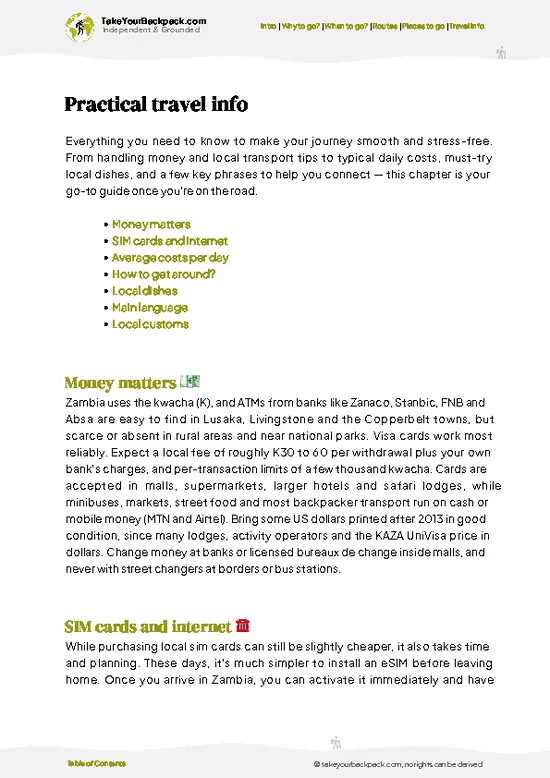
example page 0 from our offline Travel Guide for Zambia
example page 1 from our offline Travel Guide for Zambia
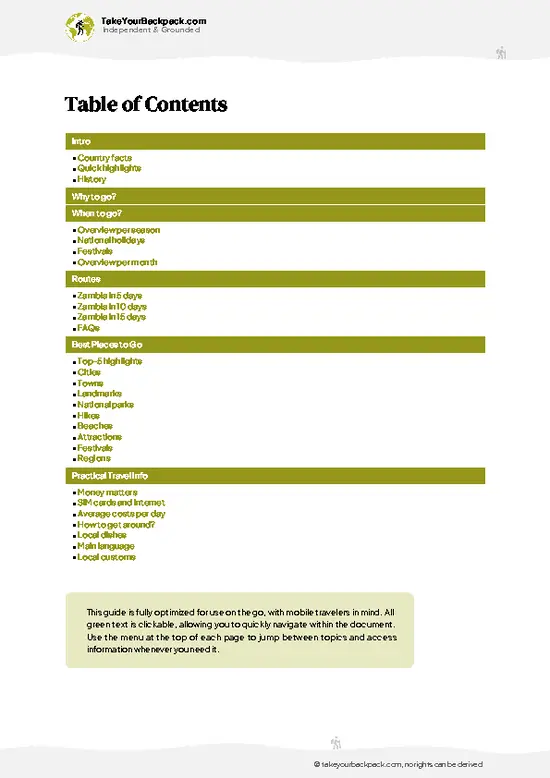
example page 2 from our offline Travel Guide for Zambia
example page 3 from our offline Travel Guide for Zambia
example page 4 from our offline Travel Guide for Zambia
example page 5 from our offline Travel Guide for Zambia
example page 6 from our offline Travel Guide for Zambia
example page 7 from our offline Travel Guide for Zambia
Loading the map 🌍
CLICK TO FILTER
cities
towns
landmarks
national parks
hikes
beaches
attractions
festivals
regions
SHOW COUNTRY’S BESTSHOW ALL

✨ Why go?
Ranked #5 festival in Zambia
What sets this place apart

Kulamba Ceremony is where Chewa identity is performed in full, and backpackers route around it because few African festivals let you stand this close to the real thing. Chiefs arrive from across Zambia, Malawi and Mozambique to pay respect to Kalonga Gawa Undi, and the procession of regalia, drummers and praise-singers is the actual ritual, not a show staged for visitors. You come away understanding how kinship and chieftaincy still organize daily life here.

The second pull is the temporary community. Visitors camp or find village rooms, share food, and end up chatting with families who have traveled for days. It is cheap compared with big-name music festivals, and the crowd is mostly local, so you are a guest rather than a customer.

It also fits neatly into an eastern Zambia loop. Pair … read more 👉
Kulamba Ceremony is where Chewa identity is performed in full, and backpackers route around it because few African festivals let you stand this close to the real thing. Chiefs arrive from across Zambia, Malawi and Mozambique to pay respect to Kalonga Gawa Undi, and the procession of regalia, drummers and praise-singers is the actual ritual, not a show staged for visitors. You come away understanding how kinship and chieftaincy still organize daily life here.

The second pull is the temporary community. Visitors camp or find village rooms, share food, and end up chatting with families who have traveled for days. It is cheap compared with big-name music festivals, and the crowd is mostly local, so you are a guest rather than a customer.

It also fits neatly into an eastern Zambia loop. Pair it with South Luangwa safaris and a crossing into Malawi, and the ceremony becomes the cultural anchor of the trip.

💡 HighlightsTop highlights of Kulamba Ceremony

  1. Arrival of the Kalonga Gawa Undi: The procession is the centerpiece. The paramount chief is carried in with attendants, drummers and ululating crowds, and you see exactly how much he means to the Chewa.
  2. Gule Wamkulu masked dancers: Dancers in animal masks, rags and feathers perform acrobatic, sometimes menacing routines. The tradition is listed by UNESCO, and up close it feels like stepping into a living spirit world.
  3. Chiefs’ tribute and the arena gathering: Delegations from Zambia, Malawi and Mozambique present themselves in turn, each with songs and distinct dress. It is a quick lesson in how far Chewa ties reach.
  4. Traditional dances and drumming: Between the main events, groups perform village dances on open ground. Drums of different sizes build layered rhythms, and you are often pulled in
… read more 👉
  1. Arrival of the Kalonga Gawa Undi: The procession is the centerpiece. The paramount chief is carried in with attendants, drummers and ululating crowds, and you see exactly how much he means to the Chewa.
  2. Gule Wamkulu masked dancers: Dancers in animal masks, rags and feathers perform acrobatic, sometimes menacing routines. The tradition is listed by UNESCO, and up close it feels like stepping into a living spirit world.
  3. Chiefs’ tribute and the arena gathering: Delegations from Zambia, Malawi and Mozambique present themselves in turn, each with songs and distinct dress. It is a quick lesson in how far Chewa ties reach.
  4. Traditional dances and drumming: Between the main events, groups perform village dances on open ground. Drums of different sizes build layered rhythms, and you are often pulled in to join.
  5. Local food and craft stalls: Villagers sell nsima with relish, roasted maize, grilled meat and handmade baskets and carvings. Eating here is the easiest way to start conversations.
Kulamba Ceremony has no real gate fee for onlookers, so watching the dances and the procession costs nothing, and the craft stalls are the only place you must spend.
Spotted a mistake or missing something? Contact us.

🌤️ When to go?When is the celebration of Kulamba Ceremony?

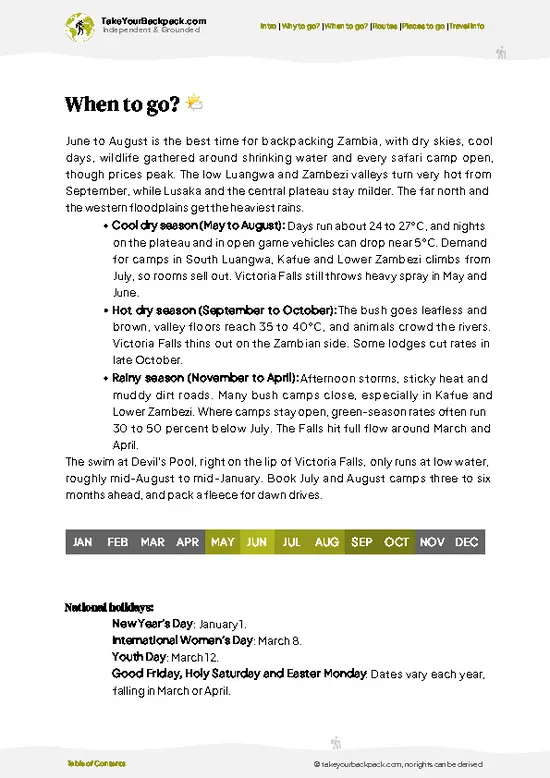
Kulamba Ceremony is held on the last Saturday of August each year, a one-day gathering (with build-up the days before) at the Kulamba grounds near Katete in Zambia’s Eastern Province, where Chewa people gather before Paramount Chief Kalonga Gawa Undi.
  • Best day: Saturday is the whole point. Dancing, the Gule Wamkulu masked performers and the chief’s arrival fill the day, so arrive by mid-morning. Friday is calmer and lets you watch groups assemble.
  • Weather: Dry, dusty and sunny. Days reach about 26 to 30°C (79 to 86°F), nights drop to roughly 10 to 14°C (50 to 57°F). Bring a hat, sunscreen, a scarf for dust, a warm layer and water.
  • Booking: Rooms in Katete and Chipata fill weeks ahead, so reserve by July. Prices rise by roughly 20 to 50 percent around the weekend.
  • Roads: The Great East Road jams
… read more 👉
Kulamba Ceremony is held on the last Saturday of August each year, a one-day gathering (with build-up the days before) at the Kulamba grounds near Katete in Zambia’s Eastern Province, where Chewa people gather before Paramount Chief Kalonga Gawa Undi.
  • Best day: Saturday is the whole point. Dancing, the Gule Wamkulu masked performers and the chief’s arrival fill the day, so arrive by mid-morning. Friday is calmer and lets you watch groups assemble.
  • Weather: Dry, dusty and sunny. Days reach about 26 to 30°C (79 to 86°F), nights drop to roughly 10 to 14°C (50 to 57°F). Bring a hat, sunscreen, a scarf for dust, a warm layer and water.
  • Booking: Rooms in Katete and Chipata fill weeks ahead, so reserve by July. Prices rise by roughly 20 to 50 percent around the weekend.
  • Roads: The Great East Road jams with buses and pickups on the morning of the ceremony. Leave Chipata before dawn and plan to depart after the crowds thin in late afternoon.
Book your bed first, then everything else falls into place.


source: climatestotravel.comJANJanuary: not recommended for travelingFEBFebruary: not recommended for travelingMARMarch: not recommended for travelingAPRApril: not recommended for travelingMAYMay: not recommended for travelingJUNJune: not recommended for travelingJULJuly: not recommended for travelingAUGAugust: excellent for travelingSEPSeptember: not recommended for travelingOCTOctober: not recommended for travelingNOVNovember: not recommended for travelingDECDecember: not recommended for traveling

✈️ The backpacker research shortcutZambia Travel Guide

An offline-friendly backpacking guide with optimized travel routes, ranked highlights, transport advice, and the best areas to stay.
example page 0 from our offline Travel Guide for Zambia
example page 1 from our offline Travel Guide for Zambia
example page 2 from our offline Travel Guide for Zambia
example page 3 from our offline Travel Guide for Zambia
example page 4 from our offline Travel Guide for Zambia
example page 5 from our offline Travel Guide for Zambia
example page 6 from our offline Travel Guide for Zambia
example page 7 from our offline Travel Guide for Zambia
The digital guide (351 pages) contains:
✅ 89 highlights, ranked by travel appeal
✅ Optimized 5, 10 & 15-day travel routes
✅ Cities, national parks, landmarks, beaches
✅ How to get around
✅ Offline-friendly for travel without Wi-Fi
👉 Click to see all 30+ guide features

📅 Plan smarter in minutes, not weeks
✅ Month by month travel advice
✅ Festivals & national holidays
✅ Budget expectations

🗺️ Go to the right places, skip the overrated ones
✅ Honest pros & cons of destinations
✅ Top hikes, parks & viewpoints
✅ Lesser-known places most travelers miss
✅ Clear “worth it vs skip it” guidance

🛏️ Travel smoothly without rookie mistakes
✅ Best areas to stay
✅ Transport systems explained simply
✅ Common scams & safety advice
✅ SIM cards, money & practical tips

🌍 Understand the country, not just visit it
✅ Culture & traditions
✅ 52 Essential phrases & customs
✅ Festivals worth planning around
✅ Traveler-friendly historical context
✅ Insights that make places more meaningful

📱 Built for real travel conditions
✅ Fully downloadable PDF
✅ Works completely offline
✅ Optimized for phone use
✅ Useful in remote areas & buses
✅ Everything in one place
Stop searching, start planning
Get instant access to your full guide. 30‑day money-back guarantee.
+ Add another guide for just

By proceeding you agree to our terms.
Sent to your inbox immediately after payment • 100% Secure Checkout
Best Backpacking Travel Advisor 2025 tourism awardBest Backpacking
Travel Advisor
2025
What others say about Take Your Backpack Guides:
⭐⭐⭐⭐⭐
Fantastic, amazing amount of information!
⭐⭐⭐⭐⭐
My goodness this is amazing, it's what I've been looking for hats off too you!
⭐⭐⭐⭐⭐
I think this is absolutely BRILLIANT
⭐⭐⭐⭐
Very complete and informative. It's still missing places, but I gotta to commend you
⭐⭐⭐⭐⭐
This is truly amazing, thank you, can't wait to explore it with my kids!
⭐⭐⭐⭐⭐
Awesome resource, thank you!
⭐⭐⭐⭐⭐
This is amazing! Can't wait to explore the ones I haven't seen
⭐⭐⭐⭐
I love this! Well done, great idea.
⭐⭐⭐⭐⭐
Thanks for taking the time to make this gem!
⭐⭐⭐⭐⭐
This might be the best website I've ever seen.
⭐⭐⭐⭐⭐
Congratulations, and thank you so much for your work; it's incredibly valuable.
⭐⭐⭐⭐
In all seriousness I think you did a great job pointing out the important spots
⭐⭐⭐⭐⭐
10/10 very good
⭐⭐⭐⭐⭐
As someone who's only just starting to visit regularly this is awesome, thank you.
⭐⭐⭐⭐
Thank you very much! I'm going to visit my dad, it's going to be very useful!
⭐⭐⭐⭐⭐
This is really cool! We'll be travelling for the first time and this definitely come in handy.
⭐⭐⭐⭐⭐
You are now our minister of culture, congratulations 👨‍💼
⭐⭐⭐⭐⭐
Just wanted to tell you that this is a pearl! Going to follow your recommendations.
⭐⭐⭐⭐⭐
This is so cool. I'll definitely be using the resource for my travels soon.
⭐⭐⭐⭐⭐
This is very impressive! Good work.
⭐⭐⭐⭐⭐
This is an amazing and informative site. Very well done!

🛏️ Where to stay?Best areas to stay in Zambia

Chipata is the smartest base for Kulamba Ceremony, with Katete as the closer but thinner option. Chipata is the main town of Eastern Province, roughly 70 km east of Katete along the Great East Road, and it has the widest spread of guesthouses, lodges and backpacker-friendly places, plus ATMs, supermarkets, restaurants and minibus links. It is also where you will meet other travelers, overlanders and volunteers heading the same way, so sharing a ride to the grounds is easy. Expect a 1 to 1.5 hour drive each way on festival morning, so go early.

Katete suits you if you want to wake up near the … read more 👉
Chipata is the smartest base for Kulamba Ceremony, with Katete as the closer but thinner option. Chipata is the main town of Eastern Province, roughly 70 km east of Katete along the Great East Road, and it has the widest spread of guesthouses, lodges and backpacker-friendly places, plus ATMs, supermarkets, restaurants and minibus links. It is also where you will meet other travelers, overlanders and volunteers heading the same way, so sharing a ride to the grounds is easy. Expect a 1 to 1.5 hour drive each way on festival morning, so go early.

Katete suits you if you want to wake up near the action. Accommodation is limited to a handful of simple guesthouses, and they sell out early, so book well ahead. It is a small, calm town where the evening before the ceremony has a real buzz as families arrive. Safety is good in both places, but keep valuables out of sight in the crowd and travel in groups after dark.

If beds run out, camping or a homestay arranged through local contacts in the Katete area can work, though facilities will be basic.

👛 Costs (as of 22 October 2026)Travel costs and budget guide for Kulamba Ceremony

Kulamba Ceremony costs about US$61 to 102 a day for an independent traveler, with most spending going to a bed and transport. Entry to the grounds is generally free or a small donation, and the real costs are getting to Katete and eating in a crowd.
CategoryBudget RangeLocal Reality
Festival ticketsUS$0 to 5No formal ticket for the public. Small fees may apply for vehicles, cameras or reserved seating.
AccommodationLow season: US$12 to 25. High season: US$25 to 50Guesthouses in Chipata and Katete rise sharply around the ceremony weekend. Camping costs less if arranged locally.
Local transportUS$8 to 25Shared minibus from Chipata to Katete costs a few dollars each way. A hired car or taxi for the day runs US$40 to 70, split between riders.
Food & drinksUS$5 to 12Nshima meals and grilled snacks at
… read more 👉
Kulamba Ceremony costs about US$61 to 102 a day for an independent traveler, with most spending going to a bed and transport. Entry to the grounds is generally free or a small donation, and the real costs are getting to Katete and eating in a crowd.
CategoryBudget RangeLocal Reality
Festival ticketsUS$0 to 5No formal ticket for the public. Small fees may apply for vehicles, cameras or reserved seating.
AccommodationLow season: US$12 to 25. High season: US$25 to 50Guesthouses in Chipata and Katete rise sharply around the ceremony weekend. Camping costs less if arranged locally.
Local transportUS$8 to 25Shared minibus from Chipata to Katete costs a few dollars each way. A hired car or taxi for the day runs US$40 to 70, split between riders.
Food & drinksUS$5 to 12Nshima meals and grilled snacks at the grounds cost US$1 to 4. Bottled drinks cost under US$2.
Miscellaneous expensesUS$3 to 10Sunscreen, water, small gifts for hosts, phone credit and donations for photographing dancers.
Total Daily BudgetUS$61 to 102Based on high-season accommodation and mid-range transport choices.


source: zambiatourism.com
⚠️ Prices can change and everyone travels differently, so take this as a rough guide. Hope it helps you plan your adventure!

🍲 FoodEating & Drinking in Kulamba Ceremony

Food at Kulamba Ceremony is village-festival fare, cooked for crowds and eaten with your hands. The staple is nshima, the thick maize porridge, served with relish such as kapenta (tiny dried fish), beans, greens or stewed chicken. Roadside and grounds-side vendors also sell roasted maize, grilled meat, fried cassava, boiled groundnuts and sweet fritters called vitumbuwa, usually fried to order over charcoal.

Try the nshima with chicken for the full experience. Wash your hands from the shared basin, roll a small ball with your right hand, dent it with your thumb and scoop the relish. Locals will happily show you if you fumble.

For drinks, expect bottled sodas, water and bottled beer. Chibuku, the cheap sorghum and maize beer sold in cartons, is common, and homemade brews appear around the … read more 👉
Food at Kulamba Ceremony is village-festival fare, cooked for crowds and eaten with your hands. The staple is nshima, the thick maize porridge, served with relish such as kapenta (tiny dried fish), beans, greens or stewed chicken. Roadside and grounds-side vendors also sell roasted maize, grilled meat, fried cassava, boiled groundnuts and sweet fritters called vitumbuwa, usually fried to order over charcoal.

Try the nshima with chicken for the full experience. Wash your hands from the shared basin, roll a small ball with your right hand, dent it with your thumb and scoop the relish. Locals will happily show you if you fumble.

For drinks, expect bottled sodas, water and bottled beer. Chibuku, the cheap sorghum and maize beer sold in cartons, is common, and homemade brews appear around the grounds. If someone offers a shared cup, take a small sip and pass it on politely.

Bring cash in small notes (kwacha). Card readers are rare and mobile money is more reliable than banks on the day. Lines move slowly, portions are generous, and sharing a plate between two is normal. Carry water, since stalls run dry by afternoon.

FAQCommon questions from travelers

Kulamba Ceremony takes place on the last Saturday of August each year, so the date shifts slightly between years. It is centered on one day, with people arriving from the Thursday or Friday. The venue is the Kulamba grounds near Katete in Eastern Province, about 70 km from Chipata.
Attending Kulamba Ceremony is cheap, since there is generally no formal public entry fee, though small charges may apply for vehicles or cameras. The main costs are a bed in Chipata or Katete at about US$25 to 50 during festival weekend, and transport, which runs US$8 to 25 by minibus. Food at the grounds costs roughly US$1 to 4 a plate.
No, Kulamba Ceremony does not require advance tickets for general visitors, as the event is a traditional gathering open to the public. What you do need to book early is accommodation, because rooms in Katete and Chipata sell out weeks ahead. Reserve by July and arrive on the grounds by mid-morning on Saturday.
⚠️ Things can change over time, so always validate details locally before you go.

Other Zambian festivals near Kulamba Ceremony

Explore more nearby:

  • N’cwala—Ngoni first fruits, Mtenguleni, shields and spears, February rains| 52 km away
  • Malaila Ceremony—Eastern chiefdom, dance-troupe rivalry, heirloom regalia, village brew| 72 km away
  • Chibwela Kumushi Ceremony—Lenje homecoming, bark-cloth dancers, Mumbwa and Kabwe area, village chicken| 255 km away

💡 Not sure where to go next?
Create a personalized itinerary for Zambia including Kulamba Ceremony and the places that fit your trip.

Generate my itinerary

👉 Discover all festivals

Or checkout all Zambia has to offer (think cities, towns, villages, national parks, hikes, beaches, festivals)
Country photo of Zambia

We 💚 feedbackIs it worth it?

Kulamba Ceremony trips up travelers who arrive on the main day and expect a schedule. Events start late and run long, and the best moments happen in the quieter hours around the arena. Get there a day early, ask the village headman where to pitch a tent, and keep your camera lowered near the masked dancers until locals show it is fine.

✍️ Help improve this page!
The information on this page is based on in-depth research, insights shared by experienced travelers, and feedback from the local travel community in Zambia. While every effort is made to keep the information accurate and current, conditions can change — so if you spot anything incorrect or outdated, please get in touch.


🙋‍♂️ Give feedback

👋 Meet the founderWho’s Behind Take Your Backpack?

Johan, backpacker and founder of TakeYourBackpackHi, I’m Johan (Netherlands 🇳🇱), the creator of TakeYourBackpack. Over the past 3 decades, I’ve backpacked through 90+ countries across six continents, gaining extensive experience with independent travel, long-term trips, and overland routes.

This site is built on a combination of firsthand travel experience and carefully curated insights from other backpackers. Many guides are based on places I’ve personally visited, while others bring together tips, observations, and practical advice shared by trusted travelers I’ve met along the way.

The goal is to provide realistic, experience-driven guidance — not generic itineraries — so you can explore destinations with better context, clearer expectations, and more confidence.