

×

Zimbabwe🇿🇼 | hikesEastern Highlandsmisty peaks, montane forests, cool climate, remote villages | things to do and best time to go

Explore Matobo Heritage FestivalExplore Matobo Hills

Backpacking in Eastern Highlands
🏆 Top pickhike ranked #1
By Johan Kruseman 🇳🇱 | Updated June 2, 2026

Most backpackers expect Zimbabwe’s Eastern Highlands to be a gentle, misty escape—think rolling tea estates and polite waterfalls. The surprise? The trails here bite back. Mud sucks at your boots, granite outcrops demand all fours, and the weather can flip from sunburn to sideways rain in an hour. The Eastern Highlands slice along Zimbabwe’s eastern border with Mozambique, a green spine of mountains that feels a world away from the dry savanna stereotypes. Hiking here is a full-body experience: you’ll sweat up forested ridges, scramble over boulders, and then—just when your legs threaten mutiny—catch a view that punches you in the chest. Nyanga’s peaks and Chimanimani’s wild, broken ridges both offer scenery that’s raw and cinematic, but Chimanimani’s trails are rougher and less forgiving. Public transport to trailheads is possible but slow and patchy; you’ll earn every kilometer. Compared to the more manicured paths of Nyanga, the Eastern Highlands are for those who want their adventure with a side of unpredictability and a cold, muddy stream to soak their feet at the end.

Discover everything you want to know in the 📖 Zimbabwe Travel Guide.
Best time to go: May - October
Duration: 5 to 7 days
Distance: 300 kilometers
Total ascent: 1,200 meters


Get your Zimbabwe guide
90 ranked highlights, routes & tips, works offline (356 pages)
Loading the map 🌍
CLICK TO FILTER
cities
towns
landmarks
national parks
hikes
beaches
attractions
festivals
regions
SHOW COUNTRY’S BESTSHOW ALL

✨ Why go?
Ranked #1 hike in Zimbabwe
Why Eastern Highlands should be on your travel list

The Eastern Highlands in Zimbabwe pull backpackers in with their raw beauty and accessible adventure. Imagine trekking through lush, rolling hills where the air is crisp and the views stretch endlessly. The scenery-to-effort ratio here is off the charts; you’ll sweat a bit, but the payoff is a panorama that makes every step worth it.

Public transport is your friend. Buses and shared taxis whisk you to trailheads without breaking the bank. This means you can dive into the wilderness without a hefty price tag. The low cost of both transport and accommodation keeps your wallet happy while you chase those breathtaking vistas.

Flexibility is key. You can choose routes that fit your pace, whether you’re up for a quick day hike or a multi-day trek. Each path leads you deeper into the heart of … read more 👉
The Eastern Highlands in Zimbabwe pull backpackers in with their raw beauty and accessible adventure. Imagine trekking through lush, rolling hills where the air is crisp and the views stretch endlessly. The scenery-to-effort ratio here is off the charts; you’ll sweat a bit, but the payoff is a panorama that makes every step worth it.

Public transport is your friend. Buses and shared taxis whisk you to trailheads without breaking the bank. This means you can dive into the wilderness without a hefty price tag. The low cost of both transport and accommodation keeps your wallet happy while you chase those breathtaking vistas.

Flexibility is key. You can choose routes that fit your pace, whether you’re up for a quick day hike or a multi-day trek. Each path leads you deeper into the heart of the highlands, where the only sounds are the rustle of leaves and your own heartbeat.

As you crest a ridge, the world unfolds below you. That moment, with a cold beer in hand at a local lodge, is the cherry on top of your adventure. The Eastern Highlands are not just a hike; they’re a vibrant chapter in your backpacking story.
Want to include Eastern Highlands in your Zimbabwe route?
Create a personalized Zimbabwe itinerary that includes Eastern Highlands and the places that fit your trip — based on your travel style, budget, and available time. Get your route in seconds.

Generate my trip

💡 HighlightsTop highlights of Eastern Highlands

  • Mount Nyangani summit: Zimbabwe’s highest point — a short but rewarding scramble across peat bogs, rocky outcrops and moorland. The ridge walk gives proper 360° views over the Honde Valley and into Mozambique; the mix of mist, moss and wind-battered grassland feels nothing like lowland bush trails.
  • Mutarazi Falls and the gorge: The tallest waterfall in Zimbabwe, plunging into a sheer, fern-lined gorge. The hike to the main lookout is dramatic—you get raw vertical drop, constant spray and a real sense of exposure that outdoes most flatland waterfall walks.
  • Chimanimani peaks and granite towers (personal favorite): Weathered granite tors, narrow ridgelines and hidden pools make this range great for scrambling and route-finding. The terrain is rugged and remote, with sudden cliffs, wildflowers
read more 👉
  • Mount Nyangani summit: Zimbabwe’s highest point — a short but rewarding scramble across peat bogs, rocky outcrops and moorland. The ridge walk gives proper 360° views over the Honde Valley and into Mozambique; the mix of mist, moss and wind-battered grassland feels nothing like lowland bush trails.
  • Mutarazi Falls and the gorge: The tallest waterfall in Zimbabwe, plunging into a sheer, fern-lined gorge. The hike to the main lookout is dramatic—you get raw vertical drop, constant spray and a real sense of exposure that outdoes most flatland waterfall walks.
  • Chimanimani peaks and granite towers (personal favorite): Weathered granite tors, narrow ridgelines and hidden pools make this range great for scrambling and route-finding. The terrain is rugged and remote, with sudden cliffs, wildflowers and sweeping views into Mozambique—proper mountain country that feels a world away from busier parks.
  • Vumba (Bvumba) Botanical Gardens & Leopard Rock viewpoint: Misty cloud forest trails, cultivated gardens and easy cliff-top walks. Hikes here trade high drama for mood—early-morning bird song, orchids and sweeping panoramas of the lowlands; it’s a nice contrast to the raw peaks and a great place to cool off.
  • Chirinda Forest (Chipinge): A rare montane rainforest fragment — walking here is about lush shade, giant trees, epiphytes and a different kind of wildlife (birds and tiny forest mammals). It’s humid, green and quiet; for hikers who love biodiversity and cool forest walks, it’s a standout compared with the high, windswept ridges.
Spotted a mistake or missing something? Contact us.

🌤️ When to go?Seasonal considerations and timing


  • Weather: The dry season from May to October is prime for hiking. Expect clear skies and minimal rain, which means trails stay firm and rivers don’t swell unexpectedly. The wet season (November to April) turns paths into slippery mudslides and can hide leeches in the grass.

  • Temperature: Daytime highs hover around 20-25°C (68-77°F) during the dry months, perfect for sustained trekking without overheating. Nights can dip to 5-10°C (41-50°F), so pack layers. The wet season heats up to 28-32°C (82-90°F), making exertion tougher and dehydration a real risk.

  • Daylight Hours: From May to August, you get roughly 11-12 hours of daylight—enough to push hard and still catch sunset views without rushing. The wet season offers longer days but often clouds out the light you want for those panoramic
read more 👉

  • Weather: The dry season from May to October is prime for hiking. Expect clear skies and minimal rain, which means trails stay firm and rivers don’t swell unexpectedly. The wet season (November to April) turns paths into slippery mudslides and can hide leeches in the grass.

  • Temperature: Daytime highs hover around 20-25°C (68-77°F) during the dry months, perfect for sustained trekking without overheating. Nights can dip to 5-10°C (41-50°F), so pack layers. The wet season heats up to 28-32°C (82-90°F), making exertion tougher and dehydration a real risk.

  • Daylight Hours: From May to August, you get roughly 11-12 hours of daylight—enough to push hard and still catch sunset views without rushing. The wet season offers longer days but often clouds out the light you want for those panoramic shots.

  • Crowds: The dry season draws more hikers, especially July and August, but the Eastern Highlands rarely feel overrun. The wet season sees fewer visitors, giving you solitude but at the cost of trail conditions.

  • Seasonal Activities: Dry months align with local festivals and wildlife spotting, adding cultural and natural layers to your trek. Wet months bring lush greenery and waterfalls at full roar but can limit access to some routes.

  • Price Fluctuations: Accommodation and guided tours peak in the dry season, especially mid-year. Booking early can lock in better rates. Off-season offers discounts but fewer services and less reliable transport.


Pro-tip: Hit the trails in late May or early June—cool, dry, and just before the tourist rush. You’ll earn every step with crisp air and a quiet trail, then toast your effort with a cold beer as the sun dips behind the hills.


source: climatestotravel.comJANJanuary: fair for travelingFEBFebruary: fair for travelingMARMarch: fair for travelingAPRApril: fair for travelingMAYMay: highly recommended for travelingJUNJune: excellent for travelingJULJuly: excellent for travelingAUGAugust: excellent for travelingSEPSeptember: highly recommended for travelingOCTOctober: highly recommended for travelingNOVNovember: fair for travelingDECDecember: fair for traveling
when-to-go

✈️ The backpacker research shortcutZimbabwe Travel Guide

An offline-friendly backpacking guide with optimized travel routes, ranked highlights, transport advice, and the best areas to stay.
example page 0 from our offline Travel Guide for Zimbabwe
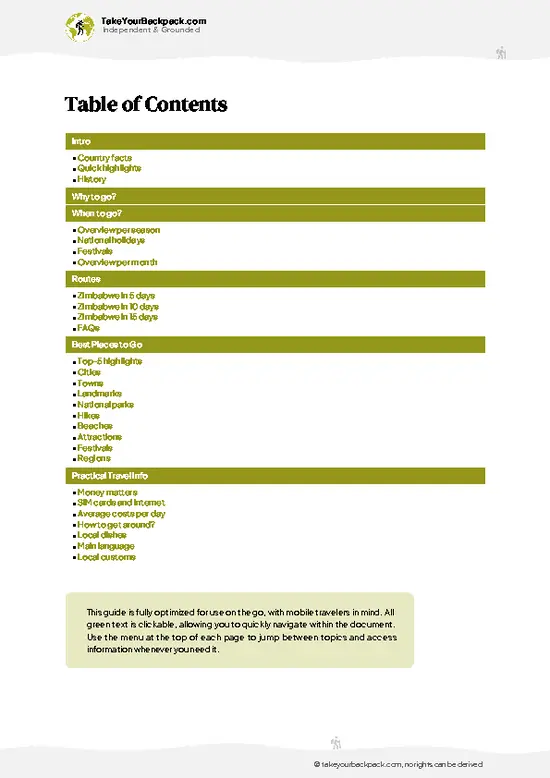
example page 1 from our offline Travel Guide for Zimbabwe
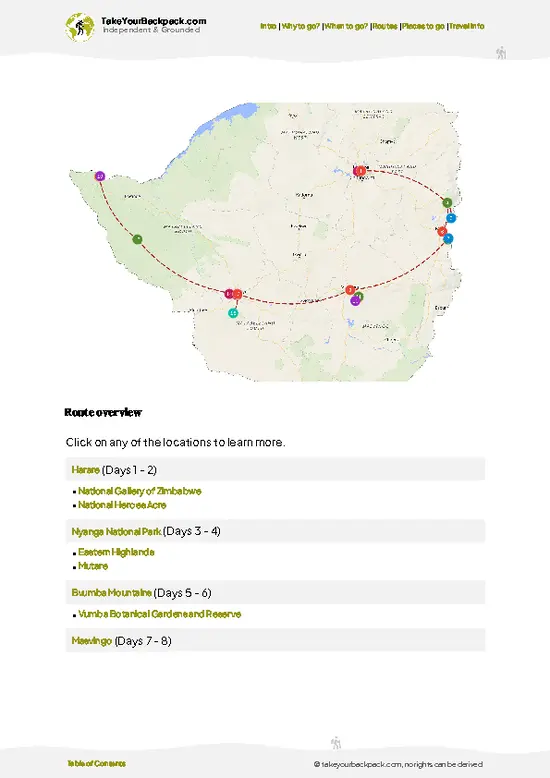
example page 2 from our offline Travel Guide for Zimbabwe
example page 3 from our offline Travel Guide for Zimbabwe
example page 4 from our offline Travel Guide for Zimbabwe
example page 5 from our offline Travel Guide for Zimbabwe
example page 6 from our offline Travel Guide for Zimbabwe
example page 7 from our offline Travel Guide for Zimbabwe
The digital guide (356 pages) contains:
90 highlights, ranked by travel appeal
Optimized 5, 10 & 15-day travel routes
Cities, national parks, landmarks, beaches
How to get around
Offline-friendly for travel without Wi-Fi
👉 Click to see all 30+ guide features

📅 Plan smarter in minutes, not weeks
Month by month travel advice
Festivals & national holidays
Budget expectations

🗺️ Go to the right places, skip the overrated ones
Honest pros & cons of destinations
Top hikes, parks & viewpoints
Lesser-known places most travelers miss
Clear “worth it vs skip it” guidance

🛏️ Travel smoothly without rookie mistakes
Best areas to stay
Transport systems explained simply
Common scams & safety advice
SIM cards, money & practical tips

🌍 Understand the country, not just visit it
Culture & traditions
52 Essential phrases & customs
Festivals worth planning around
Traveler-friendly historical context
Insights that make places more meaningful

📱 Built for real travel conditions
Fully downloadable PDF
Works completely offline
Optimized for phone use
Useful in remote areas & buses
Everything in one place
Save weeks of stressful planning
Get instant access to your full guide. 30‑day money-back guarantee.


By proceeding you agree to our terms.
Sent to your inbox immediately after payment • 100% Secure Checkout
Best Backpacking Travel Advisor 2025 tourism awardBest Backpacking
Travel Advisor
2025
What others say about Take Your Backpack Guides:
⭐⭐⭐⭐⭐
Fantastic, amazing amount of information!
⭐⭐⭐⭐⭐
My goodness this is amazing, it's what I've been looking for hats off too you!
⭐⭐⭐⭐⭐
I think this is absolutely BRILLIANT
⭐⭐⭐⭐
Very complete and informative. It's still missing places, but I gotta to commend you
⭐⭐⭐⭐⭐
This is truly amazing, thank you, can't wait to explore it with my kids!
⭐⭐⭐⭐⭐
Awesome resource, thank you!
⭐⭐⭐⭐⭐
This is amazing! Can't wait to explore the ones I haven't seen
⭐⭐⭐⭐
I love this! Well done, great idea.
⭐⭐⭐⭐⭐
Thanks for taking the time to make this gem!
⭐⭐⭐⭐⭐
This might be the best website I've ever seen.
⭐⭐⭐⭐⭐
Congratulations, and thank you so much for your work; it's incredibly valuable.
⭐⭐⭐⭐
In all seriousness I think you did a great job pointing out the important spots
⭐⭐⭐⭐⭐
10/10 very good
⭐⭐⭐⭐⭐
As someone who's only just starting to visit regularly this is awesome, thank you.
⭐⭐⭐⭐
Thank you very much! I'm going to visit my dad, it's going to be very useful!
⭐⭐⭐⭐⭐
This is really cool! We'll be travelling for the first time and this definitely come in handy.
⭐⭐⭐⭐⭐
You are now our minister of culture, congratulations 👨‍💼
⭐⭐⭐⭐⭐
Just wanted to tell you that this is a pearl! Going to follow your recommendations.
⭐⭐⭐⭐⭐
This is so cool. I'll definitely be using the resource for my travels soon.
⭐⭐⭐⭐⭐
This is very impressive! Good work.
⭐⭐⭐⭐⭐
This is an amazing and informative site. Very well done!

🛏️ Where to stay?Where staying makes the most sense

If you enjoy meeting fellow travelers, consider choosing hostels with high ratings for atmosphere. On the other hand, if you prefer having your own space, a hotel might be a better option.

🥾 Hike detailsTrail overview: what to expect on the hike

Total Distance: The Eastern Highlands trail stretches around 70 kilometers, making it a solid trek for those looking to immerse themselves in nature.

Estimated Duration: Most hikers take about 4 to 6 days to complete the trail, depending on pace and how often you stop to soak in the views or snap photos.

Difficulty Level: This trail is generally rated as moderate to challenging. You’ll encounter some steep sections and rocky paths, so a decent level of fitness is recommended.

Starting Point: The trail typically begins at the Nyanga National Park entrance. To get there via public transport, … read more 👉
Total Distance: The Eastern Highlands trail stretches around 70 kilometers, making it a solid trek for those looking to immerse themselves in nature.

Estimated Duration: Most hikers take about 4 to 6 days to complete the trail, depending on pace and how often you stop to soak in the views or snap photos.

Difficulty Level: This trail is generally rated as moderate to challenging. You’ll encounter some steep sections and rocky paths, so a decent level of fitness is recommended.

Starting Point: The trail typically begins at the Nyanga National Park entrance. To get there via public transport, you can catch a bus from Harare to Nyanga. Once you arrive in Nyanga, you might need to take a short taxi ride to reach the park entrance.

Major Landmarks Along the Route:
  • Mount Nyangani: The highest peak in Zimbabwe, offering breathtaking panoramic views.
  • Nyanga Falls: A stunning waterfall that’s perfect for a refreshing break.
  • Vumba Mountains: Known for their lush vegetation and diverse ecosystems, these mountains are a highlight of the trail.

Type of Terrain and Scenery: Expect a mix of rocky paths, forested areas, and some open grasslands. The scenery varies from dense montane forests to sweeping mountain vistas, with plenty of opportunities for photography.

Typical Vegetation: You’ll find a variety of plants, including pine trees, wildflowers, and indigenous shrubs. The higher elevations are particularly rich in biodiversity.

Wildlife: Keep your eyes peeled for various bird species, including the elusive Cape Vulture. You might also spot antelope and smaller mammals like bushbucks as you hike through the park.

This trail is a hidden gem for independent hikers, offering a chance to connect with nature while challenging yourself in a stunning environment. Just remember to pack enough water and snacks, and enjoy the journey!
⚠️ Hiking info can sometimes be outdated or inaccurate. Before you hit the trail, check the latest conditions with locals. If you do spot anything that's off, I'd love to hear from you, so I can update it for fellow travelers.

🛡️ SafetyTraveler Safety Guide

The Eastern Highlands of Zimbabwe offer a wild playground, but it’s not without its quirks. Weather can shift faster than you can say “raincoat.” Mornings might greet you with a chill, while afternoons can blaze. Layering is your best friend; pack a lightweight shell and a warm fleece.

The trails here can be steep and rocky, demanding your full attention. Navigation isn’t always straightforward, so a good map and a compass are essential. Footing can be tricky, especially after rain, when mud turns paths into slip-and-slide adventures.

Wildlife encounters are part of the charm, but respect is key. Keep your distance from any animals you spot, and don’t feed them. They’re part of the ecosystem, not your hiking buddies.

Preparation is crucial. First-timers often underestimate the altitude; … read more 👉
The Eastern Highlands of Zimbabwe offer a wild playground, but it’s not without its quirks. Weather can shift faster than you can say “raincoat.” Mornings might greet you with a chill, while afternoons can blaze. Layering is your best friend; pack a lightweight shell and a warm fleece.

The trails here can be steep and rocky, demanding your full attention. Navigation isn’t always straightforward, so a good map and a compass are essential. Footing can be tricky, especially after rain, when mud turns paths into slip-and-slide adventures.

Wildlife encounters are part of the charm, but respect is key. Keep your distance from any animals you spot, and don’t feed them. They’re part of the ecosystem, not your hiking buddies.

Preparation is crucial. First-timers often underestimate the altitude; take it slow to acclimatize. Hydration is non-negotiable, especially on warmer days. Embrace the challenge, and the views from the peaks will reward your efforts with breathtaking panoramas that make every step worthwhile.

Other Zimbabwean hikes near Eastern Highlands

Explore more nearby:


💡 Not sure where to go next?
Create a personalized itinerary for Zimbabwe including Eastern Highlands and the places that fit your trip.

Generate my itinerary

👉 Discover all hikes

Or checkout all Zimbabwe has to offer (think cities, towns, villages, national parks, hikes, beaches, festivals)
Country photo of Zimbabwe

We 💚 feedbackKey takeaways before you go

The Eastern Highlands are a hiker’s dream, with trails that twist through lush forests and reveal jaw-dropping vistas. You’ll feel the burn in your legs, but that first glimpse of the Nyanga Mountains makes it all worthwhile. Just be ready for unpredictable weather; one minute it’s sunny, the next you’re dodging raindrops. Pack smart, embrace the elements, and you’ll walk away with stories worth telling. Trust me, it’s a wild ride!

✈️ When did I visit Zimbabwe?
I have backpacked Zimbabwe all the way back in 2001.

✍️ Help improve this page!
The information on this page is based on my own backpacking experience in Zimbabwe, supplemented with up-to-date research and feedback from other travelers. Travel details can change, so if you notice anything outdated or incomplete, feel free to let me know.


🙋‍♂️ Give feedback

👋 Meet the founderWho’s Behind Take Your Backpack?

Johan, backpacker and founder of TakeYourBackpackHi, I’m Johan (Netherlands 🇳🇱), the creator of TakeYourBackpack. Over the past decade, I’ve backpacked through 80+ countries across six continents, gaining extensive experience with independent travel, long-term trips, and overland routes.

This site is built on a combination of firsthand travel experience and carefully curated insights from other backpackers. Many guides are based on places I’ve personally visited, while others bring together tips, observations, and practical advice shared by trusted travelers I’ve met along the way.

The goal is to provide realistic, experience-driven guidance — not generic itineraries — so you can explore destinations with better context, clearer expectations, and more confidence.

Get full Zimbabwe guide •
Instant download • 90 highlights • Full Offline guide