×

Zimbabwe🇿🇼 | townsChirunduZambezi frontier, hippo shallows, tigerfish, 1939 bridge | things to do and best time to go

Explore MazoweExplore Sanyati

Backpacking in Chirundu
👍 Recommendedtown ranked #6
By Johan Kruseman 🇳🇱 | Updated October 22, 2026

Chirundu is a border post on the Zambezi, and travelers often assume it is a place to rush through, yet the town has its own pull. It sits in the north of Zimbabwe, on the Lusaka highway, at the Zambian frontier. I expected a dusty customs yard and little else. What surprised me was the river: a few steps from the trucks, hippos grunt in the shallows and fish eagles call overhead. You get there by road with ease, and the highway keeps it busy with transit travelers. Evenings are quiet, with a few lodges, a small bar or two and almost no hostel scene, so meeting other backpackers happens mostly at campsites. Walk the riverbank, hire a boat and watch elephants cross the water. Chirundu ends your day with a sky full of river noise.

Discover everything you want to know in the 📖 Zimbabwe Travel Guide.


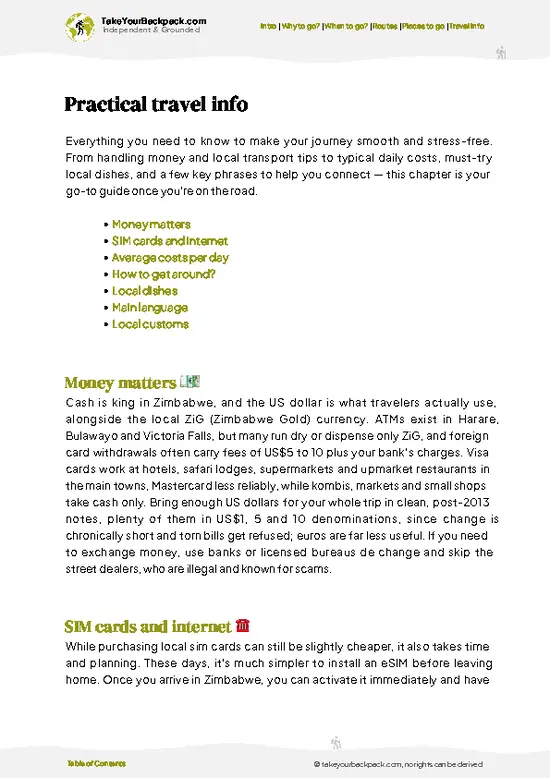
example page 0 from our offline Travel Guide for Zimbabwe
example page 1 from our offline Travel Guide for Zimbabwe
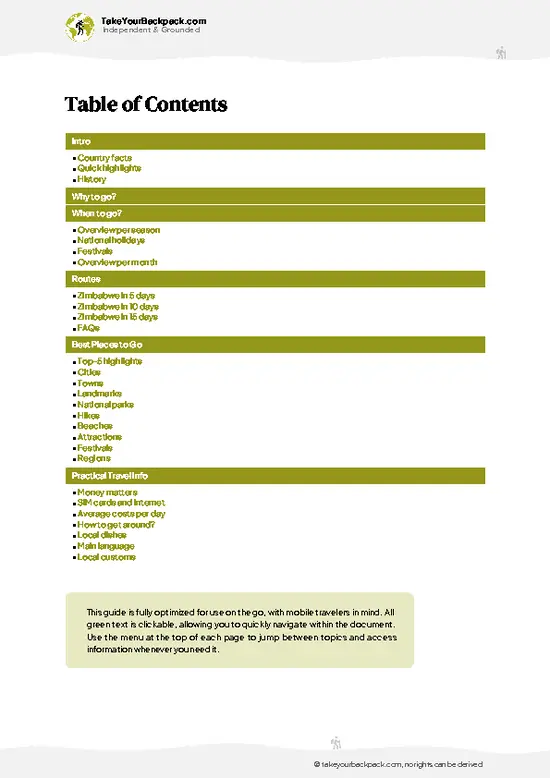
example page 2 from our offline Travel Guide for Zimbabwe
example page 3 from our offline Travel Guide for Zimbabwe
example page 4 from our offline Travel Guide for Zimbabwe
example page 5 from our offline Travel Guide for Zimbabwe
example page 6 from our offline Travel Guide for Zimbabwe
example page 7 from our offline Travel Guide for Zimbabwe
Loading the map 🌍
CLICK TO FILTER
cities
towns
landmarks
national parks
hikes
beaches
attractions
festivals
regions
SHOW COUNTRY’S BESTSHOW ALL

✨ Why go?
Ranked #6 town in Zimbabwe
What makes it a must-see town

Chirundu works as a short, sharp stop on the Zimbabwe-Zambia overland route, and it rewards travelers who want the Zambezi without a big-ticket safari. The town sits at the edge of the Zambezi Valley, so wildlife shows up on the doorstep. Elephants, hippos and crocodiles are regular sights along the river, and you can see them from a campsite chair or a small boat. The Chirundu Bridge over the Zambezi is the border link, and it gives the place a working, crossroads feel, with trucks lined up and traders milling about. Most backpackers stay one night, perhaps two if they want a river cruise or some fishing. Solo travelers and overlanders will like it best. It is a quiet stop with few bars, so those chasing nightlife should move on. Slow travelers who like birdwatching and sunsets over water … read more 👉
Chirundu works as a short, sharp stop on the Zimbabwe-Zambia overland route, and it rewards travelers who want the Zambezi without a big-ticket safari. The town sits at the edge of the Zambezi Valley, so wildlife shows up on the doorstep. Elephants, hippos and crocodiles are regular sights along the river, and you can see them from a campsite chair or a small boat. The Chirundu Bridge over the Zambezi is the border link, and it gives the place a working, crossroads feel, with trucks lined up and traders milling about. Most backpackers stay one night, perhaps two if they want a river cruise or some fishing. Solo travelers and overlanders will like it best. It is a quiet stop with few bars, so those chasing nightlife should move on. Slow travelers who like birdwatching and sunsets over water will find plenty to do here. The town is small, flat and easy to understand on foot.

💡 HighlightsWhat this place is best known for

  1. Chirundu Bridge: The 1939 bridge across the Zambezi is the town’s best-known landmark and the border link to Zambia. Walk up for views of the river and passing trucks, but keep photography discreet near the border posts. Morning is calmest. It is free and takes 20 to 30 minutes.
  2. Zambezi riverbank walk: A stroll along the water brings hippos, crocodiles and abundant birdlife into view. Go at dawn or dusk when animals are most active, and stay well back from the edge. Free, about 1 to 2 hours.
  3. Boat cruise on the Zambezi: Lodges run small boat trips past sandbanks where elephants, hippos and fish eagles gather. Late afternoon is best for light and activity. Expect roughly US$20 to 40 per person for 2 hours.
  4. Tiger fishing: The river holds tigerfish, and local guides take anglers out for half-day
… read more 👉
  1. Chirundu Bridge: The 1939 bridge across the Zambezi is the town’s best-known landmark and the border link to Zambia. Walk up for views of the river and passing trucks, but keep photography discreet near the border posts. Morning is calmest. It is free and takes 20 to 30 minutes.
  2. Zambezi riverbank walk: A stroll along the water brings hippos, crocodiles and abundant birdlife into view. Go at dawn or dusk when animals are most active, and stay well back from the edge. Free, about 1 to 2 hours.
  3. Boat cruise on the Zambezi: Lodges run small boat trips past sandbanks where elephants, hippos and fish eagles gather. Late afternoon is best for light and activity. Expect roughly US$20 to 40 per person for 2 hours.
  4. Tiger fishing: The river holds tigerfish, and local guides take anglers out for half-day trips. Early morning gives the best chance of a bite. Costs run about US$50 to 100 including gear, for 3 to 4 hours.
  5. Chirundu Fossil Forest: Petrified wood lies scattered in the bush near the town, a quiet glimpse into the area’s ancient past. Go in the cooler part of the day with a local guide. Entry is usually around US$5 and the visit takes about 1 hour.
Chirundu also works as a base for day trips to Mana Pools National Park, Lake Kariba and the Kariba Dam wall. A full day covers everything in town comfortably, and a relaxed overnight lets you add the boat trip.
Spotted a mistake or missing something? Contact us.

🏘️ NeighborhoodsHow different areas shape the experience

Chirundu is a border town on the Zambezi, small enough to cover on foot in a morning, and each patch of it has its own rhythm. Here is how to split it up.
  • Border Post and Bridge Area: Trucks queue for kilometers along the highway, and the air smells of diesel, frying dough and river mud. Money changers, SIM sellers and snack stalls crowd the approach. Walk to the Chirundu Bridge viewpoint edge and you get the wide brown Zambezi sliding under the 1960s bridge, a fine spot to watch hippos snort at dusk.
  • Main Roadside Market and Shops: Strung along the Harare-Lusaka highway, this is where you grab tomatoes, bananas, airtime and cold sodas. Vendors call out, trucks rumble past, and you leave with a bag of fresh fruit and a bargain on a phone charger.
  • Residential Streets and Township: Quiet, dusty
… read more 👉
Chirundu is a border town on the Zambezi, small enough to cover on foot in a morning, and each patch of it has its own rhythm. Here is how to split it up.
  • Border Post and Bridge Area: Trucks queue for kilometers along the highway, and the air smells of diesel, frying dough and river mud. Money changers, SIM sellers and snack stalls crowd the approach. Walk to the Chirundu Bridge viewpoint edge and you get the wide brown Zambezi sliding under the 1960s bridge, a fine spot to watch hippos snort at dusk.
  • Main Roadside Market and Shops: Strung along the Harare-Lusaka highway, this is where you grab tomatoes, bananas, airtime and cold sodas. Vendors call out, trucks rumble past, and you leave with a bag of fresh fruit and a bargain on a phone charger.
  • Residential Streets and Township: Quiet, dusty lanes lined with low houses, small bars and braai spots. Walk in daylight, say hello to everyone, and you will end up at a plate of grilled meat and sadza with a cold beer for a few dollars.
  • Riverfront Lodges Strip: Short rides or a walk along the water bring you to shaded camps with sunset decks. Nights here are calm, with frogs, crickets and the occasional hippo grunt. Order a drink, face the river and let the sky do the work.

⌛️ 1 day1-day itinerary for Chirundu

7:00 AM, Zambezi riverbank: Start with a slow walk along the water while hippos are still out and birds are loud. Keep a safe distance and enjoy the mist lifting off the river.
9:00 AM, Breakfast at your lodge or campsite: Eat eggs and tea on a terrace overlooking the Zambezi, then stroll toward the highway.
10:30 AM, Chirundu Bridge: Walk to the bridge for views over the river, trucks and the Zambian bank. It is a quick stop, so do not linger near border posts.
12:30 PM, Local market and roadside stalls: Wander the stalls near the highway for fruit, grilled maize and simple plates of sadza with relish. It is a down-to-earth lunch among drivers and traders.
2:30 PM, Chirundu Fossil Forest: Away from the standard route, hire a local guide and walk among petrified logs in the bush. The bare ground … read more 👉
7:00 AM, Zambezi riverbank: Start with a slow walk along the water while hippos are still out and birds are loud. Keep a safe distance and enjoy the mist lifting off the river.
9:00 AM, Breakfast at your lodge or campsite: Eat eggs and tea on a terrace overlooking the Zambezi, then stroll toward the highway.
10:30 AM, Chirundu Bridge: Walk to the bridge for views over the river, trucks and the Zambian bank. It is a quick stop, so do not linger near border posts.
12:30 PM, Local market and roadside stalls: Wander the stalls near the highway for fruit, grilled maize and simple plates of sadza with relish. It is a down-to-earth lunch among drivers and traders.
2:30 PM, Chirundu Fossil Forest: Away from the standard route, hire a local guide and walk among petrified logs in the bush. The bare ground and quiet make it worth the detour. Return before the heat peaks.
4:30 PM, Zambezi boat cruise: Board a small boat from a lodge and drift past elephants, hippos and sandbanks. The low sun makes this the best wildlife window of the day.
7:00 PM, Riverside dinner: Finish with grilled fish or a braai at your lodge, listening to the night chorus along the water.

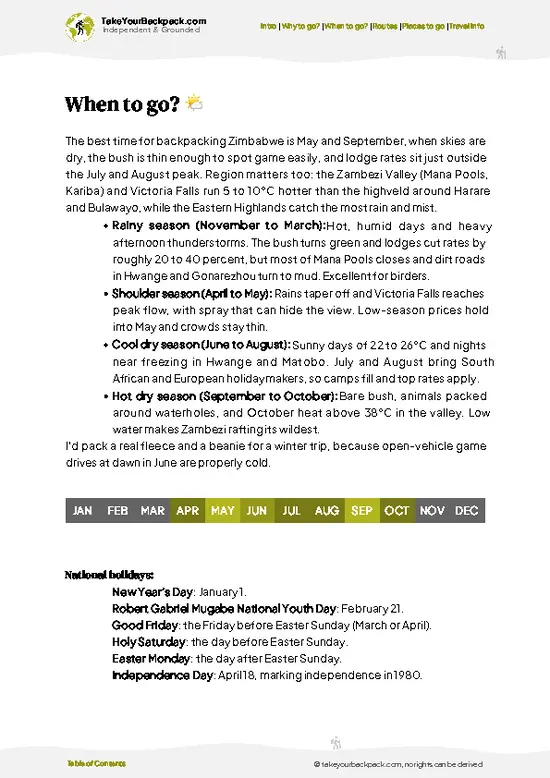
🌤️ When to go?Choosing the right time of year

  • Cool Dry Season (May to August): Days reach 25 to 29°C (77 to 84°F), nights drop to 12 to 16°C (54 to 61°F), and the Zambezi bank is comfortable for walking. Animals gather at the river, and lodge prices peak, especially in July.
  • Hot Season (September to November): Temperatures climb to 35 to 40°C (95 to 104°F) before the rains. Wildlife viewing is superb, but afternoons are brutal. Daylight runs about 12 to 13 hours.
  • Rainy Season (December to March): Expect 30 to 35°C (86 to 95°F), humid air, thunderstorms and green riverbanks. Some dirt roads turn muddy, lodges discount rooms by roughly 20 to 30 percent, and mosquitoes multiply.
Book river activities for June or July mornings if you want comfort, or go in April for lower prices and fading rain.

source: climatestotravel.comJANJanuary: fair for travelingFEBFebruary: fair for travelingMARMarch: fair for travelingAPRApril: good for travelingMAYMay: highly recommended for travelingJUNJune: highly recommended for travelingJULJuly: good for travelingAUGAugust: good for travelingSEPSeptember: highly recommended for travelingOCTOctober: good for travelingNOVNovember: fair for travelingDECDecember: fair for traveling
when-to-go

✈️ The backpacker research shortcutZimbabwe Travel Guide

An offline-friendly backpacking guide with optimized travel routes, ranked highlights, transport advice, and the best areas to stay.
example page 0 from our offline Travel Guide for Zimbabwe
example page 1 from our offline Travel Guide for Zimbabwe
example page 2 from our offline Travel Guide for Zimbabwe
example page 3 from our offline Travel Guide for Zimbabwe
example page 4 from our offline Travel Guide for Zimbabwe
example page 5 from our offline Travel Guide for Zimbabwe
example page 6 from our offline Travel Guide for Zimbabwe
example page 7 from our offline Travel Guide for Zimbabwe
The digital guide (265 pages) contains:
✅ 67 highlights, ranked by travel appeal
✅ Optimized 5, 10 & 15-day travel routes
✅ Cities, national parks, landmarks, beaches
✅ How to get around
✅ Offline-friendly for travel without Wi-Fi
👉 Click to see all 30+ guide features

📅 Plan smarter in minutes, not weeks
✅ Month by month travel advice
✅ Festivals & national holidays
✅ Budget expectations

🗺️ Go to the right places, skip the overrated ones
✅ Honest pros & cons of destinations
✅ Top hikes, parks & viewpoints
✅ Lesser-known places most travelers miss
✅ Clear “worth it vs skip it” guidance

🛏️ Travel smoothly without rookie mistakes
✅ Best areas to stay
✅ Transport systems explained simply
✅ Common scams & safety advice
✅ SIM cards, money & practical tips

🌍 Understand the country, not just visit it
✅ Culture & traditions
✅ 52 Essential phrases & customs
✅ Festivals worth planning around
✅ Traveler-friendly historical context
✅ Insights that make places more meaningful

📱 Built for real travel conditions
✅ Fully downloadable PDF
✅ Works completely offline
✅ Optimized for phone use
✅ Useful in remote areas & buses
✅ Everything in one place
Stop searching, start planning
Get instant access to your full guide. 30‑day money-back guarantee.
+ Add another guide for just

By proceeding you agree to our terms.
Sent to your inbox immediately after payment • 100% Secure Checkout
Best Backpacking Travel Advisor 2025 tourism awardBest Backpacking
Travel Advisor
2025
What others say about Take Your Backpack Guides:
⭐⭐⭐⭐⭐
Fantastic, amazing amount of information!
⭐⭐⭐⭐⭐
My goodness this is amazing, it's what I've been looking for hats off too you!
⭐⭐⭐⭐⭐
I think this is absolutely BRILLIANT
⭐⭐⭐⭐
Very complete and informative. It's still missing places, but I gotta to commend you
⭐⭐⭐⭐⭐
This is truly amazing, thank you, can't wait to explore it with my kids!
⭐⭐⭐⭐⭐
Awesome resource, thank you!
⭐⭐⭐⭐⭐
This is amazing! Can't wait to explore the ones I haven't seen
⭐⭐⭐⭐
I love this! Well done, great idea.
⭐⭐⭐⭐⭐
Thanks for taking the time to make this gem!
⭐⭐⭐⭐⭐
This might be the best website I've ever seen.
⭐⭐⭐⭐⭐
Congratulations, and thank you so much for your work; it's incredibly valuable.
⭐⭐⭐⭐
In all seriousness I think you did a great job pointing out the important spots
⭐⭐⭐⭐⭐
10/10 very good
⭐⭐⭐⭐⭐
As someone who's only just starting to visit regularly this is awesome, thank you.
⭐⭐⭐⭐
Thank you very much! I'm going to visit my dad, it's going to be very useful!
⭐⭐⭐⭐⭐
This is really cool! We'll be travelling for the first time and this definitely come in handy.
⭐⭐⭐⭐⭐
You are now our minister of culture, congratulations 👨‍💼
⭐⭐⭐⭐⭐
Just wanted to tell you that this is a pearl! Going to follow your recommendations.
⭐⭐⭐⭐⭐
This is so cool. I'll definitely be using the resource for my travels soon.
⭐⭐⭐⭐⭐
This is very impressive! Good work.
⭐⭐⭐⭐⭐
This is an amazing and informative site. Very well done!

🛏️ Where to stay?Best areas and accommodation options

The riverfront lodge strip is the best base for a budget stay in Chirundu, with camping and basic chalets from about US$10 to 25 per person. Dedicated hostels are scarce here, so expect campsites, small guesthouses and the occasional shared room rather than a dorm scene. Evenings are quiet and safe inside the lodge grounds, with security at the gate, and the main noise comes from frogs and hippos. Many places let you pitch a tent or rent one, which is the cheapest route.

The second option is the area near the main road and market, where small guesthouses charge around US$15 to 30 for a double. … read more 👉
The riverfront lodge strip is the best base for a budget stay in Chirundu, with camping and basic chalets from about US$10 to 25 per person. Dedicated hostels are scarce here, so expect campsites, small guesthouses and the occasional shared room rather than a dorm scene. Evenings are quiet and safe inside the lodge grounds, with security at the gate, and the main noise comes from frogs and hippos. Many places let you pitch a tent or rent one, which is the cheapest route.

The second option is the area near the main road and market, where small guesthouses charge around US$15 to 30 for a double. You are steps from kombis, shops and border services, which suits early departures. Expect truck noise from dawn and some generator hum when power drops. Walking after dark here is fine on the main strip but less pleasant on side streets, so take a short taxi ride back. Book ahead in the cool months from June to August when overlanders fill the camps.

🚌 Getting aroundGetting around like a local

Chirundu’s center is compact, so you can walk from the bridge to the market and the main shops in about 15 minutes. Past that, the riverside lodges and the Mana Pools road sit several kilometers out, and the sun makes walking foolish. Traffic is mostly trucks on the highway, and public transport is informal but frequent along the main route.
  • Walking: Free, flat and the best way to see the border strip, the market and the bridge. Go early, carry water, and you will get close-up views of trucks, traders and river life.
  • Minibuses (kombis): Run along the highway to Harare and Karoi, roughly US$6 to 10 for the 4 to 5 hour run to Harare. They leave when full, from early morning until mid-afternoon, and you get a front-row seat on the escarpment descent with sweeping valley views.
  • Long-distance buses:
… read more 👉
Chirundu’s center is compact, so you can walk from the bridge to the market and the main shops in about 15 minutes. Past that, the riverside lodges and the Mana Pools road sit several kilometers out, and the sun makes walking foolish. Traffic is mostly trucks on the highway, and public transport is informal but frequent along the main route.
  • Walking: Free, flat and the best way to see the border strip, the market and the bridge. Go early, carry water, and you will get close-up views of trucks, traders and river life.
  • Minibuses (kombis): Run along the highway to Harare and Karoi, roughly US$6 to 10 for the 4 to 5 hour run to Harare. They leave when full, from early morning until mid-afternoon, and you get a front-row seat on the escarpment descent with sweeping valley views.
  • Long-distance buses: Coaches between Harare and Lusaka stop at the border, with fares of around US$15 to 25 to either capital. Services run mainly mornings, so arrive early and enjoy a cheaper, more comfortable ride.
  • Local taxis and pickups: Short hops around town and to nearby lodges cost about US$2 to 8, depending on distance and haggling. Agree the price before you climb in, and you will reach riverside decks in minutes.
  • Hitching and shared transfers: Some travelers share rides to Mana Pools gate, a long drive on rough roads, usually US$20 to 40 per vehicle split between passengers. You pay in sweat and dust, and you earn elephant sightings at the other end.

👛 Costs (as of 22 October 2026)Typical daily expenses

Chirundu costs about US$45 to 60 per day for a backpacker, with US$52 a realistic daily total in high season. The table shows the usual categories.
CategoryBudget RangeLocal Reality
Dorm accommodationUS$10 to 20Camping or a basic shared room at riverside lodges; high season sits at the upper end.
MealsUS$10 to 18Roadside grills, sadza with meat and takeaway chicken are cheap; lodge dinners cost more.
Local transportUS$4 to 8Short taxi hops and kombi rides along the highway.
Basic activities/entry feesUS$10 to 20Fossil forest visits are cheap, while canoe or boat trips and park fees cost more.
Miscellaneous expensesUS$3 to 6Water, airtime, sunscreen and small tips.
Total Daily BudgetUS$52Comfortable for a mid-range backpacker in high season.
Carry small US dollar notes and buy fruit and water at the … read more 👉
Chirundu costs about US$45 to 60 per day for a backpacker, with US$52 a realistic daily total in high season. The table shows the usual categories.
CategoryBudget RangeLocal Reality
Dorm accommodationUS$10 to 20Camping or a basic shared room at riverside lodges; high season sits at the upper end.
MealsUS$10 to 18Roadside grills, sadza with meat and takeaway chicken are cheap; lodge dinners cost more.
Local transportUS$4 to 8Short taxi hops and kombi rides along the highway.
Basic activities/entry feesUS$10 to 20Fossil forest visits are cheap, while canoe or boat trips and park fees cost more.
Miscellaneous expensesUS$3 to 6Water, airtime, sunscreen and small tips.
Total Daily BudgetUS$52Comfortable for a mid-range backpacker in high season.
Carry small US dollar notes and buy fruit and water at the roadside market, which saves several dollars a day compared with lodge prices.
⚠️ Prices can change and everyone travels differently, so take this as a rough guide. Hope it helps you plan your adventure!

🚌 Day tripsWhere to go beyond the main area

Chirundu works well as a base for a few river and park outings, though the best wildlife areas need early starts and your own wheels or a shared lift.
Mana Pools National Park:
The floodplain has elephants strolling under acacia trees and walkable bush with a guide. The drive takes about 2 to 3 hours each way on rough road, so leave at dawn. Entry is roughly US$30 to 80 per day for foreigners, plus transport shares. Go from May to October. First-timers often forget to bring food and water, as there is no shop inside.
👉 Explore Mana Pools National Park
Zambezi River Canoe or Boat Outing:
Half-day paddles or boat trips from lodges run about US$25 to 60. You glide past hippos, crocodiles and fish eagles, and the river is calmest in the dry months. Take a guide, keep well clear of hippos, and carry … read more 👉
Chirundu works well as a base for a few river and park outings, though the best wildlife areas need early starts and your own wheels or a shared lift.
Mana Pools National Park:
The floodplain has elephants strolling under acacia trees and walkable bush with a guide. The drive takes about 2 to 3 hours each way on rough road, so leave at dawn. Entry is roughly US$30 to 80 per day for foreigners, plus transport shares. Go from May to October. First-timers often forget to bring food and water, as there is no shop inside.
👉 Explore Mana Pools National Park
Zambezi River Canoe or Boat Outing:
Half-day paddles or boat trips from lodges run about US$25 to 60. You glide past hippos, crocodiles and fish eagles, and the river is calmest in the dry months. Take a guide, keep well clear of hippos, and carry a hat and sunscreen.

Kariba Town:
The giant dam wall and lake are about 3 to 4 hours by road, so this is a long day unless you leave early. Kombis and cars run via Makuti, and costs come to roughly US$15 to 30 round trip by shared transport. Visit between April and October for clear lake views.

Chirundu Fossil Forest:
A short drive from town takes you to petrified tree trunks lying in the bush, around 1 hour round trip. Entry is low, about US$2 to 5, and a local guide helps you find the best pieces. Go in the cooler morning hours.

🛡️ SafetyStaying Safe: What Travelers Should Know

Chirundu is generally safe for backpackers, and most problems come from the border, not the town. Around the bridge, touts and money changers approach hard, and some quote poor rates, so change only small amounts and count notes slowly. Fixers offering to speed up paperwork are rarely necessary, so do the process yourself at the official counters and keep receipts. Keep phones and wallets in front pockets in the market crowds. At night, stay on the main road or inside lodge grounds, and take a taxi if you are alone, as streets are poorly lit. Hippos graze on land after dark and elephants wander through, so never walk along the riverbank at night. Trucks move fast along the highway, so cross carefully. Carry a copy of your passport and some small US dollar bills for fees.

FAQFrequently asked questions about Chirundu

Chirundu is worth a night or two if you like river wildlife, but it works mainly as a stopover and gateway. The Zambezi bank has hippos and elephants nearby, and Mana Pools lies about 2 to 3 hours away by road. Travelers heading between Harare and Lusaka often add a night to break the 5 to 6 hour journey.
Two days is enough for Chirundu: one for the river, market and a sunset by the water, and one for a fossil forest visit or canoe outing. Add 2 to 3 extra days if you plan to reach Mana Pools, since the road is rough and the park deserves early mornings. Budget about US$45 to 60 per day.
Chirundu can be done as a day trip from Harare, but it is a long one, with about 4 to 5 hours each way by kombi or car. A bus costs roughly US$6 to 10 each way, so you would have only a few hours on the Zambezi bank. Staying one night gives you a calm sunset and an easier return.
⚠️ Things can change over time, so always validate details locally before you go.

Other Zimbabwean towns near Chirundu

Explore more nearby:

  • Karoi—Tobacco and cotton country, farm-service main street, country club bar| 123 km away
  • Mhangura—Copper headframes, company housing rows, slag-heap skyline| 167 km away
  • Sanyati—Cotton harvest, mission hospital, growth point stalls, river banks| 217 km away

💡 Not sure where to go next?
Create a personalized itinerary for Zimbabwe including Chirundu and the places that fit your trip.

Generate my itinerary

👉 Discover all towns

Or checkout all Zimbabwe has to offer (think cities, towns, villages, national parks, hikes, beaches, festivals)
Country photo of Zimbabwe

We 💚 feedbackIs it worth it?

Chirundu suits one night, two if you add fishing or the fossil forest. Three nights would stretch it, since the town is small and the evenings are quiet. I would arrive early, book the late-afternoon boat trip and keep the next day free for Mana Pools or the road onward.

✈️ When did I visit Zimbabwe?
I have backpacked Zimbabwe all the way back in 2001.

✍️ Help improve this page!
The information on this page is based on my own backpacking experience in Zimbabwe, supplemented with up-to-date research and feedback from other travelers. Travel details can change, so if you notice anything outdated or incomplete, feel free to let me know.


🙋‍♂️ Give feedback

👋 Meet the founderWho’s Behind Take Your Backpack?

Johan, backpacker and founder of TakeYourBackpackHi, I’m Johan (Netherlands 🇳🇱), the creator of TakeYourBackpack. Over the past 3 decades, I’ve backpacked through 90+ countries across six continents, gaining extensive experience with independent travel, long-term trips, and overland routes.

This site is built on a combination of firsthand travel experience and carefully curated insights from other backpackers. Many guides are based on places I’ve personally visited, while others bring together tips, observations, and practical advice shared by trusted travelers I’ve met along the way.

The goal is to provide realistic, experience-driven guidance — not generic itineraries — so you can explore destinations with better context, clearer expectations, and more confidence.