×

Zimbabwe🇿🇼 | best townsDiscover the 10 Best towns Across Zimbabwe

In Zimbabwe, towns pulse with unique character, shaped by their regional and seasonal contexts. From the bustling streets of Harare to the serene charm of Victoria Falls, each locale offers distinct flavors of local culture and walkability. Choosing the right town can dramatically influence your backpacking experience, affecting everything from vibe and safety to budget and ease of travel. For instance, Bulawayo boasts rich history and vibrant arts, while Masvingo serves as a gateway to ancient ruins. Understanding these nuances allows you to immerse yourself fully, ensuring your journey is not just about the destination, but the vibrant tapestry of life in each town.

By Johan Kruseman 🇳🇱 | Updated June 15, 2026
Explore the best villages in Zimbabwe

Why go?Understanding Their Importance

Zimbabwe’s towns pulse with a unique rhythm, shaped by a rich tapestry of cultural heritage and historical significance. Unlike many other countries, Zimbabwe offers a blend of traditional and contemporary influences, where local customs thrive alongside modern life. This creates a vibrant atmosphere that invites exploration and connection.

The pace of life in these towns is refreshingly unhurried. Visitors can savor the local culinary scene, from street food bursting with flavor to family-run eateries serving up authentic dishes. Each meal tells a story, reflecting the diverse influences that have shaped Zimbabwean cuisine over generations.

Geographically, Zimbabwe’s towns are often clustered, allowing for strategic itinerary planning. However, this clustering comes with trade-offs. While … read more 👉
Zimbabwe’s towns pulse with a unique rhythm, shaped by a rich tapestry of cultural heritage and historical significance. Unlike many other countries, Zimbabwe offers a blend of traditional and contemporary influences, where local customs thrive alongside modern life. This creates a vibrant atmosphere that invites exploration and connection.

The pace of life in these towns is refreshingly unhurried. Visitors can savor the local culinary scene, from street food bursting with flavor to family-run eateries serving up authentic dishes. Each meal tells a story, reflecting the diverse influences that have shaped Zimbabwean cuisine over generations.

Geographically, Zimbabwe’s towns are often clustered, allowing for strategic itinerary planning. However, this clustering comes with trade-offs. While it may seem tempting to hop from one town to another, doing so can dilute the depth of exploration. Spending more time in fewer towns often leads to richer experiences, revealing the nuances of local life that a quick visit might miss.

Accessibility varies, with some towns more easily reached than others. This can impact the overall experience; a longer journey might lead to a more immersive encounter with the local culture. Travelers should weigh the time invested against the depth of experience. In Zimbabwe, the journey itself is as rewarding as the destination, making every choice a meaningful part of the adventure.
Why These Made the Cut
The list of best towns in Zimbabwe is created based on charm, local culture, atmosphere, hidden gems, and visitor appeal. If you feel a town is missing in this list, please let us know.

When to go?Optimal Periods for Travel

Seasonal Patterns


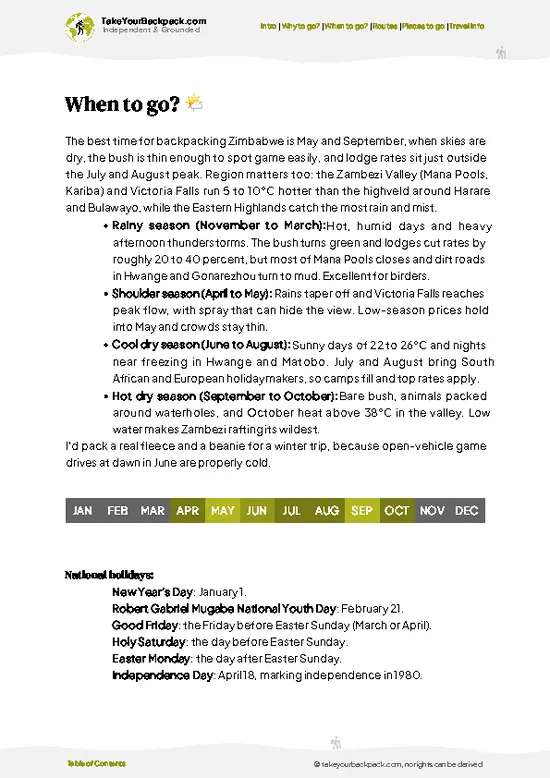
Zimbabwe’s towns pulse with life, each season bringing its own rhythm. The dry season, from May to October, offers clear skies and cooler temperatures. This is when towns buzz with activity. Festivals and markets thrive, showcasing local culture. The vibrant energy is palpable, making it the prime time for exploration.

Optimal Months


The months of June to September are particularly favorable. Wildlife viewing peaks, and outdoor activities flourish. However, expect crowds. Travelers flock to popular spots, driving up costs.

Shoulder Seasons


April and November serve as shoulder seasons. These months present a mixed bag. The weather remains pleasant, but the atmosphere is quieter. Prices may dip, offering a chance for budget-conscious travelers to enjoy the charm without … read more 👉

Seasonal Patterns


Zimbabwe’s towns pulse with life, each season bringing its own rhythm. The dry season, from May to October, offers clear skies and cooler temperatures. This is when towns buzz with activity. Festivals and markets thrive, showcasing local culture. The vibrant energy is palpable, making it the prime time for exploration.

Optimal Months


The months of June to September are particularly favorable. Wildlife viewing peaks, and outdoor activities flourish. However, expect crowds. Travelers flock to popular spots, driving up costs.

Shoulder Seasons


April and November serve as shoulder seasons. These months present a mixed bag. The weather remains pleasant, but the atmosphere is quieter. Prices may dip, offering a chance for budget-conscious travelers to enjoy the charm without the throngs.

Seasonal Constraints


The rainy season, from November to March, transforms the landscape. While towns may feel more serene, heavy rains can disrupt travel plans. Roads may become challenging, and some activities might be limited.

Understanding these seasonal dynamics allows for informed choices. Balancing time, money, and comfort enhances the experience, ensuring that each visit resonates with the essence of Zimbabwean life.

town hoppingPlanning Your Route Efficiently

Regional Clustering
Start by grouping towns based on their geographical proximity. For instance, consider the vibrant Harare as your launchpad, then venture to the historical charm of Masvingo and the scenic beauty of Bulawayo. This clustering minimizes travel time and maximizes exploration.

Direction of Travel
Traveling from east to west or vice versa creates a natural flow. Begin in Harare, head to Masvingo for the Great Zimbabwe ruins, then continue to Bulawayo, where you can dive into local culture. This sequence allows for a logical progression, reducing backtracking and fatigue.

Time Allocation
Allocate two to three days per town. This pacing lets you soak in local sights without feeling rushed. A day trip to nearby attractions can also enhance your experience without the need … read more 👉
Regional Clustering
Start by grouping towns based on their geographical proximity. For instance, consider the vibrant Harare as your launchpad, then venture to the historical charm of Masvingo and the scenic beauty of Bulawayo. This clustering minimizes travel time and maximizes exploration.

Direction of Travel
Traveling from east to west or vice versa creates a natural flow. Begin in Harare, head to Masvingo for the Great Zimbabwe ruins, then continue to Bulawayo, where you can dive into local culture. This sequence allows for a logical progression, reducing backtracking and fatigue.

Time Allocation
Allocate two to three days per town. This pacing lets you soak in local sights without feeling rushed. A day trip to nearby attractions can also enhance your experience without the need for extensive travel.

Common Pitfalls
Avoid cramming too many towns into a short timeframe. This leads to burnout and missed opportunities. Prioritize quality over quantity; it’s better to fully experience a few towns than to skim the surface of many.

Trade-Offs
Consider the balance between speed and depth. Fast travel might save time but sacrifices the richness of local interactions. Budget constraints can also impact comfort; sometimes, spending a bit more on accommodation can lead to a more restful experience, allowing for better exploration the next day.

The ListThe Best towns of Zimbabwe

1 Victoria Falls town

waterfall viewpoints, adventure sports, border crossing

Stand at the edge of the falls, watch mist rise, and cross easily into Zambia for a different perspective on the Zambezi.

2 Kariba

lakeside town, houseboats, fishing docks

Relax by the water, join a houseboat trip, and spot wildlife along the lake’s edge as the sun sets over distant hills.

3 Hwange

national park gateway, safari lodges, coal mining

Set out early for game drives, return to town for supplies, and notice the contrast between industry and wilderness.

4 Masvingo

Great Zimbabwe ruins, lakeside views, small-town pace, regional crossroads

Stand among ancient stone walls, relax by the lake, and use this compact city as a base for exploring southern Zimbabwe.

5 Gwanda

gold mining, semi-arid landscape, roadside stalls

Pass through a mining town surrounded by dry hills, where roadside vendors sell fruit and travelers break journeys north or south.

6 Chirundu

Zambezi crossing, truck queues, fishing lodges

Cross the river into Zambia, watch trucks line up, and find riverside lodges popular with anglers and birders.

7 Chiredzi

sugar estates, lowveld wildlife, hot climate, gateway to Gonarezhou

Travel through sugar plantations, encounter wildlife in the lowveld, and use the town as a launch point for national park adventures.

8 Plumtree

border town, cattle ranching, railway station

Cross into Botswana, see livestock markets, and use the railway to connect with remote western regions.

9 Chipinge

tea estates, misty hills, rural markets, borderland culture

Experience cool highland air, visit tea plantations, and observe daily life shaped by the rhythms of agriculture and cross-border trade.

10 Marondera

boarding schools, pine plantations, commuter town

Walk leafy streets, see students in uniform, and experience a town balancing education, agriculture, and proximity to Harare.

11 Rusape

agricultural center, roadside markets, bus stopover

Pause in a farming town where buses refuel, travelers stock up on fresh produce, and rural life shapes the pace.

12 Zvishavane

platinum mining, small-town shops, local football

Notice the mining influence, catch a local match, and explore a town shaped by industry and weekend routines.

13 Karoi

tobacco auctions, roadside motels, farming supply stores

Experience a town where tobacco shapes the economy, and travelers find simple accommodation on the route to the northwest.

14 Bindura

nickel mining, university campus, rural surrounds

Visit a mining town with a student presence, where the landscape shifts quickly from urban bustle to open countryside.

15 Chegutu

grain silos, railway junction, roadside eateries

Watch trains pass, sample local meals, and observe the rhythms of a town built around transport and agriculture.

16 Chivhu

dairy farms, grain depots, highway rest stop

Stop for supplies, watch trucks load grain, and notice the agricultural focus that defines this small highway town.

17 Shamva

gold mines, rural villages, roadside markets

Pass through a mining area dotted with villages, where local markets offer seasonal produce and mining shapes daily life.

18 Mhangura

copper mining, closed factories, hillside settlements

Explore a town marked by its mining past, with abandoned sites and hillside homes overlooking the surrounding bush.

19 Sanyati

cotton farming, rural clinics, mission station

Travel through cotton fields, visit local clinics, and see how mission work supports a remote farming community.

20 Mbare Musika

open-air market, minibus hub, street vendors

Navigate a dense urban market where produce, textiles, and daily life converge in a constant flow of people and goods.

Think you know Zimbabwe?

Prove you’re a true local — uncover 10 lesser-known towns in Zimbabwe that locals tend to keep to themselves.
Loading the map 🌍

Expert viewInsights from Locals and Experts

Expert Commentary


When diving into the towns of Zimbabwe, think of it as a vibrant tapestry of experiences. You’ll want to explore at least four to six towns to capture the essence of the country. Each town offers a unique flavor, but the rhythm of your journey will depend on how you balance time, money, and comfort.

Regional Clustering


Start by clustering your visits regionally. The towns in the eastern highlands, for instance, boast lush landscapes and a cooler climate, while those in the west present a stark contrast with their arid beauty. This geographical strategy not only saves travel time but also allows you to immerse yourself in the local culture more deeply. However, be prepared for varying infrastructure quality. Some roads are well-maintained, while others may challenge your … read more 👉

Expert Commentary


When diving into the towns of Zimbabwe, think of it as a vibrant tapestry of experiences. You’ll want to explore at least four to six towns to capture the essence of the country. Each town offers a unique flavor, but the rhythm of your journey will depend on how you balance time, money, and comfort.

Regional Clustering


Start by clustering your visits regionally. The towns in the eastern highlands, for instance, boast lush landscapes and a cooler climate, while those in the west present a stark contrast with their arid beauty. This geographical strategy not only saves travel time but also allows you to immerse yourself in the local culture more deeply. However, be prepared for varying infrastructure quality. Some roads are well-maintained, while others may challenge your patience. If you prioritize comfort, consider investing in a reliable vehicle or guided transport, which can add to your budget but significantly enhance your experience.

Travel Rhythm


Establishing a travel rhythm is crucial. Zimbabwe’s towns are often spaced out, so plan for at least two to three hours of travel between them. This means you’ll need to manage your time wisely. If you’re on a tighter schedule, you might sacrifice depth for breadth, skimming the surface of each town rather than diving into the local scene. On the flip side, if you take your time, you’ll uncover hidden stories and connections that make the journey worthwhile. Just remember, the slower you go, the more you’ll feel the pulse of the place.

Local Charm


Each town has its own charm, shaped by local traditions and community spirit. Engage with the locals; they’re often the best guides to the heart of their town. Markets are a treasure trove of local life, but they can also be overwhelming. If you’re not comfortable navigating the hustle and bustle, consider visiting during quieter hours or joining a local tour. This way, you can enjoy the vibrant atmosphere without feeling lost in the crowd. The trade-off here is between the authentic experience of mingling with locals and the comfort of a guided approach.

Logistical Considerations


Logistics can be a double-edged sword. While public transport is available, it can be unpredictable. Renting a car gives you freedom but comes with the responsibility of navigating unfamiliar roads. Factor in fuel costs and potential breakdowns. If you’re traveling solo, consider joining a small group; it can ease the burden of logistics while enhancing safety. Safety is paramount, especially in less populated areas. Stay aware of your surroundings and respect local customs. This not only keeps you safe but also fosters goodwill.

Safety & Cultural Considerations


Cultural sensitivity is key. Zimbabweans are generally warm and welcoming, but understanding local customs can enhance your experience. Dress modestly, especially in rural areas, and be respectful when taking photos. Always ask permission first. The trade-off here is between capturing memories and respecting the local way of life.

In summary, your journey through Zimbabwe’s towns is a balancing act. Prioritize your interests and be mindful of the trade-offs between time, money, and comfort. Embrace the rhythm of travel, engage with the local culture, and let the towns reveal their stories at your pace. Each choice you make will shape your adventure, turning a simple trip into a rich tapestry of experiences.

✈️ The backpacker research shortcutZimbabwe Travel Guide

An offline-friendly backpacking guide with optimized travel routes, ranked highlights, transport advice, and the best areas to stay.
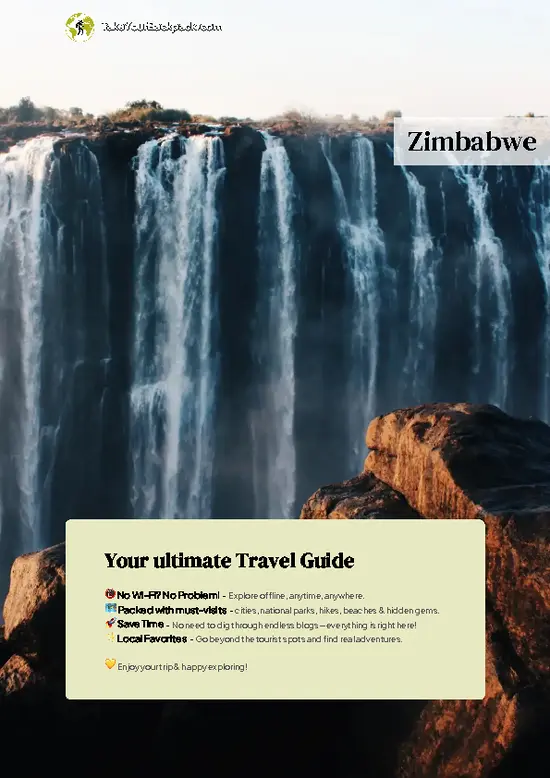
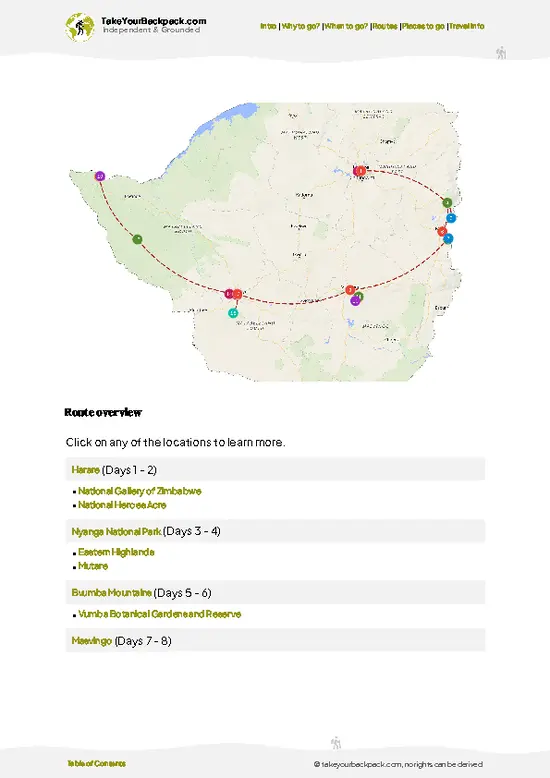
example page 0 from our offline Travel Guide for Zimbabwe
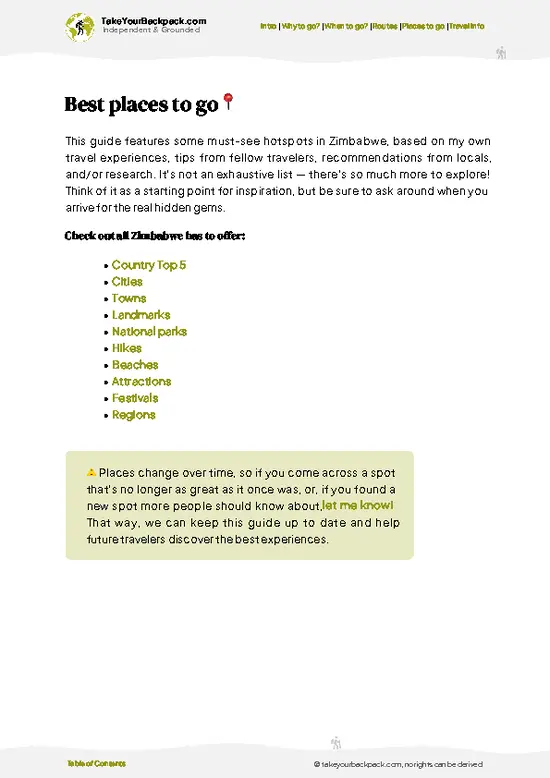
example page 1 from our offline Travel Guide for Zimbabwe
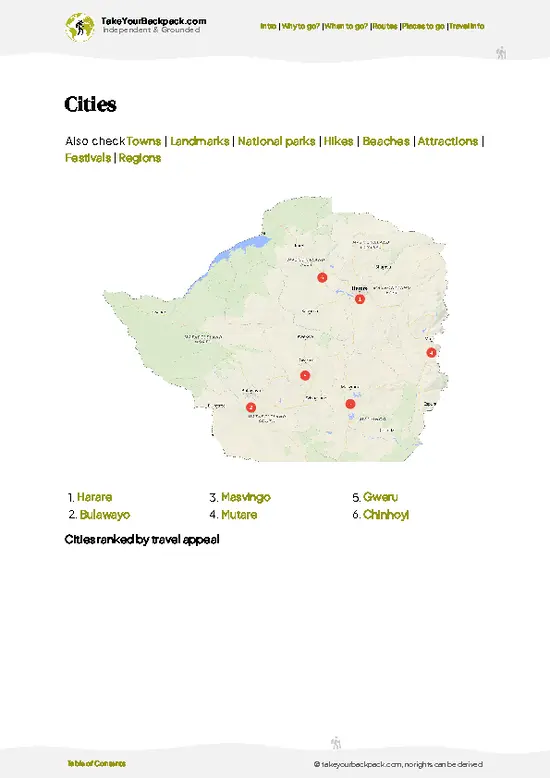
example page 2 from our offline Travel Guide for Zimbabwe
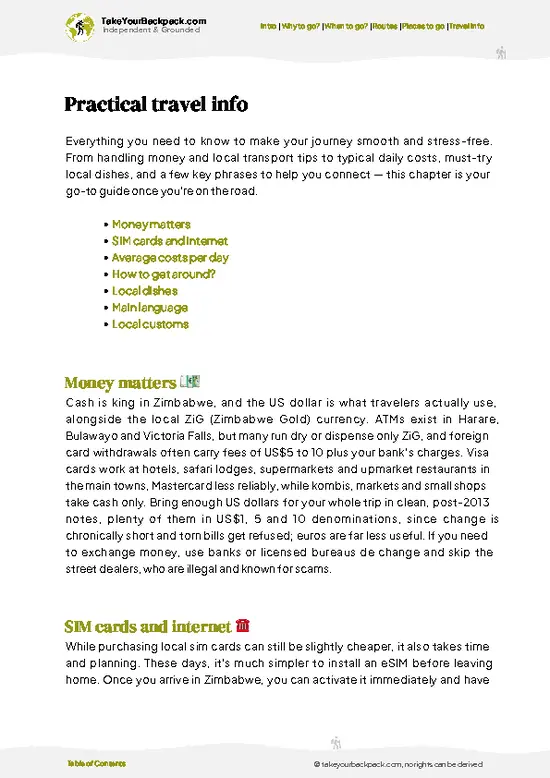
example page 3 from our offline Travel Guide for Zimbabwe
example page 4 from our offline Travel Guide for Zimbabwe
example page 5 from our offline Travel Guide for Zimbabwe
example page 6 from our offline Travel Guide for Zimbabwe
example page 7 from our offline Travel Guide for Zimbabwe
The digital guide (356 pages) contains:
90 highlights, ranked by travel appeal
Optimized 5, 10 & 15-day travel routes
Cities, national parks, landmarks, beaches
How to get around
Offline-friendly for travel without Wi-Fi
👉 Click to see all 30+ guide features

📅 Plan smarter in minutes, not weeks
Month by month travel advice
Festivals & national holidays
Budget expectations

🗺️ Go to the right places, skip the overrated ones
Honest pros & cons of destinations
Top hikes, parks & viewpoints
Lesser-known places most travelers miss
Clear “worth it vs skip it” guidance

🛏️ Travel smoothly without rookie mistakes
Best areas to stay
Transport systems explained simply
Common scams & safety advice
SIM cards, money & practical tips

🌍 Understand the country, not just visit it
Culture & traditions
52 Essential phrases & customs
Festivals worth planning around
Traveler-friendly historical context
Insights that make places more meaningful

📱 Built for real travel conditions
Fully downloadable PDF
Works completely offline
Optimized for phone use
Useful in remote areas & buses
Everything in one place
Save weeks of stressful planning
Get instant access to your full guide. 30‑day money-back guarantee.


By proceeding you agree to our terms.
Sent to your inbox immediately after payment • 100% Secure Checkout
Best Backpacking Travel Advisor 2025 tourism awardBest Backpacking
Travel Advisor
2025
What others say about Take Your Backpack Guides:
⭐⭐⭐⭐⭐
Fantastic, amazing amount of information!
⭐⭐⭐⭐⭐
My goodness this is amazing, it's what I've been looking for hats off too you!
⭐⭐⭐⭐⭐
I think this is absolutely BRILLIANT
⭐⭐⭐⭐
Very complete and informative. It's still missing places, but I gotta to commend you
⭐⭐⭐⭐⭐
This is truly amazing, thank you, can't wait to explore it with my kids!
⭐⭐⭐⭐⭐
Awesome resource, thank you!
⭐⭐⭐⭐⭐
This is amazing! Can't wait to explore the ones I haven't seen
⭐⭐⭐⭐
I love this! Well done, great idea.
⭐⭐⭐⭐⭐
Thanks for taking the time to make this gem!
⭐⭐⭐⭐⭐
This might be the best website I've ever seen.
⭐⭐⭐⭐⭐
Congratulations, and thank you so much for your work; it's incredibly valuable.
⭐⭐⭐⭐
In all seriousness I think you did a great job pointing out the important spots
⭐⭐⭐⭐⭐
10/10 very good
⭐⭐⭐⭐⭐
As someone who's only just starting to visit regularly this is awesome, thank you.
⭐⭐⭐⭐
Thank you very much! I'm going to visit my dad, it's going to be very useful!
⭐⭐⭐⭐⭐
This is really cool! We'll be travelling for the first time and this definitely come in handy.
⭐⭐⭐⭐⭐
You are now our minister of culture, congratulations 👨‍💼
⭐⭐⭐⭐⭐
Just wanted to tell you that this is a pearl! Going to follow your recommendations.
⭐⭐⭐⭐⭐
This is so cool. I'll definitely be using the resource for my travels soon.
⭐⭐⭐⭐⭐
This is very impressive! Good work.
⭐⭐⭐⭐⭐
This is an amazing and informative site. Very well done!

🛏️ Where to stay?Best Places to Stay in Zimbabwe

Yes. Hostels, backpacker lodges, budget guesthouses and campsites are common in major centres — Harare, Bulawayo and Victoria Falls — with limited basic options near national parks for camping or safari tents.

Harare — CBD gives the cheapest central options but can be noisy and less secure at night while northern residential suburbs are quieter, safer and better for cafes and transport; Bulawayo — city centre offers budget rooms with easy access to sights and buses but has quieter nightlife and mixed street safety; Victoria Falls — town centre and accommodation near the park put you closest to the falls, tours and lively nightlife yet are pricier in peak season; near parks (Hwange, Mana Pools) … read more 👉
Yes. Hostels, backpacker lodges, budget guesthouses and campsites are common in major centres — Harare, Bulawayo and Victoria Falls — with limited basic options near national parks for camping or safari tents.

Harare — CBD gives the cheapest central options but can be noisy and less secure at night while northern residential suburbs are quieter, safer and better for cafes and transport; Bulawayo — city centre offers budget rooms with easy access to sights and buses but has quieter nightlife and mixed street safety; Victoria Falls — town centre and accommodation near the park put you closest to the falls, tours and lively nightlife yet are pricier in peak season; near parks (Hwange, Mana Pools) expect remote, seasonal camps or basic safari camps and plan transfers and timing accordingly.

If you enjoy meeting fellow travelers, consider choosing hostels with high ratings for atmosphere. On the other hand, if you prefer having your own space, a hotel might be a better option.

ZimbabweExplore Zimbabwe

👋 Meet the founderWho’s Behind Take Your Backpack?

Johan, backpacker and founder of TakeYourBackpackHi, I’m Johan (Netherlands 🇳🇱), the creator of TakeYourBackpack. Over the past decade, I’ve backpacked through 80+ countries across six continents, gaining extensive experience with independent travel, long-term trips, and overland routes.

This site is built on a combination of firsthand travel experience and carefully curated insights from other backpackers. Many guides are based on places I’ve personally visited, while others bring together tips, observations, and practical advice shared by trusted travelers I’ve met along the way.

The goal is to provide realistic, experience-driven guidance — not generic itineraries — so you can explore destinations with better context, clearer expectations, and more confidence.

Get full Zimbabwe guide •
Instant download • 90 highlights • Full Offline guide