×

Zimbabwe🇿🇼 | landmarksGreat Zimbabwestone ruins, ancient city, Shona heritage, hilltop views | things to do and best time to go

Explore MhanguraExplore Kariba Dam

Backpacking in Great Zimbabwe
🌟 Highlightunique site ranked #2
By Johan Kruseman 🇳🇱 | Updated June 4, 2026

Your boots crunch over sun-baked granite shards, the air thick with the scent of dry grass and the distant, metallic clang of cowbells. You duck through a narrow stone passage, fingers brushing lichen-covered walls older than most empires, and suddenly you’re standing in the shadow of the Great Enclosure—no filter, no crowds, just you and the ghosts of a lost civilization. Great Zimbabwe sits in the southeastern hills of Zimbabwe, about a day’s journey from Harare, and it’s nothing like the over-processed shots you’ve seen online. Here’s the truth: you won’t be elbowing through selfie sticks or shelling out for overpriced tickets. The site is affordable, rarely crowded, and the silence is almost unnerving—until a troop of vervet monkeys reminds you whose turf this really is. The ruins themselves? They’re raw, monumental, and humbling, especially when you realize this was the heart of a medieval African kingdom. The real magic isn’t in the photos; it’s in the weight of history pressing in from every stone.

Discover everything you want to know in the 📖 Zimbabwe Travel Guide.


Get your Zimbabwe guide
90 ranked highlights, routes & tips, works offline (356 pages)
Loading the map 🌍
CLICK TO FILTER
cities
towns
landmarks
national parks
hikes
beaches
attractions
festivals
regions
SHOW COUNTRY’S BESTSHOW ALL

✨ Why go?
Ranked #2 unique site in Zimbabwe
What makes this unique site worth visiting

Great Zimbabwe isn’t just another dusty ruin; it’s a testament to a lost civilization that thrived from the 11th to 15th centuries. Yes, you’ll encounter crowds—especially during peak season—but don’t let that deter you. The scale of the stone structures is jaw-dropping, and the history is palpable.

You’ll walk through the Great Enclosure, where the walls whisper tales of kings and queens. It’s a low-cost adventure, too. Entry fees are reasonable, and you can easily stretch your budget by camping nearby or staying in local guesthouses.

What makes Great Zimbabwe truly special is how it fits into a broader journey. Pair it with a visit to Lake Mutirikwi or the nearby Matobo National Park for a well-rounded experience. The landscape is stunning, and the wildlife is a bonus.

This isn’t just … read more 👉
Great Zimbabwe isn’t just another dusty ruin; it’s a testament to a lost civilization that thrived from the 11th to 15th centuries. Yes, you’ll encounter crowds—especially during peak season—but don’t let that deter you. The scale of the stone structures is jaw-dropping, and the history is palpable.

You’ll walk through the Great Enclosure, where the walls whisper tales of kings and queens. It’s a low-cost adventure, too. Entry fees are reasonable, and you can easily stretch your budget by camping nearby or staying in local guesthouses.

What makes Great Zimbabwe truly special is how it fits into a broader journey. Pair it with a visit to Lake Mutirikwi or the nearby Matobo National Park for a well-rounded experience. The landscape is stunning, and the wildlife is a bonus.

This isn’t just a stop on your itinerary; it’s a chance to connect with a piece of African heritage that’s often overlooked. The effort to get there pays off in insight and perspective. You’ll leave with more than just photos; you’ll carry a deeper understanding of a remarkable past.
Want to include Great Zimbabwe in your Zimbabwe route?
Create a personalized Zimbabwe itinerary that includes Great Zimbabwe and the places that fit your trip — based on your travel style, budget, and available time. Get your route in seconds.

Generate my trip

💡 HighlightsWhat this place is best known for

  • Great Enclosure — The showstopper: the largest ancient stone structure in sub-Saharan Africa. Its massive, curving granite walls and high parapet create an intense sense of scale and mystery; standing inside you see why it’s the site’s defining monument.
  • Hill Complex — Perched citadel and my personal favorite. Climb the rocky path to see the oldest, most sacred core of Great Zimbabwe, get sweeping views over the ruins and valley, and feel the place where rulers likely sat and watched their domain.
  • Conical Tower — A perfectly tapered stone cone inside the Great Enclosure that’s as much an architectural statement as it is a symbol. Its precise drystone work and unique shape have sparked debates about its function, from grain store to status marker, which is part of the fascination.
  • Valley
read more 👉
  • Great Enclosure — The showstopper: the largest ancient stone structure in sub-Saharan Africa. Its massive, curving granite walls and high parapet create an intense sense of scale and mystery; standing inside you see why it’s the site’s defining monument.
  • Hill Complex — Perched citadel and my personal favorite. Climb the rocky path to see the oldest, most sacred core of Great Zimbabwe, get sweeping views over the ruins and valley, and feel the place where rulers likely sat and watched their domain.
  • Conical Tower — A perfectly tapered stone cone inside the Great Enclosure that’s as much an architectural statement as it is a symbol. Its precise drystone work and unique shape have sparked debates about its function, from grain store to status marker, which is part of the fascination.
  • Valley Ruins — The lower living areas and foundations that show how everyday people lived and worked. You’ll find house patterns, courtyards and refuse areas that, together with recovered artifacts, sketch a surprisingly detailed picture of daily life centuries ago.
  • Soapstone Birds and Carvings — Stylized birds carved from soapstone that were found at the site and later became national symbols. They’re small but striking pieces of art that point to ritual practice, identity and the high craft level of Great Zimbabwe’s inhabitants.
  • Drystone Masonry — The technique itself deserves its own mention: precisely shaped granite blocks fitted without mortar to make tall, stable walls. The workmanship and durability you can inspect up close are why the ruins still impress after centuries of weather.
  • Museum, Trade Finds and Landscape — The on-site museum and artifact displays (Chinese ceramics, glass beads, copper) tell the story of long-distance Indian Ocean trade links, while the surrounding baobabs, ridges and sunset views remind you this was a place connected to both local landscapes and faraway networks.
Spotted a mistake or missing something? Contact us.

🌤️ When to go?Seasonal considerations and timing


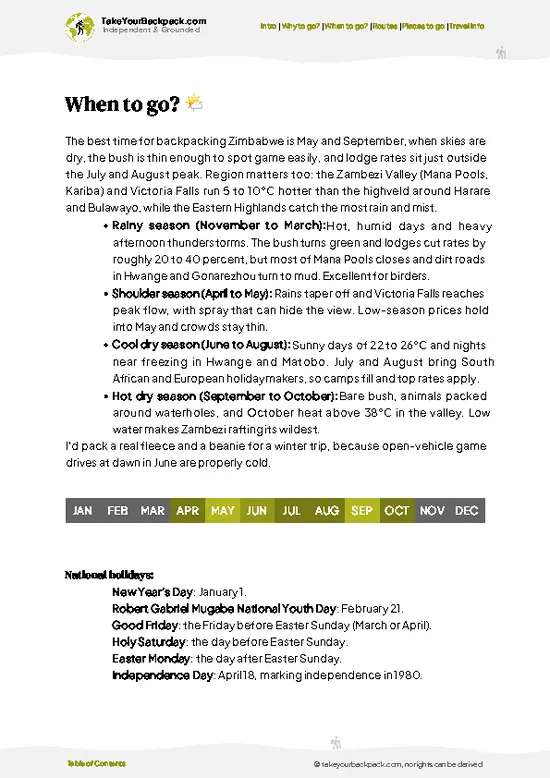
  • Weather: The dry season from May to October is your best bet. Expect clear skies and minimal rain, which means easier hiking and less mud. The wet season (November to April) brings heavy rains that can turn paths slippery and obscure views.

  • Temperature: During the dry months, daytime highs hover around 22-28°C (72-82°F), perfect for exploring without overheating. Nights can dip to 7-12°C (45-54°F), so pack a warm layer. The wet season heats up to 30°C (86°F) or more, with humidity that can sap your energy fast.

  • Daylight Hours: Zimbabwe enjoys roughly 11-12 hours of daylight year-round, but the dry season offers more consistent sunny mornings, ideal for early starts and longer treks.

  • Crowds: Great Zimbabwe isn’t a tourist crush like Victoria Falls, but the dry season sees a noticeable
read more 👉

  • Weather: The dry season from May to October is your best bet. Expect clear skies and minimal rain, which means easier hiking and less mud. The wet season (November to April) brings heavy rains that can turn paths slippery and obscure views.

  • Temperature: During the dry months, daytime highs hover around 22-28°C (72-82°F), perfect for exploring without overheating. Nights can dip to 7-12°C (45-54°F), so pack a warm layer. The wet season heats up to 30°C (86°F) or more, with humidity that can sap your energy fast.

  • Daylight Hours: Zimbabwe enjoys roughly 11-12 hours of daylight year-round, but the dry season offers more consistent sunny mornings, ideal for early starts and longer treks.

  • Crowds: Great Zimbabwe isn’t a tourist crush like Victoria Falls, but the dry season sees a noticeable bump in visitors. If you want solitude, aim for shoulder months May or September when the weather is still good but fewer people show up.

  • Seasonal Activities: Wildlife viewing peaks in the dry season as animals gather near waterholes. This adds a bonus layer to your visit beyond the ruins themselves. The wet season’s lush greenery is tempting but comes with fewer visible animals and more bugs.

  • Price Fluctuations: Expect higher accommodation and tour prices during the dry season, especially July and August. Booking ahead can save you a chunk. The wet season offers cheaper rates but at the cost of less predictable conditions.


Pro-tip: Visit just after the rains end in May or just before they start in September—this sweet spot balances good weather, fewer crowds, and better prices, letting you soak in the ruins without the usual hassle.


source: climatestotravel.comJANJanuary: fair for travelingFEBFebruary: fair for travelingMARMarch: fair for travelingAPRApril: good for travelingMAYMay: highly recommended for travelingJUNJune: excellent for travelingJULJuly: excellent for travelingAUGAugust: excellent for travelingSEPSeptember: highly recommended for travelingOCTOctober: excellent for travelingNOVNovember: fair for travelingDECDecember: fair for traveling
zimbabwe-unique-site-great-zimbabwe
© Google |

✈️ The backpacker research shortcutZimbabwe Travel Guide

An offline-friendly backpacking guide with optimized travel routes, ranked highlights, transport advice, and the best areas to stay.
example page 0 from our offline Travel Guide for Zimbabwe
example page 1 from our offline Travel Guide for Zimbabwe
example page 2 from our offline Travel Guide for Zimbabwe
example page 3 from our offline Travel Guide for Zimbabwe
example page 4 from our offline Travel Guide for Zimbabwe
example page 5 from our offline Travel Guide for Zimbabwe
example page 6 from our offline Travel Guide for Zimbabwe
example page 7 from our offline Travel Guide for Zimbabwe
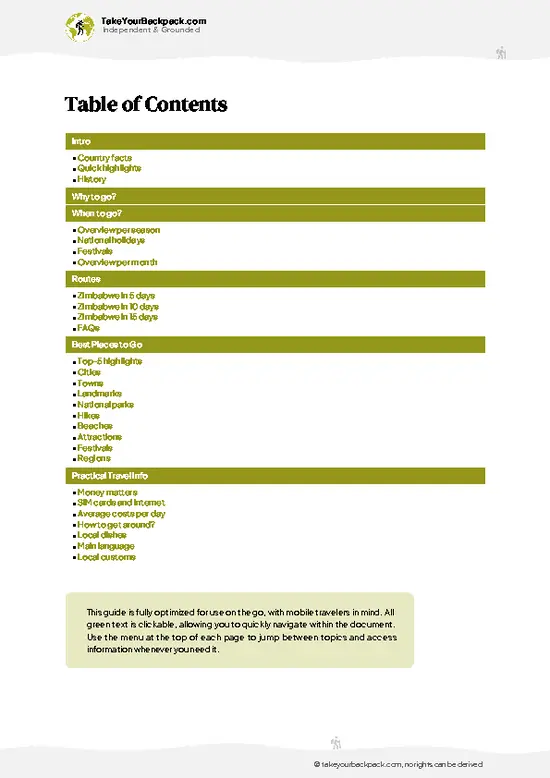
The digital guide (356 pages) contains:
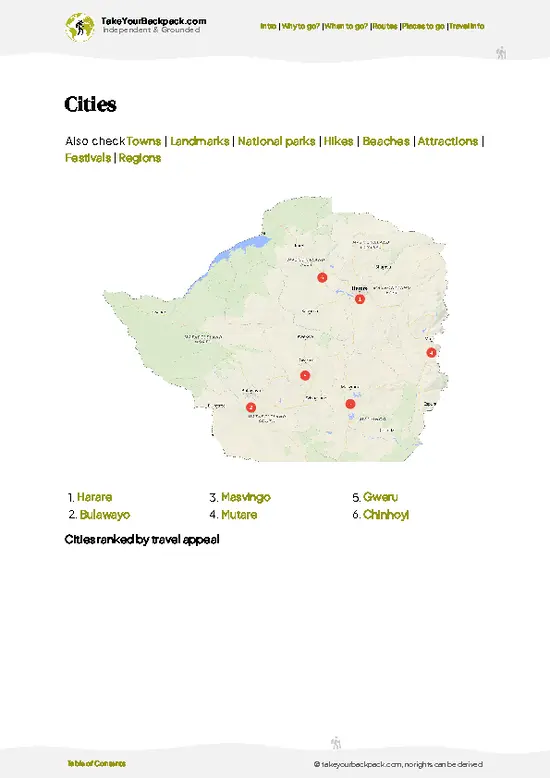
90 highlights, ranked by travel appeal
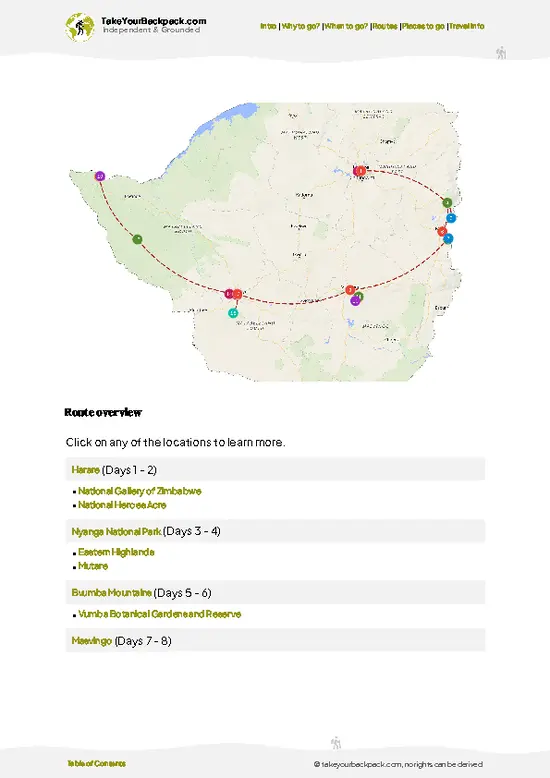
Optimized 5, 10 & 15-day travel routes
Cities, national parks, landmarks, beaches
How to get around
Offline-friendly for travel without Wi-Fi
👉 Click to see all 30+ guide features

📅 Plan smarter in minutes, not weeks
Month by month travel advice
Festivals & national holidays
Budget expectations

🗺️ Go to the right places, skip the overrated ones
Honest pros & cons of destinations
Top hikes, parks & viewpoints
Lesser-known places most travelers miss
Clear “worth it vs skip it” guidance

🛏️ Travel smoothly without rookie mistakes
Best areas to stay
Transport systems explained simply
Common scams & safety advice
SIM cards, money & practical tips

🌍 Understand the country, not just visit it
Culture & traditions
52 Essential phrases & customs
Festivals worth planning around
Traveler-friendly historical context
Insights that make places more meaningful

📱 Built for real travel conditions
Fully downloadable PDF
Works completely offline
Optimized for phone use
Useful in remote areas & buses
Everything in one place
Save weeks of stressful planning
Get instant access to your full guide. 30‑day money-back guarantee.


By proceeding you agree to our terms.
Sent to your inbox immediately after payment • 100% Secure Checkout
Best Backpacking Travel Advisor 2025 tourism awardBest Backpacking
Travel Advisor
2025
What others say about Take Your Backpack Guides:
⭐⭐⭐⭐⭐
Fantastic, amazing amount of information!
⭐⭐⭐⭐⭐
My goodness this is amazing, it's what I've been looking for hats off too you!
⭐⭐⭐⭐⭐
I think this is absolutely BRILLIANT
⭐⭐⭐⭐
Very complete and informative. It's still missing places, but I gotta to commend you
⭐⭐⭐⭐⭐
This is truly amazing, thank you, can't wait to explore it with my kids!
⭐⭐⭐⭐⭐
Awesome resource, thank you!
⭐⭐⭐⭐⭐
This is amazing! Can't wait to explore the ones I haven't seen
⭐⭐⭐⭐
I love this! Well done, great idea.
⭐⭐⭐⭐⭐
Thanks for taking the time to make this gem!
⭐⭐⭐⭐⭐
This might be the best website I've ever seen.
⭐⭐⭐⭐⭐
Congratulations, and thank you so much for your work; it's incredibly valuable.
⭐⭐⭐⭐
In all seriousness I think you did a great job pointing out the important spots
⭐⭐⭐⭐⭐
10/10 very good
⭐⭐⭐⭐⭐
As someone who's only just starting to visit regularly this is awesome, thank you.
⭐⭐⭐⭐
Thank you very much! I'm going to visit my dad, it's going to be very useful!
⭐⭐⭐⭐⭐
This is really cool! We'll be travelling for the first time and this definitely come in handy.
⭐⭐⭐⭐⭐
You are now our minister of culture, congratulations 👨‍💼
⭐⭐⭐⭐⭐
Just wanted to tell you that this is a pearl! Going to follow your recommendations.
⭐⭐⭐⭐⭐
This is so cool. I'll definitely be using the resource for my travels soon.
⭐⭐⭐⭐⭐
This is very impressive! Good work.
⭐⭐⭐⭐⭐
This is an amazing and informative site. Very well done!

🛏️ Where to stay?Choosing the right base

Staying near Great Zimbabwe is about finding the right vibe. You want a place that’s safe, social, and budget-friendly.

Start in Masvingo, the closest town. It’s a hub for backpackers, with a mix of local charm and traveler energy. The streets buzz with life, and you’ll find plenty of eateries where you can grab a meal without breaking the bank. Look for spots near the main market; they’re often lively and give you a taste of daily life.

Another option is to camp near the site itself. It’s not just about saving money; it’s about soaking in the atmosphere. Imagine waking up to the sounds of … read more 👉
Staying near Great Zimbabwe is about finding the right vibe. You want a place that’s safe, social, and budget-friendly.

Start in Masvingo, the closest town. It’s a hub for backpackers, with a mix of local charm and traveler energy. The streets buzz with life, and you’ll find plenty of eateries where you can grab a meal without breaking the bank. Look for spots near the main market; they’re often lively and give you a taste of daily life.

Another option is to camp near the site itself. It’s not just about saving money; it’s about soaking in the atmosphere. Imagine waking up to the sounds of nature and the ancient stones of Great Zimbabwe looming nearby. Just make sure to check in with locals about safety and amenities.

If you’re feeling adventurous, consider staying with a local family. This isn’t just a bed; it’s an experience. You’ll get authentic meals and stories that no guidebook can provide.

Avoid the tourist traps that promise luxury but deliver mediocrity. Instead, seek out places that let you connect with the spirit of Zimbabwe. That’s where the real magic happens.

👛 Costs (as of 26 June 2025)Money, prices, and spending tips

Visiting Great Zimbabwe can be a rewarding experience, but it’s essential to know what you’re getting into financially.
  • Entrance Fee: Expect to pay around $10 to $15 USD for adults. This fee grants you access to the ruins and the museum. Keep in mind that prices can vary for locals versus international visitors.
  • Guided Tours: If you want a deeper understanding of the site, consider a guided tour. These typically range from $20 to $50 USD, depending on the length and depth of the tour. A knowledgeable guide can enhance your experience significantly.
  • Accommodation: Options vary widely. Budget lodges start at about $15 to $30 USD per night. Mid-range hotels can cost between $50 to $100 USD. For a more luxurious stay, expect to pay upwards of $150 USD. Booking in advance can sometimes snag you better
read more 👉
Visiting Great Zimbabwe can be a rewarding experience, but it’s essential to know what you’re getting into financially.
  • Entrance Fee: Expect to pay around $10 to $15 USD for adults. This fee grants you access to the ruins and the museum. Keep in mind that prices can vary for locals versus international visitors.
  • Guided Tours: If you want a deeper understanding of the site, consider a guided tour. These typically range from $20 to $50 USD, depending on the length and depth of the tour. A knowledgeable guide can enhance your experience significantly.
  • Accommodation: Options vary widely. Budget lodges start at about $15 to $30 USD per night. Mid-range hotels can cost between $50 to $100 USD. For a more luxurious stay, expect to pay upwards of $150 USD. Booking in advance can sometimes snag you better deals.
  • Food and Drink: Meals at local eateries can be quite affordable, averaging $5 to $10 USD. If you opt for a sit-down restaurant, budget around $15 to $25 USD per meal. Always check if the place has local specialties; they’re often the best value.
  • Transportation: Getting to Great Zimbabwe can be tricky. If you’re traveling from Harare, a bus ticket will set you back about $10 to $15 USD. Local taxis or private transfers can be more expensive, ranging from $50 to $100 USD, depending on distance and negotiation skills.

Understanding these costs will help you plan better and ensure you get the most out of your visit to this historical marvel.


source: zimbabwetourism.net
⚠️ Prices can change and everyone travels differently, so take this as a rough guide. Hope it helps you plan your adventure!

Other Zimbabwean landmarks near Great Zimbabwe

Explore more nearby:

  • Victoria Falls—thundering cascade, rainforest mist, border crossing, gorge views
  • Kariba Dam—vast reservoir, houseboats, lakeside wildlife, engineering landmark
  • Kopje—granite outcrops, city panoramas, sunset vantage, urban wildlife

💡 Not sure where to go next?
Create a personalized itinerary for Zimbabwe including Great Zimbabwe and the places that fit your trip.

Generate my itinerary

👉 Discover all landmarks

Or checkout all Zimbabwe has to offer (think cities, towns, villages, national parks, hikes, beaches, festivals)
Country photo of Zimbabwe

We 💚 feedbackSumming up the experience

Great Zimbabwe is a stunning testament to human ingenuity, with its massive stone walls whispering stories of a thriving civilization. You’ll feel the weight of history here, and that’s worth every step. But let’s be real: the crowds can be overwhelming, especially during peak season, and the facilities might not meet your expectations. Still, if you’re ready to dig deeper, the experience can be transformative. Just go in with your eyes wide open.

✈️ When did I visit Zimbabwe?
I have backpacked Zimbabwe all the way back in 2001.

✍️ Help improve this page!
The information on this page is based on my own backpacking experience in Zimbabwe, supplemented with up-to-date research and feedback from other travelers. Travel details can change, so if you notice anything outdated or incomplete, feel free to let me know.


🙋‍♂️ Give feedback

👋 Meet the founderWho’s Behind Take Your Backpack?

Johan, backpacker and founder of TakeYourBackpackHi, I’m Johan (Netherlands 🇳🇱), the creator of TakeYourBackpack. Over the past decade, I’ve backpacked through 80+ countries across six continents, gaining extensive experience with independent travel, long-term trips, and overland routes.

This site is built on a combination of firsthand travel experience and carefully curated insights from other backpackers. Many guides are based on places I’ve personally visited, while others bring together tips, observations, and practical advice shared by trusted travelers I’ve met along the way.

The goal is to provide realistic, experience-driven guidance — not generic itineraries — so you can explore destinations with better context, clearer expectations, and more confidence.

Get full Zimbabwe guide •
Instant download • 90 highlights • Full Offline guide