×

Zimbabwe🇿🇼 | landmarksKariba Damvast reservoir, houseboats, lakeside wildlife, engineering landmark | things to do and best time to go

Explore Great ZimbabweExplore Kopje

Backpacking in Kariba Dam
👍 Recommendedunique site ranked #3
By Johan Kruseman 🇳🇱 | Updated June 5, 2026

Here’s what nobody tells you: Kariba Dam is one of the few “bucket list” spots in Zimbabwe where you can actually find a quiet corner—if you time it right. Most travelers barrel in expecting a tourist circus, but outside of local holiday weekends, you’ll often have the thunderous spillway and endless lake views almost to yourself. Kariba Dam sits on the northwestern edge of Zimbabwe, straddling the border with Zambia, and it’s a beast—both in scale and in story. This isn’t your typical selfie stop. The dam is a hulking, concrete testament to mid-century engineering, with a backstory that’s as heavy as the structure itself (entire villages relocated, wildlife airlifted, the works). Yes, it’s a trek to get here—buses are slow, and the road can rattle your bones—but the payoff is real: raw power, surreal sunsets, and a sense of standing somewhere that shaped a nation. Don’t come for the Instagram likes; come for the goosebumps.

Discover everything you want to know in the 📖 Zimbabwe Travel Guide.


Get your Zimbabwe guide
90 ranked highlights, routes & tips, works offline (356 pages)
Loading the map 🌍
CLICK TO FILTER
cities
towns
landmarks
national parks
hikes
beaches
attractions
festivals
regions
SHOW COUNTRY’S BESTSHOW ALL

✨ Why go?
Ranked #3 unique site in Zimbabwe
Why Kariba Dam should be on your travel list

Kariba Dam is not just another stop; it’s a game-changer for backpackers. Sure, it’s popular, and yes, you’ll see crowds, but that’s part of the experience. The sheer scale of this engineering marvel is jaw-dropping. Spanning 1,826 meters, it’s one of the largest dams in the world, and standing there, you can’t help but feel the power of nature and human ingenuity combined.

The cost to visit is minimal, especially compared to other attractions. You can easily fit it into a broader route through Zimbabwe, making it a natural pit stop between Victoria Falls and Lake Malawi. Plus, the surrounding area is rich with wildlife. Take a moment to watch the sunset over the dam; it’s a sight that’ll stick with you long after the trip.

What’s often overlooked are the local communities nearby. Engage … read more 👉
Kariba Dam is not just another stop; it’s a game-changer for backpackers. Sure, it’s popular, and yes, you’ll see crowds, but that’s part of the experience. The sheer scale of this engineering marvel is jaw-dropping. Spanning 1,826 meters, it’s one of the largest dams in the world, and standing there, you can’t help but feel the power of nature and human ingenuity combined.

The cost to visit is minimal, especially compared to other attractions. You can easily fit it into a broader route through Zimbabwe, making it a natural pit stop between Victoria Falls and Lake Malawi. Plus, the surrounding area is rich with wildlife. Take a moment to watch the sunset over the dam; it’s a sight that’ll stick with you long after the trip.

What’s often overlooked are the local communities nearby. Engage with them, try the local food, and hear their stories. That’s where the real magic lies. So, while the dam itself is impressive, it’s the authentic connections you make that truly elevate the experience.
Want to include Kariba Dam in your Zimbabwe route?
Create a personalized Zimbabwe itinerary that includes Kariba Dam and the places that fit your trip — based on your travel style, budget, and available time. Get your route in seconds.

Generate my trip

💡 HighlightsKey sights and experiences for travelers

  • The Dam Wall & Viewpoints — The concrete wall itself is the headline: a mid-20th-century engineering beast completed in 1959 that tamed the Zambezi and created one of the world’s largest man-made lakes. Walk the crest (where allowed) or climb nearby viewpoints for the scale, neat industrial history plaques, and a weirdly cinematic panorama of water and scrub.
  • Hydroelectric Power Station — The guts behind the dam: massive turbines and the story of how Kariba supplies power to Zimbabwe and Zambia. Guided visits aren’t always on the schedule, but seeing the plant and learning about its role in regional development gives the site real historical and technical heft.
  • Sunset Boat Cruises — Simple, peaceful and wildlife-rich: cruises along the reservoir at dusk regularly produce hippos, crocodiles,
read more 👉
  • The Dam Wall & Viewpoints — The concrete wall itself is the headline: a mid-20th-century engineering beast completed in 1959 that tamed the Zambezi and created one of the world’s largest man-made lakes. Walk the crest (where allowed) or climb nearby viewpoints for the scale, neat industrial history plaques, and a weirdly cinematic panorama of water and scrub.
  • Hydroelectric Power Station — The guts behind the dam: massive turbines and the story of how Kariba supplies power to Zimbabwe and Zambia. Guided visits aren’t always on the schedule, but seeing the plant and learning about its role in regional development gives the site real historical and technical heft.
  • Sunset Boat Cruises — Simple, peaceful and wildlife-rich: cruises along the reservoir at dusk regularly produce hippos, crocodiles, shore elephants and a ridiculous sunset every night. Shared launches keep costs down, and it’s the easiest way to feel the scale of the lake without burning cash.
  • Houseboat Stays — Personal favorite. Rent or share a basic houseboat and wake up anchored off a quiet cove; fish from the deck, BBQ at night, then fall asleep to the slap of water. It’s both adventurous and surprisingly budget-friendly when split between people, and you won’t find many places where the accommodation is literally afloat.
  • Tigerfish Fishing — Kariba is famous for hard-fighting tigerfish; anglers come from around the world for the thrill. You can hire local guides and gear, try catch-and-release, and even as a beginner there are affordable half-day trips that deliver big adrenaline for relatively little money.
  • Matusadona National Park Access & Boat Safaris — The park on the lake’s northern shore is experienced mostly by boat, so game drives feel different here: hippos and elephants at the waterline, boat approaches to sightings, and a quieter, less touristy national park vibe. Great for a day trip from the dam or as part of a houseboat itinerary.
  • Tonga Culture & Resettlement History (Nyaminyami Legend) — The social story behind Kariba is as important as the concrete: thousands were resettled when the valley flooded, and the local Tonga oral history — including the Nyaminyami river-god legend — gives the place cultural depth. Visiting local villages or small heritage exhibits adds perspective to the engineering spectacle.
  • Birdlife & Island-Hopping — The lake created a patchwork of islands and riverine habitats that are fantastic for birders: raptors, kingfishers, fish eagles and a loud, colorful shoreline cast. Cheap local boats will do short island hops for photos and quiet walks.
Spotted a mistake or missing something? Contact us.

🌤️ When to go?Weather, crowds, and seasonal trade-offs


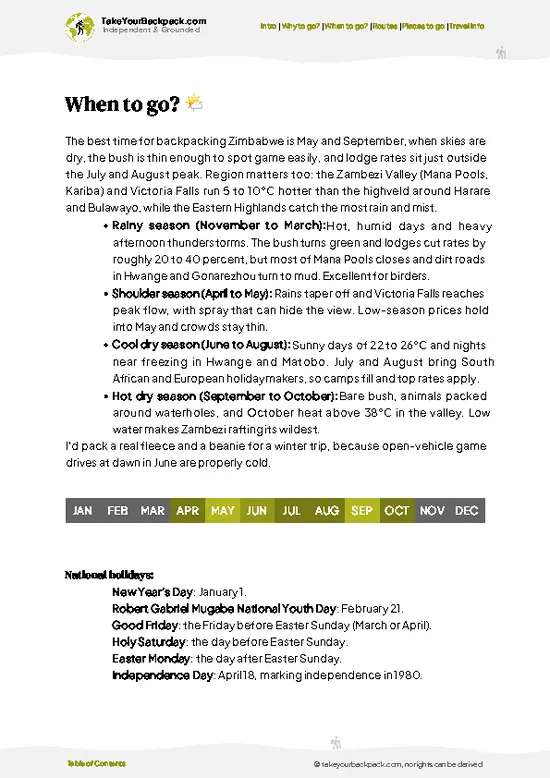
  • Weather: The dry season from May to October is your best bet. Expect clear skies and minimal rain, which means fewer muddy trails and more reliable boat rides on the lake. The wet season (November to April) brings heavy rains that can flood roads and limit access.

  • Temperature: Daytime temps in the dry season hover around 20-25°C (68-77°F), perfect for hiking and wildlife spotting without sweating buckets. Nights can dip to 5-10°C (41-50°F), so pack layers. Wet season days are hotter, often hitting 30°C+ (86°F+), but humidity makes it feel worse.

  • Daylight Hours: Around 11-12 hours year-round, but the dry season’s clearer skies mean you get more usable daylight for activities. The wet season’s afternoon storms can cut your day short.

  • Crowds: Kariba Dam isn’t exactly a tourist hotspot,
read more 👉

  • Weather: The dry season from May to October is your best bet. Expect clear skies and minimal rain, which means fewer muddy trails and more reliable boat rides on the lake. The wet season (November to April) brings heavy rains that can flood roads and limit access.

  • Temperature: Daytime temps in the dry season hover around 20-25°C (68-77°F), perfect for hiking and wildlife spotting without sweating buckets. Nights can dip to 5-10°C (41-50°F), so pack layers. Wet season days are hotter, often hitting 30°C+ (86°F+), but humidity makes it feel worse.

  • Daylight Hours: Around 11-12 hours year-round, but the dry season’s clearer skies mean you get more usable daylight for activities. The wet season’s afternoon storms can cut your day short.

  • Crowds: Kariba Dam isn’t exactly a tourist hotspot, but the dry season attracts more visitors, especially around July and August. If you want solitude, aim for shoulder months like May or September.

  • Seasonal Activities: Dry season is prime for fishing, boating, and game viewing. The wet season turns the landscape lush but can make some trails impassable and fishing less predictable.

  • Price Fluctuations: Expect higher prices during the dry season when demand peaks. Accommodation and tours can be 20-30% cheaper in the wet season, but you trade convenience and comfort.


Pro-tip: Visit just before the dry season peaks—in May or September—to dodge crowds, enjoy decent weather, and snag better deals without sacrificing the experience.


source: climatestotravel.comJANJanuary: fair for travelingFEBFebruary: fair for travelingMARMarch: fair for travelingAPRApril: good for travelingMAYMay: highly recommended for travelingJUNJune: excellent for travelingJULJuly: excellent for travelingAUGAugust: excellent for travelingSEPSeptember: highly recommended for travelingOCTOctober: excellent for travelingNOVNovember: fair for travelingDECDecember: fair for traveling
when-to-go

✈️ The backpacker research shortcutZimbabwe Travel Guide

An offline-friendly backpacking guide with optimized travel routes, ranked highlights, transport advice, and the best areas to stay.
example page 0 from our offline Travel Guide for Zimbabwe
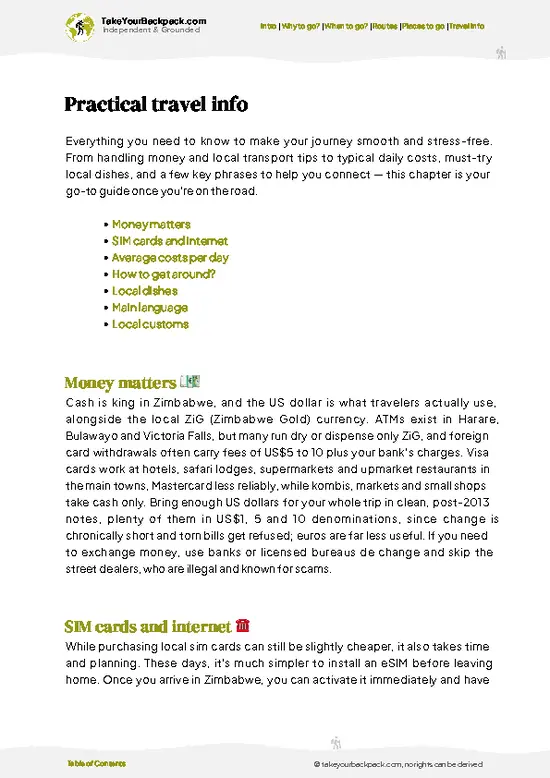
example page 1 from our offline Travel Guide for Zimbabwe
example page 2 from our offline Travel Guide for Zimbabwe
example page 3 from our offline Travel Guide for Zimbabwe
example page 4 from our offline Travel Guide for Zimbabwe
example page 5 from our offline Travel Guide for Zimbabwe
example page 6 from our offline Travel Guide for Zimbabwe
example page 7 from our offline Travel Guide for Zimbabwe
The digital guide (356 pages) contains:
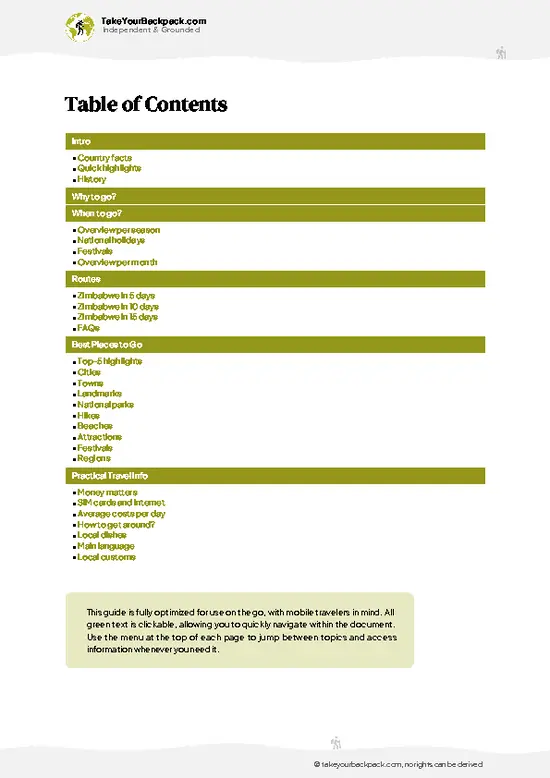
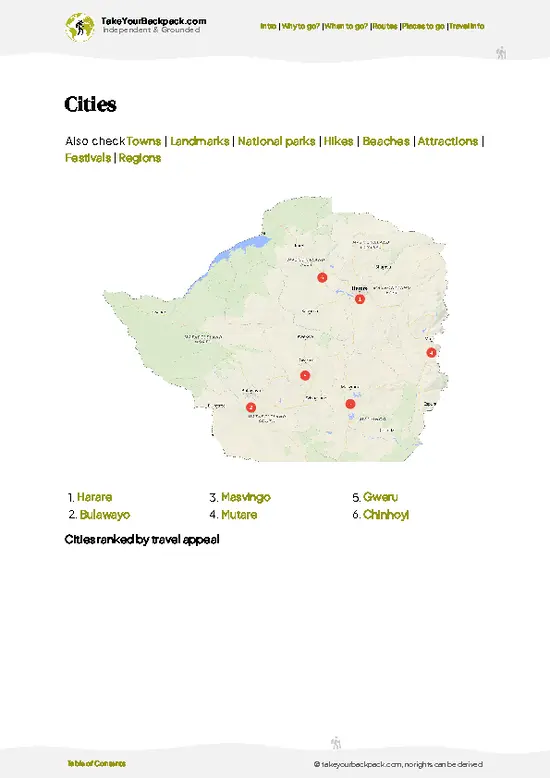
90 highlights, ranked by travel appeal
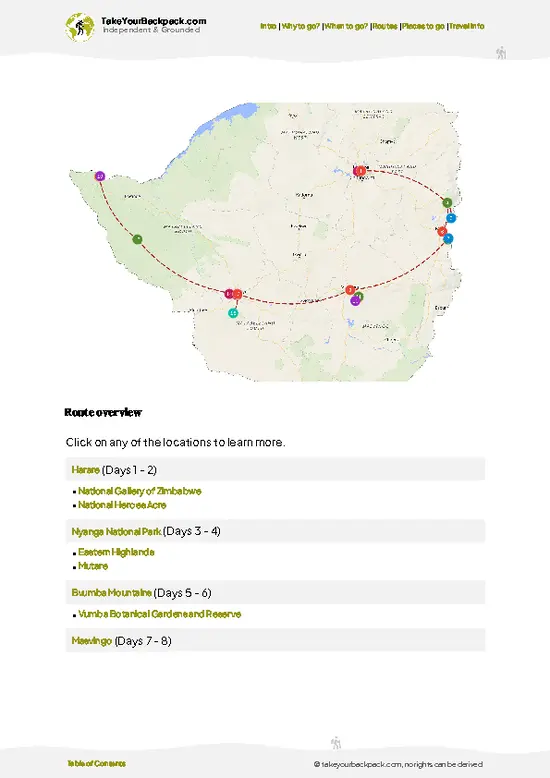
Optimized 5, 10 & 15-day travel routes
Cities, national parks, landmarks, beaches
How to get around
Offline-friendly for travel without Wi-Fi
👉 Click to see all 30+ guide features

📅 Plan smarter in minutes, not weeks
Month by month travel advice
Festivals & national holidays
Budget expectations

🗺️ Go to the right places, skip the overrated ones
Honest pros & cons of destinations
Top hikes, parks & viewpoints
Lesser-known places most travelers miss
Clear “worth it vs skip it” guidance

🛏️ Travel smoothly without rookie mistakes
Best areas to stay
Transport systems explained simply
Common scams & safety advice
SIM cards, money & practical tips

🌍 Understand the country, not just visit it
Culture & traditions
52 Essential phrases & customs
Festivals worth planning around
Traveler-friendly historical context
Insights that make places more meaningful

📱 Built for real travel conditions
Fully downloadable PDF
Works completely offline
Optimized for phone use
Useful in remote areas & buses
Everything in one place
Save weeks of stressful planning
Get instant access to your full guide. 30‑day money-back guarantee.


By proceeding you agree to our terms.
Sent to your inbox immediately after payment • 100% Secure Checkout
Best Backpacking Travel Advisor 2025 tourism awardBest Backpacking
Travel Advisor
2025
What others say about Take Your Backpack Guides:
⭐⭐⭐⭐⭐
Fantastic, amazing amount of information!
⭐⭐⭐⭐⭐
My goodness this is amazing, it's what I've been looking for hats off too you!
⭐⭐⭐⭐⭐
I think this is absolutely BRILLIANT
⭐⭐⭐⭐
Very complete and informative. It's still missing places, but I gotta to commend you
⭐⭐⭐⭐⭐
This is truly amazing, thank you, can't wait to explore it with my kids!
⭐⭐⭐⭐⭐
Awesome resource, thank you!
⭐⭐⭐⭐⭐
This is amazing! Can't wait to explore the ones I haven't seen
⭐⭐⭐⭐
I love this! Well done, great idea.
⭐⭐⭐⭐⭐
Thanks for taking the time to make this gem!
⭐⭐⭐⭐⭐
This might be the best website I've ever seen.
⭐⭐⭐⭐⭐
Congratulations, and thank you so much for your work; it's incredibly valuable.
⭐⭐⭐⭐
In all seriousness I think you did a great job pointing out the important spots
⭐⭐⭐⭐⭐
10/10 very good
⭐⭐⭐⭐⭐
As someone who's only just starting to visit regularly this is awesome, thank you.
⭐⭐⭐⭐
Thank you very much! I'm going to visit my dad, it's going to be very useful!
⭐⭐⭐⭐⭐
This is really cool! We'll be travelling for the first time and this definitely come in handy.
⭐⭐⭐⭐⭐
You are now our minister of culture, congratulations 👨‍💼
⭐⭐⭐⭐⭐
Just wanted to tell you that this is a pearl! Going to follow your recommendations.
⭐⭐⭐⭐⭐
This is so cool. I'll definitely be using the resource for my travels soon.
⭐⭐⭐⭐⭐
This is very impressive! Good work.
⭐⭐⭐⭐⭐
This is an amazing and informative site. Very well done!

🛏️ Where to stay?Best areas to stay in Zimbabwe

Staying near Kariba Dam can be a mixed bag. The Instagram version shows serene waters and stunning sunsets, but the reality? It’s often crowded, especially during peak season. You’ll find tourists snapping selfies while locals hustle to make a living.

For budget travelers and solo backpackers, the best areas to stay are around the town of Kariba itself. It’s lively, with a mix of locals and travelers. You’ll find affordable guesthouses and communal spaces where you can swap stories over a cold drink. The vibe is friendly, and you’ll feel safe wandering the streets, especially during the day. … read more 👉
Staying near Kariba Dam can be a mixed bag. The Instagram version shows serene waters and stunning sunsets, but the reality? It’s often crowded, especially during peak season. You’ll find tourists snapping selfies while locals hustle to make a living.

For budget travelers and solo backpackers, the best areas to stay are around the town of Kariba itself. It’s lively, with a mix of locals and travelers. You’ll find affordable guesthouses and communal spaces where you can swap stories over a cold drink. The vibe is friendly, and you’ll feel safe wandering the streets, especially during the day.

Another option is the shoreline campsites. They offer a more rustic experience, with the sound of water lapping against the shore as your backdrop. These spots are perfect for meeting fellow adventurers, sharing meals, and maybe even spotting some wildlife. Just be prepared for basic amenities—this isn’t luxury living.

If you’re looking for a social atmosphere, head to the areas near the ferry terminal. It’s bustling, with easy access to boat trips and fishing excursions. You’ll find a mix of cultures here, and the energy is palpable. Embrace the chaos; it’s part of the real magic of Kariba.

👛 Costs (as of 30 June 2025)Money, prices, and spending tips

Visiting Kariba Dam in Zimbabwe can be an eye-opening experience, but it’s essential to know what you’re getting into financially.
  • Entrance Fees: Expect to pay around $5 to $10 USD for entry. This fee grants you access to the dam and surrounding areas. It’s a small price for the views and the chance to learn about this engineering marvel.
  • Accommodation: Options range from budget lodges at about $30 to $50 USD per night to more upscale hotels that can go up to $150 USD or more. If you want to wake up with a view of the dam, splurge a bit. Camping is also available for around $10 to $20 USD, but check local regulations.
  • Food and Drink: Meals can vary widely. Street food might cost you $2 to $5 USD, while dining in a mid-range restaurant could set you back $10 to $25 USD. If you’re looking for a
read more 👉
Visiting Kariba Dam in Zimbabwe can be an eye-opening experience, but it’s essential to know what you’re getting into financially.
  • Entrance Fees: Expect to pay around $5 to $10 USD for entry. This fee grants you access to the dam and surrounding areas. It’s a small price for the views and the chance to learn about this engineering marvel.
  • Accommodation: Options range from budget lodges at about $30 to $50 USD per night to more upscale hotels that can go up to $150 USD or more. If you want to wake up with a view of the dam, splurge a bit. Camping is also available for around $10 to $20 USD, but check local regulations.
  • Food and Drink: Meals can vary widely. Street food might cost you $2 to $5 USD, while dining in a mid-range restaurant could set you back $10 to $25 USD. If you’re looking for a more upscale dining experience, expect to pay $30 USD or more per person.
  • Transportation: Getting to Kariba can be tricky. A bus from Harare will cost about $10 to $15 USD. If you prefer a private taxi, budget around $100 USD for a round trip. Local transport options are available but can be hit or miss.
  • Activities: Boat cruises on the lake are popular and can range from $20 to $50 USD, depending on the duration and inclusions. Guided tours around the dam itself may cost around $15 to $30 USD. These experiences can deepen your understanding of the area.

Be prepared for crowds, especially during peak seasons. The dam is a popular spot, and it can feel touristy. However, the real magic lies in the stories of the locals and the breathtaking sunsets over the lake.


source: zimbabwetourism.net
⚠️ Prices can change and everyone travels differently, so take this as a rough guide. Hope it helps you plan your adventure!

Other Zimbabwean landmarks near Kariba Dam

Explore more nearby:

  • Victoria Falls—thundering cascade, rainforest mist, border crossing, gorge views| 351 km away
  • Great Zimbabwe—stone ruins, ancient city, Shona heritage, hilltop views
  • Kopje—granite outcrops, city panoramas, sunset vantage, urban wildlife

💡 Not sure where to go next?
Create a personalized itinerary for Zimbabwe including Kariba Dam and the places that fit your trip.

Generate my itinerary

👉 Discover all landmarks

Or checkout all Zimbabwe has to offer (think cities, towns, villages, national parks, hikes, beaches, festivals)
Country photo of Zimbabwe

We 💚 feedbackKey takeaways before you go

Kariba Dam is a marvel of engineering, but let’s be real: it’s crowded, especially during peak season. You’ll share the view with plenty of tourists snapping selfies. However, the sheer scale of the dam and the surrounding wildlife is jaw-dropping. Watching the sunset over the water, with hippos grunting nearby, is a moment that sticks with you. Just be prepared for the hustle and bustle; it’s part of the experience.

✈️ When did I visit Zimbabwe?
I have backpacked Zimbabwe all the way back in 2001.

✍️ Help improve this page!
The information on this page is based on my own backpacking experience in Zimbabwe, supplemented with up-to-date research and feedback from other travelers. Travel details can change, so if you notice anything outdated or incomplete, feel free to let me know.


🙋‍♂️ Give feedback

👋 Meet the founderWho’s Behind Take Your Backpack?

Johan, backpacker and founder of TakeYourBackpackHi, I’m Johan (Netherlands 🇳🇱), the creator of TakeYourBackpack. Over the past decade, I’ve backpacked through 80+ countries across six continents, gaining extensive experience with independent travel, long-term trips, and overland routes.

This site is built on a combination of firsthand travel experience and carefully curated insights from other backpackers. Many guides are based on places I’ve personally visited, while others bring together tips, observations, and practical advice shared by trusted travelers I’ve met along the way.

The goal is to provide realistic, experience-driven guidance — not generic itineraries — so you can explore destinations with better context, clearer expectations, and more confidence.

Get full Zimbabwe guide •
Instant download • 90 highlights • Full Offline guide