×

Zimbabwe🇿🇼 | best landmarksDiscover the 3 Best landmarks Across Zimbabwe

Landmarks in Zimbabwe come in three distinct flavors: a world-class waterfall, granite and stone ruins that carry the weight of centuries, and wild river and bush country where the setting is the attraction. Each region plays differently. The northwest around Victoria Falls is polished, busy and priced in US dollars. The southwest and south around Bulawayo and Masvingo are quieter, cheaper and mostly reached by bus or shared minibus. The Eastern Highlands reward hikers with cool air and almost no crowds. For backpacking and independent travel, pick your flavor first, because it sets your budget and your transport headaches.

By Johan Kruseman 🇳🇱 | Updated October 23, 2026
Explore the best national parks in Zimbabwe

Why go?Understanding Their Importance

Zimbabwe packs deep history, dramatic geology and big wildlife into a country you can cross in a day of hard overland travel. The high plateau, roughly 1,000 to 1,500 meters across most of the interior, produced the granite domes and balancing rocks of the south. It also supported the stone-building Shona and Ndebele kingdoms that left walled capitals and rock-art shelters across the land. The Zambezi in the north carves a gorge and a waterfall system that no other African border matches for sheer volume in the wet season.

That mix gives Zimbabwe a rare strength. Cultural and natural landmarks sit within a day or two of each other, and the crowds are thin compared with Kenya, Tanzania or South Africa. Guides are well trained, and many are fluent storytellers.

Know the downsides before you … read more 👉
Zimbabwe packs deep history, dramatic geology and big wildlife into a country you can cross in a day of hard overland travel. The high plateau, roughly 1,000 to 1,500 meters across most of the interior, produced the granite domes and balancing rocks of the south. It also supported the stone-building Shona and Ndebele kingdoms that left walled capitals and rock-art shelters across the land. The Zambezi in the north carves a gorge and a waterfall system that no other African border matches for sheer volume in the wet season.

That mix gives Zimbabwe a rare strength. Cultural and natural landmarks sit within a day or two of each other, and the crowds are thin compared with Kenya, Tanzania or South Africa. Guides are well trained, and many are fluent storytellers.

Know the downsides before you commit. Infrastructure is patchy. Power cuts, fuel shortages and potholed roads are routine, and signage at lesser sites can be minimal. The economy runs largely on US dollars, so card payments are unreliable outside big hotels and cash in small notes is king. Foreign-visitor entry fees are higher than local rates, and Victoria Falls prices run well above the rest of the country. Go with patience and a flexible plan, and Zimbabwe pays you back with places you may have almost to yourself.
Why These Made the Cut
The list of best unique sites in Zimbabwe is created based on history or culture, wow factor, atmosphere, quirks, and memorability. If you feel a unique site is missing in this list, please let us know.

When to go?Optimal Periods for Travel

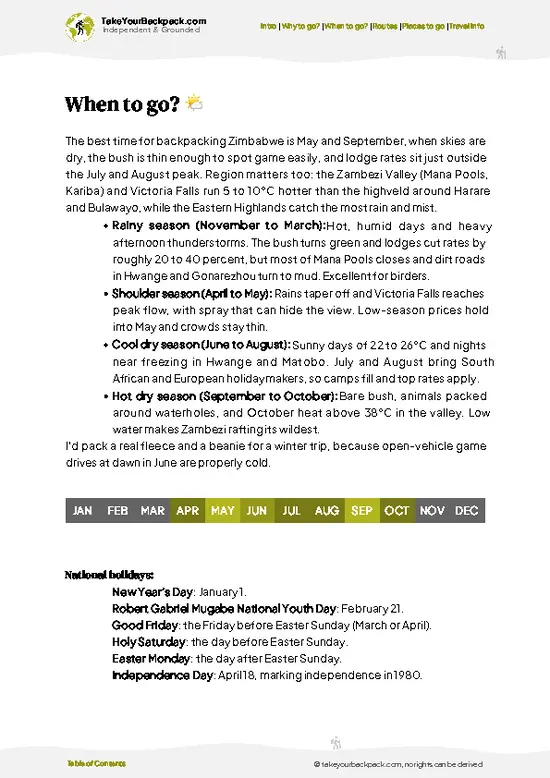
Best Months and Weather: May to October is the best window for Zimbabwe’s landmarks because the skies stay dry and clear, roads are passable and wildlife gathers at the few remaining water sources. Days run 22 to 30°C across most of the country. Highland and Bulawayo nights drop to 5 to 10°C in June and July, and frost is possible in the Eastern Highlands, so pack a proper fleece.
Shoulder and Wet Seasons: November to April brings the rains, with most of the 600 to 900 mm annual total falling in downpours between December and March. The Eastern Highlands get more, often above 1,000 mm, and mist can hide the views. Dirt roads to remote parks turn to mud, and some camps and tracks close. September to October is the hottest stretch. In the Zambezi Valley and around Victoria Falls, afternoons reach … read more 👉
Best Months and Weather: May to October is the best window for Zimbabwe’s landmarks because the skies stay dry and clear, roads are passable and wildlife gathers at the few remaining water sources. Days run 22 to 30°C across most of the country. Highland and Bulawayo nights drop to 5 to 10°C in June and July, and frost is possible in the Eastern Highlands, so pack a proper fleece.
Shoulder and Wet Seasons: November to April brings the rains, with most of the 600 to 900 mm annual total falling in downpours between December and March. The Eastern Highlands get more, often above 1,000 mm, and mist can hide the views. Dirt roads to remote parks turn to mud, and some camps and tracks close. September to October is the hottest stretch. In the Zambezi Valley and around Victoria Falls, afternoons reach 35 to 40°C, so start early and rest at midday.
Crowds and Prices: The waterfall region is the one place where timing swings the experience. February to May delivers the thundering water volume but heavy spray that soaks you and blocks views. From June to August, you get clearer viewing and peak visitor numbers, with lodge rates up by roughly 20 to 40 percent. September to December has lower water yet cheaper beds and thinner queues. Elsewhere, crowds stay modest all year, and April and May are an excellent shoulder choice: green landscapes, lower prices and mild days.

unique site hoppingPlanning Your Route Efficiently

How Many Days You Need: A trip linking several landmarks in Zimbabwe needs 10 to 14 days, and a tighter version fits into 8 if you cut the highlands. Distances look short on the map but eat hours on the road, so build in slack.
Which Regions Cluster and Which Direction: Three clusters make sense: the southeast and south (Masvingo area), the southwest (Bulawayo and its surroundings) and the northwest (Victoria Falls and Hwange). Travel Harare to Masvingo to Bulawayo to Victoria Falls, then exit into Zambia or Botswana. That sequence saves the headline attraction for last and lets you finish near an easy border crossing. Travelers starting in Zambia can simply reverse it. The Eastern Highlands, around Mutare and Nyanga, sit off this line and need 3 to 4 extra days from Harare.
Time Per Stop and … read more 👉
How Many Days You Need: A trip linking several landmarks in Zimbabwe needs 10 to 14 days, and a tighter version fits into 8 if you cut the highlands. Distances look short on the map but eat hours on the road, so build in slack.
Which Regions Cluster and Which Direction: Three clusters make sense: the southeast and south (Masvingo area), the southwest (Bulawayo and its surroundings) and the northwest (Victoria Falls and Hwange). Travel Harare to Masvingo to Bulawayo to Victoria Falls, then exit into Zambia or Botswana. That sequence saves the headline attraction for last and lets you finish near an easy border crossing. Travelers starting in Zambia can simply reverse it. The Eastern Highlands, around Mutare and Nyanga, sit off this line and need 3 to 4 extra days from Harare.
Time Per Stop and Transfers: Allow 1 to 2 days for each ruin or rock-art area, 2 to 3 days for Victoria Falls, and 2 to 4 days for a national park. Harare to Masvingo takes about 4 hours by bus, Masvingo to Bulawayo 4 to 5 hours, Bulawayo to Victoria Falls 7 to 9 hours by coach or 5 to 6 by private car. Highland buses from Harare to Mutare run 4 to 5 hours.
Planning Mistakes: The most common error is stacking a long transfer onto a sightseeing morning. Break up the 8-hour hauls with an overnight stop. Others include assuming fuel and cash are everywhere (fill up and withdraw in cities) and booking parks without a vehicle or a lift from a lodge. Hire a guide-driver for remote reserves instead.

The ListThe Best landmarks of Zimbabwe

1 Victoria Falls

Mile-wide curtain, spray trails, Devil’s Cataract, Batoka Gorge

Follow the rim trail through warm spray to cliff-edge viewpoints, then head downstream for Grade 5 rafting or upstream for a quiet river cruise.

Zambia&Zimbabwe - the Victoria Falls

2 Great Zimbabwe

Mortarless granite walls, Great Enclosure, conical tower, hill climb

Walk the narrow passage between the curving walls to the conical tower, then climb the granite hill for a view over the ruins.

zimbabwe-unique-site-great-zimbabwe
© Google |

3 Kariba Dam

Arch dam wall, spillway gates, Zambezi gorge, Nyaminyami legend

Cross the crest of the 128-meter arch wall with your passport, then watch spillway water roar into the Zambezi gorge below.

Loading the map 🌍

Expert viewInsights from Locals and Experts

How Many Landmarks to Visit: Plan on four to six landmarks in a two-week trip. Zimbabwe’s distances, slow roads and occasional fuel or power headaches eat time, and anything beyond six turns the trip into a transfer marathon. Four to six gives you one flagship attraction, one or two cultural sites, and a wilderness stop with room for a rest day. Squeezing in more costs you energy and cash without adding depth, so stop at six.
Choosing Between Kinds: History fans get the best value from the stone ruins and rock-art sites. Entry typically runs US$10 to 20, a local guide adds US$10 to 25, and you can reach most by public transport plus a short taxi ride. They cost little and need no special gear. Wildlife seekers should pay for one park rather than three. A self-drive or shared safari day costs … read more 👉
How Many Landmarks to Visit: Plan on four to six landmarks in a two-week trip. Zimbabwe’s distances, slow roads and occasional fuel or power headaches eat time, and anything beyond six turns the trip into a transfer marathon. Four to six gives you one flagship attraction, one or two cultural sites, and a wilderness stop with room for a rest day. Squeezing in more costs you energy and cash without adding depth, so stop at six.
Choosing Between Kinds: History fans get the best value from the stone ruins and rock-art sites. Entry typically runs US$10 to 20, a local guide adds US$10 to 25, and you can reach most by public transport plus a short taxi ride. They cost little and need no special gear. Wildlife seekers should pay for one park rather than three. A self-drive or shared safari day costs US$80 to 200 once fees, vehicle and guide are added, and it beats a rushed visit to several. If you want comfort, choose the waterfall town. Beds are easy, activities cluster close, and the trade-off is price: entry for foreigners runs about US$50, and meals and activities cost double what they do inland. Hikers and photographers on a tight budget get the most from the Eastern Highlands, where trails are free or a few dollars and cabins cost US$15 to 30, though getting there takes the most effort.
What Things Cost: A backpacker can live on US$40 to 70 a day outside Victoria Falls: dorm or basic room US$12 to 25, meals US$5 to 12, minibuses US$5 to 15 a leg. Add US$20 to 40 a day in the falls area. Park fees for national parks run roughly US$15 to 30 a person per day, with vehicle charges on top. Carry small US dollar notes, because change is scarce and card machines fail.
Safety and Cultural Care: Police roadblocks are frequent. Stay calm and polite, keep passport copies handy, and avoid driving at night, when animals, pedestrians and unlit vehicles crowd the road. Never photograph government buildings, soldiers or police. Wildlife is real: on foot or by canoe, follow your guide to the letter, and never swim in the river above the falls. Many landmarks are sacred to local communities. Ask before photographing ceremonies or shrines, dress modestly, remove hats or shoes where asked, and do not climb walls or touch rock paintings. Hire local guides: they bring context, they are paid directly, and their income funds site upkeep.

✈️ The backpacker research shortcutZimbabwe Travel Guide

An offline-friendly backpacking guide with optimized travel routes, ranked highlights, transport advice, and the best areas to stay.
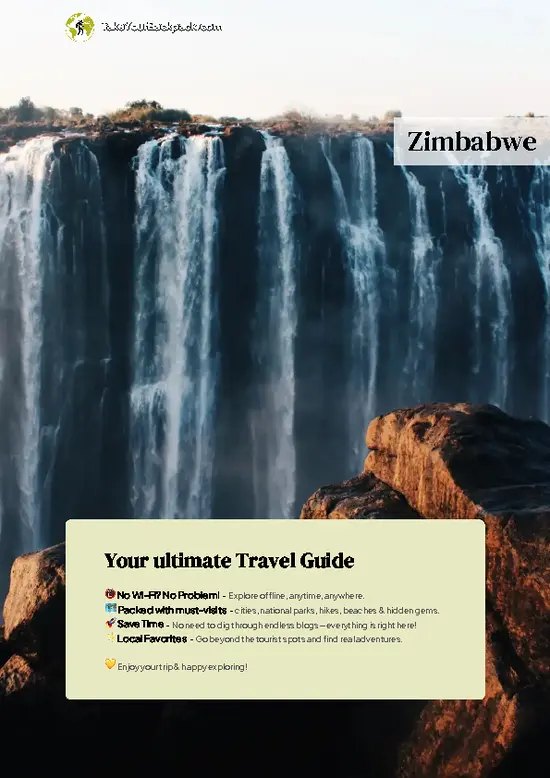
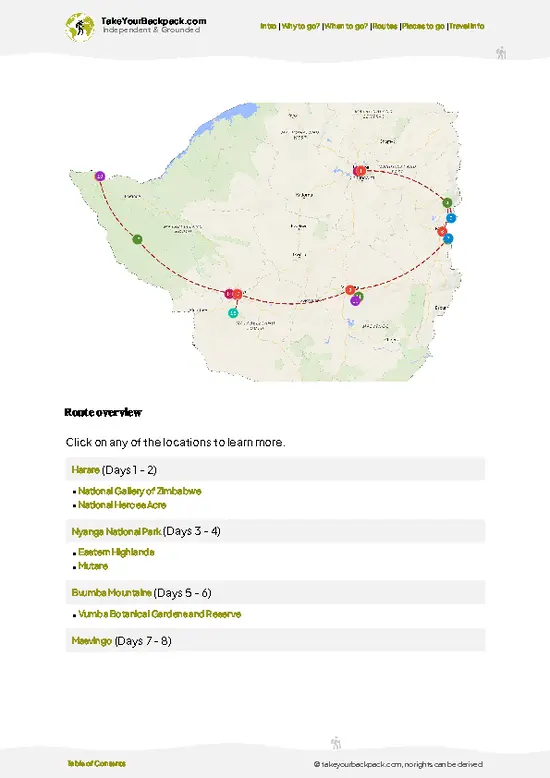
example page 0 from our offline Travel Guide for Zimbabwe
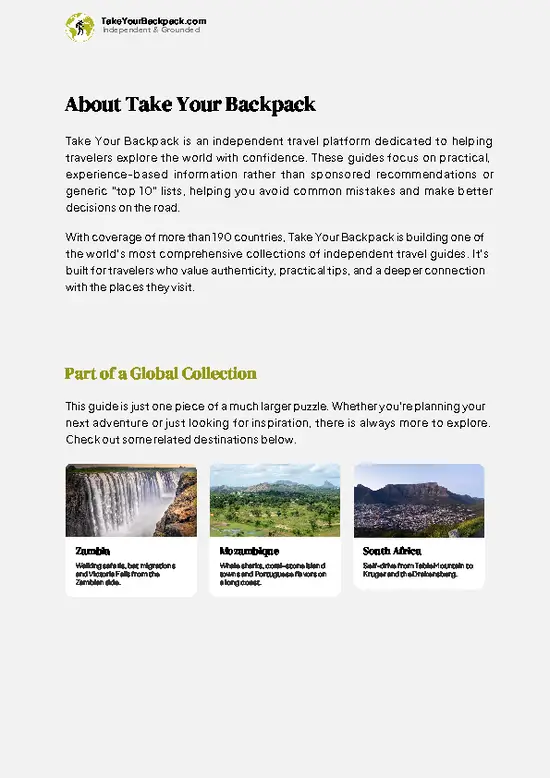
example page 1 from our offline Travel Guide for Zimbabwe
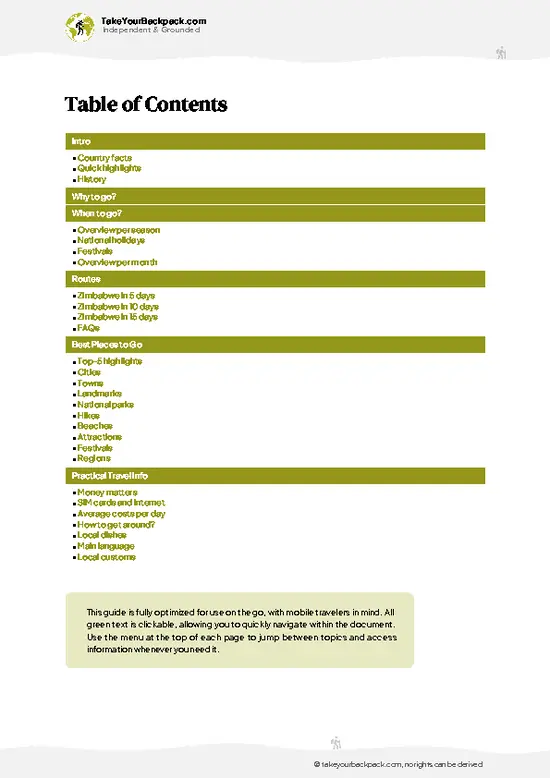
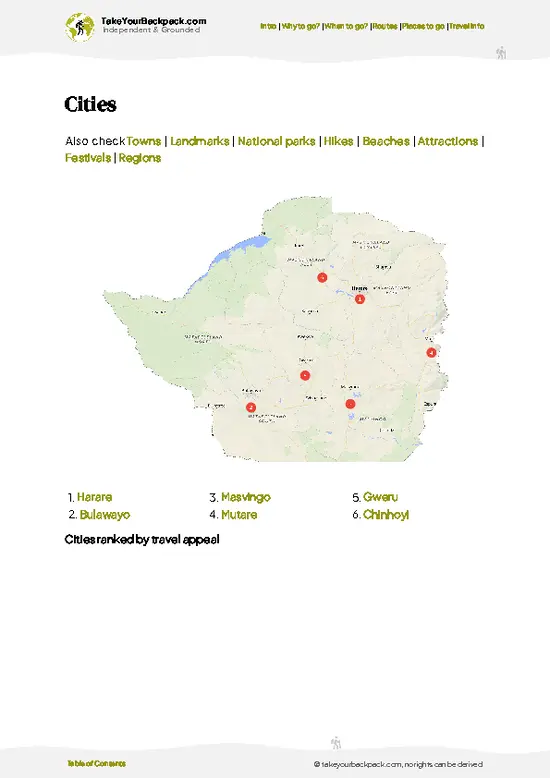
example page 2 from our offline Travel Guide for Zimbabwe
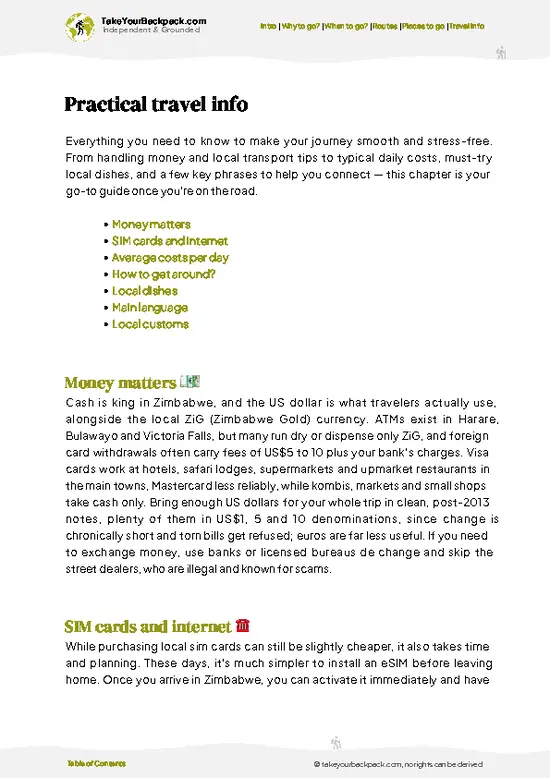
example page 3 from our offline Travel Guide for Zimbabwe
example page 4 from our offline Travel Guide for Zimbabwe
example page 5 from our offline Travel Guide for Zimbabwe
example page 6 from our offline Travel Guide for Zimbabwe
example page 7 from our offline Travel Guide for Zimbabwe
The digital guide (265 pages) contains:
✅ 67 highlights, ranked by travel appeal
✅ Optimized 5, 10 & 15-day travel routes
✅ Cities, national parks, landmarks, beaches
✅ How to get around
✅ Offline-friendly for travel without Wi-Fi
👉 Click to see all 30+ guide features

📅 Plan smarter in minutes, not weeks
✅ Month by month travel advice
✅ Festivals & national holidays
✅ Budget expectations

🗺️ Go to the right places, skip the overrated ones
✅ Honest pros & cons of destinations
✅ Top hikes, parks & viewpoints
✅ Lesser-known places most travelers miss
✅ Clear “worth it vs skip it” guidance

🛏️ Travel smoothly without rookie mistakes
✅ Best areas to stay
✅ Transport systems explained simply
✅ Common scams & safety advice
✅ SIM cards, money & practical tips

🌍 Understand the country, not just visit it
✅ Culture & traditions
✅ 52 Essential phrases & customs
✅ Festivals worth planning around
✅ Traveler-friendly historical context
✅ Insights that make places more meaningful

📱 Built for real travel conditions
✅ Fully downloadable PDF
✅ Works completely offline
✅ Optimized for phone use
✅ Useful in remote areas & buses
✅ Everything in one place
Stop searching, start planning
Get instant access to your full guide. 30‑day money-back guarantee.
+ Add another guide for just

By proceeding you agree to our terms.
Sent to your inbox immediately after payment • 100% Secure Checkout
Best Backpacking Travel Advisor 2025 tourism awardBest Backpacking
Travel Advisor
2025
What others say about Take Your Backpack Guides:
⭐⭐⭐⭐⭐
Fantastic, amazing amount of information!
⭐⭐⭐⭐⭐
My goodness this is amazing, it's what I've been looking for hats off too you!
⭐⭐⭐⭐⭐
I think this is absolutely BRILLIANT
⭐⭐⭐⭐
Very complete and informative. It's still missing places, but I gotta to commend you
⭐⭐⭐⭐⭐
This is truly amazing, thank you, can't wait to explore it with my kids!
⭐⭐⭐⭐⭐
Awesome resource, thank you!
⭐⭐⭐⭐⭐
This is amazing! Can't wait to explore the ones I haven't seen
⭐⭐⭐⭐
I love this! Well done, great idea.
⭐⭐⭐⭐⭐
Thanks for taking the time to make this gem!
⭐⭐⭐⭐⭐
This might be the best website I've ever seen.
⭐⭐⭐⭐⭐
Congratulations, and thank you so much for your work; it's incredibly valuable.
⭐⭐⭐⭐
In all seriousness I think you did a great job pointing out the important spots
⭐⭐⭐⭐⭐
10/10 very good
⭐⭐⭐⭐⭐
As someone who's only just starting to visit regularly this is awesome, thank you.
⭐⭐⭐⭐
Thank you very much! I'm going to visit my dad, it's going to be very useful!
⭐⭐⭐⭐⭐
This is really cool! We'll be travelling for the first time and this definitely come in handy.
⭐⭐⭐⭐⭐
You are now our minister of culture, congratulations 👨‍💼
⭐⭐⭐⭐⭐
Just wanted to tell you that this is a pearl! Going to follow your recommendations.
⭐⭐⭐⭐⭐
This is so cool. I'll definitely be using the resource for my travels soon.
⭐⭐⭐⭐⭐
This is very impressive! Good work.
⭐⭐⭐⭐⭐
This is an amazing and informative site. Very well done!

🛏️ Where to stay?Where to Base Yourself

Zimbabwe has a small but solid spread of backpacker lodges, garden hostels with dorms at roughly US$12 to 25 a night, and budget guesthouses, though you won’t find big party hostels. In Harare, the leafy northern suburbs of Avondale and Belgravia hold most budget beds, with cafés, a shopping center and the city’s best restaurants close by and a calm, walled-garden feel; Milton Park is cheaper and closer to downtown but quieter at night, while Borrowdale is safe and polished but pricey and far from the center. Victoria Falls town packs the best backpacker scene into walkable streets a short ride from the falls, with bars and adventure-booking desks on your doorstep (watch for elephants and warthogs … read more 👉
Zimbabwe has a small but solid spread of backpacker lodges, garden hostels with dorms at roughly US$12 to 25 a night, and budget guesthouses, though you won’t find big party hostels. In Harare, the leafy northern suburbs of Avondale and Belgravia hold most budget beds, with cafés, a shopping center and the city’s best restaurants close by and a calm, walled-garden feel; Milton Park is cheaper and closer to downtown but quieter at night, while Borrowdale is safe and polished but pricey and far from the center. Victoria Falls town packs the best backpacker scene into walkable streets a short ride from the falls, with bars and adventure-booking desks on your doorstep (watch for elephants and warthogs after dark), and in Bulawayo the Suburbs neighborhood offers quiet, good-value guesthouses a short taxi ride from the center and the museum.

If you enjoy meeting fellow travelers, consider choosing hostels with high ratings for atmosphere. On the other hand, if you prefer having your own space, a hotel might be a better option.

ZimbabweExpand Your Journey

👋 Meet the founderWho’s Behind Take Your Backpack?

Johan, backpacker and founder of TakeYourBackpackHi, I’m Johan (Netherlands 🇳🇱), the creator of TakeYourBackpack. Over the past 3 decades, I’ve backpacked through 90+ countries across six continents, gaining extensive experience with independent travel, long-term trips, and overland routes.

This site is built on a combination of firsthand travel experience and carefully curated insights from other backpackers. Many guides are based on places I’ve personally visited, while others bring together tips, observations, and practical advice shared by trusted travelers I’ve met along the way.

The goal is to provide realistic, experience-driven guidance — not generic itineraries — so you can explore destinations with better context, clearer expectations, and more confidence.