×

Zimbabwe🇿🇼 | townsMaronderaboarding schools, pine plantations, commuter town | things to do and best time to go

Explore ZvishavaneExplore Chegutu

Backpacking in Marondera
👍 Recommendedtown ranked #9
By Johan Kruseman 🇳🇱 | Updated June 11, 2026

Everyone hears about Marondera’s agricultural college and expects a town built on the romance of rolling fields and rural tradition. But for travelers, what actually matters is the way Marondera acts as a gentle pause between the urban thrum of Harare and the wild, forested highlands to the east. Set about 75 kilometers southeast of Zimbabwe’s capital, Marondera is neither a must-see nor a tourist trap—it’s a practical, unhurried waypoint. The town’s center is compact, with a few colonial-era buildings and a market that smells of fresh tomatoes and dust after rain. You won’t find a backpacker scene or buzzing nightlife; evenings are slow, and hostels are rare, but local guesthouses are affordable and safe enough if you keep your wits. Compared to Mutare or Harare, Marondera feels quieter, less scenic, but more real—ideal for a reset, a resupply, or a day spent wandering before catching the next bus east.

Discover everything you want to know in the 📖 Zimbabwe Travel Guide.


Get your Zimbabwe guide
90 ranked highlights, routes & tips, works offline (355 pages)
Loading the map 🌍
CLICK TO FILTER
cities
towns
landmarks
national parks
hikes
beaches
attractions
festivals
regions
SHOW COUNTRY’S BESTSHOW ALL

✨ Why go?
Ranked #9 town in Zimbabwe
What makes it a must-see town

Marondera serves as a gateway for backpackers exploring Zimbabwe’s rich landscapes. Its proximity to stunning hikes in the nearby Eastern Highlands makes it a practical stop for those seeking adventure. The walkable streets are lined with small-scale hostels and guesthouses, offering a cozy atmosphere where you can easily connect with fellow travelers. Expect to find local food stalls that serve up hearty meals, filling your belly with authentic flavors while you share stories with new friends.

Most backpackers tend to stay for a few days, soaking in the laid-back vibe, perfect for slow travelers and solo adventurers. The town feels friendly, not overwhelming, making it ideal for those who appreciate a balance of social interaction and quiet reflection. If you’re looking for a place to recharge … read more 👉
Marondera serves as a gateway for backpackers exploring Zimbabwe’s rich landscapes. Its proximity to stunning hikes in the nearby Eastern Highlands makes it a practical stop for those seeking adventure. The walkable streets are lined with small-scale hostels and guesthouses, offering a cozy atmosphere where you can easily connect with fellow travelers. Expect to find local food stalls that serve up hearty meals, filling your belly with authentic flavors while you share stories with new friends.

Most backpackers tend to stay for a few days, soaking in the laid-back vibe, perfect for slow travelers and solo adventurers. The town feels friendly, not overwhelming, making it ideal for those who appreciate a balance of social interaction and quiet reflection. If you’re looking for a place to recharge before heading to the breathtaking beaches of Lake Chivero or the cultural sites in Harare, Marondera is a solid choice.
Want to include Marondera in your Zimbabwe route?
Create a personalized Zimbabwe itinerary that includes Marondera and the places that fit your trip — based on your travel style, budget, and available time. Get your route in seconds.

Generate my trip

💡 HighlightsTop highlights of Marondera

  • Peterhouse Group of Schools — A landmark private boarding school on the outskirts of town with expansive lawns, a distinctive chapel and strong sporting traditions; visiting during a rugby/cricket fixture or an open event gives a real feel for local Anglo-Zimbabwean school culture and beautiful grounds to walk.
  • Marondera Agricultural Showgrounds — Home of the town’s big annual agricultural show and regular community events; the showgrounds showcase livestock, crop displays, local crafts and are the best place to see the farming life that defines the area.
  • Marondera Railway Station — The historic station on the Harare-Mutare line retains colonial-era railway character; it’s a compact, photogenic slice of local transport history and a practical reminder of the town’s role as an agricultural
read more 👉
  • Peterhouse Group of Schools — A landmark private boarding school on the outskirts of town with expansive lawns, a distinctive chapel and strong sporting traditions; visiting during a rugby/cricket fixture or an open event gives a real feel for local Anglo-Zimbabwean school culture and beautiful grounds to walk.
  • Marondera Agricultural Showgrounds — Home of the town’s big annual agricultural show and regular community events; the showgrounds showcase livestock, crop displays, local crafts and are the best place to see the farming life that defines the area.
  • Marondera Railway Station — The historic station on the Harare-Mutare line retains colonial-era railway character; it’s a compact, photogenic slice of local transport history and a practical reminder of the town’s role as an agricultural service centre.
  • Marondera Golf Club — A well-established local club with a friendly clubhouse and green fairways that offer a quiet, social place to spend an afternoon and mingle with locals away from the market bustle.
  • Marondera Town Market & High Street — The real pulse of town: open-air stalls selling seasonal produce, butchers, bakers and small traders, framed by period commercial buildings; best for sampling everyday life and picking up fresh fruit, veg and local snacks.
Nearby day-trip highlights include the market town of Macheke, the Wedza hills and surrounding farming estates; my personal favorite for a quick, scenic escape and village visits is the Wedza hills.
Spotted a mistake or missing something? Contact us.

Things to do near Marondera

Ratings based on Tripadvisor reviews. When you book through this link, you support our work at no extra cost to you.

🏘️ NeighborhoodsWhere things are and how it's laid out

Marondera offers a unique blend of local culture and accessibility, perfect for backpackers seeking an authentic Zimbabwean experience. Here’s how to navigate its neighborhoods:

Central Marondera: This is the heartbeat of the town. You’ll find bustling markets and local eateries, where the scent of grilled meat fills the air. It’s walkable, with everything within reach. Nightlife is low-key, mostly centered around pubs that close early. Ideal for short stays, you can soak in the local vibe without straying far from amenities.

Ruzawi: A quieter, residential area that feels more suburban. Here, you’ll encounter lush gardens and a slower pace. It’s less walkable, so having a bike or using local taxis is wise. Perfect for longer stays, you can enjoy a peaceful retreat while still being close … read more 👉
Marondera offers a unique blend of local culture and accessibility, perfect for backpackers seeking an authentic Zimbabwean experience. Here’s how to navigate its neighborhoods:

Central Marondera: This is the heartbeat of the town. You’ll find bustling markets and local eateries, where the scent of grilled meat fills the air. It’s walkable, with everything within reach. Nightlife is low-key, mostly centered around pubs that close early. Ideal for short stays, you can soak in the local vibe without straying far from amenities.

Ruzawi: A quieter, residential area that feels more suburban. Here, you’ll encounter lush gardens and a slower pace. It’s less walkable, so having a bike or using local taxis is wise. Perfect for longer stays, you can enjoy a peaceful retreat while still being close to the town’s core.

Chikangwe: This neighborhood is a hidden treasure for those looking to connect with locals. The atmosphere is friendly, and you’ll find community events happening often. It’s affordable, but transport options can be limited. Best for those who want to immerse themselves in daily life, it’s a rewarding choice for longer visits.

⌛️ 1 day1-day itinerary for Marondera

Marondera, a charming town just an hour from Harare, offers a slice of Zimbabwean life that feels refreshingly authentic. The vibrant markets, friendly locals, and lush landscapes create an atmosphere that invites exploration.

Start your morning at the bustling Marondera Market. The scent of fresh produce mingles with the earthy aroma of spices. Grab a breakfast of roasted maize or a local pastry from a vendor. Engage with the vendors; their stories add depth to the experience. Afterward, take a stroll through the nearby residential neighborhoods like Macheke, where you can admire the colorful homes and gardens that reflect the community’s spirit.

In the afternoon, head to the Marondera Golf Club, a hidden gem not often frequented by tourists. Even if you’re not a golfer, the sprawling … read more 👉
Marondera, a charming town just an hour from Harare, offers a slice of Zimbabwean life that feels refreshingly authentic. The vibrant markets, friendly locals, and lush landscapes create an atmosphere that invites exploration.

Start your morning at the bustling Marondera Market. The scent of fresh produce mingles with the earthy aroma of spices. Grab a breakfast of roasted maize or a local pastry from a vendor. Engage with the vendors; their stories add depth to the experience. Afterward, take a stroll through the nearby residential neighborhoods like Macheke, where you can admire the colorful homes and gardens that reflect the community’s spirit.

In the afternoon, head to the Marondera Golf Club, a hidden gem not often frequented by tourists. Even if you’re not a golfer, the sprawling greens and the sound of birds chirping create a peaceful retreat. Enjoy a light lunch at the clubhouse, where you might strike up a conversation with a local who can share insights about the area.

As the sun begins to set, make your way to the nearby Lake Chivero. The golden light reflecting off the water is a sight to behold. Bring a picnic or grab some takeout from a local eatery. The tranquility of the lake, combined with the sounds of nature, wraps up your day beautifully.

Marondera may not be on every tourist’s radar, but its warmth and character make it a rewarding stop. Embrace the rhythm of the town, and you’ll leave with stories that linger long after your visit.
Turn your Marondera visit into an Zimbabwe adventure
Build a complete Zimbabwe route with Marondera, hidden gems, must-see destinations, and realistic travel times included.

Generate my trip

🌤️ When to go?Weather, crowds, and seasonal trade-offs


  • Weather: Marondera’s dry season from May to October offers crisp, clear days perfect for trekking and exploring. The wet season (November to April) brings heavy rains that can turn dirt roads into mud traps, making travel tricky and less enjoyable.

  • Temperature: During the dry months, daytime highs hover around 20-25°C (68-77°F), with chilly nights dropping to 5-10°C (41-50°F). The wet season heats up to 25-30°C (77-86°F), but humidity can feel oppressive.

  • Daylight Hours: Expect roughly 11-12 hours of daylight year-round, but the dry season’s clear skies mean you’ll get more usable daylight for hiking and sightseeing without the threat of sudden storms.

  • Crowds: Tourist traffic peaks in the dry season, especially around July and August, when Zimbabweans also travel. Visiting early or
read more 👉

  • Weather: Marondera’s dry season from May to October offers crisp, clear days perfect for trekking and exploring. The wet season (November to April) brings heavy rains that can turn dirt roads into mud traps, making travel tricky and less enjoyable.

  • Temperature: During the dry months, daytime highs hover around 20-25°C (68-77°F), with chilly nights dropping to 5-10°C (41-50°F). The wet season heats up to 25-30°C (77-86°F), but humidity can feel oppressive.

  • Daylight Hours: Expect roughly 11-12 hours of daylight year-round, but the dry season’s clear skies mean you’ll get more usable daylight for hiking and sightseeing without the threat of sudden storms.

  • Crowds: Tourist traffic peaks in the dry season, especially around July and August, when Zimbabweans also travel. Visiting early or late in this window means fewer people and better deals.

  • Seasonal Activities: Dry months are ideal for wildlife spotting and visiting local markets, as animals gather near waterholes and roads stay accessible. The wet season’s lush greenery is beautiful but can limit outdoor activities.

  • Price Fluctuations: Accommodation and transport costs rise in the dry season due to demand. The wet season offers lower prices but comes with the trade-off of less predictable conditions.


Pro-tip: Aim for May or September—cool, dry, and just before or after peak crowds—so you get the best light for photos and the freshest air without paying a premium.


source: climatestotravel.comJANJanuary: fair for travelingFEBFebruary: fair for travelingMARMarch: fair for travelingAPRApril: fair for travelingMAYMay: excellent for travelingJUNJune: highly recommended for travelingJULJuly: highly recommended for travelingAUGAugust: highly recommended for travelingSEPSeptember: excellent for travelingOCTOctober: highly recommended for travelingNOVNovember: fair for travelingDECDecember: fair for traveling
when-to-go

✈️ The backpacker research shortcutZimbabwe Travel Guide

An offline-friendly backpacking guide with optimized travel routes, ranked highlights, transport advice, and the best areas to stay.
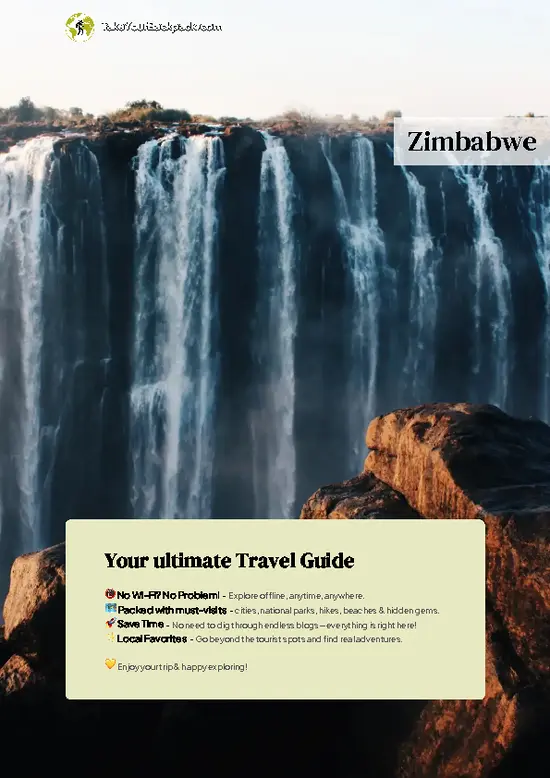
example page 0 from our offline Travel Guide for Zimbabwe
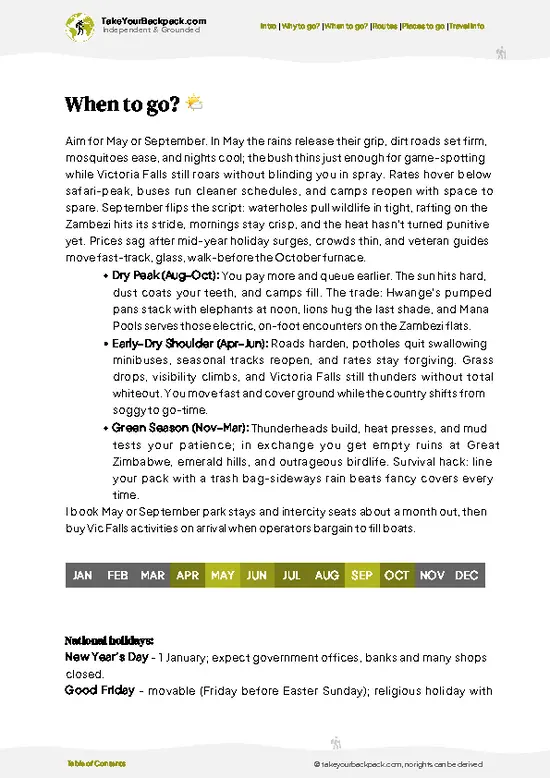
example page 1 from our offline Travel Guide for Zimbabwe
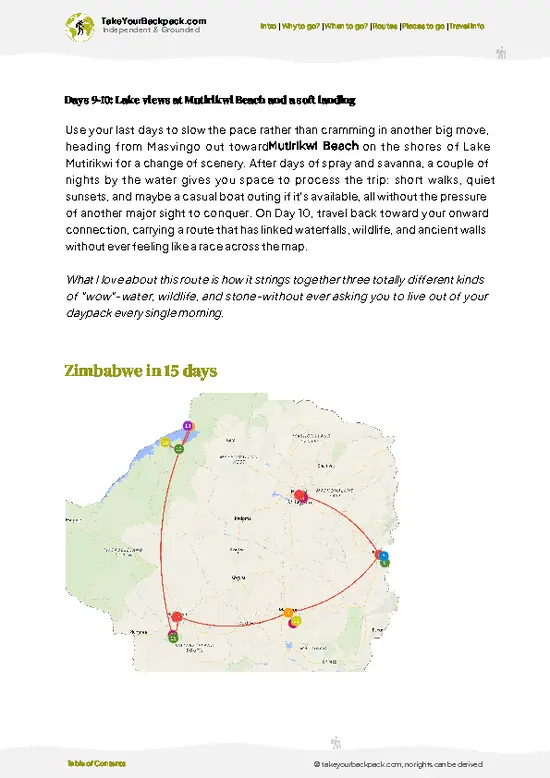
example page 2 from our offline Travel Guide for Zimbabwe
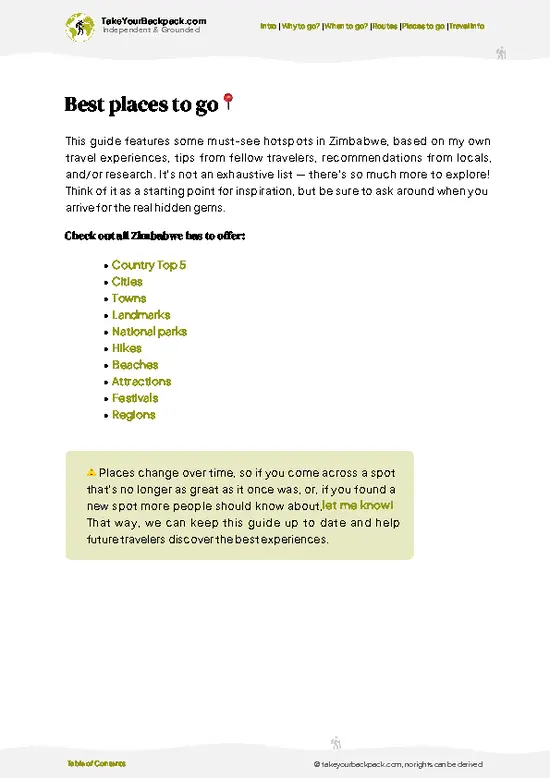
example page 3 from our offline Travel Guide for Zimbabwe
example page 4 from our offline Travel Guide for Zimbabwe
example page 5 from our offline Travel Guide for Zimbabwe
example page 6 from our offline Travel Guide for Zimbabwe
example page 7 from our offline Travel Guide for Zimbabwe
The digital guide (355 pages) contains:
90 highlights, ranked by travel appeal
Optimized 5, 10 & 15-day travel routes
Cities, national parks, landmarks, beaches
How to get around
Offline-friendly for travel without Wi-Fi
👉 Click to see all 30+ guide features

📅 Plan smarter in minutes, not weeks
Month by month travel advice
Festivals & national holidays
Budget expectations

🗺️ Go to the right places, skip the overrated ones
Honest pros & cons of destinations
Top hikes, parks & viewpoints
Lesser-known places most travelers miss
Clear “worth it vs skip it” guidance

🛏️ Travel smoothly without rookie mistakes
Best areas to stay
Transport systems explained simply
Common scams & safety advice
SIM cards, money & practical tips

🌍 Understand the country, not just visit it
Culture & traditions
52 Essential phrases & customs
Festivals worth planning around
Traveler-friendly historical context
Insights that make places more meaningful

📱 Built for real travel conditions
Fully downloadable PDF
Works completely offline
Optimized for phone use
Useful in remote areas & buses
Everything in one place
Save weeks of stressful planning
Get instant access to your full guide. 30‑day money-back guarantee.


By proceeding you agree to our terms.
Sent to your inbox immediately after payment • 100% Secure Checkout
Best Backpacking Travel Advisor 2025 tourism awardBest Backpacking
Travel Advisor
2025
What others say about Take Your Backpack Guides:
⭐⭐⭐⭐⭐
Fantastic, amazing amount of information!
⭐⭐⭐⭐⭐
My goodness this is amazing, it's what I've been looking for hats off too you!
⭐⭐⭐⭐⭐
I think this is absolutely BRILLIANT
⭐⭐⭐⭐
Very complete and informative. It's still missing places, but I gotta to commend you
⭐⭐⭐⭐⭐
This is truly amazing, thank you, can't wait to explore it with my kids!
⭐⭐⭐⭐⭐
Awesome resource, thank you!
⭐⭐⭐⭐⭐
This is amazing! Can't wait to explore the ones I haven't seen
⭐⭐⭐⭐
I love this! Well done, great idea.
⭐⭐⭐⭐⭐
Thanks for taking the time to make this gem!
⭐⭐⭐⭐⭐
This might be the best website I've ever seen.
⭐⭐⭐⭐⭐
Congratulations, and thank you so much for your work; it's incredibly valuable.
⭐⭐⭐⭐
In all seriousness I think you did a great job pointing out the important spots
⭐⭐⭐⭐⭐
10/10 very good
⭐⭐⭐⭐⭐
As someone who's only just starting to visit regularly this is awesome, thank you.
⭐⭐⭐⭐
Thank you very much! I'm going to visit my dad, it's going to be very useful!
⭐⭐⭐⭐⭐
This is really cool! We'll be travelling for the first time and this definitely come in handy.
⭐⭐⭐⭐⭐
You are now our minister of culture, congratulations 👨‍💼
⭐⭐⭐⭐⭐
Just wanted to tell you that this is a pearl! Going to follow your recommendations.
⭐⭐⭐⭐⭐
This is so cool. I'll definitely be using the resource for my travels soon.
⭐⭐⭐⭐⭐
This is very impressive! Good work.
⭐⭐⭐⭐⭐
This is an amazing and informative site. Very well done!

🛏️ Where to stay?Best areas and accommodation options

In Marondera, the best spot for backpackers is the town center, especially around the main shopping streets and the bus terminus. This area hums with local life—vendors calling out, the smell of fresh maize roasting, and the steady pulse of minibuses coming and going. It’s where you’ll find the most budget-friendly guesthouses and hostels, making it easy to meet other travelers and locals alike. Staying here means you’re never far from basic amenities, markets, and the occasional street food stall, which keeps costs low and the vibe lively.

Compared to the quieter, more residential suburbs, the … read more 👉
In Marondera, the best spot for backpackers is the town center, especially around the main shopping streets and the bus terminus. This area hums with local life—vendors calling out, the smell of fresh maize roasting, and the steady pulse of minibuses coming and going. It’s where you’ll find the most budget-friendly guesthouses and hostels, making it easy to meet other travelers and locals alike. Staying here means you’re never far from basic amenities, markets, and the occasional street food stall, which keeps costs low and the vibe lively.

Compared to the quieter, more residential suburbs, the town center feels safer during the day because of the constant foot traffic and informal security that comes with a crowd. At night, it’s best to stick to well-lit streets, but the social energy of this area makes it easier to find companions for day trips or a shared meal. The outskirts might offer peace, but they lack the pulse and practical convenience that backpackers crave when navigating Zimbabwe’s rhythms for the first time.

🚌 Getting aroundMoving around without the hassle

Marondera moves at its own rhythm—neither a frantic city nor a sleepy village. The sun casts long shadows over dusty streets where the scent of fresh maize mingles with the earthy aroma of red soil. Here, time feels elastic. You won’t find strict timetables or polished transit hubs. Instead, the town’s pulse is a blend of informal hustle and patient waiting, where locals negotiate rides with a nod and a smile. Understanding this flow is your key to moving like a local, not just a visitor.


  • Walking: The heart of Marondera is compact enough to explore on foot. Streets are mostly unpaved, so sturdy shoes are a must. Walking lets you soak in the warm, dusty air and catch the everyday scenes—vendors calling out, children playing soccer on cracked fields. It’s free, flexible, and the best way
read more 👉
Marondera moves at its own rhythm—neither a frantic city nor a sleepy village. The sun casts long shadows over dusty streets where the scent of fresh maize mingles with the earthy aroma of red soil. Here, time feels elastic. You won’t find strict timetables or polished transit hubs. Instead, the town’s pulse is a blend of informal hustle and patient waiting, where locals negotiate rides with a nod and a smile. Understanding this flow is your key to moving like a local, not just a visitor.


  • Walking: The heart of Marondera is compact enough to explore on foot. Streets are mostly unpaved, so sturdy shoes are a must. Walking lets you soak in the warm, dusty air and catch the everyday scenes—vendors calling out, children playing soccer on cracked fields. It’s free, flexible, and the best way to navigate the town’s core.


  • Shared Minibuses (Combis): These are the lifeblood of local transit. They don’t run on a strict schedule but start filling up early morning and run until dusk. Fares are low—often just a few Zimbabwean dollars—but expect cramped conditions and frequent stops. The ride is bumpy, windows open to let in the dry heat and dust, but it’s the fastest way to cover longer distances within and just outside town.


  • Hitchhiking: Common and generally safe if you use common sense. Locals often thumb rides between Marondera and nearby farming areas. It’s free and can be surprisingly quick, but you’ll need patience and a good eye for trustworthy drivers. The trade-off is a chance to chat with locals and see the landscape unfold at a relaxed pace.


  • Bicycle Rentals: Not widely advertised but available through a few guesthouses. Biking gives you control over your pace and access to quieter roads and surrounding countryside. The terrain is uneven, so a sturdy bike is essential. It’s a quiet, sweat-earned way to experience the dry, sun-washed landscape beyond town limits.


  • Local Taxis: Rare and more expensive than minibuses, taxis operate mostly by negotiation. They offer comfort and speed for short hops but aren’t a budget staple. Use them sparingly—think of them as a backup for late arrivals or when you’re hauling gear.

👛 Costs (as of 1 July 2025)Money, prices, and spending tips

Backpacking through Marondera, Zimbabwe, means balancing modest costs with the reality of limited tourist infrastructure. Here’s what to expect day-to-day.
  • Dorm Accommodation: Options are sparse and basic, mostly small guesthouses or lodges offering dorm beds. Prices hover around $8 to $15 USD per night. Expect simple rooms with shared bathrooms, sometimes with inconsistent hot water and power outages, but clean enough to rest after a day on the road.
  • Meals: Street food and local eateries dominate. A filling plate of sadza (a staple maize dish) with vegetables or meat runs about $2 to $4 USD. Western-style meals or dining at a lodge can push closer to $6 to $10 USD. Fresh fruit and snacks from markets are cheap and a good way to keep energy up.
  • Local Transport: Minibus taxis are the go-to,
read more 👉
Backpacking through Marondera, Zimbabwe, means balancing modest costs with the reality of limited tourist infrastructure. Here’s what to expect day-to-day.
  • Dorm Accommodation: Options are sparse and basic, mostly small guesthouses or lodges offering dorm beds. Prices hover around $8 to $15 USD per night. Expect simple rooms with shared bathrooms, sometimes with inconsistent hot water and power outages, but clean enough to rest after a day on the road.
  • Meals: Street food and local eateries dominate. A filling plate of sadza (a staple maize dish) with vegetables or meat runs about $2 to $4 USD. Western-style meals or dining at a lodge can push closer to $6 to $10 USD. Fresh fruit and snacks from markets are cheap and a good way to keep energy up.
  • Local Transport: Minibus taxis are the go-to, costing roughly $0.50 to $1 USD for short trips around town or nearby villages. For longer rides, like heading to Harare or other towns, expect $5 to $10 USD. The rides can be bumpy and crowded, but they’re the most authentic way to move around.
  • Basic Activities/Entry Fees: Marondera isn’t a hotspot for tourist attractions, so entry fees are minimal or nonexistent. Visiting local markets, churches, or walking around town is free. If you want to explore nearby farms or nature spots, small fees of $2 to $5 USD might apply, often negotiable.
  • Miscellaneous Expenses: Budget a few dollars for bottled water ($0.50 to $1 USD), occasional internet access at cafes or lodges ($1 to $3 USD per hour), and small tips or snacks. Phone credit for local SIM cards is cheap and essential for navigation and communication.

All told, you’re looking at roughly $15 to $30 USD per day to cover the essentials in Marondera. It’s not a flashy backpacking hub, but the modest costs reflect a place where travel feels grounded in everyday life rather than tourist polish. The trade-off is a rawer, more direct connection to Zimbabwean small-town rhythms.


source: zimbabwetourism.net
⚠️ Prices can change and everyone travels differently, so take this as a rough guide. Hope it helps you plan your adventure!

🚌 Day tripsShort trips worth adding

Marondera is a fantastic launchpad for exploring Zimbabwe’s rich landscapes and culture. With its proximity to natural wonders and vibrant communities, you can easily dive into adventures that are both rewarding and accessible.

Lake Chivero
Just a short drive from Marondera, Lake Chivero is a serene escape. The lake is alive with the sounds of birds and the gentle lapping of water against the shore. You can rent a canoe or simply stroll along the banks, soaking in the tranquility. The best time to visit is early morning when the mist hangs low over the water. Expect to spend around $10 for transport and entry fees. A common mistake? Many backpackers overlook the picnic spots; pack a lunch and enjoy it with a view.


Haka Game Park
A mere hour from Marondera, Haka Game Park offers a … read more 👉
Marondera is a fantastic launchpad for exploring Zimbabwe’s rich landscapes and culture. With its proximity to natural wonders and vibrant communities, you can easily dive into adventures that are both rewarding and accessible.

Lake Chivero
Just a short drive from Marondera, Lake Chivero is a serene escape. The lake is alive with the sounds of birds and the gentle lapping of water against the shore. You can rent a canoe or simply stroll along the banks, soaking in the tranquility. The best time to visit is early morning when the mist hangs low over the water. Expect to spend around $10 for transport and entry fees. A common mistake? Many backpackers overlook the picnic spots; pack a lunch and enjoy it with a view.


Haka Game Park
A mere hour from Marondera, Haka Game Park offers a taste of Zimbabwe’s wildlife without the crowds. You can spot zebras, giraffes, and various antelope species while wandering the well-marked trails. The park is best visited in the cooler months, from May to September, when animals are more active. Budget around $15 for entry and transport. First-timers often underestimate the importance of a good pair of binoculars; bring them for a closer look at the wildlife.


Ruins of Great Zimbabwe
While a bit further afield, the ancient ruins of Great Zimbabwe are worth the journey. It’s about a two-hour drive, but the history and architecture are awe-inspiring. Spend a few hours exploring the stone structures and learning about the civilization that thrived here. Aim for the dry season, from April to October, for the best weather. Total costs can be around $25, including transport and entry. Many miss the guided tours; they offer invaluable insights that make the experience richer.


Chimanimani Mountains
For those craving a bit of adventure, the Chimanimani Mountains are a must. About two hours from Marondera, this area is perfect for hiking and offers breathtaking views. The best time to go is during the dry season, when trails are more accessible. Expect to spend around $20 for transport and park fees. A common rookie mistake is underestimating the weather; pack layers, as it can change quickly.
Want to know what more Zimbabwe offers?
The Zimbabwe Travel Guide describes 90 highlights, from cities to national parks, from beaches to hikes

Get the Travel Guide -

🛡️ SafetyTraveler Safety Guide

Marondera is generally safe, but a few practical tips can enhance your experience. Stay alert in crowded markets, where distractions can lead to petty theft. If you’re wandering solo, especially after dark, stick to well-lit areas and avoid empty streets; a friendly demeanor can go a long way in blending in.

Watch for common scams, like overly eager guides offering unsolicited help. Politely decline and trust your instincts. Local transport can be a bit chaotic, so keep your belongings close and be prepared for bumpy rides.

Embrace the vibrant atmosphere, but carry yourself with confidence. Engaging with locals can enrich your journey, just remember to stay aware of your surroundings.

Other Zimbabwean towns near Marondera

Explore more nearby:

  • Mbare Musika—open-air market, minibus hub, street vendors| 65 km away
  • Rusape—agricultural center, roadside markets, bus stopover| 72 km away
  • Bindura—nickel mining, university campus, rural surrounds| 101 km away

💡 Not sure where to go next?
Create a personalized itinerary for Zimbabwe including Marondera and the places that fit your trip.

Generate my itinerary

👉 Discover all towns

Or checkout all Zimbabwe has to offer (think cities, towns, villages, national parks, hikes, beaches, festivals)
Country photo of Zimbabwe

We 💚 feedbackFinal thoughts on visiting Marondera

Marondera pulses with a raw, authentic vibe. The local markets burst with the scent of spices and fresh produce, a feast for the senses. But be ready for the heat—both from the sun and the pace of life here. It can feel slow, almost languid, which might test your patience. Embrace it; the reward is a deeper connection to the culture and its people.

✈️ When did I visit Zimbabwe?
I have backpacked Zimbabwe all the way back in 2001.

✍️ Help improve this page!
The information on this page is based on my own backpacking experience in Zimbabwe, supplemented with up-to-date research and feedback from other travelers. Travel details can change, so if you notice anything outdated or incomplete, feel free to let me know.


🙋‍♂️ Give feedback

👋 Meet the founderWho’s Behind Take Your Backpack?

Johan, backpacker and founder of TakeYourBackpackHi, I’m Johan (Netherlands 🇳🇱), the creator of TakeYourBackpack. Over the past decade, I’ve backpacked through 80+ countries across six continents, gaining extensive experience with independent travel, long-term trips, and overland routes.

This site is built on a combination of firsthand travel experience and carefully curated insights from other backpackers. Many guides are based on places I’ve personally visited, while others bring together tips, observations, and practical advice shared by trusted travelers I’ve met along the way.

The goal is to provide realistic, experience-driven guidance — not generic itineraries — so you can explore destinations with better context, clearer expectations, and more confidence.

Get full Zimbabwe guide •
Instant download • 90 highlights • Full Offline guide