×

Zimbabwe🇿🇼 | national parksMatusadona National ParkLake Kariba shoreline, rugged escarpment, island-dotted waters | things to do and best time to go

Explore Matobo National ParkExplore Ngezi Pan National Park

Backpacking in Matusadona
🌟 Highlightnational park ranked #6
By Johan Kruseman 🇳🇱 | Updated September 3, 2026

Most travelers realize too late that Matusadona National Park’s real gift is its emptiness—no safari traffic jams, just you, the mopane woodland, and the distant grunt of hippos. Set on the southern shore of Lake Kariba in northern Zimbabwe, Matusadona feels like the country’s wild card: less polished than Hwange, less famous than Mana Pools, but more raw and personal. Hiking here is possible, but the terrain is tough and the heat is real—this is not a park for casual strolls. Wildlife is abundant but shy; you’ll work for your sightings, and that makes them count. Access is a headache (bumpy roads, pricey boat transfers), and entrance fees aren’t cheap, but campsites and basic lodges keep costs from spiraling. If you want crowds, look elsewhere. If you want solitude and a sense of earning every view, Matusadona delivers.

Discover everything you want to know in the 📖 Zimbabwe Travel Guide.


Get your Zimbabwe guide
72 ranked highlights, routes & tips, works offline (281 pages)
Loading the map 🌍
CLICK TO FILTER
cities
towns
landmarks
national parks
hikes
beaches
attractions
festivals
regions
SHOW COUNTRY’S BESTSHOW ALL

✨ Why go?
Ranked #6 national park in Zimbabwe
What sets this place apart

Matusadona National Park in Zimbabwe draws backpackers for several compelling reasons. Independent exploration is a major draw; the park’s layout allows you to roam freely, making it ideal for those who prefer to set their own pace. You can hike, canoe, or simply soak in the scenery without being tied to a tour group.

Budget-conscious travelers will appreciate the camping and hostel options nearby. These accommodations keep costs low while offering a chance to connect with fellow adventurers. The park’s trail variety caters to different skill levels, from easy walks along the shores of Lake Kariba to more challenging hikes that lead you into the heart of the wilderness.

Matusadona is particularly suited for self-guided travelers. While guided tours are available, many find that navigating … read more 👉
Matusadona National Park in Zimbabwe draws backpackers for several compelling reasons. Independent exploration is a major draw; the park’s layout allows you to roam freely, making it ideal for those who prefer to set their own pace. You can hike, canoe, or simply soak in the scenery without being tied to a tour group.

Budget-conscious travelers will appreciate the camping and hostel options nearby. These accommodations keep costs low while offering a chance to connect with fellow adventurers. The park’s trail variety caters to different skill levels, from easy walks along the shores of Lake Kariba to more challenging hikes that lead you into the heart of the wilderness.

Matusadona is particularly suited for self-guided travelers. While guided tours are available, many find that navigating the park independently enhances the experience. You can discover hidden spots and wildlife at your own pace, allowing for a more personal connection with the landscape. Just be mindful of safety and park regulations to ensure a smooth adventure.
Want to include Matusadona National Park in your Zimbabwe route?
Create a personalized Zimbabwe itinerary that includes Matusadona National Park and the places that fit your trip — based on your travel style, budget, and available time. Get your route in seconds.

Generate my trip

💡 HighlightsPlaces and moments you shouldn't skip

  • Lake Kariba shoreline and islands (personal favorite) — The water is the park’s heartbeat: broad bays, tiny tree-covered islands and quiet inlets where hippos laze and elephants sometimes swim. Boat trips at dawn or dusk deliver wildlife views you don’t get on ordinary game drives and absolutely killer sunsets—plus tigerfish if you like to fish.
  • Zambezi escarpment and kopje hikes — Rugged granite outcrops rise from mopane and miombo woodlands, giving short but rewarding climbs with panoramic views over the lake and valley. Great for a sweaty half-day hike, rock-scrambling, and spotting klipspringer or small raptors on exposed ledges.
  • Riverine forest and papyrus channels — The rivers and inlets carve green corridors through otherwise dry country. These shady stretches are alive with birds,
read more 👉
  • Lake Kariba shoreline and islands (personal favorite) — The water is the park’s heartbeat: broad bays, tiny tree-covered islands and quiet inlets where hippos laze and elephants sometimes swim. Boat trips at dawn or dusk deliver wildlife views you don’t get on ordinary game drives and absolutely killer sunsets—plus tigerfish if you like to fish.
  • Zambezi escarpment and kopje hikes — Rugged granite outcrops rise from mopane and miombo woodlands, giving short but rewarding climbs with panoramic views over the lake and valley. Great for a sweaty half-day hike, rock-scrambling, and spotting klipspringer or small raptors on exposed ledges.
  • Riverine forest and papyrus channels — The rivers and inlets carve green corridors through otherwise dry country. These shady stretches are alive with birds, elephant trails, and the constant background of hippo grunts and croc eyes—best explored by small boat or an easy riverside walk.
  • Big-game viewing and rhino-conservation areas — Matusadona holds real wilderness populations of elephants, buffalo, lion and leopard, and the park has been a focus for black rhino reintroduction and protection efforts. If you want raw, less-pressured wildlife encounters, this is one of Zimbabwe’s quieter big-game places.
  • Island and shoreline birding — Water-edge species rule here: African fish eagle perches, kingfishers flick, and migrating waterbirds congregate on exposed shoals. Early morning boat runs or slow walks along the shore are top for racking up species while avoiding the heat.
  • Low-visitorship wilderness and camping — Matusadona is noticeably less busy than the big parks, so you get real solitude: simple campsites, fewer jeeps, and the kind of nights where stars feel close enough to touch. Ideal for backpackers who don’t need luxury and want the bush to themselves.
  • Golden-hour wildlife and photographic spots — Whether it’s a lone elephant silhouette against the lake or hippos steaming in the last light, the park’s light is brutally photogenic. Plan drives or boat runs for early morning and late afternoon—those two hours make the whole trip worth it.
Spotted a mistake or missing something? Contact us.

🌤️ When to go?Choosing the right time of year


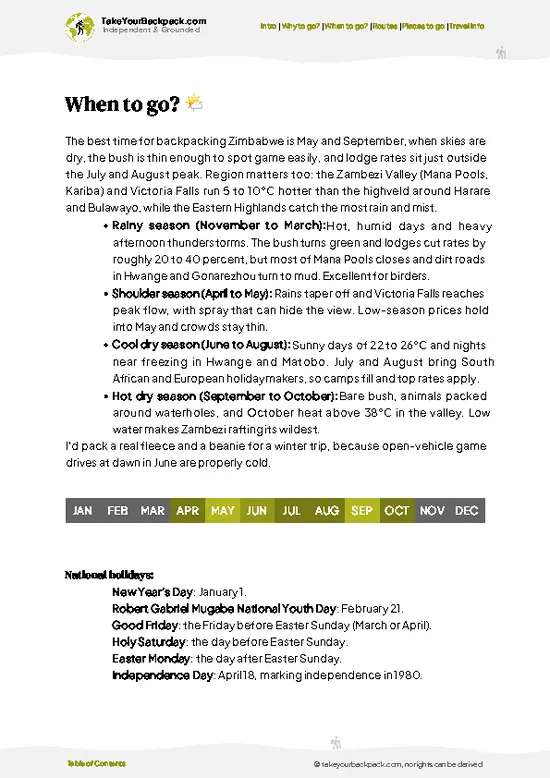
  • Weather: The dry season from May to October is your best bet. Expect little rain, which means better wildlife spotting and fewer muddy trails. The wet season (November to April) brings heavy rains that can make roads impassable and wildlife harder to find.

  • Temperature: Daytime temps in the dry season hover around 20-28°C (68-82°F), cooling off nicely at night to 7-15°C (45-59°F). The wet season is warmer and more humid, often pushing 30°C (86°F) or higher, which can sap your energy on hikes.

  • Daylight Hours: Zimbabwe enjoys roughly 11-13 hours of daylight year-round. The dry season offers clearer skies, so you get more usable daylight for trekking and game drives without the afternoon storms cutting your time short.

  • Crowds: Matusadona is less trafficked than other parks, but the dry
read more 👉

  • Weather: The dry season from May to October is your best bet. Expect little rain, which means better wildlife spotting and fewer muddy trails. The wet season (November to April) brings heavy rains that can make roads impassable and wildlife harder to find.

  • Temperature: Daytime temps in the dry season hover around 20-28°C (68-82°F), cooling off nicely at night to 7-15°C (45-59°F). The wet season is warmer and more humid, often pushing 30°C (86°F) or higher, which can sap your energy on hikes.

  • Daylight Hours: Zimbabwe enjoys roughly 11-13 hours of daylight year-round. The dry season offers clearer skies, so you get more usable daylight for trekking and game drives without the afternoon storms cutting your time short.

  • Crowds: Matusadona is less trafficked than other parks, but the dry season still sees a modest uptick in visitors. If you want solitude, aim for shoulder months like May or September when the weather is good but crowds are thinner.

  • Seasonal Activities: Dry months are prime for game viewing and boat safaris on Lake Kariba. Wet months bring lush landscapes and bird migrations but limit road access and increase insect activity.

  • Price Fluctuations: Expect higher rates during the dry season due to demand. The wet season offers lower prices but comes with trade-offs in accessibility and comfort.


Pro-tip: Plan your visit for late dry season—August to September—when wildlife congregates around shrinking water sources, giving you the best bang for your buck and energy.


source: climatestotravel.comJANJanuary: fair for travelingFEBFebruary: fair for travelingMARMarch: fair for travelingAPRApril: fair for travelingMAYMay: highly recommended for travelingJUNJune: excellent for travelingJULJuly: excellent for travelingAUGAugust: excellent for travelingSEPSeptember: excellent for travelingOCTOctober: highly recommended for travelingNOVNovember: fair for travelingDECDecember: fair for traveling
when-to-go

✈️ The backpacker research shortcutZimbabwe Travel Guide

An offline-friendly backpacking guide with optimized travel routes, ranked highlights, transport advice, and the best areas to stay.
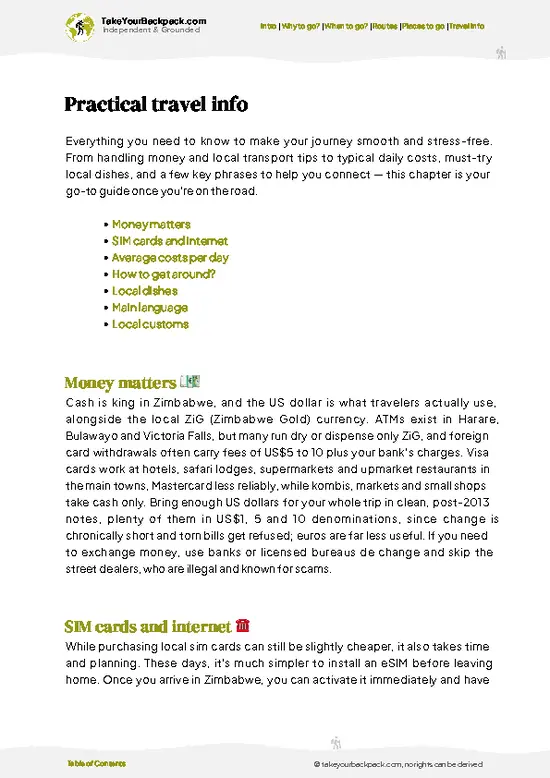
example page 0 from our offline Travel Guide for Zimbabwe
example page 1 from our offline Travel Guide for Zimbabwe
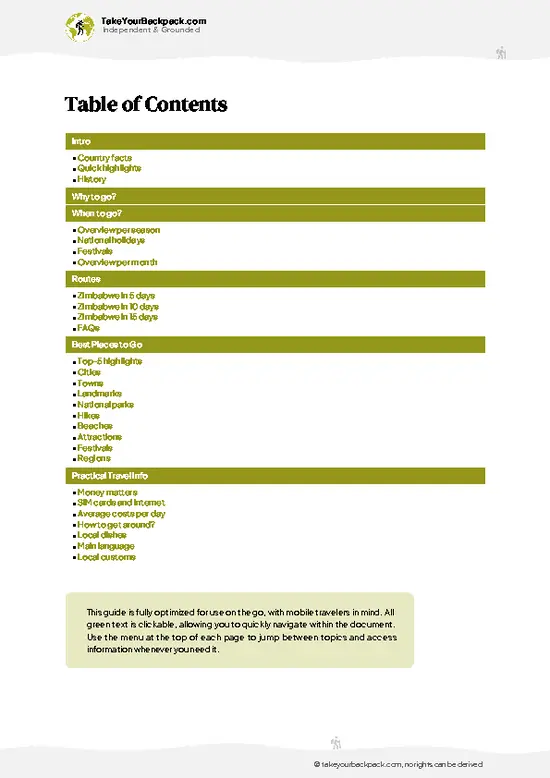
example page 2 from our offline Travel Guide for Zimbabwe
example page 3 from our offline Travel Guide for Zimbabwe
example page 4 from our offline Travel Guide for Zimbabwe
example page 5 from our offline Travel Guide for Zimbabwe
example page 6 from our offline Travel Guide for Zimbabwe
example page 7 from our offline Travel Guide for Zimbabwe
The digital guide (281 pages) contains:
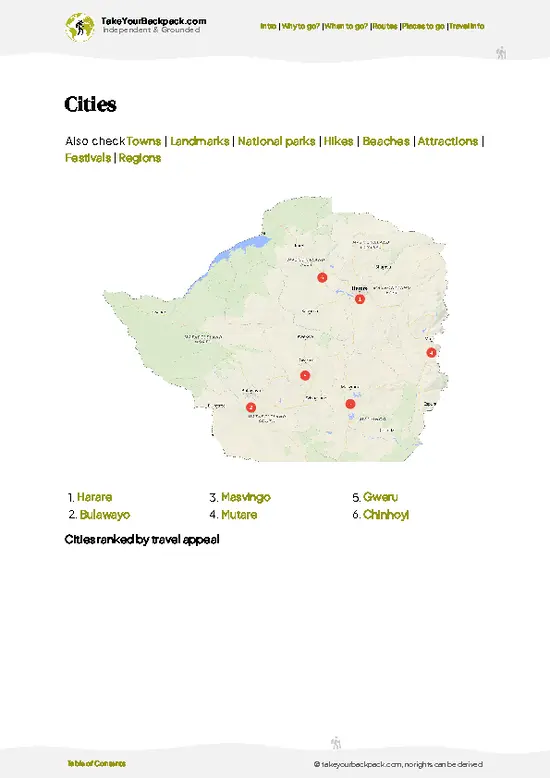
72 highlights, ranked by travel appeal
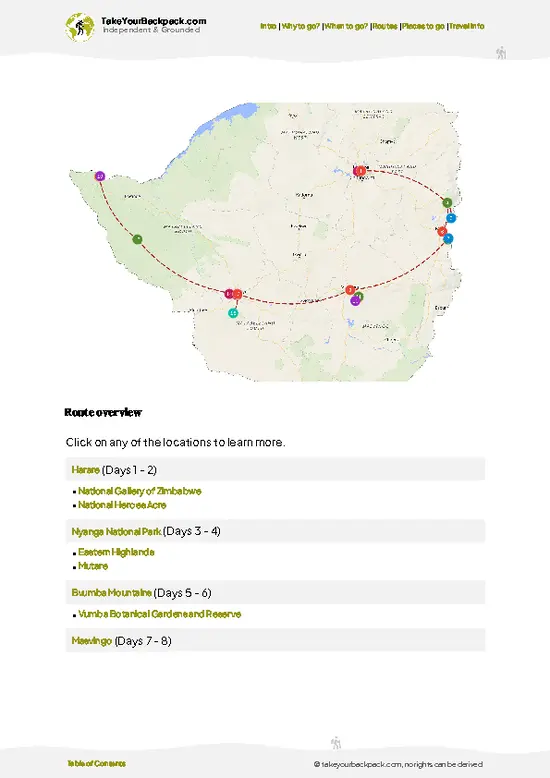
Optimized 5, 10 & 15-day travel routes
Cities, national parks, landmarks, beaches
How to get around
Offline-friendly for travel without Wi-Fi
👉 Click to see all 30+ guide features

📅 Plan smarter in minutes, not weeks
Month by month travel advice
Festivals & national holidays
Budget expectations

🗺️ Go to the right places, skip the overrated ones
Honest pros & cons of destinations
Top hikes, parks & viewpoints
Lesser-known places most travelers miss
Clear “worth it vs skip it” guidance

🛏️ Travel smoothly without rookie mistakes
Best areas to stay
Transport systems explained simply
Common scams & safety advice
SIM cards, money & practical tips

🌍 Understand the country, not just visit it
Culture & traditions
52 Essential phrases & customs
Festivals worth planning around
Traveler-friendly historical context
Insights that make places more meaningful

📱 Built for real travel conditions
Fully downloadable PDF
Works completely offline
Optimized for phone use
Useful in remote areas & buses
Everything in one place
Save weeks of stressful planning
Get instant access to your full guide. 30‑day money-back guarantee.
+ Add another guide for just US$7.80

By proceeding you agree to our terms.
Sent to your inbox immediately after payment • 100% Secure Checkout
Best Backpacking Travel Advisor 2025 tourism awardBest Backpacking
Travel Advisor
2025
What others say about Take Your Backpack Guides:
⭐⭐⭐⭐⭐
Fantastic, amazing amount of information!
⭐⭐⭐⭐⭐
My goodness this is amazing, it's what I've been looking for hats off too you!
⭐⭐⭐⭐⭐
I think this is absolutely BRILLIANT
⭐⭐⭐⭐
Very complete and informative. It's still missing places, but I gotta to commend you
⭐⭐⭐⭐⭐
This is truly amazing, thank you, can't wait to explore it with my kids!
⭐⭐⭐⭐⭐
Awesome resource, thank you!
⭐⭐⭐⭐⭐
This is amazing! Can't wait to explore the ones I haven't seen
⭐⭐⭐⭐
I love this! Well done, great idea.
⭐⭐⭐⭐⭐
Thanks for taking the time to make this gem!
⭐⭐⭐⭐⭐
This might be the best website I've ever seen.
⭐⭐⭐⭐⭐
Congratulations, and thank you so much for your work; it's incredibly valuable.
⭐⭐⭐⭐
In all seriousness I think you did a great job pointing out the important spots
⭐⭐⭐⭐⭐
10/10 very good
⭐⭐⭐⭐⭐
As someone who's only just starting to visit regularly this is awesome, thank you.
⭐⭐⭐⭐
Thank you very much! I'm going to visit my dad, it's going to be very useful!
⭐⭐⭐⭐⭐
This is really cool! We'll be travelling for the first time and this definitely come in handy.
⭐⭐⭐⭐⭐
You are now our minister of culture, congratulations 👨‍💼
⭐⭐⭐⭐⭐
Just wanted to tell you that this is a pearl! Going to follow your recommendations.
⭐⭐⭐⭐⭐
This is so cool. I'll definitely be using the resource for my travels soon.
⭐⭐⭐⭐⭐
This is very impressive! Good work.
⭐⭐⭐⭐⭐
This is an amazing and informative site. Very well done!

🛏️ Where to stay?Choosing the right base

Matusadona National Park is a wild, untamed beauty, and finding the right place to stay can enhance your experience. Inside the park, options are limited but worth considering. The Matusadona Safari Lodge offers a cozy base with comfortable accommodations and guided tours. It’s a solid choice for those wanting to immerse themselves in the park’s wildlife.

For a more budget-friendly option, look into the Matusadona National Park Campsites. They provide basic amenities and a chance to connect with nature directly. Just remember to bring your own gear and food; it’s a no-frills experience that can … read more 👉
Matusadona National Park is a wild, untamed beauty, and finding the right place to stay can enhance your experience. Inside the park, options are limited but worth considering. The Matusadona Safari Lodge offers a cozy base with comfortable accommodations and guided tours. It’s a solid choice for those wanting to immerse themselves in the park’s wildlife.

For a more budget-friendly option, look into the Matusadona National Park Campsites. They provide basic amenities and a chance to connect with nature directly. Just remember to bring your own gear and food; it’s a no-frills experience that can be rewarding if you’re prepared.

If you prefer to stay outside the park, Kariba is your best bet. This town has a range of accommodations, from guesthouses to lodges. The views of the lake are stunning, and you can find local eateries that serve authentic Zimbabwean cuisine.

Keep in mind that transport to and from the park can add up, so factor that into your budget. Planning ahead will save you from unexpected costs and keep your adventure smooth.

👛 Costs (as of 3 September 2026)Money, prices, and spending tips

Matusadona National Park in Zimbabwe offers a range of costs that can catch you off guard if you’re not prepared.

First, the entrance fee is about $10 to $15 per person per day. This fee is essential for park maintenance and conservation efforts. If you’re planning to camp, expect to pay around $15 to $25 per night for a campsite.

Guided tours can vary significantly. A half-day boat safari might set you back $50 to $100, while a full-day guided tour can range from $100 to $200. These prices often include park fees, but always confirm what’s included to avoid surprises.

Accommodations nearby can also vary. Budget lodges start at around $30 per night, while mid-range options can go up to $100. Luxury lodges can easily exceed $300 per night.

Food costs are generally reasonable. Expect … read more 👉
Matusadona National Park in Zimbabwe offers a range of costs that can catch you off guard if you’re not prepared.

First, the entrance fee is about $10 to $15 per person per day. This fee is essential for park maintenance and conservation efforts. If you’re planning to camp, expect to pay around $15 to $25 per night for a campsite.

Guided tours can vary significantly. A half-day boat safari might set you back $50 to $100, while a full-day guided tour can range from $100 to $200. These prices often include park fees, but always confirm what’s included to avoid surprises.

Accommodations nearby can also vary. Budget lodges start at around $30 per night, while mid-range options can go up to $100. Luxury lodges can easily exceed $300 per night.

Food costs are generally reasonable. Expect to pay about $5 to $15 for a meal at local eateries. However, dining at lodges or upscale restaurants can push that to $30 or more.

Keep in mind that cash is king in Zimbabwe. Many places don’t accept cards, so plan to carry enough cash for your entire stay.

Being aware of these costs will help you allocate your budget wisely, ensuring you have the energy and funds for the experiences that truly matter in this beautiful park.


source: zimparks.org.zw
⚠️ Prices can change and everyone travels differently, so take this as a rough guide. Hope it helps you plan your adventure!

🥾 TrailsScenic routes and wildlife spotting in Matusadona

Matusadona National Park is a hidden gem for hikers looking for a mix of stunning views, diverse wildlife, and a bit of adventure. The park hugs the shores of Lake Kariba and is surrounded by rugged hills and lush vegetation, making every step a feast for the eyes. You’ll likely spot elephants, hippos, and even some big cats if you’re lucky. The terrain varies from flat lakeside paths to more challenging hilly areas, so there’s something for everyone.

There are a couple of designated trails worth checking out. One popular option is the Matusadona Trail:
  • Length: 15 km
  • Estimated Duration: 5-6 hours
  • Difficulty
read more 👉
Matusadona National Park is a hidden gem for hikers looking for a mix of stunning views, diverse wildlife, and a bit of adventure. The park hugs the shores of Lake Kariba and is surrounded by rugged hills and lush vegetation, making every step a feast for the eyes. You’ll likely spot elephants, hippos, and even some big cats if you’re lucky. The terrain varies from flat lakeside paths to more challenging hilly areas, so there’s something for everyone.

There are a couple of designated trails worth checking out. One popular option is the Matusadona Trail:
  • Length: 15 km
  • Estimated Duration: 5-6 hours
  • Difficulty Level: Moderate
  • Key Features: Stunning views of Lake Kariba, diverse birdlife, and chances to see wildlife up close.
  • Terrain: A mix of flat lakeside paths and some hilly sections.

Getting to Matusadona can be a bit of a trek, but it’s doable. Public transport options are available from nearby towns, though you might need to hop on a few different buses. Just be ready for a bit of a wait. The park isn’t usually overrun with tourists, so you can enjoy the tranquility—perfect for soaking in the scenery. As for the entrance fee, it’s not too steep, but make sure to check the latest rates before you go, as they can change.
⚠️ Hiking info can sometimes be outdated or inaccurate. Before you hit the trail, check the latest conditions with locals. If you do spot anything that's off, I'd love to hear from you, so I can update it for fellow travelers.

🛡️ SafetyTraveler Safety Guide

Matusadona National Park offers a straightforward hiking experience, but a few practical considerations can enhance your adventure. Weather can shift quickly, especially during the rainy season, so pack a reliable rain jacket and check forecasts before heading out. The terrain is generally manageable, but be prepared for uneven footing and occasional steep sections. Good hiking boots with ankle support are essential.

Wildlife encounters are part of the thrill here. Elephants and hippos roam freely, so keep a respectful distance. If you spot wildlife, stay calm and observe quietly; sudden movements can startle them.

First-time visitors often underestimate the importance of hydration. Carry enough water, especially on warmer days, as some trails lack reliable sources. Lastly, familiarize … read more 👉
Matusadona National Park offers a straightforward hiking experience, but a few practical considerations can enhance your adventure. Weather can shift quickly, especially during the rainy season, so pack a reliable rain jacket and check forecasts before heading out. The terrain is generally manageable, but be prepared for uneven footing and occasional steep sections. Good hiking boots with ankle support are essential.

Wildlife encounters are part of the thrill here. Elephants and hippos roam freely, so keep a respectful distance. If you spot wildlife, stay calm and observe quietly; sudden movements can startle them.

First-time visitors often underestimate the importance of hydration. Carry enough water, especially on warmer days, as some trails lack reliable sources. Lastly, familiarize yourself with the trail map; navigation is straightforward, but knowing your route helps maintain your pace and energy. Enjoy the journey, and let the park’s beauty unfold at your own rhythm.

FAQTraveler FAQ

3 to 4 days are ideal to explore Matusadona National Park thoroughly, allowing time for game drives and boat safaris on Lake Kariba. This duration lets you cover the main wildlife areas and enjoy the scenery without rushing.
No, visiting Matusadona National Park without a car is difficult as the park is remote and public transport options are very limited. Most visitors use 4x4 vehicles or join guided tours that provide transport within the park.
Yes, there is an entrance fee for Matusadona National Park. As of recent rates, the fee is approximately $20 USD per person per day, and additional permits may be required for activities like fishing or boat safaris.
⚠️ Things can change over time, so always validate details locally before you go.

Other Zimbabwean national parks near Matusadona

Explore more nearby:


💡 Not sure where to go next?
Create a personalized itinerary for Zimbabwe including Matusadona and the places that fit your trip.

Generate my itinerary

👉 Discover all national parks

Or checkout all Zimbabwe has to offer (think cities, towns, villages, national parks, hikes, beaches, festivals)
Country photo of Zimbabwe

We 💚 feedbackSumming up the experience

Matusadona National Park is a treasure for wildlife lovers. Picture elephants splashing in the Zambezi, a scene that sticks with you long after you leave. But here’s the catch: access can be tricky. The roads are rough, and you might need a 4x4 to navigate them. Plan ahead to avoid frustration. Embrace the journey; it’s part of the experience. Just remember, the effort is worth it for those unforgettable moments in nature.

✈️ When did I visit Zimbabwe?
I have backpacked Zimbabwe all the way back in 2001.

✍️ Help improve this page!
The information on this page is based on my own backpacking experience in Zimbabwe, supplemented with up-to-date research and feedback from other travelers. Travel details can change, so if you notice anything outdated or incomplete, feel free to let me know.


🙋‍♂️ Give feedback

👋 Meet the founderWho’s Behind Take Your Backpack?

Johan, backpacker and founder of TakeYourBackpackHi, I’m Johan (Netherlands 🇳🇱), the creator of TakeYourBackpack. Over the past decade, I’ve backpacked through 80+ countries across six continents, gaining extensive experience with independent travel, long-term trips, and overland routes.

This site is built on a combination of firsthand travel experience and carefully curated insights from other backpackers. Many guides are based on places I’ve personally visited, while others bring together tips, observations, and practical advice shared by trusted travelers I’ve met along the way.

The goal is to provide realistic, experience-driven guidance — not generic itineraries — so you can explore destinations with better context, clearer expectations, and more confidence.

Get full Zimbabwe guide •
Instant download • 72 highlights • Full Offline guide