×

Zimbabwe🇿🇼 | festivalsMbira FestivalMbira keys, hosho rattles, interlocking melodies, handmade instruments | things to do and best time to go

Explore Bulawayo Arts FestivalExplore Kariba Tiger Fishing Tournament

Backpacking in Mbira
👀 For curious travelersfestival ranked #10
By Johan Kruseman 🇳🇱 | Updated October 22, 2026

Entry is cheap, the music is free of velvet ropes, and you can wander between stages without a plan. Mbira Festival unfolds in Harare, Zimbabwe’s capital, and the GPS spot sits in the city center, so you can sleep in town and walk or hop a short ride to the venue. Expect mbira thumb pianos, hosho rattles, drumming and dancers, with a crowd of locals, diaspora families and a scattering of curious backpackers. It runs for a few days and stays friendly and loose. I arrived on a crowded minibus, and the conductor swapped seats with me so I could keep my pack on my knees, then pointed me toward the sound of the lead player. Unlike the big, polished Harare International Festival of the Arts nearby, this one stays rooted in traditional music.

Discover everything you want to know in the 📖 Zimbabwe Travel Guide.


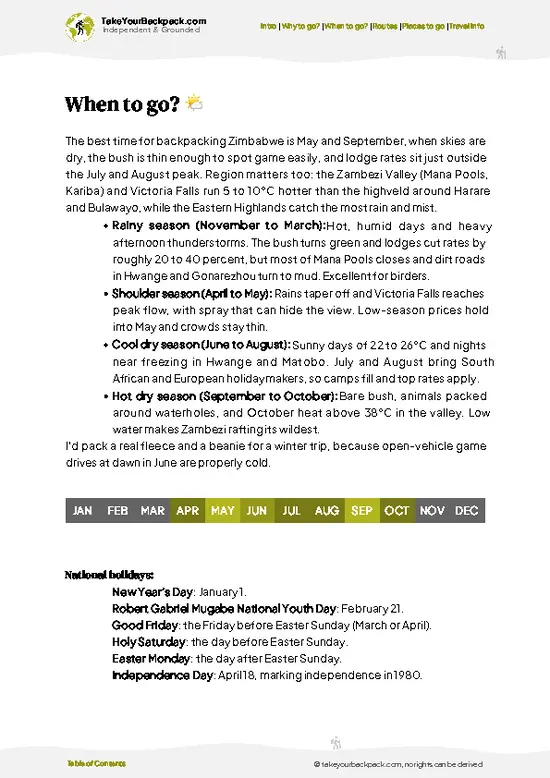
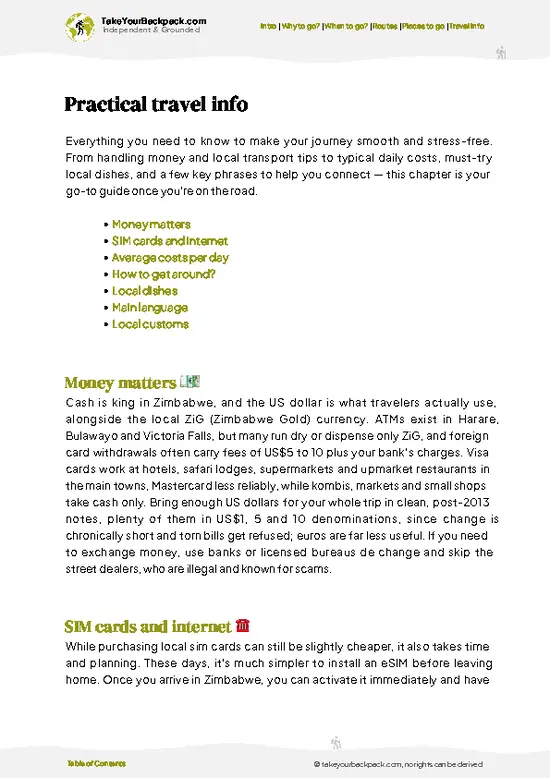
example page 0 from our offline Travel Guide for Zimbabwe
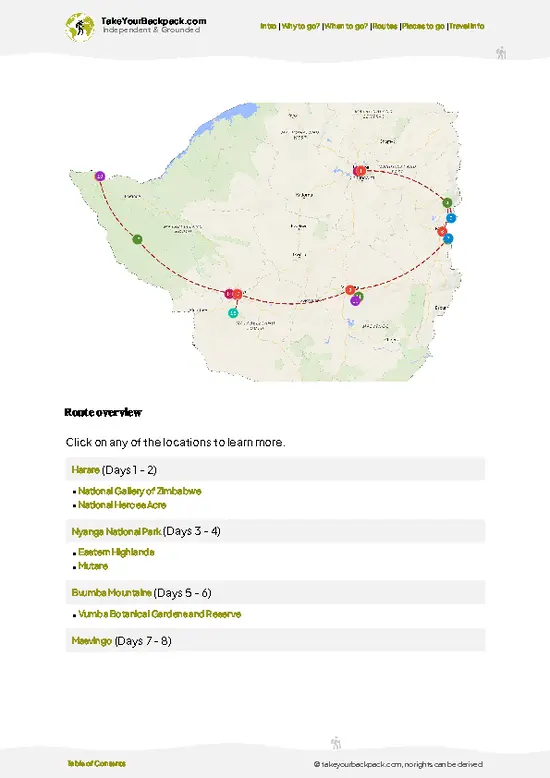
example page 1 from our offline Travel Guide for Zimbabwe
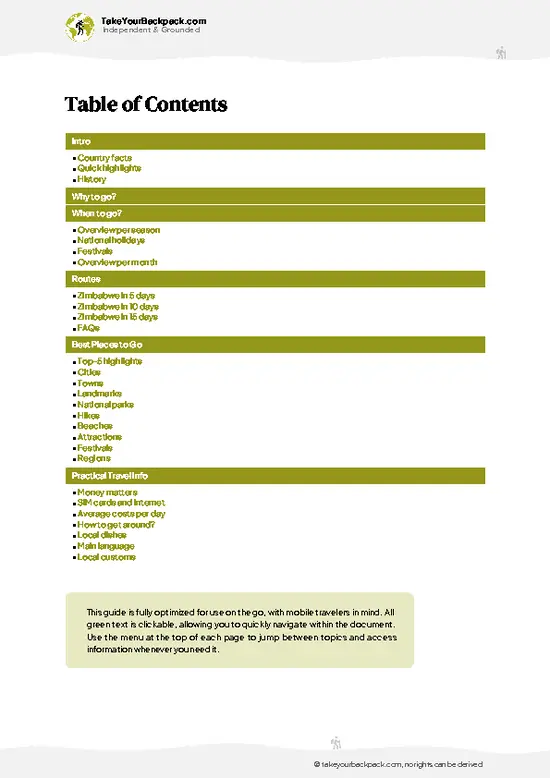
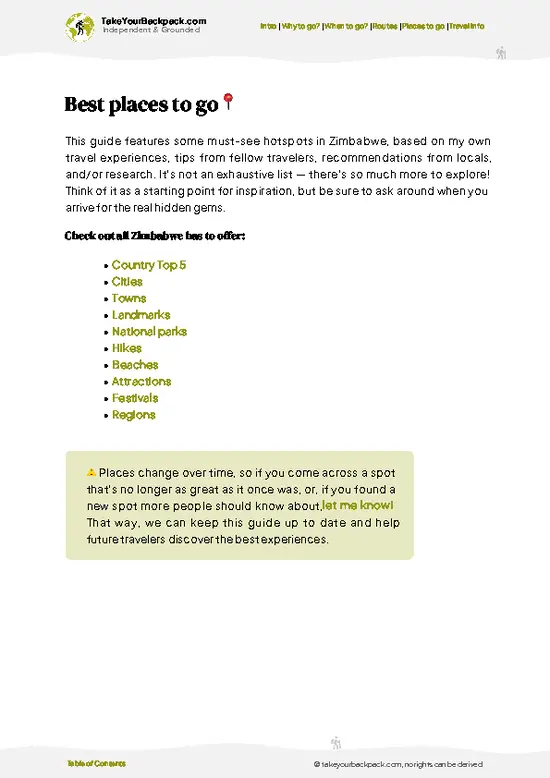
example page 2 from our offline Travel Guide for Zimbabwe
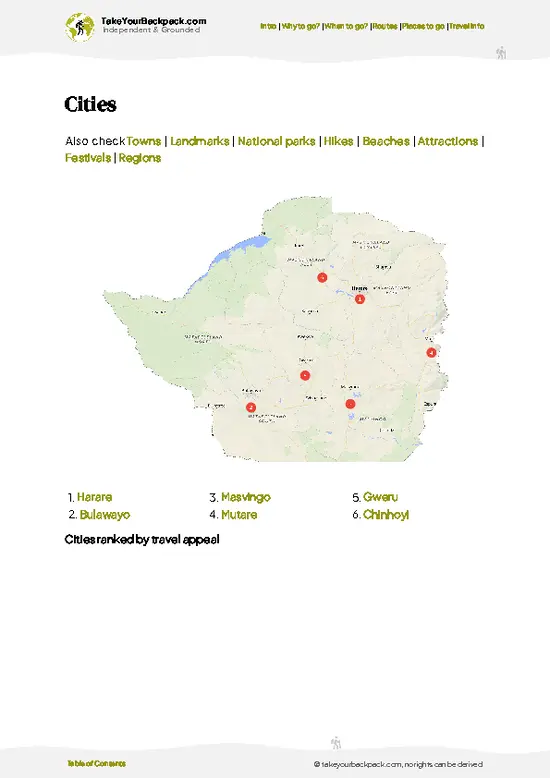
example page 3 from our offline Travel Guide for Zimbabwe
example page 4 from our offline Travel Guide for Zimbabwe
example page 5 from our offline Travel Guide for Zimbabwe
example page 6 from our offline Travel Guide for Zimbabwe
example page 7 from our offline Travel Guide for Zimbabwe
Loading the map 🌍
CLICK TO FILTER
cities
towns
landmarks
national parks
hikes
beaches
attractions
festivals
regions
SHOW COUNTRY’S BESTSHOW ALL

✨ Why go?
Ranked #10 festival in Zimbabwe
What makes it a must-see festival

Mbira Festival gives you a front-row seat to the instrument at the heart of Shona spiritual and social life, and that is a rare thing to find in a capital city. Backpackers plan around it because the mbira dzavadzimu tradition is usually heard at ceremonies you would never be invited to, while here you can sit twenty feet from the players and hear the layered, looping patterns build. The social side is just as strong. Audiences sing back, dance up front and chat easily with strangers, so you leave with names, phone numbers and invitations to hear more music around town. It also slots well into a longer Zimbabwe loop, since Harare is the hub for Great Zimbabwe and the Eastern Highlands. Pair it with a few days of Harare’s live music venues and you get a deeper musical picture than most visitors ever see.

💡 HighlightsMust-see experiences and standout moments

  1. Mbira dzavadzimu performances: The headline act is the instrument itself, metal keys on a wooden board inside a gourd resonator. Players weave interlocking melodies that can run for twenty minutes without losing their grip on you.
  2. Hosho and drum accompaniment: Paired gourd rattles lock in a steady shuffle under the mbira, and the drums give the dancers their pulse. Stand near the percussion to feel how the rhythm is built.
  3. Traditional dance in front of the stage: Locals pull strangers in, and nobody minds if you move badly. Watch the older women first, because their footwork sets the standard.
  4. Contemporary mbira fusion sets: Younger bands plug mbira into guitars, bass and kit, which shows how a centuries-old sound still shapes Zimbabwean pop and jazz.
  5. Craft and food stalls: Vendors sell hand-built
… read more 👉
  1. Mbira dzavadzimu performances: The headline act is the instrument itself, metal keys on a wooden board inside a gourd resonator. Players weave interlocking melodies that can run for twenty minutes without losing their grip on you.
  2. Hosho and drum accompaniment: Paired gourd rattles lock in a steady shuffle under the mbira, and the drums give the dancers their pulse. Stand near the percussion to feel how the rhythm is built.
  3. Traditional dance in front of the stage: Locals pull strangers in, and nobody minds if you move badly. Watch the older women first, because their footwork sets the standard.
  4. Contemporary mbira fusion sets: Younger bands plug mbira into guitars, bass and kit, which shows how a centuries-old sound still shapes Zimbabwean pop and jazz.
  5. Craft and food stalls: Vendors sell hand-built mbira, rattles and cloth, and you can try sadza with stews between sets. Ask a maker to play the instrument before you buy, since tuning varies a lot.
Mbira Festival works best when you pair the dance floor in front of the stage with an afternoon at the craft stalls, then return for the fusion sets after dark.
Spotted a mistake or missing something? Contact us.

Things to do near Mbira Festival

Ratings based on Tripadvisor reviews. When you book through this link, you support our work at no extra cost to you.

🌤️ When to go?When is the celebration of Mbira Festival?

Mbira Festival, better known as the Harare International Festival of the Arts' mbira showcase and the Zimbabwe Mbira Festival circuit, is held in Harare, usually in late April or May, with performances running across several days at city venues.
  • Best day: Go on the closing weekend, when the biggest mbira ensembles share a stage and the crowds sing along.
  • Weather: Days reach 22 to 26°C (72 to 79°F), evenings drop to 10 to 12°C (50 to 54°F), and rain is rare. Bring a warm layer, sunscreen and a hat for open-air sets.
  • Booking: Reserve beds two to three weeks ahead, as prices can climb 20 to 40 percent. Tickets are easy to buy at the gate for most shows.
  • Transport: Reach the venue by early afternoon, since evening traffic on Harare's main roads clogs, and leave before the final encore to catch a ride.
… read more 👉
Mbira Festival, better known as the Harare International Festival of the Arts' mbira showcase and the Zimbabwe Mbira Festival circuit, is held in Harare, usually in late April or May, with performances running across several days at city venues.
  • Best day: Go on the closing weekend, when the biggest mbira ensembles share a stage and the crowds sing along.
  • Weather: Days reach 22 to 26°C (72 to 79°F), evenings drop to 10 to 12°C (50 to 54°F), and rain is rare. Bring a warm layer, sunscreen and a hat for open-air sets.
  • Booking: Reserve beds two to three weeks ahead, as prices can climb 20 to 40 percent. Tickets are easy to buy at the gate for most shows.
  • Transport: Reach the venue by early afternoon, since evening traffic on Harare's main roads clogs, and leave before the final encore to catch a ride.
Arrive a day early so you can settle in and catch a soundcheck.


source: climatestotravel.comJANJanuary: not recommended for travelingFEBFebruary: not recommended for travelingMARMarch: not recommended for travelingAPRApril: not recommended for travelingMAYMay: excellent for travelingJUNJune: not recommended for travelingJULJuly: not recommended for travelingAUGAugust: not recommended for travelingSEPSeptember: not recommended for travelingOCTOctober: not recommended for travelingNOVNovember: not recommended for travelingDECDecember: not recommended for traveling

✈️ The backpacker research shortcutZimbabwe Travel Guide

An offline-friendly backpacking guide with optimized travel routes, ranked highlights, transport advice, and the best areas to stay.
example page 0 from our offline Travel Guide for Zimbabwe
example page 1 from our offline Travel Guide for Zimbabwe
example page 2 from our offline Travel Guide for Zimbabwe
example page 3 from our offline Travel Guide for Zimbabwe
example page 4 from our offline Travel Guide for Zimbabwe
example page 5 from our offline Travel Guide for Zimbabwe
example page 6 from our offline Travel Guide for Zimbabwe
example page 7 from our offline Travel Guide for Zimbabwe
The digital guide (265 pages) contains:
✅ 67 highlights, ranked by travel appeal
✅ Optimized 5, 10 & 15-day travel routes
✅ Cities, national parks, landmarks, beaches
✅ How to get around
✅ Offline-friendly for travel without Wi-Fi
👉 Click to see all 30+ guide features

📅 Plan smarter in minutes, not weeks
✅ Month by month travel advice
✅ Festivals & national holidays
✅ Budget expectations

🗺️ Go to the right places, skip the overrated ones
✅ Honest pros & cons of destinations
✅ Top hikes, parks & viewpoints
✅ Lesser-known places most travelers miss
✅ Clear “worth it vs skip it” guidance

🛏️ Travel smoothly without rookie mistakes
✅ Best areas to stay
✅ Transport systems explained simply
✅ Common scams & safety advice
✅ SIM cards, money & practical tips

🌍 Understand the country, not just visit it
✅ Culture & traditions
✅ 52 Essential phrases & customs
✅ Festivals worth planning around
✅ Traveler-friendly historical context
✅ Insights that make places more meaningful

📱 Built for real travel conditions
✅ Fully downloadable PDF
✅ Works completely offline
✅ Optimized for phone use
✅ Useful in remote areas & buses
✅ Everything in one place
Stop searching, start planning
Get instant access to your full guide. 30‑day money-back guarantee.
+ Add another guide for just

By proceeding you agree to our terms.
Sent to your inbox immediately after payment • 100% Secure Checkout
Best Backpacking Travel Advisor 2025 tourism awardBest Backpacking
Travel Advisor
2025
What others say about Take Your Backpack Guides:
⭐⭐⭐⭐⭐
Fantastic, amazing amount of information!
⭐⭐⭐⭐⭐
My goodness this is amazing, it's what I've been looking for hats off too you!
⭐⭐⭐⭐⭐
I think this is absolutely BRILLIANT
⭐⭐⭐⭐
Very complete and informative. It's still missing places, but I gotta to commend you
⭐⭐⭐⭐⭐
This is truly amazing, thank you, can't wait to explore it with my kids!
⭐⭐⭐⭐⭐
Awesome resource, thank you!
⭐⭐⭐⭐⭐
This is amazing! Can't wait to explore the ones I haven't seen
⭐⭐⭐⭐
I love this! Well done, great idea.
⭐⭐⭐⭐⭐
Thanks for taking the time to make this gem!
⭐⭐⭐⭐⭐
This might be the best website I've ever seen.
⭐⭐⭐⭐⭐
Congratulations, and thank you so much for your work; it's incredibly valuable.
⭐⭐⭐⭐
In all seriousness I think you did a great job pointing out the important spots
⭐⭐⭐⭐⭐
10/10 very good
⭐⭐⭐⭐⭐
As someone who's only just starting to visit regularly this is awesome, thank you.
⭐⭐⭐⭐
Thank you very much! I'm going to visit my dad, it's going to be very useful!
⭐⭐⭐⭐⭐
This is really cool! We'll be travelling for the first time and this definitely come in handy.
⭐⭐⭐⭐⭐
You are now our minister of culture, congratulations 👨‍💼
⭐⭐⭐⭐⭐
Just wanted to tell you that this is a pearl! Going to follow your recommendations.
⭐⭐⭐⭐⭐
This is so cool. I'll definitely be using the resource for my travels soon.
⭐⭐⭐⭐⭐
This is very impressive! Good work.
⭐⭐⭐⭐⭐
This is an amazing and informative site. Very well done!

🛏️ Where to stay?How to pick the right area

Avondale, Belgravia and Milton Park are the safest, most sociable areas for backpackers in Harare, and each sits a short ride from the main festival venues. Avondale has the densest cluster of cafes, small guesthouses and shared dorms, so you can walk to dinner after dark and meet other solo travelers over breakfast. Belgravia is quieter and leafy, with a residential feel, good for anyone who wants sleep between late sets. Milton Park puts you near the city center and the Harare Gardens, handy when performances start in the afternoon and you need quick access. Avoid central streets late at night, … read more 👉
Avondale, Belgravia and Milton Park are the safest, most sociable areas for backpackers in Harare, and each sits a short ride from the main festival venues. Avondale has the densest cluster of cafes, small guesthouses and shared dorms, so you can walk to dinner after dark and meet other solo travelers over breakfast. Belgravia is quieter and leafy, with a residential feel, good for anyone who wants sleep between late sets. Milton Park puts you near the city center and the Harare Gardens, handy when performances start in the afternoon and you need quick access. Avoid central streets late at night, and use a registered taxi or ride-hailing app after dark rather than walking. Book early in the weeks around the festival, because the best budget beds fill first. Staying in a shared guesthouse often helps you find people to split taxis with, which cuts costs and adds safety when the music ends.

👛 Costs (as of 22 October 2026)Typical daily expenses

Mbira Festival costs roughly US$56 to 105 per day for an independent traveler in Harare. That total includes a mid-range bed in high season and standard festival spending.
CategoryBudget RangeLocal Reality
Festival ticketsUS$5 to 20Single shows are cheapest, while premium evening concerts cost more.
AccommodationUS$15 to 40Dorms and guesthouses in Avondale or Belgravia rise during festival weeks.
Local transportUS$3 to 12Shared minibuses cost under US$1 per ride, while taxis after dark run US$5 to 10.
Food & drinksUS$8 to 18Sadza plates cost US$3 to 6 and a beer US$1.50 to 3.
Miscellaneous expensesUS$5 to 15Covers mbira souvenirs, SIM data and tips.
Total Daily BudgetUS$56 to 105About US$75 for a comfortable day.
⚠️ Prices can change and everyone travels differently, so take this as a rough guide. Hope it helps you plan your adventure!

🍲 FoodWhat to Eat & Drink

Expect sadza with stew or braaied meat as the backbone of festival eating. Stalls grill beef and chicken over charcoal, and the smoke drifts through the crowd while the mbira players tune up. Order sadza and relish with greens like covo or muriwo for the most authentic plate, and try boerewors if you want something quick between sets.

For drinks, look for maheu, Zambezi lager and soft drinks sold from cooler boxes. Traditional sorghum beer appears at some community stalls and is worth a sip for the tang.

Portions are filling, so share a plate with a new friend. Lines move slowly because everything is cooked to order, so eat before the headline act. Carry small US dollar notes since card machines are unreliable and change can be scarce.

FAQFrequently asked questions about Mbira

Mbira Festival takes place in Harare, usually in late April or May, over several days of performances. Exact dates shift each year, so check the program a month ahead. The closing weekend draws the largest crowds and the biggest ensembles.
Attending Mbira Festival typically costs US$5 to 20 per show, depending on the act and venue. Add US$15 to 40 a night for a bed and US$8 to 18 daily for food and drinks. A realistic total for a day is around US$75.
Mbira Festival tickets are often available at the gate for smaller daytime shows, but evening headline concerts can sell out. Buying ahead is wise for the closing weekend, ideally two to three weeks early. Beds in Avondale and Belgravia also fill fast, so reserve them at the same time.
⚠️ Things can change over time, so always validate details locally before you go.

Other Zimbabwean festivals near Mbira

Explore more nearby:


💡 Not sure where to go next?
Create a personalized itinerary for Zimbabwe including Mbira and the places that fit your trip.

Generate my itinerary

👉 Discover all festivals

Or checkout all Zimbabwe has to offer (think cities, towns, villages, national parks, hikes, beaches, festivals)
Country photo of Zimbabwe

We 💚 feedbackFinal thoughts on celebrating the Mbira

Mbira Festival trips go wrong when travelers show up late, catch one set and leave. Arrive early, stay for the full evening and talk to the players between songs. I would also buy a small mbira from a maker you have watched play, not from the first stall you pass.

✈️ When did I visit Zimbabwe?
I have backpacked Zimbabwe all the way back in 2001.

✍️ Help improve this page!
The information on this page is based on my own backpacking experience in Zimbabwe, supplemented with up-to-date research and feedback from other travelers. Travel details can change, so if you notice anything outdated or incomplete, feel free to let me know.


🙋‍♂️ Give feedback

👋 Meet the founderWho’s Behind Take Your Backpack?

Johan, backpacker and founder of TakeYourBackpackHi, I’m Johan (Netherlands 🇳🇱), the creator of TakeYourBackpack. Over the past 3 decades, I’ve backpacked through 90+ countries across six continents, gaining extensive experience with independent travel, long-term trips, and overland routes.

This site is built on a combination of firsthand travel experience and carefully curated insights from other backpackers. Many guides are based on places I’ve personally visited, while others bring together tips, observations, and practical advice shared by trusted travelers I’ve met along the way.

The goal is to provide realistic, experience-driven guidance — not generic itineraries — so you can explore destinations with better context, clearer expectations, and more confidence.