×

Zimbabwe🇿🇼 | festivalsHarare International Festival of the ArtsHarare Gardens lawn, six-day program, Reps Theatre, children’s workshops | things to do and best time to go

Explore Chimanimani Arts FestivalExplore Harare International Carnival

Backpacking in Harare International of the Arts
🏆 Top pickfestival ranked #1
By Johan Kruseman 🇳🇱 | Updated October 22, 2026

HIFA is a city festival with no campsite and no field of tents, so you sleep in a guesthouse or hostel and walk or ride to the shows. It takes place in Zimbabwe’s capital, Harare, with its hub at Harare Gardens in the city center and satellite stages in theaters and galleries around town. Expect about six days of live music, theater, dance, circus, poetry and visual art, usually around the end of April or start of May. The crowd is Zimbabwean families, students, artists and a small band of overlanders, and the mood is more picnic blanket than mosh pit. On my way in, a taxi driver tapped the dashboard and said, “Come hungry, the gardens smell of braai by dinner.” He was right. Buy your pass early, pick up a venue map, and spend day one wandering the craft and food stalls at midday, catching an afternoon theater piece, then claiming a patch of lawn for the evening main stage.

Discover everything you want to know in the 📖 Zimbabwe Travel Guide.


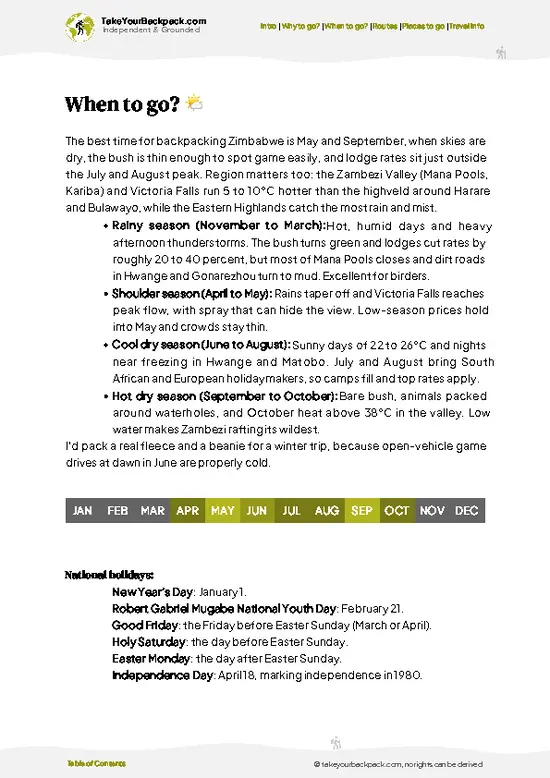
example page 0 from our offline Travel Guide for Zimbabwe
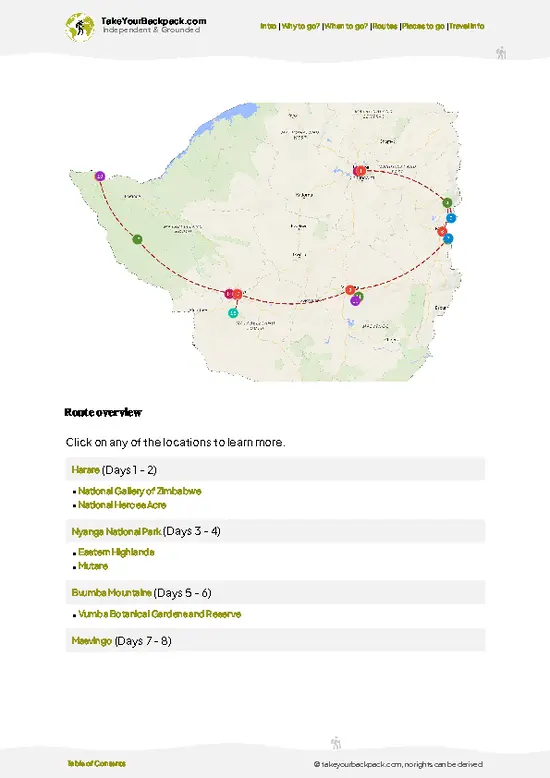
example page 1 from our offline Travel Guide for Zimbabwe
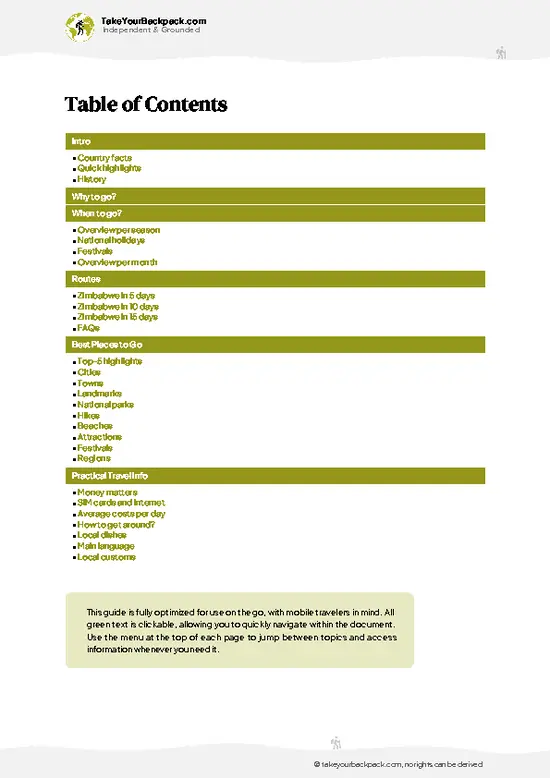
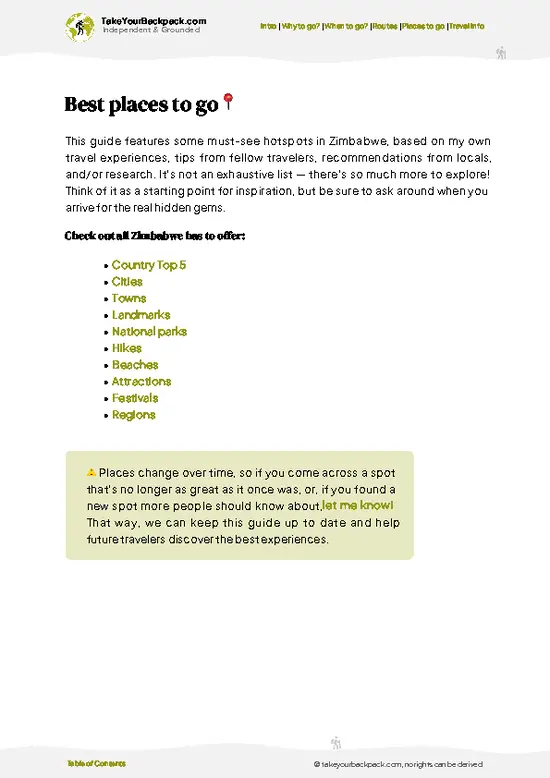
example page 2 from our offline Travel Guide for Zimbabwe
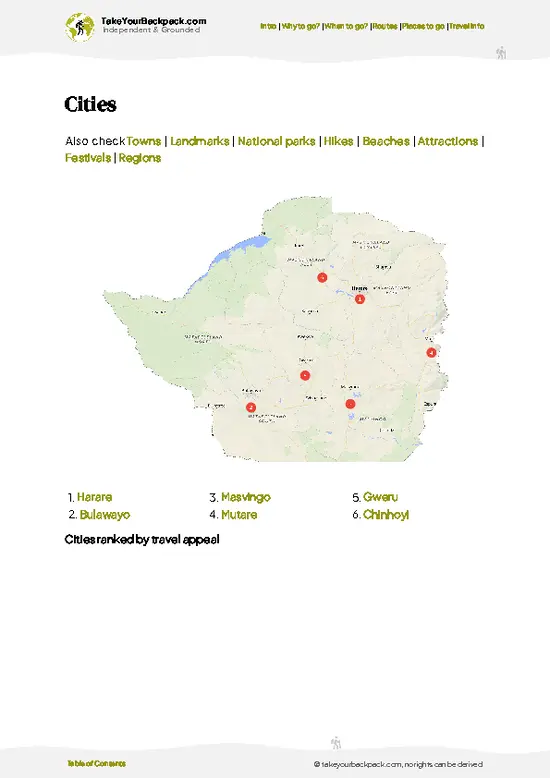
example page 3 from our offline Travel Guide for Zimbabwe
example page 4 from our offline Travel Guide for Zimbabwe
example page 5 from our offline Travel Guide for Zimbabwe
example page 6 from our offline Travel Guide for Zimbabwe
example page 7 from our offline Travel Guide for Zimbabwe
Loading the map 🌍
CLICK TO FILTER
cities
towns
landmarks
national parks
hikes
beaches
attractions
festivals
regions
SHOW COUNTRY’S BESTSHOW ALL

✨ Why go?
Ranked #1 festival in Zimbabwe
Why Harare International of the Arts should be on your travel list

Harare International Festival of the Arts pulls backpackers into Zimbabwe’s capital because it compresses a country’s creative scene into one walkable week. Instead of hunting for gigs in scattered clubs, you get Harare Gardens as a single meeting point where mbira players, Afro-jazz bands, poets and visiting acts from elsewhere in Africa share a program. That makes it easy to talk to strangers. Sit on the lawn with a plate of sadza and relish and someone will tell you which show to catch next, which band they grew up listening to, and where the after-party is.

It also fits neatly into a longer route. Harare is a natural gateway for travelers heading on to Great Zimbabwe, the Eastern Highlands or Victoria Falls, so the festival can be the opening act of a Zimbabwe loop rather than a detour. … read more 👉
Harare International Festival of the Arts pulls backpackers into Zimbabwe’s capital because it compresses a country’s creative scene into one walkable week. Instead of hunting for gigs in scattered clubs, you get Harare Gardens as a single meeting point where mbira players, Afro-jazz bands, poets and visiting acts from elsewhere in Africa share a program. That makes it easy to talk to strangers. Sit on the lawn with a plate of sadza and relish and someone will tell you which show to catch next, which band they grew up listening to, and where the after-party is.

It also fits neatly into a longer route. Harare is a natural gateway for travelers heading on to Great Zimbabwe, the Eastern Highlands or Victoria Falls, so the festival can be the opening act of a Zimbabwe loop rather than a detour. Compared with the big camping festivals of Europe, the cost of a day pass and a few meals stays modest, and the daytime theater, dance and gallery events spread through the city show you neighborhoods you would otherwise skip.

💡 HighlightsPlaces and moments you shouldn't skip

  1. Harare Gardens Main Stage. This is the heart of the festival and the place most people picture when they say HIFA. Evening concerts run on the big stage while the lawn fills with blankets, folding chairs and families, and the mix of Zimbabwean and international acts makes it the best single spot for atmosphere.
  2. The Opening Street Carnival. Drummers, dancers, stilt walkers and costumed groups move through central Harare to mark the start of the festival. It spills onto ordinary streets, so office workers and shoppers become the audience, and it is the quickest way to feel the city’s energy.
  3. Theater and Dance at the Reps Theatre. Away from the open-air crowds, the festival uses indoor venues for serious stagework. Zimbabwean playwrights and choreographers tackle everyday life, politics and humor
… read more 👉
  1. Harare Gardens Main Stage. This is the heart of the festival and the place most people picture when they say HIFA. Evening concerts run on the big stage while the lawn fills with blankets, folding chairs and families, and the mix of Zimbabwean and international acts makes it the best single spot for atmosphere.
  2. The Opening Street Carnival. Drummers, dancers, stilt walkers and costumed groups move through central Harare to mark the start of the festival. It spills onto ordinary streets, so office workers and shoppers become the audience, and it is the quickest way to feel the city’s energy.
  3. Theater and Dance at the Reps Theatre. Away from the open-air crowds, the festival uses indoor venues for serious stagework. Zimbabwean playwrights and choreographers tackle everyday life, politics and humor here, and the intimate setting suits anyone who wants more than a music night.
  4. The Craft and Food Stalls in the Gardens. Between shows, you can browse stone sculpture, basketry, beadwork and printed fabrics, then eat grilled meat, sadza or roasted maize from the vendors. It is the easiest place to talk with artisans and to pick up souvenirs that were made locally.
  5. Family and Children’s Programming. Daytime sessions of puppetry, storytelling, circus skills and workshops give the festival a relaxed, community feel. Watching local kids join in is a good reminder that HIFA is as much a neighborhood party as a headline-driven event.
Harare International Festival of the Arts costs least at the Opening Street Carnival, which plays out on public streets and is free to watch.
Spotted a mistake or missing something? Contact us.

Things to do around Harare International Festival of the Arts

Ratings based on Tripadvisor reviews. When you book through this link, you support our work at no extra cost to you.

🌤️ When to go?When is the celebration of Harare International Festival of the Arts?

Harare International Festival of the Arts (HIFA) runs for six days, usually from the last days of April into the first days of May, with the dates fixed each year around the Workers’ Day holiday, and it is centered on Harare Gardens in the city center with shows at theaters and venues across town.
  • Best day: Opening night sets the tone with a big parade and crowds, but I would go midweek for easier seating and the smaller theater and dance shows. Saturday brings the biggest crowds and the loudest music acts.
  • Weather: Late autumn days are dry and sunny at about 24 to 27°C (75 to 81°F), and evenings drop to 10 to 13°C (50 to 55°F). Bring a warm jacket and sunscreen. Rain is rare.
  • Booking: Buy tickets for headline shows a few weeks ahead. Book beds at least a month early, as good central rooms fill
… read more 👉
Harare International Festival of the Arts (HIFA) runs for six days, usually from the last days of April into the first days of May, with the dates fixed each year around the Workers’ Day holiday, and it is centered on Harare Gardens in the city center with shows at theaters and venues across town.
  • Best day: Opening night sets the tone with a big parade and crowds, but I would go midweek for easier seating and the smaller theater and dance shows. Saturday brings the biggest crowds and the loudest music acts.
  • Weather: Late autumn days are dry and sunny at about 24 to 27°C (75 to 81°F), and evenings drop to 10 to 13°C (50 to 55°F). Bring a warm jacket and sunscreen. Rain is rare.
  • Booking: Buy tickets for headline shows a few weeks ahead. Book beds at least a month early, as good central rooms fill and rates climb roughly 20 to 40 percent.
  • Crowds and roads: Traffic around the Gardens jams in the early evening. Arrive before the afternoon rush and leave the venue after shows with a pre-arranged ride.
Arrive a day early, collect your wristband and plan your show schedule before the crowds do.


source: climatestotravel.comJANJanuary: not recommended for travelingFEBFebruary: not recommended for travelingMARMarch: not recommended for travelingAPRApril: excellent for travelingMAYMay: not recommended for travelingJUNJune: not recommended for travelingJULJuly: not recommended for travelingAUGAugust: not recommended for travelingSEPSeptember: not recommended for travelingOCTOctober: not recommended for travelingNOVNovember: not recommended for travelingDECDecember: not recommended for traveling

✈️ The backpacker research shortcutZimbabwe Travel Guide

An offline-friendly backpacking guide with optimized travel routes, ranked highlights, transport advice, and the best areas to stay.
example page 0 from our offline Travel Guide for Zimbabwe
example page 1 from our offline Travel Guide for Zimbabwe
example page 2 from our offline Travel Guide for Zimbabwe
example page 3 from our offline Travel Guide for Zimbabwe
example page 4 from our offline Travel Guide for Zimbabwe
example page 5 from our offline Travel Guide for Zimbabwe
example page 6 from our offline Travel Guide for Zimbabwe
example page 7 from our offline Travel Guide for Zimbabwe
The digital guide (265 pages) contains:
✅ 67 highlights, ranked by travel appeal
✅ Optimized 5, 10 & 15-day travel routes
✅ Cities, national parks, landmarks, beaches
✅ How to get around
✅ Offline-friendly for travel without Wi-Fi
👉 Click to see all 30+ guide features

📅 Plan smarter in minutes, not weeks
✅ Month by month travel advice
✅ Festivals & national holidays
✅ Budget expectations

🗺️ Go to the right places, skip the overrated ones
✅ Honest pros & cons of destinations
✅ Top hikes, parks & viewpoints
✅ Lesser-known places most travelers miss
✅ Clear “worth it vs skip it” guidance

🛏️ Travel smoothly without rookie mistakes
✅ Best areas to stay
✅ Transport systems explained simply
✅ Common scams & safety advice
✅ SIM cards, money & practical tips

🌍 Understand the country, not just visit it
✅ Culture & traditions
✅ 52 Essential phrases & customs
✅ Festivals worth planning around
✅ Traveler-friendly historical context
✅ Insights that make places more meaningful

📱 Built for real travel conditions
✅ Fully downloadable PDF
✅ Works completely offline
✅ Optimized for phone use
✅ Useful in remote areas & buses
✅ Everything in one place
Stop searching, start planning
Get instant access to your full guide. 30‑day money-back guarantee.
+ Add another guide for just

By proceeding you agree to our terms.
Sent to your inbox immediately after payment • 100% Secure Checkout
Best Backpacking Travel Advisor 2025 tourism awardBest Backpacking
Travel Advisor
2025
What others say about Take Your Backpack Guides:
⭐⭐⭐⭐⭐
Fantastic, amazing amount of information!
⭐⭐⭐⭐⭐
My goodness this is amazing, it's what I've been looking for hats off too you!
⭐⭐⭐⭐⭐
I think this is absolutely BRILLIANT
⭐⭐⭐⭐
Very complete and informative. It's still missing places, but I gotta to commend you
⭐⭐⭐⭐⭐
This is truly amazing, thank you, can't wait to explore it with my kids!
⭐⭐⭐⭐⭐
Awesome resource, thank you!
⭐⭐⭐⭐⭐
This is amazing! Can't wait to explore the ones I haven't seen
⭐⭐⭐⭐
I love this! Well done, great idea.
⭐⭐⭐⭐⭐
Thanks for taking the time to make this gem!
⭐⭐⭐⭐⭐
This might be the best website I've ever seen.
⭐⭐⭐⭐⭐
Congratulations, and thank you so much for your work; it's incredibly valuable.
⭐⭐⭐⭐
In all seriousness I think you did a great job pointing out the important spots
⭐⭐⭐⭐⭐
10/10 very good
⭐⭐⭐⭐⭐
As someone who's only just starting to visit regularly this is awesome, thank you.
⭐⭐⭐⭐
Thank you very much! I'm going to visit my dad, it's going to be very useful!
⭐⭐⭐⭐⭐
This is really cool! We'll be travelling for the first time and this definitely come in handy.
⭐⭐⭐⭐⭐
You are now our minister of culture, congratulations 👨‍💼
⭐⭐⭐⭐⭐
Just wanted to tell you that this is a pearl! Going to follow your recommendations.
⭐⭐⭐⭐⭐
This is so cool. I'll definitely be using the resource for my travels soon.
⭐⭐⭐⭐⭐
This is very impressive! Good work.
⭐⭐⭐⭐⭐
This is an amazing and informative site. Very well done!

🛏️ Where to stay?Where staying makes the most sense

The best areas for backpackers are Avondale, Belgravia and the leafy suburbs just north of the center, because they sit within a short ride of the main HIFA stages at Harare Gardens and the Reps Theatre side of town.
Avondale is the easiest base. It has a walkable shopping and café strip, plenty of guesthouses and backpacker-style dorms, and a steady flow of solo travelers swapping festival plans over breakfast. Shared taxis and ride-hailing cars reach the gardens in 10 to 15 minutes, and the streets are calm enough to walk in daylight.
Belgravia and Milton Park suit you if you want quieter, tree-lined … read more 👉
The best areas for backpackers are Avondale, Belgravia and the leafy suburbs just north of the center, because they sit within a short ride of the main HIFA stages at Harare Gardens and the Reps Theatre side of town.
Avondale is the easiest base. It has a walkable shopping and café strip, plenty of guesthouses and backpacker-style dorms, and a steady flow of solo travelers swapping festival plans over breakfast. Shared taxis and ride-hailing cars reach the gardens in 10 to 15 minutes, and the streets are calm enough to walk in daylight.
Belgravia and Milton Park suit you if you want quieter, tree-lined streets and small guesthouses run by owners who know which acts are worth catching. Beds are US$15 to 35 in a dorm or simple room, and hosts often arrange safe late-night rides home.
The city center puts you closest to the venues, but I would only choose it if you are comfortable with busy streets by day and you plan to take a taxi after dark. Avoid walking between venues late at night anywhere in town.
Whichever area you pick, book early, since festival week fills the budget beds fast. Pick a place with secure gates and a host who can call a trusted driver.

👛 Costs (as of 22 October 2026)Money, prices, and spending tips

Harare International Festival of the Arts costs most independent travelers about US$52 to 135 a day, with US$115 as a realistic mid figure including a ticket and a budget bed.
CategoryBudget RangeLocal Reality
Festival ticketsUS$10 to 30Daily gate passes are modest, while headline evening shows and some workshops cost extra.
AccommodationUS$20 to 45Dorms and simple guesthouse rooms in Avondale and Belgravia rise in price during festival week.
Local transportUS$5 to 20Ride-hailing and taxis between suburbs and the gardens are the safest option at night, while minibuses are cheaper by day.
Food & drinksUS$12 to 25Stall plates run US$3 to 7, and beers US$1.50 to 3, mostly paid in cash.
Miscellaneous expensesUS$5 to 15Craft souvenirs, SIM data and tips for performers or guides add up.
Total Daily BudgetUS$52
… read more 👉
Harare International Festival of the Arts costs most independent travelers about US$52 to 135 a day, with US$115 as a realistic mid figure including a ticket and a budget bed.
CategoryBudget RangeLocal Reality
Festival ticketsUS$10 to 30Daily gate passes are modest, while headline evening shows and some workshops cost extra.
AccommodationUS$20 to 45Dorms and simple guesthouse rooms in Avondale and Belgravia rise in price during festival week.
Local transportUS$5 to 20Ride-hailing and taxis between suburbs and the gardens are the safest option at night, while minibuses are cheaper by day.
Food & drinksUS$12 to 25Stall plates run US$3 to 7, and beers US$1.50 to 3, mostly paid in cash.
Miscellaneous expensesUS$5 to 15Craft souvenirs, SIM data and tips for performers or guides add up.
Total Daily BudgetUS$52 to 135About US$115 on a typical day with a ticket, a bed and some evening shows.


source: zimbabwetourism.net
⚠️ Prices can change and everyone travels differently, so take this as a rough guide. Hope it helps you plan your adventure!

🍲 FoodEating & Drinking in Harare International of the Arts

Festival stalls at Harare Gardens serve the food you would eat at any Zimbabwean braai: grilled boerewors sausage, nyama (grilled beef or goat) and chicken with sadza, the thick white maize porridge you pinch into a scoop and dunk into relish. Add collard-style greens (covo) and beans on the side, and you have a plate that costs about US$3 to 7.
Go for the sadza and nyama combo at least once. It is the real local fuel, eaten with your right hand, and sharing a big plate with new friends is normal. Smoky grill queues are part of the fun, so join one, watch what the locals order and point at it.
For drinks, try a cold Zambezi or Castle lager (about US$1.50 to 3), ginger beer, or a sweet Mazoe orange crush, Zimbabwe’s famous orange cordial, which is sold chilled and diluted. Tea and coffee stalls … read more 👉
Festival stalls at Harare Gardens serve the food you would eat at any Zimbabwean braai: grilled boerewors sausage, nyama (grilled beef or goat) and chicken with sadza, the thick white maize porridge you pinch into a scoop and dunk into relish. Add collard-style greens (covo) and beans on the side, and you have a plate that costs about US$3 to 7.
Go for the sadza and nyama combo at least once. It is the real local fuel, eaten with your right hand, and sharing a big plate with new friends is normal. Smoky grill queues are part of the fun, so join one, watch what the locals order and point at it.
For drinks, try a cold Zambezi or Castle lager (about US$1.50 to 3), ginger beer, or a sweet Mazoe orange crush, Zimbabwe’s famous orange cordial, which is sold chilled and diluted. Tea and coffee stalls open early for morning workshops.
Carry small US dollar notes, since many vendors prefer cash and change can be scarce. Card machines are unreliable on festival grounds, so bring more cash than you think you need. Portions are generous, so split a plate if you want to sample several stalls. Bottled water is easy to find, and I would stick to it.

FAQTraveler FAQ

Harare International Festival of the Arts is traditionally held in late April or early May, and runs for about five to six days. Recent editions have used venues across Harare, centered on Harare Gardens near the city center. Exact dates are announced by the organizers a few months ahead, so check before booking flights.
Attending Harare International Festival of the Arts costs about US$85 to 150 a day for a backpacker. Gate passes and tickets are roughly US$10 to 30, a guesthouse bed US$20 to 45, and stall meals US$3 to 7. Taxis and ride-hailing between suburbs and the gardens add US$5 to 20 a day.
For Harare International Festival of the Arts, buying tickets ahead is wise for headline evening concerts and workshops, which can sell out. Daytime entry to the gardens is often available at the gate, but lines form on weekends. Book beds in Avondale or Belgravia several weeks early, since guesthouses fill during festival week.
⚠️ Things can change over time, so always validate details locally before you go.

Other Zimbabwean festivals near Harare International of the Arts

Explore more nearby:


💡 Not sure where to go next?
Create a personalized itinerary for Zimbabwe including Harare International of the Arts and the places that fit your trip.

Generate my itinerary

👉 Discover all festivals

Or checkout all Zimbabwe has to offer (think cities, towns, villages, national parks, hikes, beaches, festivals)
Country photo of Zimbabwe

We 💚 feedbackIs it worth it?

Harare International Festival of the Arts rewards anyone who looks past the evening headliners. The daytime theater, workshops and gallery events are where I would spend my mornings, because the audiences are smaller and the artists often stay to chat afterward. Bring a light jacket for the lawn after dark, carry small notes for the stalls, and leave the main stage for once the sun is down.

✈️ When did I visit Zimbabwe?
I have backpacked Zimbabwe all the way back in 2001.

✍️ Help improve this page!
The information on this page is based on my own backpacking experience in Zimbabwe, supplemented with up-to-date research and feedback from other travelers. Travel details can change, so if you notice anything outdated or incomplete, feel free to let me know.


🙋‍♂️ Give feedback

👋 Meet the founderWho’s Behind Take Your Backpack?

Johan, backpacker and founder of TakeYourBackpackHi, I’m Johan (Netherlands 🇳🇱), the creator of TakeYourBackpack. Over the past 3 decades, I’ve backpacked through 90+ countries across six continents, gaining extensive experience with independent travel, long-term trips, and overland routes.

This site is built on a combination of firsthand travel experience and carefully curated insights from other backpackers. Many guides are based on places I’ve personally visited, while others bring together tips, observations, and practical advice shared by trusted travelers I’ve met along the way.

The goal is to provide realistic, experience-driven guidance — not generic itineraries — so you can explore destinations with better context, clearer expectations, and more confidence.