×

Afghanistan🇦🇫 | citiesKabulurban sprawl, hilltop forts, diverse neighborhoods | things to do and best time to go

Explore JalalabadExplore Kandahar

Backpacking in Kabul
🏆 Top pickcity ranked #1
By Johan Kruseman 🇳🇱 | Updated September 4, 2026

Kabul used to be the kind of place overlanders spoke about with a glint in their eye: bookshops and chai houses, Soviet relics, a scruffy backpacker scene orbiting Chicken Street, and a sense that chaos and curiosity could still coexist. Today, the mood is heavier and more controlled; the same mountains ring the city, the same Kabul River cuts through, but the margin for casual wandering is far thinner. Kabul sits in a high valley in eastern Afghanistan, roughly central‑east in the country, and it’s the political and cultural hub whether you like it or not. For a backpacker, this is a high‑risk, high‑friction destination: the National Museum, Babur’s Gardens, and the old city bazaars still have real pull, but security, movement restrictions, and the near‑absence of a visible hostel scene make it far less free‑flowing than Herat or Mazar. Costs can be low, but the emotional and safety costs are steep, and the overall vibe is intense, watched, and rarely relaxed.

Discover everything you want to know in the 📖 Afghanistan Travel Guide.
Safety warning

The current risk level for Afghanistan is high. Check the advice before going.


Get your Afghanistan guide
55 ranked highlights, routes & tips, works offline (228 pages)
Loading the map 🌍
CLICK TO FILTER
cities
towns
landmarks
national parks
hikes
attractions
festivals
regions
SHOW COUNTRY’S BESTSHOW ALL

✨ Why go?
Ranked #1 city in Afghanistan
Why Kabul should be on your travel list

Kabul is a strategic stop for backpackers seeking a unique blend of culture and adventure. The city serves as a basecamp for day trips into the stunning landscapes of Afghanistan, making it a launchpad for exploration. You’ll find a range of hostels that cater to budget travelers, offering a chance to connect with fellow adventurers. The food scene is a delightful mix of local flavors and international options, perfect for refueling after a day of wandering.

Kabul’s walkability allows you to soak in the vibrant street life, while the nightlife offers a glimpse into the city’s evolving social scene, from cozy cafes to lively gatherings. It’s not just about the highlights; it’s about the experience of being in a city that’s rich in history and resilience.

For those on a longer journey, Kabul … read more 👉
Kabul is a strategic stop for backpackers seeking a unique blend of culture and adventure. The city serves as a basecamp for day trips into the stunning landscapes of Afghanistan, making it a launchpad for exploration. You’ll find a range of hostels that cater to budget travelers, offering a chance to connect with fellow adventurers. The food scene is a delightful mix of local flavors and international options, perfect for refueling after a day of wandering.

Kabul’s walkability allows you to soak in the vibrant street life, while the nightlife offers a glimpse into the city’s evolving social scene, from cozy cafes to lively gatherings. It’s not just about the highlights; it’s about the experience of being in a city that’s rich in history and resilience.

For those on a longer journey, Kabul fits neatly into a broader backpacking route through Central Asia, making onward travel relatively easy. Whether you stay for a few days or just a quick stop, Kabul offers a compelling mix of value and character that’s hard to find elsewhere.
Want to include Kabul in your Afghanistan route?
Create a personalized Afghanistan itinerary that includes Kabul and the places that fit your trip — based on your travel style, budget, and available time. Get your route in seconds.

Generate my trip

💡 HighlightsWhat this place is best known for

  1. Bagh-e Babur (Babur’s Gardens) — Mughal terraced gardens and the burial site of Emperor Babur; great for a slow walk, seeing local families picnicking, and getting a sense of Kabul’s deep history in a green, calm setting.
  2. Darul Aman Palace — a dramatically restored early-20th-century palace with sweeping neoclassical lines; even if you can’t go inside, the building and its lawns are a striking piece of Kabul’s modern history and good for photos and short walks.
  3. National Museum of Afghanistan — home to Afghanistan’s most important artifacts from prehistoric times through the Islamic period; the collection (and the story of its survival) gives real context to what you see around the city — check current opening hours before you go.
  4. Shah-Do Shamshira Mosque — the yellow, baroque-looking
read more 👉
  1. Bagh-e Babur (Babur’s Gardens) — Mughal terraced gardens and the burial site of Emperor Babur; great for a slow walk, seeing local families picnicking, and getting a sense of Kabul’s deep history in a green, calm setting.
  2. Darul Aman Palace — a dramatically restored early-20th-century palace with sweeping neoclassical lines; even if you can’t go inside, the building and its lawns are a striking piece of Kabul’s modern history and good for photos and short walks.
  3. National Museum of Afghanistan — home to Afghanistan’s most important artifacts from prehistoric times through the Islamic period; the collection (and the story of its survival) gives real context to what you see around the city — check current opening hours before you go.
  4. Shah-Do Shamshira Mosque — the yellow, baroque-looking mosque that sits along the Kabul River; its unusual architecture and riverside setting make it one of the city’s most Instagrammable yet genuinely local spots.
  5. Karte Sakhi Shrine — an important local shrine with vivid ceremonies and a strong place in Kabul’s religious life; visiting gives insight into living traditions and how people in the city mark holy days.
  6. Koh-e Asamai (Asmayee Hill) and the Asamai Mosque — an old neighborhood mosque up on Asamai Hill and the surrounding viewpoints; the climb (or short drive) rewards you with one of the clearest panoramas over Kabul.
  7. Old City bazaars / Chicken Street (Murad Khani area) — winding alleys of small shops selling carpets, antiques, and everyday goods; great for atmosphere, bargain hunting, and watching city life up close (bring patience and haggle politely).
  8. Pul-e Khishti (Great Friday Mosque) — Kabul’s main historic congregational mosque in the heart of the old city; it’s a window into religious life and traditional architecture when prayers are not in session.
  9. Kabul Zoo — modest but meaningful, especially for families and locals; it’s less about polished displays and more an honest look at community life and conservation efforts in the city.
  10. Afghan Institute of Music — a music school and performance space that supports young musicians and preserves Afghan musical traditions; catching a student concert or workshop is one of the most alive cultural experiences you can have in Kabul (check schedules).
A few solid day-trip options just outside Kabul are the Paghman Gardens (formal gardens and mountain scenery), the pottery village of Istalif, and the scenic Panjshir Valley — each reachable from the city and worth a full day if conditions allow.
Spotted a mistake or missing something? Contact us.

🏘️ NeighborhoodsHow different areas shape the experience

Kabul is a city of contrasts, where history meets resilience. Understanding its neighborhoods can elevate your experience, allowing you to make savvy choices that align with your travel goals.

Shahr-e Naw: This area is the heart of modern Kabul. It’s bustling with cafes, shops, and a vibrant street life. Expect mid-range prices, making it suitable for both short and longer stays. Walkability is decent, and you’ll find a mix of nightlife and quieter spots. Public transport is accessible, but taxis are often the best bet for convenience.

Wazir Akbar Khan: Known for its diplomatic presence, this neighborhood feels more upscale. It’s quieter, with a more relaxed vibe, ideal for those seeking comfort. Prices can be higher here, but the trade-off is a safer environment. Walkability is good, and … read more 👉
Kabul is a city of contrasts, where history meets resilience. Understanding its neighborhoods can elevate your experience, allowing you to make savvy choices that align with your travel goals.

Shahr-e Naw: This area is the heart of modern Kabul. It’s bustling with cafes, shops, and a vibrant street life. Expect mid-range prices, making it suitable for both short and longer stays. Walkability is decent, and you’ll find a mix of nightlife and quieter spots. Public transport is accessible, but taxis are often the best bet for convenience.

Wazir Akbar Khan: Known for its diplomatic presence, this neighborhood feels more upscale. It’s quieter, with a more relaxed vibe, ideal for those seeking comfort. Prices can be higher here, but the trade-off is a safer environment. Walkability is good, and you’ll find some excellent restaurants. Perfect for longer stays if you prefer a more serene atmosphere.

Old City (Bala Hissar): This area is steeped in history. The vibe is authentic, with narrow streets and local markets. Costs are lower, making it great for budget travelers. However, it can be less walkable due to uneven terrain. Nightlife is minimal, but the cultural experience is rich. Best for short stays focused on exploration.

Macrorayan: A residential area with a local feel. It’s quieter and less touristy, providing a glimpse into everyday life. Prices are very affordable, and it’s walkable, though public transport options are limited. Ideal for longer stays if you want to immerse yourself in local culture.

⌛️ 1 day1-day itinerary for Kabul

Kabul is a city steeped in history and resilience, where ancient traditions meet the pulse of modern life. It’s a place where every corner tells a story, from the bustling bazaars to the serene gardens. Spending a day here offers a glimpse into its layered culture and vibrant spirit.

Start your morning in the heart of the city at the historic **Bala Hissar**, an ancient fortress that overlooks Kabul. The climb up is steep, but the panoramic views are worth every step. You’ll see the city unfold beneath you, a tapestry of life in motion. After soaking in the sights, head to **Shahr-e Naw**, a neighborhood known for its lively atmosphere. Grab a traditional Afghan breakfast at a local café—think fresh naan, creamy yogurt, and sweet tea.

As the sun climbs higher, make your way to the **National … read more 👉
Kabul is a city steeped in history and resilience, where ancient traditions meet the pulse of modern life. It’s a place where every corner tells a story, from the bustling bazaars to the serene gardens. Spending a day here offers a glimpse into its layered culture and vibrant spirit.

Start your morning in the heart of the city at the historic **Bala Hissar**, an ancient fortress that overlooks Kabul. The climb up is steep, but the panoramic views are worth every step. You’ll see the city unfold beneath you, a tapestry of life in motion. After soaking in the sights, head to **Shahr-e Naw**, a neighborhood known for its lively atmosphere. Grab a traditional Afghan breakfast at a local café—think fresh naan, creamy yogurt, and sweet tea.

As the sun climbs higher, make your way to the **National Museum of Afghanistan**. This place is often overlooked, but it houses artifacts that span millennia, showcasing the rich history of the region. Spend a couple of hours here, absorbing the stories of the past.

In the afternoon, wander through the **Kabul Bazaar**. The vibrant stalls are filled with spices, textiles, and handicrafts. Engage with the vendors; they often have fascinating tales to share. Don’t miss the chance to try some local street food—samosas or kebabs are a must.

As evening approaches, head to **Wazir Akbar Khan** for a more upscale dining experience. Choose a restaurant with a view of the city as the sun sets, painting the sky in hues of orange and pink. Enjoy a meal of **qabili palaw**, a fragrant rice dish, while reflecting on your day.

Kabul is a city that invites exploration, and even in a single day, you can connect with its spirit. Embrace the chaos, savor the flavors, and let the stories unfold.
Turn your Kabul visit into an Afghanistan adventure
Build a complete Afghanistan route with Kabul, hidden gems, must-see destinations, and realistic travel times included.

Generate my trip

🌤️ When to go?Seasonal considerations and timing


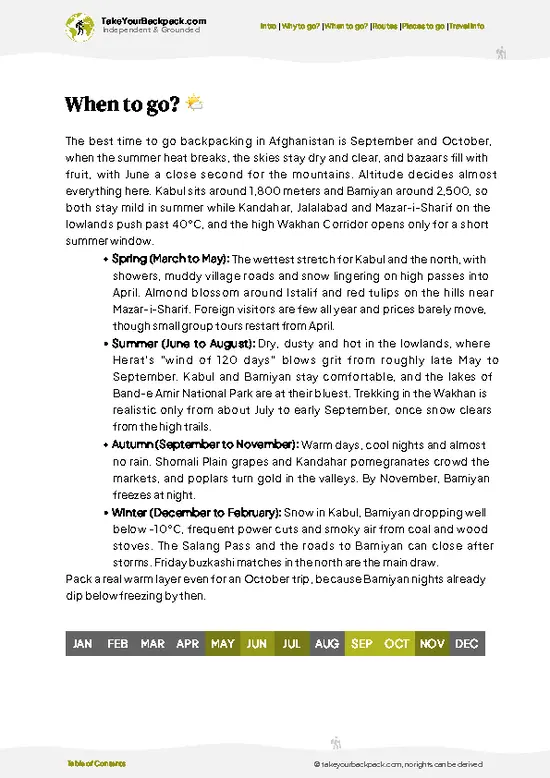
  • Topic: Weather and Temperature – Kabul’s climate swings sharply. Spring (April to June) offers mild days around 15-25°C (59-77°F) and cool nights, perfect for hiking and city strolls without overheating. Autumn (September to November) mirrors this comfort. Summers scorch, hitting 35-40°C (95-104°F), making midday outdoor activity brutal. Winters plunge below freezing, often with snow, which can stall travel plans.

  • Topic: Daylight Hours – Spring and autumn provide balanced daylight, roughly 12-14 hours, giving you ample time to explore without rushing. Winter days shrink to about 9-10 hours, limiting sightseeing windows, while summer days stretch long but come with the heat penalty.

  • Topic: Crowds and Seasonal Activities – Kabul isn’t a tourist hotspot, so crowds are generally light year-round.
read more 👉

  • Topic: Weather and Temperature – Kabul’s climate swings sharply. Spring (April to June) offers mild days around 15-25°C (59-77°F) and cool nights, perfect for hiking and city strolls without overheating. Autumn (September to November) mirrors this comfort. Summers scorch, hitting 35-40°C (95-104°F), making midday outdoor activity brutal. Winters plunge below freezing, often with snow, which can stall travel plans.

  • Topic: Daylight Hours – Spring and autumn provide balanced daylight, roughly 12-14 hours, giving you ample time to explore without rushing. Winter days shrink to about 9-10 hours, limiting sightseeing windows, while summer days stretch long but come with the heat penalty.

  • Topic: Crowds and Seasonal Activities – Kabul isn’t a tourist hotspot, so crowds are generally light year-round. However, spring and autumn see more local festivals and outdoor markets, adding cultural texture to your visit. Summer’s heat keeps locals indoors, dulling street life.

  • Topic: Price Fluctuations – Prices for accommodation and transport tend to rise slightly in spring and autumn, driven by local demand and better weather. Winter and summer offer cheaper rates but come with the trade-off of discomfort or limited activity options.


Pro-tip: Aim for spring or autumn to maximize comfort and cultural engagement while balancing cost and daylight—this is when Kabul’s rhythm feels most alive and travel logistics align in your favor.


source: climatestotravel.comJANJanuary: fair for travelingFEBFebruary: fair for travelingMARMarch: good for travelingAPRApril: excellent for travelingMAYMay: excellent for travelingJUNJune: highly recommended for travelingJULJuly: below average for travelingAUGAugust: below average for travelingSEPSeptember: excellent for travelingOCTOctober: excellent for travelingNOVNovember: highly recommended for travelingDECDecember: fair for traveling
when-to-go

✈️ The backpacker research shortcutAfghanistan Travel Guide

An offline-friendly backpacking guide with optimized travel routes, ranked highlights, transport advice, and the best areas to stay.
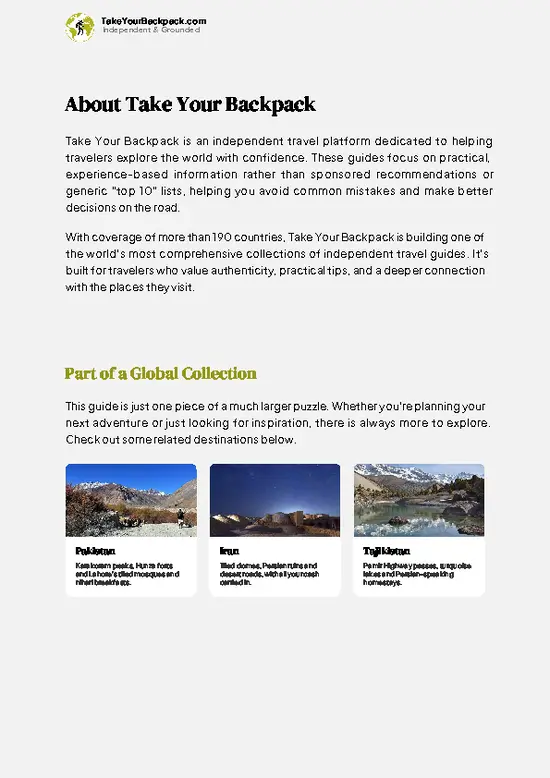
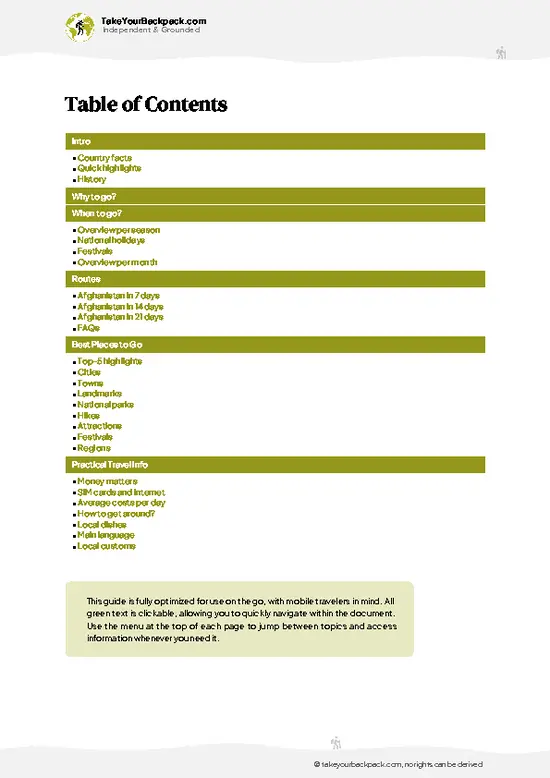
example page 0 from our offline Travel Guide for Afghanistan
example page 1 from our offline Travel Guide for Afghanistan
example page 2 from our offline Travel Guide for Afghanistan
example page 3 from our offline Travel Guide for Afghanistan
example page 4 from our offline Travel Guide for Afghanistan
example page 5 from our offline Travel Guide for Afghanistan
example page 6 from our offline Travel Guide for Afghanistan
example page 7 from our offline Travel Guide for Afghanistan
The digital guide (228 pages) contains:
55 highlights, ranked by travel appeal
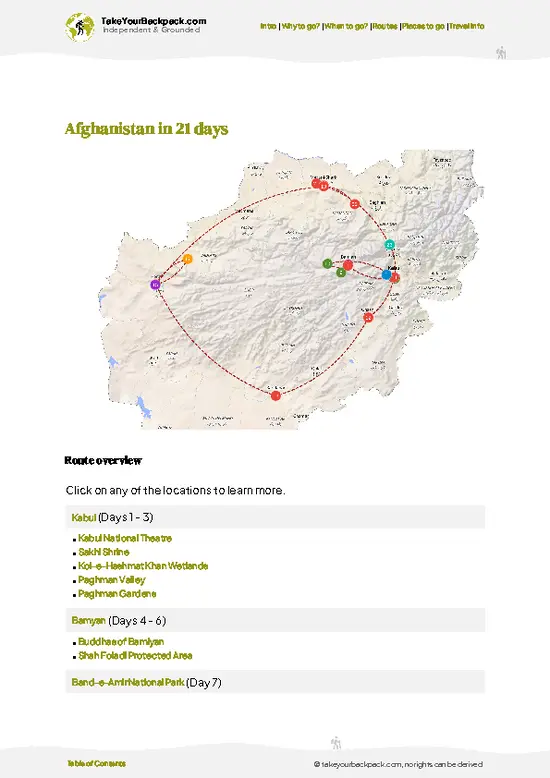
Optimized 7, 14 & 21-day travel routes
Cities, national parks, landmarks, beaches
How to get around
Offline-friendly for travel without Wi-Fi
👉 Click to see all 30+ guide features

📅 Plan smarter in minutes, not weeks
Month by month travel advice
Festivals & national holidays
Budget expectations

🗺️ Go to the right places, skip the overrated ones
Honest pros & cons of destinations
Top hikes, parks & viewpoints
Lesser-known places most travelers miss
Clear “worth it vs skip it” guidance

🛏️ Travel smoothly without rookie mistakes
Best areas to stay
Transport systems explained simply
Common scams & safety advice
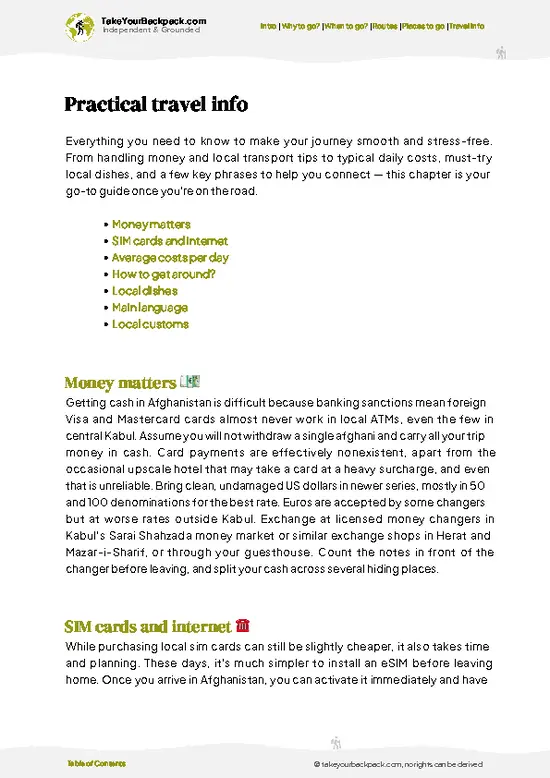
SIM cards, money & practical tips

🌍 Understand the country, not just visit it
Culture & traditions
52 Essential phrases & customs
Festivals worth planning around
Traveler-friendly historical context
Insights that make places more meaningful

📱 Built for real travel conditions
Fully downloadable PDF
Works completely offline
Optimized for phone use
Useful in remote areas & buses
Everything in one place
Save weeks of stressful planning
Get instant access to your full guide. 30‑day money-back guarantee.
+ Add another guide for just US$7.80

By proceeding you agree to our terms.
Sent to your inbox immediately after payment • 100% Secure Checkout
Best Backpacking Travel Advisor 2025 tourism awardBest Backpacking
Travel Advisor
2025
What others say about Take Your Backpack Guides:
⭐⭐⭐⭐⭐
Fantastic, amazing amount of information!
⭐⭐⭐⭐⭐
My goodness this is amazing, it's what I've been looking for hats off too you!
⭐⭐⭐⭐⭐
I think this is absolutely BRILLIANT
⭐⭐⭐⭐
Very complete and informative. It's still missing places, but I gotta to commend you
⭐⭐⭐⭐⭐
This is truly amazing, thank you, can't wait to explore it with my kids!
⭐⭐⭐⭐⭐
Awesome resource, thank you!
⭐⭐⭐⭐⭐
This is amazing! Can't wait to explore the ones I haven't seen
⭐⭐⭐⭐
I love this! Well done, great idea.
⭐⭐⭐⭐⭐
Thanks for taking the time to make this gem!
⭐⭐⭐⭐⭐
This might be the best website I've ever seen.
⭐⭐⭐⭐⭐
Congratulations, and thank you so much for your work; it's incredibly valuable.
⭐⭐⭐⭐
In all seriousness I think you did a great job pointing out the important spots
⭐⭐⭐⭐⭐
10/10 very good
⭐⭐⭐⭐⭐
As someone who's only just starting to visit regularly this is awesome, thank you.
⭐⭐⭐⭐
Thank you very much! I'm going to visit my dad, it's going to be very useful!
⭐⭐⭐⭐⭐
This is really cool! We'll be travelling for the first time and this definitely come in handy.
⭐⭐⭐⭐⭐
You are now our minister of culture, congratulations 👨‍💼
⭐⭐⭐⭐⭐
Just wanted to tell you that this is a pearl! Going to follow your recommendations.
⭐⭐⭐⭐⭐
This is so cool. I'll definitely be using the resource for my travels soon.
⭐⭐⭐⭐⭐
This is very impressive! Good work.
⭐⭐⭐⭐⭐
This is an amazing and informative site. Very well done!

🛏️ Where to stay?Best areas to stay in Afghanistan

In Kabul, the backpacker’s best bet is the Shahr-e-Naw district. It’s the city’s commercial heart, where you’ll find a cluster of guesthouses and budget accommodations that cater to travelers without the luxury price tag. This area strikes a rare balance: it’s busy enough to feel alive and social, yet not so chaotic that you’re overwhelmed. Streets here are lined with cafes and small eateries, perfect for meeting locals or fellow travelers. Safety-wise, Shahr-e-Naw is relatively stable compared to other parts of Kabul, thanks to a stronger security presence and its central location.

Contrast … read more 👉
In Kabul, the backpacker’s best bet is the Shahr-e-Naw district. It’s the city’s commercial heart, where you’ll find a cluster of guesthouses and budget accommodations that cater to travelers without the luxury price tag. This area strikes a rare balance: it’s busy enough to feel alive and social, yet not so chaotic that you’re overwhelmed. Streets here are lined with cafes and small eateries, perfect for meeting locals or fellow travelers. Safety-wise, Shahr-e-Naw is relatively stable compared to other parts of Kabul, thanks to a stronger security presence and its central location.

Contrast this with older districts like Karte Parwan or Wazir Akbar Khan, which lean more toward diplomatic compounds and upscale residences. These neighborhoods offer comfort but at a cost—both in money and the social isolation that comes with more exclusive zones. For a backpacker, that’s a trade-off that often isn’t worth it.

Hostel options in Shahr-e-Naw are limited but growing, mostly small-scale and family-run, which adds to the authentic vibe. You’re trading off the polished amenities of a hotel for a more grounded, communal experience. If you want to maximize your time and budget while staying in a place that encourages connection and exploration, Shahr-e-Naw is the strategic choice. It’s where you get the most bang for your buck without sacrificing the social pulse that makes travel memorable.

🚌 Getting aroundHow to get from A to B

Kabul moves at its own rhythm, a pulse that’s neither strictly regimented nor wildly chaotic but somewhere in between—a dance of old-world intuition and the creeping influence of modern schedules. The city’s flow is shaped by a mix of honking minibuses, the occasional taxi weaving through narrow streets, and the steady shuffle of pedestrians who know shortcuts better than any map. Time here isn’t always measured by the clock but by the ebb and flow of daily life, where waiting is part of the journey and comfort often takes a backseat to getting there. For the budget traveler, understanding this dynamic is key: every choice you make about how to get around is a trade-off between speed, cost, and the kind of experience you want to carry with you.


  • Walking: The ultimate budget option—free,
read more 👉
Kabul moves at its own rhythm, a pulse that’s neither strictly regimented nor wildly chaotic but somewhere in between—a dance of old-world intuition and the creeping influence of modern schedules. The city’s flow is shaped by a mix of honking minibuses, the occasional taxi weaving through narrow streets, and the steady shuffle of pedestrians who know shortcuts better than any map. Time here isn’t always measured by the clock but by the ebb and flow of daily life, where waiting is part of the journey and comfort often takes a backseat to getting there. For the budget traveler, understanding this dynamic is key: every choice you make about how to get around is a trade-off between speed, cost, and the kind of experience you want to carry with you.


  • Walking: The ultimate budget option—free, flexible, and immersive. Kabul’s compact neighborhoods mean many key spots are within a 20-30 minute walk. You sacrifice speed and comfort, especially in summer heat or winter chill, but gain a ground-level view of daily life and unexpected encounters.

  • Shared Minibuses: The backbone of Kabul’s public transit. These run roughly from 6 AM to 8 PM, cost about 20-30 Afghanis (less than 50 cents), and cover most main routes. They’re slow and crowded, often stopping on a whim, but unbeatable for budget travelers who want to blend in and save money.

  • Private Taxis: Faster and more comfortable than minibuses, but at a price. Expect to pay 200-400 Afghanis for typical city trips. No fixed schedule—hail one anytime—but negotiating fares is a must. Ideal if you’re short on time and can stretch your budget a bit.

  • Motorcycle Taxis (Boda Bodas): A quick, nimble option for weaving through traffic jams. Prices vary but generally hover around 100-200 Afghanis. Not for the faint-hearted—comfort and safety take a hit—but they save precious minutes when time is tight.

  • Intercity Buses: If your trip extends beyond Kabul, these buses connect to other cities with departures mostly in the early morning. Tickets range from 300 to 700 Afghanis depending on distance. They’re basic, sometimes crowded, and slow, but unbeatable for budget long-distance travel.


Mastering Kabul’s transit means playing the trade-off game smartly: walk when you want to soak in the city’s texture, jump on a minibus to stretch your budget, or splurge on a taxi when time is your enemy. Each choice shapes your experience, turning the city’s pulse into your personal rhythm.

👛 Costs (as of 4 September 2026)What things cost and how to budget

Backpacking in Kabul requires a clear-eyed view of costs, where every dollar spent is a choice between time, comfort, and experience. Here’s the breakdown to help you play the system smart.
  • Dorm Accommodation (High Season): Expect to pay around $10 to $15 per night. Options are limited and basic, often with shared facilities, but this is the price for staying central and safe during peak travel months.
  • Dorm Accommodation (Off-Season): Prices drop to about $7 to $10. Fewer travelers mean more bargaining power, but also fewer amenities and less reliable services.
  • Meals: Street food and local eateries will run you about $3 to $6 per day if you stick to traditional Afghan dishes. Western-style or restaurant meals push this up to $8 or more, but the local fare is both authentic and budget-friendly.
read more 👉
Backpacking in Kabul requires a clear-eyed view of costs, where every dollar spent is a choice between time, comfort, and experience. Here’s the breakdown to help you play the system smart.
  • Dorm Accommodation (High Season): Expect to pay around $10 to $15 per night. Options are limited and basic, often with shared facilities, but this is the price for staying central and safe during peak travel months.
  • Dorm Accommodation (Off-Season): Prices drop to about $7 to $10. Fewer travelers mean more bargaining power, but also fewer amenities and less reliable services.
  • Meals: Street food and local eateries will run you about $3 to $6 per day if you stick to traditional Afghan dishes. Western-style or restaurant meals push this up to $8 or more, but the local fare is both authentic and budget-friendly.
  • Local Transport: Shared taxis and minibuses are the norm, costing roughly $0.20 to $0.50 per ride. It’s cheap but expect crowded conditions and irregular schedules.
  • City Transport Pass: Kabul doesn’t have a formal city transport pass system. Budget travelers rely on cash for each trip, so factor in daily transport costs rather than a pass.
  • Basic Activities/Entry Fees: Cultural sites and museums typically charge between $1 and $3. Some places may have no fee, but don’t expect a wide range of tourist attractions with hefty price tags.
  • Miscellaneous Expenses: This covers essentials like bottled water, SIM cards, and occasional tips. Budget around $2 to $4 daily, as these small costs add up quickly in a city with limited infrastructure.

The total daily budget for backpacking in Kabul hovers between $15 and $30. You’re trading off comfort and convenience for authenticity and low costs. Knowing where your money goes lets you decide if you want to stretch your budget for a bit more ease or dive deep into the local rhythm on a shoestring.


source: moci.gov.af
⚠️ Prices can change and everyone travels differently, so take this as a rough guide. Hope it helps you plan your adventure!

🚌 Day tripsExploring the surroundings

Kabul serves as a surprisingly strategic base for day trips that reveal Afghanistan’s rich tapestry of culture and landscape. Each journey offers a unique glimpse into the heart of this resilient country, making it a rewarding experience for any backpacker.

Bamiyan Valley
Just a few hours from Kabul, Bamiyan Valley is where ancient history and breathtaking scenery collide. The remnants of the giant Buddhas, once carved into the cliffs, still echo tales of a bygone era. The valley is surrounded by dramatic mountains, perfect for hiking and soaking in the views. Expect to spend around $10 on transportation and $5 for meals. Spring and autumn are ideal for mild weather. A common mistake? Underestimating the time needed to explore; plan for a full day to truly appreciate the area.
👉 Explore read more 👉
Kabul serves as a surprisingly strategic base for day trips that reveal Afghanistan’s rich tapestry of culture and landscape. Each journey offers a unique glimpse into the heart of this resilient country, making it a rewarding experience for any backpacker.

Bamiyan Valley
Just a few hours from Kabul, Bamiyan Valley is where ancient history and breathtaking scenery collide. The remnants of the giant Buddhas, once carved into the cliffs, still echo tales of a bygone era. The valley is surrounded by dramatic mountains, perfect for hiking and soaking in the views. Expect to spend around $10 on transportation and $5 for meals. Spring and autumn are ideal for mild weather. A common mistake? Underestimating the time needed to explore; plan for a full day to truly appreciate the area.
👉 Explore Bamiyan Valley

Shahr-e Gholghola
A short drive from Bamiyan, Shahr-e Gholghola, or the ”City of Screams,” offers a haunting yet fascinating look at Afghanistan’s past. The ruins are perched on a hill, providing panoramic views of the valley below. The site is less frequented, allowing for a peaceful exploration. Budget around $15 for transport and snacks. Late spring is particularly lovely, with wildflowers dotting the landscape. Many first-timers miss the chance to engage with local guides who can share stories that breathe life into the ruins.


Kabul to Panjshir Valley
Panjshir Valley is a stunning escape just a couple of hours from Kabul. Known for its lush landscapes and historical significance, it’s a place where nature and culture intertwine. You can hike, visit local villages, and even learn about the resistance against the Soviets. Expect to spend around $20 for transport and meals. Late spring to early fall is the best time to visit. A common oversight is not checking road conditions; they can vary, so stay flexible with your plans.
👉 Explore Panjshir Valley

Kabul to Qargha Lake
For a quick retreat, Qargha Lake is just a short drive away. This serene spot is perfect for a day of relaxation or picnicking. Rent a boat or simply enjoy the views from the shore. Total costs can be around $10 for transport and snacks. Summer is peak season, so aim for weekdays to avoid crowds. First-timers often forget to bring their own food; local options can be limited.


These day trips from Kabul not only enrich your travel experience but also deepen your understanding of Afghanistan’s diverse landscapes and cultures.
Want to know what more Afghanistan offers?
The Afghanistan Travel Guide describes 55 highlights, from cities to national parks, from beaches to hikes

Get the Travel Guide -

🍲 FoodWhat to Eat & Drink

In Kabul, food is a vibrant tapestry of flavors and traditions that beckons you to dive in. Start with qabili palau, a fragrant rice dish topped with tender lamb, carrots, and raisins. The aroma alone is enough to draw you in, and each bite bursts with a blend of spices that tells a story of the region’s rich history.

Street food is where the heart of Kabul beats. Vendors line the bustling markets, serving up samosas and bolani—crispy pastries filled with potatoes or greens. Grab one on the go, and you’ll feel the pulse of daily life around you. The chai culture is equally inviting; sipping on sweet, milky tea while chatting with locals is a ritual that fosters connection.

Eating customs here are steeped in hospitality. Expect to share meals, often seated on the floor, with dishes placed … read more 👉
In Kabul, food is a vibrant tapestry of flavors and traditions that beckons you to dive in. Start with qabili palau, a fragrant rice dish topped with tender lamb, carrots, and raisins. The aroma alone is enough to draw you in, and each bite bursts with a blend of spices that tells a story of the region’s rich history.

Street food is where the heart of Kabul beats. Vendors line the bustling markets, serving up samosas and bolani—crispy pastries filled with potatoes or greens. Grab one on the go, and you’ll feel the pulse of daily life around you. The chai culture is equally inviting; sipping on sweet, milky tea while chatting with locals is a ritual that fosters connection.

Eating customs here are steeped in hospitality. Expect to share meals, often seated on the floor, with dishes placed in the center. It’s customary to eat with your right hand, a gesture of respect.

Kabul’s dining scene is casual and communal, where every meal is an opportunity to engage with the warmth of Afghan culture. Embrace the flavors, and let the city’s culinary spirit guide your journey.

🛡️ SafetyStaying Safe: What Travelers Should Know

Kabul has its complexities, but with the right mindset, you can navigate it smoothly. Stay alert in crowded areas like the bazaars; pickpockets can be a nuisance. When wandering, keep your belongings close and avoid flashy displays of wealth.

Solo travelers should be cautious, especially at night. Streets can be quieter, so opt for well-lit areas and consider using trusted transportation options.

Scams do exist, often revolving around taxi fares or currency exchanges. Always agree on a price before getting in a cab, and use official exchange services rather than street vendors.

Everyday annoyances might include persistent vendors or overly curious locals. A polite but firm “no” usually does the trick. Carry yourself confidently; a relaxed demeanor can disarm potential issues. With awareness … read more 👉
Kabul has its complexities, but with the right mindset, you can navigate it smoothly. Stay alert in crowded areas like the bazaars; pickpockets can be a nuisance. When wandering, keep your belongings close and avoid flashy displays of wealth.

Solo travelers should be cautious, especially at night. Streets can be quieter, so opt for well-lit areas and consider using trusted transportation options.

Scams do exist, often revolving around taxi fares or currency exchanges. Always agree on a price before getting in a cab, and use official exchange services rather than street vendors.

Everyday annoyances might include persistent vendors or overly curious locals. A polite but firm “no” usually does the trick. Carry yourself confidently; a relaxed demeanor can disarm potential issues. With awareness and a bit of savvy, you can enjoy the rich tapestry of experiences Kabul offers.

FAQCommon questions from travelers

3 to 4 days is sufficient to explore Kabul's main attractions such as the National Museum, Babur Gardens, and the Kabul Zoo. This timeframe allows for acclimatization and some cultural immersion without rushing.
No, Kabul is generally not safe for solo backpackers due to ongoing security concerns, including risks of terrorism and crime. Travelers should exercise extreme caution and consider guided tours or local contacts for safer movement.
Kabul is known for its rich history as a cultural and trade center on the Silk Road, its ancient sites like the Bala Hissar fortress, and its vibrant bazaars offering traditional Afghan crafts and spices.
⚠️ Things can change over time, so always validate details locally before you go.

Other Afghan cities near Kabul

Explore more nearby:

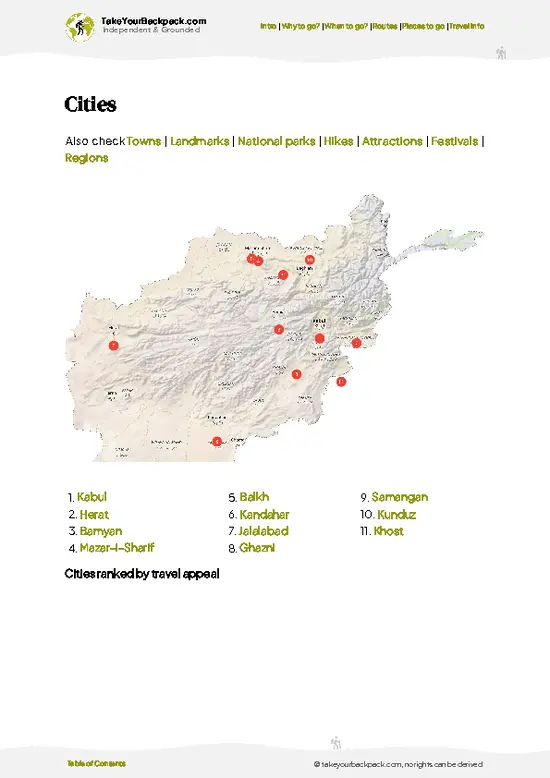
  • Jalalabad—subtropical gardens, citrus orchards, river crossings| 115 km away
  • Bamyan—cliffside niches, mountain valleys, Hazara heartland| 130 km away
  • Ghazni—medieval towers, archaeological sites, trade crossroads| 133 km away

💡 Not sure where to go next?
Create a personalized itinerary for Afghanistan including Kabul and the places that fit your trip.

Generate my itinerary

👉 Discover all cities

Or checkout all Afghanistan has to offer (think cities, towns, villages, national parks, hikes, beaches, festivals)
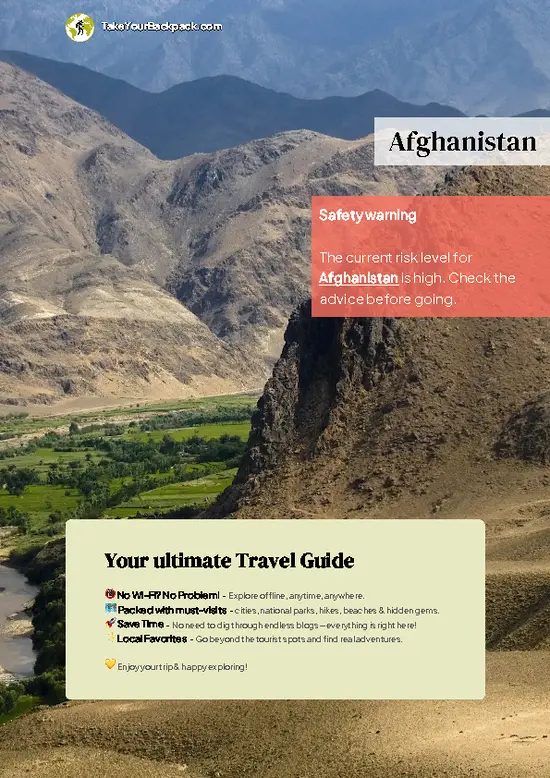
Country photo of Afghanistan

We 💚 feedbackSumming up the experience

Kabul’s energy is palpable, a blend of resilience and warmth. The best surprise? The local markets, where the aroma of spices mingles with laughter. You’ll find treasures in the chaos, but keep your wits about you. Safety is key; stick to well-trodden paths and be mindful of your surroundings. Engage with locals—they’re eager to share stories and insights. This city isn’t just a destination; it’s a lesson in humanity. Embrace it, but tread carefully.

✍️ Help improve this page!
The information on this page is based on in-depth research, insights shared by experienced travelers, and feedback from the local travel community in Afghanistan. While every effort is made to keep the information accurate and current, conditions can change — so if you spot anything incorrect or outdated, please get in touch.


🙋‍♂️ Give feedback

👋 Meet the founderWho’s Behind Take Your Backpack?

Johan, backpacker and founder of TakeYourBackpackHi, I’m Johan (Netherlands 🇳🇱), the creator of TakeYourBackpack. Over the past decade, I’ve backpacked through 80+ countries across six continents, gaining extensive experience with independent travel, long-term trips, and overland routes.

This site is built on a combination of firsthand travel experience and carefully curated insights from other backpackers. Many guides are based on places I’ve personally visited, while others bring together tips, observations, and practical advice shared by trusted travelers I’ve met along the way.

The goal is to provide realistic, experience-driven guidance — not generic itineraries — so you can explore destinations with better context, clearer expectations, and more confidence.

Get full country guide •
Instant download • 55 highlights • Full Offline guide