×

Albania🇦🇱 | best festivalsBest 8 festivals in Albania

Festivals in Albania run on grilled lamb smoke, brass bands and amplified folk polyphony bouncing off stone walls. The north (Shkodër, Theth, Valbona) keeps events small, clan-rooted and hard to reach, with gravel roads and few beds. The south (Gjirokastër, Berat, the Riviera) draws bigger crowds, louder stages and higher summer prices, though minibuses and hostels are plentiful. Tirana and the coast carry the electronic and film circuit, with late nights and sunburnt dance floors. For backpackers and other independent travelers, the choice comes down to rough-edged village gatherings or polished, well-connected events with a clearer schedule.

By Johan Kruseman 🇳🇱 | Updated October 18, 2026
Explore the best regions in Albania

Why go?Key Factors That Shape the Experience

Albania suits festivals because public life happens outdoors. Squares, castle courtyards and Ottoman-era bazaar streets double as stages, and a long dry summer means few events get rained out. Decades of isolation under communism left regional traditions intact: iso-polyphonic singing in the south, the lahuta (a one-stringed fiddle) and epic verse in the north, and costumes that differ valley to valley. Many gatherings still follow the religious and agricultural calendar, so Orthodox, Catholic, Muslim and Bektashi observances sit side by side in the same country, often in the same town.

Before choosing Albania for its festivals, know that infrastructure is uneven. Tirana, Berat and the coast have buses, cash machines and rooms. Mountain villages have dust, cowbells and homestay beds that … read more 👉
Albania suits festivals because public life happens outdoors. Squares, castle courtyards and Ottoman-era bazaar streets double as stages, and a long dry summer means few events get rained out. Decades of isolation under communism left regional traditions intact: iso-polyphonic singing in the south, the lahuta (a one-stringed fiddle) and epic verse in the north, and costumes that differ valley to valley. Many gatherings still follow the religious and agricultural calendar, so Orthodox, Catholic, Muslim and Bektashi observances sit side by side in the same country, often in the same town.

Before choosing Albania for its festivals, know that infrastructure is uneven. Tirana, Berat and the coast have buses, cash machines and rooms. Mountain villages have dust, cowbells and homestay beds that fill fast. Schedules shift, and posters go up days before an event, so dates are often confirmed late, on local social media or by asking at a guesthouse. Cash in lek is the norm outside cities, and card machines can fail. Expect late starts, open-air crowds that sit on stone steps or the grass, and food that arrives slowly but comes hot off the coals. Come flexible and the reward is a country where visitors are folded into the celebration rather than watching from a rope line.
Our Approach to Ranking
The list of best festivals in Albania is created based on energy, traditions, crowd experience, activities, and overall excitement. If you feel a festival is missing in this list, please let us know.

When to go?Best Time to Visit Albania for festivals

Best months: The best months for festivals in Albania are June to September, when open-air stages run on dry evenings and mountain roads are clear of snow. July and August bring 30 to 35°C on the coast and in the Tirana basin, with rainfall often under 40 mm a month, so expect hot stone, cicadas by day and sweet air after dark.
Shoulder seasons: May and October are milder, at about 18 to 25°C, with more rain (roughly 60 to 100 mm a month inland, more in the northern Alps). Cultural, religious and folk events cluster here and in spring, and rooms cost 20 to 40 percent less than in peak summer. Showers turn village lanes to mud, so pack a light shell.
Peak and winter: Mid-July to the end of August is the crowded, expensive stretch on the Riviera and in Sarandë, Himara and Vlorë. Dorm beds and … read more 👉
Best months: The best months for festivals in Albania are June to September, when open-air stages run on dry evenings and mountain roads are clear of snow. July and August bring 30 to 35°C on the coast and in the Tirana basin, with rainfall often under 40 mm a month, so expect hot stone, cicadas by day and sweet air after dark.
Shoulder seasons: May and October are milder, at about 18 to 25°C, with more rain (roughly 60 to 100 mm a month inland, more in the northern Alps). Cultural, religious and folk events cluster here and in spring, and rooms cost 20 to 40 percent less than in peak summer. Showers turn village lanes to mud, so pack a light shell.
Peak and winter: Mid-July to the end of August is the crowded, expensive stretch on the Riviera and in Sarandë, Himara and Vlorë. Dorm beds and guesthouse rooms rise sharply, and beach towns pack with diaspora families and Kosovar visitors. Book ahead. In the northern Albanian Alps (Theth, Valbona), guesthouses open roughly June to September, and snow blocks high passes from about November to April. From December to February, Tirana and the south hold indoor and winter events at 0 to 10°C, with gray, damp days and early dark, and coastal places are shuttered.

festival hoppingOptimizing Your Multi-Stop Itinerary

How long to allow: A trip combining several festivals in Albania needs 8 to 14 days, because roads are slow and public transport thins out after early afternoon.
Grouping and direction: Cluster by region. The north (Shkodër, then Theth or Valbona) pairs well on its own, and the south (Berat, Gjirokastër, Saranda or Himara) forms a second cluster. Tirana is the hinge, with buses fanning out from its terminals. Travel north to south, or the reverse, so the heat of the coast comes last and you avoid doubling back. Allow 2 to 3 nights per stop, and 3 or 4 in the mountains where arrival alone eats a day. Tirana to Shkodër takes about 1.5 to 2 hours, Tirana to Berat about 2 hours, Tirana to Gjirokastër 4 to 5 hours, and Shkodër to Theth roughly 2.5 to 3 hours by minibus or 4×4 on a rough road. The … read more 👉
How long to allow: A trip combining several festivals in Albania needs 8 to 14 days, because roads are slow and public transport thins out after early afternoon.
Grouping and direction: Cluster by region. The north (Shkodër, then Theth or Valbona) pairs well on its own, and the south (Berat, Gjirokastër, Saranda or Himara) forms a second cluster. Tirana is the hinge, with buses fanning out from its terminals. Travel north to south, or the reverse, so the heat of the coast comes last and you avoid doubling back. Allow 2 to 3 nights per stop, and 3 or 4 in the mountains where arrival alone eats a day. Tirana to Shkodër takes about 1.5 to 2 hours, Tirana to Berat about 2 hours, Tirana to Gjirokastër 4 to 5 hours, and Shkodër to Theth roughly 2.5 to 3 hours by minibus or 4×4 on a rough road. The Riviera coast road from Vlorë to Sarandë takes 2.5 to 3 hours with stops on its hairpin bends.
Mistakes to avoid: The common errors are cramming a mountain stop and a coastal stop into one day, trusting printed timetables, and leaving no slack when events start late. Instead, leave a buffer day between regions, ask guesthouse owners about the real last bus (furgons, the shared minibuses, leave when full), and keep fuel and cash in lek on hand for rural legs.

The ListTop festivals of Albania

1 Gjirokastër National Folklore Festival

stone amphitheater, traditional costumes, polyphonic singing, folk dance

Experience rare Albanian folk traditions as performers from across the country gather to share music, dance, and centuries-old storytelling.

2 Kala Festival

Ionian coastline, electronic music, beach stages, late-night parties

Dance by the sea as international DJs and live acts transform a coastal village into a multi-day celebration of music and community.

3 Tirana International Film Festival

independent cinema, international directors, urban venues, film premieres

Watch new films from Albania and abroad in city theaters, with opportunities to meet filmmakers and join post-screening discussions.

4 Carnival of Korçë

costumed parades, street performances, mask contests

Join locals in a lively procession where elaborate masks and playful performances fill the streets with color and spectacle.

5 Përmet Wine Festival

local vineyards, wine tastings, regional cuisine, rural setting

Taste small-batch wines and sample local dishes in a riverside town known for its hospitality and agricultural traditions.

6 Korçë Apple Festival

orchard tours, apple products, harvest displays, local crafts

Stroll through apple orchards, try fresh and preserved fruit specialties, and browse handmade goods at this seasonal harvest event.

7 Lake Shkodra Festival

lakeside concerts, boat races, open-air markets, fishing traditions

Celebrate lakeside life with music, water sports, and local food, all set against the backdrop of Albania’s largest lake.

8 Korça Beer Festival

local breweries, seasonal brews, open-air tastings

Sample a range of Albanian craft beers in a relaxed setting where brewers and enthusiasts gather for tastings and casual conversation.

Loading the map 🌍

Expert viewWhat You Should Know

How many festivals to plan: I advise two or three festivals on one trip, and four only if you have more than three weeks. Albanian events are scattered between mountain villages, Adriatic beach towns and inland cities, and the furgons (minibuses) that connect them run on their own clock, usually leaving by early afternoon. Each festival also tends to fill the local guesthouses, so you need a day on either side for arriving and recovering. Pack in more and you spend the trip on a hot plastic seat watching the road, not standing in a square with a plate of grilled meat in your hand.
Choosing the kind that fits you: If you travel on a tight budget and like meeting people, put folk and village gatherings first. They are often free, the music is clarinet, accordion and lahuta-style drone singing, … read more 👉
How many festivals to plan: I advise two or three festivals on one trip, and four only if you have more than three weeks. Albanian events are scattered between mountain villages, Adriatic beach towns and inland cities, and the furgons (minibuses) that connect them run on their own clock, usually leaving by early afternoon. Each festival also tends to fill the local guesthouses, so you need a day on either side for arriving and recovering. Pack in more and you spend the trip on a hot plastic seat watching the road, not standing in a square with a plate of grilled meat in your hand.
Choosing the kind that fits you: If you travel on a tight budget and like meeting people, put folk and village gatherings first. They are often free, the music is clarinet, accordion and lahuta-style drone singing, and someone will almost certainly press a glass of raki or a plate of byrek into your hands. If you want nightlife and sand between your toes, pick a coastal music festival, where bass carries across the pebble beaches until dawn and the Ionian light turns orange around 7 pm. If you care about history and architecture, choose a city or heritage event in towns such as Gjirokastra or Berat, where stone streets amplify every drum and cobbles punish thin sandals. Mixing one of each kind gives you range without exhaustion.
What it costs: Expect US$30 to 55 a day (about 2,700 to 5,000 lek) in festival season, since beds cost more when an event is on. A dorm or guesthouse room runs 1,800 to 4,500 lek (US$20 to 50), and a meal of grilled lamb or fergese with a drink costs 800 to 1,800 lek (US$9 to 20). Village events usually charge nothing at the gate. Larger music festivals charge for passes, roughly US$40 to 150 depending on the lineup and how early you buy. A local guide for a heritage or mountain event costs US$20 to 40 for a half day. Furgon rides between towns cost 300 to 1,000 lek (US$3 to 11) each. Carry cash, because village cafes, guesthouses and many ticket tables do not take cards, and ATMs thin out fast beyond the main towns.
Safety and manners on the ground: Albania is generally safe for festival crowds, and petty theft exists mostly around the busiest coastal nights, so keep your phone in a front pocket. The bigger risks are practical. August heat on a shadeless square can reach the mid-30s Celsius, so carry water and a hat. Mountain roads back from late events are narrow and poorly lit, and drivers on them may have been drinking, so sleep where you party instead of hitching a ride at midnight.
Cultural details that matter: In Albania a head shake from side to side can mean yes, and a nod can mean no. Confirm prices and directions with words. Muslim, Orthodox and Catholic communities live side by side, and religious celebrations call for covered shoulders and knees. Ask before photographing people in traditional costume, since many will pose happily once you have said hello. Refusing a drink is fine if you put a hand on your chest and thank the host warmly. Accepting at least a sip of coffee or raki opens doors, and the conversation that follows is often the best part of the day.

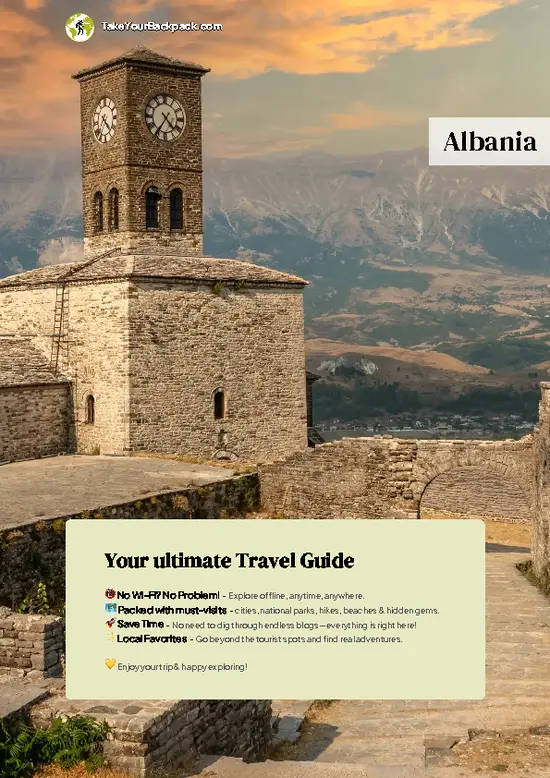
✈️ The backpacker research shortcutAlbania Travel Guide

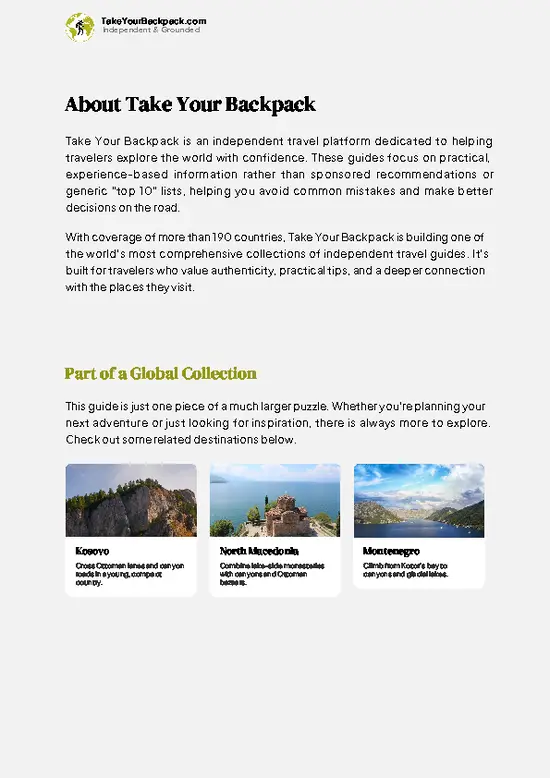
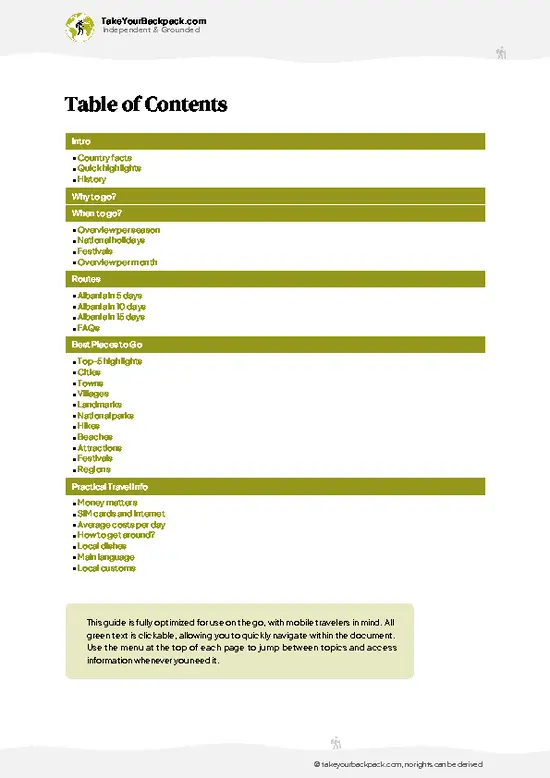
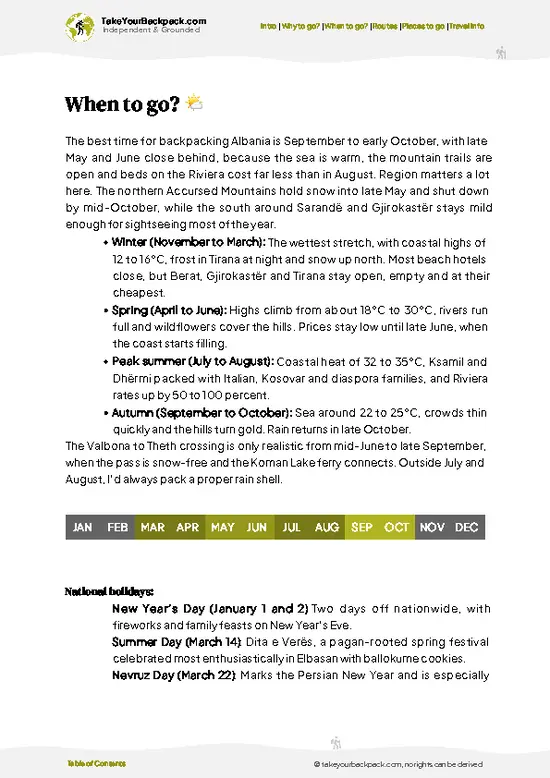
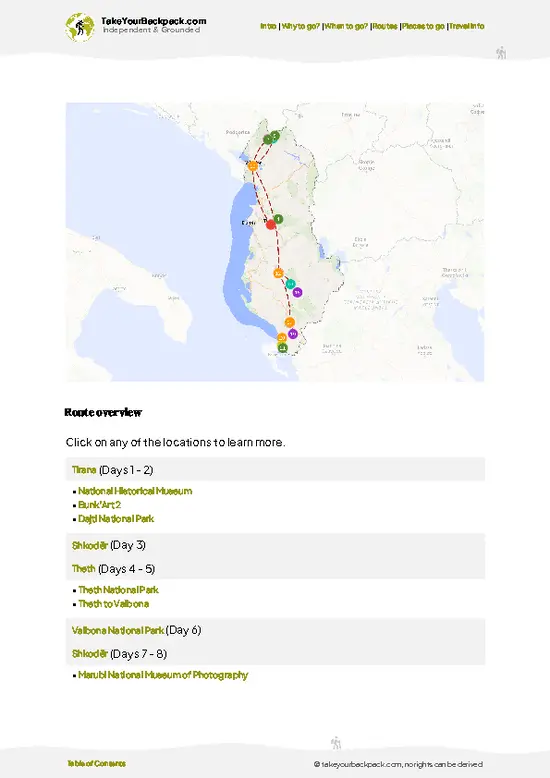
An offline-friendly backpacking guide with optimized travel routes, ranked highlights, transport advice, and the best areas to stay.
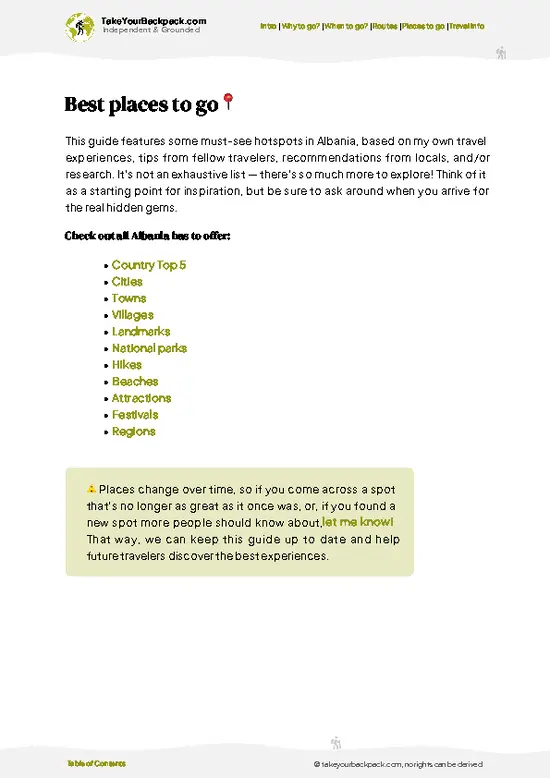
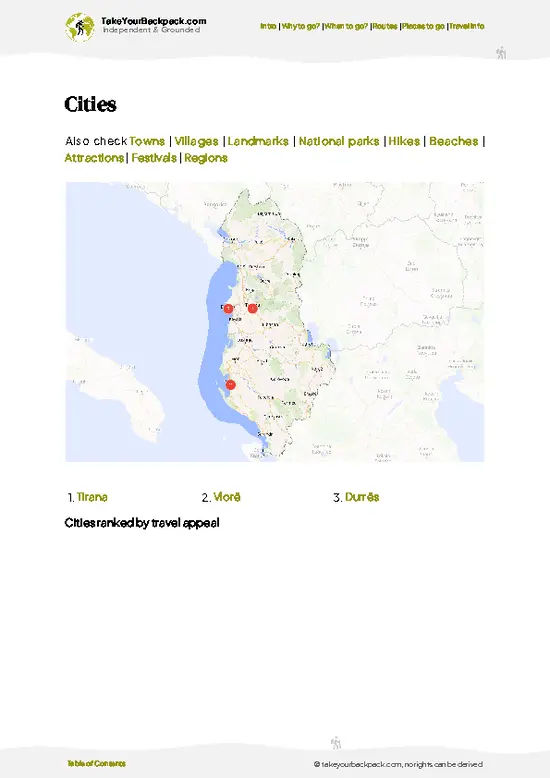
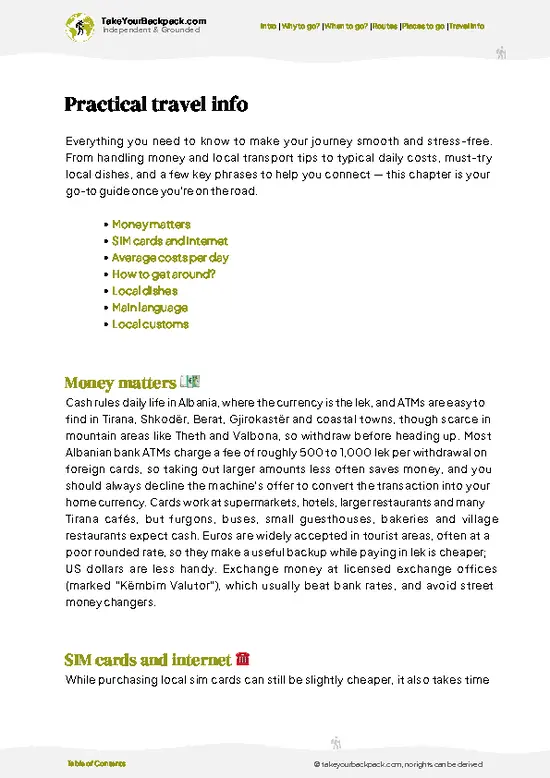
example page 0 from our offline Travel Guide for Albania
example page 1 from our offline Travel Guide for Albania
example page 2 from our offline Travel Guide for Albania
example page 3 from our offline Travel Guide for Albania
example page 4 from our offline Travel Guide for Albania
example page 5 from our offline Travel Guide for Albania
example page 6 from our offline Travel Guide for Albania
example page 7 from our offline Travel Guide for Albania
The digital guide (305 pages) contains:
✅ 78 highlights, ranked by travel appeal
✅ Optimized 5, 10 & 15-day travel routes
✅ Cities, national parks, landmarks, beaches
✅ How to get around
✅ Offline-friendly for travel without Wi-Fi
👉 Click to see all 30+ guide features

📅 Plan smarter in minutes, not weeks
✅ Month by month travel advice
✅ Festivals & national holidays
✅ Budget expectations

🗺️ Go to the right places, skip the overrated ones
✅ Honest pros & cons of destinations
✅ Top hikes, parks & viewpoints
✅ Lesser-known places most travelers miss
✅ Clear “worth it vs skip it” guidance

🛏️ Travel smoothly without rookie mistakes
✅ Best areas to stay
✅ Transport systems explained simply
✅ Common scams & safety advice
✅ SIM cards, money & practical tips

🌍 Understand the country, not just visit it
✅ Culture & traditions
✅ 52 Essential phrases & customs
✅ Festivals worth planning around
✅ Traveler-friendly historical context
✅ Insights that make places more meaningful

📱 Built for real travel conditions
✅ Fully downloadable PDF
✅ Works completely offline
✅ Optimized for phone use
✅ Useful in remote areas & buses
✅ Everything in one place
Stop searching, start planning
Get instant access to your full guide. 30‑day money-back guarantee.
+ Add another guide for just

By proceeding you agree to our terms.
Sent to your inbox immediately after payment • 100% Secure Checkout
Best Backpacking Travel Advisor 2025 tourism awardBest Backpacking
Travel Advisor
2025
What others say about Take Your Backpack Guides:
⭐⭐⭐⭐⭐
Fantastic, amazing amount of information!
⭐⭐⭐⭐⭐
My goodness this is amazing, it's what I've been looking for hats off too you!
⭐⭐⭐⭐⭐
I think this is absolutely BRILLIANT
⭐⭐⭐⭐
Very complete and informative. It's still missing places, but I gotta to commend you
⭐⭐⭐⭐⭐
This is truly amazing, thank you, can't wait to explore it with my kids!
⭐⭐⭐⭐⭐
Awesome resource, thank you!
⭐⭐⭐⭐⭐
This is amazing! Can't wait to explore the ones I haven't seen
⭐⭐⭐⭐
I love this! Well done, great idea.
⭐⭐⭐⭐⭐
Thanks for taking the time to make this gem!
⭐⭐⭐⭐⭐
This might be the best website I've ever seen.
⭐⭐⭐⭐⭐
Congratulations, and thank you so much for your work; it's incredibly valuable.
⭐⭐⭐⭐
In all seriousness I think you did a great job pointing out the important spots
⭐⭐⭐⭐⭐
10/10 very good
⭐⭐⭐⭐⭐
As someone who's only just starting to visit regularly this is awesome, thank you.
⭐⭐⭐⭐
Thank you very much! I'm going to visit my dad, it's going to be very useful!
⭐⭐⭐⭐⭐
This is really cool! We'll be travelling for the first time and this definitely come in handy.
⭐⭐⭐⭐⭐
You are now our minister of culture, congratulations 👨‍💼
⭐⭐⭐⭐⭐
Just wanted to tell you that this is a pearl! Going to follow your recommendations.
⭐⭐⭐⭐⭐
This is so cool. I'll definitely be using the resource for my travels soon.
⭐⭐⭐⭐⭐
This is very impressive! Good work.
⭐⭐⭐⭐⭐
This is an amazing and informative site. Very well done!

🛏️ Where to stay?Where to Stay: Albania Edition

Albania has a dense, cheap hostel scene, with dorm beds typically running 1,200 to 2,000 lek (about US$13 to 22) and private guesthouse rooms not far above that. In Tirana, the streets around Skanderbeg Square put you within walking distance of the main sights and bus connections, while Blloku has the best bars and cafés but louder nights and higher prices. Down south, Saranda packs hostels near the seafront promenade for beach access and summer nightlife, whereas the old quarters of Berat (Mangalem) and Gjirokastër (around the Old Bazaar) are quiet and atmospheric but involve steep cobbled climbs with a backpack.

If you enjoy meeting fellow travelers, consider choosing hostels with high ratings … read more 👉
Albania has a dense, cheap hostel scene, with dorm beds typically running 1,200 to 2,000 lek (about US$13 to 22) and private guesthouse rooms not far above that. In Tirana, the streets around Skanderbeg Square put you within walking distance of the main sights and bus connections, while Blloku has the best bars and cafés but louder nights and higher prices. Down south, Saranda packs hostels near the seafront promenade for beach access and summer nightlife, whereas the old quarters of Berat (Mangalem) and Gjirokastër (around the Old Bazaar) are quiet and atmospheric but involve steep cobbled climbs with a backpack.

If you enjoy meeting fellow travelers, consider choosing hostels with high ratings for atmosphere. On the other hand, if you prefer having your own space, a hotel might be a better option.

AlbaniaExplore Beyond This Category

👋 Meet the founderWho’s Behind Take Your Backpack?

Johan, backpacker and founder of TakeYourBackpackHi, I’m Johan (Netherlands 🇳🇱), the creator of TakeYourBackpack. Over the past 3 decades, I’ve backpacked through 90+ countries across six continents, gaining extensive experience with independent travel, long-term trips, and overland routes.

This site is built on a combination of firsthand travel experience and carefully curated insights from other backpackers. Many guides are based on places I’ve personally visited, while others bring together tips, observations, and practical advice shared by trusted travelers I’ve met along the way.

The goal is to provide realistic, experience-driven guidance — not generic itineraries — so you can explore destinations with better context, clearer expectations, and more confidence.