×

Albania🇦🇱 | best landmarksBest 7 landmarks in Albania

Landmarks in Albania are layered rather than polished: Ottoman bazaars, Illyrian and Roman ruins, hilltop castles, Orthodox churches with soot-darkened frescoes, and the concrete bunkers left from the communist era. In the south, UNESCO towns of pale stone climb hillsides, cicadas buzz, and ticket booths charge a few euros-equivalent in lek. The north is rougher, with fortress ruins reached by gravel roads and stone houses in the mountains. Tirana packs the most variety into walkable blocks. Crowds thin fast away from the coast, and independent travelers who accept patchy signage and furgon schedules get ruins nearly to themselves.

By Johan Kruseman 🇳🇱 | Updated October 18, 2026
Explore the best national parks in Albania

Why go?Key Factors That Shape the Experience

Albania sits at a crossroads, and the ground shows it. Greek colonists, Romans, Byzantines, Venetians and Ottomans all built here, and then four decades of isolation under Enver Hoxha froze much of it in place. That means you can touch a Roman road, step into a mosque and pass a bunker in a single afternoon, with little commercial polish between you and the stone. Many sites are small, unfenced or looked after by a lone attendant who sells you a ticket from a plastic chair.

Geography shapes the experience. The country is mountainous, so landmarks often sit on steep hilltops or at the end of switchbacks, and the limestone paving of old towns turns slick after rain. Heat in the south bakes the stone by midday, while the north stays cooler and damp.

Before choosing Albania, know that infrastructure … read more 👉
Albania sits at a crossroads, and the ground shows it. Greek colonists, Romans, Byzantines, Venetians and Ottomans all built here, and then four decades of isolation under Enver Hoxha froze much of it in place. That means you can touch a Roman road, step into a mosque and pass a bunker in a single afternoon, with little commercial polish between you and the stone. Many sites are small, unfenced or looked after by a lone attendant who sells you a ticket from a plastic chair.

Geography shapes the experience. The country is mountainous, so landmarks often sit on steep hilltops or at the end of switchbacks, and the limestone paving of old towns turns slick after rain. Heat in the south bakes the stone by midday, while the north stays cooler and damp.

Before choosing Albania, know that infrastructure is uneven. Opening hours shift, signs may be only in Albanian, and a poorly marked turnoff can cost an hour. Cash in lek is the safe bet for entry fees. In return, costs stay low and you often have the atmosphere to yourself, with only goat bells and the smell of wild oregano for company.
Why These Made the Cut
The list of best unique sites in Albania is created based on history or culture, wow factor, atmosphere, quirks, and memorability. If you feel a unique site is missing in this list, please let us know.

When to go?Best Time to Visit Albania for landmarks

Best months: April to June and September to October: Late spring and early autumn are best because daytime temperatures sit around 18 to 28°C, the light turns honey-colored by late afternoon, and stone-built sites are comfortable to climb. Spring brings green hillsides and wildflowers, though April can still bring showers, with Tirana and the north receiving the most rain. Autumn is drier, the air smells of woodsmoke and ripening figs, and crowds fade after mid-September.
Summer: hot and busy on the coast: July and August push the south and the coastal plain to 32 to 38°C, and exposed ruins and hilltop castles offer almost no shade at midday. Coastal towns fill with regional holidaymakers, and accommodation prices near the sea can rise by 30 to 60 percent. Start early, finish by 11 am, and … read more 👉
Best months: April to June and September to October: Late spring and early autumn are best because daytime temperatures sit around 18 to 28°C, the light turns honey-colored by late afternoon, and stone-built sites are comfortable to climb. Spring brings green hillsides and wildflowers, though April can still bring showers, with Tirana and the north receiving the most rain. Autumn is drier, the air smells of woodsmoke and ripening figs, and crowds fade after mid-September.
Summer: hot and busy on the coast: July and August push the south and the coastal plain to 32 to 38°C, and exposed ruins and hilltop castles offer almost no shade at midday. Coastal towns fill with regional holidaymakers, and accommodation prices near the sea can rise by 30 to 60 percent. Start early, finish by 11 am, and save afternoons for shaded old towns or a swim. The mountains in the north are the cooler summer option, with highs around 22 to 28°C.
Winter: quiet but limited: From November to March, rain and fog arrive, especially in the north, where mountain roads can close with snow and some small sites keep short hours or shut. Temperatures in Tirana hover around 3 to 12°C. Prices drop, crowds disappear, and the south stays milder, but plan for muddy paths and early sunsets.

unique site hoppingOptimizing Your Multi-Stop Itinerary

Plan 7 to 12 days: A trip linking several landmarks in Albania works best in 7 to 12 days, because roads are slow and mountain curves add time to every leg. Start in Tirana, the main transport hub, and move in one direction: either north to south or the reverse, rather than doubling back. The usual clusters are the central capital area with nearby Durrës, the northwest around Shkodër and Krujë, the southern interior around Berat and Gjirokastër, and the far south coast near Saranda.
Time per stop and between regions: Allow 2 to 4 hours for a small hilltop site and a full day for a big town with ruins, cobbled lanes and a castle. Typical transfers are about 1.5 to 2 hours from Tirana to Berat, 2.5 to 3 hours from Berat to Gjirokastër, and around 1.5 hours onward to Saranda, with Shkodër roughly … read more 👉
Plan 7 to 12 days: A trip linking several landmarks in Albania works best in 7 to 12 days, because roads are slow and mountain curves add time to every leg. Start in Tirana, the main transport hub, and move in one direction: either north to south or the reverse, rather than doubling back. The usual clusters are the central capital area with nearby Durrës, the northwest around Shkodër and Krujë, the southern interior around Berat and Gjirokastër, and the far south coast near Saranda.
Time per stop and between regions: Allow 2 to 4 hours for a small hilltop site and a full day for a big town with ruins, cobbled lanes and a castle. Typical transfers are about 1.5 to 2 hours from Tirana to Berat, 2.5 to 3 hours from Berat to Gjirokastër, and around 1.5 hours onward to Saranda, with Shkodër roughly 1.5 to 2 hours north of Tirana. Furgons and buses leave from different terminals in the capital, mostly in the morning, and many fill before departing instead of keeping to a timetable.
Common planning mistakes: Travelers often cram three sites into a day, then arrive at hot, closed gates. Count on 40 to 60 km per hour on average. Instead, stay at least two nights in the larger bases and visit nearby sites on short side trips. Check the last return bus before leaving, and avoid heading for remote ruins late in the afternoon.

The ListTop landmarks of Albania

1 Blue Eye Spring

turquoise pool, karst spring, shaded forest

Stand above a deep, swirling spring where icy water rises from underground, framed by dense trees and shifting sunlight.

albania-unique-site-blue-eye-spring
© Google | Simon Schmid

2 Osum Canyon

sheer rock faces, river bends, wildflower meadows

Traverse dramatic bends and vertical cliffs, with springtime wildflowers brightening the canyon floor and riverbanks.

albania-unique-site-osum-canyon
© Google |

3 Apollonia

ancient ruins, Roman mosaics, hilltop monastery

Wander through a sprawling archaeological park where olive groves surround weathered columns and a monastery overlooks the Myzeqe plain.

albania-unique-site-apollonia
© Google |

4 Castle of Krujë

mountain fortress, Ottoman bazaar, Skanderbeg museum

Climb stone ramparts for sweeping valley views, then browse traditional crafts in a centuries-old market below the castle walls.

albania-unique-site-castle-of-kruje
© Google | Łukasz Cupryjak

5 Bënja Thermal Baths

natural hot pools, stone bridges, mountain backdrop

Soak in mineral-rich pools beside an Ottoman bridge, surrounded by rugged peaks and the scent of wild herbs.

albania-unique-site-benja-thermal-baths
© Google | Mykola Gusev

6 Sotira Waterfall

cascading falls, forested valley, mossy rocks

Follow a quiet trail to a multi-tiered waterfall, where cool mist and lush greenery offer a break from summer heat.

albania-unique-site-sotira-waterfall
© Google |

7 St. Anthony’s Church, Laç

hilltop shrine, pilgrimage site, panoramic views

Join pilgrims ascending a winding path to a remote church, where candles flicker and the landscape stretches to the Adriatic.

albania-unique-site-st-anthonys-church-lac
© Google | Boiken Verli
Loading the map 🌍

Expert viewWhat You Should Know

How many to visit: Aim for 6 to 8 landmarks on a typical trip, spread over a week or two. That number leaves time for the walking that matters: steep cobbles, castle stairs that burn the calves, and the pause in a cafe afterward with a short strong coffee. Beyond eight, sites start to blur and transport eats the hours. You come away with a few clear memories rather than a camera roll of identical walls.
Choose by travel style: History lovers should favor the UNESCO old towns and Roman and Illyrian ruins, where stone, tile and frescoes hold the detail. Photographers do best at hilltop castles in the early light, when the valleys fill with haze. Budget travelers can lean on the free outdoor experiences, such as bazaars, mosque courtyards and Cold War bunkers on open land, and pay only for the … read more 👉
How many to visit: Aim for 6 to 8 landmarks on a typical trip, spread over a week or two. That number leaves time for the walking that matters: steep cobbles, castle stairs that burn the calves, and the pause in a cafe afterward with a short strong coffee. Beyond eight, sites start to blur and transport eats the hours. You come away with a few clear memories rather than a camera roll of identical walls.
Choose by travel style: History lovers should favor the UNESCO old towns and Roman and Illyrian ruins, where stone, tile and frescoes hold the detail. Photographers do best at hilltop castles in the early light, when the valleys fill with haze. Budget travelers can lean on the free outdoor experiences, such as bazaars, mosque courtyards and Cold War bunkers on open land, and pay only for the two or three headline sites. Adventure seekers should pick the northern fortresses and mountain churches, where a bumpy ride pays off with silence and a wide view.
What it costs: Plan on roughly US$30 to 50 a day, including a dorm bed or simple guesthouse, food and local transport. Entry fees to major sites generally run about 300 to 1,000 lek (US$3 to 11), with smaller ruins and churches often cheaper. A local guide at a major castle or archaeological park may charge about US$10 to 30 for a short tour. Furgons for a 1.5 to 3 hour leg cost about 500 to 1,500 lek (US$5 to 16). Carry cash in lek, as small ticket offices rarely take cards, and the payoff is a smoother day.
Safety and etiquette: The main risk is the terrain. Polished limestone and old cobbles turn slippery in rain, and some ruins have unfenced drops, so wear shoes with grip and keep children close. Carry water in summer because shade is rare. Dress modestly in mosques and Orthodox churches, with covered shoulders and knees, and take shoes off where others do. Ask before photographing inside active places of worship, as some do not allow it. Bunkers and unmarked tunnels can hide broken glass or deep holes, so stay out unless they are official sites. Finally, set aside a small cash reserve for tips to caretakers who unlock a gate, because the reward is often a quiet interior.

✈️ The backpacker research shortcutAlbania Travel Guide

An offline-friendly backpacking guide with optimized travel routes, ranked highlights, transport advice, and the best areas to stay.
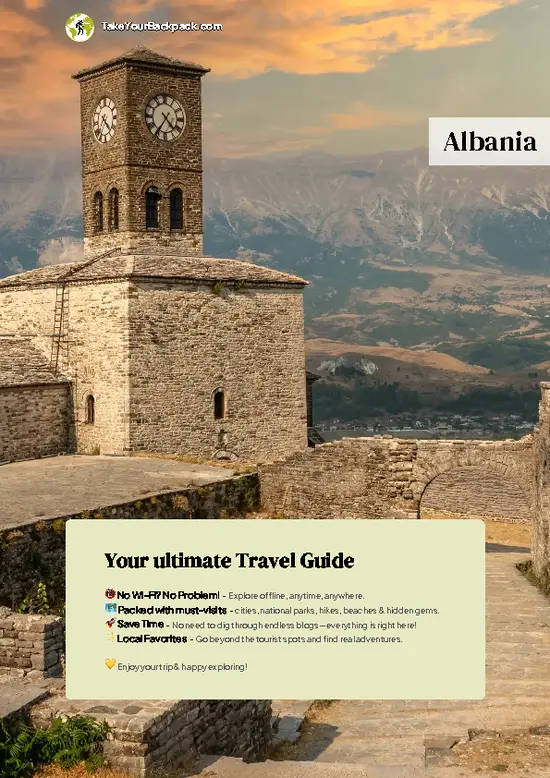
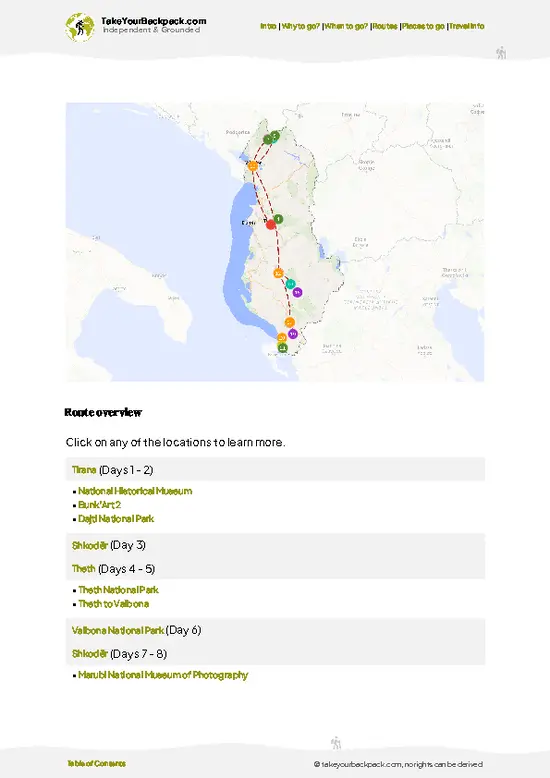
example page 0 from our offline Travel Guide for Albania
example page 1 from our offline Travel Guide for Albania
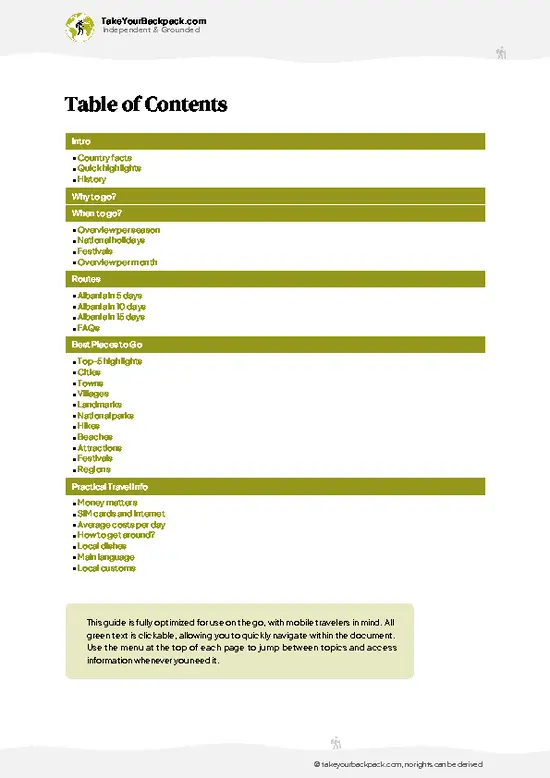
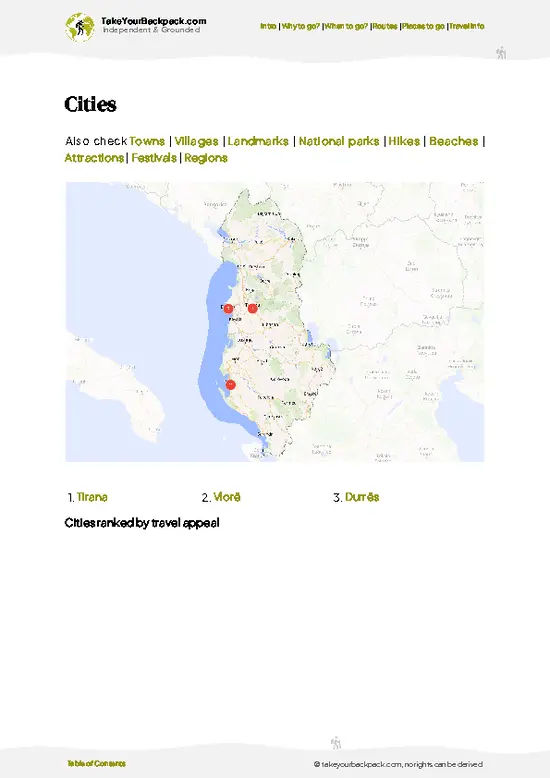
example page 2 from our offline Travel Guide for Albania
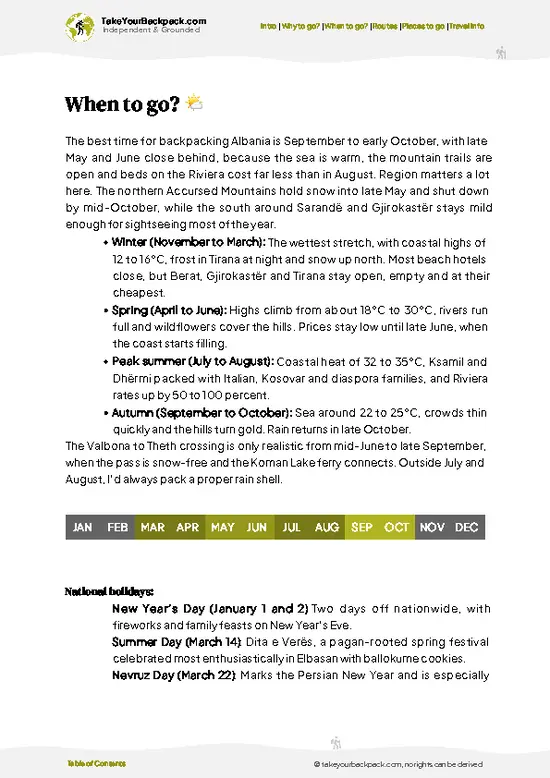
example page 3 from our offline Travel Guide for Albania
example page 4 from our offline Travel Guide for Albania
example page 5 from our offline Travel Guide for Albania
example page 6 from our offline Travel Guide for Albania
example page 7 from our offline Travel Guide for Albania
The digital guide (305 pages) contains:
✅ 78 highlights, ranked by travel appeal
✅ Optimized 5, 10 & 15-day travel routes
✅ Cities, national parks, landmarks, beaches
✅ How to get around
✅ Offline-friendly for travel without Wi-Fi
👉 Click to see all 30+ guide features

📅 Plan smarter in minutes, not weeks
✅ Month by month travel advice
✅ Festivals & national holidays
✅ Budget expectations

🗺️ Go to the right places, skip the overrated ones
✅ Honest pros & cons of destinations
✅ Top hikes, parks & viewpoints
✅ Lesser-known places most travelers miss
✅ Clear “worth it vs skip it” guidance

🛏️ Travel smoothly without rookie mistakes
✅ Best areas to stay
✅ Transport systems explained simply
✅ Common scams & safety advice
✅ SIM cards, money & practical tips

🌍 Understand the country, not just visit it
✅ Culture & traditions
✅ 52 Essential phrases & customs
✅ Festivals worth planning around
✅ Traveler-friendly historical context
✅ Insights that make places more meaningful

📱 Built for real travel conditions
✅ Fully downloadable PDF
✅ Works completely offline
✅ Optimized for phone use
✅ Useful in remote areas & buses
✅ Everything in one place
Stop searching, start planning
Get instant access to your full guide. 30‑day money-back guarantee.
+ Add another guide for just

By proceeding you agree to our terms.
Sent to your inbox immediately after payment • 100% Secure Checkout
Best Backpacking Travel Advisor 2025 tourism awardBest Backpacking
Travel Advisor
2025
What others say about Take Your Backpack Guides:
⭐⭐⭐⭐⭐
Fantastic, amazing amount of information!
⭐⭐⭐⭐⭐
My goodness this is amazing, it's what I've been looking for hats off too you!
⭐⭐⭐⭐⭐
I think this is absolutely BRILLIANT
⭐⭐⭐⭐
Very complete and informative. It's still missing places, but I gotta to commend you
⭐⭐⭐⭐⭐
This is truly amazing, thank you, can't wait to explore it with my kids!
⭐⭐⭐⭐⭐
Awesome resource, thank you!
⭐⭐⭐⭐⭐
This is amazing! Can't wait to explore the ones I haven't seen
⭐⭐⭐⭐
I love this! Well done, great idea.
⭐⭐⭐⭐⭐
Thanks for taking the time to make this gem!
⭐⭐⭐⭐⭐
This might be the best website I've ever seen.
⭐⭐⭐⭐⭐
Congratulations, and thank you so much for your work; it's incredibly valuable.
⭐⭐⭐⭐
In all seriousness I think you did a great job pointing out the important spots
⭐⭐⭐⭐⭐
10/10 very good
⭐⭐⭐⭐⭐
As someone who's only just starting to visit regularly this is awesome, thank you.
⭐⭐⭐⭐
Thank you very much! I'm going to visit my dad, it's going to be very useful!
⭐⭐⭐⭐⭐
This is really cool! We'll be travelling for the first time and this definitely come in handy.
⭐⭐⭐⭐⭐
You are now our minister of culture, congratulations 👨‍💼
⭐⭐⭐⭐⭐
Just wanted to tell you that this is a pearl! Going to follow your recommendations.
⭐⭐⭐⭐⭐
This is so cool. I'll definitely be using the resource for my travels soon.
⭐⭐⭐⭐⭐
This is very impressive! Good work.
⭐⭐⭐⭐⭐
This is an amazing and informative site. Very well done!

🛏️ Where to stay?Top Places to Consider Staying

Albania has a dense, cheap hostel scene, with dorm beds typically running 1,200 to 2,000 lek (about US$13 to 22) and private guesthouse rooms not far above that. In Tirana, the streets around Skanderbeg Square put you within walking distance of the main sights and bus connections, while Blloku has the best bars and cafés but louder nights and higher prices. Down south, Saranda packs hostels near the seafront promenade for beach access and summer nightlife, whereas the old quarters of Berat (Mangalem) and Gjirokastër (around the Old Bazaar) are quiet and atmospheric but involve steep cobbled climbs with a backpack.

If you enjoy meeting fellow travelers, consider choosing hostels with high ratings … read more 👉
Albania has a dense, cheap hostel scene, with dorm beds typically running 1,200 to 2,000 lek (about US$13 to 22) and private guesthouse rooms not far above that. In Tirana, the streets around Skanderbeg Square put you within walking distance of the main sights and bus connections, while Blloku has the best bars and cafés but louder nights and higher prices. Down south, Saranda packs hostels near the seafront promenade for beach access and summer nightlife, whereas the old quarters of Berat (Mangalem) and Gjirokastër (around the Old Bazaar) are quiet and atmospheric but involve steep cobbled climbs with a backpack.

If you enjoy meeting fellow travelers, consider choosing hostels with high ratings for atmosphere. On the other hand, if you prefer having your own space, a hotel might be a better option.

AlbaniaMore Places Across Albania

👋 Meet the founderWho’s Behind Take Your Backpack?

Johan, backpacker and founder of TakeYourBackpackHi, I’m Johan (Netherlands 🇳🇱), the creator of TakeYourBackpack. Over the past 3 decades, I’ve backpacked through 90+ countries across six continents, gaining extensive experience with independent travel, long-term trips, and overland routes.

This site is built on a combination of firsthand travel experience and carefully curated insights from other backpackers. Many guides are based on places I’ve personally visited, while others bring together tips, observations, and practical advice shared by trusted travelers I’ve met along the way.

The goal is to provide realistic, experience-driven guidance — not generic itineraries — so you can explore destinations with better context, clearer expectations, and more confidence.