×

Algeria🇩🇿 | attractionsBardo National Museum of Prehistory and Ethnographyprehistoric tools, Berber textiles, Ottoman villa | things to do and best time to go

Explore National Museum of Fine Arts of AlgiersExplore Maqam Echahid

Backpacking in Bardo National Museum of Prehistory and Ethnography
👍 Recommendedattraction ranked #11
By Johan Kruseman 🇳🇱 | Updated April 25, 2026

Here’s what nobody tells you: the Bardo National Museum of Prehistory and Ethnography is one of the few places in Algiers where you can stand inches from 2-million-year-old stone tools—no glass, no alarms, just you and the deep past. Forget the polished Instagram feeds; the Bardo is tucked inside a 18th-century Moorish villa in the heart of Algiers, and it feels more like wandering through a time capsule than a museum. Backpackers expecting the Louvre’s gloss will be thrown—this place is raw, sometimes dusty, and the crowds are mostly local families, not selfie-stick mobs. Entry is cheap, and you’ll get more for your dinar here than at the Casbah’s tourist traps, but don’t expect perfect English signage or air-conditioned comfort. The real magic is in the details: Neolithic jewelry, Tuareg swords, Berber textiles—objects with stories that punch way above their display cases. If you want Algeria’s soul, not just its photo ops, this is where you start.

Discover everything you want to know in the 📖 Algeria Travel Guide.


Get your Algeria guide
91 ranked highlights, routes & tips, works offline (356 pages)
Loading the map 🌍
CLICK TO FILTER
cities
towns
landmarks
national parks
hikes
beaches
attractions
festivals
SHOW COUNTRY’S BESTSHOW ALL

✨ Why go?
Ranked #11 attraction in Algeria
What makes it a must-see attraction

The Bardo National Museum of Prehistory and Ethnography in Algeria isn’t some glossy, Instagram-ready spot where you snap a quick selfie and move on. It’s a heavyweight in the world of cultural landmarks, and backpackers who make time for it know they’re stepping into a place that’s more than just a museum—it’s a deep dive into the roots of human history in North Africa. This isn’t about flashy displays; it’s about the raw, unfiltered story of prehistoric life and the rich tapestry of Algeria’s diverse ethnic groups. The artifacts here aren’t just old—they’re foundational, offering a tangible connection to the dawn of civilization in the region.

Sure, it can get busy, especially during peak tourist seasons, and the entrance fee might make you pause if you’re counting every dinar. But the … read more 👉
The Bardo National Museum of Prehistory and Ethnography in Algeria isn’t some glossy, Instagram-ready spot where you snap a quick selfie and move on. It’s a heavyweight in the world of cultural landmarks, and backpackers who make time for it know they’re stepping into a place that’s more than just a museum—it’s a deep dive into the roots of human history in North Africa. This isn’t about flashy displays; it’s about the raw, unfiltered story of prehistoric life and the rich tapestry of Algeria’s diverse ethnic groups. The artifacts here aren’t just old—they’re foundational, offering a tangible connection to the dawn of civilization in the region.

Sure, it can get busy, especially during peak tourist seasons, and the entrance fee might make you pause if you’re counting every dinar. But the payoff? Immense. The museum acts as a crucial milestone on any serious Algeria route, bridging the gap between the Sahara’s vast emptiness and the Mediterranean’s bustling coast. It’s a place where you can feel the weight of history pressing in, where every exhibit challenges you to rethink what you know about human origins and cultural evolution. For backpackers craving substance over spectacle, the Bardo Museum delivers a rare, unvarnished encounter with the past that’s worth every minute and every cent.
Want to include Bardo National Museum of Prehistory and Ethnography in your Algeria route?
Create a personalized Algeria itinerary that includes Bardo National Museum of Prehistory and Ethnography and the places that fit your trip — based on your travel style, budget, and available time. Get your route in seconds.

Generate my trip

💡 HighlightsKey sights and experiences for travelers

The Prehistoric Hall: Skeletons, Skulls, and the Real Story of Algeria’s First Humans
Forget the textbook version of North African prehistory. The Bardo’s prehistoric hall throws you face-to-face with the bones and tools of Algeria’s earliest inhabitants—think actual Neanderthal skulls, not just dusty replicas. You’ll see hand axes that predate the pyramids by tens of thousands of years, and the kind of fossilized animal bones that make you realize the Sahara was once a lush, dangerous playground. It’s not just a parade of artifacts; it’s a direct line to the people who survived here before the concept of “Algeria” even existed. The room is rarely crowded, and the silence is heavy—perfect for letting your imagination run wild.


The Tassili n’Ajjer Rock Art Gallery: Ancient Graffiti That Still read more 👉
The Prehistoric Hall: Skeletons, Skulls, and the Real Story of Algeria’s First Humans
Forget the textbook version of North African prehistory. The Bardo’s prehistoric hall throws you face-to-face with the bones and tools of Algeria’s earliest inhabitants—think actual Neanderthal skulls, not just dusty replicas. You’ll see hand axes that predate the pyramids by tens of thousands of years, and the kind of fossilized animal bones that make you realize the Sahara was once a lush, dangerous playground. It’s not just a parade of artifacts; it’s a direct line to the people who survived here before the concept of “Algeria” even existed. The room is rarely crowded, and the silence is heavy—perfect for letting your imagination run wild.


The Tassili n’Ajjer Rock Art Gallery: Ancient Graffiti That Still Packs a Punch
Instagram can’t touch this. The Bardo’s collection of rock art casts and photographs from Tassili n’Ajjer is a crash course in human creativity, 10,000 years before Banksy. These aren’t just pretty pictures—they’re evidence of a Sahara that once teemed with hippos, giraffes, and people who painted their lives on stone. The gallery’s dim lighting and raw, unpolished displays make it feel more like a cave than a museum. You’ll walk out with a new respect for the artists who worked with nothing but ochre and nerve.


The Kabyle Room: Color, Pattern, and the Art of Everyday Survival
If you think ethnography is just old pots and costumes, the Kabyle Room will set you straight. This is a riot of color—handwoven rugs, pottery with geometric designs, and jewelry that looks like it could headline a Paris runway. But it’s not just about aesthetics. Every object here is a survival tool, a status symbol, or a coded message. The displays are dense, almost overwhelming, but that’s the point: Kabyle culture is about making the most of what you have, and doing it with style. You’ll want to linger, and you should.


The Moorish Palace: The Museum’s Real Showstopper
Here’s the twist: the Bardo isn’t just a museum, it’s a palace. The building itself is a 18th-century Moorish mansion, and it’s worth the trip even if you never look at a single artifact. Think intricate tilework, carved cedar ceilings, and sun-drenched courtyards that feel like a movie set—except this is the real deal. The architecture is so transportive you’ll forget you’re in Algiers, until the call to prayer drifts in through the windows. The crowds thin out in the side rooms, so take your time and soak up the atmosphere. This is the kind of place that makes you want to whisper, just out of respect.


The Saharan Nomad Exhibit: Life on the Edge, No Filters Required
This isn’t some romanticized “desert wanderer” fantasy. The Bardo’s Saharan nomad section is all about the grit and ingenuity it takes to survive in one of the harshest environments on earth. You’ll see camel saddles, tent fragments, and the kind of water containers that mean the difference between life and death. The displays are blunt and unsentimental, but that’s what makes them powerful. It’s a reminder that adventure isn’t always pretty, but it’s always real.
Spotted a mistake or missing something? Contact us.

Things to do around Bardo National Museum of Prehistory and Ethnography

Ratings based on Tripadvisor reviews. When you book through this link, you support our work at no extra cost to you.

🌤️ When to go?Best time to visit Bardo National Museum of Prehistory and Ethnography


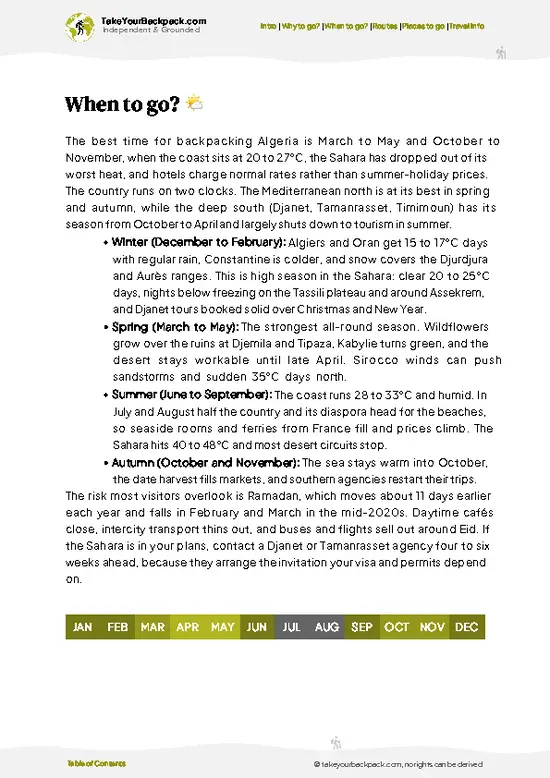
  • Weather: The best time to visit the Bardo National Museum is during the spring months, from March to May, when Algeria enjoys mild temperatures and low humidity. Expect highs around 20-25°C (68-77°F), perfect for wandering without overheating or freezing.

  • Temperature: Summer (June to August) can be brutal, with temperatures soaring above 35°C (95°F), making museum visits less comfortable. Winters (December to February) are cooler, averaging 10-15°C (50-59°F), but still manageable if you prefer fewer crowds.

  • Daylight Hours: Spring and autumn offer balanced daylight, roughly 11 to 13 hours, giving you ample time to explore without rushing. Winter days are shorter, which can limit your sightseeing window.

  • Crowds: Tourist traffic peaks in summer, especially July and August, when locals
read more 👉

  • Weather: The best time to visit the Bardo National Museum is during the spring months, from March to May, when Algeria enjoys mild temperatures and low humidity. Expect highs around 20-25°C (68-77°F), perfect for wandering without overheating or freezing.

  • Temperature: Summer (June to August) can be brutal, with temperatures soaring above 35°C (95°F), making museum visits less comfortable. Winters (December to February) are cooler, averaging 10-15°C (50-59°F), but still manageable if you prefer fewer crowds.

  • Daylight Hours: Spring and autumn offer balanced daylight, roughly 11 to 13 hours, giving you ample time to explore without rushing. Winter days are shorter, which can limit your sightseeing window.

  • Crowds: Tourist traffic peaks in summer, especially July and August, when locals and international visitors flood the museum. Spring and autumn see fewer tourists, letting you enjoy exhibits without the elbow-to-elbow hassle.

  • Seasonal Activities: Spring coincides with cultural festivals in Algiers, adding a vibrant local flavor to your visit. The museum sometimes hosts special exhibitions during this period, enhancing the experience beyond the permanent collection.

  • Price Fluctuations: Entry fees remain stable year-round, but accommodation and transport costs spike in summer. Visiting off-peak in spring or autumn can save you money on lodging and local travel.


Pro-tip: Aim for late April or early May to catch pleasant weather, manageable crowds, and local cultural events—this combo turns a standard museum visit into a memorable dive into Algeria’s rich heritage.


source: climatestotravel.comJANJanuary: good for travelingFEBFebruary: good for travelingMARMarch: excellent for travelingAPRApril: excellent for travelingMAYMay: excellent for travelingJUNJune: fair for travelingJULJuly: below average for travelingAUGAugust: below average for travelingSEPSeptember: highly recommended for travelingOCTOctober: highly recommended for travelingNOVNovember: good for travelingDECDecember: good for traveling
when-to-go

✈️ The backpacker research shortcutAlgeria Travel Guide

An offline-friendly backpacking guide with optimized travel routes, ranked highlights, transport advice, and the best areas to stay.
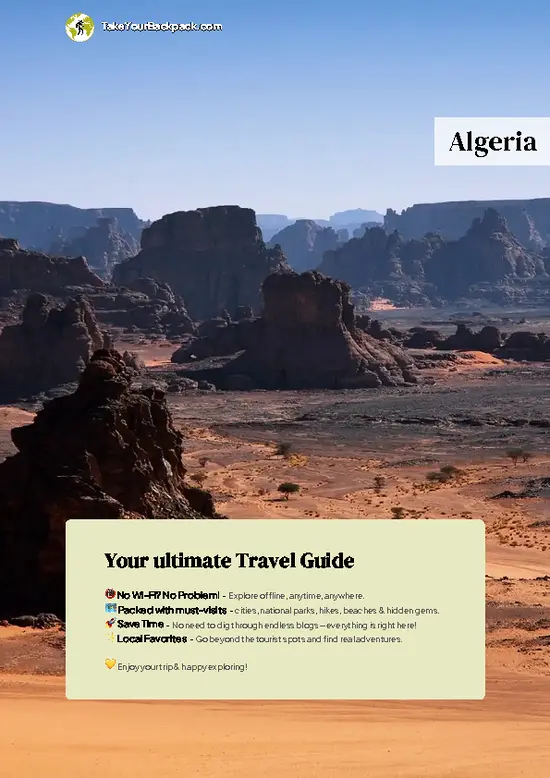
example page 0 from our offline Travel Guide for Algeria
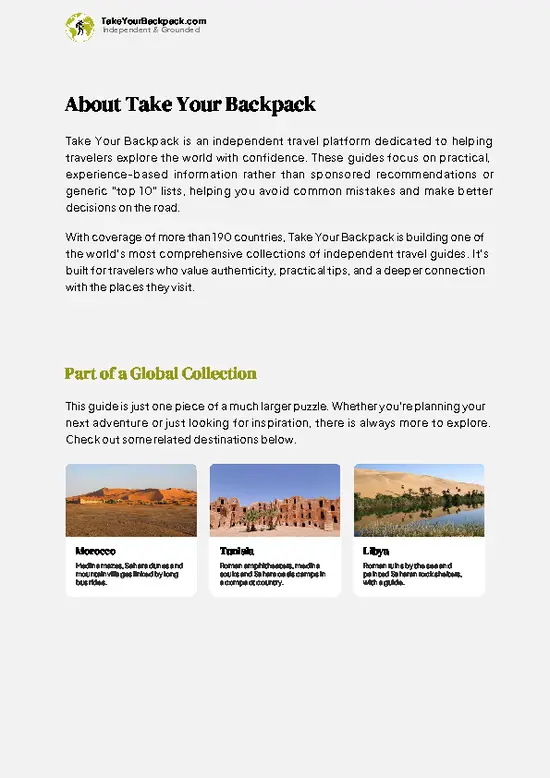
example page 1 from our offline Travel Guide for Algeria
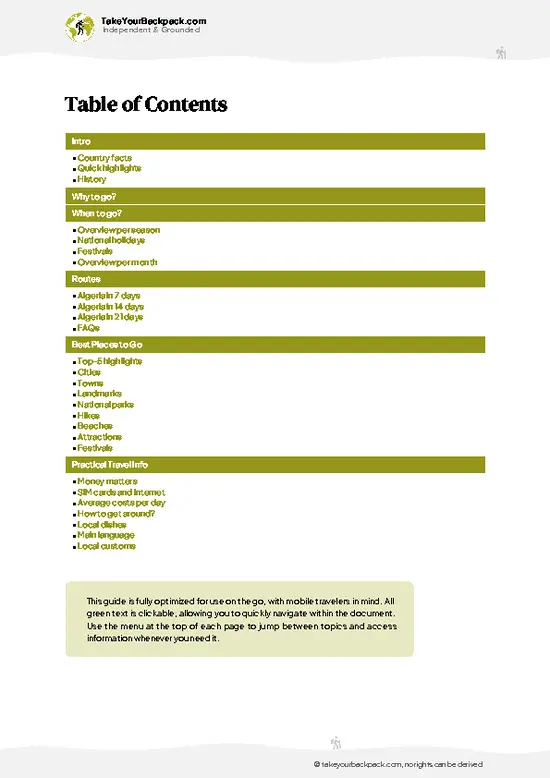
example page 2 from our offline Travel Guide for Algeria
example page 3 from our offline Travel Guide for Algeria
example page 4 from our offline Travel Guide for Algeria
example page 5 from our offline Travel Guide for Algeria
example page 6 from our offline Travel Guide for Algeria
example page 7 from our offline Travel Guide for Algeria
The digital guide (356 pages) contains:
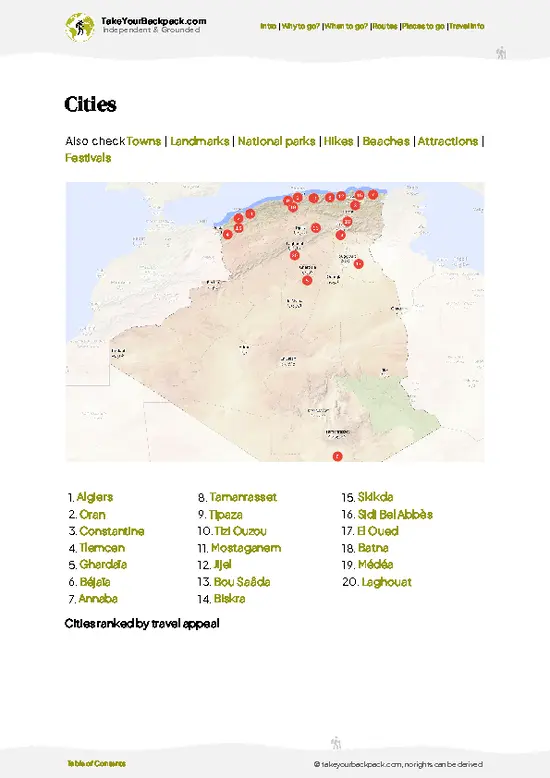
91 highlights, ranked by travel appeal
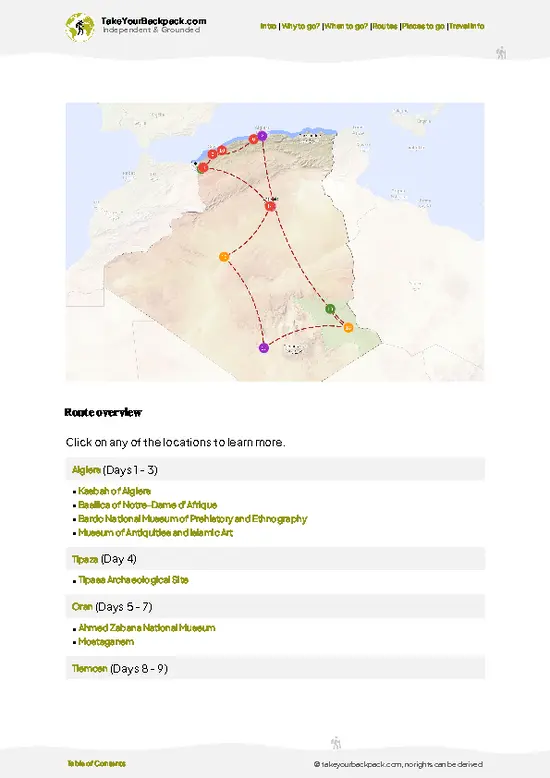
Optimized 7, 14 & 21-day travel routes
Cities, national parks, landmarks, beaches
How to get around
Offline-friendly for travel without Wi-Fi
👉 Click to see all 30+ guide features

📅 Plan smarter in minutes, not weeks
Month by month travel advice
Festivals & national holidays
Budget expectations

🗺️ Go to the right places, skip the overrated ones
Honest pros & cons of destinations
Top hikes, parks & viewpoints
Lesser-known places most travelers miss
Clear “worth it vs skip it” guidance

🛏️ Travel smoothly without rookie mistakes
Best areas to stay
Transport systems explained simply
Common scams & safety advice
SIM cards, money & practical tips

🌍 Understand the country, not just visit it
Culture & traditions
52 Essential phrases & customs
Festivals worth planning around
Traveler-friendly historical context
Insights that make places more meaningful

📱 Built for real travel conditions
Fully downloadable PDF
Works completely offline
Optimized for phone use
Useful in remote areas & buses
Everything in one place
Save weeks of stressful planning
Get instant access to your full guide. 30‑day money-back guarantee.


By proceeding you agree to our terms.
Sent to your inbox immediately after payment • 100% Secure Checkout
Best Backpacking Travel Advisor 2025 tourism awardBest Backpacking
Travel Advisor
2025
What others say about Take Your Backpack Guides:
⭐⭐⭐⭐⭐
Fantastic, amazing amount of information!
⭐⭐⭐⭐⭐
My goodness this is amazing, it's what I've been looking for hats off too you!
⭐⭐⭐⭐⭐
I think this is absolutely BRILLIANT
⭐⭐⭐⭐
Very complete and informative. It's still missing places, but I gotta to commend you
⭐⭐⭐⭐⭐
This is truly amazing, thank you, can't wait to explore it with my kids!
⭐⭐⭐⭐⭐
Awesome resource, thank you!
⭐⭐⭐⭐⭐
This is amazing! Can't wait to explore the ones I haven't seen
⭐⭐⭐⭐
I love this! Well done, great idea.
⭐⭐⭐⭐⭐
Thanks for taking the time to make this gem!
⭐⭐⭐⭐⭐
This might be the best website I've ever seen.
⭐⭐⭐⭐⭐
Congratulations, and thank you so much for your work; it's incredibly valuable.
⭐⭐⭐⭐
In all seriousness I think you did a great job pointing out the important spots
⭐⭐⭐⭐⭐
10/10 very good
⭐⭐⭐⭐⭐
As someone who's only just starting to visit regularly this is awesome, thank you.
⭐⭐⭐⭐
Thank you very much! I'm going to visit my dad, it's going to be very useful!
⭐⭐⭐⭐⭐
This is really cool! We'll be travelling for the first time and this definitely come in handy.
⭐⭐⭐⭐⭐
You are now our minister of culture, congratulations 👨‍💼
⭐⭐⭐⭐⭐
Just wanted to tell you that this is a pearl! Going to follow your recommendations.
⭐⭐⭐⭐⭐
This is so cool. I'll definitely be using the resource for my travels soon.
⭐⭐⭐⭐⭐
This is very impressive! Good work.
⭐⭐⭐⭐⭐
This is an amazing and informative site. Very well done!

🛏️ Where to stay?How to pick the right area

If you’re backpacking to see the Bardo National Museum of Prehistory and Ethnography in Algeria, let’s cut through the usual hype. The museum itself is a solid draw, but it’s not a secret sanctuary. Expect crowds, especially on weekends and holidays, and don’t kid yourself about finding a quiet, tucked-away spot right next door. The real trick is where you crash after soaking in the artifacts.

The best areas to stay are those that balance safety, social vibes, and budget sense. Look for neighborhoods just outside the immediate museum zone—places where locals live and backpackers mingle. These … read more 👉
If you’re backpacking to see the Bardo National Museum of Prehistory and Ethnography in Algeria, let’s cut through the usual hype. The museum itself is a solid draw, but it’s not a secret sanctuary. Expect crowds, especially on weekends and holidays, and don’t kid yourself about finding a quiet, tucked-away spot right next door. The real trick is where you crash after soaking in the artifacts.

The best areas to stay are those that balance safety, social vibes, and budget sense. Look for neighborhoods just outside the immediate museum zone—places where locals live and backpackers mingle. These spots tend to have affordable guesthouses and small inns that don’t scream tourist trap but still offer a chance to meet fellow travelers. You want somewhere with a pulse, where you can grab a cheap meal, chat with other backpackers, and feel secure walking back at night.

Avoid the ultra-touristy strips that jack up prices and empty your wallet for a bed. Instead, aim for districts with a mix of local markets, street food stalls, and easy access to public transport. These areas give you a real taste of Algerian daily life and keep you connected to the museum without the inflated costs or sterile hotel lobbies. Trust me, the magic isn’t just in the museum—it’s in the gritty, lively neighborhoods where you’ll actually live the experience.

👛 Costs (as of 28 February 2025)Travel costs and budget guide for Bardo National Museum of Prehistory and Ethnography

As of the most recent estimates, the entrance fee to the Bardo National Museum of Prehistory and Ethnography in Algiers is approximately €1 to €2. Additional costs may include guide services at €0.75 per person or per group, and a fee of €0.75 for the use of photographic equipment for non-commercial purposes. Admission is free on specific national holidays, such as International Museum Day on May 18th. ([mawred.org](https://mawred.org/wp-content/uploads/2019/04/Legislation-_-Cultural-Regulation-in-Algeria-English.pdf?utm_source=openai))
⚠️ Prices can change and everyone travels differently, so take this as a rough guide. Hope it helps you plan your adventure!

Other Algerian attractions near Bardo National Museum of Prehistory and Ethnography

Explore more nearby:


💡 Not sure where to go next?
Create a personalized itinerary for Algeria including Bardo National Museum of Prehistory and Ethnography and the places that fit your trip.

Generate my itinerary

👉 Discover all attractions

Or checkout all Algeria has to offer (think cities, towns, villages, national parks, hikes, beaches, festivals)
Country photo of Algeria

We 💚 feedbackParting advice and final tips

The Bardo National Museum isn’t your flashy, crowd-packed spectacle. Expect a quiet, almost reverent vibe—perfect if you’re tired of elbowing through tourists. The real magic? The way the artifacts whisper stories of Algeria’s deep past, especially the prehistoric tools and traditional crafts that feel like a direct line to the people who shaped this land. Heads-up: signage can be sparse, so a little prep helps. But if you lean in, this place rewards with a raw, unfiltered connection to history you won’t find in glossy guidebooks.

✍️ Help improve this page!
The information on this page is based on in-depth research, insights shared by experienced travelers, and feedback from the local travel community in Algeria. While every effort is made to keep the information accurate and current, conditions can change — so if you spot anything incorrect or outdated, please get in touch.


🙋‍♂️ Give feedback

👋 Meet the founderWho’s Behind Take Your Backpack?

Johan, backpacker and founder of TakeYourBackpackHi, I’m Johan (Netherlands 🇳🇱), the creator of TakeYourBackpack. Over the past decade, I’ve backpacked through 80+ countries across six continents, gaining extensive experience with independent travel, long-term trips, and overland routes.

This site is built on a combination of firsthand travel experience and carefully curated insights from other backpackers. Many guides are based on places I’ve personally visited, while others bring together tips, observations, and practical advice shared by trusted travelers I’ve met along the way.

The goal is to provide realistic, experience-driven guidance — not generic itineraries — so you can explore destinations with better context, clearer expectations, and more confidence.

Get full Algeria guide •
Instant download • 91 highlights • Full Offline guide