×

Algeria🇩🇿 | best attractionsWhere to Find the 10 Best attractions in Algeria

Algeria’s best attractions are defined by a striking contrast between vast Saharan landscapes and Mediterranean coastal cities, each offering distinct challenges and rewards for backpackers. The northern regions, with their cooler climate and accessible urban hubs like Algiers and Constantine, provide a more straightforward independent travel experience, blending history and vibrant street life with relative ease of transport. In contrast, southern Algeria demands grit—long desert treks and remote oases require careful planning, a higher budget for guides or transport, and a readiness for extreme heat and sparse infrastructure. Seasonality plays a crucial role: spring and autumn bring manageable temperatures for exploring the Sahara, while summer’s brutal heat can turn even short hikes into endurance tests. Choosing the right attraction here is more than picking a destination; it shapes your entire trip’s vibe, safety considerations, and cultural immersion. For backpackers, aligning your route with these regional realities ensures the payoff is not just a photo but a deep, earned connection with Algeria’s raw, unfiltered soul.

By Johan Kruseman 🇳🇱 | Updated June 7, 2026
Explore the best festivals in Algeria

Why go?What Makes Them Special

Algeria’s attractions stand apart because they demand a commitment that few other destinations require, rewarding travelers with experiences that feel both raw and deeply rooted. The country’s vastness is a defining factor—stretching from the Mediterranean coast to the heart of the Sahara, it offers a scale that challenges conventional travel rhythms. This means that travel time is often a significant investment, but it’s precisely this expanse that allows for a diversity of landscapes and histories rarely compressed into a single trip elsewhere. The trade-off here is clear: those willing to endure long journeys across sometimes rugged infrastructure gain access to environments and cultural layers untouched by mass tourism.

The geographic diversity shapes the nature of exploration. Coastal … read more 👉
Algeria’s attractions stand apart because they demand a commitment that few other destinations require, rewarding travelers with experiences that feel both raw and deeply rooted. The country’s vastness is a defining factor—stretching from the Mediterranean coast to the heart of the Sahara, it offers a scale that challenges conventional travel rhythms. This means that travel time is often a significant investment, but it’s precisely this expanse that allows for a diversity of landscapes and histories rarely compressed into a single trip elsewhere. The trade-off here is clear: those willing to endure long journeys across sometimes rugged infrastructure gain access to environments and cultural layers untouched by mass tourism.

The geographic diversity shapes the nature of exploration. Coastal cities bring a Mediterranean climate with a mix of French colonial architecture and bustling markets, while the interior plunges into arid desert landscapes where silence and space dominate. This contrast makes Algeria especially suited for travelers who appreciate a blend of cultural immersion and natural extremes. However, the climatic conditions—scorching summers in the desert, wet winters along the coast—require careful timing and preparation, as the environment can quickly shift from inviting to punishing.

Culturally and historically, Algeria’s attractions are steeped in a complex past that spans ancient Roman ruins, Islamic heritage, and the scars of colonial struggle. This depth offers a richness that demands more than a cursory glance; it rewards those who engage with the stories behind the stones and streets. Yet, the infrastructural limitations—from uneven road quality to limited tourist services outside major cities—mean that spontaneous exploration can be challenging. Travelers must balance the desire for immersive experiences with practical considerations like transport and accommodation availability.

In essence, Algeria’s attractions matter because they offer a rare blend of scale, history, and cultural authenticity that isn’t easily accessible elsewhere. The payoff is a travel experience where every effort—whether enduring a long drive or navigating less-developed facilities—culminates in moments that feel genuinely earned, not handed over on a silver platter.
How the List Was Created
The list of best attractions in Algeria is created based on cultural significance or entertainment value. If you feel a attraction is missing in this list, please let us know.

When to go?When to Plan Your Trip

Seasonal Rhythms Shape the Experience

Algeria’s climate swings between extremes, and that rhythm dictates how its attractions come alive. Winters bring a crispness that can bite, especially inland and in the highlands, where temperatures dip sharply after sunset. Coastal areas soften this chill but remain cool and damp. Spring and autumn offer a gentler balance—mild days and cooler nights—making these shoulder seasons the sweet spot for most travelers. The air carries a freshness then, with the scent of blossoming wildflowers and earth warming under steady sunlight.

Summer, by contrast, is a furnace in much of the country. Inland deserts bake under relentless sun, pushing daytime temperatures well above comfortable limits. This heat can turn outdoor exploration into a test of endurance … read more 👉

Seasonal Rhythms Shape the Experience

Algeria’s climate swings between extremes, and that rhythm dictates how its attractions come alive. Winters bring a crispness that can bite, especially inland and in the highlands, where temperatures dip sharply after sunset. Coastal areas soften this chill but remain cool and damp. Spring and autumn offer a gentler balance—mild days and cooler nights—making these shoulder seasons the sweet spot for most travelers. The air carries a freshness then, with the scent of blossoming wildflowers and earth warming under steady sunlight.

Summer, by contrast, is a furnace in much of the country. Inland deserts bake under relentless sun, pushing daytime temperatures well above comfortable limits. This heat can turn outdoor exploration into a test of endurance rather than enjoyment. Coastal zones provide some relief with sea breezes, but humidity can rise, making the atmosphere heavy and sticky. The intense summer sun also shortens the window for safe and pleasant hiking or sightseeing to early mornings or late afternoons.

Visiting during the shoulder seasons means fewer crowds and more manageable temperatures, but it’s not without trade-offs. Spring can bring occasional showers and unpredictable weather shifts, while autumn edges toward chillier nights and shorter daylight hours. Costs tend to be lower outside peak summer months, and accommodations are less crowded, offering a more relaxed pace.

Winter travel demands preparation for cold snaps and limited daylight, but it also reveals a quieter, more introspective side of Algeria’s landscapes. The stark contrasts between sunlit days and frosty nights create a unique atmosphere that rewards those willing to brave the cold.

In essence, timing your visit is about balancing comfort with the kind of experience you want—whether that’s the vibrant energy of warmer months or the contemplative calm of cooler seasons. Each phase shapes the sensory backdrop, from the heat on your skin to the scent of the earth, making every visit distinctly tangible.

attraction hoppingPlanning Your Route Efficiently

Mapping Algeria’s Vast Canvas

Algeria’s sheer size demands a strategic approach to stitching together its diverse attractions. The key is to cluster your stops regionally—coastal cities, Sahara edges, and mountain retreats each deserve their own focused leg. Starting from the north, where urban life and Mediterranean breezes dominate, then pushing inward toward the desert’s edge, creates a natural flow that minimizes backtracking. Moving southward, the landscape shifts dramatically, so plan for longer travel days and fewer stops to savor the stark beauty without rushing.

Balancing Time and Terrain

Urban hubs and archaeological sites typically require a day or two each to explore without feeling rushed. Desert excursions, however, demand more patience—expect to spend multiple days on the … read more 👉

Mapping Algeria’s Vast Canvas

Algeria’s sheer size demands a strategic approach to stitching together its diverse attractions. The key is to cluster your stops regionally—coastal cities, Sahara edges, and mountain retreats each deserve their own focused leg. Starting from the north, where urban life and Mediterranean breezes dominate, then pushing inward toward the desert’s edge, creates a natural flow that minimizes backtracking. Moving southward, the landscape shifts dramatically, so plan for longer travel days and fewer stops to savor the stark beauty without rushing.

Balancing Time and Terrain

Urban hubs and archaeological sites typically require a day or two each to explore without feeling rushed. Desert excursions, however, demand more patience—expect to spend multiple days on the road or in camps to truly absorb the vastness and silence. Mountain treks or hikes call for flexible timing; weather and trail conditions can dictate pace, so build in buffer days. Overloading your itinerary with too many stops in quick succession often leads to fatigue and missed experiences, especially when distances between points can be deceptive.

Trade-offs: Depth Versus Distance

Speeding through Algeria’s highlights might check boxes but sacrifices the sensory rewards—the dust on your boots, the shifting light over dunes at dusk, the taste of local bread fresh from a village oven. Conversely, lingering too long in one place risks missing the country’s broader contrasts. Budget constraints often push travelers toward buses and shared taxis, which are economical but slower and less predictable. Opting for private transport or internal flights can save time but eats into funds better spent on authentic meals or guided experiences.

Flexibility as a Travel Asset

Algeria’s infrastructure outside major cities can be uneven, so adaptability is crucial. Weather, road conditions, or local events might require last-minute reroutes. Embrace this uncertainty as part of the journey’s texture rather than a setback. Prioritize a few must-see spots and allow the rest of the itinerary to breathe. This approach transforms logistical challenges into opportunities for unexpected discoveries, making the trip’s rewards feel genuinely earned.

The ListMust-Visit attractions in Algeria

1 Casbah of Algiers

labyrinthine alleys, Ottoman palaces, hillside medina

Navigate steep, narrow streets lined with whitewashed houses, discovering hidden courtyards and centuries-old craftsmanship in the city’s oldest quarter.

2 Timgad Archaeological Site and museum

Roman grid plan, triumphal arch, ancient library

Walk straight avenues through a Roman city’s remains, with a museum displaying statues, inscriptions, and daily-use objects.

algeria-attraction-timgad-archaeological-site-and-museum
© Google |

3 Tipasa Archaeological Site and museum

coastal ruins, Punic necropolis, early Christian basilicas

Stroll among seaside ruins where Roman, Phoenician, and early Christian structures stand amid wildflowers and Mediterranean breezes.

algeria-attraction-tipasa-archaeological-site-and-museum
© Google |

4 M’Zab Valley ksour

fortified villages, palm oases, Ibadi architecture

Travel through a desert valley dotted with compact, centuries-old settlements, each built for communal living and water conservation.

5 Ghoufi Balconies troglodyte village remains

canyon dwellings, sandstone cliffs, abandoned hamlets

Descend into a dramatic gorge to explore centuries-old cave homes carved into rock, surrounded by palm groves and terraced gardens.

algeria-attraction-ghoufi-balconies-troglodyte-village-remains
© Google |

6 Basilica of Notre-Dame d’Afrique

hilltop sanctuary, stained glass, Mediterranean views

Admire intricate mosaics and panoramic sea vistas from this 19th-century church, blending Romanesque and Byzantine influences above Algiers.

algeria-attraction-basilica-of-notre-dame-dafrique
© Google |

7 Basilica of St. Augustine

Romanesque revival, mosaics, Hippo Regius site

Stand among relics of early Christianity and Roman North Africa in a basilica overlooking the ancient ruins of Annaba.

8 Ketchaoua Mosque

Ottoman minarets, marble columns, layered history

Observe the blend of Islamic and Byzantine design in a mosque that has served both faiths at the foot of the Casbah.

9 El Djemila Roman ruins and museum

forum remains, mosaic floors, mountain backdrop

Wander among temples, arches, and a well-preserved theater, with a museum displaying artifacts from this highland Roman settlement.

10 Maqam Echahid

concrete monument, independence memorial, city skyline

Stand beneath soaring arches commemorating Algeria’s liberation, with open plazas and city views from this prominent Algiers landmark.

algeria-attraction-maqam-echahid
© Google |

11 Bardo National Museum of Prehistory and Ethnography

prehistoric tools, Berber textiles, Ottoman villa

Encounter ancient lifeways and regional cultures inside a restored mansion, with displays ranging from Paleolithic relics to traditional crafts.

12 National Museum of Fine Arts of Algiers

European paintings, Maghrebi artists, hillside galleries

View works by Algerian and international painters in a museum overlooking the botanical gardens, with collections spanning several centuries.

13 Ahmed Zabana National Museum

colonial architecture, independence history, Oran artifacts

Trace Algeria’s modern story through galleries focused on resistance, local heritage, and the city’s evolving identity since the colonial era.

14 Museum of Antiquities and Islamic Art

Roman sculptures, Islamic ceramics, archaeological finds

Survey a chronological collection spanning Roman, Byzantine, and Islamic periods, with galleries highlighting regional artistry and daily life.

15 Constantine suspension bridges and old town viewpoints

deep gorges, cliffside walkways, panoramic lookouts

Cross dramatic bridges suspended above canyons and pause at overlooks offering sweeping views of Constantine’s urban landscape.

16 El Mechouar Palace

Andalusian courtyards, tiled halls, Tlemcen sultanate

Step into a palace complex featuring ornate woodwork and geometric tiles, once the seat of Zayyanid rulers in western Algeria.

17 El Oued Souk and old covered market

domed arcades, Saharan goods, local trading hub

Browse stalls filled with spices, woven baskets, and desert produce beneath vaulted ceilings in this bustling southern marketplace.

18 National Theatre Mahieddine Bachtarzi

neoclassical façade, velvet interiors, performance venue

Attend concerts or plays in an ornate 19th-century theater, known for its acoustics and richly decorated auditorium.

Think you know Algeria?

Prove you’re a true local — uncover 8 lesser-known attractions in Algeria that locals tend to keep to themselves.
Loading the map 🌍

Expert viewWhat You Should Know

Expert Commentary


Algeria’s vastness is its defining challenge and its greatest reward. When planning to explore the country’s best attractions, expect to pick your battles carefully. The sheer scale means you won’t cover everything in one trip without feeling rushed or exhausted. I recommend aiming for a handful of key sites—three to five is a solid target. This range lets you dive deep enough to appreciate the texture of each place without spreading yourself thin across endless miles and logistics.

Traveling here demands a mindset that embraces both patience and flexibility. Distances between attractions can be deceptive; what looks like a short hop on a map often turns into hours on roads that vary wildly in quality. Infrastructure outside major hubs is patchy at best. You’ll find stretches … read more 👉

Expert Commentary


Algeria’s vastness is its defining challenge and its greatest reward. When planning to explore the country’s best attractions, expect to pick your battles carefully. The sheer scale means you won’t cover everything in one trip without feeling rushed or exhausted. I recommend aiming for a handful of key sites—three to five is a solid target. This range lets you dive deep enough to appreciate the texture of each place without spreading yourself thin across endless miles and logistics.

Traveling here demands a mindset that embraces both patience and flexibility. Distances between attractions can be deceptive; what looks like a short hop on a map often turns into hours on roads that vary wildly in quality. Infrastructure outside major hubs is patchy at best. You’ll find stretches where paved roads give way to gravel or sand, and public transport options are scarce or unreliable. Renting a car is often the most practical choice, but be ready for a driving experience that requires alertness and a tolerance for unpredictability—think sudden livestock crossings, unmarked speed bumps, and local driving styles that can feel like a free-for-all.

Budget-wise, Algeria sits in a middle ground. It’s not a high-cost destination, but the expense of getting around can add up quickly, especially if you rely on private transport or guided tours to reach remote spots. Accommodations range from basic guesthouses to mid-range hotels; luxury options are limited and often concentrated in a few urban centers. Factor in that some of the most rewarding attractions lie far from tourist infrastructure, so you’ll need to budget for meals and supplies that might not be readily available on the trail or in smaller towns.

The cultural fabric here is rich and complex, and understanding local customs is crucial for a smooth experience. Algeria is predominantly Muslim, and while urban areas show a degree of modernity and openness, rural regions hold tightly to conservative values. Dress modestly, especially outside cities, and be mindful of gender norms. Interactions with locals can be warm and generous, but respect and discretion go a long way. Language barriers exist—Arabic and Berber dialects dominate, with French widely spoken in urban centers. Patience and a willingness to engage beyond language, through gestures or shared meals, often open doors that guidebooks can’t.

Safety is a layered consideration. While many travelers pass through without incident, some regions remain sensitive due to historical and political factors. Stick to well-known routes and attractions that have a steady flow of visitors. Night travel is best avoided, and always check local advice before venturing into less frequented areas. The payoff for this caution is a sense of discovery that feels genuine, not staged for tourists. You’ll encounter landscapes and cultural moments that feel untouched, where the effort to get there deepens your connection to the place.

The sensory experience of Algeria’s attractions is as varied as its geography. The desert’s heat is relentless during the day, baking the earth and sharpening the colors of rock and sand. Nights drop sharply in temperature, and the silence is profound—broken only by the occasional call to prayer or the rustle of wind through sparse vegetation. Coastal areas offer a different rhythm: salty air, the cry of seabirds, and the tang of fresh fish markets. Inland, the scent of spices and grilled meats drifts from street vendors, mingling with the dust and the faint hum of daily life.

Expect to invest effort in reaching and appreciating these places. Trails may be rough, signage minimal, and amenities sparse. But the reward is a visceral one: the moment you crest a dune and see the endless desert stretching to the horizon, or the first sip of a cold drink after a dusty hike through ancient ruins. These are not polished tourist experiences; they are earned through sweat and patience, and that makes them all the more memorable.

When prioritizing attractions, consider your own travel style and stamina. If you thrive on adventure and don’t mind roughing it, the desert and mountain regions offer unparalleled solitude and raw beauty. If you prefer a more structured experience with easier access to comforts, focus on coastal and urban sites where infrastructure supports longer stays and cultural immersion. Either way, build in buffer time—delays happen, and rushing through Algeria’s vastness risks missing the subtle details that make each place unique.

In sum, Algeria’s best attractions demand respect for their scale and complexity. You’ll need to balance ambition with realism, choosing a manageable number of sites and preparing for the physical and logistical challenges that come with them. But the payoff is a travel experience that feels authentic and deeply rewarding, where every step forward reveals a new layer of history, culture, or landscape that stays with you long after you leave.

✈️ The backpacker research shortcutAlgeria Travel Guide

An offline-friendly backpacking guide with optimized travel routes, ranked highlights, transport advice, and the best areas to stay.
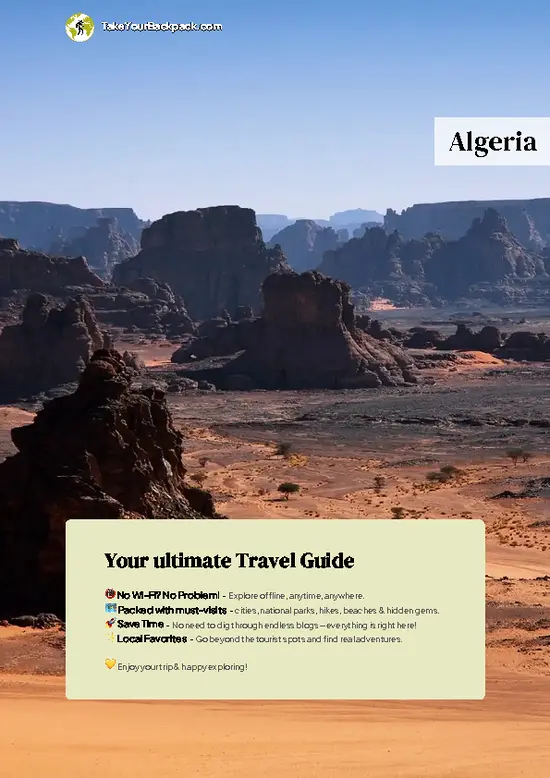
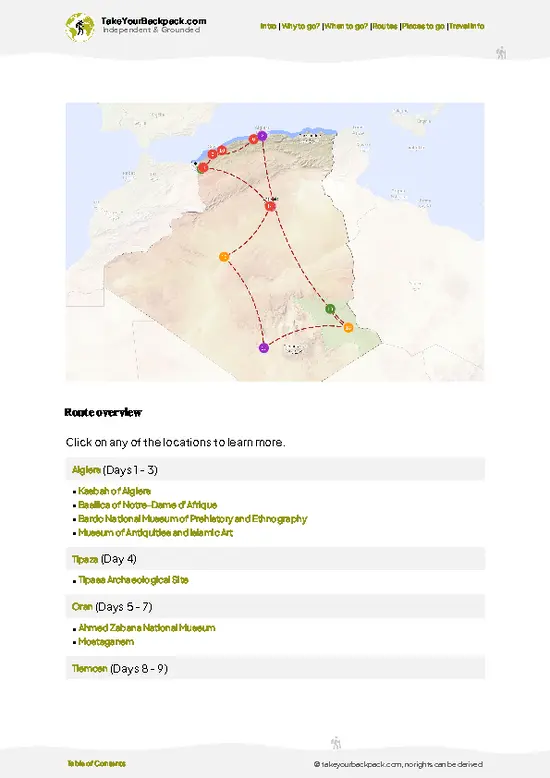
example page 0 from our offline Travel Guide for Algeria
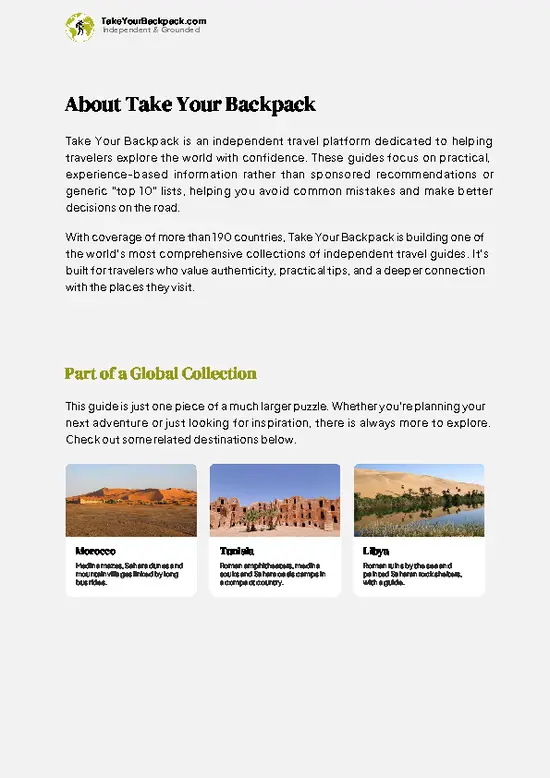
example page 1 from our offline Travel Guide for Algeria
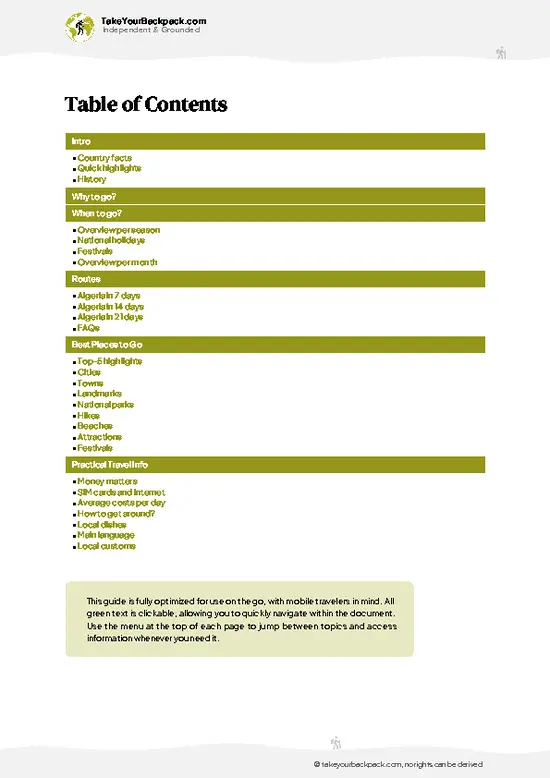
example page 2 from our offline Travel Guide for Algeria
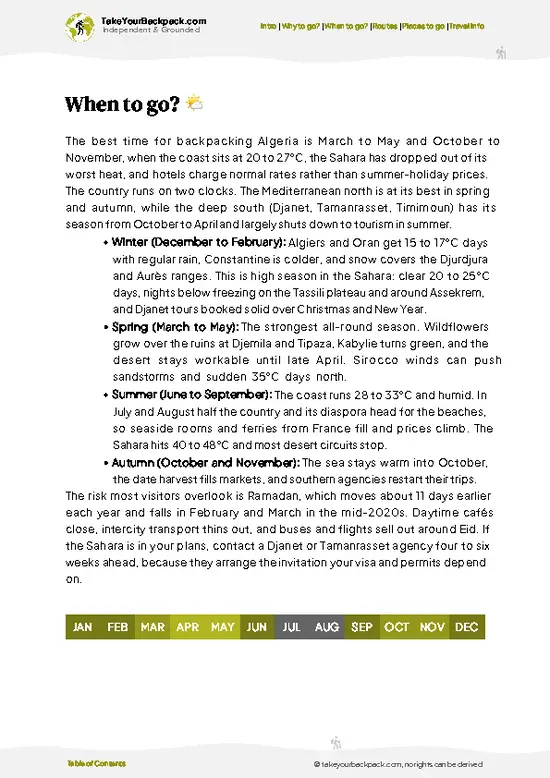
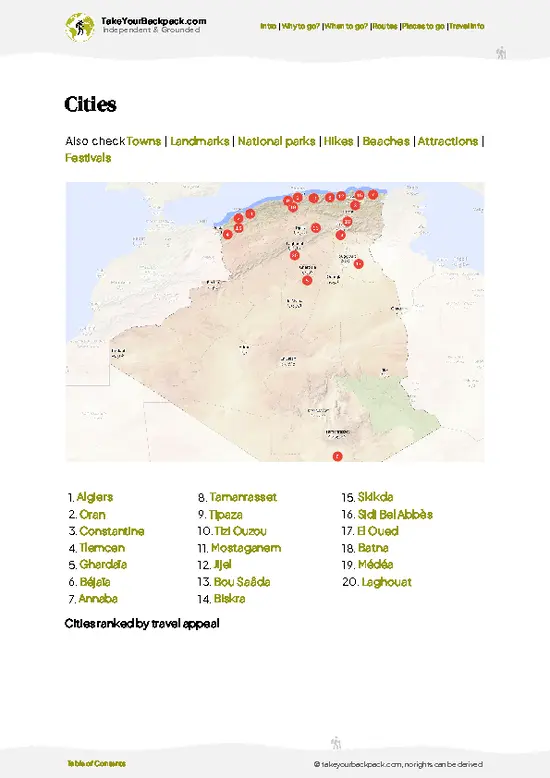
example page 3 from our offline Travel Guide for Algeria
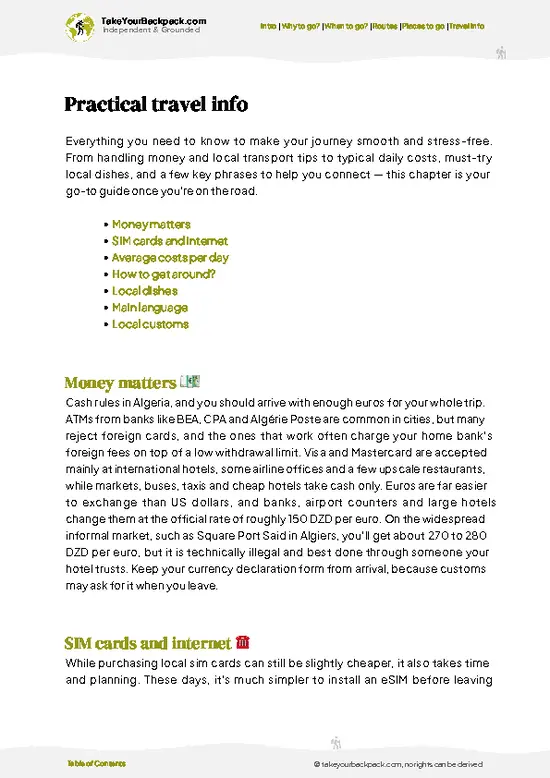
example page 4 from our offline Travel Guide for Algeria
example page 5 from our offline Travel Guide for Algeria
example page 6 from our offline Travel Guide for Algeria
example page 7 from our offline Travel Guide for Algeria
The digital guide (356 pages) contains:
91 highlights, ranked by travel appeal
Optimized 7, 14 & 21-day travel routes
Cities, national parks, landmarks, beaches
How to get around
Offline-friendly for travel without Wi-Fi
👉 Click to see all 30+ guide features

📅 Plan smarter in minutes, not weeks
Month by month travel advice
Festivals & national holidays
Budget expectations

🗺️ Go to the right places, skip the overrated ones
Honest pros & cons of destinations
Top hikes, parks & viewpoints
Lesser-known places most travelers miss
Clear “worth it vs skip it” guidance

🛏️ Travel smoothly without rookie mistakes
Best areas to stay
Transport systems explained simply
Common scams & safety advice
SIM cards, money & practical tips

🌍 Understand the country, not just visit it
Culture & traditions
52 Essential phrases & customs
Festivals worth planning around
Traveler-friendly historical context
Insights that make places more meaningful

📱 Built for real travel conditions
Fully downloadable PDF
Works completely offline
Optimized for phone use
Useful in remote areas & buses
Everything in one place
Save weeks of stressful planning
Get instant access to your full guide. 30‑day money-back guarantee.


By proceeding you agree to our terms.
Sent to your inbox immediately after payment • 100% Secure Checkout
Best Backpacking Travel Advisor 2025 tourism awardBest Backpacking
Travel Advisor
2025
What others say about Take Your Backpack Guides:
⭐⭐⭐⭐⭐
Fantastic, amazing amount of information!
⭐⭐⭐⭐⭐
My goodness this is amazing, it's what I've been looking for hats off too you!
⭐⭐⭐⭐⭐
I think this is absolutely BRILLIANT
⭐⭐⭐⭐
Very complete and informative. It's still missing places, but I gotta to commend you
⭐⭐⭐⭐⭐
This is truly amazing, thank you, can't wait to explore it with my kids!
⭐⭐⭐⭐⭐
Awesome resource, thank you!
⭐⭐⭐⭐⭐
This is amazing! Can't wait to explore the ones I haven't seen
⭐⭐⭐⭐
I love this! Well done, great idea.
⭐⭐⭐⭐⭐
Thanks for taking the time to make this gem!
⭐⭐⭐⭐⭐
This might be the best website I've ever seen.
⭐⭐⭐⭐⭐
Congratulations, and thank you so much for your work; it's incredibly valuable.
⭐⭐⭐⭐
In all seriousness I think you did a great job pointing out the important spots
⭐⭐⭐⭐⭐
10/10 very good
⭐⭐⭐⭐⭐
As someone who's only just starting to visit regularly this is awesome, thank you.
⭐⭐⭐⭐
Thank you very much! I'm going to visit my dad, it's going to be very useful!
⭐⭐⭐⭐⭐
This is really cool! We'll be travelling for the first time and this definitely come in handy.
⭐⭐⭐⭐⭐
You are now our minister of culture, congratulations 👨‍💼
⭐⭐⭐⭐⭐
Just wanted to tell you that this is a pearl! Going to follow your recommendations.
⭐⭐⭐⭐⭐
This is so cool. I'll definitely be using the resource for my travels soon.
⭐⭐⭐⭐⭐
This is very impressive! Good work.
⭐⭐⭐⭐⭐
This is an amazing and informative site. Very well done!

🛏️ Where to stay?Best Places to Stay in Algeria

Yes — there are hostels and budget guesthouses in Algeria, mainly in major cities and tourist towns such as Algiers, Oran, Constantine, Tipaza and Ghardaïa, while options are sparse in rural and desert areas.
Algiers concentrates most low-cost options around Hydra (quieter and safer, more hotels but generally pricier and farther from the old town), Bab El Oued (cheapest, seafront and lively but basic with more noise), and the Casbah (closest to heritage sites and atmospheric but narrow streets, basic facilities and variable safety); Oran’s city centre and historic districts give more nightlife and choices but are busier; Tipaza and Ghardaïa offer small guesthouses near ruins or oases that … read more 👉
Yes — there are hostels and budget guesthouses in Algeria, mainly in major cities and tourist towns such as Algiers, Oran, Constantine, Tipaza and Ghardaïa, while options are sparse in rural and desert areas.
Algiers concentrates most low-cost options around Hydra (quieter and safer, more hotels but generally pricier and farther from the old town), Bab El Oued (cheapest, seafront and lively but basic with more noise), and the Casbah (closest to heritage sites and atmospheric but narrow streets, basic facilities and variable safety); Oran’s city centre and historic districts give more nightlife and choices but are busier; Tipaza and Ghardaïa offer small guesthouses near ruins or oases that are peaceful yet limited in services and transport.

If you enjoy meeting fellow travelers, consider choosing hostels with high ratings for atmosphere. On the other hand, if you prefer having your own space, a hotel might be a better option.

AlgeriaExplore Algeria

👋 Meet the founderWho’s Behind Take Your Backpack?

Johan, backpacker and founder of TakeYourBackpackHi, I’m Johan (Netherlands 🇳🇱), the creator of TakeYourBackpack. Over the past decade, I’ve backpacked through 80+ countries across six continents, gaining extensive experience with independent travel, long-term trips, and overland routes.

This site is built on a combination of firsthand travel experience and carefully curated insights from other backpackers. Many guides are based on places I’ve personally visited, while others bring together tips, observations, and practical advice shared by trusted travelers I’ve met along the way.

The goal is to provide realistic, experience-driven guidance — not generic itineraries — so you can explore destinations with better context, clearer expectations, and more confidence.

Get full Algeria guide •
Instant download • 91 highlights • Full Offline guide