Roman Theater of Calama
Let’s get real: you’ll see a lot of Roman theaters if you backpack North Africa, but Calama’s is a heavyweight. Not because it’s the biggest or the best preserved, but because it’s still got the bones of a city that mattered. You can actually walk the semi-circular rows where Roman citizens gossiped and cheered, and the stage is battered but not beaten. Skip the Instagram pose and just sit for a minute—imagine the desert wind carrying the echoes of Latin drama. The crowds? Almost nonexistent. You’ll have the place nearly to yourself, which is the real luxury here.
Ruins of the Basilica
Most people breeze past this, but the basilica at Calama is a quiet punch to the gut if you care about early Christian history. This isn’t a sanitized, reconstructed tourist trap. The … read more 👉
Let’s get real: you’ll see a lot of Roman theaters if you backpack North Africa, but Calama’s is a heavyweight. Not because it’s the biggest or the best preserved, but because it’s still got the bones of a city that mattered. You can actually walk the semi-circular rows where Roman citizens gossiped and cheered, and the stage is battered but not beaten. Skip the Instagram pose and just sit for a minute—imagine the desert wind carrying the echoes of Latin drama. The crowds? Almost nonexistent. You’ll have the place nearly to yourself, which is the real luxury here.
Ruins of the Basilica
Most people breeze past this, but the basilica at Calama is a quiet punch to the gut if you care about early Christian history. This isn’t a sanitized, reconstructed tourist trap. The … read more 👉
Roman Theater of Calama
Let’s get real: you’ll see a lot of Roman theaters if you backpack North Africa, but Calama’s is a heavyweight. Not because it’s the biggest or the best preserved, but because it’s still got the bones of a city that mattered. You can actually walk the semi-circular rows where Roman citizens gossiped and cheered, and the stage is battered but not beaten. Skip the Instagram pose and just sit for a minute—imagine the desert wind carrying the echoes of Latin drama. The crowds? Almost nonexistent. You’ll have the place nearly to yourself, which is the real luxury here.
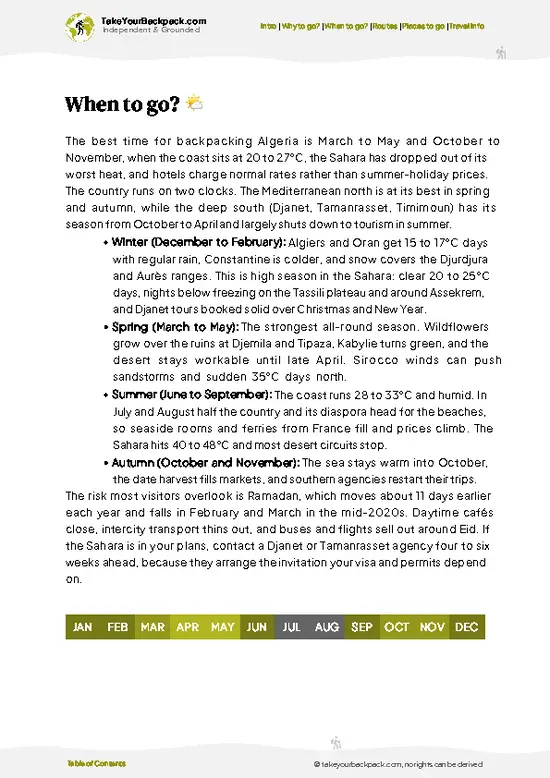
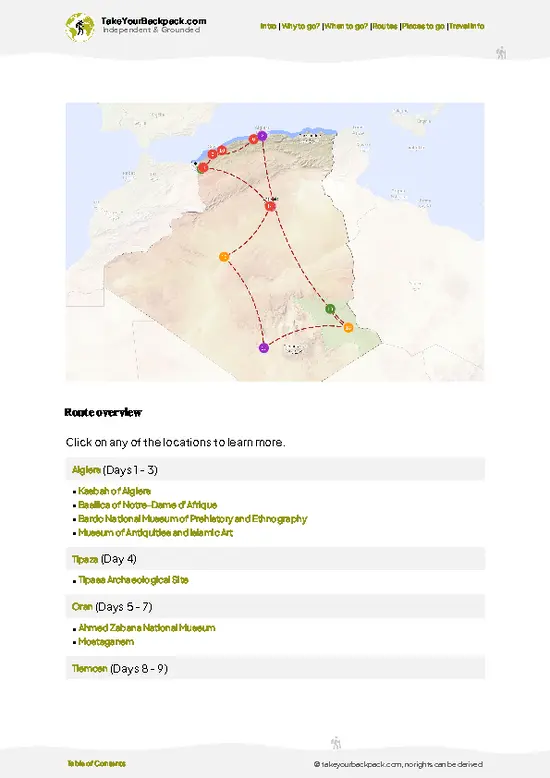
Ruins of the Basilica
Most people breeze past this, but the basilica at Calama is a quiet punch to the gut if you care about early Christian history. This isn’t a sanitized, reconstructed tourist trap. The columns are toppled, the mosaics are battered, and the sense of time is thick. You’re standing where North African Christianity took root, in a city that was once a bishopric. The site’s roughness is its charm—no velvet ropes, no glass cases, just you and the stones. Bring your own context, because there’s no slick signage or curated experience. That’s the point.
Roman Baths
If you want to understand how the Romans conquered not just with swords but with plumbing, the baths at Calama are your crash course. The hypocaust system (that’s ancient underfloor heating, for the uninitiated) is still visible if you know where to look. The layout is classic: frigidarium, tepidarium, caldarium. But what makes Calama’s baths different is the sense of abandonment—nature is slowly reclaiming the site, and you can see wildflowers poking through the old tiles. It’s a reminder that empires fade, but hot water is always a good idea.
Forum and Market Area
Don’t expect a grand piazza. What you get is a jumble of stones, some columns, and the ghost of commerce. This was the beating heart of Calama, where deals were struck and news was traded. The market area is more evocative than photogenic, but if you’re the kind of traveler who likes to reconstruct the past from fragments, this is your playground. The lack of crowds means you can actually hear your own thoughts—and maybe, if you’re lucky, the distant echo of a Roman vendor hawking olives.
Byzantine Fortress
Here’s where Calama throws a curveball. After the Romans, the Byzantines rolled in and built a fortress right on top of the old city. The walls are chunky, utilitarian, and built for business, not beauty. Climb up and you’ll get a panoramic view of the surrounding plains—no filter needed, just the harsh, honest light of the Algerian sun. The fortress is a reminder that this city was fought over for centuries, and it’s still standing, battered but defiant. If you want a sense of scale—of history layered on history—this is where you’ll feel it.
Let’s get real: you’ll see a lot of Roman theaters if you backpack North Africa, but Calama’s is a heavyweight. Not because it’s the biggest or the best preserved, but because it’s still got the bones of a city that mattered. You can actually walk the semi-circular rows where Roman citizens gossiped and cheered, and the stage is battered but not beaten. Skip the Instagram pose and just sit for a minute—imagine the desert wind carrying the echoes of Latin drama. The crowds? Almost nonexistent. You’ll have the place nearly to yourself, which is the real luxury here.
Ruins of the Basilica
Most people breeze past this, but the basilica at Calama is a quiet punch to the gut if you care about early Christian history. This isn’t a sanitized, reconstructed tourist trap. The columns are toppled, the mosaics are battered, and the sense of time is thick. You’re standing where North African Christianity took root, in a city that was once a bishopric. The site’s roughness is its charm—no velvet ropes, no glass cases, just you and the stones. Bring your own context, because there’s no slick signage or curated experience. That’s the point.
Roman Baths
If you want to understand how the Romans conquered not just with swords but with plumbing, the baths at Calama are your crash course. The hypocaust system (that’s ancient underfloor heating, for the uninitiated) is still visible if you know where to look. The layout is classic: frigidarium, tepidarium, caldarium. But what makes Calama’s baths different is the sense of abandonment—nature is slowly reclaiming the site, and you can see wildflowers poking through the old tiles. It’s a reminder that empires fade, but hot water is always a good idea.
Forum and Market Area
Don’t expect a grand piazza. What you get is a jumble of stones, some columns, and the ghost of commerce. This was the beating heart of Calama, where deals were struck and news was traded. The market area is more evocative than photogenic, but if you’re the kind of traveler who likes to reconstruct the past from fragments, this is your playground. The lack of crowds means you can actually hear your own thoughts—and maybe, if you’re lucky, the distant echo of a Roman vendor hawking olives.
Byzantine Fortress
Here’s where Calama throws a curveball. After the Romans, the Byzantines rolled in and built a fortress right on top of the old city. The walls are chunky, utilitarian, and built for business, not beauty. Climb up and you’ll get a panoramic view of the surrounding plains—no filter needed, just the harsh, honest light of the Algerian sun. The fortress is a reminder that this city was fought over for centuries, and it’s still standing, battered but defiant. If you want a sense of scale—of history layered on history—this is where you’ll feel it.
Spotted a mistake or missing something? Contact us.
v2.webp)

Best Backpacking
Hi, I’m Johan (Netherlands 🇳🇱), the creator of TakeYourBackpack. Over the past decade, I’ve backpacked through 80+ countries across six continents, gaining extensive experience with independent travel, long-term trips, and overland routes.