v2.webp)
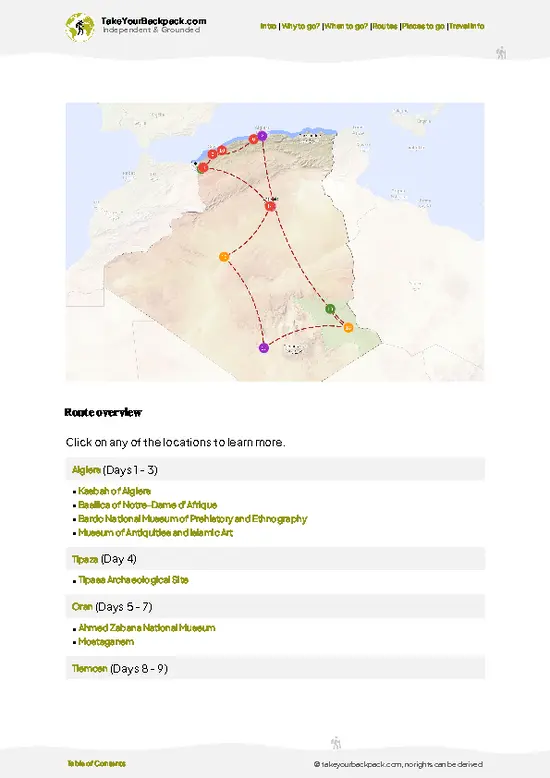
- The Basilica’s Byzantine-Romanesque church: this is the sight everyone climbs for. The sanctuary was consecrated in 1872, and its domed, striped stonework sits on a headland about 124 meters above the sea. Step inside and the air is cool, smelling of stone and old wax.
- Our Lady of Africa apse inscription: around the apse runs the Latin prayer “Notre-Dame d’Afrique, priez pour nous et pour les musulmans.” It asks Our Lady of Africa to pray for us and for Muslims, which says plenty about how this church sits in a Muslim-majority country.
- The black Madonna statue: the dark-faced figure of the Virgin stands above the altar, in a silver-colored robe. Locals of different faiths still come to light candles before her, and you will hear hushed Arabic and French side by side.
- The ex-voto plaques: the
- The Basilica’s Byzantine-Romanesque church: this is the sight everyone climbs for. The sanctuary was consecrated in 1872, and its domed, striped stonework sits on a headland about 124 meters above the sea. Step inside and the air is cool, smelling of stone and old wax.
- Our Lady of Africa apse inscription: around the apse runs the Latin prayer “Notre-Dame d’Afrique, priez pour nous et pour les musulmans.” It asks Our Lady of Africa to pray for us and for Muslims, which says plenty about how this church sits in a Muslim-majority country.
- The black Madonna statue: the dark-faced figure of the Virgin stands above the altar, in a silver-colored robe. Locals of different faiths still come to light candles before her, and you will hear hushed Arabic and French side by side.
- The ex-voto plaques: the walls carry hundreds of small thank-you tablets left by sailors and families, many from fishermen. Reading them is a slow, oddly moving way to spend ten minutes.
- The terrace view over the Bay of Algiers: from the forecourt you look across rooftops, the port cranes and the curve of the bay. Sea wind carries salt and the sound of traffic from far below, and the haze softens everything into pale blue.
- Stained glass and mosaics: colored light falls on the floor in the afternoon, and the mosaic work in the apse is finer than the plain exterior suggests. Bring your phone camera, but keep the flash off.
- The cliffside approach in Bologhine: the walk or cable-car-style climb through the steep neighborhood is part of the experience, with narrow lanes, laundry strung between balconies and the smell of grilled sardines on a windy day. Go with daylight and keep your bag zipped.
Spotted a mistake or missing something? Contact us.

"Best of Algiers city" by Fancyellow

Algiers Casbah Tour

Best of Algiers Tour By Algeriatours16

"Tipaza and Cherchell" Tour by Fancyellow

The essential of Algiers by a local expert in a Private Day

Private Day Tour to the Roman Ruins of Tipaza

Casbah tour

BEST Casbah Private Guided tour with a Tasty Traditional Lunch

Djemila Roman Ruins in a Private Day


 Best Backpacking
.jpg) Hi, I’m Johan (Netherlands 🇳🇱), the creator of TakeYourBackpack. Over the past 3 decades, I’ve backpacked through 90+ countries across six continents, gaining extensive experience with independent travel, long-term trips, and overland routes.
Hi, I’m Johan (Netherlands 🇳🇱), the creator of TakeYourBackpack. Over the past 3 decades, I’ve backpacked through 90+ countries across six continents, gaining extensive experience with independent travel, long-term trips, and overland routes.