×

Algeria🇩🇿 | townsDjanetSaharan oasis, blue-painted houses, Tassili gateway | things to do and best time to go

Explore Bou Hedma National ParkExplore Ghoufi

Backpacking in Djanet
🏆 Top picktown ranked #1
By Johan Kruseman 🇳🇱 | Updated June 12, 2026

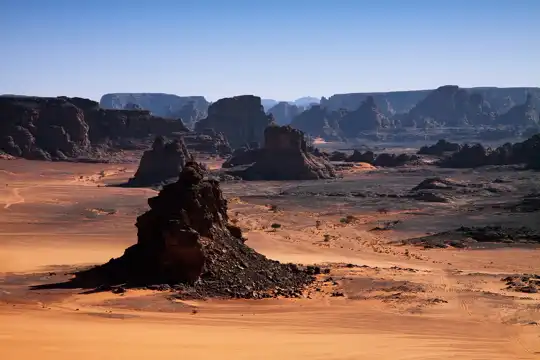
The first real fork in the road for anyone eyeing Djanet is this: do you treat it as a launchpad for the Sahara’s wildest corners, or as a destination in itself? That choice matters, because Djanet isn’t a place you just stumble into—it’s deep in southeastern Algeria, a thousand kilometers from Algiers, closer to Libya and Niger than to the Mediterranean. The town itself is a low-slung sprawl of whitewashed houses and palm groves, pressed between ochre cliffs and the endless, humming silence of the desert. For backpackers, Djanet is less about urban thrills and more about the anticipation before the leap: it’s the last real outpost before you trade paved roads for the sand seas of Tassili n’Ajjer. There’s a compact old center with a market that smells of dates and diesel, a few simple cafés, and the kind of slow, communal evenings that make it easy to meet fellow travelers—if there are any. Getting here is a mission: flights from Algiers, or a long, patience-testing bus ride. Once you arrive, you’ll need local guides for anything beyond town. Costs are higher than in northern Algeria, and safety is a real calculation—this is a region where you don’t just wander off alone. Compared to the bustle of Tamanrasset, Djanet feels quieter, more intimate, and infinitely more remote. It’s not for everyone, but if you want to earn your sunrise over prehistoric rock art, this is where the journey gets real.

Discover everything you want to know in the 📖 Algeria Travel Guide.


Get your Algeria guide
91 ranked highlights, routes & tips, works offline (356 pages)
Loading the map 🌍
CLICK TO FILTER
cities
towns
landmarks
national parks
hikes
beaches
attractions
festivals
SHOW COUNTRY’S BESTSHOW ALL

✨ Why go?
Ranked #1 town in Algeria
What sets this place apart

Djanet serves as a gateway to the stunning landscapes of the Sahara, making it a prime stop for backpackers seeking both adventure and culture. The town’s walkable streets are lined with small-scale guesthouses and hostels, offering a cozy atmosphere where you can easily strike up conversations with fellow travelers. The local food scene is a treat, with aromatic tagines and fresh bread that fill the air with warmth, inviting you to linger over meals.

Hikers will find Djanet a convenient base for exploring the nearby Tadrart and Ahaggar mountain ranges, where trails lead to breathtaking rock formations and ancient petroglyphs. The social vibe here is friendly but not overwhelming; you can choose to join a group for a trek or enjoy quiet moments in a café, sipping mint tea while watching the … read more 👉
Djanet serves as a gateway to the stunning landscapes of the Sahara, making it a prime stop for backpackers seeking both adventure and culture. The town’s walkable streets are lined with small-scale guesthouses and hostels, offering a cozy atmosphere where you can easily strike up conversations with fellow travelers. The local food scene is a treat, with aromatic tagines and fresh bread that fill the air with warmth, inviting you to linger over meals.

Hikers will find Djanet a convenient base for exploring the nearby Tadrart and Ahaggar mountain ranges, where trails lead to breathtaking rock formations and ancient petroglyphs. The social vibe here is friendly but not overwhelming; you can choose to join a group for a trek or enjoy quiet moments in a café, sipping mint tea while watching the world go by.

Most travelers tend to stay a few days, soaking in the cultural richness and preparing for the next leg of their journey. Djanet attracts slow travelers, solo adventurers, and small groups looking for an authentic experience, making it a perfect blend of exploration and relaxation.
Want to include Djanet in your Algeria route?
Create a personalized Algeria itinerary that includes Djanet and the places that fit your trip — based on your travel style, budget, and available time. Get your route in seconds.

Generate my trip

💡 HighlightsKey sights and experiences for travelers

  1. Djanet Oasis (La Palmeraie) — The real heart of the town: long date-palm alleys, trickling irrigation channels and shaded paths where locals work and hang out. It’s the best place to feel how life in the Sahara actually functions.
  2. The Old Ksar (old town quarter) — Tight lanes, mud-brick and stone homes, rooftop terraces and everyday scenes of family life. Walking the ksar gives a tangible sense of Djanet’s architectural rhythm and history.
  3. The Souk / Market — A compact, lively market where you can buy dates, spices, grains and Tuareg silver, watch bargaining, and sample local snacks. It’s social life and commerce rolled into one.
  4. The Main Mosque — The town’s principal mosque and its forecourt are community anchors. Even if you don’t go inside, the rhythms around prayer times and Friday
read more 👉
  1. Djanet Oasis (La Palmeraie) — The real heart of the town: long date-palm alleys, trickling irrigation channels and shaded paths where locals work and hang out. It’s the best place to feel how life in the Sahara actually functions.
  2. The Old Ksar (old town quarter) — Tight lanes, mud-brick and stone homes, rooftop terraces and everyday scenes of family life. Walking the ksar gives a tangible sense of Djanet’s architectural rhythm and history.
  3. The Souk / Market — A compact, lively market where you can buy dates, spices, grains and Tuareg silver, watch bargaining, and sample local snacks. It’s social life and commerce rolled into one.
  4. The Main Mosque — The town’s principal mosque and its forecourt are community anchors. Even if you don’t go inside, the rhythms around prayer times and Friday gatherings are a good window into local culture (observe local customs).
  5. Foggara and irrigation channels — The ancient underground water channels and visible outlets that feed the oasis are quietly fascinating and essential to Djanet’s survival; seeing them explains how people manage water in the desert.
  6. Tuareg artisan workshops and jewelry stalls — Small shops and bench workshops where silversmiths and leatherworkers craft traditional Tuareg pieces; great for watching techniques and picking up authentic, locally made gifts.
  7. Palm-grove trails and local viewpoints — Short walks right from town lead to edges of the sandstone escarpments; the views back over the green palmeraie against red rock are unexpectedly cinematic at sunrise or late afternoon.
  8. Date-drying yards and packing spots — Local spots where dates are sorted, dried and packed; you’ll get a hands-on look at the food economy of the oasis and can taste varieties you won’t find elsewhere.
  9. Tea houses and evening gathering places — Small cafés and shaded corners where you can sit on low cushions, drink mint tea, listen to Tuareg songs or storytelling, and experience everyday social life without a tourist curtain.
  10. Community meeting places and market squares — The town’s plazas and informal gathering points where festivals, local announcements and casual trade happen; ideal for people-watching and catching spontaneous cultural moments.
Nearby day-trip highlights: the rock-art panels and canyons of Tassili n’Ajjer, the sculpted sandstone of the Tadrart Rouge, and the gueltas and palm valleys around Iherir are all real, visitable spots you can reach from Djanet.
Spotted a mistake or missing something? Contact us.

Things to do around Djanet

Ratings based on Tripadvisor reviews. When you book through this link, you support our work at no extra cost to you.

🏘️ NeighborhoodsUnderstanding the local layout

Djanet, the gateway to the Sahara, offers a unique blend of culture and adventure. Each neighborhood has its own character, making it essential to choose wisely for your stay.

Centre Ville: This is the heart of Djanet, where the pulse of the town beats strongest. You’ll find bustling markets and local eateries serving up tagines that fill the air with spices. It’s walkable, with most attractions within a short stroll. Prices here can be higher, but the convenience makes it worth it for short stays. Nightlife is low-key; think cozy cafés rather than wild parties.

El-Mansourah: A quieter area, perfect for those seeking a peaceful retreat. The vibe is laid-back, with fewer tourists. You can enjoy the scent of jasmine wafting through the streets. Accommodation is more affordable, making it suitable … read more 👉
Djanet, the gateway to the Sahara, offers a unique blend of culture and adventure. Each neighborhood has its own character, making it essential to choose wisely for your stay.

Centre Ville: This is the heart of Djanet, where the pulse of the town beats strongest. You’ll find bustling markets and local eateries serving up tagines that fill the air with spices. It’s walkable, with most attractions within a short stroll. Prices here can be higher, but the convenience makes it worth it for short stays. Nightlife is low-key; think cozy cafés rather than wild parties.

El-Mansourah: A quieter area, perfect for those seeking a peaceful retreat. The vibe is laid-back, with fewer tourists. You can enjoy the scent of jasmine wafting through the streets. Accommodation is more affordable, making it suitable for longer stays. Public transport is accessible, but you might want to walk to soak in the local atmosphere.

La Gare: Close to the bus station, this area is ideal for backpackers on the move. The vibe is transient, with a mix of locals and travelers. Prices are budget-friendly, and you’ll find basic amenities. It’s not the most picturesque, but it’s practical for short stays. Nightlife is minimal, so don’t expect much after dark.

Ouled Mimoun: This neighborhood offers a glimpse into traditional life. The atmosphere is rich with history, and you can often hear the call to prayer echoing through the streets. It’s less touristy, making it a great spot for those looking to immerse themselves in local culture. Prices are reasonable, and while it’s a bit further from the main attractions, the experience is worth the trek.

⌛️ 1 dayWhat you can realistically do in a day

Djanet, Algeria, is a captivating blend of ancient Berber culture and stunning Saharan landscapes. The town serves as a gateway to the Tassili n’Ajjer National Park, where the surreal rock formations and prehistoric art tell stories of a time long past. The atmosphere is thick with the scent of spices and the warmth of the sun, inviting you to explore its hidden corners.

Start your morning at the bustling local market, where the air is alive with chatter and the vibrant colors of fresh produce. Grab a flaky *mhadjeb* (stuffed flatbread) from a street vendor, and savor the flavors as you wander through the narrow alleys of the old town. The *Kasbah*, with its mud-brick architecture, is a must-see. Here, you can feel the history seep into your bones as you admire the intricate designs that … read more 👉
Djanet, Algeria, is a captivating blend of ancient Berber culture and stunning Saharan landscapes. The town serves as a gateway to the Tassili n’Ajjer National Park, where the surreal rock formations and prehistoric art tell stories of a time long past. The atmosphere is thick with the scent of spices and the warmth of the sun, inviting you to explore its hidden corners.

Start your morning at the bustling local market, where the air is alive with chatter and the vibrant colors of fresh produce. Grab a flaky *mhadjeb* (stuffed flatbread) from a street vendor, and savor the flavors as you wander through the narrow alleys of the old town. The *Kasbah*, with its mud-brick architecture, is a must-see. Here, you can feel the history seep into your bones as you admire the intricate designs that have stood the test of time.

In the afternoon, head to the nearby *Tassili n’Ajjer* for a hike. The trails are well-marked, and the surreal rock formations will leave you in awe. Look for the ancient petroglyphs etched into the stone; they’re not just art, but a glimpse into the lives of those who walked this land thousands of years ago. Bring plenty of water and a camera—the golden light of the late afternoon will make your photos pop.

As the sun begins to set, return to Djanet and find a local café in the *Hassi* neighborhood. Here, you can sip on sweet mint tea while watching the sky turn shades of orange and pink. For dinner, seek out a family-run restaurant serving traditional *couscous* or *tagine*. The warmth of the hospitality will make you feel right at home.

End your day by strolling through the quiet streets, where the soft glow of lanterns illuminates the path. Djanet may not be on every tourist’s radar, but its charm lies in its authenticity, making your visit feel like a well-earned adventure.
Turn your Djanet visit into an Algeria adventure
Build a complete Algeria route with Djanet, hidden gems, must-see destinations, and realistic travel times included.

Generate my trip

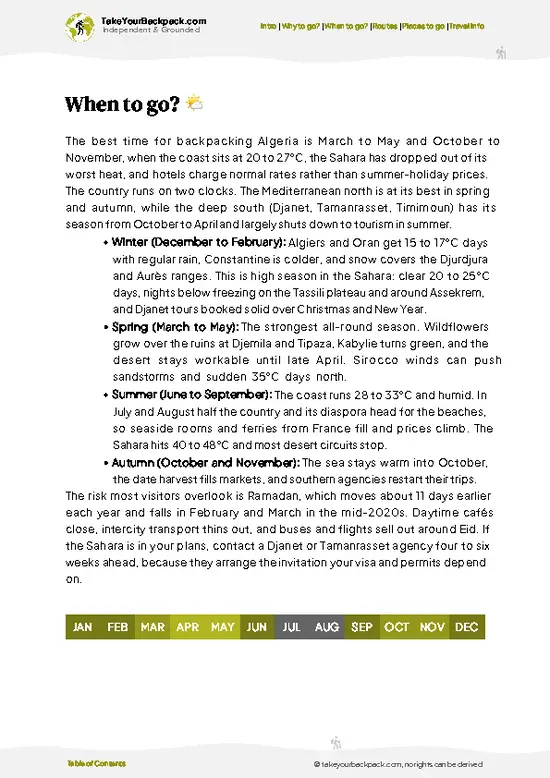
🌤️ When to go?Seasonal considerations and timing


  • Topic: Weather – Djanet sits deep in the Sahara, so summers scorch with highs often above 45°C (113°F), making midday hiking brutal. Winters are mild, with daytime temps around 20°C (68°F), perfect for exploring without overheating.

  • Topic: Temperature – Nights can swing cold, especially in winter, dropping near 0°C (32°F). Layering is key: warm mornings and evenings contrast with sun-baked afternoons.

  • Topic: Daylight Hours – From October to March, daylight stretches about 10-11 hours, enough to start early and finish before dark. Longer summer days mean more heat exposure, so timing your hikes early or late is crucial.

  • Topic: Crowds – Djanet is off the beaten path, but winter months attract more travelers seeking Sahara treks. Expect a modest bump in visitors from December to February,
read more 👉

  • Topic: Weather – Djanet sits deep in the Sahara, so summers scorch with highs often above 45°C (113°F), making midday hiking brutal. Winters are mild, with daytime temps around 20°C (68°F), perfect for exploring without overheating.

  • Topic: Temperature – Nights can swing cold, especially in winter, dropping near 0°C (32°F). Layering is key: warm mornings and evenings contrast with sun-baked afternoons.

  • Topic: Daylight Hours – From October to March, daylight stretches about 10-11 hours, enough to start early and finish before dark. Longer summer days mean more heat exposure, so timing your hikes early or late is crucial.

  • Topic: Crowds – Djanet is off the beaten path, but winter months attract more travelers seeking Sahara treks. Expect a modest bump in visitors from December to February, which can mean better local services but less solitude.

  • Topic: Seasonal Activities – Winter offers ideal conditions for multi-day desert treks and visiting rock art sites without the risk of heat exhaustion. Summer’s extreme heat limits outdoor activities to dawn and dusk, shrinking your adventure window.

  • Topic: Price Fluctuations – Peak season (winter) sees higher prices for guides and accommodations, reflecting demand. Off-season summer months bring lower costs but require serious heat tolerance and flexible plans.


Pro-tip: Aim for late autumn or early spring—cooler days, manageable nights, fewer crowds, and prices that haven’t peaked yet. This timing turns Djanet’s raw desert beauty into a playground, not a trial.


source: climatestotravel.comJANJanuary: highly recommended for travelingFEBFebruary: highly recommended for travelingMARMarch: highly recommended for travelingAPRApril: excellent for travelingMAYMay: good for travelingJUNJune: fair for travelingJULJuly: below average for travelingAUGAugust: below average for travelingSEPSeptember: good for travelingOCTOctober: excellent for travelingNOVNovember: excellent for travelingDECDecember: highly recommended for traveling
when-to-go

✈️ The backpacker research shortcutAlgeria Travel Guide

An offline-friendly backpacking guide with optimized travel routes, ranked highlights, transport advice, and the best areas to stay.
example page 0 from our offline Travel Guide for Algeria
example page 1 from our offline Travel Guide for Algeria
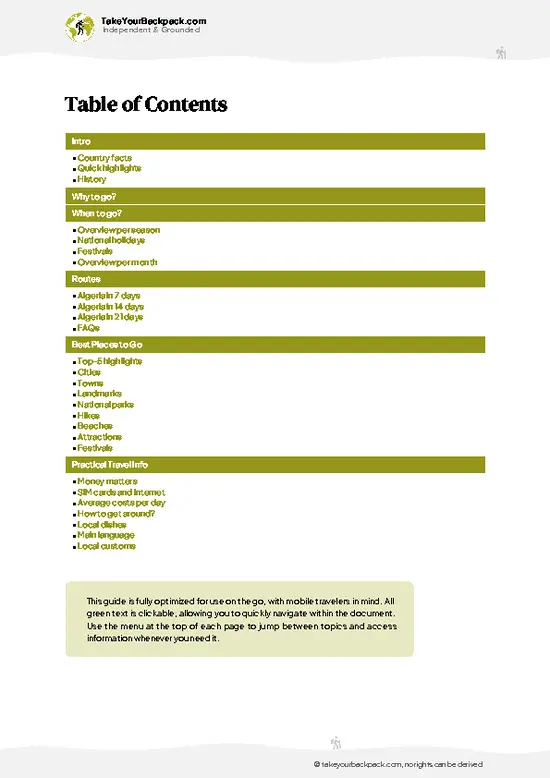
example page 2 from our offline Travel Guide for Algeria
example page 3 from our offline Travel Guide for Algeria
example page 4 from our offline Travel Guide for Algeria
example page 5 from our offline Travel Guide for Algeria
example page 6 from our offline Travel Guide for Algeria
example page 7 from our offline Travel Guide for Algeria
The digital guide (356 pages) contains:
91 highlights, ranked by travel appeal
Optimized 7, 14 & 21-day travel routes
Cities, national parks, landmarks, beaches
How to get around
Offline-friendly for travel without Wi-Fi
👉 Click to see all 30+ guide features

📅 Plan smarter in minutes, not weeks
Month by month travel advice
Festivals & national holidays
Budget expectations

🗺️ Go to the right places, skip the overrated ones
Honest pros & cons of destinations
Top hikes, parks & viewpoints
Lesser-known places most travelers miss
Clear “worth it vs skip it” guidance

🛏️ Travel smoothly without rookie mistakes
Best areas to stay
Transport systems explained simply
Common scams & safety advice
SIM cards, money & practical tips

🌍 Understand the country, not just visit it
Culture & traditions
52 Essential phrases & customs
Festivals worth planning around
Traveler-friendly historical context
Insights that make places more meaningful

📱 Built for real travel conditions
Fully downloadable PDF
Works completely offline
Optimized for phone use
Useful in remote areas & buses
Everything in one place
Save weeks of stressful planning
Get instant access to your full guide. 30‑day money-back guarantee.


By proceeding you agree to our terms.
Sent to your inbox immediately after payment • 100% Secure Checkout
Best Backpacking Travel Advisor 2025 tourism awardBest Backpacking
Travel Advisor
2025
What others say about Take Your Backpack Guides:
⭐⭐⭐⭐⭐
Fantastic, amazing amount of information!
⭐⭐⭐⭐⭐
My goodness this is amazing, it's what I've been looking for hats off too you!
⭐⭐⭐⭐⭐
I think this is absolutely BRILLIANT
⭐⭐⭐⭐
Very complete and informative. It's still missing places, but I gotta to commend you
⭐⭐⭐⭐⭐
This is truly amazing, thank you, can't wait to explore it with my kids!
⭐⭐⭐⭐⭐
Awesome resource, thank you!
⭐⭐⭐⭐⭐
This is amazing! Can't wait to explore the ones I haven't seen
⭐⭐⭐⭐
I love this! Well done, great idea.
⭐⭐⭐⭐⭐
Thanks for taking the time to make this gem!
⭐⭐⭐⭐⭐
This might be the best website I've ever seen.
⭐⭐⭐⭐⭐
Congratulations, and thank you so much for your work; it's incredibly valuable.
⭐⭐⭐⭐
In all seriousness I think you did a great job pointing out the important spots
⭐⭐⭐⭐⭐
10/10 very good
⭐⭐⭐⭐⭐
As someone who's only just starting to visit regularly this is awesome, thank you.
⭐⭐⭐⭐
Thank you very much! I'm going to visit my dad, it's going to be very useful!
⭐⭐⭐⭐⭐
This is really cool! We'll be travelling for the first time and this definitely come in handy.
⭐⭐⭐⭐⭐
You are now our minister of culture, congratulations 👨‍💼
⭐⭐⭐⭐⭐
Just wanted to tell you that this is a pearl! Going to follow your recommendations.
⭐⭐⭐⭐⭐
This is so cool. I'll definitely be using the resource for my travels soon.
⭐⭐⭐⭐⭐
This is very impressive! Good work.
⭐⭐⭐⭐⭐
This is an amazing and informative site. Very well done!

🛏️ Where to stay?Choosing the right base

In Djanet, the heart of the town near the central square and the main market area is where backpackers find their rhythm. This neighborhood hums with life as the sun dips low, casting long shadows over sandstone buildings that smell faintly of spices and desert dust. It’s not just about convenience here; it’s about being where the pulse of daily life is strongest. Streets are narrow but safe, with locals who nod in greeting and vendors calling out in a mix of Tamahaq and Arabic.

Why settle here? Because this is where you’ll find the handful of budget accommodations that cater to solo travelers … read more 👉
In Djanet, the heart of the town near the central square and the main market area is where backpackers find their rhythm. This neighborhood hums with life as the sun dips low, casting long shadows over sandstone buildings that smell faintly of spices and desert dust. It’s not just about convenience here; it’s about being where the pulse of daily life is strongest. Streets are narrow but safe, with locals who nod in greeting and vendors calling out in a mix of Tamahaq and Arabic.

Why settle here? Because this is where you’ll find the handful of budget accommodations that cater to solo travelers and small groups. Hostels and guesthouses cluster around this zone, offering a chance to meet others swapping stories over mint tea or sharing plans for the next desert trek. The vibe is relaxed but lively, a perfect balance for those who want to recharge before heading into the vast silence of Tassili n’Ajjer.

Other parts of Djanet stretch out into quieter residential areas or more isolated spots that lack the social buzz and easy access to essentials. Staying central means you’re never far from a café or a friendly face, and the evening light here—soft, golden, and cool—makes wandering the streets feel like a reward, not a chore. This is where the town’s soul is easiest to tap into, and where your journey truly begins.

🚌 Getting aroundMoving around without the hassle

Djanet moves at the pace of the desert wind—unhurried, deliberate, and shaped by the sun’s arc across the sky. This isn’t a place where timetables rule your day; instead, intuition and local rhythms guide you. The town’s narrow streets and ochre walls absorb the heat, softening the edges of time itself. Mornings start with the scent of fresh bread and strong coffee, while afternoons stretch long and quiet, broken only by the occasional hum of a motorbike or the shuffle of sandals on sand. Here, your best bet is to sync with the natural flow—early starts before the heat, and slow, deliberate movement when the sun is high. Understanding this flow is your key to unlocking Djanet’s raw charm without the frustration of missed rides or wasted hours.


  • Walking: The heart of Djanet is compact and
read more 👉
Djanet moves at the pace of the desert wind—unhurried, deliberate, and shaped by the sun’s arc across the sky. This isn’t a place where timetables rule your day; instead, intuition and local rhythms guide you. The town’s narrow streets and ochre walls absorb the heat, softening the edges of time itself. Mornings start with the scent of fresh bread and strong coffee, while afternoons stretch long and quiet, broken only by the occasional hum of a motorbike or the shuffle of sandals on sand. Here, your best bet is to sync with the natural flow—early starts before the heat, and slow, deliberate movement when the sun is high. Understanding this flow is your key to unlocking Djanet’s raw charm without the frustration of missed rides or wasted hours.


  • Walking: The heart of Djanet is compact and best explored on foot. Walking lets you soak in the cracked earth underfoot, the sun-warmed stone walls, and the occasional waft of spices from local kitchens. It’s free, flexible, and the only way to catch the subtle shifts in the town’s rhythm. Expect to cover most spots within 30 minutes, but pace yourself—shade is scarce and the sun relentless by midday.


  • Shared Taxis (Taxi Collectifs): These are the lifeblood of local transit, operating without fixed schedules but with a clear sense of when they fill up and depart. Fares hover around 100-200 DZD for short trips. They’re a budget-friendly way to reach nearby villages or the edges of the Tassili n’Ajjer National Park. The catch: you’ll wait until the vehicle fills, so patience is your currency here. Departures cluster around early morning and late afternoon, avoiding the midday heat.


  • Motorbike Taxis: If you’re traveling solo and want speed over comfort, motorbike taxis zip through the narrow streets and outlying paths. Prices vary but expect around 150-300 DZD for short hops. They’re fast, nimble, and perfect for quick errands or catching a sunset viewpoint before the light fades. Helmets aren’t always standard, so brace for dust and wind.


  • Minibus Services: For longer hauls, minibuses connect Djanet with larger towns like Illizi or In Aménas. These run less frequently—usually once or twice a day, early morning departures—and cost around 1,000-1,500 DZD. They’re basic but reliable, with a rough ride over desert roads that demands a sturdy stomach and a sense of adventure. Booking a day ahead is smart, especially in peak season.


  • Bicycle Rentals: A less common but rewarding choice if you’re up for a bit of sweat and sun. Bikes cost about 500-700 DZD per day and give you freedom to explore trails and outskirts at your own pace. The terrain is sandy and uneven, so a sturdy mountain bike is essential. Early mornings or late afternoons are the best windows to avoid the brutal heat and catch the desert’s golden hues.

👛 Costs (as of 14 April 2025)How expensive it really is

Backpacking in Djanet, Algeria, means stepping into a desert town where every dinar spent feels like an investment in an authentic Saharan experience. Here’s what your daily costs will look like, broken down so you can plan with confidence.
  • Dorm Accommodation: Options are limited and basic, mostly small guesthouses or desert camps. Expect to pay around €10-15 per night for a dorm bed or shared room. These places are simple but clean, often with a communal vibe and a chance to meet other travelers.
  • Meals: Food is straightforward and hearty—think couscous, tagines, and fresh bread. Street food and local eateries will cost about €3-6 per meal. If you opt for a more tourist-oriented spot or a desert camp dinner, prices can rise to €8-12, but the flavors and setting justify the splurge.
  • Local
read more 👉
Backpacking in Djanet, Algeria, means stepping into a desert town where every dinar spent feels like an investment in an authentic Saharan experience. Here’s what your daily costs will look like, broken down so you can plan with confidence.
  • Dorm Accommodation: Options are limited and basic, mostly small guesthouses or desert camps. Expect to pay around €10-15 per night for a dorm bed or shared room. These places are simple but clean, often with a communal vibe and a chance to meet other travelers.
  • Meals: Food is straightforward and hearty—think couscous, tagines, and fresh bread. Street food and local eateries will cost about €3-6 per meal. If you opt for a more tourist-oriented spot or a desert camp dinner, prices can rise to €8-12, but the flavors and setting justify the splurge.
  • Local Transport: Djanet is small, so walking is your best bet for getting around town. For trips outside town, shared taxis or minibuses cost roughly €2-5 depending on distance. Renting a 4x4 for desert excursions is pricier, usually around €50-70 per day, but essential for reaching remote spots.
  • Basic Activities/Entry Fees: Most natural sites around Djanet don’t have formal entrance fees, but guided tours are highly recommended for safety and insight. Expect to pay €20-40 for a half-day tour, which often includes transport and a guide who knows the terrain and history.
  • Miscellaneous Expenses: Water, snacks, and small essentials will add up to about €2-5 daily. Keep cash handy as card payments are rare, and ATMs can be unreliable.

In total, you’re looking at a daily budget of roughly €20-40. This range covers the essentials without cutting corners, letting you soak in the desert’s raw beauty without the stress of overspending. The modest costs reflect the town’s remote nature and simple lifestyle, but the payoff is a genuine, unfiltered Saharan adventure.


source: algeria.com
⚠️ Prices can change and everyone travels differently, so take this as a rough guide. Hope it helps you plan your adventure!

🚌 Day tripsShort trips worth adding

Djanet, Algeria, is a backpacker’s dream base, offering a gateway to the Sahara’s wonders. The town itself buzzes with life, the scent of spices wafting through the air, and the warm, ochre-hued buildings inviting exploration. From here, you can dive into some truly rewarding day trips.

1. Tassili n’Ajjer National Park
This UNESCO World Heritage site is a must. The surreal rock formations and ancient petroglyphs tell stories of a time long past. It takes about an hour to reach the park entrance, and you can expect to pay around 200 DZD for entry. The best time to visit is during the cooler months, from October to April, when the temperatures are more forgiving. A common mistake? Underestimating the park’s vastness; bring plenty of water and snacks, as the trails can be longer than they … read more 👉
Djanet, Algeria, is a backpacker’s dream base, offering a gateway to the Sahara’s wonders. The town itself buzzes with life, the scent of spices wafting through the air, and the warm, ochre-hued buildings inviting exploration. From here, you can dive into some truly rewarding day trips.

1. Tassili n’Ajjer National Park
This UNESCO World Heritage site is a must. The surreal rock formations and ancient petroglyphs tell stories of a time long past. It takes about an hour to reach the park entrance, and you can expect to pay around 200 DZD for entry. The best time to visit is during the cooler months, from October to April, when the temperatures are more forgiving. A common mistake? Underestimating the park’s vastness; bring plenty of water and snacks, as the trails can be longer than they appear.
👉 Explore Tassili n’Ajjer National Park

2. The Erg Admer Dunes
Just a short drive from Djanet, the Erg Admer offers stunning landscapes of golden sand dunes that seem to stretch endlessly. It’s about a 45-minute ride, costing roughly 150 DZD for transport. Aim for sunrise or sunset; the light transforms the dunes into a painter’s palette. Many first-timers miss out on the best views by sticking to the main paths. Venture off a bit, and you’ll find secluded spots that feel like your own private oasis.


3. The Oasis of Djanet
Explore the lush palm groves and tranquil waters of the local oasis. It’s a quick 20-minute walk from the town center, and you can enjoy it for free. The best time to visit is early morning when the air is cool, and the birds are singing. A common oversight is not taking the time to simply sit and soak in the atmosphere. Bring a book or a sketchpad; the serenity is worth lingering over.


4. The Rock Art of the Sahara
This trip is a cultural treasure hunt. The petroglyphs scattered around the region are a testament to ancient civilizations. It’s about an hour’s drive, costing around 200 DZD for transport. The cooler months are ideal for this adventure. Many travelers rush through, but take your time to appreciate the intricate details of the carvings. They’re not just art; they’re a connection to the past.


Djanet isn’t just a stopover; it’s a launchpad for unforgettable experiences. Each trip offers a unique slice of the Sahara’s soul, waiting to be discovered.
Want to know what more Algeria offers?
The Algeria Travel Guide describes 91 highlights, from cities to national parks, from beaches to hikes

Get the Travel Guide -

🛡️ SafetySafety Tips and Common Scams in Djanet

Djanet is generally safe, but a few practical tips can enhance your experience. The town’s vibrant markets and narrow streets are alive with energy, but keep your belongings close. Pickpocketing can happen in crowded areas, especially during busy market hours.

If you’re traveling solo, be mindful after dark. The streets are quieter, and while locals are friendly, it’s wise to stick to well-lit areas. A confident stride and a friendly nod can go a long way in establishing rapport.

Scams are rare, but some vendors may inflate prices for tourists. Always ask for prices upfront, and don’t hesitate to negotiate. If someone offers unsolicited help, it’s best to politely decline; they may expect a tip for their “assistance.”

Overall, embrace the local culture with an open heart, but keep your … read more 👉
Djanet is generally safe, but a few practical tips can enhance your experience. The town’s vibrant markets and narrow streets are alive with energy, but keep your belongings close. Pickpocketing can happen in crowded areas, especially during busy market hours.

If you’re traveling solo, be mindful after dark. The streets are quieter, and while locals are friendly, it’s wise to stick to well-lit areas. A confident stride and a friendly nod can go a long way in establishing rapport.

Scams are rare, but some vendors may inflate prices for tourists. Always ask for prices upfront, and don’t hesitate to negotiate. If someone offers unsolicited help, it’s best to politely decline; they may expect a tip for their “assistance.”

Overall, embrace the local culture with an open heart, but keep your wits about you. The beauty of Djanet lies in its authenticity, and a little awareness will unlock a richer experience.

Other Algerian towns near Djanet

Explore more nearby:

  • Illizi—Tassili n’Ajjer access, prehistoric rock art, desert outpost| 239 km away
  • In Salah—tilted minaret, shifting sand seas, salt flats| 760 km away
  • Hassi Messaoud—oil industry hub, desert infrastructure, expat community| 862 km away

💡 Not sure where to go next?
Create a personalized itinerary for Algeria including Djanet and the places that fit your trip.

Generate my itinerary

👉 Discover all towns

Or checkout all Algeria has to offer (think cities, towns, villages, national parks, hikes, beaches, festivals)
Country photo of Algeria

We 💚 feedbackParting advice and final tips

Djanet is a canvas of ochre and gold, where the Sahara whispers secrets. The vibe? Intimate and raw, with a rhythm that slows you down. Don’t miss the sunrise over the Tassili n’Ajjer; it’s a moment that’ll etch itself in your memory. But be prepared: the heat can be relentless, so hydrate and take breaks. Embrace the local culture; a shared meal with the Tuareg will reveal the heart of this place. It’s not just a destination; it’s a journey into the soul of the desert.

✍️ Help improve this page!
The information on this page is based on in-depth research, insights shared by experienced travelers, and feedback from the local travel community in Algeria. While every effort is made to keep the information accurate and current, conditions can change — so if you spot anything incorrect or outdated, please get in touch.


🙋‍♂️ Give feedback

👋 Meet the founderWho’s Behind Take Your Backpack?

Johan, backpacker and founder of TakeYourBackpackHi, I’m Johan (Netherlands 🇳🇱), the creator of TakeYourBackpack. Over the past decade, I’ve backpacked through 80+ countries across six continents, gaining extensive experience with independent travel, long-term trips, and overland routes.

This site is built on a combination of firsthand travel experience and carefully curated insights from other backpackers. Many guides are based on places I’ve personally visited, while others bring together tips, observations, and practical advice shared by trusted travelers I’ve met along the way.

The goal is to provide realistic, experience-driven guidance — not generic itineraries — so you can explore destinations with better context, clearer expectations, and more confidence.

Get full Algeria guide •
Instant download • 91 highlights • Full Offline guide