×

Algeria🇩🇿 | national parksOuarsenis National ParkOuarsenis cedars, Sidi Amar ridge, mountain villages, remote crags | things to do and best time to go

Explore Gourara National ParkExplore Djanet

Backpacking in Ouarsenis
👀 For curious travelersnational park ranked #11
By Johan Kruseman 🇳🇱 | Updated October 22, 2026

Ouarsenis National Park is often pictured as a Sahara-edge desert, yet it is a mountain park of cedar forest and limestone ridges in the north of Algeria, in the Tissemsilt region southwest of Algiers. Cedar resin and damp earth hang in the air, and wind hisses through the branches as you climb toward Sidi Amar, where the ridge opens onto a long view across the highlands. Trails are rough and mostly unmarked, and public transport is thin, so planning pays off. Crowds are almost nonexistent, which gives you silence and the chance of spotting Barbary macaques. Unlike busier Chrea National Park near Blida, Ouarsenis feels remote and unpolished.

Discover everything you want to know in the 📖 Algeria Travel Guide.


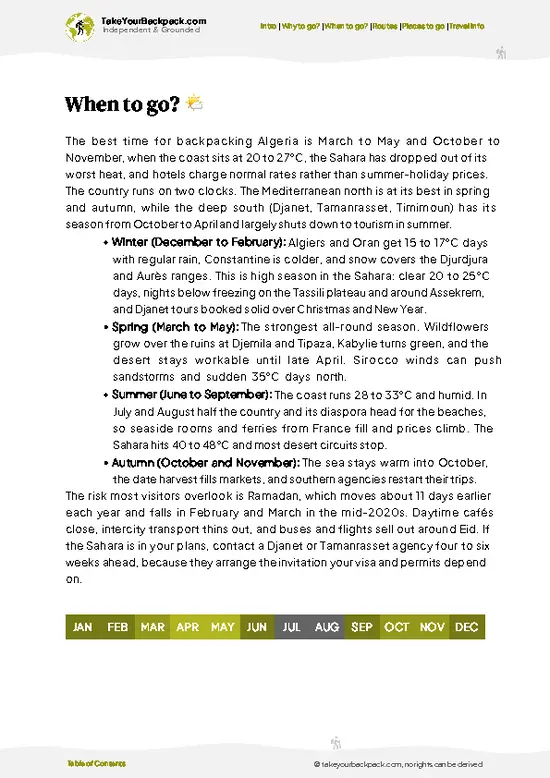
example page 0 from our offline Travel Guide for Algeria
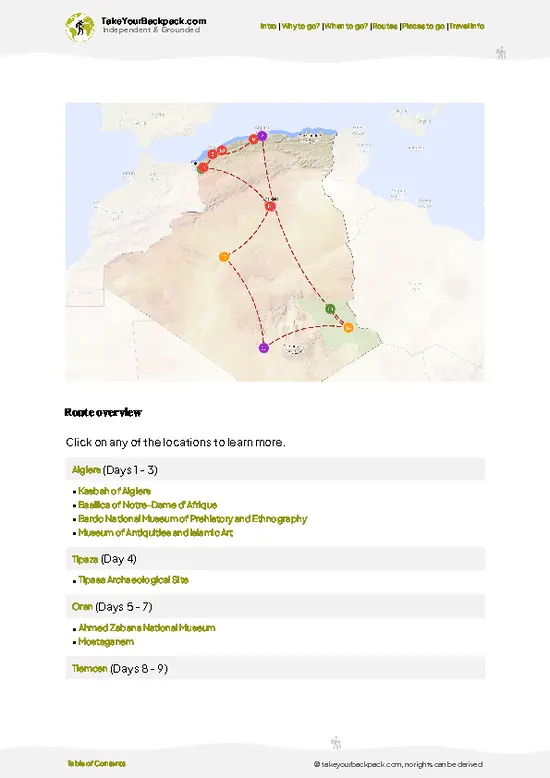
example page 1 from our offline Travel Guide for Algeria
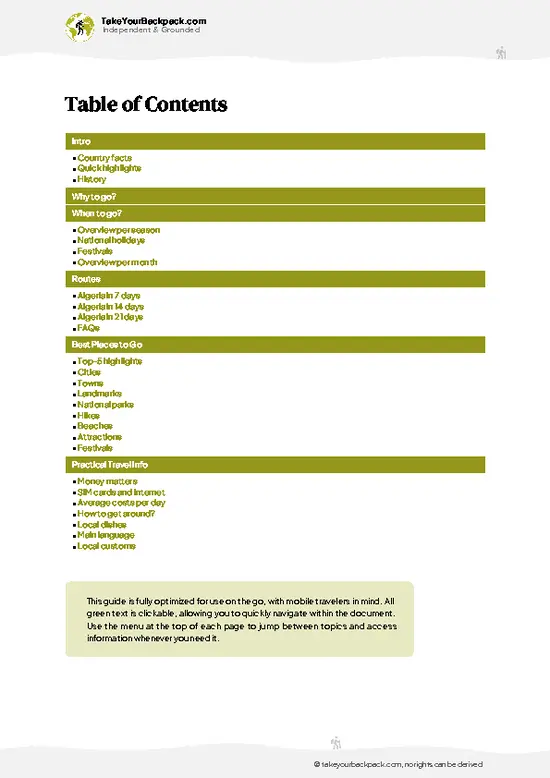
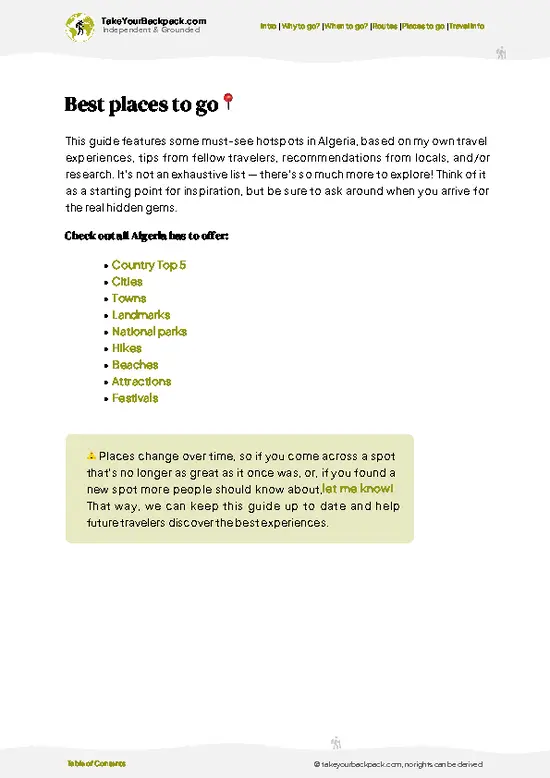
example page 2 from our offline Travel Guide for Algeria
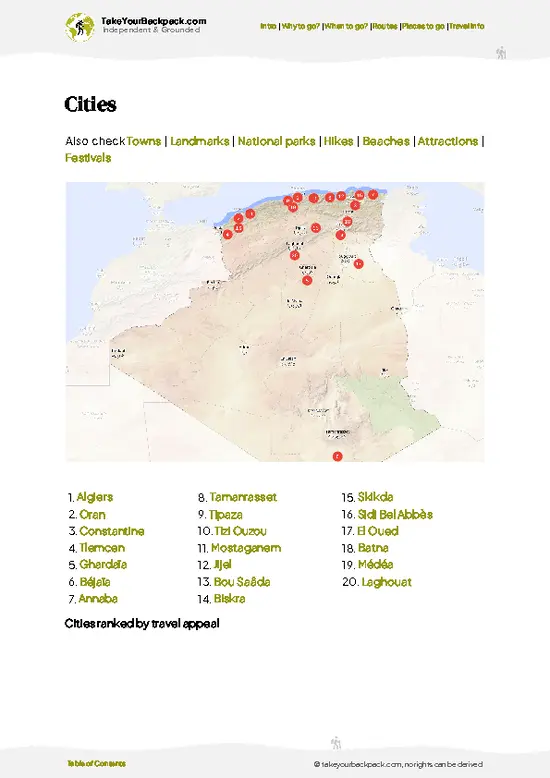
example page 3 from our offline Travel Guide for Algeria
example page 4 from our offline Travel Guide for Algeria
example page 5 from our offline Travel Guide for Algeria
example page 6 from our offline Travel Guide for Algeria
example page 7 from our offline Travel Guide for Algeria
Loading the map 🌍
CLICK TO FILTER
cities
towns
landmarks
national parks
hikes
beaches
attractions
festivals
SHOW COUNTRY’S BESTSHOW ALL

✨ Why go?
Ranked #11 national park in Algeria
The unique appeal for travelers

Ouarsenis National Park suits backpackers who like finding their own way, because the terrain is empty and nothing is packaged. The headline is the Ouarsenis cedar forest, one of the Atlas cedar stands that still cling to these slopes, where you can walk for hours without meeting another hiker. Higher up, the Sidi Amar ridge gives wide views over the surrounding plateaus, and the rolling ground around it lets you improvise routes rather than follow a fixed circuit. Villages near the park are the place for tea, bread and local conversation, and a little French or Arabic helps a lot. If you prefer guided tours and signed paths, this is not your park. If you like quiet and a bit of uncertainty, it delivers.

💡 HighlightsWhat this place is best known for

  1. Ouarsenis cedar forest: The park’s best-known sight, with Atlas cedars standing on steep slopes, their dark crowns filtering light onto a floor of needles and cones.
  2. Sidi Amar summit area: A high ridge with sweeping views across the surrounding highlands, good for a long rest after a steady climb.
  3. Barbary macaque habitat: Shy macaques live in the forested slopes, and patient walkers at quiet hours may glimpse them moving through the trees.
  4. Limestone ridges and rock faces: Pale crags break through the forest and give scrambling, photography and shelter from the wind.
  5. Highland meadows: Open clearings between the trees fill with wildflowers in spring and make natural picnic and camp spots.
  6. Mountain villages around the massif: Small settlements where you can buy bread, drink mint tea and ask locals
… read more 👉
  1. Ouarsenis cedar forest: The park’s best-known sight, with Atlas cedars standing on steep slopes, their dark crowns filtering light onto a floor of needles and cones.
  2. Sidi Amar summit area: A high ridge with sweeping views across the surrounding highlands, good for a long rest after a steady climb.
  3. Barbary macaque habitat: Shy macaques live in the forested slopes, and patient walkers at quiet hours may glimpse them moving through the trees.
  4. Limestone ridges and rock faces: Pale crags break through the forest and give scrambling, photography and shelter from the wind.
  5. Highland meadows: Open clearings between the trees fill with wildflowers in spring and make natural picnic and camp spots.
  6. Mountain villages around the massif: Small settlements where you can buy bread, drink mint tea and ask locals about paths and weather.
Ouarsenis National Park has no ticketed attraction, so nothing needs booking ahead.
Spotted a mistake or missing something? Contact us.

🌤️ When to go?Weather, crowds, and seasonal trade-offs

  • Spring (April to June): Ouarsenis National Park is at its best, with daytime highs of 15 to 25°C (59 to 77°F), green cedar slopes and wildflowers. Snowmelt can leave trails muddy early on.
  • Summer (July to August): Expect 28 to 35°C (82 to 95°F) at lower elevations, cooler near the ridges. Days are long, and Algerian holiday visitors fill the nearby towns.
  • Autumn (September to November): Highs of 14 to 26°C (57 to 79°F) and quiet trails make this a strong second choice.
  • Winter (December to March): Snow often covers the higher cedar forests, with temperatures of -3 to 10°C (27 to 50°F), short daylight and some closed tracks. Skiers and snow-lovers come on weekends.
Book in advance for July and August, since lodging in nearby towns is scarce and prices climb then.

source: climatestotravel.comJANJanuary: fair for travelingFEBFebruary: fair for travelingMARMarch: good for travelingAPRApril: excellent for travelingMAYMay: excellent for travelingJUNJune: highly recommended for travelingJULJuly: below average for travelingAUGAugust: below average for travelingSEPSeptember: highly recommended for travelingOCTOctober: excellent for travelingNOVNovember: good for travelingDECDecember: fair for traveling
when-to-go

✈️ The backpacker research shortcutAlgeria Travel Guide

An offline-friendly backpacking guide with optimized travel routes, ranked highlights, transport advice, and the best areas to stay.
example page 0 from our offline Travel Guide for Algeria
example page 1 from our offline Travel Guide for Algeria
example page 2 from our offline Travel Guide for Algeria
example page 3 from our offline Travel Guide for Algeria
example page 4 from our offline Travel Guide for Algeria
example page 5 from our offline Travel Guide for Algeria
example page 6 from our offline Travel Guide for Algeria
example page 7 from our offline Travel Guide for Algeria
The digital guide (314 pages) contains:
✅ 79 highlights, ranked by travel appeal
✅ Optimized 7, 14 & 21-day travel routes
✅ Cities, national parks, landmarks, beaches
✅ How to get around
✅ Offline-friendly for travel without Wi-Fi
👉 Click to see all 30+ guide features

📅 Plan smarter in minutes, not weeks
✅ Month by month travel advice
✅ Festivals & national holidays
✅ Budget expectations

🗺️ Go to the right places, skip the overrated ones
✅ Honest pros & cons of destinations
✅ Top hikes, parks & viewpoints
✅ Lesser-known places most travelers miss
✅ Clear “worth it vs skip it” guidance

🛏️ Travel smoothly without rookie mistakes
✅ Best areas to stay
✅ Transport systems explained simply
✅ Common scams & safety advice
✅ SIM cards, money & practical tips

🌍 Understand the country, not just visit it
✅ Culture & traditions
✅ 52 Essential phrases & customs
✅ Festivals worth planning around
✅ Traveler-friendly historical context
✅ Insights that make places more meaningful

📱 Built for real travel conditions
✅ Fully downloadable PDF
✅ Works completely offline
✅ Optimized for phone use
✅ Useful in remote areas & buses
✅ Everything in one place
Stop searching, start planning
Get instant access to your full guide. 30‑day money-back guarantee.
+ Add another guide for just

By proceeding you agree to our terms.
Sent to your inbox immediately after payment • 100% Secure Checkout
Best Backpacking Travel Advisor 2025 tourism awardBest Backpacking
Travel Advisor
2025
What others say about Take Your Backpack Guides:
⭐⭐⭐⭐⭐
Fantastic, amazing amount of information!
⭐⭐⭐⭐⭐
My goodness this is amazing, it's what I've been looking for hats off too you!
⭐⭐⭐⭐⭐
I think this is absolutely BRILLIANT
⭐⭐⭐⭐
Very complete and informative. It's still missing places, but I gotta to commend you
⭐⭐⭐⭐⭐
This is truly amazing, thank you, can't wait to explore it with my kids!
⭐⭐⭐⭐⭐
Awesome resource, thank you!
⭐⭐⭐⭐⭐
This is amazing! Can't wait to explore the ones I haven't seen
⭐⭐⭐⭐
I love this! Well done, great idea.
⭐⭐⭐⭐⭐
Thanks for taking the time to make this gem!
⭐⭐⭐⭐⭐
This might be the best website I've ever seen.
⭐⭐⭐⭐⭐
Congratulations, and thank you so much for your work; it's incredibly valuable.
⭐⭐⭐⭐
In all seriousness I think you did a great job pointing out the important spots
⭐⭐⭐⭐⭐
10/10 very good
⭐⭐⭐⭐⭐
As someone who's only just starting to visit regularly this is awesome, thank you.
⭐⭐⭐⭐
Thank you very much! I'm going to visit my dad, it's going to be very useful!
⭐⭐⭐⭐⭐
This is really cool! We'll be travelling for the first time and this definitely come in handy.
⭐⭐⭐⭐⭐
You are now our minister of culture, congratulations 👨‍💼
⭐⭐⭐⭐⭐
Just wanted to tell you that this is a pearl! Going to follow your recommendations.
⭐⭐⭐⭐⭐
This is so cool. I'll definitely be using the resource for my travels soon.
⭐⭐⭐⭐⭐
This is very impressive! Good work.
⭐⭐⭐⭐⭐
This is an amazing and informative site. Very well done!

🛏️ Where to stay?Where staying makes the most sense

No hotels or formal campgrounds operate inside Ouarsenis National Park, so most backpackers sleep in the towns around it. Tissemsilt, the provincial capital, is the most practical base, with a few simple hotels at roughly US$15 to 30 a night, plus shops, cafes and taxis. Theniet El Had, near the cedar forest of the same name, has a small guesthouse-style lodging scene and sits closest to the best walking. Khemisti and Bordj Bou Naama offer cheaper rooms and quieter streets, though choices are limited and English is rarely spoken. Chlef and Tiaret are larger cities with more hotels at US$25 to … read more 👉
No hotels or formal campgrounds operate inside Ouarsenis National Park, so most backpackers sleep in the towns around it. Tissemsilt, the provincial capital, is the most practical base, with a few simple hotels at roughly US$15 to 30 a night, plus shops, cafes and taxis. Theniet El Had, near the cedar forest of the same name, has a small guesthouse-style lodging scene and sits closest to the best walking. Khemisti and Bordj Bou Naama offer cheaper rooms and quieter streets, though choices are limited and English is rarely spoken. Chlef and Tiaret are larger cities with more hotels at US$25 to 50 a night and better transport links. Wild camping is possible in the forest with local permission, and rural families sometimes offer a room if you ask politely. Bring cash, as cards are rarely accepted outside the cities.

👛 Costs (as of 22 October 2026)Typical daily expenses

A day in Ouarsenis National Park typically costs around US$40 to 55 for a backpacker using local lodging and transport. Costs stay low because facilities are basic and everything is paid in cash in Algerian dinars.
CategoryBudget RangeLocal Reality
Entrance feesUS$0 to 2Access is mostly free, with small fees at some forest sites.
AccommodationUS$15 to 30Simple hotels in Tissemsilt or Theniet El Had; cheaper in low season.
Local transportUS$4 to 10Shared taxis and minibuses between towns; private taxis to trailheads cost more.
Food and suppliesUS$8 to 12Grilled meat, bread and tea at small cafes; stock up in town before hiking.
Guide (optional)US$10 to 20Arranged locally for a day walk.
Total Daily BudgetUS$52Based on high-season lodging and a guide for the day.


source: algeria.com
⚠️ Prices can change and everyone travels differently, so take this as a rough guide. Hope it helps you plan your adventure!

🥾 TrailsTrail guide for Ouarsenis national park

Ouarsenis National Park offers walking on rough, mostly unsigned routes through cedar forest and across limestone ridges, so a map app, a compass and a full water supply matter more than boots alone. Without formal named trails, these are the walks people actually do:
  • Forest approach to the cedar stands: Start from the villages at the base of the massif and follow tracks uphill into the trees. Allow 2 to 3 hours, with moderate difficulty on stony, sometimes slippery ground.
  • Ridge walk toward Sidi Amar: A longer day of 4 to 6 hours climbing through forest to open ridge. It is moderately hard, with
… read more 👉
Ouarsenis National Park offers walking on rough, mostly unsigned routes through cedar forest and across limestone ridges, so a map app, a compass and a full water supply matter more than boots alone. Without formal named trails, these are the walks people actually do:
  • Forest approach to the cedar stands: Start from the villages at the base of the massif and follow tracks uphill into the trees. Allow 2 to 3 hours, with moderate difficulty on stony, sometimes slippery ground.
  • Ridge walk toward Sidi Amar: A longer day of 4 to 6 hours climbing through forest to open ridge. It is moderately hard, with steep sections, loose rock and big views at the top.
  • Meadow and village loops: Easy half-day wanders between highland clearings and farm tracks, passing shepherds, springs and wildflowers in spring.
  • Wildlife watching: Move slowly at dawn or late afternoon in the forest for a chance of macaques, birds of prey and boar tracks.
Reaching Ouarsenis National Park by public transport is slow. Buses and shared taxis run to the regional towns, and you then need a local taxi or a lift to the trailheads. The park is quiet, with few other visitors even in good weather. No formal entrance fee is generally charged, but carry cash and ask locally about access. Winter brings snow and mud at altitude, so check conditions before setting out.
⚠️ Hiking info can sometimes be outdated or inaccurate. Before you hit the trail, check the latest conditions with locals. If you do spot anything that's off, I'd love to hear from you, so I can update it for fellow travelers.

🛡️ SafetyStaying Safe: What Travelers Should Know

Ouarsenis National Park is straightforward for prepared walkers, and the main hazards are weather and distance. Winter brings snow and fog on the ridges, and summer heat can be fierce on exposed slopes, so carry more water than you expect to need. Many tracks are unsigned, so download offline maps and consider hiring a local guide through town contacts. Footing is rocky and steep in places, and sturdy boots matter. Wild boar and jackals live in the forest but avoid people. Keep food sealed at camp, and never approach animals. Shepherd dogs can be protective of flocks, so give them space and walk calmly. Mobile coverage is patchy, so tell your host where you are going and when you will return.

FAQFrequently asked questions about Ouarsenis

Two to three days works well for Ouarsenis National Park. One day covers the cedar forest near Theniet El Had, and a second allows a longer ridge walk. A third day suits snow trips or a visit to Tissemsilt, about 20 to 40 minutes from the main sites by taxi.
Reaching Ouarsenis National Park without a car is possible but slow. Buses and shared taxis run from Algiers or Chlef to Tissemsilt and Theniet El Had, taking roughly 3 to 5 hours from the capital. Local taxis to trailheads cost about US$5 to 15, and you should arrange the return trip in advance.
Ouarsenis National Park has no major entrance fee or formal permit for most visitors. Some forest sites charge small fees of up to about US$2, and a local guide costs around US$10 to 20 a day. Carry your passport for police checks on the roads, and ask park staff in Theniet El Had about restrictions.
⚠️ Things can change over time, so always validate details locally before you go.

Other Algerian national parks near Ouarsenis

Explore more nearby:


💡 Not sure where to go next?
Create a personalized itinerary for Algeria including Ouarsenis and the places that fit your trip.

Generate my itinerary

👉 Discover all national parks

Or checkout all Algeria has to offer (think cities, towns, villages, national parks, hikes, beaches, festivals)
Country photo of Algeria

We 💚 feedbackIs it worth it?

Ouarsenis National Park is at its best in late spring, when the meadows flower and the cedar shade stays cool, or on a clear early morning when the macaques are most active. I would bring layers, extra water and a local contact, and leave time to share tea in the villages afterward.

✍️ Help improve this page!
The information on this page is based on in-depth research, insights shared by experienced travelers, and feedback from the local travel community in Algeria. While every effort is made to keep the information accurate and current, conditions can change — so if you spot anything incorrect or outdated, please get in touch.


🙋‍♂️ Give feedback

👋 Meet the founderWho’s Behind Take Your Backpack?

Johan, backpacker and founder of TakeYourBackpackHi, I’m Johan (Netherlands 🇳🇱), the creator of TakeYourBackpack. Over the past 3 decades, I’ve backpacked through 90+ countries across six continents, gaining extensive experience with independent travel, long-term trips, and overland routes.

This site is built on a combination of firsthand travel experience and carefully curated insights from other backpackers. Many guides are based on places I’ve personally visited, while others bring together tips, observations, and practical advice shared by trusted travelers I’ve met along the way.

The goal is to provide realistic, experience-driven guidance — not generic itineraries — so you can explore destinations with better context, clearer expectations, and more confidence.