×

Algeria🇩🇿 | citiesEl BayadhSteppe plateau, rock engravings, sheep market, wool rugs | things to do and best time to go

Explore AdrarExplore Saïda

Backpacking in El Bayadh
👀 For curious travelerscity ranked #34
By Johan Kruseman 🇳🇱 | Updated October 22, 2026

El Bayadh suits travelers who like high steppe, sheep markets and long quiet roads, and it will feel thin to anyone chasing nightlife or polished sights. The town sits in the Hauts Plateaux of the north of Algeria, about 1,300 meters up, so mornings are sharp and the light is hard and white. Dust, woodsmoke and grilled meat hang in the air. Foreign visitors are rare, so expect curiosity, not infrastructure. You will like it most if you travel slowly and talk to people. If you need hostels and set itineraries, skip it.

Discover everything you want to know in the 📖 Algeria Travel Guide.


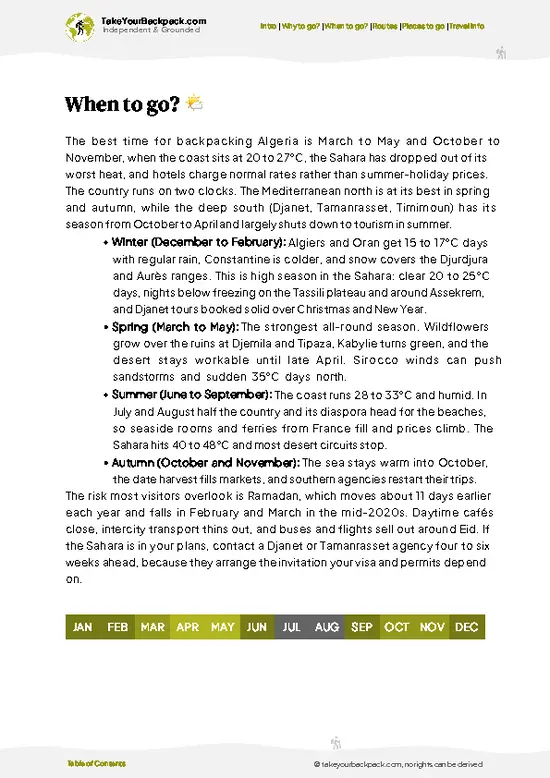
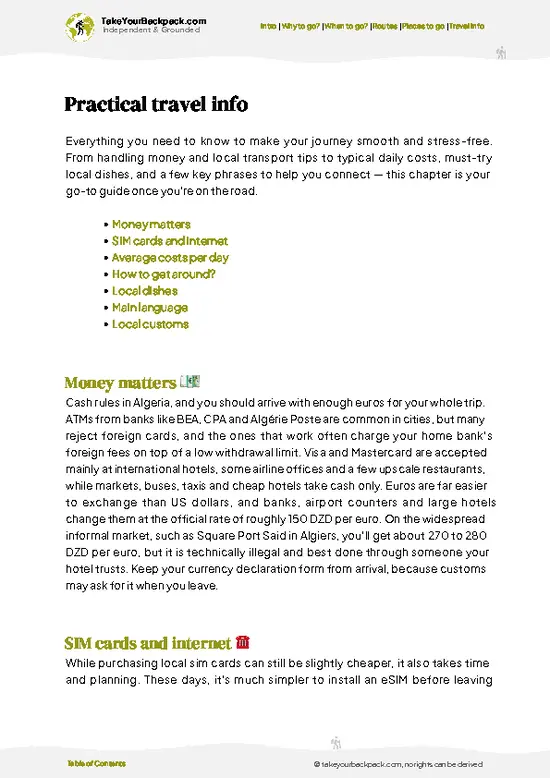
example page 0 from our offline Travel Guide for Algeria
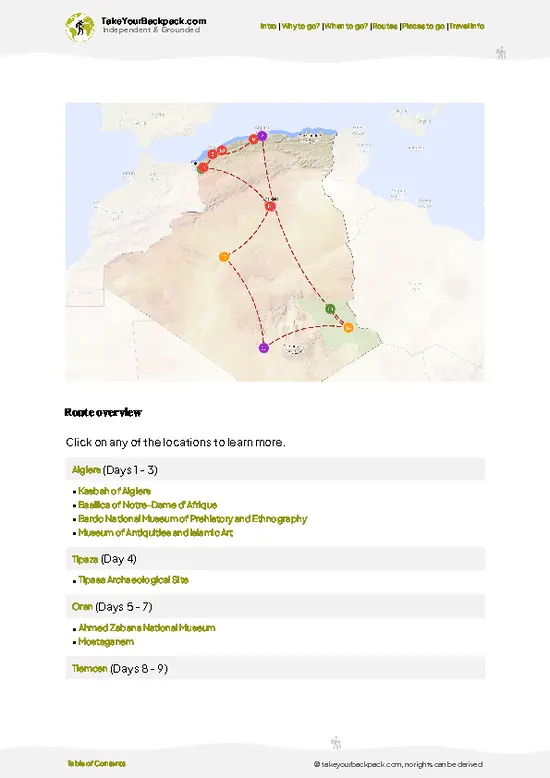
example page 1 from our offline Travel Guide for Algeria
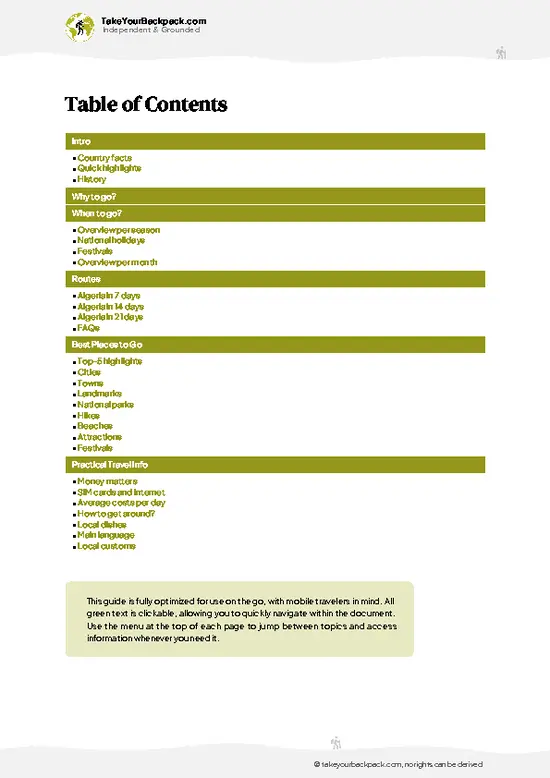
example page 2 from our offline Travel Guide for Algeria
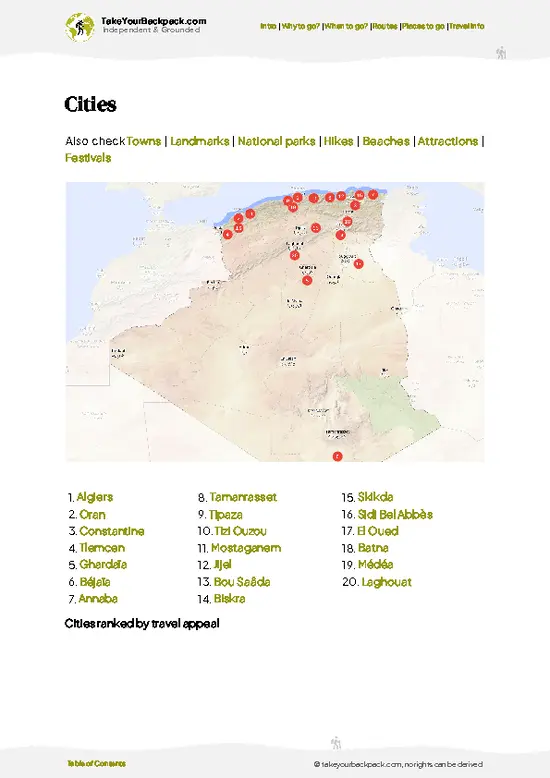
example page 3 from our offline Travel Guide for Algeria
example page 4 from our offline Travel Guide for Algeria
example page 5 from our offline Travel Guide for Algeria
example page 6 from our offline Travel Guide for Algeria
example page 7 from our offline Travel Guide for Algeria
Loading the map 🌍
CLICK TO FILTER
cities
towns
landmarks
national parks
hikes
beaches
attractions
festivals
SHOW COUNTRY’S BESTSHOW ALL

✨ Why go?
Ranked #34 city in Algeria
Why El Bayadh should be on your travel list

El Bayadh works as a pause between the coast and the Sahara, a working steppe town where you see how pastoral Algeria actually lives. Backpackers come for the Ksour mountains nearby and the rock art of the surrounding Saharan Atlas, with the town itself as a cheap, practical place to restock and arrange a driver. It is not a place to linger for a week. Give it a night or two, bring cash, and use it to break a long overland push south.

💡 HighlightsDon't-miss highlights and experiences

  1. Rock engravings of the Djebel Bou Gueddou area: prehistoric carvings of animals on sandstone slabs in the surrounding Saharan Atlas, the region’s best-known heritage. Go in the morning for raking light. Usually free, though you need a local guide and a vehicle, so allow 3 to 5 hours.
  2. Central market: stalls of spices, dates, wool and mutton, busiest in the morning. Free to wander, about 1 hour.
  3. Sheep and livestock market: the steppe economy at work, with traders haggling over flocks. Go early, free, 1 hour.
  4. Traditional carpet and weaving workshops: the town is known for wool rugs and burnous cloaks. Browse in the morning, from US$20 for small pieces, 1 hour.
  5. Museum of the Mujahid and local heritage displays: a modest look at regional history and the independence struggle. Small fee or free, 45
… read more 👉
  1. Rock engravings of the Djebel Bou Gueddou area: prehistoric carvings of animals on sandstone slabs in the surrounding Saharan Atlas, the region’s best-known heritage. Go in the morning for raking light. Usually free, though you need a local guide and a vehicle, so allow 3 to 5 hours.
  2. Central market: stalls of spices, dates, wool and mutton, busiest in the morning. Free to wander, about 1 hour.
  3. Sheep and livestock market: the steppe economy at work, with traders haggling over flocks. Go early, free, 1 hour.
  4. Traditional carpet and weaving workshops: the town is known for wool rugs and burnous cloaks. Browse in the morning, from US$20 for small pieces, 1 hour.
  5. Museum of the Mujahid and local heritage displays: a modest look at regional history and the independence struggle. Small fee or free, 45 minutes.
  6. Town viewpoints over the steppe: climb to the edges of town at dusk for wide open plateau views. Free, 30 minutes.
Pair the livestock market with the central market on one morning, since they are close together and share the same early rhythm. For day trips, look to the ksar villages of Brezina and Boussemghoun, and the dunes around Arbaouat.
Spotted a mistake or missing something? Contact us.

🏘️ NeighborhoodsNeighborhood guide to El Bayadh

El Bayadh is compact, and a day on foot covers most of what matters. The town sits on a high plateau, so the air is dry and the light is hard and white by midday. Streets are not signposted for visitors, so ask a shopkeeper rather than trusting a map app.
  • Town center around the main market: Smells of grilled meat, mint and wool drift through the stalls where shepherds buy and sell. Crowds peak in the morning and thin out by early afternoon, when shops shutter, so shop early. Fully walkable.
  • Old quarter and the Ksar-style lanes: Mud-toned walls, narrow alleys and the sound of looms. Wander with a local guide if you want to enter workshops, since carpet makers are often tucked behind unmarked doors.
  • Outskirts toward the steppe: Wide, wind-scoured and silent after dark. Distances are long and shade is rare, so take a taxi rather than walking.

⌛️ 1 dayA smart one-day plan

This is a market morning that fades into a slow steppe afternoon.
8:00 AM: Livestock market Arrive early when traders are busiest. Watch the haggling, then walk toward the center.
10:00 AM: Central market Browse spices, dates and wool, and buy tea or bread for breakfast. Ask about the weaving stalls.
12:30 PM: Grilled meat lunch Eat at a simple grill near the center, where mutton comes straight off the coals.
2:30 PM: Weaving workshop Visit a carpet maker, away from the usual route, to see wool turned into rugs by hand. Then walk or take a taxi.
5:00 PM: Edge-of-town viewpoint Finish above the plateau as the cold sets in and the sky opens wide.

🌤️ When to go?Weather, crowds, and seasonal trade-offs

Spring and autumn are the easiest seasons for El Bayadh, which sits at roughly 1,300 meters on a dry plateau.
  • Spring (March to May): 12 to 24°C (54 to 75°F), clear skies, light crowds.
  • Summer (June to August): 30 to 38°C (86 to 100°F), harsh midday sun, quiet streets.
  • Autumn (September to November): 15 to 27°C (59 to 81°F), steady light.
  • Winter (December to February): 0 to 10°C (32 to 50°F), frost at night and occasional snow.
Pack layers, because nights stay cold even after warm days.

source: climatestotravel.comJANJanuary: fair for travelingFEBFebruary: fair for travelingMARMarch: excellent for travelingAPRApril: excellent for travelingMAYMay: highly recommended for travelingJUNJune: fair for travelingJULJuly: below average for travelingAUGAugust: below average for travelingSEPSeptember: excellent for travelingOCTOctober: excellent for travelingNOVNovember: highly recommended for travelingDECDecember: fair for traveling
when-to-go

✈️ The backpacker research shortcutAlgeria Travel Guide

An offline-friendly backpacking guide with optimized travel routes, ranked highlights, transport advice, and the best areas to stay.
example page 0 from our offline Travel Guide for Algeria
example page 1 from our offline Travel Guide for Algeria
example page 2 from our offline Travel Guide for Algeria
example page 3 from our offline Travel Guide for Algeria
example page 4 from our offline Travel Guide for Algeria
example page 5 from our offline Travel Guide for Algeria
example page 6 from our offline Travel Guide for Algeria
example page 7 from our offline Travel Guide for Algeria
The digital guide (314 pages) contains:
✅ 79 highlights, ranked by travel appeal
✅ Optimized 7, 14 & 21-day travel routes
✅ Cities, national parks, landmarks, beaches
✅ How to get around
✅ Offline-friendly for travel without Wi-Fi
👉 Click to see all 30+ guide features

📅 Plan smarter in minutes, not weeks
✅ Month by month travel advice
✅ Festivals & national holidays
✅ Budget expectations

🗺️ Go to the right places, skip the overrated ones
✅ Honest pros & cons of destinations
✅ Top hikes, parks & viewpoints
✅ Lesser-known places most travelers miss
✅ Clear “worth it vs skip it” guidance

🛏️ Travel smoothly without rookie mistakes
✅ Best areas to stay
✅ Transport systems explained simply
✅ Common scams & safety advice
✅ SIM cards, money & practical tips

🌍 Understand the country, not just visit it
✅ Culture & traditions
✅ 52 Essential phrases & customs
✅ Festivals worth planning around
✅ Traveler-friendly historical context
✅ Insights that make places more meaningful

📱 Built for real travel conditions
✅ Fully downloadable PDF
✅ Works completely offline
✅ Optimized for phone use
✅ Useful in remote areas & buses
✅ Everything in one place
Stop searching, start planning
Get instant access to your full guide. 30‑day money-back guarantee.
+ Add another guide for just

By proceeding you agree to our terms.
Sent to your inbox immediately after payment • 100% Secure Checkout
Best Backpacking Travel Advisor 2025 tourism awardBest Backpacking
Travel Advisor
2025
What others say about Take Your Backpack Guides:
⭐⭐⭐⭐⭐
Fantastic, amazing amount of information!
⭐⭐⭐⭐⭐
My goodness this is amazing, it's what I've been looking for hats off too you!
⭐⭐⭐⭐⭐
I think this is absolutely BRILLIANT
⭐⭐⭐⭐
Very complete and informative. It's still missing places, but I gotta to commend you
⭐⭐⭐⭐⭐
This is truly amazing, thank you, can't wait to explore it with my kids!
⭐⭐⭐⭐⭐
Awesome resource, thank you!
⭐⭐⭐⭐⭐
This is amazing! Can't wait to explore the ones I haven't seen
⭐⭐⭐⭐
I love this! Well done, great idea.
⭐⭐⭐⭐⭐
Thanks for taking the time to make this gem!
⭐⭐⭐⭐⭐
This might be the best website I've ever seen.
⭐⭐⭐⭐⭐
Congratulations, and thank you so much for your work; it's incredibly valuable.
⭐⭐⭐⭐
In all seriousness I think you did a great job pointing out the important spots
⭐⭐⭐⭐⭐
10/10 very good
⭐⭐⭐⭐⭐
As someone who's only just starting to visit regularly this is awesome, thank you.
⭐⭐⭐⭐
Thank you very much! I'm going to visit my dad, it's going to be very useful!
⭐⭐⭐⭐⭐
This is really cool! We'll be travelling for the first time and this definitely come in handy.
⭐⭐⭐⭐⭐
You are now our minister of culture, congratulations 👨‍💼
⭐⭐⭐⭐⭐
Just wanted to tell you that this is a pearl! Going to follow your recommendations.
⭐⭐⭐⭐⭐
This is so cool. I'll definitely be using the resource for my travels soon.
⭐⭐⭐⭐⭐
This is very impressive! Good work.
⭐⭐⭐⭐⭐
This is an amazing and informative site. Very well done!

🛏️ Where to stay?Choosing the right base

The center near the main market is the best area for a budget bed in El Bayadh, since taxis, cafés and the bus station are all close. Dedicated hostels are rare, so expect simple, inexpensive hotels or private rooms, typically US$15 to 30 a night, and book by phone where possible. The center stays noisy until late with traffic and cafés, so bring earplugs. Outlying areas are quieter but need a taxi after dark and have little choice of beds.

🚌 Getting aroundMoving around without the hassle

El Bayadh is easiest to handle by taxi, because the center is small but the plateau streets are spread out and public buses are infrequent. Shared and private taxis wait around the main squares, with the dry wind and dust making long walks tiring.
  • Walking: Free, and fine for the market and old lanes. Go early, since midday sun is sharp and winter evenings bite.
  • City taxi: About US$1 to 3 for a ride within town. Agree the price before getting in, because meters are rarely used.
  • Intercity shared taxi (louage-style minibus) and bus: Departures leave from the gare routière when full. Expect roughly US$3 to 8 toward Saida, Mecheria or Laghouat, and 3 to 5 hours on the road. Leave mornings, as services thin out by afternoon.
  • Hired car with driver: About US$40 to 70 a day for the surrounding steppe and
… read more 👉
El Bayadh is easiest to handle by taxi, because the center is small but the plateau streets are spread out and public buses are infrequent. Shared and private taxis wait around the main squares, with the dry wind and dust making long walks tiring.
  • Walking: Free, and fine for the market and old lanes. Go early, since midday sun is sharp and winter evenings bite.
  • City taxi: About US$1 to 3 for a ride within town. Agree the price before getting in, because meters are rarely used.
  • Intercity shared taxi (louage-style minibus) and bus: Departures leave from the gare routière when full. Expect roughly US$3 to 8 toward Saida, Mecheria or Laghouat, and 3 to 5 hours on the road. Leave mornings, as services thin out by afternoon.
  • Hired car with driver: About US$40 to 70 a day for the surrounding steppe and rock-art sites. Tracks are rough and signless, so a local driver saves wrong turns.

👛 Costs (as of 22 October 2026)Money, prices, and spending tips

El Bayadh costs a backpacker about US$37 a day, with lodging being the biggest line.
CategoryBudget RangeLocal Reality
Dorm/budget bed (high season)US$15 to 22Simple hotel room, rarely a true dorm
Dorm/budget bed (off-season)US$12 to 18Winter rates drop slightly
MealsUS$8 to 12Grill counters and cafés
Local transportUS$3 to 5Short taxi rides
City transport passNot availablePay per ride
Activities/entry feesUS$2 to 5Mostly free, guides extra
MiscellaneousUS$2 to 4Water, snacks, SIM data
Total Daily BudgetUS$37Comfortable and frugal
Eat where locals queue at lunch, as portions are larger and prices lower than at evening cafés. Pay in dinars, carried in cash.

source: algeria.com
⚠️ Prices can change and everyone travels differently, so take this as a rough guide. Hope it helps you plan your adventure!

🚌 Day tripsShort trips worth adding

El Bayadh works well for day trips if you can arrange a driver, as public transport to the sites is thin.Rock Art of the Saharan Atlas: Engravings of animals and hunters sit on sandstone outcrops in the surrounding hills. Allow a half day plus a local guide, roughly US$30 to 60 with transport. Visit in spring or autumn and bring water, as there is no shade. First-timers often go without a guide and never find the sites.
Brezina: This oasis ksar lies about 90 km south, roughly 1.5 hours by road, with palm gardens and mud-brick lanes. Shared taxis and a hired driver cost about US$5 to 40 depending on the option. Go in the cooler months and leave before dark.
Stitten: A quiet hill village known for weaving, reachable in under two hours by hired car for around US$30 to 50 round trip. Ask about workshops … read more 👉
El Bayadh works well for day trips if you can arrange a driver, as public transport to the sites is thin.Rock Art of the Saharan Atlas: Engravings of animals and hunters sit on sandstone outcrops in the surrounding hills. Allow a half day plus a local guide, roughly US$30 to 60 with transport. Visit in spring or autumn and bring water, as there is no shade. First-timers often go without a guide and never find the sites.
Brezina: This oasis ksar lies about 90 km south, roughly 1.5 hours by road, with palm gardens and mud-brick lanes. Shared taxis and a hired driver cost about US$5 to 40 depending on the option. Go in the cooler months and leave before dark.
Stitten: A quiet hill village known for weaving, reachable in under two hours by hired car for around US$30 to 50 round trip. Ask about workshops in advance, as many are closed on Fridays.

🍲 FoodEating & Drinking in El Bayadh

Highland steppe country means sheep, and the local fare leans on lamb cooked simply over charcoal or slow-stewed with chickpeas and spices. Look for mechoui style roasts and thick bread baked in sand or clay ovens, torn to scoop up sauce. Local dates and dairy such as leben (cold fermented milk) cut the heat of the day. Backpackers eat at small grill counters and cafés near the market, where a meal costs roughly US$3 to 7. Mint tea and strong coffee end most meals, and evenings are early, with many places closing by 9 pm.

🛡️ SafetyStaying Safe: What Travelers Should Know

El Bayadh is calm and the main issues are practical rather than criminal. Carry your passport copy and expect police checkpoints on the roads, which are routine, so keep documents handy and be polite. Women traveling solo should dress modestly and avoid empty streets after dark. Taxi prices for foreigners can be inflated, so agree the fare first. For desert and rock-art trips, go with a guide and tell your hotel where you are heading.

FAQCommon questions from travelers

Two days is enough for El Bayadh itself, covering the market and old lanes on day one and a guided rock-art trip on day two. Add a third day if you want to reach Brezina, about 1.5 hours south. Budget around US$35 to 45 a day.
Yes, El Bayadh is generally calm for solo backpackers, with little street crime and a low-key local feel. Expect routine police checkpoints and carry your passport. Women should dress modestly and avoid empty streets after dark, and anyone heading to rock-art sites should use a guide costing about US$30 to 60.
El Bayadh is known for its high-plateau sheep herding, wool carpets and weaving, and prehistoric rock engravings in the surrounding Saharan Atlas. It sits around 1,300 meters up, so winters are cold and summers dry. The weekly market and nearby ksars such as Brezina are the main draws.
⚠️ Things can change over time, so always validate details locally before you go.

Other Algerian cities near El Bayadh

Explore more nearby:

  • Saïda—Forest hills, mineral springs, Ottoman relics| 151 km away
  • Laghouat—Saharan plateau, stone architecture, date markets| 171 km away
  • Tiaret—Highland steppe, Berber tombs, horse breeding| 190 km away

💡 Not sure where to go next?
Create a personalized itinerary for Algeria including El Bayadh and the places that fit your trip.

Generate my itinerary

👉 Discover all cities

Or checkout all Algeria has to offer (think cities, towns, villages, national parks, hikes, beaches, festivals)
Country photo of Algeria

We 💚 feedbackSumming up the experience

The usual mistake in El Bayadh is arriving underdressed because Algeria means heat. Winter nights and mornings here are bitterly cold, so bring a proper jacket, and set aside cash since cards rarely work.

✍️ Help improve this page!
The information on this page is based on in-depth research, insights shared by experienced travelers, and feedback from the local travel community in Algeria. While every effort is made to keep the information accurate and current, conditions can change — so if you spot anything incorrect or outdated, please get in touch.


🙋‍♂️ Give feedback

👋 Meet the founderWho’s Behind Take Your Backpack?

Johan, backpacker and founder of TakeYourBackpackHi, I’m Johan (Netherlands 🇳🇱), the creator of TakeYourBackpack. Over the past 3 decades, I’ve backpacked through 90+ countries across six continents, gaining extensive experience with independent travel, long-term trips, and overland routes.

This site is built on a combination of firsthand travel experience and carefully curated insights from other backpackers. Many guides are based on places I’ve personally visited, while others bring together tips, observations, and practical advice shared by trusted travelers I’ve met along the way.

The goal is to provide realistic, experience-driven guidance — not generic itineraries — so you can explore destinations with better context, clearer expectations, and more confidence.