v2.webp)
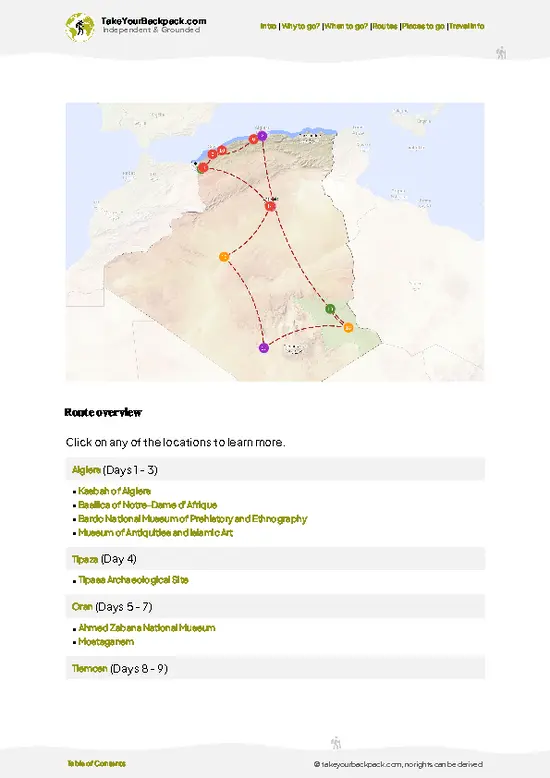
- Foggara Museum (Adrar area): the clearest introduction to the underground channels that carry water to the palm groves, with maps, tools and explanations of the water keepers’ work. Go in the morning. Entry is usually under US$2, and you need about 45 minutes.
- Red Fort of Adrar (Borj Bakhti area): a mud-brick fortress in the old quarter whose crumbling walls glow rust-red in late afternoon. Free to view from outside, 30 minutes.
- Old Ksar and Medina Quarter: narrow, shaded alleys of packed earth with carved wooden doors. Go early, before the heat. Free, 1 hour.
- Central Market: stalls of dates, spices, dried herbs and desert bread. Mornings are busiest. Spend US$2 to 5 on snacks, and allow 1 hour.
- Palm Grove Walk: shaded paths along irrigation channels where you can watch the foggara water divided
- Foggara Museum (Adrar area): the clearest introduction to the underground channels that carry water to the palm groves, with maps, tools and explanations of the water keepers’ work. Go in the morning. Entry is usually under US$2, and you need about 45 minutes.
- Red Fort of Adrar (Borj Bakhti area): a mud-brick fortress in the old quarter whose crumbling walls glow rust-red in late afternoon. Free to view from outside, 30 minutes.
- Old Ksar and Medina Quarter: narrow, shaded alleys of packed earth with carved wooden doors. Go early, before the heat. Free, 1 hour.
- Central Market: stalls of dates, spices, dried herbs and desert bread. Mornings are busiest. Spend US$2 to 5 on snacks, and allow 1 hour.
- Palm Grove Walk: shaded paths along irrigation channels where you can watch the foggara water divided between gardens. Best early morning or late afternoon. Free, 1 to 2 hours.
- Sunset from the Dunes Edge: the sand ridge outside town gives long views over the red town and palms. A short taxi ride costs about US$3 to 6, and you need about 1.5 hours.
Spotted a mistake or missing something? Contact us.

 Best Backpacking
.jpg) Hi, I’m Johan (Netherlands 🇳🇱), the creator of TakeYourBackpack. Over the past 3 decades, I’ve backpacked through 90+ countries across six continents, gaining extensive experience with independent travel, long-term trips, and overland routes.
Hi, I’m Johan (Netherlands 🇳🇱), the creator of TakeYourBackpack. Over the past 3 decades, I’ve backpacked through 90+ countries across six continents, gaining extensive experience with independent travel, long-term trips, and overland routes.