×

Algeria🇩🇿 | attractionsEl Djemila Roman ruins and museumforum remains, mosaic floors, mountain backdrop | things to do and best time to go

Explore Maqam EchahidExplore Timgad Archaeological Site and museum

Backpacking in El Djemila Roman ruins and museum
👍 Recommendedattraction ranked #9
By Johan Kruseman 🇳🇱 | Updated September 3, 2026

Everyone’s seen the postcard shot: a lone arch, golden in the Algerian sun, supposedly promising you a private audience with Roman grandeur at El Djemila. Here’s the reality—if you’re coming just for that Instagram-perfect amphitheater, you’re missing the real story. What actually matters is the way this place feels like a lost city paused mid-conversation, with mosaics still whispering about daily life, and half-collapsed forums that let you wander without velvet ropes or selfie-stick mobs. El Djemila sits in the hills of northeastern Algeria, about 50 kilometers from Sétif, and it’s not exactly on the tourist conveyor belt. That’s both a blessing and a challenge. You’ll dodge the crowds (and the touts), but you’ll also need to work for it—public transport is patchy, and the site’s remote enough that you’ll want your own wheels or a lot of patience. Entry is cheap, the museum is surprisingly rich, and the vibe is pure, unfiltered time travel—more raw and personal than the polished ruins at Tipasa or Timgad. If you want to feel like an explorer, not just a visitor, this is where Algeria’s Roman past actually gets under your skin.

Discover everything you want to know in the 📖 Algeria Travel Guide.


Get your Algeria guide
86 ranked highlights, routes & tips, works offline (334 pages)
Loading the map 🌍
CLICK TO FILTER
cities
towns
landmarks
national parks
hikes
beaches
attractions
festivals
SHOW COUNTRY’S BESTSHOW ALL

✨ Why go?
Ranked #9 attraction in Algeria
The unique appeal for travelers

El Djemila Roman ruins and museum in Algeria don’t just show up on backpacker itineraries because they’re easy or flashy—they’re a raw, unvarnished dive into history that punches way above its weight. Sure, it’s not the kind of place where you’ll find crowds elbowing for the perfect selfie, but that’s part of the appeal. This site is a major milestone on Algeria’s cultural route, offering a deep historical narrative that stretches back to Roman times, when this was a thriving city known as Cuicul. The ruins aren’t just scattered stones; they’re a sprawling, well-preserved testament to Roman urban life, with streets, temples, and baths that let you walk through layers of time.

The museum adds context without drowning you in jargon—artifacts and mosaics that connect you to the people who lived … read more 👉
El Djemila Roman ruins and museum in Algeria don’t just show up on backpacker itineraries because they’re easy or flashy—they’re a raw, unvarnished dive into history that punches way above its weight. Sure, it’s not the kind of place where you’ll find crowds elbowing for the perfect selfie, but that’s part of the appeal. This site is a major milestone on Algeria’s cultural route, offering a deep historical narrative that stretches back to Roman times, when this was a thriving city known as Cuicul. The ruins aren’t just scattered stones; they’re a sprawling, well-preserved testament to Roman urban life, with streets, temples, and baths that let you walk through layers of time.

The museum adds context without drowning you in jargon—artifacts and mosaics that connect you to the people who lived here, not just the empire that ruled. Backpackers who make the effort to get here often talk about the adrenaline rush of exploring a site that feels both monumental and intimate, far from the polished tourist traps. It’s a place where the effort-to-reward ratio is high: a bit off the beaten path, but worth every step for the authenticity and the sense of standing in a place that shaped history.
Want to include El Djemila Roman ruins and museum in your Algeria route?
Create a personalized Algeria itinerary that includes El Djemila Roman ruins and museum and the places that fit your trip — based on your travel style, budget, and available time. Get your route in seconds.

Generate my trip

💡 HighlightsWhat this place is best known for

The Theatre
Forget the Instagram shots of empty stone seats at sunrise. If you visit El Djemila’s theatre in the afternoon, you’ll likely share the space with a handful of local kids using the ancient acoustics for impromptu concerts, or a shepherd’s flock grazing at the edge of the orchestra. This isn’t Rome’s Colosseum with its velvet ropes and selfie sticks. Here, you can actually climb the stage, test the echo, and feel the ghosts of a thousand performances. The theatre’s semicircular design is a masterclass in Roman engineering, but the real thrill is how alive it still feels—raw, accessible, and utterly unpolished.


The Forum
The forum at El Djemila isn’t just a pile of columns—it’s a living map of Roman daily life, minus the crowds and the ticket hawkers. Stand in the center and you can … read more 👉
The Theatre
Forget the Instagram shots of empty stone seats at sunrise. If you visit El Djemila’s theatre in the afternoon, you’ll likely share the space with a handful of local kids using the ancient acoustics for impromptu concerts, or a shepherd’s flock grazing at the edge of the orchestra. This isn’t Rome’s Colosseum with its velvet ropes and selfie sticks. Here, you can actually climb the stage, test the echo, and feel the ghosts of a thousand performances. The theatre’s semicircular design is a masterclass in Roman engineering, but the real thrill is how alive it still feels—raw, accessible, and utterly unpolished.


The Forum
The forum at El Djemila isn’t just a pile of columns—it’s a living map of Roman daily life, minus the crowds and the ticket hawkers. Stand in the center and you can trace the outlines of ancient shops, temples, and the basilica. The stones are worn smooth by centuries of feet, and if you linger, you’ll hear the wind whistle through the ruins, carrying the scent of wild thyme. There’s no velvet rope here. You’re free to wander, touch, and imagine the deals, arguments, and gossip that once filled this space.


The Arch of Caracalla
Most Roman arches are barricaded behind fences or swarmed by tour groups. Not here. The Arch of Caracalla stands at the edge of the ancient city, battered but defiant, framing the hills beyond. Walk beneath it and you’ll see the scars of time—bullet holes from colonial skirmishes, graffiti from bored 19th-century soldiers, and the original Latin inscriptions. It’s a monument that’s survived empires, and it’s yours to explore up close, no ticket required.


The Museum
Skip the dusty glass cases you find in most small-town museums. El Djemila’s museum is a knockout for one reason: the mosaics. These aren’t just floor decorations—they’re riotous, Technicolor stories of gods, monsters, and everyday Roman life, preserved almost absurdly well. The museum is compact, but the mosaics are displayed at eye level, not behind thick glass. You’ll see the brushstrokes, the chipped edges, and the wild imagination of artists who lived nearly two millennia ago. If you’re a history nerd or just love a good story told in stone, this is the jackpot.


The Christian Basilica
Tucked away from the main drag, the Christian basilica is where El Djemila gets weird—in the best way. This isn’t a grand cathedral; it’s a sprawling, open-air ruin with crypts, baptismal fonts, and the faint outline of mosaics. The vibe is less “tourist attraction” and more “archaeological playground.” You can duck into the subterranean chambers, run your hands along the ancient altar, and feel the collision of Roman and early Christian worlds. It’s haunting, peaceful, and—if you catch it at dusk—almost cinematic.
Spotted a mistake or missing something? Contact us.
🌤️ When to go?Best time to visit El Djemila Roman ruins and museum


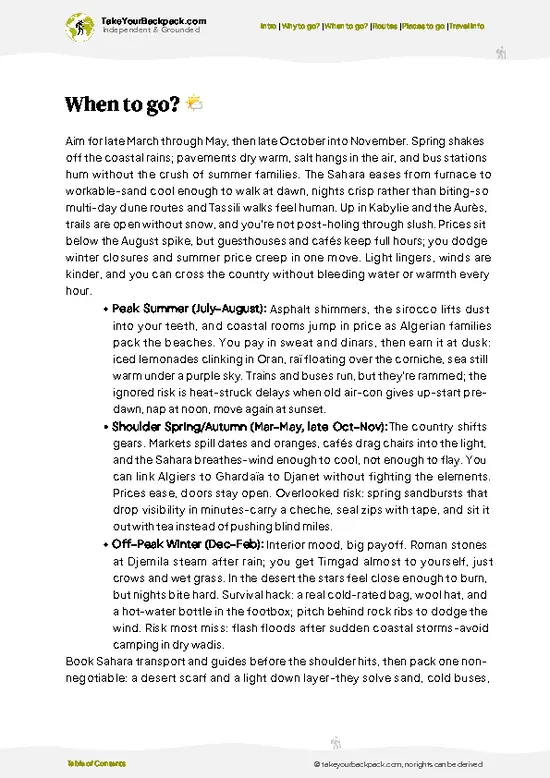
  • Weather: The best weather hits between April and June or September to October. You’ll dodge the brutal summer heat that spikes above 35°C (95°F), which can turn exploring ruins into a sweat marathon. Winters are mild but can be damp and chilly, around 10°C (50°F), not ideal for wandering ancient stones.

  • Temperature: Spring and fall offer a comfortable range from 18°C to 25°C (64°F to 77°F), perfect for long days outside without overheating or freezing. Summer’s scorchers can hit 40°C (104°F), making midday treks miserable.

  • Daylight Hours: From April to October, you get 12 to 14 hours of daylight, giving you plenty of time to soak in the ruins without rushing. Winter days shrink to about 10 hours, limiting your window for exploration.

  • Crowds: Peak tourist season aligns with summer
read more 👉

  • Weather: The best weather hits between April and June or September to October. You’ll dodge the brutal summer heat that spikes above 35°C (95°F), which can turn exploring ruins into a sweat marathon. Winters are mild but can be damp and chilly, around 10°C (50°F), not ideal for wandering ancient stones.

  • Temperature: Spring and fall offer a comfortable range from 18°C to 25°C (64°F to 77°F), perfect for long days outside without overheating or freezing. Summer’s scorchers can hit 40°C (104°F), making midday treks miserable.

  • Daylight Hours: From April to October, you get 12 to 14 hours of daylight, giving you plenty of time to soak in the ruins without rushing. Winter days shrink to about 10 hours, limiting your window for exploration.

  • Crowds: Peak tourist season aligns with summer holidays, especially July and August, when the site fills up with local and international visitors. Spring and fall are quieter, letting you experience the ruins without elbowing through selfie sticks.

  • Seasonal Activities: There’s no flashy festival tied to El Djemila, but spring and fall bring pleasant conditions for nearby hiking and village visits, adding layers to your trip beyond the ruins.

  • Price Fluctuations: Entry fees stay stable year-round, but accommodation and transport costs spike in summer due to demand. Visiting off-peak months can save you a chunk on lodging and local travel.


Pro-tip: Aim for late April or early October to dodge the heat and crowds while catching the ruins in their most inviting light—cool mornings, warm afternoons, and a calm vibe that lets history speak for itself.


source: climatestotravel.comJANJanuary: fair for travelingFEBFebruary: fair for travelingMARMarch: good for travelingAPRApril: excellent for travelingMAYMay: excellent for travelingJUNJune: excellent for travelingJULJuly: fair for travelingAUGAugust: fair for travelingSEPSeptember: excellent for travelingOCTOctober: excellent for travelingNOVNovember: good for travelingDECDecember: fair for traveling
when-to-go

✈️ The backpacker research shortcutAlgeria Travel Guide

An offline-friendly backpacking guide with optimized travel routes, ranked highlights, transport advice, and the best areas to stay.
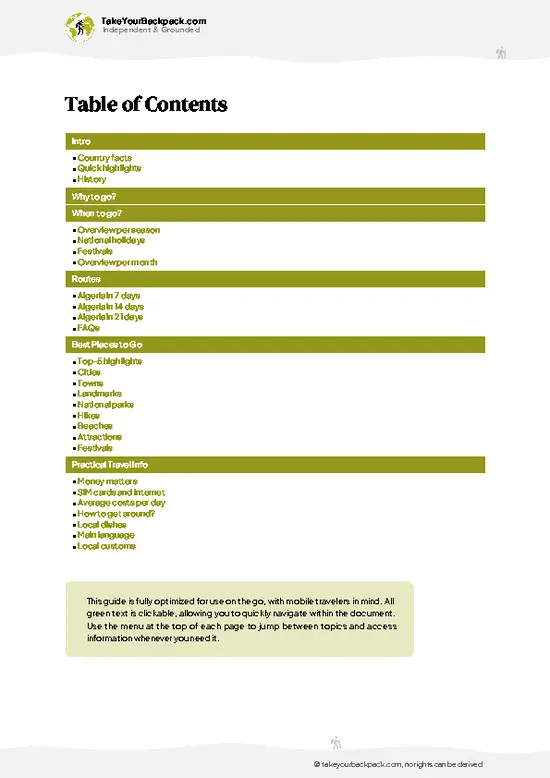
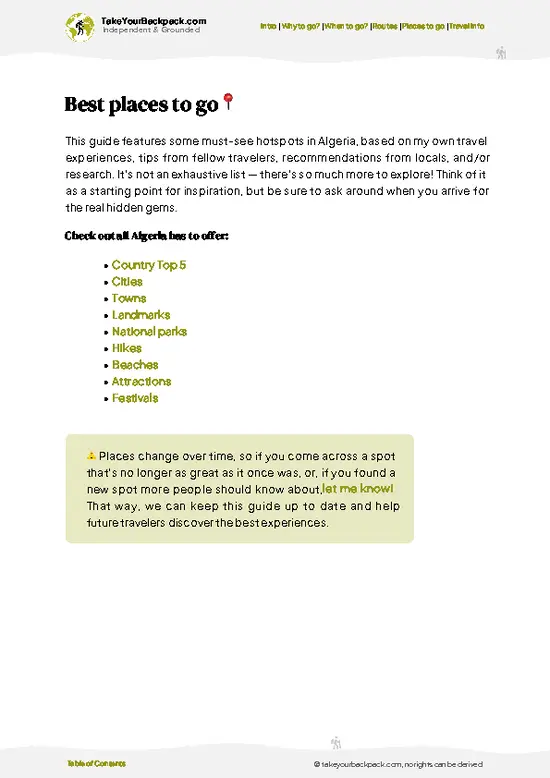
example page 0 from our offline Travel Guide for Algeria
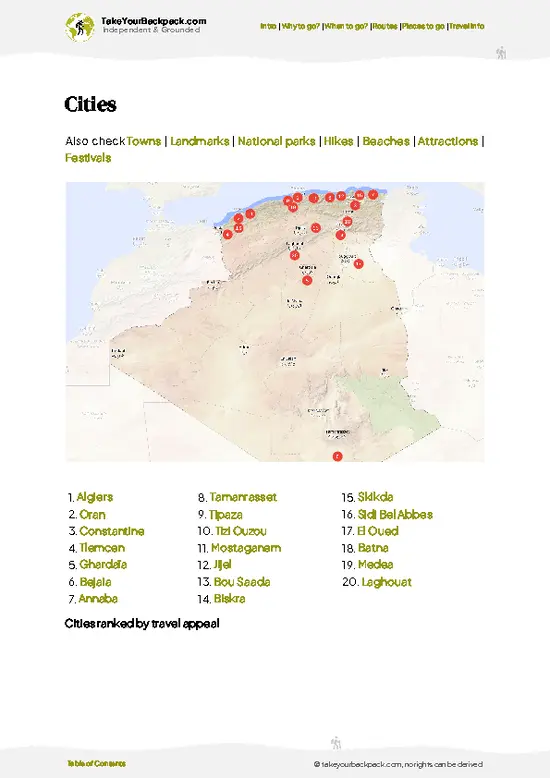
example page 1 from our offline Travel Guide for Algeria
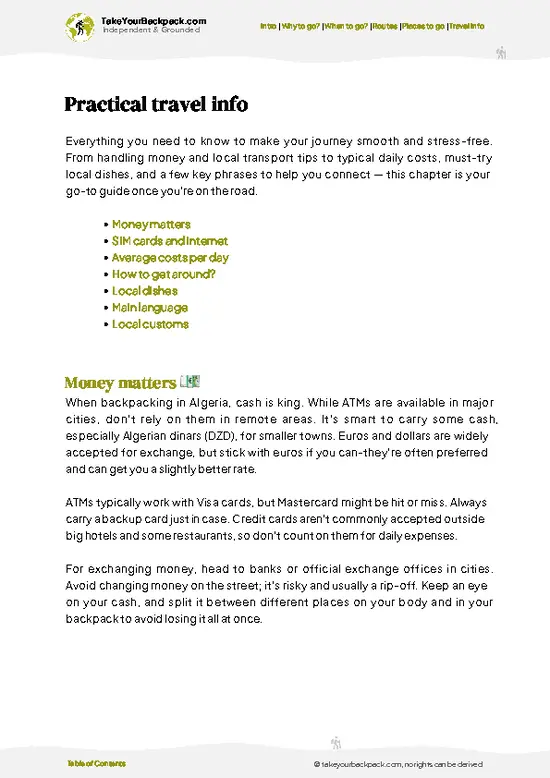
example page 2 from our offline Travel Guide for Algeria
example page 3 from our offline Travel Guide for Algeria
example page 4 from our offline Travel Guide for Algeria
example page 5 from our offline Travel Guide for Algeria
example page 6 from our offline Travel Guide for Algeria
example page 7 from our offline Travel Guide for Algeria
The digital guide (334 pages) contains:
86 highlights, ranked by travel appeal
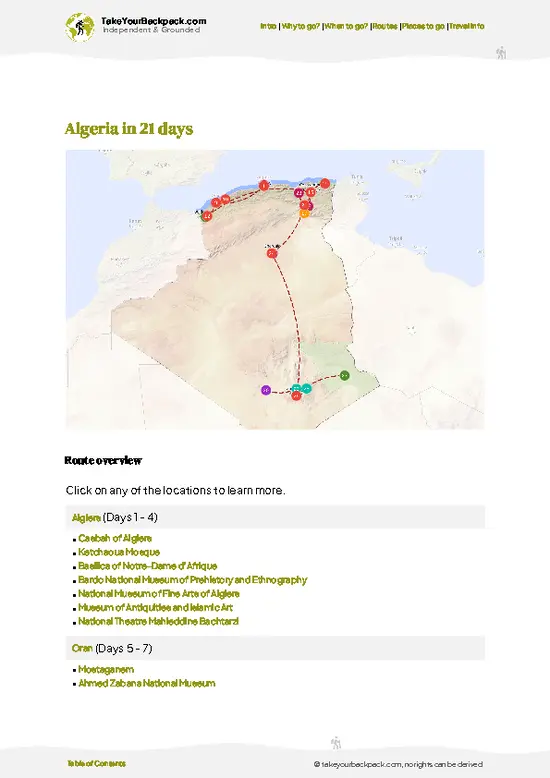
Optimized 7, 14 & 21-day travel routes
Cities, national parks, landmarks, beaches
How to get around
Offline-friendly for travel without Wi-Fi
👉 Click to see all 30+ guide features

📅 Plan smarter in minutes, not weeks
Month by month travel advice
Festivals & national holidays
Budget expectations

🗺️ Go to the right places, skip the overrated ones
Honest pros & cons of destinations
Top hikes, parks & viewpoints
Lesser-known places most travelers miss
Clear “worth it vs skip it” guidance

🛏️ Travel smoothly without rookie mistakes
Best areas to stay
Transport systems explained simply
Common scams & safety advice
SIM cards, money & practical tips

🌍 Understand the country, not just visit it
Culture & traditions
52 Essential phrases & customs
Festivals worth planning around
Traveler-friendly historical context
Insights that make places more meaningful

📱 Built for real travel conditions
Fully downloadable PDF
Works completely offline
Optimized for phone use
Useful in remote areas & buses
Everything in one place
Save weeks of stressful planning
Get instant access to your full guide. 30‑day money-back guarantee.
+ Add another guide for just US$7.80

By proceeding you agree to our terms.
Sent to your inbox immediately after payment • 100% Secure Checkout
Best Backpacking Travel Advisor 2025 tourism awardBest Backpacking
Travel Advisor
2025
What others say about Take Your Backpack Guides:
⭐⭐⭐⭐⭐
Fantastic, amazing amount of information!
⭐⭐⭐⭐⭐
My goodness this is amazing, it's what I've been looking for hats off too you!
⭐⭐⭐⭐⭐
I think this is absolutely BRILLIANT
⭐⭐⭐⭐
Very complete and informative. It's still missing places, but I gotta to commend you
⭐⭐⭐⭐⭐
This is truly amazing, thank you, can't wait to explore it with my kids!
⭐⭐⭐⭐⭐
Awesome resource, thank you!
⭐⭐⭐⭐⭐
This is amazing! Can't wait to explore the ones I haven't seen
⭐⭐⭐⭐
I love this! Well done, great idea.
⭐⭐⭐⭐⭐
Thanks for taking the time to make this gem!
⭐⭐⭐⭐⭐
This might be the best website I've ever seen.
⭐⭐⭐⭐⭐
Congratulations, and thank you so much for your work; it's incredibly valuable.
⭐⭐⭐⭐
In all seriousness I think you did a great job pointing out the important spots
⭐⭐⭐⭐⭐
10/10 very good
⭐⭐⭐⭐⭐
As someone who's only just starting to visit regularly this is awesome, thank you.
⭐⭐⭐⭐
Thank you very much! I'm going to visit my dad, it's going to be very useful!
⭐⭐⭐⭐⭐
This is really cool! We'll be travelling for the first time and this definitely come in handy.
⭐⭐⭐⭐⭐
You are now our minister of culture, congratulations 👨‍💼
⭐⭐⭐⭐⭐
Just wanted to tell you that this is a pearl! Going to follow your recommendations.
⭐⭐⭐⭐⭐
This is so cool. I'll definitely be using the resource for my travels soon.
⭐⭐⭐⭐⭐
This is very impressive! Good work.
⭐⭐⭐⭐⭐
This is an amazing and informative site. Very well done!

🛏️ Where to stay?How to pick the right area

El Djemila Roman ruins are a knockout slice of history, but let’s cut through the Instagram gloss: this isn’t a bustling tourist hub with endless nightlife or backpacker enclaves. The crowds? Manageable, but mostly day-trippers from nearby cities. The costs? Surprisingly reasonable, but don’t expect a party scene or luxury comforts.

If you want to be close to the ruins, your best bet is to stay in the town of El Djem itself. It’s small, straightforward, and safe—no sketchy corners here. The vibe is low-key, which means you won’t find a backpacker party hostel, but you will find simple guesthouses … read more 👉
El Djemila Roman ruins are a knockout slice of history, but let’s cut through the Instagram gloss: this isn’t a bustling tourist hub with endless nightlife or backpacker enclaves. The crowds? Manageable, but mostly day-trippers from nearby cities. The costs? Surprisingly reasonable, but don’t expect a party scene or luxury comforts.

If you want to be close to the ruins, your best bet is to stay in the town of El Djem itself. It’s small, straightforward, and safe—no sketchy corners here. The vibe is low-key, which means you won’t find a backpacker party hostel, but you will find simple guesthouses where you can meet other travelers who are here for the same reason: the ruins. It’s social enough if you’re open to striking up conversations over shared meals or local coffee.

For a bit more buzz and options, consider staying in Sousse, about an hour away. It’s a bigger city with a lively medina, budget accommodations, and a more established backpacker scene. You’ll find more social opportunities and better infrastructure, but it’s a trade-off with distance.

Bottom line: El Djem is where you go for the ruins and a quiet, authentic experience. Sousse is your fallback for social life and budget convenience. Either way, you’re close enough to soak in the Roman magic without the tourist circus.

👛 Costs (as of 3 September 2026)Travel costs and budget guide for El Djemila Roman ruins and museum

As of March 2026, the entrance fee for the El Djemila Roman ruins and museum in Algeria is approximately 200 to 500 Algerian Dinars (DZD) for foreign visitors, which is about €1.50 to €4. The museum fee is typically included in the ticket or requires a small additional fee. Hiring a local guide at the entrance is highly recommended, with fees ranging from 400 to 1,000 DZD (approximately €3 to €8), offering excellent value for a 1.5 to 2.5-hour tour.

source: tripadvisor.com
⚠️ Prices can change and everyone travels differently, so take this as a rough guide. Hope it helps you plan your adventure!

FAQFrequently asked questions about El Djemila Roman ruins and museum

2 to 3 hours is sufficient to explore El Djemila Roman ruins and museum thoroughly. This allows time to walk through the well-preserved ruins and visit the museum exhibits. Allocate extra time if you want to take detailed photos or read all informational plaques.
Yes, the entrance fee is worth it. The site offers a well-preserved glimpse into Roman urban life with impressive mosaics and architecture. The fee is typically around 300 Algerian Dinars, providing good value for the historical experience.
El Djemila is located about 35 km northeast of Setif. You can reach it by taxi or rented car from Setif, which takes around 40 minutes. Public transport options are limited, so arranging private transport is recommended for convenience.
⚠️ Things can change over time, so always validate details locally before you go.

Other Algerian attractions near El Djemila Roman ruins and museum

Explore more nearby:


💡 Not sure where to go next?
Create a personalized itinerary for Algeria including El Djemila Roman ruins and museum and the places that fit your trip.

Generate my itinerary

👉 Discover all attractions

Or checkout all Algeria has to offer (think cities, towns, villages, national parks, hikes, beaches, festivals)
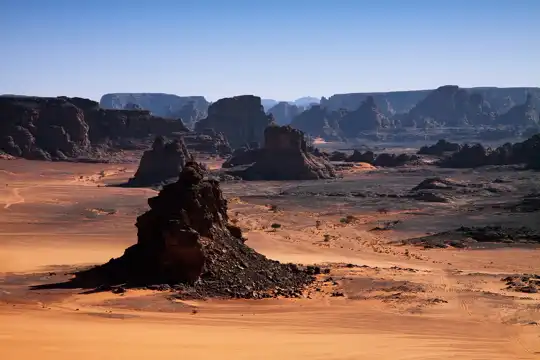
Country photo of Algeria

We 💚 feedbackIs it worth it?

El Djemila isn’t some polished tourist magnet—expect a few crowds, especially midday, and don’t be shocked if the signage feels half-baked. But here’s the kicker: once you step beyond the obvious, the ruins hit you with a quiet, raw power. The way the light slices through those ancient arches at sunset? That’s the real magic, no filter needed. The museum’s modest, but the artifacts tell stories you won’t find in guidebooks. Come ready to slow down and soak it in—this place rewards patience, not speed.

✍️ Help improve this page!
The information on this page is based on in-depth research, insights shared by experienced travelers, and feedback from the local travel community in Algeria. While every effort is made to keep the information accurate and current, conditions can change — so if you spot anything incorrect or outdated, please get in touch.


🙋‍♂️ Give feedback

👋 Meet the founderWho’s Behind Take Your Backpack?

Johan, backpacker and founder of TakeYourBackpackHi, I’m Johan (Netherlands 🇳🇱), the creator of TakeYourBackpack. Over the past decade, I’ve backpacked through 80+ countries across six continents, gaining extensive experience with independent travel, long-term trips, and overland routes.

This site is built on a combination of firsthand travel experience and carefully curated insights from other backpackers. Many guides are based on places I’ve personally visited, while others bring together tips, observations, and practical advice shared by trusted travelers I’ve met along the way.

The goal is to provide realistic, experience-driven guidance — not generic itineraries — so you can explore destinations with better context, clearer expectations, and more confidence.

Get full Algeria guide •
Instant download • 86 highlights • Full Offline guide