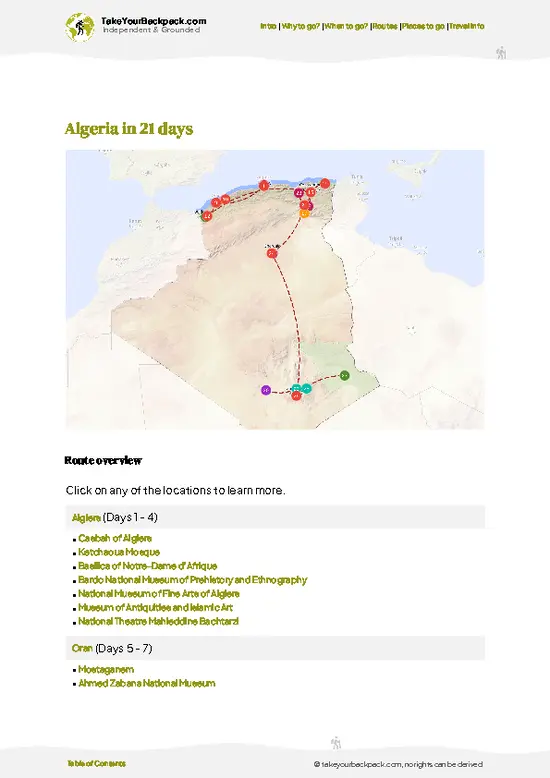
v2.webp)
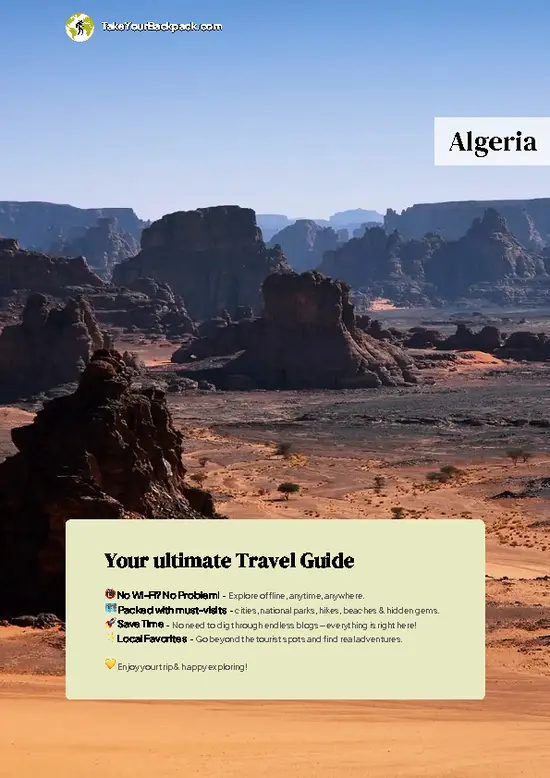
The Decumanus Maximus: Roman Urban Planning, Unfiltered
Forget the drone shots—walk the main east-west street yourself. The Decumanus Maximus is a straight line of ancient ambition, flanked by toppled columns and sun-bleached paving stones that have survived centuries of sand and silence. You’re not just looking at ruins; you’re tracing the original Roman grid, so precise you could almost use it as a ruler. The sheer scale and symmetry are a masterclass in city-building, and unlike Rome or Pompeii, you’ll probably have it to yourself—no selfie-stick gauntlet, just the wind and your own footsteps.
The Library: Where Knowledge Outlasted Empire
Timgad’s library isn’t just a pile of stones. It’s one of the best-preserved ancient libraries in the Roman world, and you can still see the niches where … read more 👉
Forget the drone shots—walk the main east-west street yourself. The Decumanus Maximus is a straight line of ancient ambition, flanked by toppled columns and sun-bleached paving stones that have survived centuries of sand and silence. You’re not just looking at ruins; you’re tracing the original Roman grid, so precise you could almost use it as a ruler. The sheer scale and symmetry are a masterclass in city-building, and unlike Rome or Pompeii, you’ll probably have it to yourself—no selfie-stick gauntlet, just the wind and your own footsteps.
The Library: Where Knowledge Outlasted Empire
Timgad’s library isn’t just a pile of stones. It’s one of the best-preserved ancient libraries in the Roman world, and you can still see the niches where … read more 👉
The Decumanus Maximus: Roman Urban Planning, Unfiltered
Forget the drone shots—walk the main east-west street yourself. The Decumanus Maximus is a straight line of ancient ambition, flanked by toppled columns and sun-bleached paving stones that have survived centuries of sand and silence. You’re not just looking at ruins; you’re tracing the original Roman grid, so precise you could almost use it as a ruler. The sheer scale and symmetry are a masterclass in city-building, and unlike Rome or Pompeii, you’ll probably have it to yourself—no selfie-stick gauntlet, just the wind and your own footsteps.
The Library: Where Knowledge Outlasted Empire
Timgad’s library isn’t just a pile of stones. It’s one of the best-preserved ancient libraries in the Roman world, and you can still see the niches where scrolls once lived. Stand there and imagine the debates, the scholars, the slow burn of ideas in a frontier town. There’s no velvet rope or glass case—just you, the stones, and the ghosts of readers past. It’s a rare, tactile connection to the intellectual life of an empire, and it’s more moving than any museum placard.
The Theater: Acoustics and Drama in the Middle of Nowhere
This isn’t a crumbling amphitheater you squint at from behind a fence. Timgad’s theater is carved into the hillside, with seating for 3,500 and acoustics that still work. Stand on the stage and whisper—your friends up top will hear you. The view sweeps out over the ruins and the Aurès Mountains, and if you time it right, you might catch a local performance or just the sound of your own laughter echoing through history. It’s raw, it’s real, and it’s a reminder that entertainment didn’t start with Netflix.
The Forum: The Social Engine of a Roman Outpost
Skip the Instagram filters—this is where the real drama happened. The forum was Timgad’s beating heart: politics, gossip, trade, and the occasional brawl. The layout is still clear, with the basilica, curia, and market spaces all visible. Stand in the center and you’ll feel the scale of Roman ambition, but also the everyday chaos of a city on the edge of the empire. It’s not polished, but that’s the point—this is the raw material of civilization.
The Museum: Context, Not Just Relics
Most site museums are afterthoughts. Not here. Timgad’s museum is compact but punchy, with mosaics, statues, and everyday objects that put flesh on the bones of the ruins outside. The mosaics are especially sharp—look for the hunting scenes and the Medusa, which pack more personality than any postcard. The museum gives you the backstory you need to decode the site, and it’s blissfully free of crowds. You’ll leave with a sense of the people, not just the stones.
Forget the drone shots—walk the main east-west street yourself. The Decumanus Maximus is a straight line of ancient ambition, flanked by toppled columns and sun-bleached paving stones that have survived centuries of sand and silence. You’re not just looking at ruins; you’re tracing the original Roman grid, so precise you could almost use it as a ruler. The sheer scale and symmetry are a masterclass in city-building, and unlike Rome or Pompeii, you’ll probably have it to yourself—no selfie-stick gauntlet, just the wind and your own footsteps.
The Library: Where Knowledge Outlasted Empire
Timgad’s library isn’t just a pile of stones. It’s one of the best-preserved ancient libraries in the Roman world, and you can still see the niches where scrolls once lived. Stand there and imagine the debates, the scholars, the slow burn of ideas in a frontier town. There’s no velvet rope or glass case—just you, the stones, and the ghosts of readers past. It’s a rare, tactile connection to the intellectual life of an empire, and it’s more moving than any museum placard.
The Theater: Acoustics and Drama in the Middle of Nowhere
This isn’t a crumbling amphitheater you squint at from behind a fence. Timgad’s theater is carved into the hillside, with seating for 3,500 and acoustics that still work. Stand on the stage and whisper—your friends up top will hear you. The view sweeps out over the ruins and the Aurès Mountains, and if you time it right, you might catch a local performance or just the sound of your own laughter echoing through history. It’s raw, it’s real, and it’s a reminder that entertainment didn’t start with Netflix.
The Forum: The Social Engine of a Roman Outpost
Skip the Instagram filters—this is where the real drama happened. The forum was Timgad’s beating heart: politics, gossip, trade, and the occasional brawl. The layout is still clear, with the basilica, curia, and market spaces all visible. Stand in the center and you’ll feel the scale of Roman ambition, but also the everyday chaos of a city on the edge of the empire. It’s not polished, but that’s the point—this is the raw material of civilization.
The Museum: Context, Not Just Relics
Most site museums are afterthoughts. Not here. Timgad’s museum is compact but punchy, with mosaics, statues, and everyday objects that put flesh on the bones of the ruins outside. The mosaics are especially sharp—look for the hunting scenes and the Medusa, which pack more personality than any postcard. The museum gives you the backstory you need to decode the site, and it’s blissfully free of crowds. You’ll leave with a sense of the people, not just the stones.
Spotted a mistake or missing something? Contact us.

 Best Backpacking
.jpg) Hi, I’m Johan (Netherlands 🇳🇱), the creator of TakeYourBackpack. Over the past decade, I’ve backpacked through 80+ countries across six continents, gaining extensive experience with independent travel, long-term trips, and overland routes.
Hi, I’m Johan (Netherlands 🇳🇱), the creator of TakeYourBackpack. Over the past decade, I’ve backpacked through 80+ countries across six continents, gaining extensive experience with independent travel, long-term trips, and overland routes.