×

Algeria🇩🇿 | national parksEl Kala National ParkLac Tonga reeds, cork oaks, Lac Bleu, El Tarf coves | things to do and best time to go

Explore Chréa National ParkExplore Gouraya National Park

Backpacking in El Kala
🏆 Top picknational park ranked #4
By Johan Kruseman 🇳🇱 | Updated October 22, 2026

El Kala National Park is a coastal and lakeland reserve on the Tunisian border, with almost no desert and no mountain-hut trekking culture, so leave the Saharan expectations at home. It sits in the far northeast of Algeria, in El Tarf Province, and its cork oak forests drop toward a Mediterranean shoreline of coves and pine-scented dunes. Expect the croak of frogs at Lac Tonga, the sweetness of damp oak leaves, and sand that clings to everything. Public transport is thin, so a missed shared taxi can cost an afternoon; book a ride back before you head out. Trails are poorly signed, so download offline maps first. Summer weekends bring Algerian families to the beaches, and prices and crowding both jump, so go midweek. Mosquitoes around the wetlands are relentless, so pack repellent. Spend a first day walking the lakeshore at Tonga in the morning, then swim along the coast.

Discover everything you want to know in the 📖 Algeria Travel Guide.


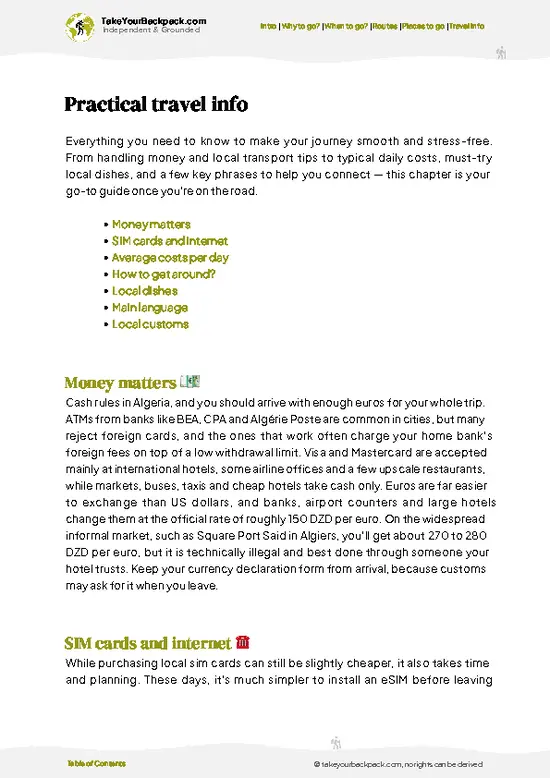
example page 0 from our offline Travel Guide for Algeria
example page 1 from our offline Travel Guide for Algeria
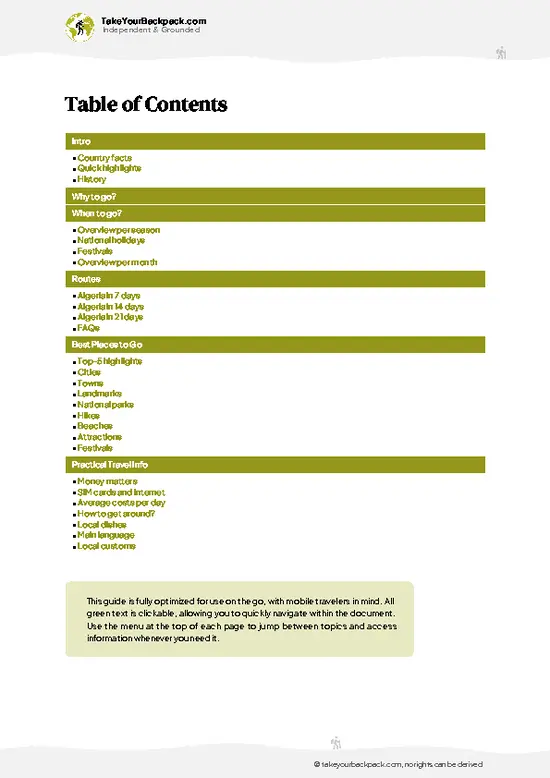
example page 2 from our offline Travel Guide for Algeria
example page 3 from our offline Travel Guide for Algeria
example page 4 from our offline Travel Guide for Algeria
example page 5 from our offline Travel Guide for Algeria
example page 6 from our offline Travel Guide for Algeria
example page 7 from our offline Travel Guide for Algeria
Loading the map 🌍
CLICK TO FILTER
cities
towns
landmarks
national parks
hikes
beaches
attractions
festivals
SHOW COUNTRY’S BESTSHOW ALL

✨ Why go?
Ranked #4 national park in Algeria
Why visitors keep coming back

El Kala National Park rewards the traveler who likes finding things alone. It is a UNESCO biosphere reserve, and you can wander among cork oak forests, freshwater lakes and a Mediterranean coastline without a guide leading a convoy. Most Algerian travel leans on organized circuits, but here you can set your own pace, stopping wherever a trail or beach looks right. The variety is the draw: wetlands for birdwatching, forest tracks, and coves where you may share the sand with a handful of locals. Camping and basic lodging in El Kala town keep costs gentle, and local cafés serve fresh fish and strong coffee. Because distances between sights are modest, a self-guided plan works better than a tour here, and you will meet more local families than foreign visitors. For anyone building a northern Algeria … read more 👉
El Kala National Park rewards the traveler who likes finding things alone. It is a UNESCO biosphere reserve, and you can wander among cork oak forests, freshwater lakes and a Mediterranean coastline without a guide leading a convoy. Most Algerian travel leans on organized circuits, but here you can set your own pace, stopping wherever a trail or beach looks right. The variety is the draw: wetlands for birdwatching, forest tracks, and coves where you may share the sand with a handful of locals. Camping and basic lodging in El Kala town keep costs gentle, and local cafés serve fresh fish and strong coffee. Because distances between sights are modest, a self-guided plan works better than a tour here, and you will meet more local families than foreign visitors. For anyone building a northern Algeria route, this is the green, watery counterweight to the dry interior and the big cities.

💡 HighlightsThe experiences that define the visit

  1. Lac Tonga: The park’s best-known wetland, a Ramsar-listed freshwater lake fringed by reeds, where herons, ducks and coots gather and the air hums with insects.
  2. Lac Oubeira: A quieter lake ringed by forest, good for a still-water picnic and for spotting waterbirds without other people around.
  3. Lac Bleu: A small, deep pool with a startling turquoise tint in sunlight, reached by a short walk through trees.
  4. Cork oak forests: Shaded tracks beneath stripped, rust-colored trunks, with dappled light and the chance of spotting wild boar tracks or songbirds.
  5. La Messida beach: A pine-backed cove with pale sand and clear water, popular in summer and calm outside peak season.
  6. Cap Rosa: A rocky headland with coastal views, offering a quiet place for a sea-facing walk away from the beach crowds.
  7. El Kala old port:
… read more 👉
  1. Lac Tonga: The park’s best-known wetland, a Ramsar-listed freshwater lake fringed by reeds, where herons, ducks and coots gather and the air hums with insects.
  2. Lac Oubeira: A quieter lake ringed by forest, good for a still-water picnic and for spotting waterbirds without other people around.
  3. Lac Bleu: A small, deep pool with a startling turquoise tint in sunlight, reached by a short walk through trees.
  4. Cork oak forests: Shaded tracks beneath stripped, rust-colored trunks, with dappled light and the chance of spotting wild boar tracks or songbirds.
  5. La Messida beach: A pine-backed cove with pale sand and clear water, popular in summer and calm outside peak season.
  6. Cap Rosa: A rocky headland with coastal views, offering a quiet place for a sea-facing walk away from the beach crowds.
  7. El Kala old port: A working fishing harbor where boats unload the catch and grilled fish is served nearby.
El Kala National Park is best started at Lac Tonga, because the water is calmest and birds are most active in the early morning.
Spotted a mistake or missing something? Contact us.

🌤️ When to go?When to go for the best experience

  • Spring (April to June): Wildflowers cover the cork oak hills and the lakes fill with birds. Highs run 18 to 26°C (64 to 79°F), days are long and the sea is still cool. Crowds stay thin.
  • Summer (July to August): Algerian families pack the beaches at El Kala town and Cap Rosa. Highs reach 30 to 35°C (86 to 95°F), and sunrise starts are the only comfortable hiking window. Beds cost the most now and often sell out.
  • Autumn (September to October): The sea is warm at 22 to 25°C (72 to 77°F), the beaches empty after early September and prices drop. Rain can start late in the season.
  • Winter (November to March): Cool and wet, with highs of 12 to 17°C (54 to 63°F), short days and muddy tracks. Migrating waterfowl peak at Lac Tonga and Lac Oubeira, and rooms are cheapest.
Book ahead for July and August, or … read more 👉
  • Spring (April to June): Wildflowers cover the cork oak hills and the lakes fill with birds. Highs run 18 to 26°C (64 to 79°F), days are long and the sea is still cool. Crowds stay thin.
  • Summer (July to August): Algerian families pack the beaches at El Kala town and Cap Rosa. Highs reach 30 to 35°C (86 to 95°F), and sunrise starts are the only comfortable hiking window. Beds cost the most now and often sell out.
  • Autumn (September to October): The sea is warm at 22 to 25°C (72 to 77°F), the beaches empty after early September and prices drop. Rain can start late in the season.
  • Winter (November to March): Cool and wet, with highs of 12 to 17°C (54 to 63°F), short days and muddy tracks. Migrating waterfowl peak at Lac Tonga and Lac Oubeira, and rooms are cheapest.
Book ahead for July and August, or aim for late May or September to get warm water without the crush.


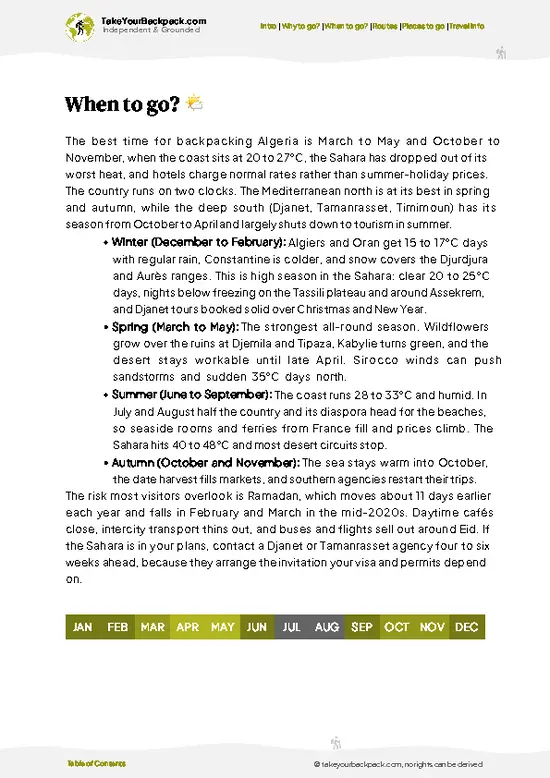
source: climatestotravel.comJANJanuary: fair for travelingFEBFebruary: fair for travelingMARMarch: good for travelingAPRApril: excellent for travelingMAYMay: excellent for travelingJUNJune: excellent for travelingJULJuly: fair for travelingAUGAugust: fair for travelingSEPSeptember: excellent for travelingOCTOctober: excellent for travelingNOVNovember: highly recommended for travelingDECDecember: fair for traveling
when-to-go

✈️ The backpacker research shortcutAlgeria Travel Guide

An offline-friendly backpacking guide with optimized travel routes, ranked highlights, transport advice, and the best areas to stay.
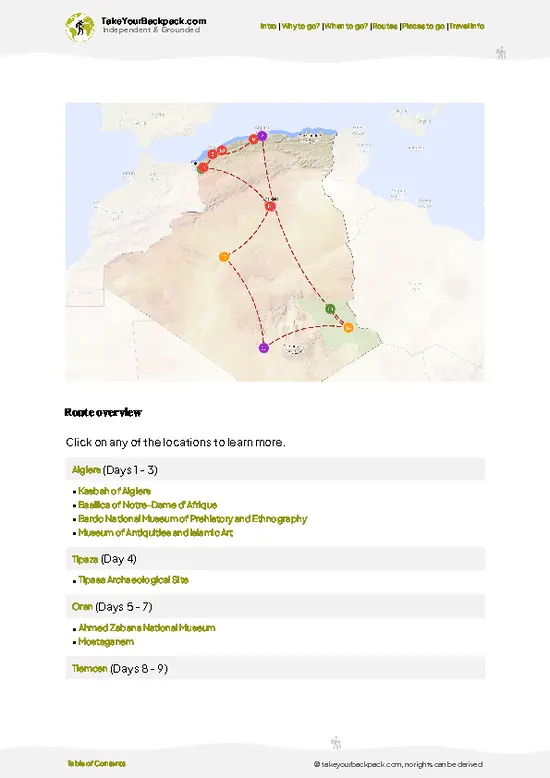
example page 0 from our offline Travel Guide for Algeria
example page 1 from our offline Travel Guide for Algeria
example page 2 from our offline Travel Guide for Algeria
example page 3 from our offline Travel Guide for Algeria
example page 4 from our offline Travel Guide for Algeria
example page 5 from our offline Travel Guide for Algeria
example page 6 from our offline Travel Guide for Algeria
example page 7 from our offline Travel Guide for Algeria
The digital guide (314 pages) contains:
✅ 79 highlights, ranked by travel appeal
✅ Optimized 7, 14 & 21-day travel routes
✅ Cities, national parks, landmarks, beaches
✅ How to get around
✅ Offline-friendly for travel without Wi-Fi
👉 Click to see all 30+ guide features

📅 Plan smarter in minutes, not weeks
✅ Month by month travel advice
✅ Festivals & national holidays
✅ Budget expectations

🗺️ Go to the right places, skip the overrated ones
✅ Honest pros & cons of destinations
✅ Top hikes, parks & viewpoints
✅ Lesser-known places most travelers miss
✅ Clear “worth it vs skip it” guidance

🛏️ Travel smoothly without rookie mistakes
✅ Best areas to stay
✅ Transport systems explained simply
✅ Common scams & safety advice
✅ SIM cards, money & practical tips

🌍 Understand the country, not just visit it
✅ Culture & traditions
✅ 52 Essential phrases & customs
✅ Festivals worth planning around
✅ Traveler-friendly historical context
✅ Insights that make places more meaningful

📱 Built for real travel conditions
✅ Fully downloadable PDF
✅ Works completely offline
✅ Optimized for phone use
✅ Useful in remote areas & buses
✅ Everything in one place
Stop searching, start planning
Get instant access to your full guide. 30‑day money-back guarantee.
+ Add another guide for just

By proceeding you agree to our terms.
Sent to your inbox immediately after payment • 100% Secure Checkout
Best Backpacking Travel Advisor 2025 tourism awardBest Backpacking
Travel Advisor
2025
What others say about Take Your Backpack Guides:
⭐⭐⭐⭐⭐
Fantastic, amazing amount of information!
⭐⭐⭐⭐⭐
My goodness this is amazing, it's what I've been looking for hats off too you!
⭐⭐⭐⭐⭐
I think this is absolutely BRILLIANT
⭐⭐⭐⭐
Very complete and informative. It's still missing places, but I gotta to commend you
⭐⭐⭐⭐⭐
This is truly amazing, thank you, can't wait to explore it with my kids!
⭐⭐⭐⭐⭐
Awesome resource, thank you!
⭐⭐⭐⭐⭐
This is amazing! Can't wait to explore the ones I haven't seen
⭐⭐⭐⭐
I love this! Well done, great idea.
⭐⭐⭐⭐⭐
Thanks for taking the time to make this gem!
⭐⭐⭐⭐⭐
This might be the best website I've ever seen.
⭐⭐⭐⭐⭐
Congratulations, and thank you so much for your work; it's incredibly valuable.
⭐⭐⭐⭐
In all seriousness I think you did a great job pointing out the important spots
⭐⭐⭐⭐⭐
10/10 very good
⭐⭐⭐⭐⭐
As someone who's only just starting to visit regularly this is awesome, thank you.
⭐⭐⭐⭐
Thank you very much! I'm going to visit my dad, it's going to be very useful!
⭐⭐⭐⭐⭐
This is really cool! We'll be travelling for the first time and this definitely come in handy.
⭐⭐⭐⭐⭐
You are now our minister of culture, congratulations 👨‍💼
⭐⭐⭐⭐⭐
Just wanted to tell you that this is a pearl! Going to follow your recommendations.
⭐⭐⭐⭐⭐
This is so cool. I'll definitely be using the resource for my travels soon.
⭐⭐⭐⭐⭐
This is very impressive! Good work.
⭐⭐⭐⭐⭐
This is an amazing and informative site. Very well done!

🛏️ Where to stay?Best areas and accommodation options

El Kala town is the practical base for backpackers, with the park all around it and no real camping or hostel infrastructure inside the boundaries. Expect small hotels and guesthouses rather than dorms. Rooms in town run about US$25 to 60 a night, and the cheapest are simple, family-run places near the port and the main street. In summer, private rooms rented by locals appear along the coast, and prices jump, so book early.
A few forest lodges and holiday complexes sit within the park near the coast and the lakes, and they suit anyone with transport. Camping is limited and informal. Ask local guides … read more 👉
El Kala town is the practical base for backpackers, with the park all around it and no real camping or hostel infrastructure inside the boundaries. Expect small hotels and guesthouses rather than dorms. Rooms in town run about US$25 to 60 a night, and the cheapest are simple, family-run places near the port and the main street. In summer, private rooms rented by locals appear along the coast, and prices jump, so book early.
A few forest lodges and holiday complexes sit within the park near the coast and the lakes, and they suit anyone with transport. Camping is limited and informal. Ask local guides or the park office in El Kala about permitted spots before you pitch a tent.
Further afield, Annaba (about 80 km west) has the widest choice, from budget hotels at US$20 to 40 to mid-range options, plus the airport and the main bus station. Souk Ahras and Tarf are smaller inland alternatives. If you arrive from the Tunisian side, the nearest larger town is Tabarka across the border, though crossings are rarely used. Most travelers sleep in El Kala and hire a taxi for the lakes and the coast.

👛 Costs (as of 22 October 2026)Money, prices, and spending tips

El Kala National Park costs a backpacker roughly US$45 to 75 a day, with the daily total at US$68 in high season. Most spending goes to beds and getting out to the lakes and coast. Travelers pay in Algerian dinars, and cash is the norm.
CategoryBudget RangeLocal Reality
Entrance feeUS$0 to 2No formal gate system for most areas; small charges may apply at some sites.
Accommodation (high season)US$25 to 40Simple hotels and rented rooms in El Kala town, fully booked in July and August.
Accommodation (low season)US$15 to 25Winter rooms are easier to bargain for.
Local transportUS$5 to 15Shared taxis and minibuses link El Kala with Annaba and nearby villages; a taxi to the lakes costs more.
Food and suppliesUS$8 to 15Grilled fish, sandwiches and pizzas in town; cafes serve strong coffee for under US$1.
… read more 👉
El Kala National Park costs a backpacker roughly US$45 to 75 a day, with the daily total at US$68 in high season. Most spending goes to beds and getting out to the lakes and coast. Travelers pay in Algerian dinars, and cash is the norm.
CategoryBudget RangeLocal Reality
Entrance feeUS$0 to 2No formal gate system for most areas; small charges may apply at some sites.
Accommodation (high season)US$25 to 40Simple hotels and rented rooms in El Kala town, fully booked in July and August.
Accommodation (low season)US$15 to 25Winter rooms are easier to bargain for.
Local transportUS$5 to 15Shared taxis and minibuses link El Kala with Annaba and nearby villages; a taxi to the lakes costs more.
Food and suppliesUS$8 to 15Grilled fish, sandwiches and pizzas in town; cafes serve strong coffee for under US$1.
Guide or boat tripUS$0 to 6Optional, and negotiated on the spot.
Total Daily BudgetUS$68Based on high-season accommodation.


source: algeria.com
⚠️ Prices can change and everyone travels differently, so take this as a rough guide. Hope it helps you plan your adventure!

🥾 TrailsBest hikes in El Kala national park

El Kala National Park suits walkers who enjoy low-key, mostly flat outings rather than summit days. Marked trails are limited, so most people follow forest tracks, lake edges and coastal paths.
  • Lac Tonga shore walk: Roughly 3 to 5 kilometers, 1 to 2 hours, easy. Flat reedy paths with birdlife and muddy patches after rain.
  • Lac Oubeira loop: Around 4 to 6 kilometers, 1.5 to 2 hours, easy. Forest edges, open water views and good picnic stops.
  • Lac Bleu approach: A short woodland walk of under an hour, easy. Soft ground and tree roots, with a small payoff at the pool.
  • Coastal headland walks: Variable,
… read more 👉
El Kala National Park suits walkers who enjoy low-key, mostly flat outings rather than summit days. Marked trails are limited, so most people follow forest tracks, lake edges and coastal paths.
  • Lac Tonga shore walk: Roughly 3 to 5 kilometers, 1 to 2 hours, easy. Flat reedy paths with birdlife and muddy patches after rain.
  • Lac Oubeira loop: Around 4 to 6 kilometers, 1.5 to 2 hours, easy. Forest edges, open water views and good picnic stops.
  • Lac Bleu approach: A short woodland walk of under an hour, easy. Soft ground and tree roots, with a small payoff at the pool.
  • Coastal headland walks: Variable, 1 to 3 hours, easy to moderate. Pine woods, rocky points and sandy coves near Cap Rosa and La Messida.
  • Cork oak forest tracks: Half a day, easy to moderate. Rolling dirt tracks beneath oaks, with wildlife signs such as boar prints.
Wildlife includes wetland birds, wild boar, jackals and, rarely seen, the Barbary macaque in the forests. Terrain is gentle, but heat, mosquitoes and muddy tracks are the main challenges, so go early in the day and carry plenty of water. Signage is sparse, so offline maps help.
Reaching the park is simplest from the town of El Kala, which has shared taxis and buses from Annaba and El Tarf. Getting between lakes and beaches usually needs a taxi or your own vehicle, as local buses are infrequent. Crowds peak at beaches on summer weekends, while lakes and forest tracks stay quiet. Entry to the park is generally free, though some sites may charge small parking or access fees.
⚠️ Hiking info can sometimes be outdated or inaccurate. Before you hit the trail, check the latest conditions with locals. If you do spot anything that's off, I'd love to hear from you, so I can update it for fellow travelers.

🛡️ SafetySafety Tips and Common Scams in El Kala

El Kala National Park is straightforward for hikers, with mild terrain and low altitude, and the main hazards are summer heat and winter mud. Most tracks cross forest and lakeshore without steep climbs, but signage is sparse, so download an offline map and consider hiring a local guide from El Kala. Carry at least 2 to 3 liters of water in summer, wear a hat and start early.
Wild boar live in the forests and rarely bother people, though you should keep your distance and never feed them. Mosquitoes are noticeable near the lakes and marshes in warm months, so bring repellent. Forest fires are a real seasonal risk in July and August, and access to some areas can be restricted then.
The area is near the Tunisian border, so carry your passport and expect occasional checkpoints. Check with local authorities … read more 👉
El Kala National Park is straightforward for hikers, with mild terrain and low altitude, and the main hazards are summer heat and winter mud. Most tracks cross forest and lakeshore without steep climbs, but signage is sparse, so download an offline map and consider hiring a local guide from El Kala. Carry at least 2 to 3 liters of water in summer, wear a hat and start early.
Wild boar live in the forests and rarely bother people, though you should keep your distance and never feed them. Mosquitoes are noticeable near the lakes and marshes in warm months, so bring repellent. Forest fires are a real seasonal risk in July and August, and access to some areas can be restricted then.
The area is near the Tunisian border, so carry your passport and expect occasional checkpoints. Check with local authorities about which zones are open before heading off the main roads. Tell your host your route, since phone signal drops in the forest.

FAQTraveler FAQ

Plan on 2 to 3 days for El Kala National Park. That gives you a day for the lakes Tonga and Oubeira, a day for the coast around Cap Rosa and the old port of El Kala, and a spare day for forest walks or the Tunisian-border hills. A single day trip from Annaba, about 80 km away, only covers one area.
Yes, but El Kala National Park is much easier with a taxi or rented car. Buses and shared taxis run from Annaba to El Kala town in roughly 1.5 to 2 hours, and fares are only a few dollars. Inside the park, you will need a local taxi (US$10 to 25 per trip) to reach the lakes or beaches, since public transport is thin.
El Kala National Park has no strict gate system for most areas, so you generally do not pay a large entrance fee. Some sites may charge a small amount, around US$0 to 2. Carry your passport for police checkpoints, and ask the park office in El Kala town about any restricted zones or permits for off-track hiking and camping.
⚠️ Things can change over time, so always validate details locally before you go.

Other Algerian national parks near El Kala

Explore more nearby:

  • Belezma National Park—Aurès cedar slopes, limestone scree, Djebel Tuggurt crest, Batna basin views| 243 km away
  • Taza National Park—Babors oak woods, Cap Bouak cliffs, Grotte Merveilleuse, Jijel coves| 250 km away
  • Gourara National Park—oasis settlements, sand dunes, salt lakes, date palm groves| 286 km away

💡 Not sure where to go next?
Create a personalized itinerary for Algeria including El Kala and the places that fit your trip.

Generate my itinerary

👉 Discover all national parks

Or checkout all Algeria has to offer (think cities, towns, villages, national parks, hikes, beaches, festivals)
Country photo of Algeria

We 💚 feedbackFinal thoughts on exploring El Kala

El Kala National Park pairs well with Annaba on a northeast Algeria loop, with Tunisia’s Tabarka just across the border for travelers continuing west to east. I would spend two nights here, keep one for lake birds at dawn, and bring bug spray and cash for fish at the port.

✍️ Help improve this page!
The information on this page is based on in-depth research, insights shared by experienced travelers, and feedback from the local travel community in Algeria. While every effort is made to keep the information accurate and current, conditions can change — so if you spot anything incorrect or outdated, please get in touch.


🙋‍♂️ Give feedback

👋 Meet the founderWho’s Behind Take Your Backpack?

Johan, backpacker and founder of TakeYourBackpackHi, I’m Johan (Netherlands 🇳🇱), the creator of TakeYourBackpack. Over the past 3 decades, I’ve backpacked through 90+ countries across six continents, gaining extensive experience with independent travel, long-term trips, and overland routes.

This site is built on a combination of firsthand travel experience and carefully curated insights from other backpackers. Many guides are based on places I’ve personally visited, while others bring together tips, observations, and practical advice shared by trusted travelers I’ve met along the way.

The goal is to provide realistic, experience-driven guidance — not generic itineraries — so you can explore destinations with better context, clearer expectations, and more confidence.