×

American Samoa🇦🇸 | national parksAunu’u Island National Natural LandmarkQuicksand marsh, boat crossing, taro-garden village, black lava cove | things to do and best time to go

Explore Le’ala Shoreline National Natural LandmarkExplore Ta’ū Island

Backpacking in Aunu’u Island National Natural Landmark
👍 Recommendednational park ranked #3
By Johan Kruseman 🇳🇱 | Updated October 15, 2026

The ferry’s engine cuts, the bow nudges the concrete landing, and the first sound is roosters, not traffic. Aunu’u Island Natural Reserve sits just off the southeast tip of Tutuila in American Samoa, and the crossing is a short boat ride from Au’asi. There’s no fixed schedule worth trusting, because the small boats run when locals need them, so go in the morning and ask the skipper about the return before you step off. The island is tiny and flat enough to walk, which is why you skip any tour and just follow the footpaths past taro plots. The upside is quiet, a rare quicksand marsh, and sea cliffs with reef below. The downside is thin shade and almost no services, so carry your own water and food. Crowds are essentially absent. A good first day: cross early, loop the village, reach the marsh before noon heat, then picnic at the shore and catch a mid-afternoon boat.

Discover everything you want to know in the 📖 American Samoa Travel Guide.


example page 0 from our offline Travel Guide for American Samoa
example page 1 from our offline Travel Guide for American Samoa
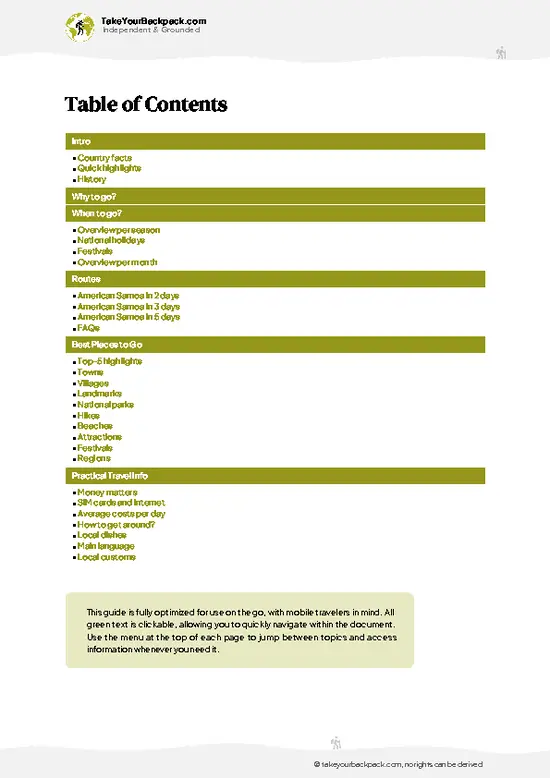
example page 2 from our offline Travel Guide for American Samoa
example page 3 from our offline Travel Guide for American Samoa
example page 4 from our offline Travel Guide for American Samoa
example page 5 from our offline Travel Guide for American Samoa
example page 6 from our offline Travel Guide for American Samoa
example page 7 from our offline Travel Guide for American Samoa
Loading the map 🌍
CLICK TO FILTER
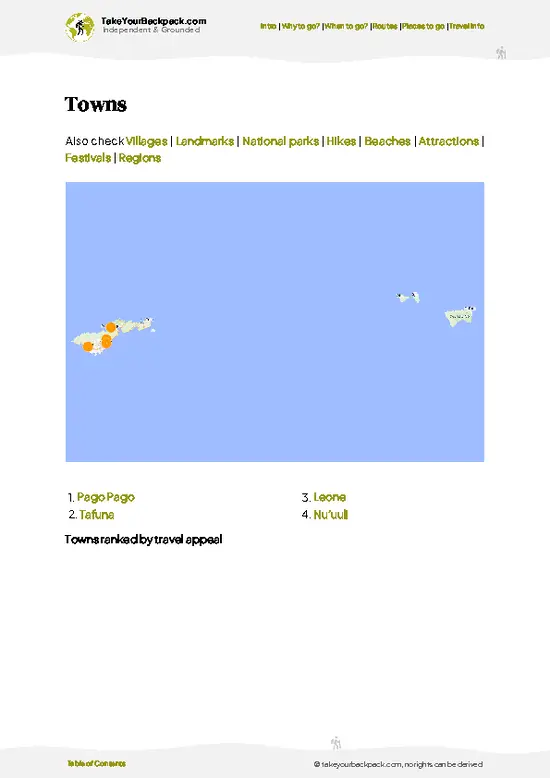
towns
villages
landmarks
national parks
hikes
beaches
attractions
festivals
regions
SHOW COUNTRY’S BESTSHOW ALL

✨ Why go?
Ranked #3 national park in American Samoa
The unique appeal for travelers

Backpackers pick Aunu’u because it rewards a self-guided day more than any island tour could. The whole place is small enough that you set your own pace, wander between village lanes and bush paths, and stop wherever the view or a friendly greeting holds you. Nobody is selling a package, and the people living here mostly seem pleased to see a visitor on foot.

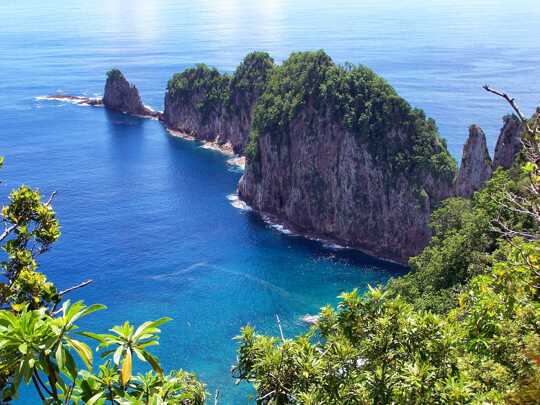
The second pull is the geology. The island is a collapsed volcanic crater, and its Pala Lake quicksand marsh is a feature you won’t find on Tutuila. Add rugged shoreline on the exposed side and a view back toward Tutuila’s mountains, and you get a compact lesson in how these islands were built.

It also suits a frugal traveler. A day trip needs little more than a boat fare, sturdy shoes, a hat and a packed lunch, and the village of Aunu’u … read more 👉
Backpackers pick Aunu’u because it rewards a self-guided day more than any island tour could. The whole place is small enough that you set your own pace, wander between village lanes and bush paths, and stop wherever the view or a friendly greeting holds you. Nobody is selling a package, and the people living here mostly seem pleased to see a visitor on foot.

The second pull is the geology. The island is a collapsed volcanic crater, and its Pala Lake quicksand marsh is a feature you won’t find on Tutuila. Add rugged shoreline on the exposed side and a view back toward Tutuila’s mountains, and you get a compact lesson in how these islands were built.

It also suits a frugal traveler. A day trip needs little more than a boat fare, sturdy shoes, a hat and a packed lunch, and the village of Aunu’u keeps a traditional rhythm with church on Sundays and quiet streets. You’re a guest here, so dress modestly in the village and ask before photographing people.

💡 HighlightsMust-see experiences and standout moments

  1. Pala Lake: The island’s headline sight is a reddish marsh just north of the village where the ground turns to quicksand. Look from the edge and stay out of it. It’s an odd, almost swampy contrast to the island’s palm and breadfruit greenery.
  2. The Boat Crossing from Au’asi: The short hop over the channel puts you at eye level with the reef and the coast of Tutuila. It’s part of the experience, and the landing is the only real pier on the island.
  3. Aunu’u Village Walk: The single village holds the island’s homes, churches and taro gardens. Lanes are quiet, pigs and chickens wander, and greetings come easily. Dress modestly and keep your voice low on Sundays.
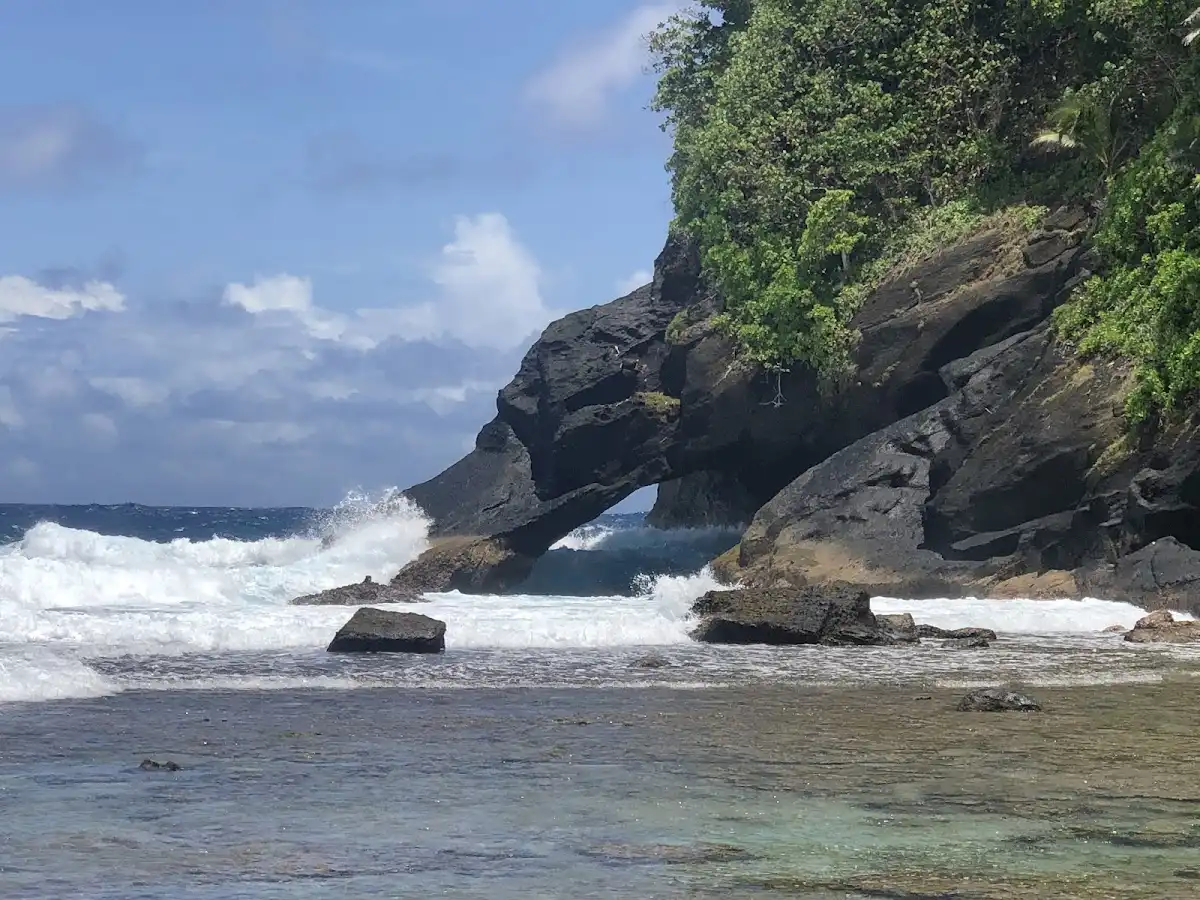
  4. Ma’ama’a Cove: A rocky shoreline cove with reef lying beyond it. Come for the sound of surf on black lava, tide-pool poking and a quiet picnic
… read more 👉
  1. Pala Lake: The island’s headline sight is a reddish marsh just north of the village where the ground turns to quicksand. Look from the edge and stay out of it. It’s an odd, almost swampy contrast to the island’s palm and breadfruit greenery.
  2. The Boat Crossing from Au’asi: The short hop over the channel puts you at eye level with the reef and the coast of Tutuila. It’s part of the experience, and the landing is the only real pier on the island.
  3. Aunu’u Village Walk: The single village holds the island’s homes, churches and taro gardens. Lanes are quiet, pigs and chickens wander, and greetings come easily. Dress modestly and keep your voice low on Sundays.
  4. Ma’ama’a Cove: A rocky shoreline cove with reef lying beyond it. Come for the sound of surf on black lava, tide-pool poking and a quiet picnic spot rather than a swim beach.
  5. Crater Rim Views: Gentle ground rising around the old volcanic bowl gives you a look down toward the marsh and out across the ocean. There’s no big summit, just a good place to understand the island’s shape.
  6. Southern Sea Cliffs and Coastline: The exposed side of the island meets open swell, with dark volcanic rock, spray and a constant wind. Seabirds ride the updrafts, and you’ll see few other people.
  7. Village Gardens and Bush Paths: Trails between taro, banana and coconut plots show how islanders still feed themselves. Fruit bats and birds are most active in the early or late hours.
The marsh and the village walk fit neatly into one morning, leaving the cove and the coast for a slower afternoon before the last boat.
Spotted a mistake or missing something? Contact us.
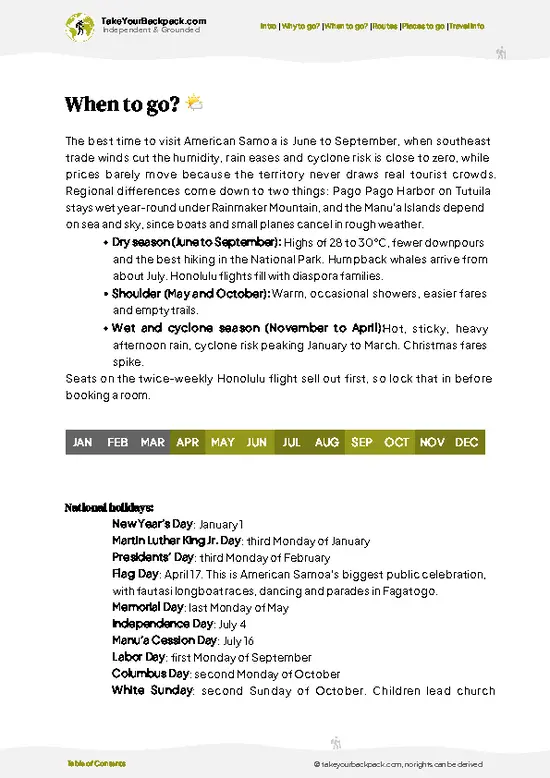
🌤️ When to go?When to go for the best experience

  • Dry Season (May to October): The most comfortable window for walking the island loop. Days run 27 to 30°C (81 to 86°F), trade winds keep the Pala Lake crater trail breezy, and mud on the track is manageable. Daylight lasts roughly 11 to 12.5 hours, with sunset around 6 pm.
  • Wet Season (November to April): Heavier showers turn the lake trail and the path to Aunu’u’s south coast into slick clay, and the humidity sits near 80 percent. Temperatures stay at 27 to 32°C (81 to 90°F). Cyclone risk peaks from December to March, and the Au’asi to Aunu’u boat can be canceled when seas build.
  • Crowds and Prices: Aunu’u sees few visitors in any month, so you will rarely share the trail. Boat fares and guesthouse rates in American Samoa barely move with the season.
  • Festival Timing: Flag Day in April brings celebrations
… read more 👉
  • Dry Season (May to October): The most comfortable window for walking the island loop. Days run 27 to 30°C (81 to 86°F), trade winds keep the Pala Lake crater trail breezy, and mud on the track is manageable. Daylight lasts roughly 11 to 12.5 hours, with sunset around 6 pm.
  • Wet Season (November to April): Heavier showers turn the lake trail and the path to Aunu’u’s south coast into slick clay, and the humidity sits near 80 percent. Temperatures stay at 27 to 32°C (81 to 90°F). Cyclone risk peaks from December to March, and the Au’asi to Aunu’u boat can be canceled when seas build.
  • Crowds and Prices: Aunu’u sees few visitors in any month, so you will rarely share the trail. Boat fares and guesthouse rates in American Samoa barely move with the season.
  • Festival Timing: Flag Day in April brings celebrations on Tutuila, and the island’s church-centered Sundays are quiet year-round.
Go early on a weekday morning so you catch the boat out and the cooler hours for the loop, then plan to be back at the landing before the afternoon return runs end.


source: climatestotravel.comJANJanuary: fair for travelingFEBFebruary: fair for travelingMARMarch: fair for travelingAPRApril: fair for travelingMAYMay: highly recommended for travelingJUNJune: excellent for travelingJULJuly: highly recommended for travelingAUGAugust: highly recommended for travelingSEPSeptember: highly recommended for travelingOCTOctober: highly recommended for travelingNOVNovember: fair for travelingDECDecember: fair for traveling
american-samoa-national-park-aunuu-island-national-natural-landmark
© Google |

✈️ The backpacker research shortcutAmerican Samoa Travel Guide

An offline-friendly backpacking guide with optimized travel routes, ranked highlights, transport advice, and the best areas to stay.
example page 0 from our offline Travel Guide for American Samoa
example page 1 from our offline Travel Guide for American Samoa
example page 2 from our offline Travel Guide for American Samoa
example page 3 from our offline Travel Guide for American Samoa
example page 4 from our offline Travel Guide for American Samoa
example page 5 from our offline Travel Guide for American Samoa
example page 6 from our offline Travel Guide for American Samoa
example page 7 from our offline Travel Guide for American Samoa
The digital guide (141 pages) contains:
✅ 36 highlights, ranked by travel appeal
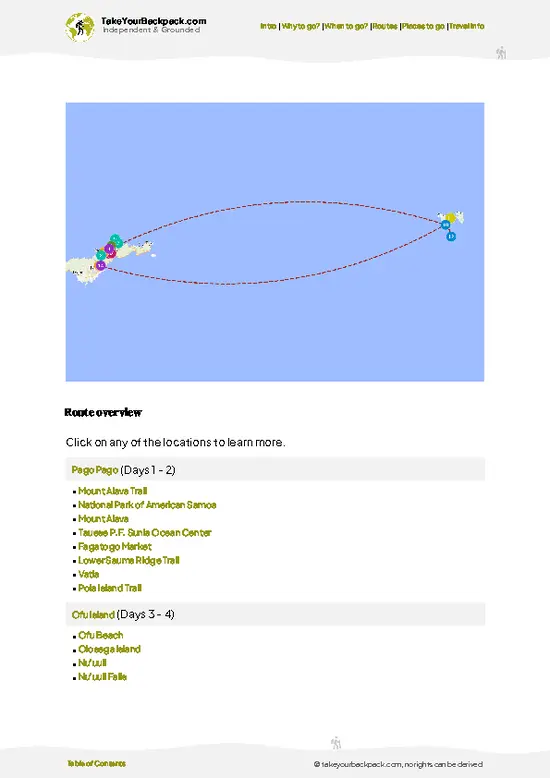
✅ Optimized 2, 3 & 5-day travel routes
✅ Cities, national parks, landmarks, beaches
✅ How to get around
✅ Offline-friendly for travel without Wi-Fi
👉 Click to see all 30+ guide features

📅 Plan smarter in minutes, not weeks
✅ Month by month travel advice
✅ Festivals & national holidays
✅ Budget expectations

🗺️ Go to the right places, skip the overrated ones
✅ Honest pros & cons of destinations
✅ Top hikes, parks & viewpoints
✅ Lesser-known places most travelers miss
✅ Clear “worth it vs skip it” guidance

🛏️ Travel smoothly without rookie mistakes
✅ Best areas to stay
✅ Transport systems explained simply
✅ Common scams & safety advice
✅ SIM cards, money & practical tips

🌍 Understand the country, not just visit it
✅ Culture & traditions
✅ 52 Essential phrases & customs
✅ Festivals worth planning around
✅ Traveler-friendly historical context
✅ Insights that make places more meaningful

📱 Built for real travel conditions
✅ Fully downloadable PDF
✅ Works completely offline
✅ Optimized for phone use
✅ Useful in remote areas & buses
✅ Everything in one place
Stop searching, start planning
Get instant access to your full guide. 30‑day money-back guarantee.
+ Add another guide for just

By proceeding you agree to our terms.
Sent to your inbox immediately after payment • 100% Secure Checkout
Best Backpacking Travel Advisor 2025 tourism awardBest Backpacking
Travel Advisor
2025
What others say about Take Your Backpack Guides:
⭐⭐⭐⭐⭐
Fantastic, amazing amount of information!
⭐⭐⭐⭐⭐
My goodness this is amazing, it's what I've been looking for hats off too you!
⭐⭐⭐⭐⭐
I think this is absolutely BRILLIANT
⭐⭐⭐⭐
Very complete and informative. It's still missing places, but I gotta to commend you
⭐⭐⭐⭐⭐
This is truly amazing, thank you, can't wait to explore it with my kids!
⭐⭐⭐⭐⭐
Awesome resource, thank you!
⭐⭐⭐⭐⭐
This is amazing! Can't wait to explore the ones I haven't seen
⭐⭐⭐⭐
I love this! Well done, great idea.
⭐⭐⭐⭐⭐
Thanks for taking the time to make this gem!
⭐⭐⭐⭐⭐
This might be the best website I've ever seen.
⭐⭐⭐⭐⭐
Congratulations, and thank you so much for your work; it's incredibly valuable.
⭐⭐⭐⭐
In all seriousness I think you did a great job pointing out the important spots
⭐⭐⭐⭐⭐
10/10 very good
⭐⭐⭐⭐⭐
As someone who's only just starting to visit regularly this is awesome, thank you.
⭐⭐⭐⭐
Thank you very much! I'm going to visit my dad, it's going to be very useful!
⭐⭐⭐⭐⭐
This is really cool! We'll be travelling for the first time and this definitely come in handy.
⭐⭐⭐⭐⭐
You are now our minister of culture, congratulations 👨‍💼
⭐⭐⭐⭐⭐
Just wanted to tell you that this is a pearl! Going to follow your recommendations.
⭐⭐⭐⭐⭐
This is so cool. I'll definitely be using the resource for my travels soon.
⭐⭐⭐⭐⭐
This is very impressive! Good work.
⭐⭐⭐⭐⭐
This is an amazing and informative site. Very well done!

🛏️ Where to stay?Best areas and accommodation options

Nobody sleeps inside the reserve, and Aunu’u has no hotels or hostels, so the practical base is the main island of Tutuila, a short boat hop away. The village of Aunu’u itself is small and run by families, and overnight stays are only possible if you arrange a home stay through a local contact. That is rare, so most visitors treat the island as a day trip.
The boat leaves from Au’asi on Tutuila’s southeast coast. Staying near the east side makes the morning crossing easy. Options around Pago Pago Harbor and Utulei have the widest choice, with US$90 to 150 a night for simple hotels and motels, and … read more 👉
Nobody sleeps inside the reserve, and Aunu’u has no hotels or hostels, so the practical base is the main island of Tutuila, a short boat hop away. The village of Aunu’u itself is small and run by families, and overnight stays are only possible if you arrange a home stay through a local contact. That is rare, so most visitors treat the island as a day trip.
The boat leaves from Au’asi on Tutuila’s southeast coast. Staying near the east side makes the morning crossing easy. Options around Pago Pago Harbor and Utulei have the widest choice, with US$90 to 150 a night for simple hotels and motels, and the area has shops, restaurants and the bus hub. Tafuna sits near the airport and suit late arrivals or early departures, usually US$100 to 180 a night.
American Samoa has no proper hostel scene and very few campsites, and camping on Aunu’u is not something to count on. Book ahead if you want somewhere near Au’asi, since rooms are limited. The island loop takes a few hours, so a base on Tutuila works fine, and the local buses (aiga) run from Pago Pago toward the east end.

👛 Costs (as of 15 October 2026)Typical daily expenses

A day trip to Aunu’u Island Natural Reserve costs roughly US$66 to 138 per person, mostly for getting to Tutuila, a boat ride and a room on the main island.
CategoryBudget RangeLocal Reality
Entrance and Village FeeUS$0 to 10The reserve has no formal gate; villagers may ask for a small donation or guide fee.
Accommodation (high season)US$50 to 90Basic motel or guesthouse rooms on Tutuila, with few cheaper options.
Boat to Aunu’uUS$4 to 10Round trip from Au’asi, with limited departures, so check times.
Local TransportUS$2 to 8Aiga buses between Pago Pago and the east side cost about US$1 to 2 each way.
Food and SuppliesUS$10 to 20Take lunch and water from Tutuila, as Aunu’u has only a couple of small shops.
Total Daily BudgetUS$66 to 138Higher if you rent a car on Tutuila for flexibility.
⚠️ Prices can change and everyone travels differently, so take this as a rough guide. Hope it helps you plan your adventure!

🥾 TrailsScenic routes and wildlife spotting in Aunu’u Island National Natural Landmark

Aunu’u has no formally signed trail network, so the walks people do follow village roads and footpaths across a small, mostly flat island. Terrain is easy: concrete lanes, grassy tracks, lava rock along the shore and soft, wet ground near the marsh. Most visitors finish a full loop in about half a day, longer if you linger at the shore.
  • Village loop: Start at the landing and follow the main lane through homes, churches and gardens. Flat, easy, shady in patches, and the best place to meet residents.
  • Pala Lake approach: Walk just north of the village and view the reddish marsh from solid ground. Easy
… read more 👉
Aunu’u has no formally signed trail network, so the walks people do follow village roads and footpaths across a small, mostly flat island. Terrain is easy: concrete lanes, grassy tracks, lava rock along the shore and soft, wet ground near the marsh. Most visitors finish a full loop in about half a day, longer if you linger at the shore.
  • Village loop: Start at the landing and follow the main lane through homes, churches and gardens. Flat, easy, shady in patches, and the best place to meet residents.
  • Pala Lake approach: Walk just north of the village and view the reddish marsh from solid ground. Easy distance, but the footing gets muddy and the quicksand is a real hazard, so keep to the edge.
  • Crater rim and bush tracks: Gentle climbs through palms and breadfruit give you views over the marsh and out to sea. Easy to moderate, mainly because of heat and humidity.
  • Coastal walk to Ma’ama’a Cove: Follow paths to the rocky shore, where lava platforms, tide pools and surf make the walking more uneven. Wear closed shoes, since the rock is sharp and wet.
  • Wildlife: Seabirds along the cliffs, fruit bats near fruiting trees, and reef fish in calm tide pools. Mornings and late afternoons are best.
Getting there is straightforward but not scheduled like a bus. Public buses and taxis on Tutuila run to Au’asi, and small boats then cross the channel. Ask about the return trip when you board, and don’t cut it close, because the last boat leaves in the afternoon. The island is quiet most days, with very few visitors, and you may have a trail to yourself. Carry water, sun protection and snacks since services are minimal. Entrance arrangements are informal and tied to the village, so ask politely about any local custom or small contribution, and respect any areas the village asks you to avoid.
⚠️ Hiking info can sometimes be outdated or inaccurate. Before you hit the trail, check the latest conditions with locals. If you do spot anything that's off, I'd love to hear from you, so I can update it for fellow travelers.

🛡️ SafetyStaying Safe: What Travelers Should Know

Aunu’u is a gentle, short walk with a few real quirks. The loop is flat to gently rolling, but the crater trail and the paths to the south coast turn to slippery clay after rain, so wear shoes with grip rather than flip-flops. The sun is the biggest everyday hazard. Carry at least 2 liters of water, since there is little shade on the open stretches, and put on reef-safe sunscreen before you land.
The quicksand at Pala Lake and the soft marsh around Red Lake in the crater are best admired from the path. Stay on marked tracks and do not wade in the lake margins.
The crossing is short but the channel can be rough. Check with the boat operator that runs are going before you leave Tutuila, and confirm the last return. Ask permission in the village before wandering off the main trail or taking photos … read more 👉
Aunu’u is a gentle, short walk with a few real quirks. The loop is flat to gently rolling, but the crater trail and the paths to the south coast turn to slippery clay after rain, so wear shoes with grip rather than flip-flops. The sun is the biggest everyday hazard. Carry at least 2 liters of water, since there is little shade on the open stretches, and put on reef-safe sunscreen before you land.
The quicksand at Pala Lake and the soft marsh around Red Lake in the crater are best admired from the path. Stay on marked tracks and do not wade in the lake margins.
The crossing is short but the channel can be rough. Check with the boat operator that runs are going before you leave Tutuila, and confirm the last return. Ask permission in the village before wandering off the main trail or taking photos near homes, and expect Sunday quiet hours. Loose dogs are common but generally uninterested in hikers. Cell signal is patchy.

FAQFrequently asked questions about Aunu’u Island National Natural Landmark

One day is enough for Aunu’u. The loop around the island, including Pala Lake and the south coast, takes about 3 to 4 hours at an easy pace, and the boat from Au’asi crosses in roughly 10 minutes. Add a second day if you also want to see the sights of Tutuila, such as Pago Pago Harbor.
Yes, though it takes planning. Aiga buses run from Pago Pago toward Au’asi on the east side, taking around 45 minutes to an hour, and the passenger boat crosses to Aunu’u in about 10 minutes. Buses run less on Sundays and thin out in the afternoon, so aim to catch the boat early.
There is no official park gate or national permit for the Aunu’u reserve. The island is village land, so a small fee or donation of about US$5 to 10 may be requested, and you should ask permission in the village before leaving the main track. Boat fares are separate and typically cost a few dollars round trip.
⚠️ Things can change over time, so always validate details locally before you go.

Other American Samoan national parks near Aunu’u Island National Natural Landmark

Explore more nearby:


💡 Not sure where to go next?
Create a personalized itinerary for American Samoa including Aunu’u Island National Natural Landmark and the places that fit your trip.

Generate my itinerary

👉 Discover all national parks

Or checkout all American Samoa has to offer (think cities, towns, villages, national parks, hikes, beaches, festivals)
Country photo of American Samoa

We 💚 feedbackKey takeaways before you go

Most first-timers rush to the marsh and treat the village as a hallway. I’d slow down in the lanes, because Aunu’u is a living community with its own rhythm, and a friendly greeting opens more doors than any map. Bring a hat, sturdy shoes and a small bag of snacks to share, and plan to leave before the afternoon light fades.

✍️ Help improve this page!
The information on this page is based on in-depth research, insights shared by experienced travelers, and feedback from the local travel community in American Samoa. While every effort is made to keep the information accurate and current, conditions can change — so if you spot anything incorrect or outdated, please get in touch.


🙋‍♂️ Give feedback

👋 Meet the founderWho’s Behind Take Your Backpack?

Johan, backpacker and founder of TakeYourBackpackHi, I’m Johan (Netherlands 🇳🇱), the creator of TakeYourBackpack. Over the past 3 decades, I’ve backpacked through 90+ countries across six continents, gaining extensive experience with independent travel, long-term trips, and overland routes.

This site is built on a combination of firsthand travel experience and carefully curated insights from other backpackers. Many guides are based on places I’ve personally visited, while others bring together tips, observations, and practical advice shared by trusted travelers I’ve met along the way.

The goal is to provide realistic, experience-driven guidance — not generic itineraries — so you can explore destinations with better context, clearer expectations, and more confidence.