×

American Samoa🇦🇸 | villagesFagatogoferry terminal, colonial-era buildings, civic square | things to do and best time to go

Explore VatiaExplore Jean P. Haydon Museum

Backpacking in Fagatogo
🌟 Highlightvillage ranked #3
By Johan Kruseman 🇳🇱 | Updated July 30, 2026

Your shirt sticks to your back as you step off the bus in Fagatogo, the air thick with sea salt, fried fish, and faint diesel from the harbor. A church bell rings somewhere uphill, and over it you hear the slap of water against the hulls of cargo ships and the chatter from the market stalls just across the road. This is Fagatogo, the harbor-side heart of Tutuila Island in American Samoa, wedged between the bay and the steep green ridge behind Pago Pago.

For backpackers, Fagatogo is more working port than postcard town, but that’s exactly why it works. It’s the practical base: buses fan out along the coast, the market keeps you fed on cheap taro, bananas, and plate lunches, and you can walk the waterfront in minutes. It’s quieter and more lived-in than nearby Pago Pago proper, with fewer obvious “sights” but easier access to real daily life. Nights are slow, social life is low-key and local, and you won’t trip over other backpackers, which keeps costs reasonable but means you make your own fun. As a launchpad for day trips into the national park or coastal villages, it’s useful, safe-feeling, and unpolished in a way that makes every hike and beach beyond it feel like a reward.

Discover everything you want to know in the 📖 American Samoa Travel Guide.
Loading the map 🌍
CLICK TO FILTER
towns
villages
landmarks
national parks
hikes
beaches
attractions
festivals
regions
SHOW COUNTRY’S BESTSHOW ALL

✨ Why go?
Ranked #3 village in American Samoa
Reasons people choose to visit here

Fagatogo, the capital of American Samoa, serves as a gateway for backpackers seeking both adventure and cultural immersion. Its walkable streets make it easy to navigate, allowing you to pop into local markets or grab a bite of fresh poke from a roadside stand. The town is a launchpad for nearby hikes like the stunning Mount Alava, where the views reward your effort with a panorama of lush green hills and the ocean’s blue expanse.

Accommodations here lean toward small-scale hostels and guesthouses, fostering a friendly social atmosphere. You’ll find fellow travelers sharing stories over a communal meal, making it ideal for solo travelers or those in small groups. Most backpackers tend to stay a few days, soaking in the local culture and enjoying the laid-back vibe.

While Fagatogo isn’t … read more 👉
Fagatogo, the capital of American Samoa, serves as a gateway for backpackers seeking both adventure and cultural immersion. Its walkable streets make it easy to navigate, allowing you to pop into local markets or grab a bite of fresh poke from a roadside stand. The town is a launchpad for nearby hikes like the stunning Mount Alava, where the views reward your effort with a panorama of lush green hills and the ocean’s blue expanse.

Accommodations here lean toward small-scale hostels and guesthouses, fostering a friendly social atmosphere. You’ll find fellow travelers sharing stories over a communal meal, making it ideal for solo travelers or those in small groups. Most backpackers tend to stay a few days, soaking in the local culture and enjoying the laid-back vibe.

While Fagatogo isn’t a nightlife hub, its charm lies in the authentic experiences—like visiting the local cultural center or enjoying a quiet evening by the harbor. If you’re a slow traveler or a hiker, this town offers a perfect balance of convenience and connection, making it a worthwhile stop on your journey through the South Pacific.
Want to include Fagatogo in your American Samoa route?
Create a personalized American Samoa itinerary that includes Fagatogo and the places that fit your trip — based on your travel style, budget, and available time. Get your route in seconds.

Generate my trip

💡 HighlightsPlaces and moments you shouldn't skip

  • Jean P. Haydon Museum — The best spot to get local context: artifacts, photos and exhibits on Samoan culture, colonial history and WWII in American Samoa. Small but well-curated; a must for understanding what you’re looking at around town.
  • Fagatogo Market (waterfront market) — Bustling, colorful, and where locals buy and sell fish, produce and handicrafts. Great for people-watching, grabbing fresh fruit or a quick snack and seeing everyday island life up close.
  • Pago Pago Harbor / Fagatogo Wharf — The working heart of the village: fishing boats, freighters and cruise tenders come in here. Walk the waterfront for dramatic harbor views across to Rainmaker Mountain and to watch the comings and goings.
  • Government House (historic governor’s residence) — A compact piece of local political history
read more 👉
  • Jean P. Haydon Museum — The best spot to get local context: artifacts, photos and exhibits on Samoan culture, colonial history and WWII in American Samoa. Small but well-curated; a must for understanding what you’re looking at around town.
  • Fagatogo Market (waterfront market) — Bustling, colorful, and where locals buy and sell fish, produce and handicrafts. Great for people-watching, grabbing fresh fruit or a quick snack and seeing everyday island life up close.
  • Pago Pago Harbor / Fagatogo Wharf — The working heart of the village: fishing boats, freighters and cruise tenders come in here. Walk the waterfront for dramatic harbor views across to Rainmaker Mountain and to watch the comings and goings.
  • Government House (historic governor’s residence) — A compact piece of local political history on the waterfront. You can view the grounds and exterior architecture and feel the layers of territorial history even if interior access is limited.
  • The Fono (territorial legislature complex) — The center of locally-made government. Visiting the exterior and nearby plazas gives a sense of Samoan political life and local ceremony—especially interesting when the legislature is in session.
  • Fagatogo Wharf / Inter-island Ferry Terminal — More than a transport hub: the terminal is the gateway to nearby islands and a good place to watch ferry operations, talk to crew, and plan day trips to places like Aunuʻu.
  • Historic courthouse and legal district — The cluster of judicial and administrative buildings in Fagatogo tells the story of colonial administration and local law. The architecture and public records displays give a grounded, real-world feel for territorial governance.
  • Harborfront viewpoints and picnic spots — Simple, visitable grassy edges and low seawalls along the harbor are perfect for watching sunsets, fishermen sorting the day’s catch, and seeing Pago Pago’s dramatic topography without leaving town.
  • Local churches and Sunday services — Attending a Sunday service is one of the most authentic cultural experiences you can have in Fagatogo: powerful singing, community spirit, and an immediate sense of Samoan life and values.
  • Small craft and souvenir stalls near the waterfront — Family-run stalls where you can buy tapa, woven goods and small carvings. They’re low-key, hands-on places to learn about materials and techniques directly from makers.
Nearby day-trip highlights include Mount ’Alava and the National Park trails (for panoramic views of Pago Pago Harbor), the tiny island of Aunuʻu a short boat ride away, and Fagatele Bay (part of the National Park) for a longer nature-and-snorkel outing.
Spotted a mistake or missing something? Contact us.

⌛️ 1 day1-day itinerary for Fagatogo

Fagatogo, the capital of American Samoa, pulses with a unique blend of Polynesian culture and vibrant local life. The air is thick with the scent of salt and tropical blooms, and the sound of waves crashing against the shore creates a soothing backdrop. This town is not just a stopover; it’s a living canvas of history, art, and community.

Start your day at the Fagatogo Market, where the morning sun filters through the colorful awnings. Vendors sell fresh fruit, local crafts, and traditional dishes. Grab a plate of taro and a cup of strong Samoan coffee. The flavors are bold, and the atmosphere is electric with chatter and laughter. This is where you’ll feel the heart of the community.

After fueling up, stroll along the waterfront to the Jean P. Haydon Museum. It’s often overlooked by tourists, … read more 👉
Fagatogo, the capital of American Samoa, pulses with a unique blend of Polynesian culture and vibrant local life. The air is thick with the scent of salt and tropical blooms, and the sound of waves crashing against the shore creates a soothing backdrop. This town is not just a stopover; it’s a living canvas of history, art, and community.

Start your day at the Fagatogo Market, where the morning sun filters through the colorful awnings. Vendors sell fresh fruit, local crafts, and traditional dishes. Grab a plate of taro and a cup of strong Samoan coffee. The flavors are bold, and the atmosphere is electric with chatter and laughter. This is where you’ll feel the heart of the community.

After fueling up, stroll along the waterfront to the Jean P. Haydon Museum. It’s often overlooked by tourists, but it offers a deep dive into Samoan history and culture. The exhibits are intimate, showcasing artifacts that tell stories of the islands’ past. You’ll leave with a richer understanding of the people and their traditions.

As the sun climbs higher, head to the nearby village of Pago Pago. The scenic drive is a treat, with lush mountains framing the road. Stop at the National Park of American Samoa for a hike. The trails here lead you through dense rainforest, where the air is cool and the sounds of nature surround you. The views from the top are worth every step.

As evening approaches, return to Fagatogo and find a spot at the waterfront for dinner. Try a local eatery like the Tisa’s Barefoot Bar, where you can savor fresh fish while watching the sunset paint the sky in hues of orange and pink. The laid-back vibe is infectious, and you’ll find yourself chatting with locals who share stories and laughter.

Your day in Fagatogo will leave you with a sense of connection to this vibrant community, making every moment feel like a meaningful part of your journey.
Turn your Fagatogo visit into an American Samoa adventure
Build a complete American Samoa route with Fagatogo, hidden gems, must-see destinations, and realistic travel times included.

Generate my trip

🌤️ When to go?Choosing the right time of year


  • Topic: Weather — Fagatogo’s tropical climate means it’s warm year-round, but the dry season from May to September offers clearer skies and less humidity. Expect highs around 29-31°C (84-88°F), making hiking and exploring more comfortable without the constant threat of sudden downpours.

  • Topic: Temperature — Temperatures hover between 24°C (75°F) at night and peak near 31°C (88°F) during the day. The dry season slightly cools the evenings, which can feel like a refreshing break after a sun-soaked day.

  • Topic: Daylight Hours — Near the equator, daylight stays steady year-round, roughly 12 hours of light. This consistency means you can plan your days without worrying about early sunsets cutting your adventures short.

  • Topic: Crowds — Tourist traffic peaks during the dry season, especially
read more 👉

  • Topic: Weather — Fagatogo’s tropical climate means it’s warm year-round, but the dry season from May to September offers clearer skies and less humidity. Expect highs around 29-31°C (84-88°F), making hiking and exploring more comfortable without the constant threat of sudden downpours.

  • Topic: Temperature — Temperatures hover between 24°C (75°F) at night and peak near 31°C (88°F) during the day. The dry season slightly cools the evenings, which can feel like a refreshing break after a sun-soaked day.

  • Topic: Daylight Hours — Near the equator, daylight stays steady year-round, roughly 12 hours of light. This consistency means you can plan your days without worrying about early sunsets cutting your adventures short.

  • Topic: Crowds — Tourist traffic peaks during the dry season, especially July and August, when locals and visitors alike flock to festivals and beaches. Visiting just before or after this window means fewer people and a more relaxed vibe.

  • Topic: Seasonal Activities — The dry months coincide with cultural events like the Flag Day celebrations in April and the annual boat races, offering a chance to dive into local traditions without the soggy interruptions of the wet season.

  • Topic: Price Fluctuations — Accommodation and flights tend to be pricier during the dry season’s peak months. Booking early or aiming for shoulder months like May or September can save you money without sacrificing the good weather.


Pro-tip: Time your visit for late April to early June to catch cultural events, enjoy manageable crowds, and experience the best weather balance—where the air smells fresher, and every sunset feels like a reward earned.


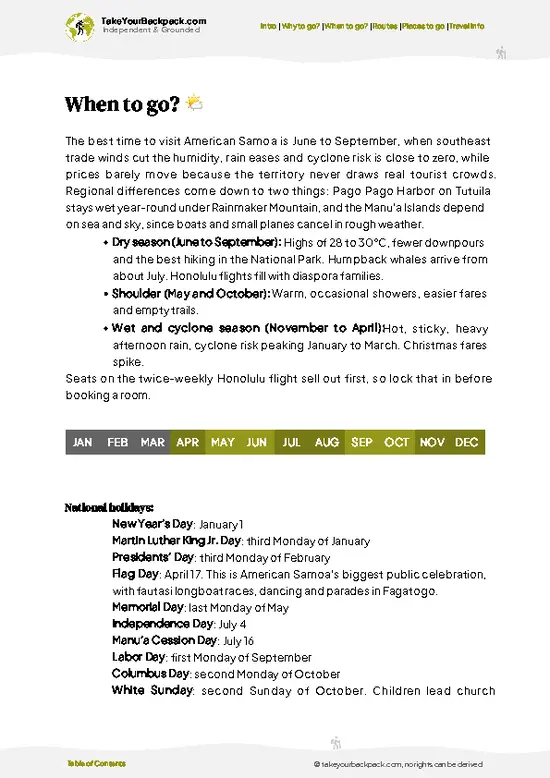
source: climatestotravel.comJANJanuary: fair for travelingFEBFebruary: fair for travelingMARMarch: fair for travelingAPRApril: highly recommended for travelingMAYMay: excellent for travelingJUNJune: excellent for travelingJULJuly: highly recommended for travelingAUGAugust: highly recommended for travelingSEPSeptember: excellent for travelingOCTOctober: good for travelingNOVNovember: fair for travelingDECDecember: fair for traveling
when-to-go

✈️ The backpacker research shortcutAmerican Samoa Travel Guide

An offline-friendly backpacking guide with optimized travel routes, ranked highlights, transport advice, and the best areas to stay.
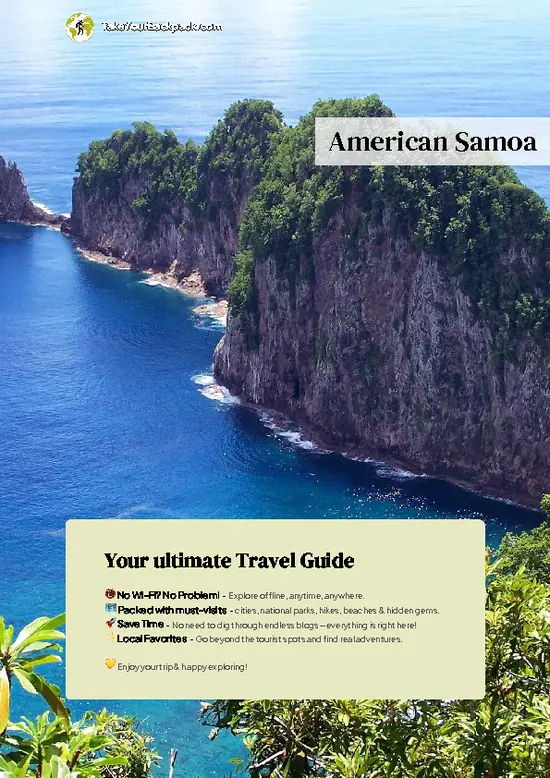
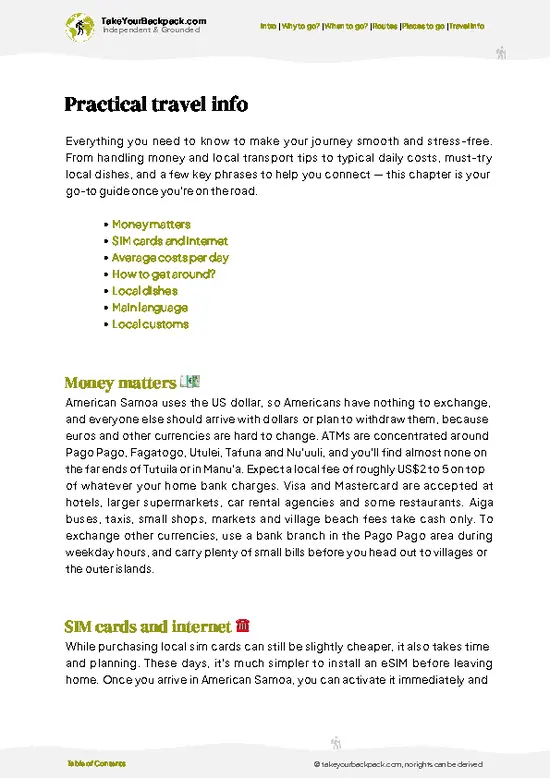
example page 0 from our offline Travel Guide for American Samoa
example page 1 from our offline Travel Guide for American Samoa
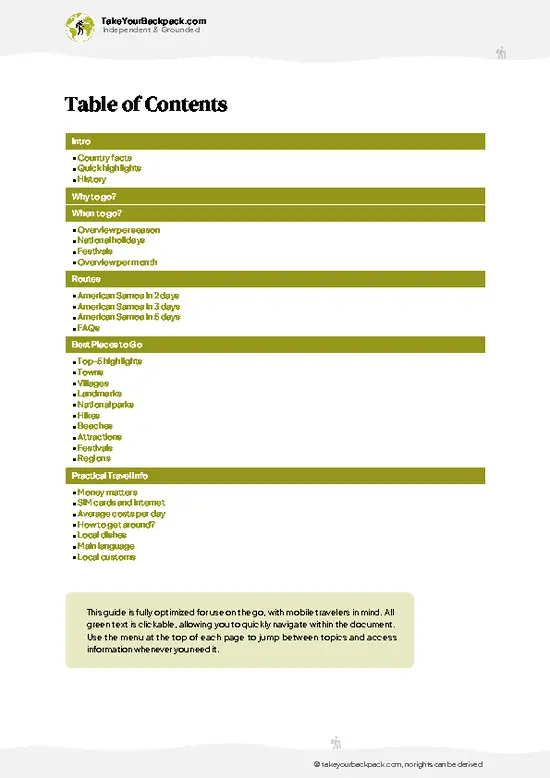
example page 2 from our offline Travel Guide for American Samoa
example page 3 from our offline Travel Guide for American Samoa
example page 4 from our offline Travel Guide for American Samoa
example page 5 from our offline Travel Guide for American Samoa
example page 6 from our offline Travel Guide for American Samoa
example page 7 from our offline Travel Guide for American Samoa
The digital guide (161 pages) contains:
37 highlights, ranked by travel appeal
Optimized 2, 3 & 5-day travel routes
Cities, national parks, landmarks, beaches
How to get around
Offline-friendly for travel without Wi-Fi
👉 Click to see all 30+ guide features

📅 Plan smarter in minutes, not weeks
Month by month travel advice
Festivals & national holidays
Budget expectations

🗺️ Go to the right places, skip the overrated ones
Honest pros & cons of destinations
Top hikes, parks & viewpoints
Lesser-known places most travelers miss
Clear “worth it vs skip it” guidance

🛏️ Travel smoothly without rookie mistakes
Best areas to stay
Transport systems explained simply
Common scams & safety advice
SIM cards, money & practical tips

🌍 Understand the country, not just visit it
Culture & traditions
52 Essential phrases & customs
Festivals worth planning around
Traveler-friendly historical context
Insights that make places more meaningful

📱 Built for real travel conditions
Fully downloadable PDF
Works completely offline
Optimized for phone use
Useful in remote areas & buses
Everything in one place
Save weeks of stressful planning
Get instant access to your full guide. 30‑day money-back guarantee.
+ Add another guide for just US$7.80

By proceeding you agree to our terms.
Sent to your inbox immediately after payment • 100% Secure Checkout
Best Backpacking Travel Advisor 2025 tourism awardBest Backpacking
Travel Advisor
2025
What others say about Take Your Backpack Guides:
⭐⭐⭐⭐⭐
Fantastic, amazing amount of information!
⭐⭐⭐⭐⭐
My goodness this is amazing, it's what I've been looking for hats off too you!
⭐⭐⭐⭐⭐
I think this is absolutely BRILLIANT
⭐⭐⭐⭐
Very complete and informative. It's still missing places, but I gotta to commend you
⭐⭐⭐⭐⭐
This is truly amazing, thank you, can't wait to explore it with my kids!
⭐⭐⭐⭐⭐
Awesome resource, thank you!
⭐⭐⭐⭐⭐
This is amazing! Can't wait to explore the ones I haven't seen
⭐⭐⭐⭐
I love this! Well done, great idea.
⭐⭐⭐⭐⭐
Thanks for taking the time to make this gem!
⭐⭐⭐⭐⭐
This might be the best website I've ever seen.
⭐⭐⭐⭐⭐
Congratulations, and thank you so much for your work; it's incredibly valuable.
⭐⭐⭐⭐
In all seriousness I think you did a great job pointing out the important spots
⭐⭐⭐⭐⭐
10/10 very good
⭐⭐⭐⭐⭐
As someone who's only just starting to visit regularly this is awesome, thank you.
⭐⭐⭐⭐
Thank you very much! I'm going to visit my dad, it's going to be very useful!
⭐⭐⭐⭐⭐
This is really cool! We'll be travelling for the first time and this definitely come in handy.
⭐⭐⭐⭐⭐
You are now our minister of culture, congratulations 👨‍💼
⭐⭐⭐⭐⭐
Just wanted to tell you that this is a pearl! Going to follow your recommendations.
⭐⭐⭐⭐⭐
This is so cool. I'll definitely be using the resource for my travels soon.
⭐⭐⭐⭐⭐
This is very impressive! Good work.
⭐⭐⭐⭐⭐
This is an amazing and informative site. Very well done!

🛏️ Where to stay?How to pick the right area

Fagatogo is the beating heart of American Samoa, and for backpackers, it’s where the pulse of island life is most accessible without the tourist gloss. The best area to stay is right around the waterfront and the nearby town center. This zone hums with local energy—fishermen unloading their catch, vendors setting up stalls, and the scent of salty ocean mixed with grilled fish hanging in the air. It’s safe, thanks to the close-knit community, and the streets stay lively well into the evening, which means you’re never far from a friendly face or a spontaneous conversation.

Compared to the quieter … read more 👉
Fagatogo is the beating heart of American Samoa, and for backpackers, it’s where the pulse of island life is most accessible without the tourist gloss. The best area to stay is right around the waterfront and the nearby town center. This zone hums with local energy—fishermen unloading their catch, vendors setting up stalls, and the scent of salty ocean mixed with grilled fish hanging in the air. It’s safe, thanks to the close-knit community, and the streets stay lively well into the evening, which means you’re never far from a friendly face or a spontaneous conversation.

Compared to the quieter residential neighborhoods that stretch inland, this waterfront strip offers a social vibe that’s crucial for solo travelers craving connection. Hostels and budget guesthouses cluster here, making it easy to meet other backpackers without feeling isolated. The light here is soft and warm, especially at sunset, casting a golden glow over the harbor that invites you to linger outside rather than retreat early.

Staying a bit further from this hub means losing that immediate access to local markets and communal spaces where island stories unfold naturally. Plus, the walkable layout means you can explore on foot, soaking in the mix of traditional Samoan architecture and the occasional colonial relic, all while keeping your budget intact. This area isn’t just a place to crash—it’s where the real Fagatogo experience begins.

🚌 Getting aroundHow to get around Fagatogo

Fagatogo moves at the pace of the tide—steady, deliberate, and shaped by the rhythms of the sea and sun rather than strict timetables. The air carries a salty tang mixed with the faint aroma of fresh bread from the local bakery, and the streets hum with a casual energy that’s more about connection than rush. Here, you don’t just get from point A to B; you slide into the flow of daily life, where a missed bus isn’t a disaster but an invitation to linger, chat, and soak in the island’s pulse. Understanding this flow is your key to unlocking Fagatogo’s charm without frustration.


  • Walking: The heart of Fagatogo is compact and best explored on foot. Sidewalks are uneven but shaded by coconut palms, and every turn reveals a new scent or sound—from the sizzle of street food to the chatter of fishermen.
read more 👉
Fagatogo moves at the pace of the tide—steady, deliberate, and shaped by the rhythms of the sea and sun rather than strict timetables. The air carries a salty tang mixed with the faint aroma of fresh bread from the local bakery, and the streets hum with a casual energy that’s more about connection than rush. Here, you don’t just get from point A to B; you slide into the flow of daily life, where a missed bus isn’t a disaster but an invitation to linger, chat, and soak in the island’s pulse. Understanding this flow is your key to unlocking Fagatogo’s charm without frustration.


  • Walking: The heart of Fagatogo is compact and best explored on foot. Sidewalks are uneven but shaded by coconut palms, and every turn reveals a new scent or sound—from the sizzle of street food to the chatter of fishermen. Walking costs nothing and lets you absorb the town’s texture at your own pace, making it the most authentic and budget-friendly way to get around.


  • Local Bus (Public Transit): Buses run roughly from 6:00 AM to 6:00 PM, with fares around $1–$2. They’re slow but reliable, weaving through the town’s narrow streets and connecting Fagatogo to nearby villages. Expect a casual schedule—buses often wait to fill up before leaving, so patience is your best companion. This option is perfect if you want to stretch your legs but still cover more ground than walking.


  • Shared Taxis: These operate on a flexible route system, leaving when full rather than on a fixed timetable. Fares hover around $3–$5 depending on distance. Shared taxis offer a faster, more direct ride than buses but require a bit of local savvy to flag down and negotiate. They’re ideal for budget travelers who want to save time without splurging on private rides.


  • Bicycle Rentals: Renting a bike costs about $10 per day and is a fantastic way to explore beyond the town center. The roads are mostly flat but can be rough, so a sturdy bike is essential. Cycling lets you chase the light as it shifts over the harbor and dive into quieter corners where buses don’t go. It’s a bit of effort, but the payoff is freedom and fresh ocean air on your face.


  • Ferry Services: For trips to nearby islands or the main island’s other towns, ferries run on a loose schedule, often departing mid-morning and mid-afternoon. Tickets cost $5–$10. The boats are basic but offer a refreshing breeze and panoramic views that no road trip can match. Timing your day around the ferry’s departure is crucial—arrive early to secure a spot and enjoy the slow, scenic ride.

👛 Costs (as of 30 July 2026)Typical daily expenses

Backpacking in Fagatogo, American Samoa, means balancing the island’s remote charm with its relatively high cost of living. Here’s what you can expect to spend day-to-day as an independent traveler.
  • Dorm Accommodation: Options are limited and basic, often in guesthouses or small inns rather than hostels. Expect to pay around $25 to $40 USD per night for a shared room. The rooms are simple, sometimes with just a fan and a shared bathroom, but clean and close to the waterfront.
  • Meals: Food costs lean toward the higher side due to import reliance. Local eateries serve up hearty plates of fresh fish, taro, and coconut-based dishes for about $8 to $15 per meal. If you shop at small markets and prepare your own food, you might bring daily food costs down to around $10 to $20.
  • Local Transport:
read more 👉
Backpacking in Fagatogo, American Samoa, means balancing the island’s remote charm with its relatively high cost of living. Here’s what you can expect to spend day-to-day as an independent traveler.
  • Dorm Accommodation: Options are limited and basic, often in guesthouses or small inns rather than hostels. Expect to pay around $25 to $40 USD per night for a shared room. The rooms are simple, sometimes with just a fan and a shared bathroom, but clean and close to the waterfront.
  • Meals: Food costs lean toward the higher side due to import reliance. Local eateries serve up hearty plates of fresh fish, taro, and coconut-based dishes for about $8 to $15 per meal. If you shop at small markets and prepare your own food, you might bring daily food costs down to around $10 to $20.
  • Local Transport: Public transport is minimal. Most locals use shared taxis or minibuses, which cost roughly $1 to $3 per short trip. Renting a scooter or car is an option but pricey—expect $40 to $70 per day. Walking is often the best way to soak in the atmosphere without extra cost.
  • Basic Activities/Entry Fees: Many natural attractions like beaches and hiking trails are free or have minimal fees. For example, entry to national parks or cultural centers might be $5 to $10. Guided tours, if you choose them, can push daily activity costs to $20 or more.
  • Miscellaneous Expenses: Think bottled water, occasional internet access, or small souvenirs. These can add up to about $5 to $10 daily, especially since some essentials are imported and marked up.

The reality is that Fagatogo isn’t a budget backpacker’s paradise, but with careful choices, you can manage a daily spend between $50 and $90 USD. This range covers the essentials without cutting corners on comfort or missing out on the island’s unique vibe.


source: americansamoa.travel
⚠️ Prices can change and everyone travels differently, so take this as a rough guide. Hope it helps you plan your adventure!

🚌 Day tripsWhere to go beyond the main area

Fagatogo, American Samoa, is a backpacker’s dream base, offering easy access to stunning landscapes and rich culture. With a vibrant local market and friendly faces, it sets the stage for unforgettable day trips.

Trip to Mount Alava
Hiking Mount Alava is like stepping into a postcard. The trail winds through lush rainforest, where the air is thick with the scent of damp earth and tropical flowers. It takes about 1.5 hours to reach the summit, where you’re greeted by panoramic views of the island and the ocean beyond. Bring sturdy shoes and plenty of water; the trail can be slippery after rain. A round-trip hike costs you nothing but your energy, making it a perfect budget-friendly adventure. Aim for early morning to catch the sunrise — it’s a sight that makes the effort worthwhile.
👉 read more 👉
Fagatogo, American Samoa, is a backpacker’s dream base, offering easy access to stunning landscapes and rich culture. With a vibrant local market and friendly faces, it sets the stage for unforgettable day trips.

Trip to Mount Alava
Hiking Mount Alava is like stepping into a postcard. The trail winds through lush rainforest, where the air is thick with the scent of damp earth and tropical flowers. It takes about 1.5 hours to reach the summit, where you’re greeted by panoramic views of the island and the ocean beyond. Bring sturdy shoes and plenty of water; the trail can be slippery after rain. A round-trip hike costs you nothing but your energy, making it a perfect budget-friendly adventure. Aim for early morning to catch the sunrise — it’s a sight that makes the effort worthwhile.
👉 Explore Mount Alava

Trip to Ofu Beach
Ofu Beach is a slice of paradise that feels like a well-kept secret. The journey takes about an hour by boat, and the ride itself is a treat, with the salty breeze and the sound of waves crashing against the hull. Once there, you’ll find soft white sand and crystal-clear waters, perfect for snorkeling among vibrant coral reefs. Expect to spend around $30 for the boat ride, and pack a picnic to enjoy under the swaying palms. The best time to visit is during the dry season, from May to October, when the weather is blissfully calm. A common mistake? Forgetting sunscreen; the sun here is relentless.
👉 Explore Ofu Beach

Trip to National Park of American Samoa
Exploring the National Park of American Samoa is a must for nature lovers. Just a short drive from Fagatogo, the park offers trails that lead you through diverse ecosystems, from coastal rainforests to rugged cliffs. Plan for a half-day trip; you can easily spend 3-4 hours hiking and soaking in the sights. Entry is free, but consider bringing a small donation for park upkeep. The best time to go is early morning, when the wildlife is most active and the air is cool. Many first-timers underestimate the park’s size; don’t rush — take your time to absorb the beauty around you.
👉 Explore National Park of American Samoa

Trip to Pago Pago Harbor
A visit to Pago Pago Harbor is like diving into the heart of local life. The harbor is bustling with fishermen and boats, and you can take a scenic drive around the coastline in about an hour. Stop at local eateries for fresh seafood; a meal will set you back around $10. The best time to visit is late afternoon when the sun casts a golden glow over the water. A common mistake is sticking to the main roads; take the time to explore the side streets for a taste of authentic island culture.
Want to know what more American Samoa offers?
The American Samoa Travel Guide describes 37 highlights, from cities to national parks, from beaches to hikes

Get the Travel Guide -

🛡️ SafetyStaying Safe: What Travelers Should Know

Fagatogo, American Samoa, is generally safe, but a few practical tips can enhance your experience. The waterfront area is lively during the day, filled with the scent of grilled fish and the sound of laughter. However, as night falls, it’s wise to stick to well-lit streets and avoid wandering too far from the main drag.

Solo travelers should be aware of their surroundings, especially when the sun dips below the horizon. Keep your belongings close and maintain a confident posture; this simple act can deter unwanted attention.

While scams aren’t rampant, be cautious of overly friendly locals offering unsolicited help. Politely decline if someone tries to guide you to a shop or restaurant that feels off. Everyday annoyances can include slow service in eateries, but this is part of the local … read more 👉
Fagatogo, American Samoa, is generally safe, but a few practical tips can enhance your experience. The waterfront area is lively during the day, filled with the scent of grilled fish and the sound of laughter. However, as night falls, it’s wise to stick to well-lit streets and avoid wandering too far from the main drag.

Solo travelers should be aware of their surroundings, especially when the sun dips below the horizon. Keep your belongings close and maintain a confident posture; this simple act can deter unwanted attention.

While scams aren’t rampant, be cautious of overly friendly locals offering unsolicited help. Politely decline if someone tries to guide you to a shop or restaurant that feels off. Everyday annoyances can include slow service in eateries, but this is part of the local charm—embrace it.

By staying aware and grounded, you’ll unlock the true essence of Fagatogo, where the warmth of the community shines brighter than any potential hiccup.

Other American Samoan villages near Fagatogo

Explore more nearby:

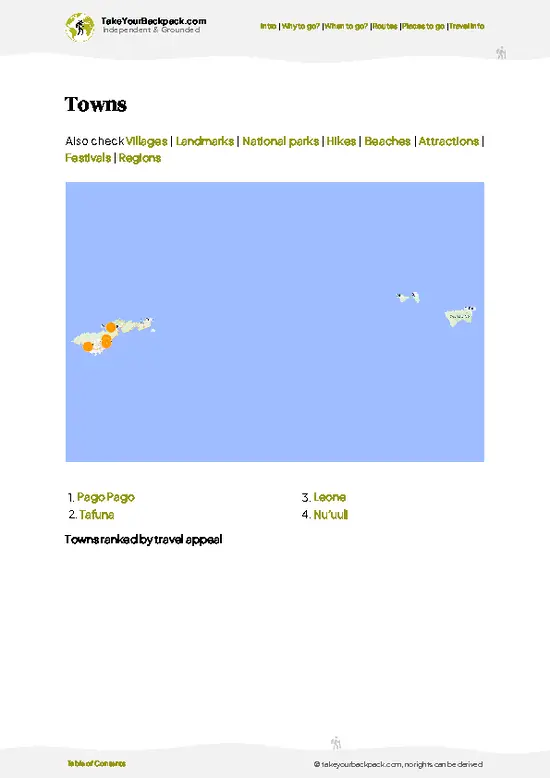
  • Vatia—rainforest valley, National Park trails, sea arches| 4 km away
  • Amouli—coastal village, reef flats, quiet shoreline| 11 km away
  • Tula—easternmost village, rugged headlands, traditional homes| 14 km away

💡 Not sure where to go next?
Create a personalized itinerary for American Samoa including Fagatogo and the places that fit your trip.

Generate my itinerary

👉 Discover all villages

Or checkout all American Samoa has to offer (think cities, towns, villages, national parks, hikes, beaches, festivals)
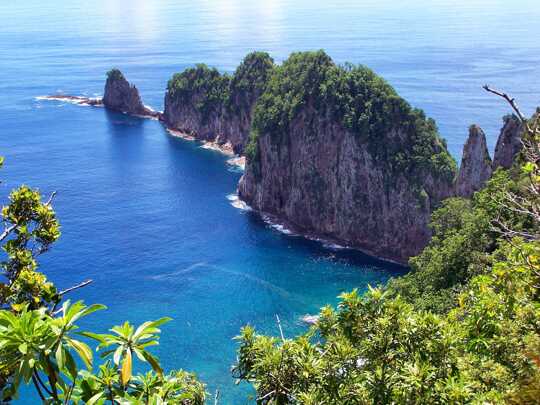
Country photo of American Samoa

We 💚 feedbackKey takeaways before you go

Fagatogo has a laid-back vibe that feels like a warm hug. The scent of saltwater mingles with the rich aroma of local dishes wafting from roadside stands. Don’t miss the market; it’s a treasure trove of fresh produce and handmade crafts. The best surprise? The locals’ genuine friendliness—everyone’s ready to share a story or a laugh. Just a heads-up: the humidity can be intense, so stay hydrated and take it slow. Embrace the rhythm, and you’ll find magic in the everyday.

✍️ Help improve this page!
The information on this page is based on in-depth research, insights shared by experienced travelers, and feedback from the local travel community in American Samoa. While every effort is made to keep the information accurate and current, conditions can change — so if you spot anything incorrect or outdated, please get in touch.


🙋‍♂️ Give feedback

👋 Meet the founderWho’s Behind Take Your Backpack?

Johan, backpacker and founder of TakeYourBackpackHi, I’m Johan (Netherlands 🇳🇱), the creator of TakeYourBackpack. Over the past decade, I’ve backpacked through 80+ countries across six continents, gaining extensive experience with independent travel, long-term trips, and overland routes.

This site is built on a combination of firsthand travel experience and carefully curated insights from other backpackers. Many guides are based on places I’ve personally visited, while others bring together tips, observations, and practical advice shared by trusted travelers I’ve met along the way.

The goal is to provide realistic, experience-driven guidance — not generic itineraries — so you can explore destinations with better context, clearer expectations, and more confidence.

Get full country guide •
Instant download • 37 highlights • Full Offline guide