×

Angola🇦🇴 | landmarksBela VistaHill viewpoints, red laterite roads, Kimbundu villages, Dembos coffee country | things to do and best time to go

Explore XangongoExplore Pico de angola

Backpacking in Bela Vista
By Johan Kruseman 🇳🇱 | Updated October 15, 2026

The detail is in the name. Bela Vista is Portuguese for “beautiful view,” a label colonial settlers pinned on hillsides across Angola, yet people here still speak Kimbundu at the market stalls and greet you in it first. The settlement sits in northern Bengo province, inland of the Atlantic town of Ambriz, where red laterite roads climb into green, humid hills. Expect no ticket booth, no souvenir rows and no crowds, which is both the appeal and the problem. Facilities are thin, signage is rare and distances eat hours. The light at dawn is soft and hazy, woodsmoke hangs low, and roosters drown out engines. Photo potential is real, but you earn it with patience and a local guide.

Discover everything you want to know in the 📖 Angola Travel Guide.


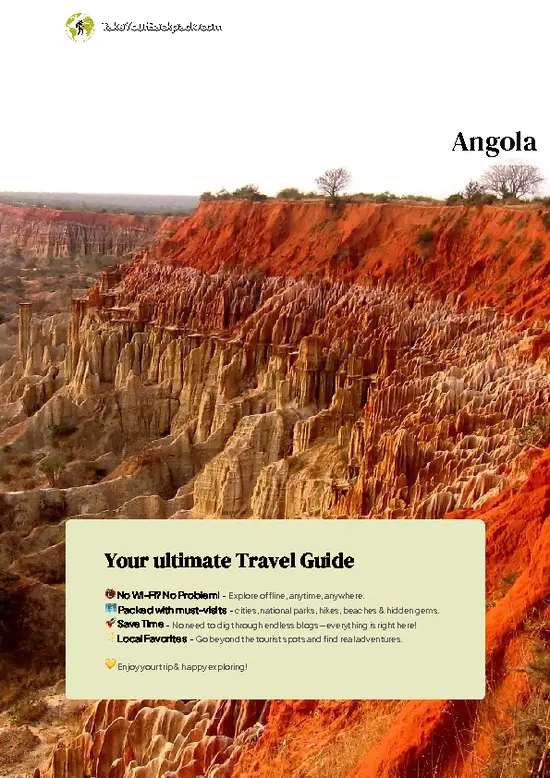
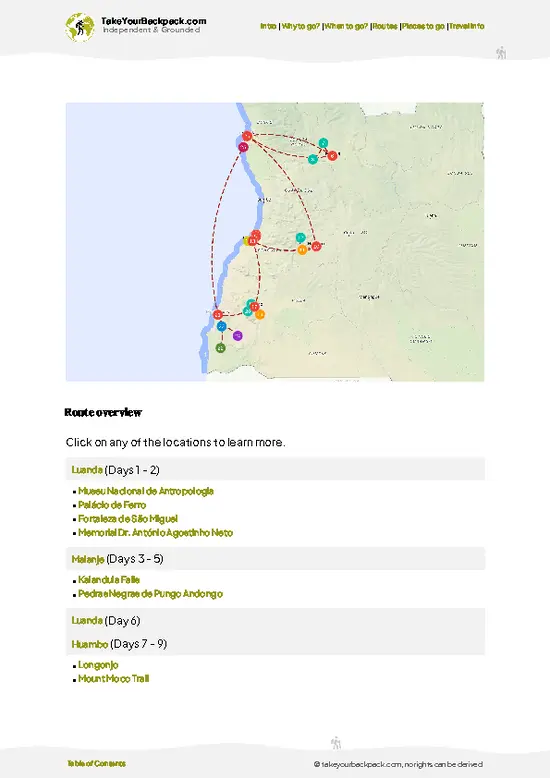
example page 0 from our offline Travel Guide for Angola
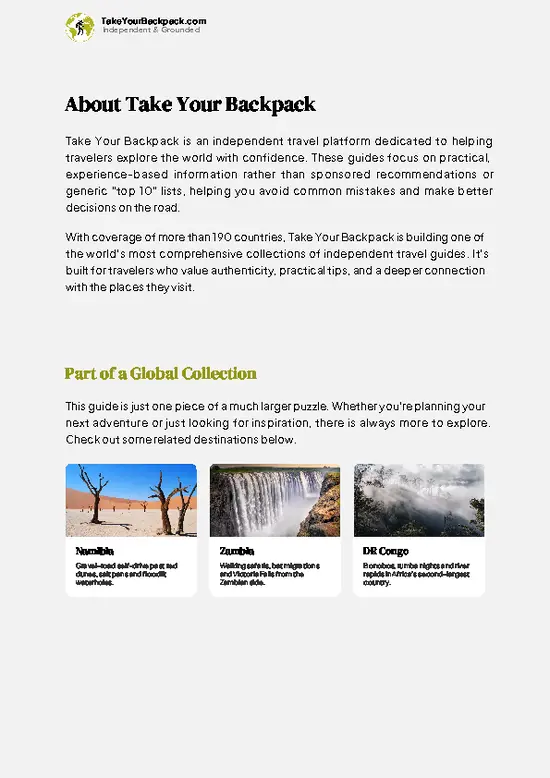
example page 1 from our offline Travel Guide for Angola
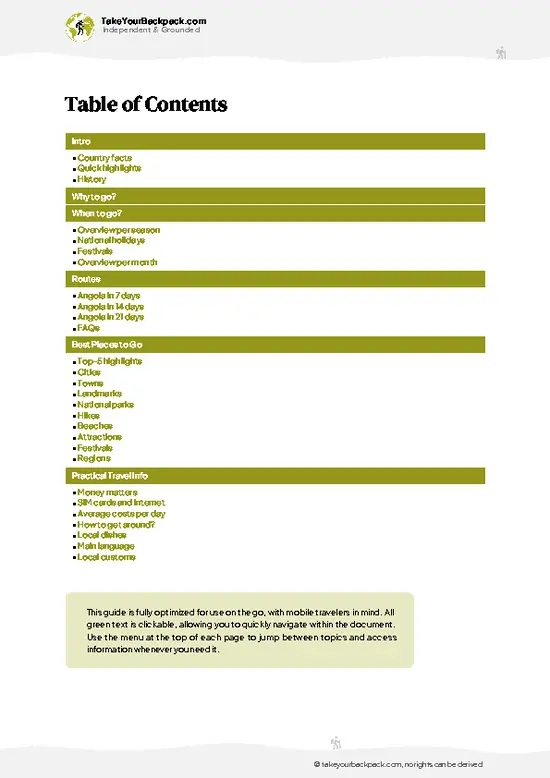
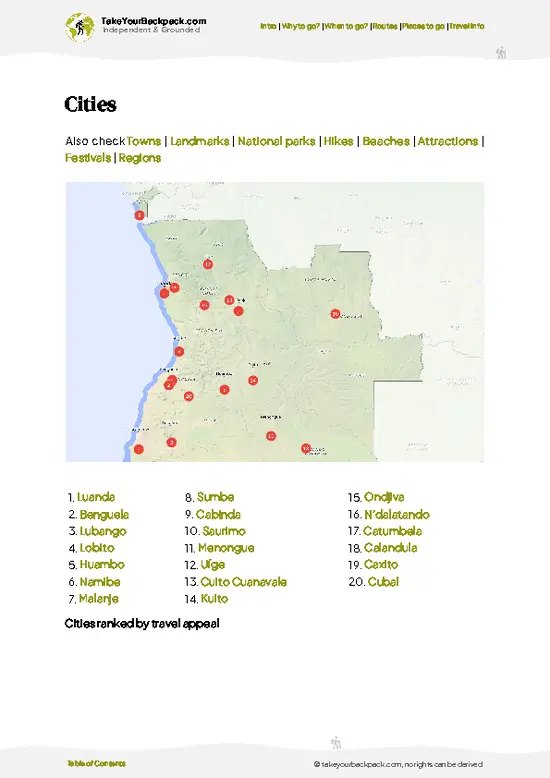
example page 2 from our offline Travel Guide for Angola
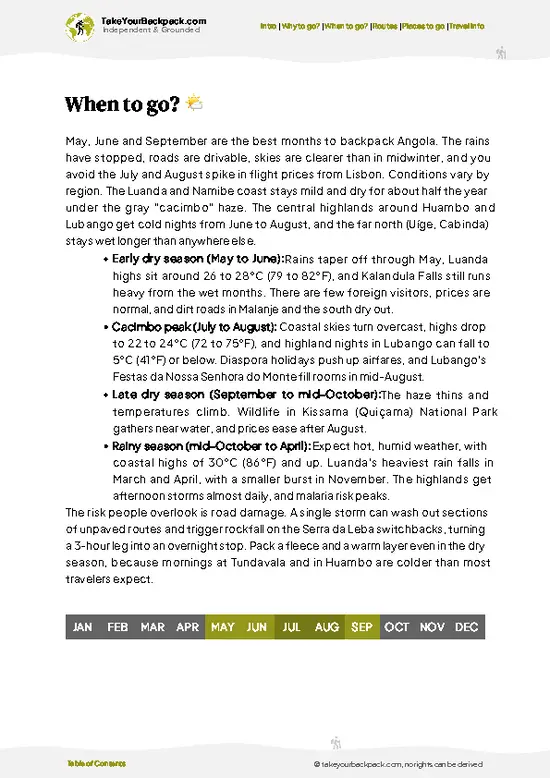
example page 3 from our offline Travel Guide for Angola
example page 4 from our offline Travel Guide for Angola
example page 5 from our offline Travel Guide for Angola
example page 6 from our offline Travel Guide for Angola
example page 7 from our offline Travel Guide for Angola
Loading the map 🌍
CLICK TO FILTER
cities
towns
landmarks
national parks
hikes
beaches
attractions
festivals
regions
SHOW COUNTRY’S BESTSHOW ALL

✨ Why go?
Ranked #99 unique site in Angola
What sets this place apart

Bela Vista rewards travelers who want northern Angola without a tour bus in sight. The draw is the landscape of the Dembos hills, a forested, coffee-growing area whose red earth and layered ridgelines look nothing like the dry coast near Luanda. The villages around it are working places, so what you see is daily life: cassava drying on mats, women pounding grain, men hauling palm wine at dusk.

It also fits a broader route well. Combine it with the Atlantic town of Ambriz and the road north from Luanda through Caxito, and you can build a three or four day loop through Bengo that most overland travelers skip entirely. Bring cash in kwanza, since card machines are rare outside the capital, and some Portuguese phrases. A few words open far more doors than any guidebook can.

💡 HighlightsTop highlights of Bela Vista

  1. The hill viewpoints: the name promises a view, and the ridges around the settlement deliver it. Walk up early, when mist still sits in the valleys and the air smells of damp earth and smoke.
  2. Red laterite roads: the rust-colored tracks are a landscape feature in themselves. After rain they turn slick and glossy, and in the dry season the dust coats everything the same orange.
  3. Village markets: informal stalls sell cassava, bananas, dried fish, palm oil and peanuts. Prices are negotiated in kwanza, and a greeting before you ask anything is expected.
  4. Kimbundu everyday life: this part of Bengo sits within Kimbundu-speaking country. Hearing the language in daily exchanges, church singing and market banter tells you more about the region than any sign could.
  5. The Dembos forest and coffee country: the
… read more 👉
  1. The hill viewpoints: the name promises a view, and the ridges around the settlement deliver it. Walk up early, when mist still sits in the valleys and the air smells of damp earth and smoke.
  2. Red laterite roads: the rust-colored tracks are a landscape feature in themselves. After rain they turn slick and glossy, and in the dry season the dust coats everything the same orange.
  3. Village markets: informal stalls sell cassava, bananas, dried fish, palm oil and peanuts. Prices are negotiated in kwanza, and a greeting before you ask anything is expected.
  4. Kimbundu everyday life: this part of Bengo sits within Kimbundu-speaking country. Hearing the language in daily exchanges, church singing and market banter tells you more about the region than any sign could.
  5. The Dembos forest and coffee country: the wider Dembos area has long been known for coffee and dense, humid vegetation. You will see old plantation traces and smallholder plots among the trees, with birdsong thick at first light.
  6. Ambriz and the Atlantic coast: a short drive west brings you to Ambriz, with long, quiet beaches, fishing boats and fresh fish grilled on the sand. It is the easiest place nearby to find a meal and a bed.
  7. Evening on the road: as the sun drops, walkers carry loads home, charcoal sellers light small fires and the hills go from green to deep blue. Sit with a cold drink and watch it happen.
Most visitors rush through without stopping at the small roadside stalls, yet that is where the best conversations and the cheapest, freshest food are found.
Spotted a mistake or missing something? Contact us.

🌤️ When to go?Seasonal considerations and timing

The best time to visit Bela Vista is the dry season from May to September, when roads are firmer and skies are clearer.
  • Dry Season (Cacimbo, May to September): Days run 22 to 28°C (72 to 82°F), nights drop to 16 to 19°C (61 to 66°F). Rain is rare, mornings are often overcast and cool, and daylight lasts roughly 11.5 to 12 hours. Dirt tracks are at their most passable.
  • Hot Wet Season (November to April): Expect 27 to 32°C (81 to 90°F), heavy humidity and downpours that turn unpaved roads to mud and can cut off river crossings. Daylight is about 12.5 hours.
  • Transition (October): Heat builds and the first storms arrive. Travel is still manageable early in the month.
  • Crowds and Prices: Visitor numbers stay very low all year. Transport and lodging costs rise slightly in the dry season and around the
… read more 👉
The best time to visit Bela Vista is the dry season from May to September, when roads are firmer and skies are clearer.
  • Dry Season (Cacimbo, May to September): Days run 22 to 28°C (72 to 82°F), nights drop to 16 to 19°C (61 to 66°F). Rain is rare, mornings are often overcast and cool, and daylight lasts roughly 11.5 to 12 hours. Dirt tracks are at their most passable.
  • Hot Wet Season (November to April): Expect 27 to 32°C (81 to 90°F), heavy humidity and downpours that turn unpaved roads to mud and can cut off river crossings. Daylight is about 12.5 hours.
  • Transition (October): Heat builds and the first storms arrive. Travel is still manageable early in the month.
  • Crowds and Prices: Visitor numbers stay very low all year. Transport and lodging costs rise slightly in the dry season and around the December holidays.
Arrive by mid-morning in the dry season, so you have the full stretch of daylight for rough roads.


source: climatestotravel.comJANJanuary: fair for travelingFEBFebruary: fair for travelingMARMarch: fair for travelingAPRApril: fair for travelingMAYMay: highly recommended for travelingJUNJune: excellent for travelingJULJuly: excellent for travelingAUGAugust: excellent for travelingSEPSeptember: highly recommended for travelingOCTOctober: excellent for travelingNOVNovember: fair for travelingDECDecember: fair for traveling
angola-unique-site-bela-vista
© Google |

✈️ The backpacker research shortcutAngola Travel Guide

An offline-friendly backpacking guide with optimized travel routes, ranked highlights, transport advice, and the best areas to stay.
example page 0 from our offline Travel Guide for Angola
example page 1 from our offline Travel Guide for Angola
example page 2 from our offline Travel Guide for Angola
example page 3 from our offline Travel Guide for Angola
example page 4 from our offline Travel Guide for Angola
example page 5 from our offline Travel Guide for Angola
example page 6 from our offline Travel Guide for Angola
example page 7 from our offline Travel Guide for Angola
The digital guide (246 pages) contains:
✅ 71 highlights, ranked by travel appeal
✅ Optimized 7, 14 & 21-day travel routes
✅ Cities, national parks, landmarks, beaches
✅ How to get around
✅ Offline-friendly for travel without Wi-Fi
👉 Click to see all 30+ guide features

📅 Plan smarter in minutes, not weeks
✅ Month by month travel advice
✅ Festivals & national holidays
✅ Budget expectations

🗺️ Go to the right places, skip the overrated ones
✅ Honest pros & cons of destinations
✅ Top hikes, parks & viewpoints
✅ Lesser-known places most travelers miss
✅ Clear “worth it vs skip it” guidance

🛏️ Travel smoothly without rookie mistakes
✅ Best areas to stay
✅ Transport systems explained simply
✅ Common scams & safety advice
✅ SIM cards, money & practical tips

🌍 Understand the country, not just visit it
✅ Culture & traditions
✅ 52 Essential phrases & customs
✅ Festivals worth planning around
✅ Traveler-friendly historical context
✅ Insights that make places more meaningful

📱 Built for real travel conditions
✅ Fully downloadable PDF
✅ Works completely offline
✅ Optimized for phone use
✅ Useful in remote areas & buses
✅ Everything in one place
Stop searching, start planning
Get instant access to your full guide. 30‑day money-back guarantee.
+ Add another guide for just

By proceeding you agree to our terms.
Sent to your inbox immediately after payment • 100% Secure Checkout
Best Backpacking Travel Advisor 2025 tourism awardBest Backpacking
Travel Advisor
2025
What others say about Take Your Backpack Guides:
⭐⭐⭐⭐⭐
Fantastic, amazing amount of information!
⭐⭐⭐⭐⭐
My goodness this is amazing, it's what I've been looking for hats off too you!
⭐⭐⭐⭐⭐
I think this is absolutely BRILLIANT
⭐⭐⭐⭐
Very complete and informative. It's still missing places, but I gotta to commend you
⭐⭐⭐⭐⭐
This is truly amazing, thank you, can't wait to explore it with my kids!
⭐⭐⭐⭐⭐
Awesome resource, thank you!
⭐⭐⭐⭐⭐
This is amazing! Can't wait to explore the ones I haven't seen
⭐⭐⭐⭐
I love this! Well done, great idea.
⭐⭐⭐⭐⭐
Thanks for taking the time to make this gem!
⭐⭐⭐⭐⭐
This might be the best website I've ever seen.
⭐⭐⭐⭐⭐
Congratulations, and thank you so much for your work; it's incredibly valuable.
⭐⭐⭐⭐
In all seriousness I think you did a great job pointing out the important spots
⭐⭐⭐⭐⭐
10/10 very good
⭐⭐⭐⭐⭐
As someone who's only just starting to visit regularly this is awesome, thank you.
⭐⭐⭐⭐
Thank you very much! I'm going to visit my dad, it's going to be very useful!
⭐⭐⭐⭐⭐
This is really cool! We'll be travelling for the first time and this definitely come in handy.
⭐⭐⭐⭐⭐
You are now our minister of culture, congratulations 👨‍💼
⭐⭐⭐⭐⭐
Just wanted to tell you that this is a pearl! Going to follow your recommendations.
⭐⭐⭐⭐⭐
This is so cool. I'll definitely be using the resource for my travels soon.
⭐⭐⭐⭐⭐
This is very impressive! Good work.
⭐⭐⭐⭐⭐
This is an amazing and informative site. Very well done!

🛏️ Where to stay?Best areas to stay in Angola

The most practical base for budget travelers is the nearby provincial hub of Caxito or, for more services, Luanda, since Bela Vista itself has very limited formal accommodation. Caxito sits on the main road north-east of the capital and has simple guesthouses, market stalls, shared taxi (candongueiro) links and a calm, small-town feel. Rooms there are basic, often with fans rather than air conditioning, and you will meet mostly Angolan traders and aid workers rather than backpackers. It works well if you want early starts and cheap local food.
Luanda is the better choice for social travelers. The … read more 👉
The most practical base for budget travelers is the nearby provincial hub of Caxito or, for more services, Luanda, since Bela Vista itself has very limited formal accommodation. Caxito sits on the main road north-east of the capital and has simple guesthouses, market stalls, shared taxi (candongueiro) links and a calm, small-town feel. Rooms there are basic, often with fans rather than air conditioning, and you will meet mostly Angolan traders and aid workers rather than backpackers. It works well if you want early starts and cheap local food.
Luanda is the better choice for social travelers. The Ilha and Maianga districts, along with parts of Miramar, have the widest range of safer, mid-priced guesthouses and the few hostel-style places where solo travelers swap tips and share rides. Expect prices to be high by regional standards, so share rooms where possible. Stay in well-lit central areas, use registered taxis or ride-hailing apps after dark, and avoid walking with valuables out.
If you plan to explore the surrounding countryside, ask local hosts about village homestays or community lodging. Always confirm where you sleep before dark, because lighting and signage on rural roads are scarce.

👛 Costs (as of 15 October 2026)How expensive it really is

A realistic budget for visiting Bela Vista is US$55 to 110 per day, driven mostly by Angola’s high lodging and transport costs. Prices are quoted in US dollars for comparison, though you pay in Angolan kwanza (AOA), and rates fluctuate.
CategoryBudget RangeLocal Reality
AccommodationUS$25 to 60Basic guesthouses in towns such as Caxito; Luanda costs noticeably more for similar quality.
FoodUS$8 to 20Street grills, fried fish and funge at local eateries are cheapest; restaurants in Luanda run higher.
Local transportUS$3 to 15Shared taxis and minibuses on main roads are inexpensive but crowded and irregular on rural routes.
Private driver or 4x4 hireUS$80 to 200Often necessary for unpaved tracks, especially in the wet season. Fuel is relatively cheap.
Entry or guide feesUS$0 to 15No formal ticketing
… read more 👉
A realistic budget for visiting Bela Vista is US$55 to 110 per day, driven mostly by Angola’s high lodging and transport costs. Prices are quoted in US dollars for comparison, though you pay in Angolan kwanza (AOA), and rates fluctuate.
CategoryBudget RangeLocal Reality
AccommodationUS$25 to 60Basic guesthouses in towns such as Caxito; Luanda costs noticeably more for similar quality.
FoodUS$8 to 20Street grills, fried fish and funge at local eateries are cheapest; restaurants in Luanda run higher.
Local transportUS$3 to 15Shared taxis and minibuses on main roads are inexpensive but crowded and irregular on rural routes.
Private driver or 4x4 hireUS$80 to 200Often necessary for unpaved tracks, especially in the wet season. Fuel is relatively cheap.
Entry or guide feesUS$0 to 15No formal ticketing is common; small tips or community fees may apply.
Visa and permitsUS$0 to 100Many nationalities now have visa-free or e-visa access; check current rules before arrival.
Water and extrasUS$2 to 6Bottled water is essential; carry cash because card acceptance is patchy outside Luanda.
⚠️ Prices can change and everyone travels differently, so take this as a rough guide. Hope it helps you plan your adventure!

FAQCommon questions from travelers

Bela Vista is a small hill settlement in northern Bengo province, Angola, within Kimbundu-speaking country inland of the Atlantic town of Ambriz. The name is Portuguese for “beautiful view.” It has no formal attractions, so the appeal is the Dembos-area landscape, village life and local markets. Ambriz, about 40 to 60 km away, is the nearest town with services.
One day is enough to see the hills, the markets and the villages, and most travelers fit it in as a stop between Ambriz and the road toward the Dembos area. A half day works if you only want the views and a meal. Staying overnight is possible only with local arrangements, so many people sleep in Ambriz and visit during daylight. Allow extra hours for slow, rutted roads, especially after rain.
Most travelers start in Luanda, drive north through Caxito, then continue toward Ambriz, roughly 200 km and 3 to 4 hours depending on road conditions. From Ambriz, local drivers or a hired 4x4 cover the last stretch on laterite roads in about one hour. Shared minibuses called candongueiros run between towns for modest kwanza fares, but connections to small settlements are irregular. A private driver or a local guide, at about US$50 to 100 a day, is the more reliable option.
⚠️ Things can change over time, so always validate details locally before you go.

Other Angolan landmarks near Bela Vista

Explore more nearby:

  • Mbanza Kongo—Cathedral ruins, Kongo kings museum, Nsanda tree, royal cemetery| 177 km away
  • Pico de angola—Mount Moco summit, montane grassland, forest patches, francolin birding| 538 km away
  • Tundavala Fissure—Plateau rim, 1,000-meter drop, shifting cloud, Serra da Leba| 783 km away

💡 Not sure where to go next?
Create a personalized itinerary for Angola including Bela Vista and the places that fit your trip.

Generate my itinerary

👉 Discover all landmarks

Or checkout all Angola has to offer (think cities, towns, villages, national parks, hikes, beaches, festivals)
Country photo of Angola

We 💚 feedbackSumming up the experience

I expected Bela Vista to feel remote and a little guarded. Instead, the surprise was how fast strangers started chatting, mostly out of curiosity about why anyone would stop. Let them ask. Share a drink, learn two Kimbundu greetings and you will be pointed toward the best view, usually by a kid who runs ahead. Carry water, fuel and cash, because none are easy to find once you leave Ambriz.

✍️ Help improve this page!
The information on this page is based on in-depth research, insights shared by experienced travelers, and feedback from the local travel community in Angola. While every effort is made to keep the information accurate and current, conditions can change — so if you spot anything incorrect or outdated, please get in touch.


🙋‍♂️ Give feedback

👋 Meet the founderWho’s Behind Take Your Backpack?

Johan, backpacker and founder of TakeYourBackpackHi, I’m Johan (Netherlands 🇳🇱), the creator of TakeYourBackpack. Over the past 3 decades, I’ve backpacked through 90+ countries across six continents, gaining extensive experience with independent travel, long-term trips, and overland routes.

This site is built on a combination of firsthand travel experience and carefully curated insights from other backpackers. Many guides are based on places I’ve personally visited, while others bring together tips, observations, and practical advice shared by trusted travelers I’ve met along the way.

The goal is to provide realistic, experience-driven guidance — not generic itineraries — so you can explore destinations with better context, clearer expectations, and more confidence.