×

Angola🇦🇴 | best landmarksYour Guide to the 5 Best landmarks in Angola

In Angola, unique sites pulse with cultural depth and natural beauty, each telling a story shaped by the land and its people. From the breathtaking landscapes of the Kalandula Falls to the historical echoes of Luanda’s colonial architecture, the country offers a rich tapestry of experiences. The scale of these sites varies widely; some, like the Namib Desert, demand a rugged trek, while others, such as the Museu da Escravatura, invite reflection in a more accessible setting.

Seasonal nuances play a crucial role in your journey. The dry season reveals the vibrant wildlife of Iona National Park, while the rainy months transform the landscape into a lush paradise. Choosing the right site impacts your budget, safety, and overall vibe. For backpackers, understanding these dynamics is essential for maximizing cultural immersion and navigating the diverse terrain of Angola.

By Johan Kruseman 🇳🇱 | Updated September 4, 2026
Explore the best national parks in Angola

Why go?Understanding Their Importance

Angola’s unique sites matter because they encapsulate a rich tapestry of cultural and historical narratives, shaped by centuries of colonial influence, civil conflict, and a resilient spirit. Unlike many other countries, Angola’s landscapes range from breathtaking coastlines to rugged highlands, offering a diverse backdrop that enhances its cultural significance. The Kwanza River, for instance, is not just a waterway; it has been a lifeline for communities, a witness to trade routes, and a source of inspiration for local folklore.

However, accessing these sites often comes with trade-offs. Many unique locations are remote, requiring significant travel time that can detract from the depth of exploration. The infrastructure in Angola is still developing, which means that while the journey may … read more 👉
Angola’s unique sites matter because they encapsulate a rich tapestry of cultural and historical narratives, shaped by centuries of colonial influence, civil conflict, and a resilient spirit. Unlike many other countries, Angola’s landscapes range from breathtaking coastlines to rugged highlands, offering a diverse backdrop that enhances its cultural significance. The Kwanza River, for instance, is not just a waterway; it has been a lifeline for communities, a witness to trade routes, and a source of inspiration for local folklore.

However, accessing these sites often comes with trade-offs. Many unique locations are remote, requiring significant travel time that can detract from the depth of exploration. The infrastructure in Angola is still developing, which means that while the journey may be arduous, it often leads to experiences that feel raw and authentic. This contrasts sharply with more accessible tourist destinations where convenience can dilute the experience.

The climate also plays a role in planning visits. The dry season, from May to October, is ideal for exploration, but it can also attract more visitors, leading to crowded sites. Conversely, the wet season offers a quieter experience but can make certain areas less accessible due to flooding.

Culturally, Angola is a mosaic of ethnic groups, each contributing to the country’s identity. Engaging with local communities can be incredibly rewarding, but it requires sensitivity and respect for traditions. This cultural richness is what sets Angola apart, making it a compelling destination for those willing to navigate its complexities. Understanding these factors is crucial for travelers seeking to appreciate the depth of Angola’s unique sites while balancing the challenges of accessibility and timing.
Why These Made the Cut
The list of best unique sites in Angola is created based on history or culture, wow factor, atmosphere, quirks, and memorability. If you feel a unique site is missing in this list, please let us know.

When to go?Timing Your Visit for the Best Experience

Seasonality plays a crucial role in experiencing the unique sites of Angola. The country has a tropical climate, characterized by a wet season and a dry season. The wet season typically runs from November to April, bringing heavy rains that can make access to certain areas challenging. Roads may become impassable, and some sites may be less accessible due to flooding. However, this season also brings lush landscapes and vibrant wildlife, making it a rewarding time for those willing to brave the elements.

Optimal months for visiting are generally during the dry season, from May to October. This period offers clearer skies and more stable weather, ideal for exploring the country’s diverse terrain. Wildlife viewing is particularly good during these months, as animals congregate around water … read more 👉
Seasonality plays a crucial role in experiencing the unique sites of Angola. The country has a tropical climate, characterized by a wet season and a dry season. The wet season typically runs from November to April, bringing heavy rains that can make access to certain areas challenging. Roads may become impassable, and some sites may be less accessible due to flooding. However, this season also brings lush landscapes and vibrant wildlife, making it a rewarding time for those willing to brave the elements.

Optimal months for visiting are generally during the dry season, from May to October. This period offers clearer skies and more stable weather, ideal for exploring the country’s diverse terrain. Wildlife viewing is particularly good during these months, as animals congregate around water sources. The cooler temperatures also make outdoor activities more enjoyable, allowing for longer hikes and explorations without the oppressive heat.

Shoulder seasons—late April and early November—can offer a balance of benefits. These months may see fewer tourists, resulting in a more intimate experience at various sites. However, travelers should be prepared for unpredictable weather, as the transition between wet and dry can lead to sudden storms or lingering mud.

Peak periods often coincide with local festivals or holidays, drawing larger crowds. While these events can enhance the cultural experience, they may also lead to higher prices and limited availability for accommodations. Planning around these times requires careful consideration of both the vibrant atmosphere and the potential for overcrowding.

Travelers should weigh these seasonal constraints against their interests and priorities, ensuring a visit that aligns with their expectations and the unique offerings of Angola.

unique site hoppingHow to Combine landmarks Into One Trip

Regional Clustering

Angola’s unique sites are best explored through a regional approach. Start in Luanda, the bustling capital, where the vibrant street life and colonial architecture set the stage. From there, head south to the coastal town of Benguela, known for its stunning beaches and rich history. This route allows for a smooth transition from urban energy to coastal relaxation, maximizing time spent at each stop.

Optimal Sequencing

After Benguela, consider venturing inland to Huambo, where the highlands offer a cooler climate and breathtaking landscapes. This sequence not only saves travel time but also provides a gradual shift in scenery and culture. Each stop deserves at least half a day; rushing through will rob the experience of its depth.

Common Planning Mistakes

Travelers … read more 👉

Regional Clustering

Angola’s unique sites are best explored through a regional approach. Start in Luanda, the bustling capital, where the vibrant street life and colonial architecture set the stage. From there, head south to the coastal town of Benguela, known for its stunning beaches and rich history. This route allows for a smooth transition from urban energy to coastal relaxation, maximizing time spent at each stop.

Optimal Sequencing

After Benguela, consider venturing inland to Huambo, where the highlands offer a cooler climate and breathtaking landscapes. This sequence not only saves travel time but also provides a gradual shift in scenery and culture. Each stop deserves at least half a day; rushing through will rob the experience of its depth.

Common Planning Mistakes

Travelers often underestimate the distances between sites. Angola is vast, and road conditions can be challenging. Avoid cramming too many stops into a single day. Instead, allow for flexibility in your schedule. This approach ensures that unexpected delays don’t derail your plans.

Trade-offs and Constraints

Balancing speed with depth is crucial. While it might be tempting to cover more ground quickly, the real reward lies in immersing oneself in each location. Budget considerations also play a role; opting for local accommodations can enhance the experience without breaking the bank.

Realistic Pacing

Aim for a rhythm that allows for exploration and relaxation. Spend a couple of days in each region to soak in the local culture and history. This pacing not only enriches the journey but also ensures that the effort of travel translates into meaningful experiences.

The ListThe Best landmarks of Angola

1 Tundavala Fissure

sheer escarpment, dramatic drop-offs, plateau edge

Peer over a vast natural chasm where the land falls away, revealing endless plains and shifting weather far below.

angola-unique-site-tundavala-fissure
© Google |

2 M’banza-Kongo

ancient stone ruins, royal burial sites, spiritual crossroads

Trace the legacy of a centuries-old kingdom where sacred sites and layered histories reveal Angola’s deep cultural roots.

angola-unique-site-mbanza-kongo v1
© Google |

3 Tchitundo-Hulo

prehistoric rock art, granite outcrops, ancient engravings

Examine enigmatic carvings etched into remote granite, offering a glimpse into the beliefs and rituals of early inhabitants.

4 Pico de angola

highest peak, cloud forests, rugged ascent

Climb through misty forests and rocky slopes to reach Angola’s highest point, where rare plants and sweeping vistas await.

5 Bela Vista

coastal cliffs, panoramic ocean views, windswept plateaus

Stand above the Atlantic on dramatic cliffs, watching shifting light and sea breezes shape the landscape below.

angola-unique-site-bela-vista
© Google |
Loading the map 🌍

Expert viewPro Tips for Exploring the Best

Unique Sites in Angola

Angola is a land of contrasts, where the raw beauty of nature meets the pulse of vibrant culture. When planning your journey, aim for about five to seven unique sites to truly grasp the essence of this diverse country. This range allows you to dive deep without feeling rushed, balancing exploration with the need to soak in the atmosphere.

Access Constraints

Getting around Angola can be a challenge. The infrastructure varies significantly, with some regions boasting well-maintained roads while others are riddled with potholes and dust. Expect to spend time navigating these conditions, especially if you venture into more remote areas. Flights can be sporadic, and public transport is often unreliable. Renting a vehicle is advisable, but be prepared for a rugged ride. … read more 👉
Unique Sites in Angola

Angola is a land of contrasts, where the raw beauty of nature meets the pulse of vibrant culture. When planning your journey, aim for about five to seven unique sites to truly grasp the essence of this diverse country. This range allows you to dive deep without feeling rushed, balancing exploration with the need to soak in the atmosphere.

Access Constraints

Getting around Angola can be a challenge. The infrastructure varies significantly, with some regions boasting well-maintained roads while others are riddled with potholes and dust. Expect to spend time navigating these conditions, especially if you venture into more remote areas. Flights can be sporadic, and public transport is often unreliable. Renting a vehicle is advisable, but be prepared for a rugged ride.

Consider the time of year as well. The rainy season can turn roads into rivers, limiting access to certain sites. Plan your trip during the dry months for a smoother experience.

Crowd Patterns

Angola is not yet a mainstream tourist destination, which means you can often enjoy sites without the throngs of visitors. However, be mindful of local holidays and festivals, which can draw crowds to specific areas. These events offer a unique glimpse into Angolan culture but can also complicate logistics. If you want to experience the local vibe, timing your visit to coincide with a festival can be rewarding, but be ready for a bustling atmosphere.

Combining Sites

When it comes to combining sites, think strategically. Some locations are relatively close, while others require significant travel time. For instance, if you’re drawn to the coastal beauty, consider pairing beach visits with nearby cultural sites. This way, you can enjoy the sun and surf while also immersing yourself in local traditions.

However, don’t underestimate travel time. What looks like a short distance on a map can take hours to traverse. Factor in the time for breaks, meals, and the inevitable delays. A well-planned itinerary can help you maximize your experience without feeling rushed.

Safety & Cultural Considerations

Safety is paramount. While many areas are safe for tourists, it’s wise to stay informed about local conditions. Avoid displaying valuables and be cautious in less populated areas. Engaging with locals can enhance your experience, but approach cultural interactions with respect. Understanding basic customs and greetings can go a long way in building rapport.

Be aware of the language barrier; Portuguese is the official language, and while some locals speak English, it’s not widespread. Learning a few phrases can open doors and create connections.

Regional Variation

Angola’s regions offer distinct experiences. The north is lush and green, while the south features arid landscapes. Each area has its own cultural nuances, from music to cuisine. If you’re a fan of traditional dishes, don’t miss the chance to sample local fare, which varies widely across the country.

In the north, you might find hearty stews and fresh fish, while the south leans towards grilled meats and spicy dishes. Each meal tells a story, reflecting the land and its people.

Time, Budget, and Effort

Expect to invest time and energy into your journey. While you can find budget accommodations, the quality may vary. Mid-range options often provide a better experience, especially in terms of comfort and safety. Factor in costs for transportation, meals, and entry fees to sites.

Plan for a mix of activities that require both physical effort and relaxation. Hiking in the national parks can be strenuous, but the payoff is breathtaking views and a sense of accomplishment. Balance these with downtime to recharge.

Prioritizing Unique Sites

To prioritize effectively, start with what resonates most with you. Are you drawn to natural wonders, historical sites, or cultural experiences? Make a list and rank them based on your interests. This will help you focus on what truly matters to you.

Consider the logistics of each site. Some may require permits or advance bookings, while others are more accessible. Researching these details ahead of time can save you headaches later.

In summary, Angola is a canvas of experiences waiting to be explored. By understanding the unique challenges and rewards of traveling here, you can craft a journey that’s not just about ticking boxes but about truly engaging with the land and its people. Embrace the grit of the streets and the burn of the trails, and you’ll find that the beauty of Angola is well worth the effort.

✈️ The backpacker research shortcutAngola Travel Guide

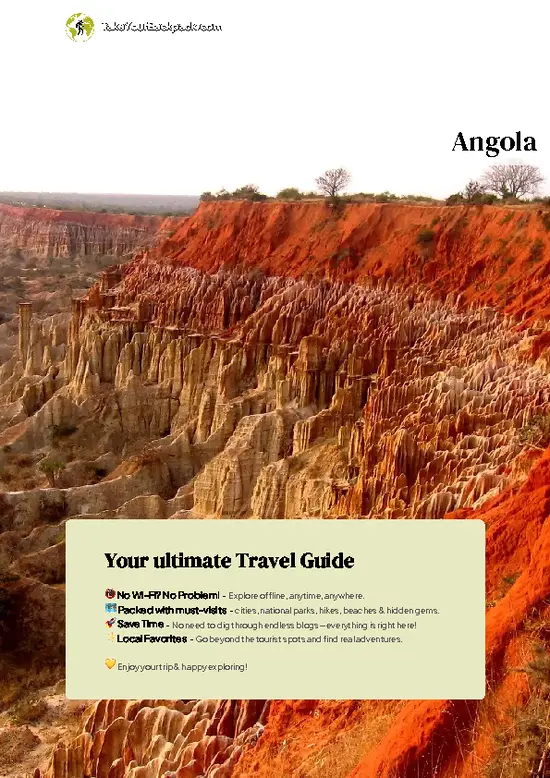
An offline-friendly backpacking guide with optimized travel routes, ranked highlights, transport advice, and the best areas to stay.
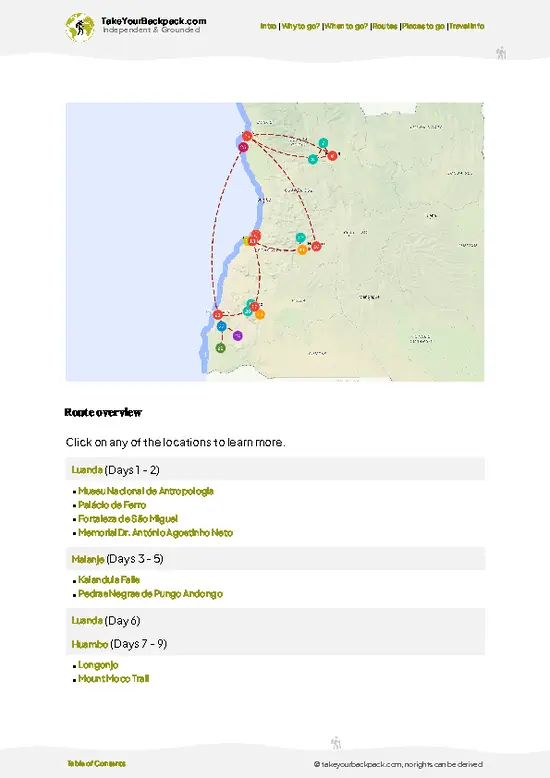
example page 0 from our offline Travel Guide for Angola
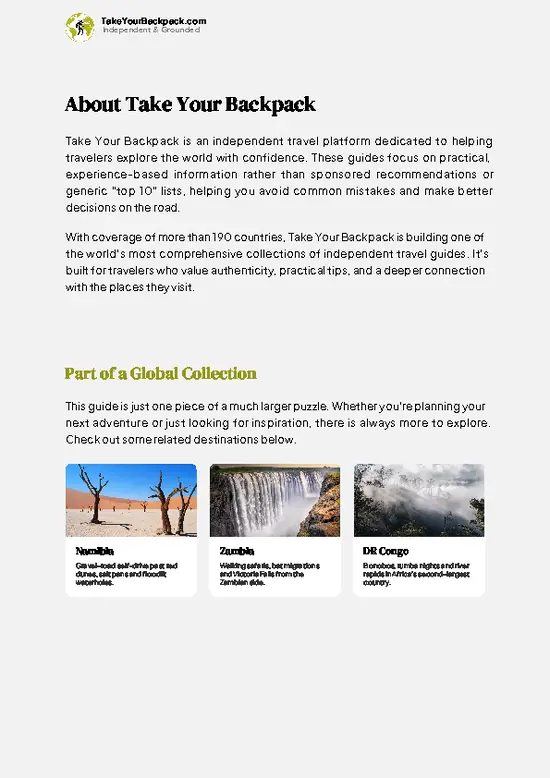
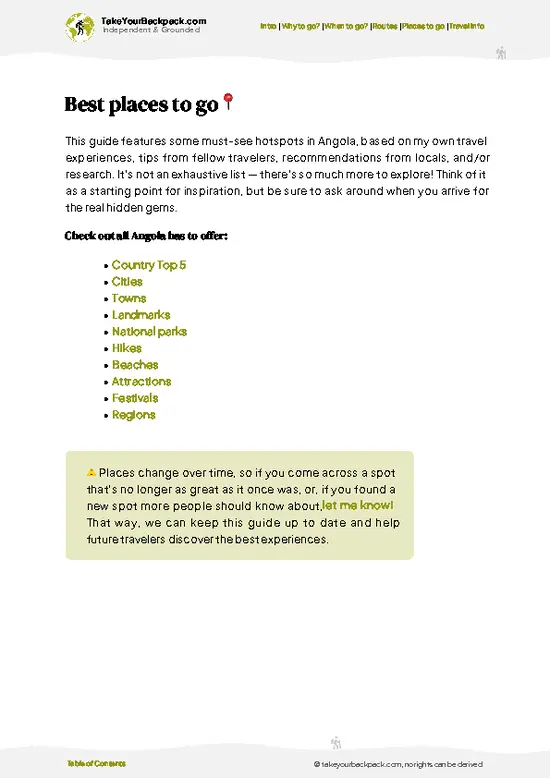
example page 1 from our offline Travel Guide for Angola
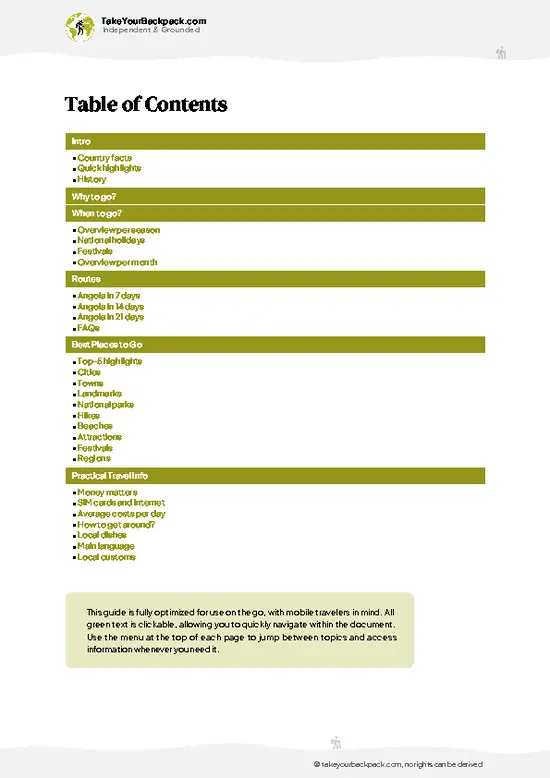
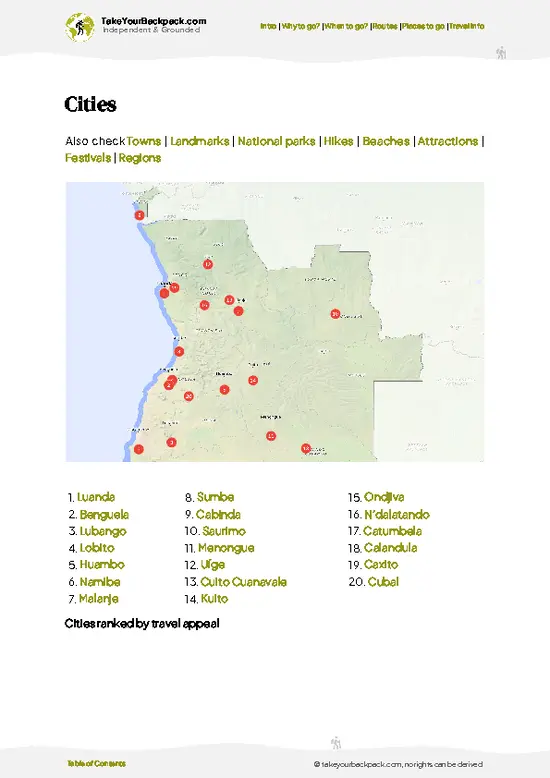
example page 2 from our offline Travel Guide for Angola
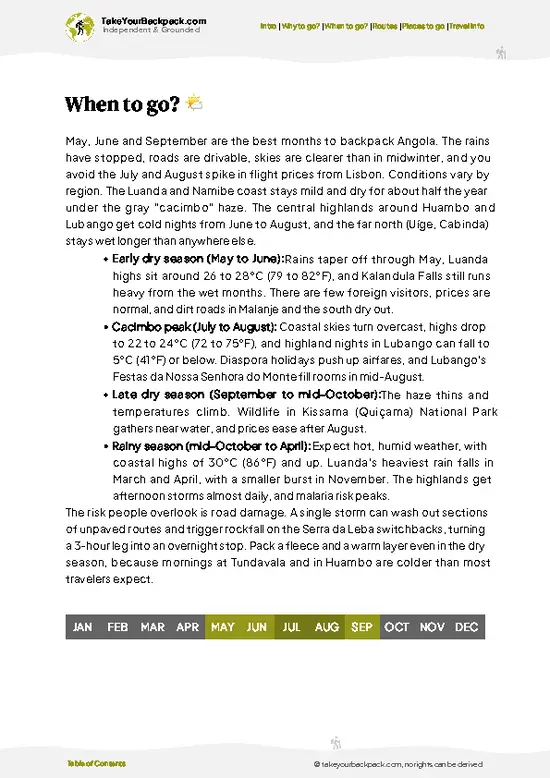
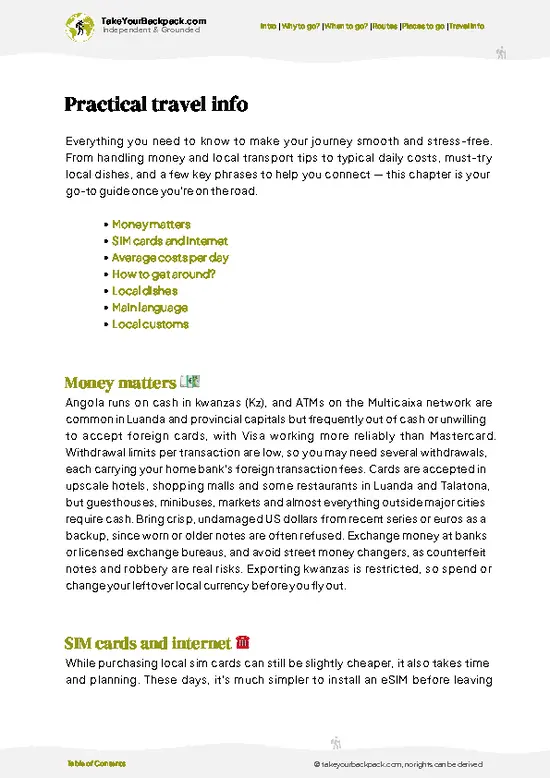
example page 3 from our offline Travel Guide for Angola
example page 4 from our offline Travel Guide for Angola
example page 5 from our offline Travel Guide for Angola
example page 6 from our offline Travel Guide for Angola
example page 7 from our offline Travel Guide for Angola
The digital guide (341 pages) contains:
90 highlights, ranked by travel appeal
Optimized 7, 14 & 21-day travel routes
Cities, national parks, landmarks, beaches
How to get around
Offline-friendly for travel without Wi-Fi
👉 Click to see all 30+ guide features

📅 Plan smarter in minutes, not weeks
Month by month travel advice
Festivals & national holidays
Budget expectations

🗺️ Go to the right places, skip the overrated ones
Honest pros & cons of destinations
Top hikes, parks & viewpoints
Lesser-known places most travelers miss
Clear “worth it vs skip it” guidance

🛏️ Travel smoothly without rookie mistakes
Best areas to stay
Transport systems explained simply
Common scams & safety advice
SIM cards, money & practical tips

🌍 Understand the country, not just visit it
Culture & traditions
52 Essential phrases & customs
Festivals worth planning around
Traveler-friendly historical context
Insights that make places more meaningful

📱 Built for real travel conditions
Fully downloadable PDF
Works completely offline
Optimized for phone use
Useful in remote areas & buses
Everything in one place
Save weeks of stressful planning
Get instant access to your full guide. 30‑day money-back guarantee.
+ Add another guide for just US$7.80

By proceeding you agree to our terms.
Sent to your inbox immediately after payment • 100% Secure Checkout
Best Backpacking Travel Advisor 2025 tourism awardBest Backpacking
Travel Advisor
2025
What others say about Take Your Backpack Guides:
⭐⭐⭐⭐⭐
Fantastic, amazing amount of information!
⭐⭐⭐⭐⭐
My goodness this is amazing, it's what I've been looking for hats off too you!
⭐⭐⭐⭐⭐
I think this is absolutely BRILLIANT
⭐⭐⭐⭐
Very complete and informative. It's still missing places, but I gotta to commend you
⭐⭐⭐⭐⭐
This is truly amazing, thank you, can't wait to explore it with my kids!
⭐⭐⭐⭐⭐
Awesome resource, thank you!
⭐⭐⭐⭐⭐
This is amazing! Can't wait to explore the ones I haven't seen
⭐⭐⭐⭐
I love this! Well done, great idea.
⭐⭐⭐⭐⭐
Thanks for taking the time to make this gem!
⭐⭐⭐⭐⭐
This might be the best website I've ever seen.
⭐⭐⭐⭐⭐
Congratulations, and thank you so much for your work; it's incredibly valuable.
⭐⭐⭐⭐
In all seriousness I think you did a great job pointing out the important spots
⭐⭐⭐⭐⭐
10/10 very good
⭐⭐⭐⭐⭐
As someone who's only just starting to visit regularly this is awesome, thank you.
⭐⭐⭐⭐
Thank you very much! I'm going to visit my dad, it's going to be very useful!
⭐⭐⭐⭐⭐
This is really cool! We'll be travelling for the first time and this definitely come in handy.
⭐⭐⭐⭐⭐
You are now our minister of culture, congratulations 👨‍💼
⭐⭐⭐⭐⭐
Just wanted to tell you that this is a pearl! Going to follow your recommendations.
⭐⭐⭐⭐⭐
This is so cool. I'll definitely be using the resource for my travels soon.
⭐⭐⭐⭐⭐
This is very impressive! Good work.
⭐⭐⭐⭐⭐
This is an amazing and informative site. Very well done!

🛏️ Where to stay?Best Places to Stay in Angola

Yes — Angola has some hostels and budget accommodation but options are limited and concentrated in a few cities; expect more guesthouse-style budget hotels than classic dorm hostels, higher prices in major centers, and variable service standards.

Most choices cluster in Luanda (central districts and business suburbs), and coastal towns such as Benguela/Lobito and Namibe (Moçâmedes); central Luanda gives easy access to sights and nightlife but brings heavy traffic and higher rates, business suburbs are quieter and safer but farther from attractions, and coastal towns are cheaper and better for beaches but have fewer evening services and limited transport links.

Carry cash, book ahead because … read more 👉
Yes — Angola has some hostels and budget accommodation but options are limited and concentrated in a few cities; expect more guesthouse-style budget hotels than classic dorm hostels, higher prices in major centers, and variable service standards.

Most choices cluster in Luanda (central districts and business suburbs), and coastal towns such as Benguela/Lobito and Namibe (Moçâmedes); central Luanda gives easy access to sights and nightlife but brings heavy traffic and higher rates, business suburbs are quieter and safer but farther from attractions, and coastal towns are cheaper and better for beaches but have fewer evening services and limited transport links.

Carry cash, book ahead because availability is sparse, and expect occasional basic-utility interruptions and tighter safety awareness in budget areas.

If you enjoy meeting fellow travelers, consider choosing hostels with high ratings for atmosphere. On the other hand, if you prefer having your own space, a hotel might be a better option.

AngolaExplore Angola

👋 Meet the founderWho’s Behind Take Your Backpack?

Johan, backpacker and founder of TakeYourBackpackHi, I’m Johan (Netherlands 🇳🇱), the creator of TakeYourBackpack. Over the past decade, I’ve backpacked through 80+ countries across six continents, gaining extensive experience with independent travel, long-term trips, and overland routes.

This site is built on a combination of firsthand travel experience and carefully curated insights from other backpackers. Many guides are based on places I’ve personally visited, while others bring together tips, observations, and practical advice shared by trusted travelers I’ve met along the way.

The goal is to provide realistic, experience-driven guidance — not generic itineraries — so you can explore destinations with better context, clearer expectations, and more confidence.

Get full Angola guide •
Instant download • 90 highlights • Full Offline guide