×

Angola🇦🇴 | landmarksTundavala FissurePlateau rim, 1,000-meter drop, shifting cloud, Serra da Leba | things to do and best time to go

Explore Tchitundo-HuloExplore Mbanza Kongo

Backpacking in Tundavala Fissure
By Johan Kruseman 🇳🇱 | Updated October 15, 2026

Tundavala is a long, sheer cliff edge, the rim of a plateau falling away to a lowland plain, rather than a narrow slot you peer down into. It sits on the Serra da Chela escarpment in Huíla Province, about 18 to 20 km from Lubango in southwestern Angola. You walk out across short, wind-combed grass and orange-brown rock, and the ground simply stops. Below, a drop of roughly 1,000 meters opens onto a hazy plain that runs toward the Namib. Wind hums over the lip, the air smells of dry grass and stone, and clouds can drift in below your boots. The crowds are thin, mostly local families and a few overlanders, but facilities are basic. The road from Lubango is paved, and getting here takes a hired driver or a taxi. Once there, the view is the whole point.

Discover everything you want to know in the 📖 Angola Travel Guide.


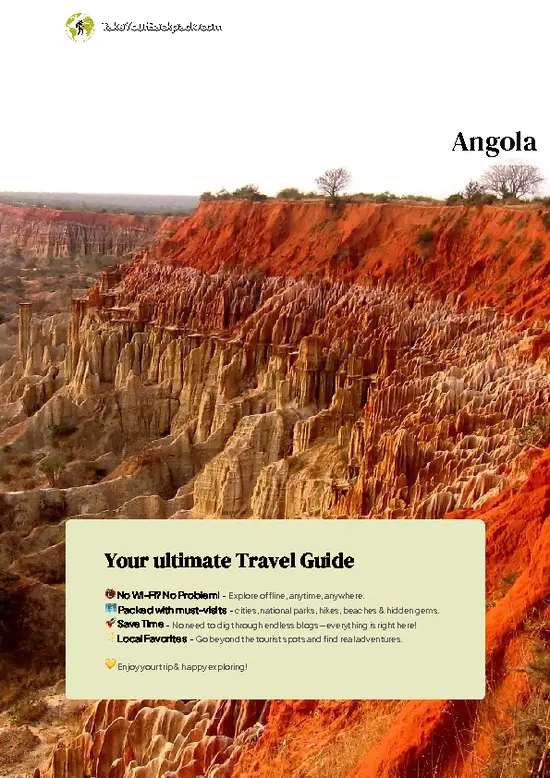
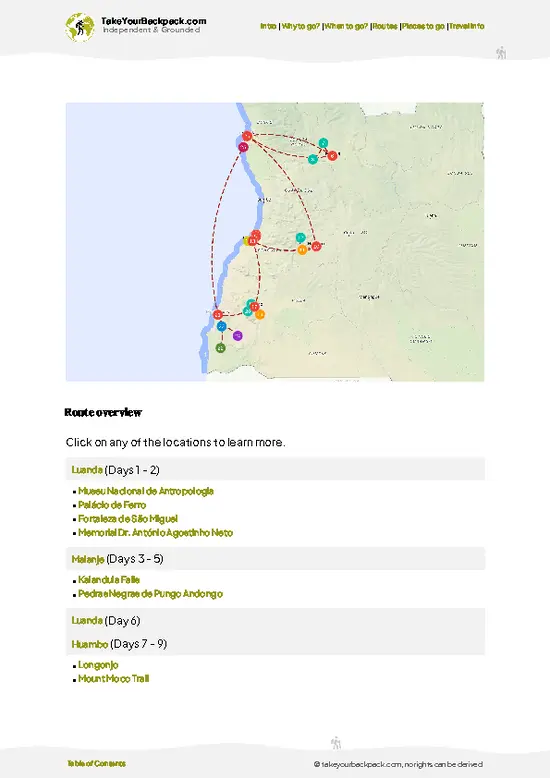
example page 0 from our offline Travel Guide for Angola
example page 1 from our offline Travel Guide for Angola
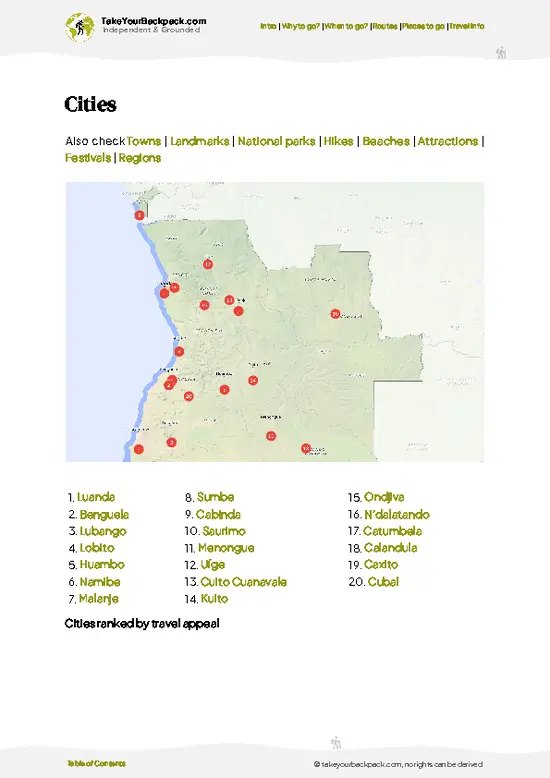
example page 2 from our offline Travel Guide for Angola
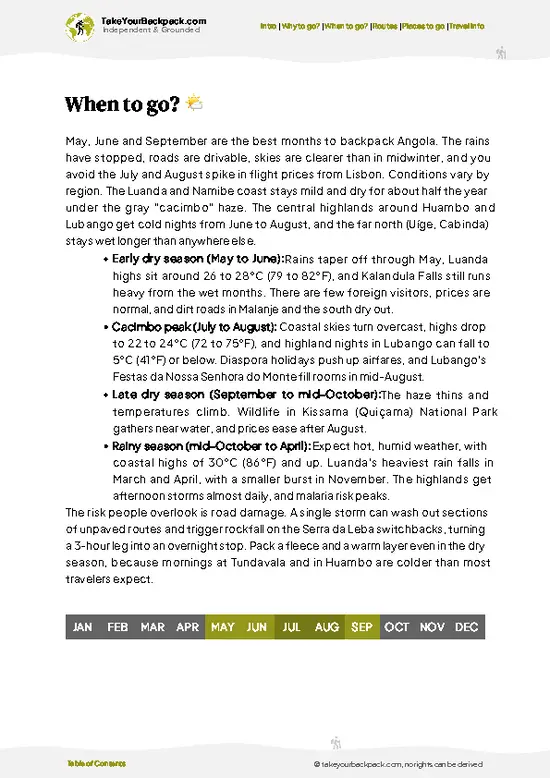
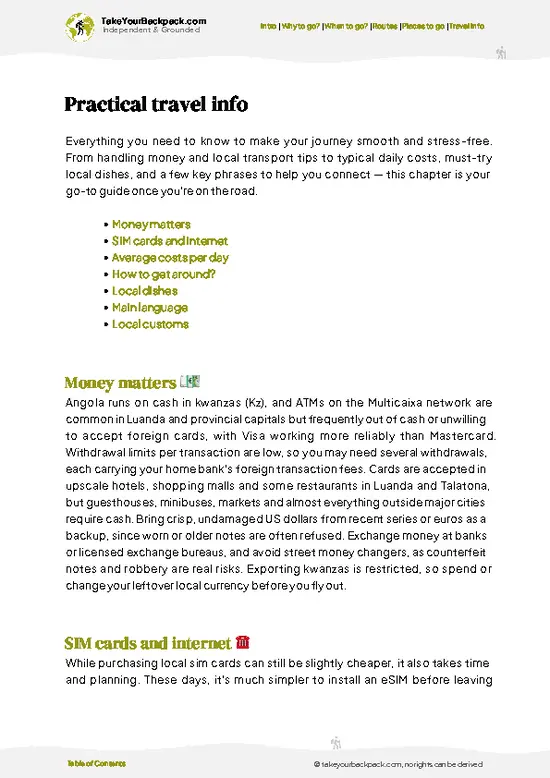
example page 3 from our offline Travel Guide for Angola
example page 4 from our offline Travel Guide for Angola
example page 5 from our offline Travel Guide for Angola
example page 6 from our offline Travel Guide for Angola
example page 7 from our offline Travel Guide for Angola
Loading the map 🌍
CLICK TO FILTER
cities
towns
landmarks
national parks
hikes
beaches
attractions
festivals
regions
SHOW COUNTRY’S BESTSHOW ALL

✨ Why go?
Ranked #99 unique site in Angola
What makes it a must-see unique site

Tundavala rewards the effort because the view is hard to match anywhere in southern Africa, and it costs very little. From Lubango, a half-day trip gets you to the rim and back, so it fits easily around a stay in the city.
The real draw is the 1,000-meter drop to the lowland plain. You stand on grass at around 2,200 meters and look down at flat, hazy country that belongs to a different climate. Few viewpoints let you see two landscapes at once so clearly.
It also works as one stop on a loop. Pair it with the Serra da Leba hairpin road that descends toward Namibe, and you can combine plateau, escarpment and desert coast in a few days. Travelers heading between Lubango and the Atlantic coast get the best use of it, since the same escarpment links both places.
Crowds rarely cause problems. You can … read more 👉
Tundavala rewards the effort because the view is hard to match anywhere in southern Africa, and it costs very little. From Lubango, a half-day trip gets you to the rim and back, so it fits easily around a stay in the city.
The real draw is the 1,000-meter drop to the lowland plain. You stand on grass at around 2,200 meters and look down at flat, hazy country that belongs to a different climate. Few viewpoints let you see two landscapes at once so clearly.
It also works as one stop on a loop. Pair it with the Serra da Leba hairpin road that descends toward Namibe, and you can combine plateau, escarpment and desert coast in a few days. Travelers heading between Lubango and the Atlantic coast get the best use of it, since the same escarpment links both places.
Crowds rarely cause problems. You can often have long stretches of rim to yourself, which is rare for a site this dramatic. Bring layers, because the wind can be cold even on sunny days.

💡 HighlightsWhat this place is best known for

  1. The main viewpoint on the rim. A flat rock platform lets you stand at the edge of the escarpment, with the plateau behind you and open air in front. Wind picks up here, and the sense of exposure is immediate.
  2. The 1,000-meter drop. The cliff face falls almost vertically to the lowlands below. On clear mornings you can see the plain stretching far toward the desert, with distinct bands of color and haze.
  3. Walking along the rim. Short footpaths follow the edge for a few hundred meters in either direction, giving different angles on the wall, with rock buttresses and ledges. Stay well back from loose edges, as there are no railings.
  4. Cloud behavior. When moisture rises from the lowlands, cloud forms and pours up the cliff face, sometimes filling the gap below you entirely. It makes the view change
… read more 👉
  1. The main viewpoint on the rim. A flat rock platform lets you stand at the edge of the escarpment, with the plateau behind you and open air in front. Wind picks up here, and the sense of exposure is immediate.
  2. The 1,000-meter drop. The cliff face falls almost vertically to the lowlands below. On clear mornings you can see the plain stretching far toward the desert, with distinct bands of color and haze.
  3. Walking along the rim. Short footpaths follow the edge for a few hundred meters in either direction, giving different angles on the wall, with rock buttresses and ledges. Stay well back from loose edges, as there are no railings.
  4. Cloud behavior. When moisture rises from the lowlands, cloud forms and pours up the cliff face, sometimes filling the gap below you entirely. It makes the view change every few minutes and is a favorite moment for photographers.
  5. The plateau grassland. The approach crosses highland grass and scattered rock outcrops on the Huíla plateau. The air is noticeably cooler and fresher than in the lowlands, and the sky feels very wide.
  6. Serra da Leba pass. A drive further along the escarpment brings you to this winding road of tight hairpin bends descending toward the coast. Its viewpoint at the top gives a different perspective of the same wall, and it is one of the most photographed roads in Angola.
  7. Cristo Rei of Lubango. This statue stands on a hilltop above the city with wide views across Lubango and the surrounding valley. It is an easy add-on on the same day, and a good place to watch the late light.
Allow about two to three hours at the rim itself, or a full day if you add Serra da Leba and Cristo Rei.
Spotted a mistake or missing something? Contact us.

🌤️ When to go?Best time to visit Tundavala Fissure

The best time to visit Tundavala Fissure is the dry season from May to September, when skies over the Huíla escarpment are clearest.
  • Dry Season (May to September): Days run 22 to 27°C (72 to 81°F) on the plateau, and nights at about 1,800 m drop to 5 to 10°C (41 to 50°F). Rain is rare, haze is lowest, and the 1,000 m drop to the plains is visible. Daylight lasts roughly 11 hours, with sunrise around 6:15 and sunset near 5:45. This is peak season for Lubango, so expect more visitors on weekends.
  • Early Rains (October to December): Temperatures reach 24 to 28°C (75 to 82°F). Afternoon storms build, and mist can fill the gorge by midday. Mornings are your best window, and the green slopes look good.
  • Peak Rains (January to April): Warm at 22 to 27°C (72 to 81°F), with heavy downpours, slick tracks
… read more 👉
The best time to visit Tundavala Fissure is the dry season from May to September, when skies over the Huíla escarpment are clearest.
  • Dry Season (May to September): Days run 22 to 27°C (72 to 81°F) on the plateau, and nights at about 1,800 m drop to 5 to 10°C (41 to 50°F). Rain is rare, haze is lowest, and the 1,000 m drop to the plains is visible. Daylight lasts roughly 11 hours, with sunrise around 6:15 and sunset near 5:45. This is peak season for Lubango, so expect more visitors on weekends.
  • Early Rains (October to December): Temperatures reach 24 to 28°C (75 to 82°F). Afternoon storms build, and mist can fill the gorge by midday. Mornings are your best window, and the green slopes look good.
  • Peak Rains (January to April): Warm at 22 to 27°C (72 to 81°F), with heavy downpours, slick tracks and frequent cloud over the edge. Views are unreliable, though crowds are thin and room rates are often negotiable.
Arrive before 9 a.m. in any season, because cloud tends to roll in later and the light on the cliff face is best early.


source: climatestotravel.comJANJanuary: fair for travelingFEBFebruary: fair for travelingMARMarch: fair for travelingAPRApril: fair for travelingMAYMay: highly recommended for travelingJUNJune: excellent for travelingJULJuly: excellent for travelingAUGAugust: excellent for travelingSEPSeptember: highly recommended for travelingOCTOctober: excellent for travelingNOVNovember: fair for travelingDECDecember: fair for traveling
angola-unique-site-tundavala-fissure
© Google |

✈️ The backpacker research shortcutAngola Travel Guide

An offline-friendly backpacking guide with optimized travel routes, ranked highlights, transport advice, and the best areas to stay.
example page 0 from our offline Travel Guide for Angola
example page 1 from our offline Travel Guide for Angola
example page 2 from our offline Travel Guide for Angola
example page 3 from our offline Travel Guide for Angola
example page 4 from our offline Travel Guide for Angola
example page 5 from our offline Travel Guide for Angola
example page 6 from our offline Travel Guide for Angola
example page 7 from our offline Travel Guide for Angola
The digital guide (246 pages) contains:
✅ 71 highlights, ranked by travel appeal
✅ Optimized 7, 14 & 21-day travel routes
✅ Cities, national parks, landmarks, beaches
✅ How to get around
✅ Offline-friendly for travel without Wi-Fi
👉 Click to see all 30+ guide features

📅 Plan smarter in minutes, not weeks
✅ Month by month travel advice
✅ Festivals & national holidays
✅ Budget expectations

🗺️ Go to the right places, skip the overrated ones
✅ Honest pros & cons of destinations
✅ Top hikes, parks & viewpoints
✅ Lesser-known places most travelers miss
✅ Clear “worth it vs skip it” guidance

🛏️ Travel smoothly without rookie mistakes
✅ Best areas to stay
✅ Transport systems explained simply
✅ Common scams & safety advice
✅ SIM cards, money & practical tips

🌍 Understand the country, not just visit it
✅ Culture & traditions
✅ 52 Essential phrases & customs
✅ Festivals worth planning around
✅ Traveler-friendly historical context
✅ Insights that make places more meaningful

📱 Built for real travel conditions
✅ Fully downloadable PDF
✅ Works completely offline
✅ Optimized for phone use
✅ Useful in remote areas & buses
✅ Everything in one place
Stop searching, start planning
Get instant access to your full guide. 30‑day money-back guarantee.
+ Add another guide for just

By proceeding you agree to our terms.
Sent to your inbox immediately after payment • 100% Secure Checkout
Best Backpacking Travel Advisor 2025 tourism awardBest Backpacking
Travel Advisor
2025
What others say about Take Your Backpack Guides:
⭐⭐⭐⭐⭐
Fantastic, amazing amount of information!
⭐⭐⭐⭐⭐
My goodness this is amazing, it's what I've been looking for hats off too you!
⭐⭐⭐⭐⭐
I think this is absolutely BRILLIANT
⭐⭐⭐⭐
Very complete and informative. It's still missing places, but I gotta to commend you
⭐⭐⭐⭐⭐
This is truly amazing, thank you, can't wait to explore it with my kids!
⭐⭐⭐⭐⭐
Awesome resource, thank you!
⭐⭐⭐⭐⭐
This is amazing! Can't wait to explore the ones I haven't seen
⭐⭐⭐⭐
I love this! Well done, great idea.
⭐⭐⭐⭐⭐
Thanks for taking the time to make this gem!
⭐⭐⭐⭐⭐
This might be the best website I've ever seen.
⭐⭐⭐⭐⭐
Congratulations, and thank you so much for your work; it's incredibly valuable.
⭐⭐⭐⭐
In all seriousness I think you did a great job pointing out the important spots
⭐⭐⭐⭐⭐
10/10 very good
⭐⭐⭐⭐⭐
As someone who's only just starting to visit regularly this is awesome, thank you.
⭐⭐⭐⭐
Thank you very much! I'm going to visit my dad, it's going to be very useful!
⭐⭐⭐⭐⭐
This is really cool! We'll be travelling for the first time and this definitely come in handy.
⭐⭐⭐⭐⭐
You are now our minister of culture, congratulations 👨‍💼
⭐⭐⭐⭐⭐
Just wanted to tell you that this is a pearl! Going to follow your recommendations.
⭐⭐⭐⭐⭐
This is so cool. I'll definitely be using the resource for my travels soon.
⭐⭐⭐⭐⭐
This is very impressive! Good work.
⭐⭐⭐⭐⭐
This is an amazing and informative site. Very well done!

🛏️ Where to stay?Best areas to stay in Angola

The best base for Tundavala Fissure is Lubango, the provincial capital, about 15 to 20 km (roughly 30 minutes by car) from the viewpoint. It is the only place nearby with a real range of budget beds, restaurants, ATMs and transport, so nearly every backpacker ends up here.
The central grid around the main avenues and the Cristo Rei side of town is the most practical area. You can walk to markets, bakeries, pharmacies and small cafés, and shared taxis (candongueiros) pass through constantly. It feels calm and safe by Angolan standards, and evening walks in the center are generally fine, though a … read more 👉
The best base for Tundavala Fissure is Lubango, the provincial capital, about 15 to 20 km (roughly 30 minutes by car) from the viewpoint. It is the only place nearby with a real range of budget beds, restaurants, ATMs and transport, so nearly every backpacker ends up here.
The central grid around the main avenues and the Cristo Rei side of town is the most practical area. You can walk to markets, bakeries, pharmacies and small cafés, and shared taxis (candongueiros) pass through constantly. It feels calm and safe by Angolan standards, and evening walks in the center are generally fine, though a taxi after dark is wiser than wandering with a phone in hand.
The neighborhoods near the Mitcha and Cristo Rei hills suit people who want cooler air and quieter nights. Guesthouses and small family-run pensions there often have secure gates and parking, which helps if you are splitting a hired car with other travelers to reach the cliff edge.
Social life is modest. Angola has few classic backpacker hostels, so you meet other travelers through guesthouse common areas, shared rides to Tundavala and the Leba Pass, and the cafés on the main streets. Book ahead on weekends and national holidays, when rooms tighten. Camping at the rim is possible only with local arrangement and is not advised for solo travelers.

👛 Costs (as of 15 October 2026)Typical daily expenses

Expect to spend roughly US$55 to 120 per day around Tundavala Fissure, with Lubango lodging and a hired ride to the cliff edge as the biggest items. Prices are quoted in US dollars as a reference, though you pay in Angolan kwanza (AOA) and exchange rates move frequently.
CategoryBudget RangeLocal Reality
Site entryUS$0 to 5Access is often informal, and a small fee or tip for a local guardian may be requested.
AccommodationUS$25 to 70Lubango guesthouses and simple hotels; dorm-style beds are rare, so a private room is the norm.
Transport to siteUS$15 to 50A taxi or hired car round trip from Lubango, often with waiting time; shared options are limited.
Local transportUS$1 to 5Candongueiro shared taxis and moto-taxis within town are cheap but crowded.
FoodUS$10 to 25Grilled chicken, fish and rice at
… read more 👉
Expect to spend roughly US$55 to 120 per day around Tundavala Fissure, with Lubango lodging and a hired ride to the cliff edge as the biggest items. Prices are quoted in US dollars as a reference, though you pay in Angolan kwanza (AOA) and exchange rates move frequently.
CategoryBudget RangeLocal Reality
Site entryUS$0 to 5Access is often informal, and a small fee or tip for a local guardian may be requested.
AccommodationUS$25 to 70Lubango guesthouses and simple hotels; dorm-style beds are rare, so a private room is the norm.
Transport to siteUS$15 to 50A taxi or hired car round trip from Lubango, often with waiting time; shared options are limited.
Local transportUS$1 to 5Candongueiro shared taxis and moto-taxis within town are cheap but crowded.
FoodUS$10 to 25Grilled chicken, fish and rice at local restaurants cost less than international menus.
Guide or toursUS$30 to 80A half-day tour including Tundavala, Leba Pass and Cristo Rei is the usual package.
Water and snacksUS$2 to 6Bring your own, since there are no shops at the cliff edge.
Cash in kwanza is the safest way to pay for taxis, markets and small eateries, and ATMs in Lubango can be unreliable with foreign cards. Costs in Angola are high compared with neighboring countries, so budget a margin.
⚠️ Prices can change and everyone travels differently, so take this as a rough guide. Hope it helps you plan your adventure!

FAQCommon questions from travelers

Tundavala Fissure is a sheer escarpment edge on the Serra da Chela, near Lubango in Huíla Province, southwestern Angola. The rim sits at about 2,200 meters and drops roughly 1,000 meters to the lowland plain. It is one of Angola’s best-known natural viewpoints and is reached by a short drive from the city.
Plan on two to three hours at the rim to walk along the edge and wait for the light or the clouds to shift. Including the 30 to 45 minute drive each way from Lubango, it fits comfortably into a half day. Add Serra da Leba and Cristo Rei and it becomes a full day trip.
Tundavala lies about 18 to 20 km from Lubango, and the trip takes 30 to 45 minutes by car on a paved road. Most backpackers hire a driver or taxi in Lubango, typically around US$40 to 80 for the round trip with waiting time, depending on the vehicle and negotiation. Any car can make it, and Lubango is reached by road from Namibe or Huambo, or by flight from Luanda.
⚠️ Things can change over time, so always validate details locally before you go.

Other Angolan landmarks near Tundavala Fissure

Explore more nearby:

  • Tchitundo-Hulo—Painted granite, rock engravings, Mucubal herders, semi-desert drive| 135 km away
  • Pico de angola—Mount Moco summit, montane grassland, forest patches, francolin birding| 326 km away
  • Bela Vista—Hill viewpoints, red laterite roads, Kimbundu villages, Dembos coffee country| 783 km away

💡 Not sure where to go next?
Create a personalized itinerary for Angola including Tundavala Fissure and the places that fit your trip.

Generate my itinerary

👉 Discover all landmarks

Or checkout all Angola has to offer (think cities, towns, villages, national parks, hikes, beaches, festivals)
Country photo of Angola

We 💚 feedbackParting advice and final tips

Treat Tundavala as the opening act of a bigger day. Go early, while the air is clear, then drive on to the Serra da Leba hairpins and finish with sunset at Cristo Rei back in Lubango. If you are continuing to Namibe, descend the pass the next morning and watch plateau turn to desert in an hour. Bring a jacket and keep well back from the edge, because the wind is stronger than it looks.

✍️ Help improve this page!
The information on this page is based on in-depth research, insights shared by experienced travelers, and feedback from the local travel community in Angola. While every effort is made to keep the information accurate and current, conditions can change — so if you spot anything incorrect or outdated, please get in touch.


🙋‍♂️ Give feedback

👋 Meet the founderWho’s Behind Take Your Backpack?

Johan, backpacker and founder of TakeYourBackpackHi, I’m Johan (Netherlands 🇳🇱), the creator of TakeYourBackpack. Over the past 3 decades, I’ve backpacked through 90+ countries across six continents, gaining extensive experience with independent travel, long-term trips, and overland routes.

This site is built on a combination of firsthand travel experience and carefully curated insights from other backpackers. Many guides are based on places I’ve personally visited, while others bring together tips, observations, and practical advice shared by trusted travelers I’ve met along the way.

The goal is to provide realistic, experience-driven guidance — not generic itineraries — so you can explore destinations with better context, clearer expectations, and more confidence.