×

Angola🇦🇴 | citiesBenguelaPraia Morena, acacia avenues, Pópulo church, railway station | things to do and best time to go

Explore Praia da CaotinhaExplore Huambo

Backpacking in Benguela
🏆 Top pickcity ranked #2
By Johan Kruseman 🇳🇱 | Updated October 16, 2026

Walk the old avenues at dusk and look up: the flame trees that earned Benguela the nickname “Cidade das Acácias Rubras” drop red petals on pavements that smell of salt, charcoal smoke and grilled fish, and locals sweep them aside without comment. The city sits on Angola’s central Atlantic coast, in Benguela Province, roughly 550 kilometers south of Luanda. Colonial facades in faded pink and ochre face a long, wind-brushed bay, and the pace is slow enough that you hear flip-flops and distant kizomba from open windows. It suits travelers who like lingering, eating seafood and using it as a base. It won’t suit anyone wanting hostels, nightlife crowds or polished infrastructure, since prices run high and services are thin. Compared with busy, expensive Luanda it feels calmer, and next to neighboring Lobito it is quieter and more residential.

Discover everything you want to know in the 📖 Angola Travel Guide.


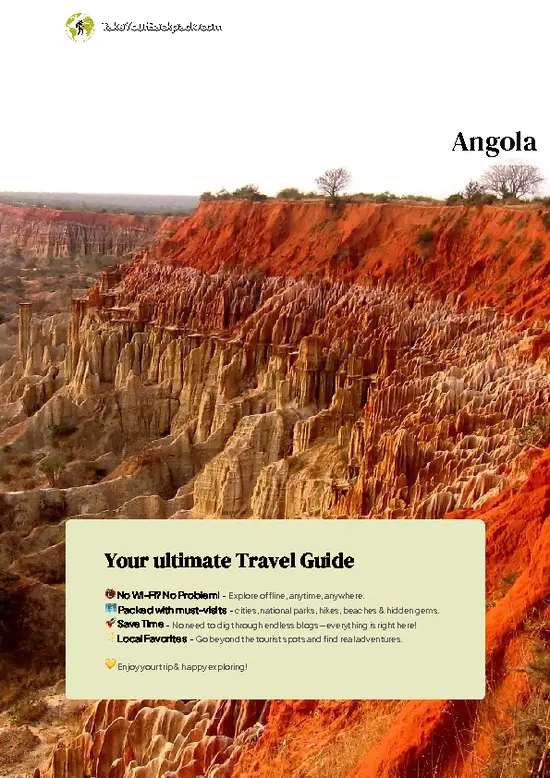
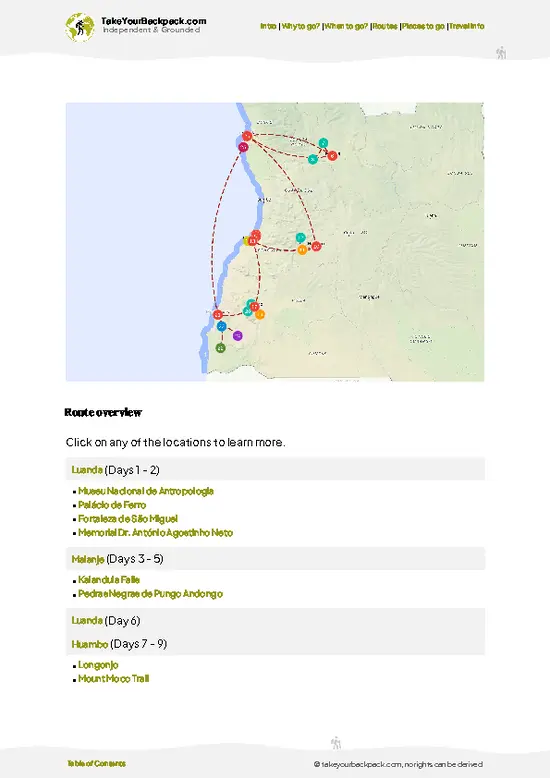
example page 0 from our offline Travel Guide for Angola
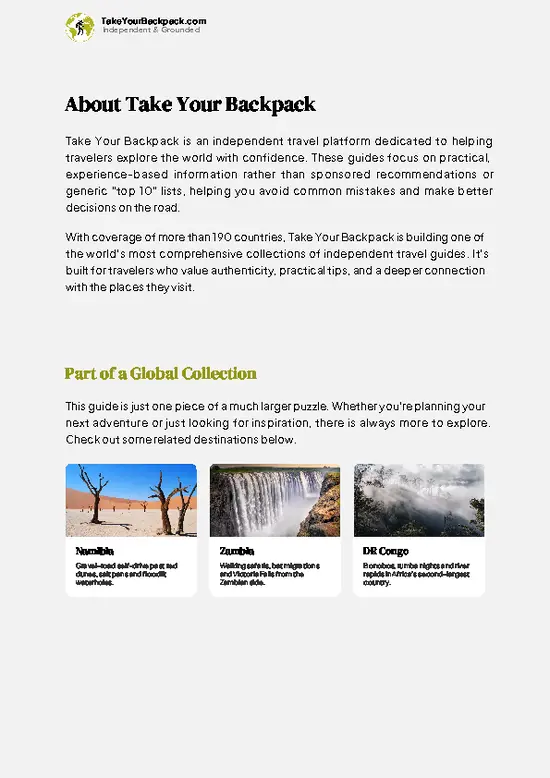
example page 1 from our offline Travel Guide for Angola
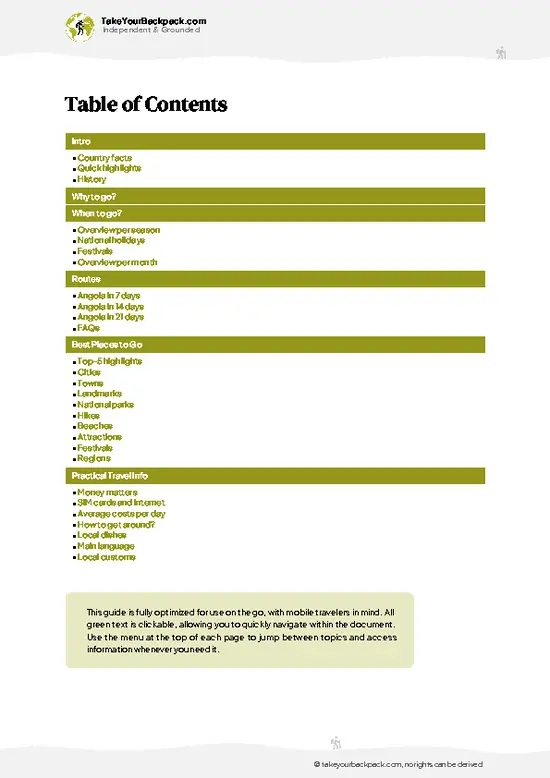
example page 2 from our offline Travel Guide for Angola
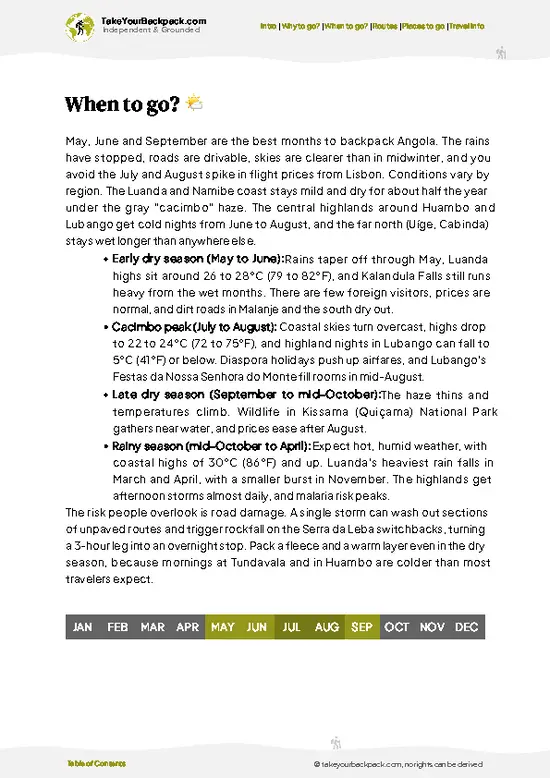
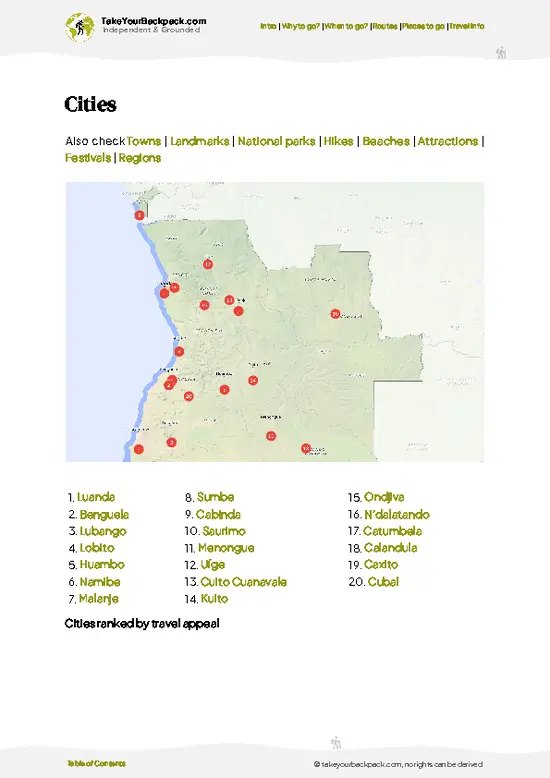
example page 3 from our offline Travel Guide for Angola
example page 4 from our offline Travel Guide for Angola
example page 5 from our offline Travel Guide for Angola
example page 6 from our offline Travel Guide for Angola
example page 7 from our offline Travel Guide for Angola
Loading the map 🌍
CLICK TO FILTER
cities
towns
landmarks
national parks
hikes
beaches
attractions
festivals
regions
SHOW COUNTRY’S BESTSHOW ALL

✨ Why go?
Ranked #2 city in Angola
Why visitors keep coming back

Benguela earns its place on a route because it is the easiest, most relaxed point on Angola’s central coast to slow down. The city is flat and compact, so you can walk from the beach to the old center in 15 to 20 minutes, and you’ll eat fresh grilled fish at tables set almost on the sand. It is also a practical base. Minibus taxis (candongueiros) and shared taxis run to Lobito, about 30 kilometers north, in under an hour, and you can reach beaches and the coast road without needing your own car. Roads inland toward Huambo and the highlands start here too. Accommodation is mostly guesthouses and small hotels rather than hostels, so budget more than you would in neighboring countries, roughly US$40 to 90 a night. Two or three nights is the useful window. It works best as a pause between Luanda … read more 👉
Benguela earns its place on a route because it is the easiest, most relaxed point on Angola’s central coast to slow down. The city is flat and compact, so you can walk from the beach to the old center in 15 to 20 minutes, and you’ll eat fresh grilled fish at tables set almost on the sand. It is also a practical base. Minibus taxis (candongueiros) and shared taxis run to Lobito, about 30 kilometers north, in under an hour, and you can reach beaches and the coast road without needing your own car. Roads inland toward Huambo and the highlands start here too. Accommodation is mostly guesthouses and small hotels rather than hostels, so budget more than you would in neighboring countries, roughly US$40 to 90 a night. Two or three nights is the useful window. It works best as a pause between Luanda and the south, with the Atlantic breeze and sunsets as the main draw, rather than a place to tick off sights.

💡 HighlightsTop highlights of Benguela

  1. Praia Morena: the city’s main beach, a long strip of tan sand with beach bars and grilled fish stalls. Go late afternoon for softer light and cooler air. Free to walk, a meal runs US$8 to 20, and an hour or two is plenty.
  2. Igreja de Nossa Senhora do Pópulo: one of the oldest churches in the region, dating to the 18th century, with a whitewashed look and a strong tie to the city’s colonial and slave-trade past. Morning is best, before the heat. Entry is usually free or a small donation, and a visit takes 30 minutes.
  3. Museu Nacional de Arqueologia: a modest museum showing stone tools, ceramics and regional archaeology, useful for context on the coast and highlands. Visit mid-morning on a weekday. Entry is typically a couple of dollars, and 45 to 60 minutes is enough.
  4. Old town architecture walk: wander
… read more 👉
  1. Praia Morena: the city’s main beach, a long strip of tan sand with beach bars and grilled fish stalls. Go late afternoon for softer light and cooler air. Free to walk, a meal runs US$8 to 20, and an hour or two is plenty.
  2. Igreja de Nossa Senhora do Pópulo: one of the oldest churches in the region, dating to the 18th century, with a whitewashed look and a strong tie to the city’s colonial and slave-trade past. Morning is best, before the heat. Entry is usually free or a small donation, and a visit takes 30 minutes.
  3. Museu Nacional de Arqueologia: a modest museum showing stone tools, ceramics and regional archaeology, useful for context on the coast and highlands. Visit mid-morning on a weekday. Entry is typically a couple of dollars, and 45 to 60 minutes is enough.
  4. Old town architecture walk: wander the central streets and the avenues lined with acacia (flame) trees, taking in the tiled and pastel colonial buildings. Late afternoon and the flowering season in the warm months look best. Free, with 1.5 to 2 hours at an easy pace.
  5. Mercado Municipal: a working market with produce, dried fish, cloth and household goods, where you can hear how daily life sounds. Go early morning. Free to enter, with snacks costing US$1 to 4, and an hour is enough. Keep valuables out of sight.
  6. Benguela railway station: a landmark of the Benguela Railway, whose line ran inland across Angola. It is a place to photograph the architecture and picture the rail history. Good in early morning or late afternoon. Free to view from outside, and 20 to 30 minutes covers it.
Nearby, Lobito’s Restinga sandspit, Baía Azul, the beaches near Baía Farta and the Catumbela river area all make easy half-day or full-day trips. If time is short, skip the railway station and put the extra half hour into Praia Morena at sunset.
Spotted a mistake or missing something? Contact us.

🏘️ NeighborhoodsNeighborhood guide to Benguela

Benguela is flat, sun-bleached and easy to read, with a few distinct pockets you can cover on foot or by short taxi hop.
  • Centro and the Avenida: Pastel colonial façades with peeling paint, jacaranda and acacia shade, and the clatter of street vendors selling phone credit and bananas. Walkable in an hour or two, quiet after dark, and the best-value area for a wander because it costs you nothing but sweat.
  • Praia Morena: A long, wide curve of pale sand with salty, fishy air and kids kicking footballs at low tide. Beach bars grill fish and play loud kizomba on weekends. It is the city beach, an easy walk from the old center, and walking back at sunset is pleasant if you stay on the main strip.
  • Baía Farta direction and the Caotinha fishing area: Wooden boats, drying fish, gulls and a heavy ocean smell.
… read more 👉
Benguela is flat, sun-bleached and easy to read, with a few distinct pockets you can cover on foot or by short taxi hop.
  • Centro and the Avenida: Pastel colonial façades with peeling paint, jacaranda and acacia shade, and the clatter of street vendors selling phone credit and bananas. Walkable in an hour or two, quiet after dark, and the best-value area for a wander because it costs you nothing but sweat.
  • Praia Morena: A long, wide curve of pale sand with salty, fishy air and kids kicking footballs at low tide. Beach bars grill fish and play loud kizomba on weekends. It is the city beach, an easy walk from the old center, and walking back at sunset is pleasant if you stay on the main strip.
  • Baía Farta direction and the Caotinha fishing area: Wooden boats, drying fish, gulls and a heavy ocean smell. Rougher and more honest than the tourist beaches. Go in daylight, keep your camera low-key and ask before photographing people.
  • Railway station area: The old Caminho de Ferro de Benguela station has grand arches and a rusty, slow-moving feel. Cheap snacks and kiosks cluster nearby. It is a quick walk from the center and gives the most history for the least money.
  • Lobito road corridor: Traffic, dust and roadside stalls. Not a place to stroll, but handy for shared taxis.

⌛️ 1 dayWhat you can realistically do in a day

Benguela rewards a slow day: colonial streets, a living market and a long beach where the afternoon light turns amber.
8:00 AM, Mercado Municipal: Start while the market is lively and the air is still cool. Walk the produce rows and dried fish stalls, then buy a coffee and a pastry from a nearby stand. Keep your phone tucked away and your bag in front of you. Then walk 10 to 15 minutes to the center.
10:00 AM, Igreja de Nossa Senhora do Pópulo: Visit the church for its age and the weight of its history, then wander the surrounding streets to see the faded pastel facades and the flame trees. It’s a short walk to the next stop.
11:30 AM, Museu Nacional de Arqueologia: Spend about an hour with the stone tools and ceramics to give the city some deeper context. Bring a small amount of cash for the … read more 👉
Benguela rewards a slow day: colonial streets, a living market and a long beach where the afternoon light turns amber.
8:00 AM, Mercado Municipal: Start while the market is lively and the air is still cool. Walk the produce rows and dried fish stalls, then buy a coffee and a pastry from a nearby stand. Keep your phone tucked away and your bag in front of you. Then walk 10 to 15 minutes to the center.
10:00 AM, Igreja de Nossa Senhora do Pópulo: Visit the church for its age and the weight of its history, then wander the surrounding streets to see the faded pastel facades and the flame trees. It’s a short walk to the next stop.
11:30 AM, Museu Nacional de Arqueologia: Spend about an hour with the stone tools and ceramics to give the city some deeper context. Bring a small amount of cash for the entry fee.
1:00 PM, Lunch near Praia Morena: Choose a beachside spot for grilled fish with rice or funge, usually US$8 to 20. Linger through the hottest part of the day in the shade.
3:30 PM, Benguela railway station: Walk or take a short taxi to the station, which is off the usual tourist route. Photograph the old architecture and imagine the trains that once ran inland. It takes about 30 minutes.
5:00 PM, Praia Morena at sunset: End on the sand as the light softens and fishermen haul in nets. Stay for sunset, then eat dinner at a beach bar before taking a taxi back to your guesthouse after dark.

🌤️ When to go?When to go for the best experience

The best months are May to September, when Benguela is dry, sunny and noticeably cooler than the rest of the year.
  • Cacimbo (May to September): Days run 22 to 27°C (72 to 81°F), nights drop to 16 to 19°C (61 to 66°F), and mornings can be overcast and misty. Sunrise is around 6:15 and sunset around 17:45. Best beach-and-walking weather, though the sea is cool.
  • Hot season (October to April): Highs reach 28 to 32°C (82 to 90°F) with high humidity. Daylight stretches to nearly 13 hours. Rain is light on this arid coast, mostly in February to April, so it rarely wrecks plans.
  • Festive peaks: December to January and Carnival in February or March bring Angolan families to the beaches. Expect fuller transport and higher room rates, with a livelier atmosphere.
  • Prices: Rates stay fairly steady, but they jump
… read more 👉
The best months are May to September, when Benguela is dry, sunny and noticeably cooler than the rest of the year.
  • Cacimbo (May to September): Days run 22 to 27°C (72 to 81°F), nights drop to 16 to 19°C (61 to 66°F), and mornings can be overcast and misty. Sunrise is around 6:15 and sunset around 17:45. Best beach-and-walking weather, though the sea is cool.
  • Hot season (October to April): Highs reach 28 to 32°C (82 to 90°F) with high humidity. Daylight stretches to nearly 13 hours. Rain is light on this arid coast, mostly in February to April, so it rarely wrecks plans.
  • Festive peaks: December to January and Carnival in February or March bring Angolan families to the beaches. Expect fuller transport and higher room rates, with a livelier atmosphere.
  • Prices: Rates stay fairly steady, but they jump around holidays and when events fill rooms.
Book ahead for late December and Carnival weekends, and visit in July for the calmest, cheapest stretch.


source: climatestotravel.comJANJanuary: fair for travelingFEBFebruary: fair for travelingMARMarch: fair for travelingAPRApril: good for travelingMAYMay: excellent for travelingJUNJune: excellent for travelingJULJuly: excellent for travelingAUGAugust: excellent for travelingSEPSeptember: highly recommended for travelingOCTOctober: good for travelingNOVNovember: fair for travelingDECDecember: fair for traveling
when-to-go

✈️ The backpacker research shortcutAngola Travel Guide

An offline-friendly backpacking guide with optimized travel routes, ranked highlights, transport advice, and the best areas to stay.
example page 0 from our offline Travel Guide for Angola
example page 1 from our offline Travel Guide for Angola
example page 2 from our offline Travel Guide for Angola
example page 3 from our offline Travel Guide for Angola
example page 4 from our offline Travel Guide for Angola
example page 5 from our offline Travel Guide for Angola
example page 6 from our offline Travel Guide for Angola
example page 7 from our offline Travel Guide for Angola
The digital guide (246 pages) contains:
✅ 71 highlights, ranked by travel appeal
✅ Optimized 7, 14 & 21-day travel routes
✅ Cities, national parks, landmarks, beaches
✅ How to get around
✅ Offline-friendly for travel without Wi-Fi
👉 Click to see all 30+ guide features

📅 Plan smarter in minutes, not weeks
✅ Month by month travel advice
✅ Festivals & national holidays
✅ Budget expectations

🗺️ Go to the right places, skip the overrated ones
✅ Honest pros & cons of destinations
✅ Top hikes, parks & viewpoints
✅ Lesser-known places most travelers miss
✅ Clear “worth it vs skip it” guidance

🛏️ Travel smoothly without rookie mistakes
✅ Best areas to stay
✅ Transport systems explained simply
✅ Common scams & safety advice
✅ SIM cards, money & practical tips

🌍 Understand the country, not just visit it
✅ Culture & traditions
✅ 52 Essential phrases & customs
✅ Festivals worth planning around
✅ Traveler-friendly historical context
✅ Insights that make places more meaningful

📱 Built for real travel conditions
✅ Fully downloadable PDF
✅ Works completely offline
✅ Optimized for phone use
✅ Useful in remote areas & buses
✅ Everything in one place
Stop searching, start planning
Get instant access to your full guide. 30‑day money-back guarantee.
+ Add another guide for just

By proceeding you agree to our terms.
Sent to your inbox immediately after payment • 100% Secure Checkout
Best Backpacking Travel Advisor 2025 tourism awardBest Backpacking
Travel Advisor
2025
What others say about Take Your Backpack Guides:
⭐⭐⭐⭐⭐
Fantastic, amazing amount of information!
⭐⭐⭐⭐⭐
My goodness this is amazing, it's what I've been looking for hats off too you!
⭐⭐⭐⭐⭐
I think this is absolutely BRILLIANT
⭐⭐⭐⭐
Very complete and informative. It's still missing places, but I gotta to commend you
⭐⭐⭐⭐⭐
This is truly amazing, thank you, can't wait to explore it with my kids!
⭐⭐⭐⭐⭐
Awesome resource, thank you!
⭐⭐⭐⭐⭐
This is amazing! Can't wait to explore the ones I haven't seen
⭐⭐⭐⭐
I love this! Well done, great idea.
⭐⭐⭐⭐⭐
Thanks for taking the time to make this gem!
⭐⭐⭐⭐⭐
This might be the best website I've ever seen.
⭐⭐⭐⭐⭐
Congratulations, and thank you so much for your work; it's incredibly valuable.
⭐⭐⭐⭐
In all seriousness I think you did a great job pointing out the important spots
⭐⭐⭐⭐⭐
10/10 very good
⭐⭐⭐⭐⭐
As someone who's only just starting to visit regularly this is awesome, thank you.
⭐⭐⭐⭐
Thank you very much! I'm going to visit my dad, it's going to be very useful!
⭐⭐⭐⭐⭐
This is really cool! We'll be travelling for the first time and this definitely come in handy.
⭐⭐⭐⭐⭐
You are now our minister of culture, congratulations 👨‍💼
⭐⭐⭐⭐⭐
Just wanted to tell you that this is a pearl! Going to follow your recommendations.
⭐⭐⭐⭐⭐
This is so cool. I'll definitely be using the resource for my travels soon.
⭐⭐⭐⭐⭐
This is very impressive! Good work.
⭐⭐⭐⭐⭐
This is an amazing and informative site. Very well done!

🛏️ Where to stay?How to pick the right area

The best area for a budget stay is the Centro near the Avenida, where most affordable guesthouses and simple pensions are concentrated within walking distance of the market and the station.
Dedicated hostels are very rare in Benguela, so expect small guesthouses and basic hotels with private rooms, often costing US$25 to 50 a night. Dorm beds are largely absent, and a solo traveler pays close to the full room price. Splitting a double with a travel partner is the cheapest route. Bookings by phone or messaging often work better than online platforms, and rooms are scarcer during Carnival and holiday … read more 👉
The best area for a budget stay is the Centro near the Avenida, where most affordable guesthouses and simple pensions are concentrated within walking distance of the market and the station.
Dedicated hostels are very rare in Benguela, so expect small guesthouses and basic hotels with private rooms, often costing US$25 to 50 a night. Dorm beds are largely absent, and a solo traveler pays close to the full room price. Splitting a double with a travel partner is the cheapest route. Bookings by phone or messaging often work better than online platforms, and rooms are scarcer during Carnival and holiday weeks.
Centro is quiet at night, reasonably safe for short walks on the main streets, and well connected: shared taxis pass along the main roads, and the bus and taxi stops toward Lobito are close. Noise comes mostly from generators and early morning street sellers rather than nightlife. Check that the place has a working generator, since power cuts are routine.
The second option is the area toward Praia Morena, which suits you if beach time matters more than convenience. It is calmer and breezier, with a mix of guesthouses and beachfront properties, though prices run higher and you will depend on taxis after dark. Backpackers on a tight budget get better value in Centro.

🚌 Getting aroundHow to get from A to B

Taking a taxi without agreeing the fare first is the mistake that drains the most kwanzas in Benguela, since drivers quote foreigners higher prices and meters do not exist. Settle the price before the door closes. The center is flat and walkable, traffic is dusty and loud near the Lobito road, and formal public transport is thin, so most backpackers combine walking with shared taxis.
  • Walking: Free, and the best option for the colonial center and the station area. Streets are shaded by acacias but the midday sun is fierce, so go early or late. It gives backpackers the most value for the center, as nothing there justifies paying for a ride.
  • Candongueiros (blue-and-white shared minibuses): Fares are roughly 100 to 300 Kz (about US$0.15 to 0.35) within town and a bit more toward Lobito. They are
… read more 👉
Taking a taxi without agreeing the fare first is the mistake that drains the most kwanzas in Benguela, since drivers quote foreigners higher prices and meters do not exist. Settle the price before the door closes. The center is flat and walkable, traffic is dusty and loud near the Lobito road, and formal public transport is thin, so most backpackers combine walking with shared taxis.
  • Walking: Free, and the best option for the colonial center and the station area. Streets are shaded by acacias but the midday sun is fierce, so go early or late. It gives backpackers the most value for the center, as nothing there justifies paying for a ride.
  • Candongueiros (blue-and-white shared minibuses): Fares are roughly 100 to 300 Kz (about US$0.15 to 0.35) within town and a bit more toward Lobito. They are crowded, loud with music and hot, and run from around 6:00 to early evening. For longer hops along fixed routes, they are the cheapest and fastest option, but you need a local to confirm the right one.
  • Motorbike taxis (kupapatas): Quick through traffic and cheap at about 200 to 500 Kz (US$0.25 to 0.60) for short rides. They are exposed, dusty and risky, with helmets rarely offered. Use only for short daytime trips if you are comfortable with it.
  • Taxis: Around 2,000 to 5,000 Kz (US$2.50 to 6) for a typical ride, for example to Praia Morena after dark. You get air flow, a seat of your own and door-to-door service. At night and with luggage, this is the best value for the extra cost, especially split between two or three people.
  • Intercity bus or shared taxi to Lobito and beyond: Lobito is about 30 km away, taking 40 to 60 minutes for roughly US$1.50 to 3 in a shared car. Vehicles leave when full, so mornings are easiest.
Carry small notes, since drivers rarely have change for large ones.

👛 Costs (as of 16 October 2026)Money, prices, and spending tips

A backpacker in Benguela should plan on roughly US$45 to 85 a day, with lodging taking the biggest share because dorms are scarce. Prices are quoted in US dollars, though you pay in kwanzas (Kz), and they vary with the exchange rate.
CategoryBudget RangeLocal Reality
Dorm/budget bed (high season)US$30 to 55Mostly private guesthouse rooms, rarely true dorms; prices rise at Carnival and in December.
Dorm/budget bed (off-season)US$22 to 40Negotiating for a few nights often cuts the rate.
MealsUS$10 to 22Market and barraca meals are cheapest; restaurant mains cost more.
Local transportUS$2 to 8Shared minibuses are cheap; taxis cost US$2.50 to 6 per ride.
City transport passNot availableNo pass exists; pay per ride in cash.
Basic activities/entry feesUS$0 to 10Beaches and walking are free; some sites
… read more 👉
A backpacker in Benguela should plan on roughly US$45 to 85 a day, with lodging taking the biggest share because dorms are scarce. Prices are quoted in US dollars, though you pay in kwanzas (Kz), and they vary with the exchange rate.
CategoryBudget RangeLocal Reality
Dorm/budget bed (high season)US$30 to 55Mostly private guesthouse rooms, rarely true dorms; prices rise at Carnival and in December.
Dorm/budget bed (off-season)US$22 to 40Negotiating for a few nights often cuts the rate.
MealsUS$10 to 22Market and barraca meals are cheapest; restaurant mains cost more.
Local transportUS$2 to 8Shared minibuses are cheap; taxis cost US$2.50 to 6 per ride.
City transport passNot availableNo pass exists; pay per ride in cash.
Basic activities/entry feesUS$0 to 10Beaches and walking are free; some sites and guides charge small fees.
MiscellaneousUS$5 to 12Water, SIM data, beers and tips.
Total Daily BudgetUS$45 to 85Lower if you split rooms and taxis.
Share rooms and taxi fares with a travel partner, and eat grilled fish at market stalls rather than in hotel restaurants.
⚠️ Prices can change and everyone travels differently, so take this as a rough guide. Hope it helps you plan your adventure!

🚌 Day tripsEasy escapes and nearby places

Benguela works well as a base for day trips, since beaches, bays and a historic port city all sit within about an hour by shared taxi.Lobito: Lobito, around 30 km north, has a long sand spit (the Restinga), a working port and a bay lined with cafés. Shared taxis take 40 to 60 minutes and cost roughly US$1.50 to 3 each way, so a day costs under US$15 with lunch. Go in the dry months and head back before dark, because last cars thin out in the evening.
👉 Explore LobitoBaía Farta: This fishing town about 25 km south has a harbor full of painted boats, salt-crusted nets and fresh catch landed in the afternoon. Expect around 1 hour by shared taxi for US$2 to 4, and lunch of grilled fish for US$6 to 10. Arrive after midday when boats come in, as many first-timers show up in the morning and find an … read more 👉
Benguela works well as a base for day trips, since beaches, bays and a historic port city all sit within about an hour by shared taxi.Lobito: Lobito, around 30 km north, has a long sand spit (the Restinga), a working port and a bay lined with cafés. Shared taxis take 40 to 60 minutes and cost roughly US$1.50 to 3 each way, so a day costs under US$15 with lunch. Go in the dry months and head back before dark, because last cars thin out in the evening.
👉 Explore LobitoBaía Farta: This fishing town about 25 km south has a harbor full of painted boats, salt-crusted nets and fresh catch landed in the afternoon. Expect around 1 hour by shared taxi for US$2 to 4, and lunch of grilled fish for US$6 to 10. Arrive after midday when boats come in, as many first-timers show up in the morning and find an empty quay.
Catumbela: A short ride of 20 to 30 minutes inland-north, this river town is known for its bridge, riverside greenery and local markets. Transport costs about US$1 to 2 each way. It is a calm half-day outing and pairs easily with Lobito on the same morning, with the dry season being the most comfortable time.
👉 Explore CatumbelaPraia das Salinas and Lagoa Azul area: Salt flats and quiet beaches lie along the coast toward Baía Farta. Reaching them usually needs a hired taxi, around US$20 to 40 for a round trip including waiting time, so share the cost. Bring water and shade, as there is little at the sites.

🍲 FoodLocal Flavors for Backpackers

Benguela’s table is built on the Atlantic, so grilled fish is the headline: fresh catch off the boats in Baía Farta and Lobito, flame-charred, squeezed with lime and served with rice or funge. Look for calulu, a slow-cooked stew of dried fish or meat with okra and palm oil, and muamba de galinha, chicken in a smoky, garlicky palm-oil sauce. Funge, a stiff cassava porridge, is pulled apart by hand and used to scoop up sauce.
For cheap eating, head to the markets and roadside grills, where charcoal smoke drifts over skewers, fried fish, cassava and sweet bananas. Beachfront barracas at Praia Morena serve plates for around US$5 to 10, and casual restaurants in the center offer set lunches. Bakeries sell crusty Portuguese-style rolls that work for breakfast.
Drinks are mostly Cuca and Nocal lagers, … read more 👉
Benguela’s table is built on the Atlantic, so grilled fish is the headline: fresh catch off the boats in Baía Farta and Lobito, flame-charred, squeezed with lime and served with rice or funge. Look for calulu, a slow-cooked stew of dried fish or meat with okra and palm oil, and muamba de galinha, chicken in a smoky, garlicky palm-oil sauce. Funge, a stiff cassava porridge, is pulled apart by hand and used to scoop up sauce.
For cheap eating, head to the markets and roadside grills, where charcoal smoke drifts over skewers, fried fish, cassava and sweet bananas. Beachfront barracas at Praia Morena serve plates for around US$5 to 10, and casual restaurants in the center offer set lunches. Bakeries sell crusty Portuguese-style rolls that work for breakfast.
Drinks are mostly Cuca and Nocal lagers, served very cold, plus Portuguese wine and sugary fruit sodas. Bars get busy on weekends with kizomba and semba, and rounds of beer are shared. Greet staff before ordering, expect slow service as normal, and eat with your right hand when funge is involved. Ask about the price of fish by weight before it hits the grill.

🛡️ SafetySafety Tips and Common Scams in Benguela

Benguela is one of Angola’s calmer cities, and daytime walking in the center and along the Avenida is routine. Petty theft is the usual problem, mainly phones and bags in crowded markets, shared taxis and around the station. Keep valuables out of sight, carry only the cash you need and avoid flashing a camera in the fishing districts. After dark, take a taxi rather than walking, particularly to the beaches and any poorly lit streets, and solo travelers should avoid empty stretches of sand at night. Police sometimes ask foreigners for documents, so carry a copy of your passport and stay polite and patient; official fines should come with paperwork. Taxi drivers may inflate fares, so agree the price first. Motorbike taxis carry real accident risk. Tap water is not safe to drink, so buy sealed … read more 👉
Benguela is one of Angola’s calmer cities, and daytime walking in the center and along the Avenida is routine. Petty theft is the usual problem, mainly phones and bags in crowded markets, shared taxis and around the station. Keep valuables out of sight, carry only the cash you need and avoid flashing a camera in the fishing districts. After dark, take a taxi rather than walking, particularly to the beaches and any poorly lit streets, and solo travelers should avoid empty stretches of sand at night. Police sometimes ask foreigners for documents, so carry a copy of your passport and stay polite and patient; official fines should come with paperwork. Taxi drivers may inflate fares, so agree the price first. Motorbike taxis carry real accident risk. Tap water is not safe to drink, so buy sealed bottles, and use repellent against mosquitoes, particularly near the river and coast.

FAQTraveler FAQ

Two to three days is enough for most backpackers. That gives you one day for the old center, museum and Praia Morena, and another for a trip to Lobito, which is about 30 kilometers north, or to Baía Azul and nearby beaches. Stay a fourth day if you want to add a longer coastal excursion toward Baía Farta.
Benguela is generally considered one of the calmer cities in Angola for solo travelers, though petty theft and opportunistic bag snatching do occur, especially around markets and at night. Stick to well-lit streets after dark, use taxis arranged through your guesthouse rather than walking late, and carry only the cash you need, in kwanza. Keep a copy of your passport with you, since police checks are common.
Benguela is known for its colonial architecture, its long beach at Praia Morena and its nickname, the City of Red Acacias, from the flame trees along its avenues. Historically it was a major Atlantic slave-trade port founded in 1617 and later linked to the interior by the Benguela Railway, which ends in nearby Lobito. Today it is also known for fresh grilled seafood and its Carnival celebrations.
⚠️ Things can change over time, so always validate details locally before you go.

Other Angolan cities near Benguela

Explore more nearby:

  • Catumbela—River banks, old road bridge, sugarcane edges, grill restaurants| 24 km away
  • Lobito—Restinga beach, bay promenade, fish market, bay miradouros| 30 km away
  • Cubal—Railway station, town square, escarpment roads, central market| 103 km away

💡 Not sure where to go next?
Create a personalized itinerary for Angola including Benguela and the places that fit your trip.

Generate my itinerary

👉 Discover all cities

Or checkout all Angola has to offer (think cities, towns, villages, national parks, hikes, beaches, festivals)
Country photo of Angola

We 💚 feedbackParting advice and final tips

Go in the late afternoon, ideally between about 4:30 and sunset, when the heat breaks and the sea breeze comes in. Fishermen drag their boats up the sand, the beach bars fire up their grills and the whole city seems to walk outdoors. Visit in the warm months if you can, when the acacias bloom red. One small warning: carry cash in kwanza, because cards often fail.

✍️ Help improve this page!
The information on this page is based on in-depth research, insights shared by experienced travelers, and feedback from the local travel community in Angola. While every effort is made to keep the information accurate and current, conditions can change — so if you spot anything incorrect or outdated, please get in touch.


🙋‍♂️ Give feedback

👋 Meet the founderWho’s Behind Take Your Backpack?

Johan, backpacker and founder of TakeYourBackpackHi, I’m Johan (Netherlands 🇳🇱), the creator of TakeYourBackpack. Over the past 3 decades, I’ve backpacked through 90+ countries across six continents, gaining extensive experience with independent travel, long-term trips, and overland routes.

This site is built on a combination of firsthand travel experience and carefully curated insights from other backpackers. Many guides are based on places I’ve personally visited, while others bring together tips, observations, and practical advice shared by trusted travelers I’ve met along the way.

The goal is to provide realistic, experience-driven guidance — not generic itineraries — so you can explore destinations with better context, clearer expectations, and more confidence.