×

Angola🇦🇴 | attractionsMemorial Dr. António Agostinho NetoRocket-shaped tower, Neto mausoleum, memorabilia, city overlook | things to do and best time to go

Explore Museu da MoedaExplore Palácio de Ferro

Backpacking in Memorial Dr. António Agostinho Neto
🌟 Highlightattraction ranked #7
By Johan Kruseman 🇳🇱 | Updated October 13, 2026

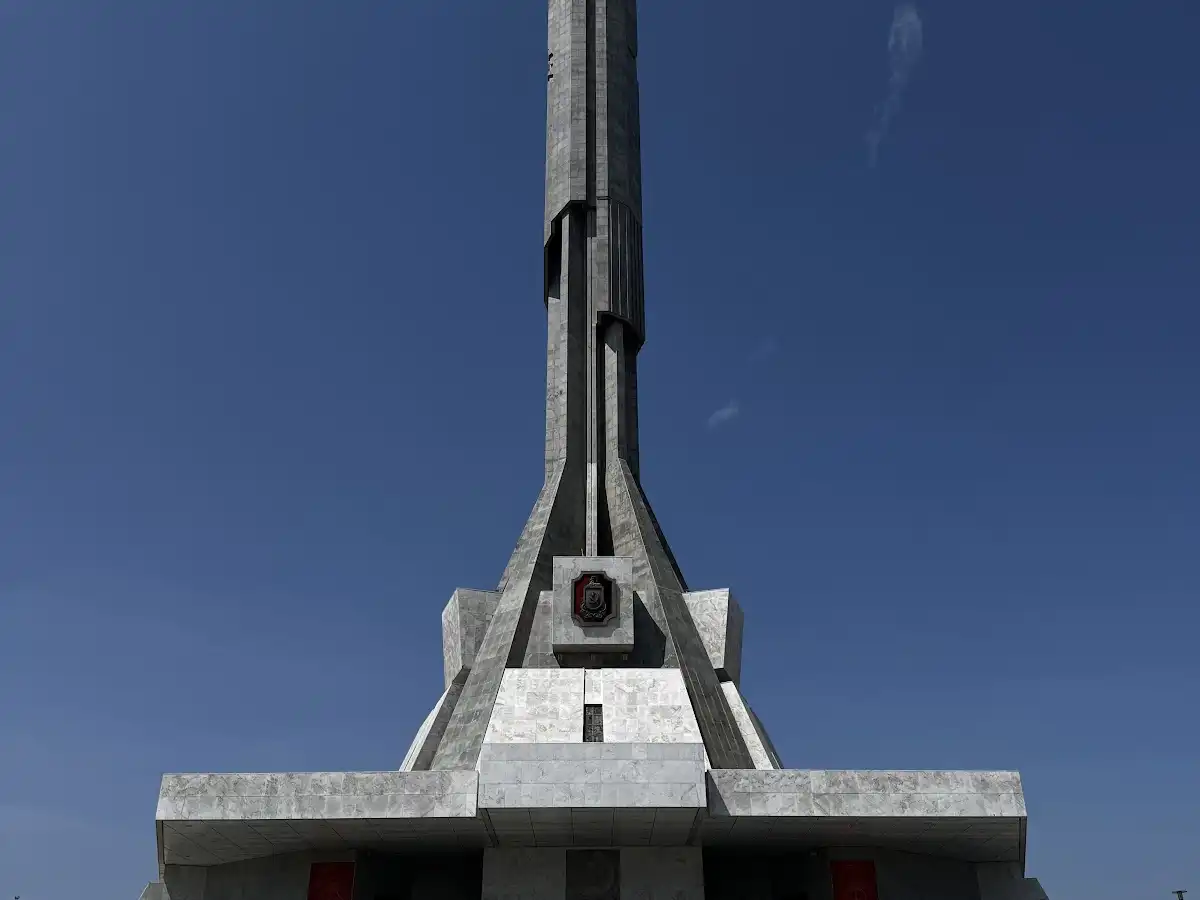
The pale, rocket-shaped tower that rises over central Luanda is the resting place of Agostinho Neto, Angola’s first president, and it is the shape people photograph first. Up close, the concrete is chalky in the afternoon glare, traffic hums from the avenues below, and the plaza smells of hot asphalt and sea air from the bay. Crowds are thin, which can feel eerie, and the rules are strict: guards may limit photos, and the dress and conduct expected are formal. Entry is modest in cost, yet the real value is the Cold War story and the quiet. It sits in the capital, a short ride from the waterfront. Compared with Kalandula Falls or Kissama, it is a brief city stop, not a trek.

Discover everything you want to know in the 📖 Angola Travel Guide.


example page 0 from our offline Travel Guide for Angola
example page 1 from our offline Travel Guide for Angola
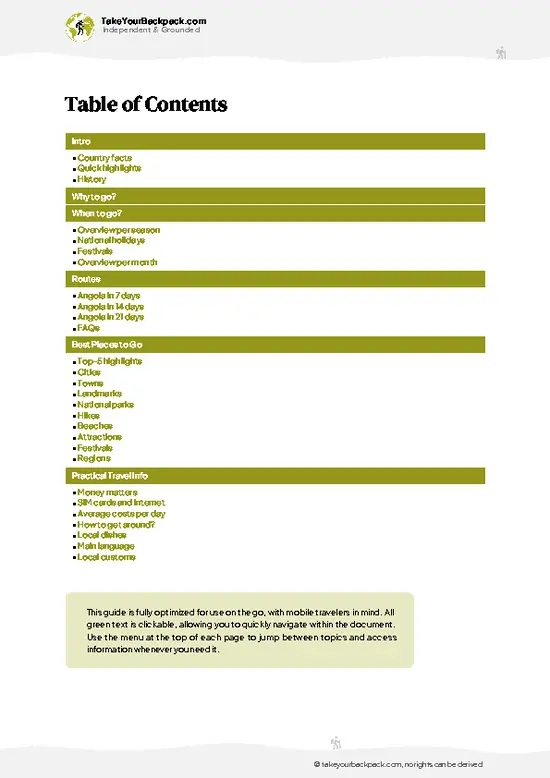
example page 2 from our offline Travel Guide for Angola
example page 3 from our offline Travel Guide for Angola
example page 4 from our offline Travel Guide for Angola
example page 5 from our offline Travel Guide for Angola
example page 6 from our offline Travel Guide for Angola
example page 7 from our offline Travel Guide for Angola
Loading the map 🌍
CLICK TO FILTER
cities
towns
landmarks
national parks
hikes
beaches
attractions
festivals
regions
SHOW COUNTRY’S BESTSHOW ALL

✨ Why go?
Ranked #7 attraction in Angola
What makes it a must-see attraction

Backpackers come for the Soviet-designed tower, a monument that looks like nothing else in southern Africa. Construction began in the 1980s, and the long delay before it opened tells you plenty about Angola’s war years and its slow rebuilding. Standing at its base, you read the country’s politics in concrete.
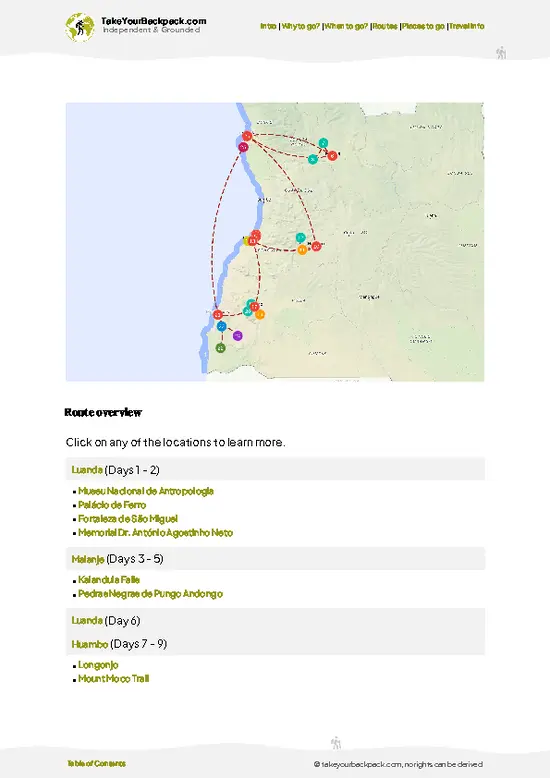
The second reason is context. Neto, poet and doctor, led the MPLA and declared independence in 1975, and understanding him makes the rest of Angola easier to read, from the street names to the murals to the way people speak about the liberation struggle. Pair this with the Fortaleza de São Miguel and the Museum of Slavery, and Luanda starts to make sense.
It is also a useful milestone on a route. Luanda is where most trips begin or end, and this is a free-feeling, low-effort stop you can … read more 👉
Backpackers come for the Soviet-designed tower, a monument that looks like nothing else in southern Africa. Construction began in the 1980s, and the long delay before it opened tells you plenty about Angola’s war years and its slow rebuilding. Standing at its base, you read the country’s politics in concrete.
The second reason is context. Neto, poet and doctor, led the MPLA and declared independence in 1975, and understanding him makes the rest of Angola easier to read, from the street names to the murals to the way people speak about the liberation struggle. Pair this with the Fortaleza de São Miguel and the Museum of Slavery, and Luanda starts to make sense.
It is also a useful milestone on a route. Luanda is where most trips begin or end, and this is a free-feeling, low-effort stop you can fit in a half day between errands and onward buses.

💡 HighlightsThe experiences that define the visit

  1. The tower itself: a tall, stepped concrete spire often compared to a rocket, visible from many parts of central Luanda. Its scale is best felt from the foot of the steps, looking straight up.
  2. The approach plaza: wide, open paving where the wind off the bay carries sound away. Walk slowly and you notice how few people share it, which is the opposite of Luanda’s market streets.
  3. Neto’s mausoleum chamber: the burial place of Angola’s first president, who died in Moscow in 1979. Expect hushed guards, cool air and strict etiquette. Dress neatly and follow staff instructions.
  4. Exhibits and memorabilia: when open, displays on Neto’s life as doctor, poet and leader give the independence story a human face. Portuguese labels dominate, so a phrasebook or translation app helps.
  5. City views: from the grounds
… read more 👉
  1. The tower itself: a tall, stepped concrete spire often compared to a rocket, visible from many parts of central Luanda. Its scale is best felt from the foot of the steps, looking straight up.
  2. The approach plaza: wide, open paving where the wind off the bay carries sound away. Walk slowly and you notice how few people share it, which is the opposite of Luanda’s market streets.
  3. Neto’s mausoleum chamber: the burial place of Angola’s first president, who died in Moscow in 1979. Expect hushed guards, cool air and strict etiquette. Dress neatly and follow staff instructions.
  4. Exhibits and memorabilia: when open, displays on Neto’s life as doctor, poet and leader give the independence story a human face. Portuguese labels dominate, so a phrasebook or translation app helps.
  5. City views: from the grounds you read Luanda’s layers, colonial blocks, modern towers and the curve of the bay. Late afternoon light turns the concrete warm and the haze gold.
  6. The photography game: the tower’s clean lines suit wide-angle shots from low angles. Ask a guard before raising a camera, since rules differ and are enforced.
If time is short, skip the exhibits and spend your minutes on the tower and plaza, which carry most of the impact.
Spotted a mistake or missing something? Contact us.

Things to do near Memorial Dr. António Agostinho Neto

Ratings based on Tripadvisor reviews. When you book through this link, you support our work at no extra cost to you.

🌤️ When to go?Weather, crowds, and seasonal trade-offs

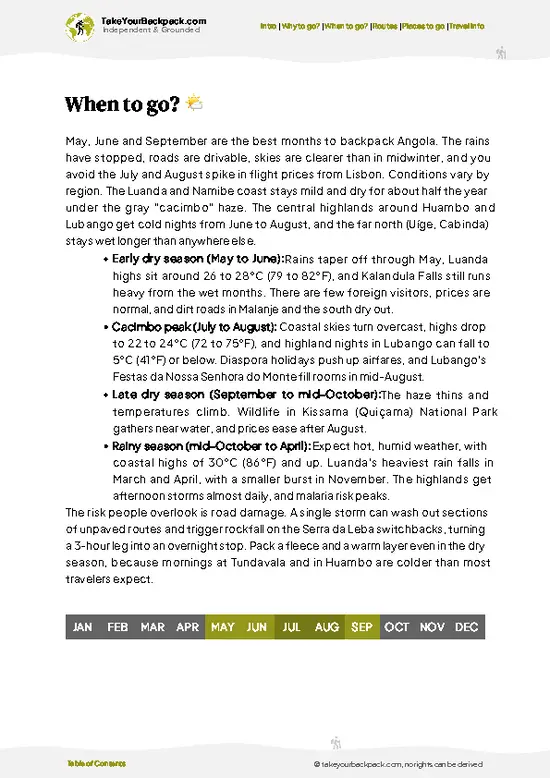
The best time to visit the Memorial Dr. António Agostinho Neto in Luanda is the dry season, roughly May to September, when days run 22 to 28°C (72 to 82°F) and rain is rare.
  • Cacimbo (May to September): Cooler, overcast mornings, 20 to 27°C (68 to 81°F), and sunset around 17:45. The esplanade photos are crisp and walking the hilltop plaza is comfortable.
  • Hot and Rainy Season (October to April): Humid, 26 to 32°C (79 to 90°F), with afternoon downpours that can flood Luanda streets. Visit early, and expect sunset near 18:30.
  • Crowds and Prices: The site stays quiet most of the year. Flights and hotels spike around Christmas and the Carnival period (February or March), when diaspora visitors arrive.
  • Public Holidays: Check opening days around national holidays, as the monument can close for official
… read more 👉
The best time to visit the Memorial Dr. António Agostinho Neto in Luanda is the dry season, roughly May to September, when days run 22 to 28°C (72 to 82°F) and rain is rare.
  • Cacimbo (May to September): Cooler, overcast mornings, 20 to 27°C (68 to 81°F), and sunset around 17:45. The esplanade photos are crisp and walking the hilltop plaza is comfortable.
  • Hot and Rainy Season (October to April): Humid, 26 to 32°C (79 to 90°F), with afternoon downpours that can flood Luanda streets. Visit early, and expect sunset near 18:30.
  • Crowds and Prices: The site stays quiet most of the year. Flights and hotels spike around Christmas and the Carnival period (February or March), when diaspora visitors arrive.
  • Public Holidays: Check opening days around national holidays, as the monument can close for official ceremonies.
Aim for a weekday morning, before the heat and the traffic build.


source: climatestotravel.comJANJanuary: fair for travelingFEBFebruary: fair for travelingMARMarch: fair for travelingAPRApril: fair for travelingMAYMay: excellent for travelingJUNJune: highly recommended for travelingJULJuly: highly recommended for travelingAUGAugust: good for travelingSEPSeptember: excellent for travelingOCTOctober: fair for travelingNOVNovember: fair for travelingDECDecember: fair for traveling
angola-attraction-memorial-dr-antonio-agostinho-neto
© Google |

✈️ The backpacker research shortcutAngola Travel Guide

An offline-friendly backpacking guide with optimized travel routes, ranked highlights, transport advice, and the best areas to stay.
example page 0 from our offline Travel Guide for Angola
example page 1 from our offline Travel Guide for Angola
example page 2 from our offline Travel Guide for Angola
example page 3 from our offline Travel Guide for Angola
example page 4 from our offline Travel Guide for Angola
example page 5 from our offline Travel Guide for Angola
example page 6 from our offline Travel Guide for Angola
example page 7 from our offline Travel Guide for Angola
The digital guide (246 pages) contains:
✅ 71 highlights, ranked by travel appeal
✅ Optimized 7, 14 & 21-day travel routes
✅ Cities, national parks, landmarks, beaches
✅ How to get around
✅ Offline-friendly for travel without Wi-Fi
👉 Click to see all 30+ guide features

📅 Plan smarter in minutes, not weeks
✅ Month by month travel advice
✅ Festivals & national holidays
✅ Budget expectations

🗺️ Go to the right places, skip the overrated ones
✅ Honest pros & cons of destinations
✅ Top hikes, parks & viewpoints
✅ Lesser-known places most travelers miss
✅ Clear “worth it vs skip it” guidance

🛏️ Travel smoothly without rookie mistakes
✅ Best areas to stay
✅ Transport systems explained simply
✅ Common scams & safety advice
✅ SIM cards, money & practical tips

🌍 Understand the country, not just visit it
✅ Culture & traditions
✅ 52 Essential phrases & customs
✅ Festivals worth planning around
✅ Traveler-friendly historical context
✅ Insights that make places more meaningful

📱 Built for real travel conditions
✅ Fully downloadable PDF
✅ Works completely offline
✅ Optimized for phone use
✅ Useful in remote areas & buses
✅ Everything in one place
Stop searching, start planning
Get instant access to your full guide. 30‑day money-back guarantee.
+ Add another guide for just

By proceeding you agree to our terms.
Sent to your inbox immediately after payment • 100% Secure Checkout
Best Backpacking Travel Advisor 2025 tourism awardBest Backpacking
Travel Advisor
2025
What others say about Take Your Backpack Guides:
⭐⭐⭐⭐⭐
Fantastic, amazing amount of information!
⭐⭐⭐⭐⭐
My goodness this is amazing, it's what I've been looking for hats off too you!
⭐⭐⭐⭐⭐
I think this is absolutely BRILLIANT
⭐⭐⭐⭐
Very complete and informative. It's still missing places, but I gotta to commend you
⭐⭐⭐⭐⭐
This is truly amazing, thank you, can't wait to explore it with my kids!
⭐⭐⭐⭐⭐
Awesome resource, thank you!
⭐⭐⭐⭐⭐
This is amazing! Can't wait to explore the ones I haven't seen
⭐⭐⭐⭐
I love this! Well done, great idea.
⭐⭐⭐⭐⭐
Thanks for taking the time to make this gem!
⭐⭐⭐⭐⭐
This might be the best website I've ever seen.
⭐⭐⭐⭐⭐
Congratulations, and thank you so much for your work; it's incredibly valuable.
⭐⭐⭐⭐
In all seriousness I think you did a great job pointing out the important spots
⭐⭐⭐⭐⭐
10/10 very good
⭐⭐⭐⭐⭐
As someone who's only just starting to visit regularly this is awesome, thank you.
⭐⭐⭐⭐
Thank you very much! I'm going to visit my dad, it's going to be very useful!
⭐⭐⭐⭐⭐
This is really cool! We'll be travelling for the first time and this definitely come in handy.
⭐⭐⭐⭐⭐
You are now our minister of culture, congratulations 👨‍💼
⭐⭐⭐⭐⭐
Just wanted to tell you that this is a pearl! Going to follow your recommendations.
⭐⭐⭐⭐⭐
This is so cool. I'll definitely be using the resource for my travels soon.
⭐⭐⭐⭐⭐
This is very impressive! Good work.
⭐⭐⭐⭐⭐
This is an amazing and informative site. Very well done!

🛏️ Where to stay?Choosing the right base

The best base for the memorial is Ilha de Luanda or the central Baixa and Ingombota districts, because both put you within a short taxi ride of the Praia do Bispo site.
Ingombota is the most practical choice for budget travelers. It has the densest cluster of guesthouses, cheap restaurants, ATMs and street life, and you can walk to the bay promenade (Marginal) in minutes. Daytime is fine on foot, but take a taxi or ride-hailing car after dark.
Miramar, just along the coast, is calmer and more residential, with embassies and better lighting at night. Rooms there cost more, yet it is the safest area … read more 👉
The best base for the memorial is Ilha de Luanda or the central Baixa and Ingombota districts, because both put you within a short taxi ride of the Praia do Bispo site.
Ingombota is the most practical choice for budget travelers. It has the densest cluster of guesthouses, cheap restaurants, ATMs and street life, and you can walk to the bay promenade (Marginal) in minutes. Daytime is fine on foot, but take a taxi or ride-hailing car after dark.
Miramar, just along the coast, is calmer and more residential, with embassies and better lighting at night. Rooms there cost more, yet it is the safest area for solo travelers who prefer quiet evenings and are happy to pay a little extra.
Ilha de Luanda, the sand spit across the bay, is where the social scene lives: beach bars, seafood grills and a young local crowd on weekends. Budget beds are limited, so book ahead.
Angola has few true backpacker hostels, so expect small guesthouses and shared apartments. Pick somewhere with a gated entrance and a reliable driver contact, and avoid walking long distances with valuables.

👛 Costs (as of 13 October 2026)What things cost and how to budget

Visiting the memorial is inexpensive, but Luanda itself is one of the costliest cities for travelers, so daily spending depends mostly on where you sleep and eat.
CategoryBudget RangeLocal Reality
EntryFree to US$5The grounds are generally open to visitors; any museum or guided access may carry a small fee payable in cash.
Guide or PhotographyUS$0 to 10Informal guides sometimes offer help. Agree on the price first, and ask before using a drone or tripod.
Local TransportUS$2 to 15Blue-and-white candongueiro minibuses cost under US$1 but are crowded. Taxis and ride-hailing apps cost roughly US$4 to 15 per trip, depending on traffic.
FoodUS$10 to 30Street grills and local cafeterias serve a plate for US$4 to 8. Mid-range restaurants charge US$15 to 30.
AccommodationUS$50 to 120Simple guesthouses start
… read more 👉
Visiting the memorial is inexpensive, but Luanda itself is one of the costliest cities for travelers, so daily spending depends mostly on where you sleep and eat.
CategoryBudget RangeLocal Reality
EntryFree to US$5The grounds are generally open to visitors; any museum or guided access may carry a small fee payable in cash.
Guide or PhotographyUS$0 to 10Informal guides sometimes offer help. Agree on the price first, and ask before using a drone or tripod.
Local TransportUS$2 to 15Blue-and-white candongueiro minibuses cost under US$1 but are crowded. Taxis and ride-hailing apps cost roughly US$4 to 15 per trip, depending on traffic.
FoodUS$10 to 30Street grills and local cafeterias serve a plate for US$4 to 8. Mid-range restaurants charge US$15 to 30.
AccommodationUS$50 to 120Simple guesthouses start near US$50 a night. Prices are high and quality varies, so confirm air conditioning and power backup.
ExtrasUS$5 to 15Bottled water, a SIM card and snacks. Carry cash in kwanza (AOA), as many small vendors do not take cards.
⚠️ Prices can change and everyone travels differently, so take this as a rough guide. Hope it helps you plan your adventure!

FAQTraveler FAQ

Plan on 45 minutes to 1.5 hours, which covers the plaza, the tower exterior and the exhibits if they are open. Add 20 to 30 minutes for security checks and photo restrictions. Many travelers combine it with the Fortaleza de São Miguel and the Ilha do Cabo waterfront for a half-day central Luanda loop.
For most backpackers, yes, since the cost is small and the tower is one of Luanda’s most distinctive sights. Fees and opening hours can change, so confirm on arrival, and expect to pay a modest amount in kwanza. The value comes from the Soviet-era design and the context on Agostinho Neto, who declared independence in 1975, rather than from long exhibits.
Take a taxi or a ride-hailing app from central Luanda, which usually takes 10 to 25 minutes depending on traffic. A ride from Ilha do Cabo or Baixa typically costs around 2,000 to 5,000 kwanza (roughly US$2 to 6). Avoid rush hours, 7 to 9 am and 4 to 7 pm, when Luanda’s avenues jam, and ask your driver to wait for the return.
⚠️ Things can change over time, so always validate details locally before you go.

Other Angolan attractions near Memorial Dr. António Agostinho Neto

Explore more nearby:


💡 Not sure where to go next?
Create a personalized itinerary for Angola including Memorial Dr. António Agostinho Neto and the places that fit your trip.

Generate my itinerary

👉 Discover all attractions

Or checkout all Angola has to offer (think cities, towns, villages, national parks, hikes, beaches, festivals)
Country photo of Angola

We 💚 feedbackWhat to keep in mind

Treat this as a morning stop, then roll straight on to the Fortaleza de São Miguel and the Ilha do Cabo waterfront for lunch, since all of it fits in a single taxi loop. Bring your passport copy and dress neatly. The tower looks best before the midday haze flattens it, and a guard’s polite no on photos is final.

✍️ Help improve this page!
The information on this page is based on in-depth research, insights shared by experienced travelers, and feedback from the local travel community in Angola. While every effort is made to keep the information accurate and current, conditions can change — so if you spot anything incorrect or outdated, please get in touch.


🙋‍♂️ Give feedback

👋 Meet the founderWho’s Behind Take Your Backpack?

Johan, backpacker and founder of TakeYourBackpackHi, I’m Johan (Netherlands 🇳🇱), the creator of TakeYourBackpack. Over the past 3 decades, I’ve backpacked through 90+ countries across six continents, gaining extensive experience with independent travel, long-term trips, and overland routes.

This site is built on a combination of firsthand travel experience and carefully curated insights from other backpackers. Many guides are based on places I’ve personally visited, while others bring together tips, observations, and practical advice shared by trusted travelers I’ve met along the way.

The goal is to provide realistic, experience-driven guidance — not generic itineraries — so you can explore destinations with better context, clearer expectations, and more confidence.