×

Angola🇦🇴 | citiesMenonguerailway hub, river crossings, rural gateway | things to do and best time to go

Explore OndjivaExplore Sumbe

Backpacking in Menongue
🌟 Highlightcity ranked #11
By Johan Kruseman 🇳🇱 | Updated September 3, 2026

Forget the idea that Menongue is just a dusty stopover on the way to somewhere else—this city is the capital of Angola’s Cuando Cubango province, deep in the country’s southeast, and it’s got its own pulse if you know where to look. Menongue isn’t polished or packed with hostels, but that’s exactly its draw: you’ll find colonial-era railway relics, a lively central market, and the faded grandeur of Praça Agostinho Neto, all without the crowds of Luanda or Lubango. Costs are lower, but so is tourist infrastructure; English is rare, and you’ll need patience to navigate transport. Safety is reasonable by Angolan standards, but solo backpackers will stand out. The vibe? Gritty, real, and refreshingly uncurated—Menongue rewards curiosity, not comfort.

Discover everything you want to know in the 📖 Angola Travel Guide.


Get your Angola guide
90 ranked highlights, routes & tips, works offline (341 pages)
Loading the map 🌍
CLICK TO FILTER
cities
towns
landmarks
national parks
hikes
beaches
attractions
festivals
regions
SHOW COUNTRY’S BESTSHOW ALL

✨ Why go?
Ranked #11 city in Angola
What sets this place apart

Menongue is a strategic stop for backpackers weaving through Angola. It offers a solid basecamp for day trips into the surrounding wilderness, making it easy to explore without the hassle of constant packing. The hostels here are budget-friendly and often buzzing with fellow travelers, creating a vibrant atmosphere for sharing stories and tips.

You’ll find affordable food options that reflect local flavors, perfect for fueling your adventures. The city is walkable, allowing you to soak in the sights without needing a vehicle. When the sun sets, the nightlife offers a laid-back vibe, ideal for unwinding after a day of exploration. Plus, Menongue’s transport links make onward travel straightforward, whether you’re heading deeper into Angola or beyond. It’s a place that balances comfort and value, making it worth your time.
Want to include Menongue in your Angola route?
Create a personalized Angola itinerary that includes Menongue and the places that fit your trip — based on your travel style, budget, and available time. Get your route in seconds.

Generate my trip

💡 HighlightsWhat this place is best known for

  • Menongue railway terminus (historic train station) — The end-point of the old colonial-era rail line; the station and surrounding yards give you a real feel for the town’s transport history and are a living slice of local life when trains or maintenance crews are active.
  • Mercado Municipal de Menongue — A bustling market where you’ll find fresh produce, grilled street food, fish, and stalls selling Mbunda textiles and everyday crafts. Great for people-watching and getting honest, cheap meals.
  • Praça Central / Independence Square — The city’s social hub: vendors, cafes, and monuments meet the flow of daily life. It’s the easiest place to soak up Menongue’s rhythms and grab a candid photo or two.
  • Igreja Matriz (main parish church) — The central church is where many locals gather; architecture
read more 👉
  • Menongue railway terminus (historic train station) — The end-point of the old colonial-era rail line; the station and surrounding yards give you a real feel for the town’s transport history and are a living slice of local life when trains or maintenance crews are active.
  • Mercado Municipal de Menongue — A bustling market where you’ll find fresh produce, grilled street food, fish, and stalls selling Mbunda textiles and everyday crafts. Great for people-watching and getting honest, cheap meals.
  • Praça Central / Independence Square — The city’s social hub: vendors, cafes, and monuments meet the flow of daily life. It’s the easiest place to soak up Menongue’s rhythms and grab a candid photo or two.
  • Igreja Matriz (main parish church) — The central church is where many locals gather; architecture and weekday services give insight into faith and community life in the region.
  • Centro Cultural Provincial (local cultural center) — The provincial cultural house stages music, dance and small exhibitions that showcase Mbunda and other local traditions — check the noticeboard for events.
  • Estádio Municipal — Catching a local football match here is one of the best low-cost ways to meet people and feel the town’s energy; games are loud, friendly and real.
  • Railway workshops and locomotive yard — Right by the terminus, the maintenance sheds and old locomotives are interesting for photography and for anyone curious about Angola’s rail history (ask permission before wandering into working areas).
  • Riverbank walks (tributary channels through town) — Menongue sits near seasonal waterways; short walks along the river edges reward you with fishing activity, birdlife and local riverside life that’s quieter than the market.
  • Artisan stalls and small workshops — Scattered near the market and around the centre, you’ll find woodcarvers, basket-makers and seamstresses producing traditional goods — good places to buy authentic souvenirs and chat with makers.
  • Local memorials and independence monuments — The town’s monuments honour local history from the colonial and conflict periods; they’re simple, often emotional sites that help explain the recent past to visitors who take time to read plaques and ask locals about stories.
For day trips from Menongue: consider visiting the Cuito Cuanavale area (historic battle sites and memorials), the headwaters and seasonal wetlands of the Cuito River for wildlife and birding, and nearby Mbunda villages for deeper cultural visits — all realistically reachable as full-day excursions from Menongue.
Spotted a mistake or missing something? Contact us.
🏘️ NeighborhoodsKey areas and districts to know

Menongue offers a unique blend of culture and accessibility for backpackers. Here’s a breakdown of key neighborhoods to help you navigate your stay.

Centro: The heart of Menongue, Centro is bustling with local markets and eateries. It’s walkable, making it easy to explore on foot. Prices are moderate, and you’ll find a mix of budget accommodations. Nightlife here is lively, with bars and music venues. Perfect for short stays where you want to soak in the local vibe.

Baía dos Tigres: This area is quieter, ideal for those seeking a more relaxed atmosphere. Accommodations are slightly pricier, but the peace is worth it. It’s less walkable, so plan for taxis or rideshares. Great for longer stays if you want to unwind after a day of exploring.

Chicala: A bit off the beaten path, Chicala offers … read more 👉
Menongue offers a unique blend of culture and accessibility for backpackers. Here’s a breakdown of key neighborhoods to help you navigate your stay.

Centro: The heart of Menongue, Centro is bustling with local markets and eateries. It’s walkable, making it easy to explore on foot. Prices are moderate, and you’ll find a mix of budget accommodations. Nightlife here is lively, with bars and music venues. Perfect for short stays where you want to soak in the local vibe.

Baía dos Tigres: This area is quieter, ideal for those seeking a more relaxed atmosphere. Accommodations are slightly pricier, but the peace is worth it. It’s less walkable, so plan for taxis or rideshares. Great for longer stays if you want to unwind after a day of exploring.

Chicala: A bit off the beaten path, Chicala offers a glimpse into local life. It’s affordable, but you’ll need to rely on public transport or taxis to get around. The vibe is laid-back, making it suitable for longer stays where you can immerse yourself in the community.

Choose wisely based on your priorities, and you’ll find the right balance of time, money, and comfort.

⌛️ 1 dayWhat you can realistically do in a day

Menongue, Angola, is a city where the pulse of local life beats strong, offering a unique blend of culture and history. Nestled in the heart of the Cuando Cubango province, it’s a place where you can feel the warmth of the people and the richness of their traditions.

Start your morning at the bustling Mercado Municipal. Here, the vibrant colors of fresh produce and local crafts create a sensory feast. Engage with vendors, sample some local fruits, and soak in the lively atmosphere. Afterward, take a short stroll to the nearby Igreja de São João, a charming church that showcases the city’s colonial architecture and offers a moment of quiet reflection.

In the afternoon, head to the Parque Nacional de Cameia, just outside the city. While it’s not a typical tourist spot, the park’s serene landscapes … read more 👉
Menongue, Angola, is a city where the pulse of local life beats strong, offering a unique blend of culture and history. Nestled in the heart of the Cuando Cubango province, it’s a place where you can feel the warmth of the people and the richness of their traditions.

Start your morning at the bustling Mercado Municipal. Here, the vibrant colors of fresh produce and local crafts create a sensory feast. Engage with vendors, sample some local fruits, and soak in the lively atmosphere. Afterward, take a short stroll to the nearby Igreja de São João, a charming church that showcases the city’s colonial architecture and offers a moment of quiet reflection.

In the afternoon, head to the Parque Nacional de Cameia, just outside the city. While it’s not a typical tourist spot, the park’s serene landscapes and diverse wildlife make it a worthy detour. Spend a few hours exploring the trails, keeping an eye out for the unique flora and fauna that call this area home.

As evening approaches, return to Menongue and find a local eatery in the Bairro da Luz neighborhood. Enjoy traditional Angolan dishes like funge and moamba de galinha, while chatting with locals who are eager to share stories about their city.

This day in Menongue is not just about ticking boxes; it’s about immersing yourself in the local rhythm, making connections, and savoring the experience.
Turn your Menongue visit into an Angola adventure
Build a complete Angola route with Menongue, hidden gems, must-see destinations, and realistic travel times included.

Generate my trip

🌤️ When to go?When to go for the best experience


  • Topic: Weather – Menongue experiences a tropical savanna climate with a distinct wet season from November to April. Heavy rains can turn dirt roads into mud traps, slowing travel and limiting outdoor activities.

  • Topic: Temperature – Daytime highs hover around 28-32°C (82-90°F) year-round, but the dry season (May to October) brings cooler nights, dropping to 12-15°C (54-59°F), making early mornings and evenings more comfortable for hiking and exploring.

  • Topic: Daylight Hours – Near the equator, daylight remains steady at about 12 hours daily, so no major shifts in hiking or sightseeing windows throughout the year.

  • Topic: Crowds – Menongue is off the beaten path, so crowds are minimal year-round. However, local festivals during the dry season can bring a lively, authentic atmosphere
read more 👉

  • Topic: Weather – Menongue experiences a tropical savanna climate with a distinct wet season from November to April. Heavy rains can turn dirt roads into mud traps, slowing travel and limiting outdoor activities.

  • Topic: Temperature – Daytime highs hover around 28-32°C (82-90°F) year-round, but the dry season (May to October) brings cooler nights, dropping to 12-15°C (54-59°F), making early mornings and evenings more comfortable for hiking and exploring.

  • Topic: Daylight Hours – Near the equator, daylight remains steady at about 12 hours daily, so no major shifts in hiking or sightseeing windows throughout the year.

  • Topic: Crowds – Menongue is off the beaten path, so crowds are minimal year-round. However, local festivals during the dry season can bring a lively, authentic atmosphere without overwhelming tourism.

  • Topic: Seasonal Activities – The dry season is prime for wildlife spotting and trekking, as animals gather near water sources. The wet season offers lush landscapes but can restrict access to remote trails.

  • Topic: Price Fluctuations – Accommodation and transport costs dip during the wet season due to lower demand, but expect to pay a premium for comfort and reliability in the dry months when travel is easier.


Pro-tip: Aim for the shoulder months of May and October to balance fewer crowds, manageable weather, and better prices—your sweet spot for smart, comfortable backpacking in Menongue.


source: climatestotravel.comJANJanuary: fair for travelingFEBFebruary: fair for travelingMARMarch: fair for travelingAPRApril: fair for travelingMAYMay: highly recommended for travelingJUNJune: excellent for travelingJULJuly: excellent for travelingAUGAugust: excellent for travelingSEPSeptember: excellent for travelingOCTOctober: highly recommended for travelingNOVNovember: fair for travelingDECDecember: fair for traveling
angola-city-menongue
© Google |

✈️ The backpacker research shortcutAngola Travel Guide

An offline-friendly backpacking guide with optimized travel routes, ranked highlights, transport advice, and the best areas to stay.
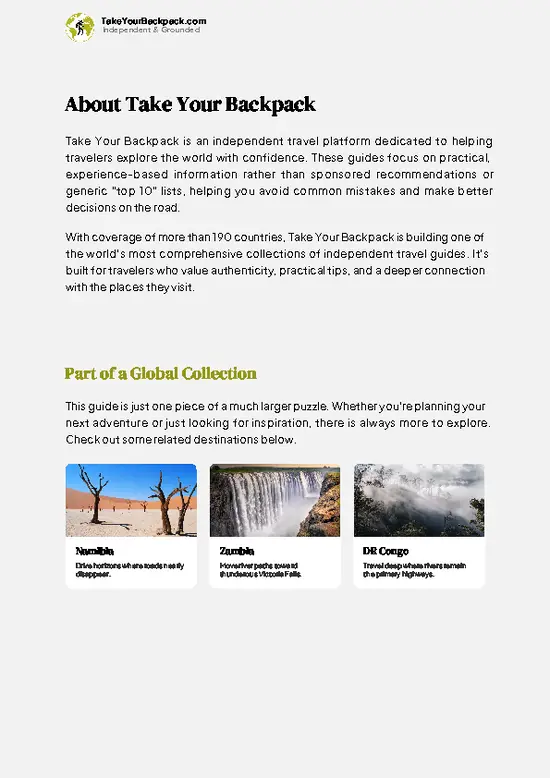
example page 0 from our offline Travel Guide for Angola
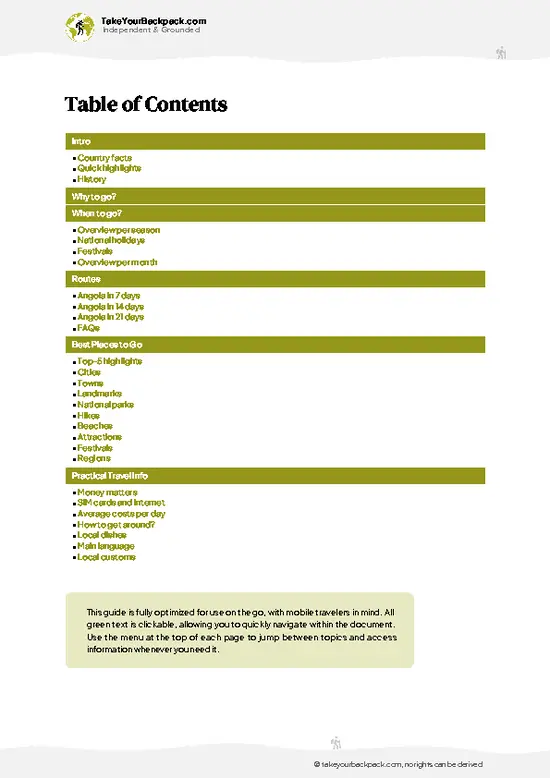
example page 1 from our offline Travel Guide for Angola
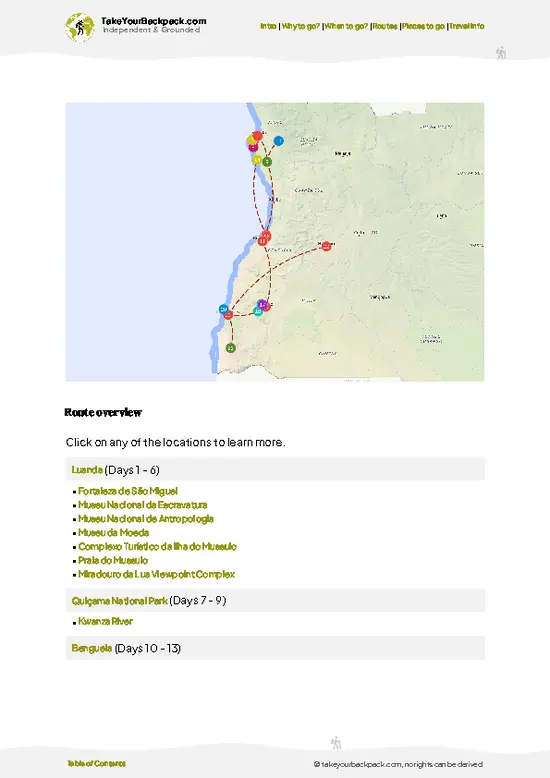
example page 2 from our offline Travel Guide for Angola
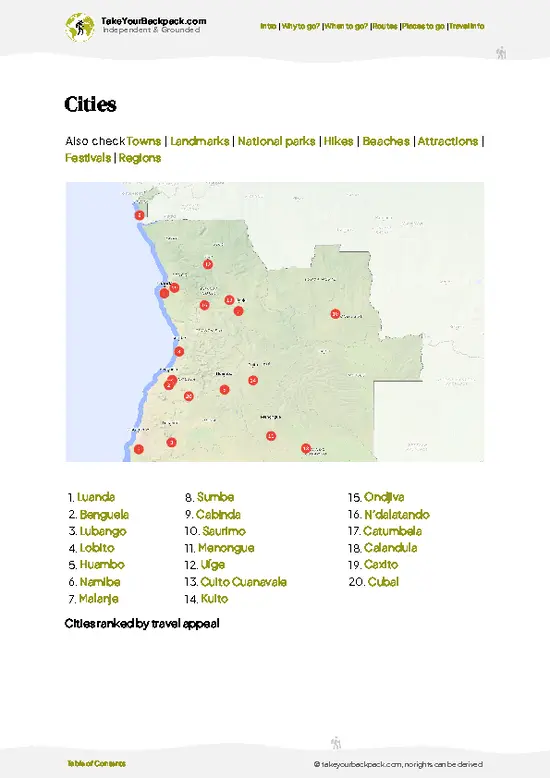
example page 3 from our offline Travel Guide for Angola
example page 4 from our offline Travel Guide for Angola
example page 5 from our offline Travel Guide for Angola
example page 6 from our offline Travel Guide for Angola
example page 7 from our offline Travel Guide for Angola
The digital guide (341 pages) contains:
90 highlights, ranked by travel appeal
Optimized 7, 14 & 21-day travel routes
Cities, national parks, landmarks, beaches
How to get around
Offline-friendly for travel without Wi-Fi
👉 Click to see all 30+ guide features

📅 Plan smarter in minutes, not weeks
Month by month travel advice
Festivals & national holidays
Budget expectations

🗺️ Go to the right places, skip the overrated ones
Honest pros & cons of destinations
Top hikes, parks & viewpoints
Lesser-known places most travelers miss
Clear “worth it vs skip it” guidance

🛏️ Travel smoothly without rookie mistakes
Best areas to stay
Transport systems explained simply
Common scams & safety advice
SIM cards, money & practical tips

🌍 Understand the country, not just visit it
Culture & traditions
52 Essential phrases & customs
Festivals worth planning around
Traveler-friendly historical context
Insights that make places more meaningful

📱 Built for real travel conditions
Fully downloadable PDF
Works completely offline
Optimized for phone use
Useful in remote areas & buses
Everything in one place
Save weeks of stressful planning
Get instant access to your full guide. 30‑day money-back guarantee.
+ Add another guide for just US$7.80

By proceeding you agree to our terms.
Sent to your inbox immediately after payment • 100% Secure Checkout
Best Backpacking Travel Advisor 2025 tourism awardBest Backpacking
Travel Advisor
2025
What others say about Take Your Backpack Guides:
⭐⭐⭐⭐⭐
Fantastic, amazing amount of information!
⭐⭐⭐⭐⭐
My goodness this is amazing, it's what I've been looking for hats off too you!
⭐⭐⭐⭐⭐
I think this is absolutely BRILLIANT
⭐⭐⭐⭐
Very complete and informative. It's still missing places, but I gotta to commend you
⭐⭐⭐⭐⭐
This is truly amazing, thank you, can't wait to explore it with my kids!
⭐⭐⭐⭐⭐
Awesome resource, thank you!
⭐⭐⭐⭐⭐
This is amazing! Can't wait to explore the ones I haven't seen
⭐⭐⭐⭐
I love this! Well done, great idea.
⭐⭐⭐⭐⭐
Thanks for taking the time to make this gem!
⭐⭐⭐⭐⭐
This might be the best website I've ever seen.
⭐⭐⭐⭐⭐
Congratulations, and thank you so much for your work; it's incredibly valuable.
⭐⭐⭐⭐
In all seriousness I think you did a great job pointing out the important spots
⭐⭐⭐⭐⭐
10/10 very good
⭐⭐⭐⭐⭐
As someone who's only just starting to visit regularly this is awesome, thank you.
⭐⭐⭐⭐
Thank you very much! I'm going to visit my dad, it's going to be very useful!
⭐⭐⭐⭐⭐
This is really cool! We'll be travelling for the first time and this definitely come in handy.
⭐⭐⭐⭐⭐
You are now our minister of culture, congratulations 👨‍💼
⭐⭐⭐⭐⭐
Just wanted to tell you that this is a pearl! Going to follow your recommendations.
⭐⭐⭐⭐⭐
This is so cool. I'll definitely be using the resource for my travels soon.
⭐⭐⭐⭐⭐
This is very impressive! Good work.
⭐⭐⭐⭐⭐
This is an amazing and informative site. Very well done!

🛏️ Where to stay?Where staying makes the most sense

Menongue’s backpacker scene is compact but distinct, with a clear hotspot for those traveling light and social. The best area to base yourself is around the city center, where the pulse of daily life hums strongest. This neighborhood balances safety and accessibility, making it a natural magnet for budget travelers and solo adventurers. Streets here are walkable, with enough local eateries and informal markets to keep you fueled without breaking the bank.

Hostel options are limited but tend to cluster near this central zone, creating a small but lively community of like-minded travelers. The … read more 👉
Menongue’s backpacker scene is compact but distinct, with a clear hotspot for those traveling light and social. The best area to base yourself is around the city center, where the pulse of daily life hums strongest. This neighborhood balances safety and accessibility, making it a natural magnet for budget travelers and solo adventurers. Streets here are walkable, with enough local eateries and informal markets to keep you fueled without breaking the bank.

Hostel options are limited but tend to cluster near this central zone, creating a small but lively community of like-minded travelers. The vibe is low-key but friendly—think casual meetups over shared meals rather than loud party scenes. Compared to the more residential outskirts, which can feel isolated and less secure, the center offers a practical trade-off: you sacrifice some quiet for convenience and connection. It’s the sweet spot where comfort meets economy, and where you can easily tap into local rhythms without the hassle of long commutes or sketchy neighborhoods.

🚌 Getting aroundHow to get around Menongue

Menongue moves at its own pace—neither a frantic rush nor a slow crawl. It’s a city where schedules exist but bend to local rhythms, where you’ll find moments of punctuality punctuated by stretches of improvisation. The flow here is a dance between necessity and flexibility, a system that rewards those who understand its pulse. Time, money, and comfort don’t align neatly; instead, they form a triangle where every choice shifts your experience. Knowing how to navigate this trade-off map means you’re not just getting from A to B—you’re mastering the city’s tempo.


  • Walking: The most reliable and cost-free option. Menongue’s compact center makes walking practical for short trips, giving you full control over your schedule and zero expense. Comfort depends on weather—prepare for heat and dust.
read more 👉
Menongue moves at its own pace—neither a frantic rush nor a slow crawl. It’s a city where schedules exist but bend to local rhythms, where you’ll find moments of punctuality punctuated by stretches of improvisation. The flow here is a dance between necessity and flexibility, a system that rewards those who understand its pulse. Time, money, and comfort don’t align neatly; instead, they form a triangle where every choice shifts your experience. Knowing how to navigate this trade-off map means you’re not just getting from A to B—you’re mastering the city’s tempo.


  • Walking: The most reliable and cost-free option. Menongue’s compact center makes walking practical for short trips, giving you full control over your schedule and zero expense. Comfort depends on weather—prepare for heat and dust.

  • Chapas (Shared Minibuses): These are the backbone of local transit. They run from early morning until dusk, roughly 6 AM to 6 PM, with fares around 50-100 Kwanza. Speed varies with traffic and stops, but they offer a direct, affordable way to cover medium distances. Expect basic comfort—crowded and bumpy rides are the norm.

  • Motorcycle Taxis (Mototaxis): Fast and flexible, mototaxis are perfect for beating traffic or reaching spots off the chapa routes. Prices start low but can climb depending on distance and negotiation skills. They operate day and night, but safety and comfort are trade-offs—helmet use is inconsistent, and rides can be rough.

  • Private Taxis: The priciest option, offering door-to-door service and relative comfort. Rates are negotiable but significantly higher than chapas or mototaxis. Ideal if you’re short on time or carrying heavy gear, but expect to pay a premium for convenience.


Understanding these options lets you play the game smart: save time by splurging on a taxi when it counts, or save money by mastering the chapa routes and walking the rest. Comfort is the wildcard—sometimes worth the extra coin, sometimes not. Your trip’s rhythm depends on how you balance these three forces.

👛 Costs (as of 3 September 2026)Typical daily expenses

Backpacking in Menongue, Angola, demands a clear-eyed view of where your money goes, so you can play the budget game smartly and avoid surprises.
  • Dorm Accommodation (High Season): Expect to pay around €15-€25 per night. Options are limited and basic, but this is the going rate when demand peaks.
  • Dorm Accommodation (Off-Season): Prices drop to about €10-€15. Fewer travelers mean better deals, but also fewer choices.
  • Meals: Local eateries serve filling meals for roughly €3-€6 each. Street food is cheaper, but hygiene standards vary, so pick your spots carefully.
  • Local Transport: Short rides on shared minibuses or moto-taxis cost about €0.50-€1.50. It’s cheap but expect crowded conditions and irregular schedules.
  • City Transport Pass: Menongue doesn’t have a formal city transport pass system.
read more 👉
Backpacking in Menongue, Angola, demands a clear-eyed view of where your money goes, so you can play the budget game smartly and avoid surprises.
  • Dorm Accommodation (High Season): Expect to pay around €15-€25 per night. Options are limited and basic, but this is the going rate when demand peaks.
  • Dorm Accommodation (Off-Season): Prices drop to about €10-€15. Fewer travelers mean better deals, but also fewer choices.
  • Meals: Local eateries serve filling meals for roughly €3-€6 each. Street food is cheaper, but hygiene standards vary, so pick your spots carefully.
  • Local Transport: Short rides on shared minibuses or moto-taxis cost about €0.50-€1.50. It’s cheap but expect crowded conditions and irregular schedules.
  • City Transport Pass: Menongue doesn’t have a formal city transport pass system. Budget for individual fares instead.
  • Basic Activities/Entry Fees: Cultural sites and small museums charge around €2-€5. Organized tours are rare and pricier, so plan accordingly.
  • Miscellaneous Expenses: Include about €2-€4 daily for essentials like bottled water, snacks, or minor supplies. Internet access can be spotty and costly if you rely on data bundles.

Menongue’s daily backpacking budget typically falls between €25 and €45. You’re trading off comfort and convenience for authenticity and low costs, but knowing these numbers lets you control where to stretch or save.
⚠️ Prices can change and everyone travels differently, so take this as a rough guide. Hope it helps you plan your adventure!

🚌 Day tripsShort trips worth adding

Menongue, Angola is a fantastic base for day trips that offer a taste of the region’s rich culture and stunning landscapes. Here’s how to make the most of your time without breaking the bank.

Kuito Adventure
Just a couple of hours from Menongue, Kuito is a vibrant town steeped in history. You can explore the remnants of colonial architecture and enjoy local markets brimming with fresh produce and crafts. The travel time is about 2.5 hours, and you can get there for around $5 on a shared taxi. Best visited in the dry season (May to September), when the roads are more manageable. A common mistake is underestimating the time it takes to navigate the local transport system, so plan accordingly.
👉 Explore Kuito

Cuito Cuanavale
This site is a must for history buffs. Known for its role in … read more 👉
Menongue, Angola is a fantastic base for day trips that offer a taste of the region’s rich culture and stunning landscapes. Here’s how to make the most of your time without breaking the bank.

Kuito Adventure
Just a couple of hours from Menongue, Kuito is a vibrant town steeped in history. You can explore the remnants of colonial architecture and enjoy local markets brimming with fresh produce and crafts. The travel time is about 2.5 hours, and you can get there for around $5 on a shared taxi. Best visited in the dry season (May to September), when the roads are more manageable. A common mistake is underestimating the time it takes to navigate the local transport system, so plan accordingly.
👉 Explore Kuito

Cuito Cuanavale
This site is a must for history buffs. Known for its role in the Angolan Civil War, Cuito Cuanavale offers a unique glimpse into the past. The trip takes about 3 hours, costing roughly $10 for transport. The best time to visit is during the cooler months, from May to August. Many first-timers overlook the significance of the local guides who can provide invaluable context, so don’t skip out on hiring one.
👉 Explore Cuito Cuanavale

Lake Luso
For a refreshing escape, head to Lake Luso, about 1.5 hours away. This serene spot is perfect for a picnic or a swim. The round trip will set you back around $6. The dry season is ideal for visiting, as the lake is more accessible. A common pitfall is forgetting to bring enough water and snacks, so stock up before you go.


Cangandala National Park
If you’re craving nature, Cangandala National Park is your ticket. It’s about a 3-hour drive, costing around $8. The park is best visited in the dry season when wildlife is easier to spot. Many backpackers miss out on the guided tours, which can enhance your experience significantly.
👉 Explore Cangandala National Park

Chitembo
A hidden treasure, Chitembo is known for its stunning rock formations and ancient petroglyphs. It’s about a 2-hour journey, costing around $7. The best time to visit is during the dry months. First-timers often overlook the importance of sturdy footwear for the rocky terrain, so lace up properly.
Want to know what more Angola offers?
The Angola Travel Guide describes 90 highlights, from cities to national parks, from beaches to hikes

Get the Travel Guide -

🍲 FoodWhat to Eat & Drink

In Menongue, local cuisine is a vibrant tapestry of flavors. Dive into funje, a staple made from cassava flour, often paired with grilled fish or chicken marinated in spicy sauces. Don’t miss caldeirada, a hearty fish stew that warms the soul.

Street food is where the magic happens. Vendors line the streets, serving up samosas and grilled meats that sizzle with flavor. The markets are alive with the aroma of fresh produce and spices, making them perfect spots to grab a quick bite.

When it comes to drinks, try cuca, a local beer that pairs beautifully with the heat of the food. Socializing over drinks is a cherished custom here; expect to share stories and laughter with locals. Just remember, it’s polite to greet everyone at the table before diving into the feast. Embrace the communal spirit, and you’ll savor every moment in Menongue.

🛡️ SafetyStaying Safe: What Travelers Should Know

Menongue is generally safe for travelers, but a few practical tips can enhance your experience. Stay aware in crowded markets; pickpockets can be a nuisance. When wandering solo, especially at night, stick to well-lit areas and avoid empty streets.

Local transportation can be a bit chaotic, so keep your belongings close and be prepared for the occasional fare dispute. Some taxi drivers might try to overcharge, so agree on a price beforehand.

Annoyances like persistent street vendors can test your patience, but a polite “no, thank you” usually does the trick. Carry yourself confidently, and you’ll navigate Menongue with ease.

FAQFrequently asked questions about Menongue

2 to 3 days is sufficient to explore Menongue, covering its main attractions and local markets. This allows time for a day trip to nearby natural sites like the Bicuar National Park, about 70 km away. Additional days may be needed if planning extensive wildlife viewing or cultural tours.
Yes, Menongue is generally safe for solo backpackers, but caution is advised due to limited infrastructure and occasional petty crime. Traveling during daylight hours and using trusted local guides or transport reduces risks. Avoid isolated areas at night and keep valuables secure.
Menongue is known for being the gateway to Bicuar National Park, a significant conservation area with diverse wildlife. It is also recognized for its role in Angola's history and as a regional trade center in Cuando Cubango province.
⚠️ Things can change over time, so always validate details locally before you go.

Other Angolan cities near Menongue

Explore more nearby:

  • Cuito Cuanavale—war memorials, river junction, military history| 167 km away
  • Kuito—war history, plateau setting, circular street plan| 265 km away
  • Chinguar—railway town, open grasslands, rural station| 276 km away

💡 Not sure where to go next?
Create a personalized itinerary for Angola including Menongue and the places that fit your trip.

Generate my itinerary

👉 Discover all cities

Or checkout all Angola has to offer (think cities, towns, villages, national parks, hikes, beaches, festivals)
Country photo of Angola

We 💚 feedbackIs it worth it?

Menongue has a raw, unfiltered vibe that feels like stepping into a different era. The best surprise? The local markets bursting with life and flavors that’ll make your taste buds dance. Just a heads-up: the roads can be rough, so don’t rush your journey. Embrace the pace, and you’ll uncover the heart of Angola.

✍️ Help improve this page!
The information on this page is based on in-depth research, insights shared by experienced travelers, and feedback from the local travel community in Angola. While every effort is made to keep the information accurate and current, conditions can change — so if you spot anything incorrect or outdated, please get in touch.


🙋‍♂️ Give feedback

👋 Meet the founderWho’s Behind Take Your Backpack?

Johan, backpacker and founder of TakeYourBackpackHi, I’m Johan (Netherlands 🇳🇱), the creator of TakeYourBackpack. Over the past decade, I’ve backpacked through 80+ countries across six continents, gaining extensive experience with independent travel, long-term trips, and overland routes.

This site is built on a combination of firsthand travel experience and carefully curated insights from other backpackers. Many guides are based on places I’ve personally visited, while others bring together tips, observations, and practical advice shared by trusted travelers I’ve met along the way.

The goal is to provide realistic, experience-driven guidance — not generic itineraries — so you can explore destinations with better context, clearer expectations, and more confidence.

Get full Angola guide •
Instant download • 90 highlights • Full Offline guide