×

Angola🇦🇴 | regionsNamibe Desertcoastal dunes, Welwitschia plants, arid plateaus, ancient rock art | things to do and best time to go

Explore Kwanza RiverExplore Cangandala

Backpacking in Namibe Desert
🏆 Top pickregion ranked #1
By Johan Kruseman 🇳🇱 | Updated June 1, 2026

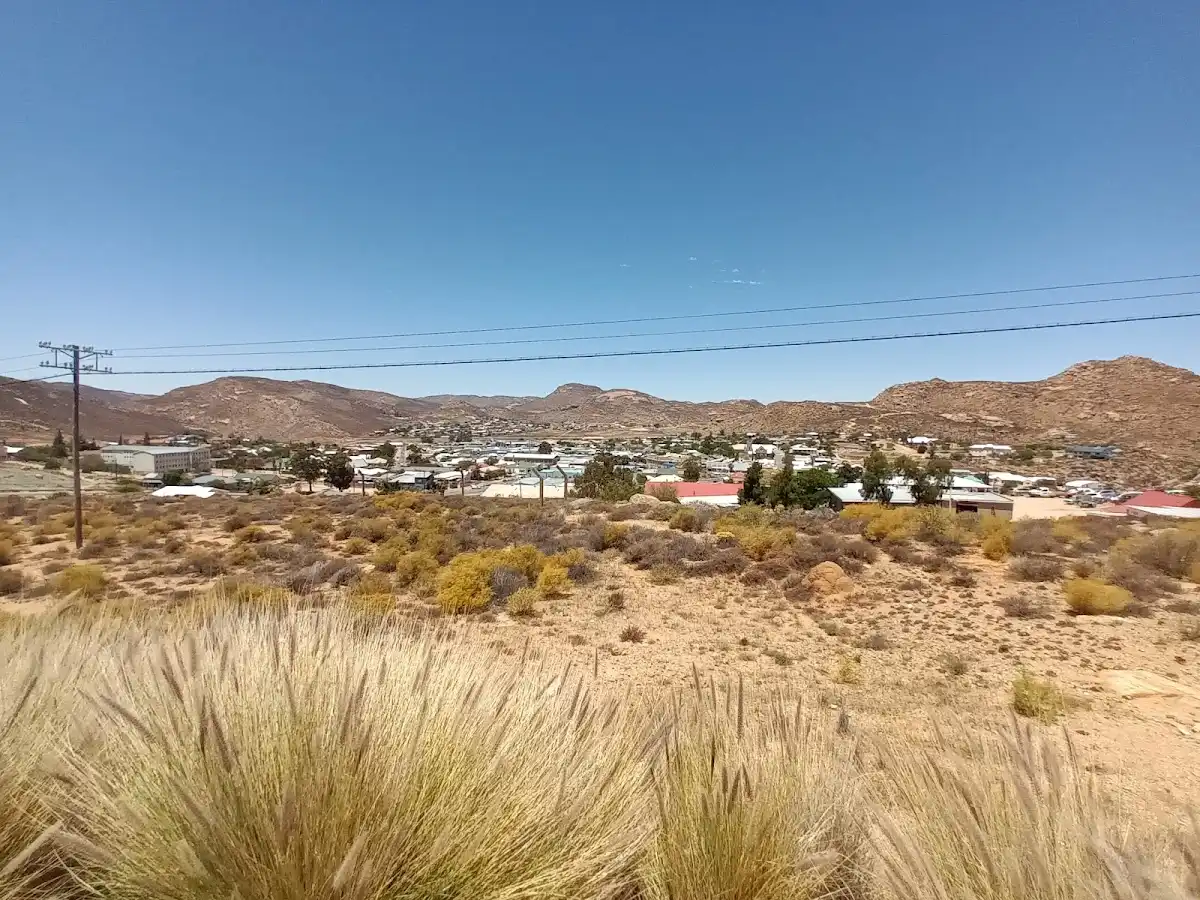
A decade ago, the Namibe Desert felt like a rumor—just you, the wind, and endless ochre dunes, with only the occasional goat herder for company. Fast-forward to today: you’ll still find that raw, cinematic emptiness, but now there’s a trickle of 4x4s and the odd overland truck, especially near the coastal town of Moçâmedes. Namibe sits in Angola’s far southwest, wedged between the Atlantic and the Namibian border, where the desert meets the sea in a way that feels almost Martian. For backpackers, it’s a region of wild contrasts: you get surreal Welwitschia plants, shipwreck beaches, and canyons that swallow sound, but you’ll also wrestle with patchy transport, unpredictable costs, and a vibe that’s more “frontier outpost” than “hostel crawl.” It’s not overrun—yet—but don’t expect the easy camaraderie of Lubango or the lush drama of the Serra da Leba escarpment. Here, authenticity isn’t curated; it’s baked in by the sun.

Discover everything you want to know in the 📖 Angola Travel Guide.


Get your Angola guide
91 ranked highlights, routes & tips, works offline (347 pages)
Loading the map 🌍
CLICK TO FILTER
cities
towns
landmarks
national parks
hikes
beaches
attractions
festivals
regions
SHOW COUNTRY’S BESTSHOW ALL

✨ Why go?
Ranked #1 region in Angola
What makes this region worth visiting

Backpackers flock to the Namibe Desert in Angola for a blend of variety and depth that’s hard to find elsewhere. You can explore stunning landscapes—from towering sand dunes to rugged coastlines—without the hassle of constant relocation. This region offers a rich tapestry of experiences, allowing you to soak in the natural beauty while also diving into local culture.

Transport options are surprisingly flexible. You can rent a 4x4 or hop on a local bus, giving you the freedom to roam at your own pace. This is where slow travel shines; you can linger in a small fishing village one day and hike through surreal rock formations the next.

Mixing nature and culture is a breeze here. Spend a morning watching the sunrise over the dunes, then head to a nearby town for a taste of traditional Angolan … read more 👉
Backpackers flock to the Namibe Desert in Angola for a blend of variety and depth that’s hard to find elsewhere. You can explore stunning landscapes—from towering sand dunes to rugged coastlines—without the hassle of constant relocation. This region offers a rich tapestry of experiences, allowing you to soak in the natural beauty while also diving into local culture.

Transport options are surprisingly flexible. You can rent a 4x4 or hop on a local bus, giving you the freedom to roam at your own pace. This is where slow travel shines; you can linger in a small fishing village one day and hike through surreal rock formations the next.

Mixing nature and culture is a breeze here. Spend a morning watching the sunrise over the dunes, then head to a nearby town for a taste of traditional Angolan cuisine. Each moment feels like a new adventure, and the connections you make with locals add layers to your journey.

In the Namibe Desert, you’re not just ticking boxes; you’re crafting a narrative that’s uniquely yours. Choose wisely, and you’ll walk away with stories that last a lifetime.
Want to include Namibe Desert in your Angola route?
Create a personalized Angola itinerary that includes Namibe Desert and the places that fit your trip — based on your travel style, budget, and available time. Get your route in seconds.

Generate my trip

💡 HighlightsThe experiences that define the visit

  • Iona National Park — Angola’s largest protected slice of the Namibe Desert: miles of orange dunes, rocky outcrops and coastal plains where desert-adapted wildlife (oryx, springbok, jackal) and giant Welwitschia plants live together. The scale and the meeting of ocean fog with true desert make it a landscape you won’t easily confuse with anywhere else.
  • Welwitschia fields (Welwitschia mirabilis) — those gnarled, two-leaf plants that look like something out of a fantasy film are endemic here. Seeing ancient, wind-sculpted specimens up close — some a thousand years old — is a uniquely Namibe experience and a must for any nature-lover.
  • Baía dos Tigres (Tiger Bay) — hidden, atmospheric ghost-bay on the coast where shifting dunes have sealed off a former fishing settlement and created eerie beaches
read more 👉
  • Iona National Park — Angola’s largest protected slice of the Namibe Desert: miles of orange dunes, rocky outcrops and coastal plains where desert-adapted wildlife (oryx, springbok, jackal) and giant Welwitschia plants live together. The scale and the meeting of ocean fog with true desert make it a landscape you won’t easily confuse with anywhere else.
  • Welwitschia fields (Welwitschia mirabilis) — those gnarled, two-leaf plants that look like something out of a fantasy film are endemic here. Seeing ancient, wind-sculpted specimens up close — some a thousand years old — is a uniquely Namibe experience and a must for any nature-lover.
  • Baía dos Tigres (Tiger Bay) — hidden, atmospheric ghost-bay on the coast where shifting dunes have sealed off a former fishing settlement and created eerie beaches and cliffs. Remote, photogenic and best reached by 4x4, it’s a true off-the-grid Namibe highlight most visitors miss.
  • Tômbwa (Tombua) fishing town and bone beaches — working coastal town with a lively fish trade, rusted shipwrecks and stretches of beach where whale bones and fossil fragments can still be seen. The mix of local fishing life, flamingo-and-wader lagoons and wreck-strewn shore is very specific to this stretch of the Benguela coast.
  • Mouth of the Cunene River (Foz do Cunene) — where a seasonal desert river punches into the Atlantic, creating shifting sandbars, tidal pools and a dramatic contrast between dry riverbed and wet coastal life. Good for quiet photography, local fishers and seeing how a desert river behaves when it actually flows.
  • Bentiaba fossil cliffs — a real geological/ paleontological coastline where marine fossils and fossil-bearing strata are exposed in the cliffs and beaches. It’s a calmer, less-touristy counterpart to classic fossil coasts and a great stop for anyone into deep-time landscapes and hands-on geology in the field.
  • Namibe (Moçâmedes) old town and seafront — the provincial port city that serves as the practical gateway to the desert coast: colonial-era streets, a working seafront, local markets and a relaxed atmosphere that feels genuinely Angolan rather than packaged for tourists. A good place to soak up local life before heading into more remote desert areas.
  • Iona dunes and interior sand sea — the interior dune seas and isolated inselbergs inside and around Iona offer surreal, wind-carved vistas and very quiet overnight camping opportunities. Sunrise and fog-rolled mornings here are what desert dreams are made of — but bring a good 4x4 and a local guide.
  • Curoca river valley and seasonal lagoons — lesser-known wet pockets inland where the ephemeral flow gathers after rains, creating surprising green strips and rich birdlife in the middle of the desert. Locals know these spots for seasonal fishing and waterbirds; most map-guided tours skip them, which is why they feel special.
  • Skeleton-coast shorelines south of Tômbwa — long, foggy beaches dotted with old wrecks, seals and isolated dunes that hug the ocean. It’s less about a single landmark and more about the raw coastal mood — shipwreck archaeology and the uncanny silence of a desert meeting the sea.
Spotted a mistake or missing something? Contact us.
⌛️ 5 daysSeeing the highlights in 5 days

Day 1: Lubango
Start your journey in Lubango, a city perched at a cool altitude. This is your launchpad into the Namibe Desert. The transport system here is reliable, with shared taxis and buses connecting you to key spots. Spend the day acclimatizing and exploring the local markets. Grab some grilled meat skewers and a cold drink. The vibe is relaxed, and it’s a great way to ease into the rhythm of Angola.

Day 2: Tundavala
Hit the road early to Tundavala, just a short drive from Lubango. The breathtaking cliffs here are a must-see. You’ll feel the adrenaline as you gaze down into the valley. The transport options are straightforward, but timing is crucial; leave before noon to avoid the heat. This day is all about soaking in the views and snapping photos that will make your friends jealous. … read more 👉
Day 1: Lubango
Start your journey in Lubango, a city perched at a cool altitude. This is your launchpad into the Namibe Desert. The transport system here is reliable, with shared taxis and buses connecting you to key spots. Spend the day acclimatizing and exploring the local markets. Grab some grilled meat skewers and a cold drink. The vibe is relaxed, and it’s a great way to ease into the rhythm of Angola.

Day 2: Tundavala
Hit the road early to Tundavala, just a short drive from Lubango. The breathtaking cliffs here are a must-see. You’ll feel the adrenaline as you gaze down into the valley. The transport options are straightforward, but timing is crucial; leave before noon to avoid the heat. This day is all about soaking in the views and snapping photos that will make your friends jealous.

Day 3: Namibe
Travel to Namibe, the gateway to the desert. The bus ride is long but scenic, showcasing the stark beauty of the landscape. Once you arrive, take a moment to breathe in the salty air of the Atlantic. Spend the afternoon wandering the coastal town, sampling fresh seafood. This is where the desert meets the ocean, and it’s a unique experience.

Day 4: Off-Path Reward: Iona National Park
Take a detour to Iona National Park. This is where you’ll find the real magic of the Namibe Desert. The park is less frequented, offering solitude and stunning landscapes. You’ll need to arrange a 4x4, but trust me, it’s worth it. The wildlife and dramatic scenery will leave you speechless.

Day 5: Return to Lubango
Head back to Lubango for your final day. Reflect on your journey and maybe pick up some local crafts. The transport back is straightforward, but be prepared for a few delays. This is part of the adventure.

The must-do day? Day 4 in Iona National Park. It’s the heart of the Namibe experience, blending adventure with the untouched beauty of Angola.
Turn your Namibe Desert visit into an Angola adventure
Build a complete Angola route with Namibe Desert, hidden gems, must-see destinations, and realistic travel times included.

Generate my trip

🌤️ When to go?When to go for the best experience


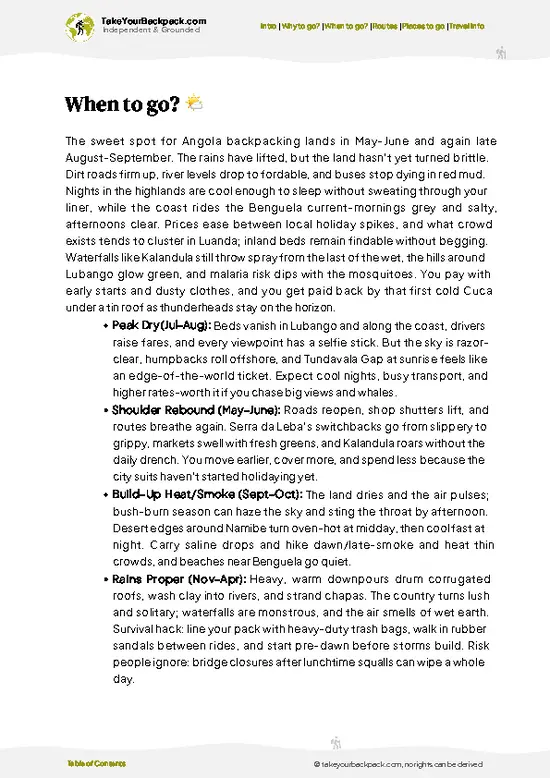
  • Topic: Weather – The Namibe Desert is a study in extremes. Visit between May and October to dodge the scorching heat and catch the coolest, driest stretch. Temperatures hover around 20-25°C (68-77°F), a sweet spot for hiking without frying your skin off.

  • Topic: Temperature – Daytime highs can spike to 35°C (95°F) in the summer months (November to April), making midday trekking brutal. Nights, especially in winter, dip sharply, sometimes below 10°C (50°F), so pack layers if you’re camping.

  • Topic: Daylight Hours – Expect roughly 11 to 12 hours of daylight year-round, but the dry season offers clearer skies and more reliable sunrise and sunset times, perfect for those golden-hour photos without the haze.

  • Topic: Crowds – The Namibe Desert isn’t exactly a tourist hotspot, but the dry season
read more 👉

  • Topic: Weather – The Namibe Desert is a study in extremes. Visit between May and October to dodge the scorching heat and catch the coolest, driest stretch. Temperatures hover around 20-25°C (68-77°F), a sweet spot for hiking without frying your skin off.

  • Topic: Temperature – Daytime highs can spike to 35°C (95°F) in the summer months (November to April), making midday trekking brutal. Nights, especially in winter, dip sharply, sometimes below 10°C (50°F), so pack layers if you’re camping.

  • Topic: Daylight Hours – Expect roughly 11 to 12 hours of daylight year-round, but the dry season offers clearer skies and more reliable sunrise and sunset times, perfect for those golden-hour photos without the haze.

  • Topic: Crowds – The Namibe Desert isn’t exactly a tourist hotspot, but the dry season sees a modest uptick in visitors. If you want near solitude, aim for shoulder months like May or September when the weather is still kind but fewer people are around.

  • Topic: Seasonal Activities – The dry season is prime for exploring the Welwitschia plants and the surreal, moonlike landscapes. Avoid the rainy season (December to March) when trails get muddy and some areas become inaccessible.

  • Topic: Price Fluctuations – Accommodation and guided tours peak in the dry season, but the price jump is modest. Booking early during May to October locks in better rates and availability, especially for the few lodges near the desert edge.


Pro-tip: Arrive early in the dry season—May or early June—to enjoy cooler temps, fewer crowds, and snag the best local guides before the high season buzz kicks in.


source: climatestotravel.comJANJanuary: fair for travelingFEBFebruary: fair for travelingMARMarch: fair for travelingAPRApril: good for travelingMAYMay: excellent for travelingJUNJune: excellent for travelingJULJuly: excellent for travelingAUGAugust: excellent for travelingSEPSeptember: highly recommended for travelingOCTOctober: highly recommended for travelingNOVNovember: good for travelingDECDecember: fair for traveling
angola-region-namibe-desert
© Google |

✈️ The backpacker research shortcutAngola Travel Guide

An offline-friendly backpacking guide with optimized travel routes, ranked highlights, transport advice, and the best areas to stay.
example page 0 from our offline Travel Guide for Angola
example page 1 from our offline Travel Guide for Angola
example page 2 from our offline Travel Guide for Angola
example page 3 from our offline Travel Guide for Angola
example page 4 from our offline Travel Guide for Angola
example page 5 from our offline Travel Guide for Angola
example page 6 from our offline Travel Guide for Angola
example page 7 from our offline Travel Guide for Angola
The digital guide (347 pages) contains:
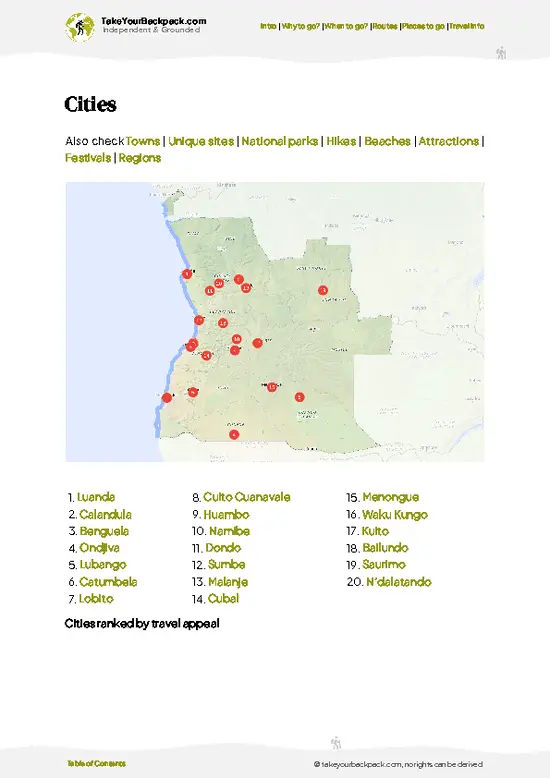
91 highlights, ranked by travel appeal
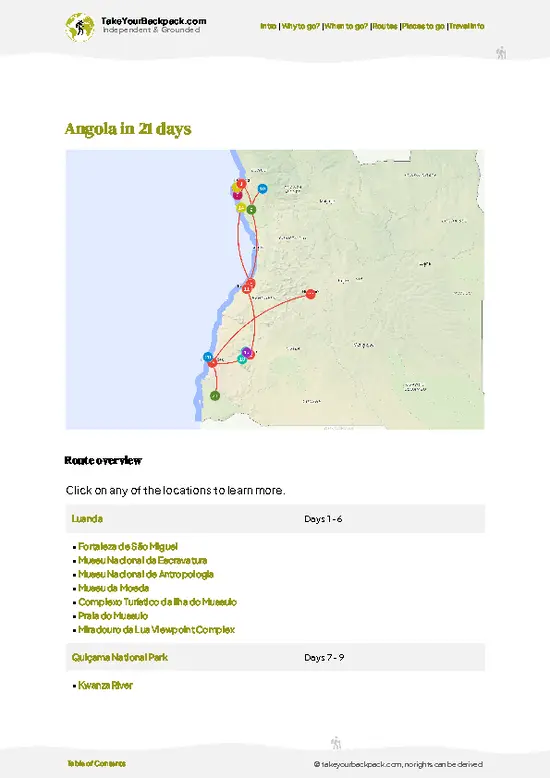
Optimized 7, 14 & 21-day travel routes
Cities, national parks, landmarks, beaches
How to get around
Offline-friendly for travel without Wi-Fi
👉 Click to see all 30+ guide features

📅 Plan smarter in minutes, not weeks
Month by month travel advice
Festivals & national holidays
Budget expectations

🗺️ Go to the right places, skip the overrated ones
Honest pros & cons of destinations
Top hikes, parks & viewpoints
Lesser-known places most travelers miss
Clear “worth it vs skip it” guidance

🛏️ Travel smoothly without rookie mistakes
Best areas to stay
Transport systems explained simply
Common scams & safety advice
SIM cards, money & practical tips

🌍 Understand the country, not just visit it
Culture & traditions
52 Essential phrases & customs
Festivals worth planning around
Traveler-friendly historical context
Insights that make places more meaningful

📱 Built for real travel conditions
Fully downloadable PDF
Works completely offline
Optimized for phone use
Useful in remote areas & buses
Everything in one place
Save weeks of stressful planning
Get instant access to your full guide. 30‑day money-back guarantee.


By proceeding you agree to our terms.
Sent to your inbox immediately after payment • 100% Secure Checkout
Best Backpacking Travel Advisor 2025 tourism awardBest Backpacking
Travel Advisor
2025
What others say about Take Your Backpack Guides:
⭐⭐⭐⭐⭐
Fantastic, amazing amount of information!
⭐⭐⭐⭐⭐
My goodness this is amazing, it's what I've been looking for hats off too you!
⭐⭐⭐⭐⭐
I think this is absolutely BRILLIANT
⭐⭐⭐⭐
Very complete and informative. It's still missing places, but I gotta to commend you
⭐⭐⭐⭐⭐
This is truly amazing, thank you, can't wait to explore it with my kids!
⭐⭐⭐⭐⭐
Awesome resource, thank you!
⭐⭐⭐⭐⭐
This is amazing! Can't wait to explore the ones I haven't seen
⭐⭐⭐⭐
I love this! Well done, great idea.
⭐⭐⭐⭐⭐
Thanks for taking the time to make this gem!
⭐⭐⭐⭐⭐
This might be the best website I've ever seen.
⭐⭐⭐⭐⭐
Congratulations, and thank you so much for your work; it's incredibly valuable.
⭐⭐⭐⭐
In all seriousness I think you did a great job pointing out the important spots
⭐⭐⭐⭐⭐
10/10 very good
⭐⭐⭐⭐⭐
As someone who's only just starting to visit regularly this is awesome, thank you.
⭐⭐⭐⭐
Thank you very much! I'm going to visit my dad, it's going to be very useful!
⭐⭐⭐⭐⭐
This is really cool! We'll be travelling for the first time and this definitely come in handy.
⭐⭐⭐⭐⭐
You are now our minister of culture, congratulations 👨‍💼
⭐⭐⭐⭐⭐
Just wanted to tell you that this is a pearl! Going to follow your recommendations.
⭐⭐⭐⭐⭐
This is so cool. I'll definitely be using the resource for my travels soon.
⭐⭐⭐⭐⭐
This is very impressive! Good work.
⭐⭐⭐⭐⭐
This is an amazing and informative site. Very well done!

🛏️ Where to stay?Best areas and accommodation options

When you’re wandering through the Namibe Desert, a few spots stand out for backpackers looking to soak in the local vibe without breaking the bank.

Start in Namibe City. It’s the gateway to the desert, buzzing with energy. You’ll find friendly locals and fellow travelers in the markets. Grab a cold drink and swap stories. The coastal views are a bonus. Just be mindful of your belongings; like any city, it has its rough edges.

Next up is Tômbwa. This laid-back fishing town offers a slice of authentic Angolan life. The beaches are stunning, and you can often find fresh seafood at local stalls. … read more 👉
When you’re wandering through the Namibe Desert, a few spots stand out for backpackers looking to soak in the local vibe without breaking the bank.

Start in Namibe City. It’s the gateway to the desert, buzzing with energy. You’ll find friendly locals and fellow travelers in the markets. Grab a cold drink and swap stories. The coastal views are a bonus. Just be mindful of your belongings; like any city, it has its rough edges.

Next up is Tômbwa. This laid-back fishing town offers a slice of authentic Angolan life. The beaches are stunning, and you can often find fresh seafood at local stalls. It’s a great place to chill and meet other backpackers. The pace is slow, which is perfect for unwinding after a day of exploration.

Don’t overlook Lobito, a bit further north. It’s a port city with a rich history and a vibrant atmosphere. The waterfront is ideal for sunset strolls, and you can mingle with locals in the cafes. It’s safe and welcoming, making it a solid choice for solo travelers.

Each of these spots offers a unique flavor of Angola, balancing comfort and social opportunities. Choose wisely, and you’ll create memories that last long after the trip ends.

🚌 Getting aroundGetting around like a local

The Namibe Desert is a land of contradictions, where the sun scorches the earth and the winds whisper secrets of ancient times. Here, schedules are more of a suggestion than a rule. You’ll find that the rhythm of travel is dictated by the whims of the weather and the local vibe. It’s a place where intuition reigns, and if you’re not ready to embrace a bit of chaos, you might find yourself stranded in the sand. But don’t worry; with a little insider knowledge, you can navigate this stunning expanse like a pro.


  • Shared Taxis (Kombis): These are your go-to for budget travel. They run between towns like Namibe and Lubango, usually starting around 6 AM and going until the last passenger is on board. Expect to pay about $5-$10, depending on your destination. They’re cramped but offer a local experience
read more 👉
The Namibe Desert is a land of contradictions, where the sun scorches the earth and the winds whisper secrets of ancient times. Here, schedules are more of a suggestion than a rule. You’ll find that the rhythm of travel is dictated by the whims of the weather and the local vibe. It’s a place where intuition reigns, and if you’re not ready to embrace a bit of chaos, you might find yourself stranded in the sand. But don’t worry; with a little insider knowledge, you can navigate this stunning expanse like a pro.


  • Shared Taxis (Kombis): These are your go-to for budget travel. They run between towns like Namibe and Lubango, usually starting around 6 AM and going until the last passenger is on board. Expect to pay about $5-$10, depending on your destination. They’re cramped but offer a local experience that’s hard to beat.


  • Private Taxis: If you’re looking for comfort and speed, this is your best bet. Prices vary widely, but you can expect to pay around $30-$50 for a ride from Namibe to the nearby coastal towns. They’re more reliable than kombis, but you’ll sacrifice a bit of that local flavor.


  • Bus Services: Larger buses connect major cities like Luanda and Namibe. They typically leave once a day, around 8 AM, and cost about $15-$20. While they’re slower (think 8-10 hours), they’re a great way to see the landscape unfold. Just pack snacks and a good book.


  • Rental Cars: For the adventurous, renting a 4x4 gives you the freedom to explore at your own pace. Prices start around $50 per day, plus fuel. Just be aware that road conditions can be rough, so a solid map or GPS is essential. This option offers the most comfort and flexibility but requires a bit more planning.


  • Motorbike Rentals: For the thrill-seekers, renting a motorbike can be an exhilarating way to traverse the desert. Expect to pay around $25 per day. It’s a fun way to feel the wind in your hair, but make sure you’re comfortable with off-road riding.


Here’s your master tactical tip: always negotiate your fare upfront, especially with taxis and motorbikes. It’s a small but crucial step that can save you from unexpected surprises later. Embrace the flow of the Namibe Desert, and let the journey shape your adventure.

🍲 FoodLocal Flavors for Backpackers

In the Namibe Desert, food is a vibrant tapestry of flavors and traditions. You can’t miss the muamba de galinha, a rich chicken stew simmered with palm oil, okra, and spices that dance on your palate. Pair it with funge, a starchy side made from cassava, perfect for soaking up every drop of that savory sauce.

For a true local experience, hit up the bustling markets. Vendors sell everything from fresh fish caught along the coast to ripe tropical fruits. The aroma of grilled sardinhas wafts through the air, tempting you to grab a few skewers from a street vendor. These fish are seasoned simply, allowing the ocean’s essence to shine through.

When it comes to drinks, try the cuca, a local beer that’s crisp and refreshing, ideal for cooling off after a day in the sun. If you’re feeling adventurous, … read more 👉
In the Namibe Desert, food is a vibrant tapestry of flavors and traditions. You can’t miss the muamba de galinha, a rich chicken stew simmered with palm oil, okra, and spices that dance on your palate. Pair it with funge, a starchy side made from cassava, perfect for soaking up every drop of that savory sauce.

For a true local experience, hit up the bustling markets. Vendors sell everything from fresh fish caught along the coast to ripe tropical fruits. The aroma of grilled sardinhas wafts through the air, tempting you to grab a few skewers from a street vendor. These fish are seasoned simply, allowing the ocean’s essence to shine through.

When it comes to drinks, try the cuca, a local beer that’s crisp and refreshing, ideal for cooling off after a day in the sun. If you’re feeling adventurous, sample ginguba, a peanut drink that’s both sweet and nutty, often enjoyed by locals.

Dining here is casual and communal. Expect to share dishes, and don’t be surprised if someone offers you a taste of their meal. It’s all about connection. Just remember, when you’re invited to share a drink, it’s a sign of friendship—so raise your glass and enjoy the moment!

Expanding your trip beyond this stop

Namibe Desert isn’t the only highlight in Angola. Explore all what Angola has to offer.
Country photo of Angola

We 💚 feedbackWhat to keep in mind

The Namibe Desert is a wild beauty that feels untouched. You’ll find surreal landscapes that shift from golden dunes to rocky outcrops. The best surprise? The sunsets—pure magic, painting the sky in colors you didn’t know existed. But here’s the scoop: don’t underestimate the heat. Carry plenty of water and plan your hikes for early morning or late afternoon. Embrace the stillness; it’s a place that invites reflection. Trust me, this desert will linger in your mind long after you leave.

✍️ Help improve this page!
The information on this page is based on in-depth research, insights shared by experienced travelers, and feedback from the local travel community in Angola. While every effort is made to keep the information accurate and current, conditions can change — so if you spot anything incorrect or outdated, please get in touch.


🙋‍♂️ Give feedback

👋 Meet the founderWho’s Behind Take Your Backpack?

Johan, backpacker and founder of TakeYourBackpackHi, I’m Johan (Netherlands 🇳🇱), the creator of TakeYourBackpack. Over the past decade, I’ve backpacked through 80+ countries across six continents, gaining extensive experience with independent travel, long-term trips, and overland routes.

This site is built on a combination of firsthand travel experience and carefully curated insights from other backpackers. Many guides are based on places I’ve personally visited, while others bring together tips, observations, and practical advice shared by trusted travelers I’ve met along the way.

The goal is to provide realistic, experience-driven guidance — not generic itineraries — so you can explore destinations with better context, clearer expectations, and more confidence.

Get full Angola guide •
Instant download • 91 highlights • Full Offline guide