×

Antigua & Barbuda🇦🇬 | landmarksCades ReefShallow reef flats, sea fans, elkhorn coral, Cades Bay rays | things to do and best time to go

Explore Betty’s HopeExplore Fort Barrington

Backpacking in Cades Reef
🏆 Top pickunique site ranked #2
By Johan Kruseman 🇳🇱 | Updated October 22, 2026

Cades Reef is famous for its snorkeling and diving along a long, shallow barrier reef where staghorn and brain coral sit in calm water. The reef runs along the southwest coast of Antigua and Barbuda, part of a marine park that stretches past Cades Bay toward Ffryes and Johnson’s Point. The wow-factor is real but quiet: parrotfish, sergeant majors, the odd turtle and sea fans swaying in clear water, rather than dramatic walls. Go in the morning, when the water is glassy and the tour boats haven’t arrived. The reef is worth your time for a half-day with a mask. The nearby beaches are fine but not special, and the reef lies about a mile offshore, so you reach it by boat. Photos need a waterproof camera. Snorkelers and relaxed first-timers will love it. Hardcore divers chasing big walls and anyone wanting nightlife will not.

Discover everything you want to know in the 📖 Antigua & Barbuda Travel Guide.


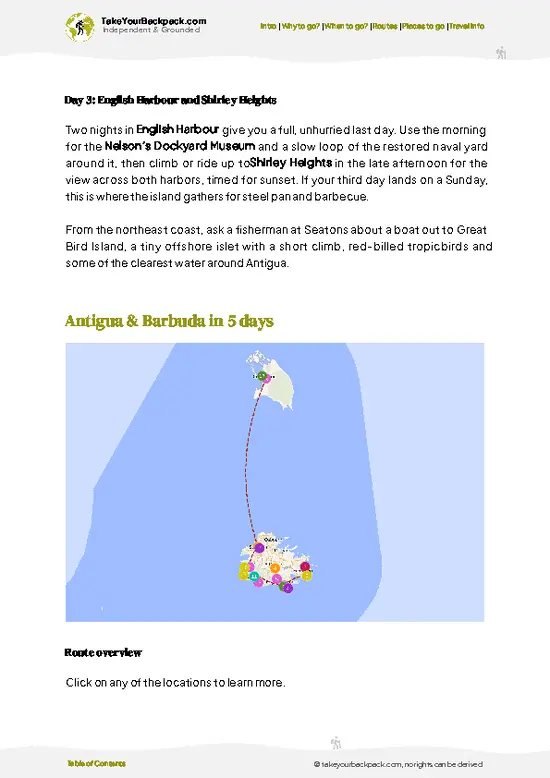
example page 0 from our offline Travel Guide for Antigua and Barbuda
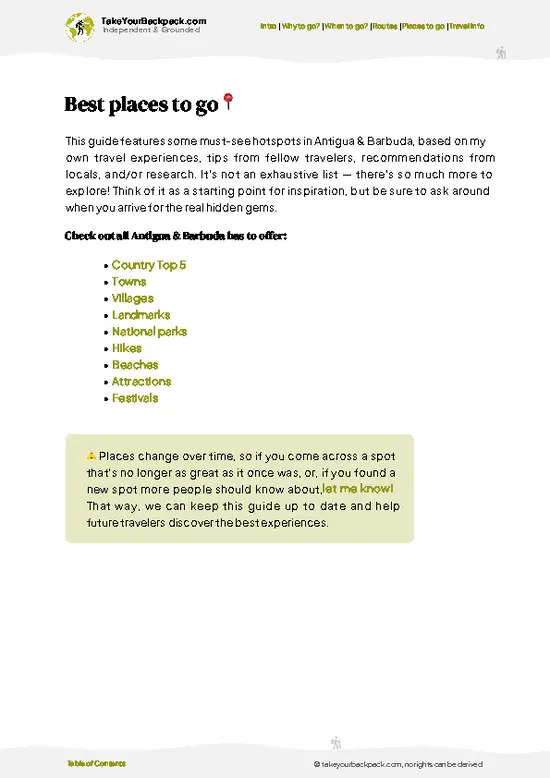
example page 1 from our offline Travel Guide for Antigua and Barbuda
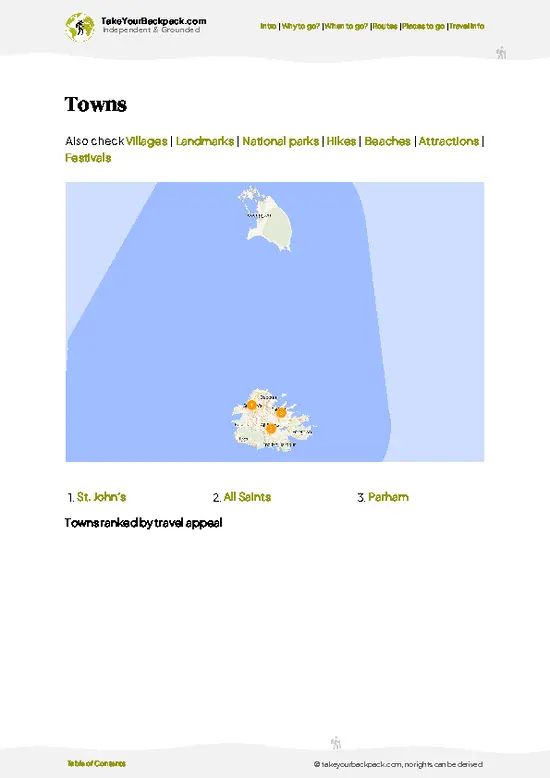
example page 2 from our offline Travel Guide for Antigua and Barbuda
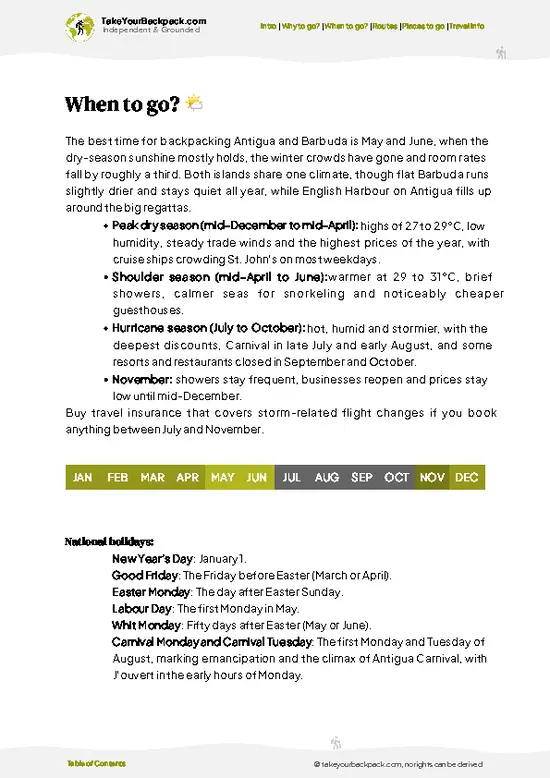
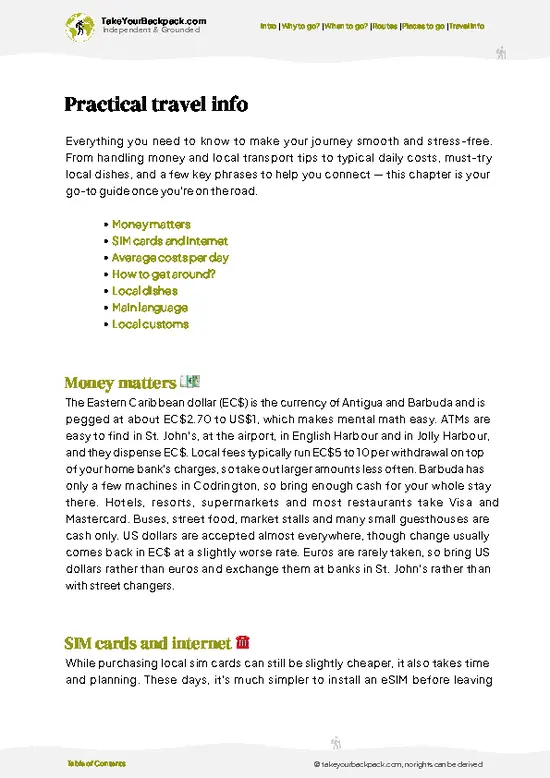
example page 3 from our offline Travel Guide for Antigua and Barbuda
example page 4 from our offline Travel Guide for Antigua and Barbuda
example page 5 from our offline Travel Guide for Antigua and Barbuda
example page 6 from our offline Travel Guide for Antigua and Barbuda
example page 7 from our offline Travel Guide for Antigua and Barbuda
Loading the map 🌍
CLICK TO FILTER
towns
villages
landmarks
national parks
hikes
beaches
attractions
festivals
SHOW COUNTRY’S BESTSHOW ALL

✨ Why go?
Ranked #2 unique site in Antigua & Barbuda
What makes this unique site worth visiting

Cades Reef gives you a real reef without a plane transfer, a liveaboard or a remote island. The reef runs roughly 2 miles along the coast, so you can drift over one long stretch instead of hopping between tiny patches, and the shallower sections make it a fair first snorkel. Depths range from a few feet to around 60 feet on the dive side, which means one site works for a first-timer and for someone with a hundred logged dives.

The other reason is protection. Fishing is restricted here, so fish tend to be bigger and less skittish than at open beaches, and the marine park status keeps anchoring off the coral. You see schooling blue tang, spotted trunkfish and the odd barracuda parked in the current.

It also fits a loop around the southwest. Pair a morning on the water with an afternoon at … read more 👉
Cades Reef gives you a real reef without a plane transfer, a liveaboard or a remote island. The reef runs roughly 2 miles along the coast, so you can drift over one long stretch instead of hopping between tiny patches, and the shallower sections make it a fair first snorkel. Depths range from a few feet to around 60 feet on the dive side, which means one site works for a first-timer and for someone with a hundred logged dives.

The other reason is protection. Fishing is restricted here, so fish tend to be bigger and less skittish than at open beaches, and the marine park status keeps anchoring off the coral. You see schooling blue tang, spotted trunkfish and the odd barracuda parked in the current.

It also fits a loop around the southwest. Pair a morning on the water with an afternoon at Cades Bay and nearby beaches such as Johnson’s Point, and you have a full day with almost no planning. Dive shops and boat operators around Jolly Harbour handle gear and transfers, so you don’t need to carry your own.

💡 HighlightsMust-see experiences and standout moments

  1. Snorkeling the shallow reef flats: This is what most people come for. Sea fans sway in a few feet of water, and sergeant majors, parrotfish and blue tang graze right under you. Stay near your boat or guide, since the current picks up off the reef edge.
  2. Diving the reef wall and slopes: Certified divers drop along the reef’s outer edge, where coral heads and sponge columns break up the sandy bottom. It’s relaxed, mostly easy diving, with enough depth variety to suit both new and experienced divers.
  3. Elkhorn and brain coral patches: Some of the best-surviving coral sits in clusters along the reef. Elkhorn thickets and round brain coral are easy to spot, and they hold hiding spots for small fish and the occasional spiny lobster.
  4. Tube sponges and sea fans: These soft formations give the reef its texture.
… read more 👉
  1. Snorkeling the shallow reef flats: This is what most people come for. Sea fans sway in a few feet of water, and sergeant majors, parrotfish and blue tang graze right under you. Stay near your boat or guide, since the current picks up off the reef edge.
  2. Diving the reef wall and slopes: Certified divers drop along the reef’s outer edge, where coral heads and sponge columns break up the sandy bottom. It’s relaxed, mostly easy diving, with enough depth variety to suit both new and experienced divers.
  3. Elkhorn and brain coral patches: Some of the best-surviving coral sits in clusters along the reef. Elkhorn thickets and round brain coral are easy to spot, and they hold hiding spots for small fish and the occasional spiny lobster.
  4. Tube sponges and sea fans: These soft formations give the reef its texture. Look for purple sea fans and tall tube sponges in muted browns and pinks. They are fun for photos if you hold still against the surge.
  5. Stingrays and turtles in Cades Bay: The sandy and seagrass stretches beside the reef are where southern stingrays glide across the bottom and green turtles come up to breathe. Keep a respectful distance and never touch them.
  6. Cades Bay shoreline and the Montserrat view: On clear days you can see the outline of Montserrat across the water from the bay, with the volcano’s plume sometimes visible. It’s a calm place to dry off and watch sailboats at anchor.
Start with the shallow reef flats snorkel, because it shows you the reef’s health and current before you decide whether to dive deeper.
Spotted a mistake or missing something? Contact us.

Things to do around Cades Reef

Ratings based on Tripadvisor reviews. When you book through this link, you support our work at no extra cost to you.

🌤️ When to go?When to go for the best experience

  • Dry Season (December to April): Calm seas and the best underwater visibility along the Cades Bay side, with highs of 27 to 30°C (81 to 86°F) and steady trade winds. Daylight runs roughly 11 to 12 hours. This is also when yachts fill the anchorage and rates climb.
  • Shoulder Months (May to June and November): Warm, a little humid, 28 to 31°C (82 to 88°F), with short showers that clear fast. Fewer boats, easier bookings, and lower prices at nearby guesthouses and dive operators.
  • Hurricane Season (July to October): Hottest and wettest, 29 to 32°C (84 to 90°F), with the highest storm risk from August to September. Swells can cancel snorkel and dive trips, though bargains are common and the water is bathtub warm.
  • Christmas and New Year: Peak prices and the busiest moorings, with sailing events in spring
… read more 👉
  • Dry Season (December to April): Calm seas and the best underwater visibility along the Cades Bay side, with highs of 27 to 30°C (81 to 86°F) and steady trade winds. Daylight runs roughly 11 to 12 hours. This is also when yachts fill the anchorage and rates climb.
  • Shoulder Months (May to June and November): Warm, a little humid, 28 to 31°C (82 to 88°F), with short showers that clear fast. Fewer boats, easier bookings, and lower prices at nearby guesthouses and dive operators.
  • Hurricane Season (July to October): Hottest and wettest, 29 to 32°C (84 to 90°F), with the highest storm risk from August to September. Swells can cancel snorkel and dive trips, though bargains are common and the water is bathtub warm.
  • Christmas and New Year: Peak prices and the busiest moorings, with sailing events in spring adding another bump in April.
Book reef trips for a morning in February or March, when winds are lighter and the water is clearest.


source: climatestotravel.comJANJanuary: excellent for travelingFEBFebruary: excellent for travelingMARMarch: excellent for travelingAPRApril: highly recommended for travelingMAYMay: highly recommended for travelingJUNJune: fair for travelingJULJuly: fair for travelingAUGAugust: fair for travelingSEPSeptember: below average for travelingOCTOctober: fair for travelingNOVNovember: highly recommended for travelingDECDecember: excellent for traveling
antigua-and-barbuda-unique-site-cades-reef
© Google | Nina R

✈️ The backpacker research shortcutAntigua & Barbuda Travel Guide

An offline-friendly backpacking guide with optimized travel routes, ranked highlights, transport advice, and the best areas to stay.
example page 0 from our offline Travel Guide for Antigua and Barbuda
example page 1 from our offline Travel Guide for Antigua and Barbuda
example page 2 from our offline Travel Guide for Antigua and Barbuda
example page 3 from our offline Travel Guide for Antigua and Barbuda
example page 4 from our offline Travel Guide for Antigua and Barbuda
example page 5 from our offline Travel Guide for Antigua and Barbuda
example page 6 from our offline Travel Guide for Antigua and Barbuda
example page 7 from our offline Travel Guide for Antigua and Barbuda
The digital guide (130 pages) contains:
✅ 36 highlights, ranked by travel appeal
✅ Optimized 2, 3 & 5-day travel routes
✅ Cities, national parks, landmarks, beaches
✅ How to get around
✅ Offline-friendly for travel without Wi-Fi
👉 Click to see all 30+ guide features

📅 Plan smarter in minutes, not weeks
✅ Month by month travel advice
✅ Festivals & national holidays
✅ Budget expectations

🗺️ Go to the right places, skip the overrated ones
✅ Honest pros & cons of destinations
✅ Top hikes, parks & viewpoints
✅ Lesser-known places most travelers miss
✅ Clear “worth it vs skip it” guidance

🛏️ Travel smoothly without rookie mistakes
✅ Best areas to stay
✅ Transport systems explained simply
✅ Common scams & safety advice
✅ SIM cards, money & practical tips

🌍 Understand the country, not just visit it
✅ Culture & traditions
✅ Local customs
✅ Festivals worth planning around
✅ Traveler-friendly historical context
✅ Insights that make places more meaningful

📱 Built for real travel conditions
✅ Fully downloadable PDF
✅ Works completely offline
✅ Optimized for phone use
✅ Useful in remote areas & buses
✅ Everything in one place
Stop searching, start planning
Get instant access to your full guide. 30‑day money-back guarantee.
+ Add another guide for just

By proceeding you agree to our terms.
Sent to your inbox immediately after payment • 100% Secure Checkout
Best Backpacking Travel Advisor 2025 tourism awardBest Backpacking
Travel Advisor
2025
What others say about Take Your Backpack Guides:
⭐⭐⭐⭐⭐
Fantastic, amazing amount of information!
⭐⭐⭐⭐⭐
My goodness this is amazing, it's what I've been looking for hats off too you!
⭐⭐⭐⭐⭐
I think this is absolutely BRILLIANT
⭐⭐⭐⭐
Very complete and informative. It's still missing places, but I gotta to commend you
⭐⭐⭐⭐⭐
This is truly amazing, thank you, can't wait to explore it with my kids!
⭐⭐⭐⭐⭐
Awesome resource, thank you!
⭐⭐⭐⭐⭐
This is amazing! Can't wait to explore the ones I haven't seen
⭐⭐⭐⭐
I love this! Well done, great idea.
⭐⭐⭐⭐⭐
Thanks for taking the time to make this gem!
⭐⭐⭐⭐⭐
This might be the best website I've ever seen.
⭐⭐⭐⭐⭐
Congratulations, and thank you so much for your work; it's incredibly valuable.
⭐⭐⭐⭐
In all seriousness I think you did a great job pointing out the important spots
⭐⭐⭐⭐⭐
10/10 very good
⭐⭐⭐⭐⭐
As someone who's only just starting to visit regularly this is awesome, thank you.
⭐⭐⭐⭐
Thank you very much! I'm going to visit my dad, it's going to be very useful!
⭐⭐⭐⭐⭐
This is really cool! We'll be travelling for the first time and this definitely come in handy.
⭐⭐⭐⭐⭐
You are now our minister of culture, congratulations 👨‍💼
⭐⭐⭐⭐⭐
Just wanted to tell you that this is a pearl! Going to follow your recommendations.
⭐⭐⭐⭐⭐
This is so cool. I'll definitely be using the resource for my travels soon.
⭐⭐⭐⭐⭐
This is very impressive! Good work.
⭐⭐⭐⭐⭐
This is an amazing and informative site. Very well done!

🛏️ Where to stay?Choosing the right base

Cades Bay and the neighboring village of Old Road are the practical bases, because the reef sits just offshore from this stretch of the southwest coast. Staying right here means you can walk to the shoreline, join a snorkel or dive outing within minutes, and fall asleep to the sound of the water. Expect small guesthouses, simple apartments and a couple of beachside eateries, not big resorts. It is quiet and safe, and the social side comes from dive groups and other snorkelers swapping notes over cold drinks at the beach bars.

For more nightlife and a livelier crowd, Jolly Harbour, about 20 minutes … read more 👉
Cades Bay and the neighboring village of Old Road are the practical bases, because the reef sits just offshore from this stretch of the southwest coast. Staying right here means you can walk to the shoreline, join a snorkel or dive outing within minutes, and fall asleep to the sound of the water. Expect small guesthouses, simple apartments and a couple of beachside eateries, not big resorts. It is quiet and safe, and the social side comes from dive groups and other snorkelers swapping notes over cold drinks at the beach bars.

For more nightlife and a livelier crowd, Jolly Harbour, about 20 minutes north by road, has supermarkets, restaurants, a marina and plenty of self-catering rentals that suit groups splitting costs. Falmouth and English Harbour, on the south coast, are the hub for sailors and crew, with the best chance of meeting other solo travelers, but they sit roughly 45 minutes away by car.

If you want to be near the reef and still have choice, pick Old Road for a village feel and Jolly Harbour for convenience. Buses are infrequent, so staying within walking distance of the beach saves on taxis.

👛 Costs (as of 22 October 2026)Money, prices, and spending tips

Cades Reef costs about US$118 a day for a backpacker who snorkels or dives it from a boat, with a shared snorkel trip being the cheapest way onto the water. The reef lies roughly a mile offshore, so every visit starts with a boat ticket. Travelers pay in Eastern Caribbean dollars, though most operators quote and accept US dollars.
CategoryBudget RangeLocal Reality
Accommodation (high season)US$35 to 60A dorm bed or basic guesthouse room along the southwest coast. Low season runs about US$25 to 45.
Snorkel boat tripUS$40 to 70Shared half-day boat outings with gear included. Private charters cost far more.
Guided dive (optional)US$80 to 110Two-tank trips from local dive shops, with rental gear often extra. Not in the daily total.
Gear rentalUS$0 to 15Mask and fins are usually included on tours. Rent
… read more 👉
Cades Reef costs about US$118 a day for a backpacker who snorkels or dives it from a boat, with a shared snorkel trip being the cheapest way onto the water. The reef lies roughly a mile offshore, so every visit starts with a boat ticket. Travelers pay in Eastern Caribbean dollars, though most operators quote and accept US dollars.
CategoryBudget RangeLocal Reality
Accommodation (high season)US$35 to 60A dorm bed or basic guesthouse room along the southwest coast. Low season runs about US$25 to 45.
Snorkel boat tripUS$40 to 70Shared half-day boat outings with gear included. Private charters cost far more.
Guided dive (optional)US$80 to 110Two-tank trips from local dive shops, with rental gear often extra. Not in the daily total.
Gear rentalUS$0 to 15Mask and fins are usually included on tours. Rent your own only if you go independently.
Marine park feeUS$5 to 10Often folded into the tour price. Ask when you book.
FoodUS$18 to 30Roadside rotis, grilled fish plates and grocery supplies keep costs down. Beach restaurants charge more.
Local transportUS$4 to 12Minibuses cost a few dollars per ride. A taxi to the departure dock runs US$15 to 30 shared between travelers.
Total Daily BudgetUS$118Based on a shared snorkel trip, high-season accommodation and mostly local food.
⚠️ Prices can change and everyone travels differently, so take this as a rough guide. Hope it helps you plan your adventure!

FAQTraveler FAQ

Cades Reef is a coral reef system running about 2 miles (3 km) along Antigua’s southwest coast, protected as part of the Cades Reef Marine Park. It is known for shallow, easy snorkeling and dive sites with soft corals, sponges, and reef fish in roughly 3 to 15 meters of water. The waters off Cades Bay and Old Road are the usual access points.
Plan on half a day for a boat snorkel trip, usually 2 to 3 hours on the water, or a full day if you add a second dive and a beach lunch. Cades Reef suits a one-day visit, but two or three days let you wait for the calmest water, typically December to April. Divers often book a two-tank outing, which takes about 4 hours.
Cades Reef lies about 30 to 40 minutes by road from St. John’s, and a taxi runs roughly US$30 to 45 each way. Minibuses toward Old Road are cheaper, around US$2 to 3, but run less often, so ask about the return. Most travelers drive a rental car or join a dive operation that picks up at nearby hotels, then boat out from Cades Bay.
⚠️ Things can change over time, so always validate details locally before you go.

Other Antiguan and Barbudan landmarks near Cades Reef

Explore more nearby:

  • Pillars of Hercules—Limestone columns, English Harbour mouth, Galleon Beach rock scramble, boat views| 12 km away
  • Shirley Heights—Sunday barbecue, gun battery, dockyard overlook, English Harbour hike| 13 km away
  • St. John’s Cathedral—Baroque twin towers, pitch pine ceiling, memorial plaques, hilltop churchyard| 13 km away

💡 Not sure where to go next?
Create a personalized itinerary for Antigua & Barbuda including Cades Reef and the places that fit your trip.

Generate my itinerary

👉 Discover all landmarks

Or checkout all Antigua & Barbuda has to offer (think cities, towns, villages, national parks, hikes, beaches, festivals)
Country photo of Antigua & Barbuda

We 💚 feedbackKey takeaways before you go

Cades Reef is best for easygoing snorkelers, first-time divers and anyone who’d rather spend a lazy morning on calm water than chase a bucket-list wall dive. I would book an early start with a small local operator and bring your own reef-safe sunscreen and a rash guard. Skip it if you’re after dramatic big-animal encounters.

✍️ Help improve this page!
The information on this page is based on in-depth research, insights shared by experienced travelers, and feedback from the local travel community in Antigua & Barbuda. While every effort is made to keep the information accurate and current, conditions can change — so if you spot anything incorrect or outdated, please get in touch.


🙋‍♂️ Give feedback

👋 Meet the founderWho’s Behind Take Your Backpack?

Johan, backpacker and founder of TakeYourBackpackHi, I’m Johan (Netherlands 🇳🇱), the creator of TakeYourBackpack. Over the past 3 decades, I’ve backpacked through 90+ countries across six continents, gaining extensive experience with independent travel, long-term trips, and overland routes.

This site is built on a combination of firsthand travel experience and carefully curated insights from other backpackers. Many guides are based on places I’ve personally visited, while others bring together tips, observations, and practical advice shared by trusted travelers I’ve met along the way.

The goal is to provide realistic, experience-driven guidance — not generic itineraries — so you can explore destinations with better context, clearer expectations, and more confidence.