

×

Antigua & Barbuda🇦🇬 | landmarksSt. John’s CathedralBaroque twin towers, pitch pine ceiling, memorial plaques, hilltop churchyard | things to do and best time to go

Explore Shirley HeightsExplore Barbuda

Backpacking in St. John’s Cathedral
👀 For curious travelersunique site ranked #6
By Johan Kruseman 🇳🇱 | Updated October 22, 2026

The twin-towered cathedral on the hill is not a medieval relic; the building you see dates from 1845, after earthquakes flattened earlier churches on the site. It stands on a rise above the capital in the north of Antigua and Barbuda, and you can spot its pair of Baroque-style towers from the harbor. The wow-factor is the interior: the pitch pine ceiling is sheathed over the stone, a design meant to resist earthquakes and hurricanes. Entry is cheap or donation-based, and crowds are thin except on cruise ship days, when the morning gets busy. Go early or after the ships leave. Photos work best from the front gates, with the white stone figures of St. John the Baptist and St. John the Divine flanking them. Unlike the small Anglican churches dotted around the countryside, this one is on an entirely different scale.

Discover everything you want to know in the 📖 Antigua & Barbuda Travel Guide.


example page 0 from our offline Travel Guide for Antigua and Barbuda
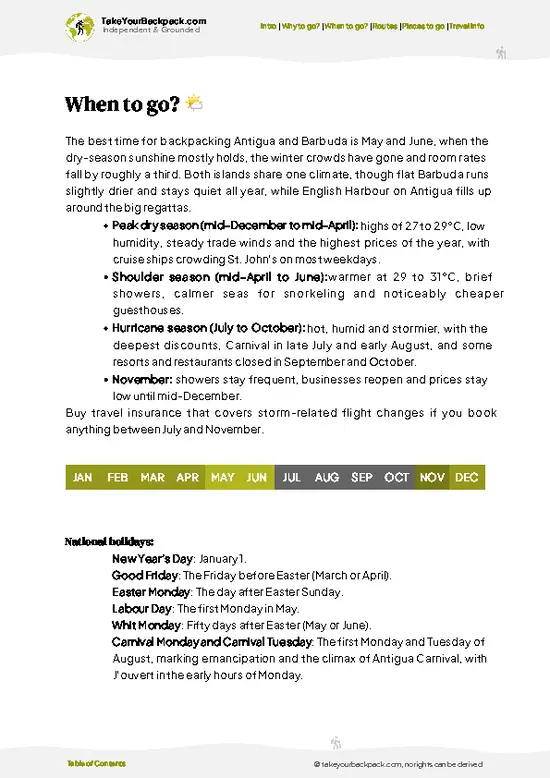
example page 1 from our offline Travel Guide for Antigua and Barbuda
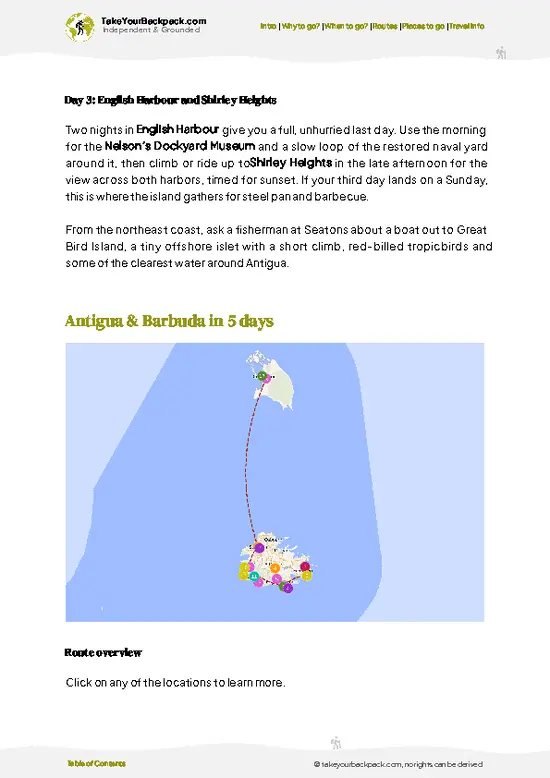
example page 2 from our offline Travel Guide for Antigua and Barbuda
example page 3 from our offline Travel Guide for Antigua and Barbuda
example page 4 from our offline Travel Guide for Antigua and Barbuda
example page 5 from our offline Travel Guide for Antigua and Barbuda
example page 6 from our offline Travel Guide for Antigua and Barbuda
example page 7 from our offline Travel Guide for Antigua and Barbuda
Loading the map 🌍
CLICK TO FILTER
towns
villages
landmarks
national parks
hikes
beaches
attractions
festivals
SHOW COUNTRY’S BESTSHOW ALL

✨ Why go?
Ranked #6 unique site in Antigua & Barbuda
The unique appeal for travelers

St. John’s Cathedral earns a stop because it sits on a hill above the capital, and you can reach it on foot from the cruise dock, the market and the museum in a single easy loop. Its two white Baroque towers, topped with cupolas, rise from a ridge you can see from the harbor, and the interior surprises people: the ceiling and walls are lined entirely in pitch pine, a design that helped the building ride out earthquakes and hurricanes. That fact alone changes how you look at the place.

It costs little to step inside, and the setting is quiet compared with the busy streets below. Stone figures of St. John the Baptist and St. John the Divine flank the gate, and they are said to have been taken from a French ship in 1756. Nearby, the gravestones in the churchyard record centuries of island history. … read more 👉
St. John’s Cathedral earns a stop because it sits on a hill above the capital, and you can reach it on foot from the cruise dock, the market and the museum in a single easy loop. Its two white Baroque towers, topped with cupolas, rise from a ridge you can see from the harbor, and the interior surprises people: the ceiling and walls are lined entirely in pitch pine, a design that helped the building ride out earthquakes and hurricanes. That fact alone changes how you look at the place.

It costs little to step inside, and the setting is quiet compared with the busy streets below. Stone figures of St. John the Baptist and St. John the Divine flank the gate, and they are said to have been taken from a French ship in 1756. Nearby, the gravestones in the churchyard record centuries of island history.

The cathedral works best as a morning anchor. Pair it with the Museum of Antigua and Barbuda on Long Street, then head to the market for lunch before you move on to Nelson’s Dockyard or the beaches. Plan on about an hour here, and you have a solid first or last day in the capital.

💡 HighlightsMust-see experiences and standout moments

  1. The Twin Towers: The 1845 Baroque-style facade and its two towers are the landmark of the skyline. Photograph them from the street below the gates for the full height.
  2. The Pine-Clad Interior: Pitch pine covers the ceiling and galleries over the stonework, a protection against quakes and hurricanes. It glows dark and warm and smells of old wood.
  3. The Gate Statues: Figures of St. John the Baptist and St. John the Divine stand at the entrance. Local tradition says they came from a captured French vessel.
  4. The Memorial Plaques: Wall tablets record planters, officers and clergy from the colonial era. Reading them gives a blunt picture of who held power and who paid for it.
  5. The Churchyard: Weathered gravestones sit around the building, some of them very old and leaning. It is quiet even when the street
… read more 👉
  1. The Twin Towers: The 1845 Baroque-style facade and its two towers are the landmark of the skyline. Photograph them from the street below the gates for the full height.
  2. The Pine-Clad Interior: Pitch pine covers the ceiling and galleries over the stonework, a protection against quakes and hurricanes. It glows dark and warm and smells of old wood.
  3. The Gate Statues: Figures of St. John the Baptist and St. John the Divine stand at the entrance. Local tradition says they came from a captured French vessel.
  4. The Memorial Plaques: Wall tablets record planters, officers and clergy from the colonial era. Reading them gives a blunt picture of who held power and who paid for it.
  5. The Churchyard: Weathered gravestones sit around the building, some of them very old and leaning. It is quiet even when the street outside is loud.
  6. Sunday Services: Attending a morning service lets you hear the choir and see the building in use. Dress modestly and sit near the back.
  7. The Hilltop View: From the grounds you look over the rooftops toward the harbor and the cruise ships. It is a useful way to get your bearings in town.
The Pine-Clad Interior and the Churchyard pair well in one slow morning, followed by a walk down to the museum.
Spotted a mistake or missing something? Contact us.

Things to do around St. John’s Cathedral

Ratings based on Tripadvisor reviews. When you book through this link, you support our work at no extra cost to you.

🌤️ When to go?Seasonal considerations and timing

The best window for St. John’s Cathedral is December to April, when rain is scarce and the two white towers stand against clear blue sky.
  • Dry Season (December to April): Days run 27 to 30°C (81 to 86°F), nights 21 to 24°C (70 to 75°F), with steady trade winds. About 11 to 12 hours of daylight. Cruise ships often put hundreds of passengers into town on the same morning, so the cathedral can be busy around 10 am to 2 pm. Accommodation costs are highest, especially over Christmas and New Year.
  • Wet Season (June to November): Hotter and stickier at 29 to 32°C (84 to 90°F), with short afternoon downpours. Hurricane risk peaks August to October. Rooms drop noticeably in price and the pews are quiet.
  • Carnival (late July to early August): The city fills with parades and music, and beds book out early
… read more 👉
The best window for St. John’s Cathedral is December to April, when rain is scarce and the two white towers stand against clear blue sky.
  • Dry Season (December to April): Days run 27 to 30°C (81 to 86°F), nights 21 to 24°C (70 to 75°F), with steady trade winds. About 11 to 12 hours of daylight. Cruise ships often put hundreds of passengers into town on the same morning, so the cathedral can be busy around 10 am to 2 pm. Accommodation costs are highest, especially over Christmas and New Year.
  • Wet Season (June to November): Hotter and stickier at 29 to 32°C (84 to 90°F), with short afternoon downpours. Hurricane risk peaks August to October. Rooms drop noticeably in price and the pews are quiet.
  • Carnival (late July to early August): The city fills with parades and music, and beds book out early despite the heat.
Visit on a weekday before 10 am for cool air and fewer cruise groups.


source: climatestotravel.comJANJanuary: excellent for travelingFEBFebruary: excellent for travelingMARMarch: excellent for travelingAPRApril: highly recommended for travelingMAYMay: highly recommended for travelingJUNJune: good for travelingJULJuly: fair for travelingAUGAugust: fair for travelingSEPSeptember: good for travelingOCTOctober: good for travelingNOVNovember: highly recommended for travelingDECDecember: excellent for traveling
antigua-and-barbuda-unique-site-st-johns-cathedral
© Google | Carlos Masi

✈️ The backpacker research shortcutAntigua & Barbuda Travel Guide

An offline-friendly backpacking guide with optimized travel routes, ranked highlights, transport advice, and the best areas to stay.
example page 0 from our offline Travel Guide for Antigua and Barbuda
example page 1 from our offline Travel Guide for Antigua and Barbuda
example page 2 from our offline Travel Guide for Antigua and Barbuda
example page 3 from our offline Travel Guide for Antigua and Barbuda
example page 4 from our offline Travel Guide for Antigua and Barbuda
example page 5 from our offline Travel Guide for Antigua and Barbuda
example page 6 from our offline Travel Guide for Antigua and Barbuda
example page 7 from our offline Travel Guide for Antigua and Barbuda
The digital guide (130 pages) contains:
✅ 36 highlights, ranked by travel appeal
✅ Optimized 2, 3 & 5-day travel routes
✅ Cities, national parks, landmarks, beaches
✅ How to get around
✅ Offline-friendly for travel without Wi-Fi
👉 Click to see all 30+ guide features

📅 Plan smarter in minutes, not weeks
✅ Month by month travel advice
✅ Festivals & national holidays
✅ Budget expectations

🗺️ Go to the right places, skip the overrated ones
✅ Honest pros & cons of destinations
✅ Top hikes, parks & viewpoints
✅ Lesser-known places most travelers miss
✅ Clear “worth it vs skip it” guidance

🛏️ Travel smoothly without rookie mistakes
✅ Best areas to stay
✅ Transport systems explained simply
✅ Common scams & safety advice
✅ SIM cards, money & practical tips

🌍 Understand the country, not just visit it
✅ Culture & traditions
✅ Local customs
✅ Festivals worth planning around
✅ Traveler-friendly historical context
✅ Insights that make places more meaningful

📱 Built for real travel conditions
✅ Fully downloadable PDF
✅ Works completely offline
✅ Optimized for phone use
✅ Useful in remote areas & buses
✅ Everything in one place
Stop searching, start planning
Get instant access to your full guide. 30‑day money-back guarantee.
+ Add another guide for just

By proceeding you agree to our terms.
Sent to your inbox immediately after payment • 100% Secure Checkout
Best Backpacking Travel Advisor 2025 tourism awardBest Backpacking
Travel Advisor
2025
What others say about Take Your Backpack Guides:
⭐⭐⭐⭐⭐
Fantastic, amazing amount of information!
⭐⭐⭐⭐⭐
My goodness this is amazing, it's what I've been looking for hats off too you!
⭐⭐⭐⭐⭐
I think this is absolutely BRILLIANT
⭐⭐⭐⭐
Very complete and informative. It's still missing places, but I gotta to commend you
⭐⭐⭐⭐⭐
This is truly amazing, thank you, can't wait to explore it with my kids!
⭐⭐⭐⭐⭐
Awesome resource, thank you!
⭐⭐⭐⭐⭐
This is amazing! Can't wait to explore the ones I haven't seen
⭐⭐⭐⭐
I love this! Well done, great idea.
⭐⭐⭐⭐⭐
Thanks for taking the time to make this gem!
⭐⭐⭐⭐⭐
This might be the best website I've ever seen.
⭐⭐⭐⭐⭐
Congratulations, and thank you so much for your work; it's incredibly valuable.
⭐⭐⭐⭐
In all seriousness I think you did a great job pointing out the important spots
⭐⭐⭐⭐⭐
10/10 very good
⭐⭐⭐⭐⭐
As someone who's only just starting to visit regularly this is awesome, thank you.
⭐⭐⭐⭐
Thank you very much! I'm going to visit my dad, it's going to be very useful!
⭐⭐⭐⭐⭐
This is really cool! We'll be travelling for the first time and this definitely come in handy.
⭐⭐⭐⭐⭐
You are now our minister of culture, congratulations 👨‍💼
⭐⭐⭐⭐⭐
Just wanted to tell you that this is a pearl! Going to follow your recommendations.
⭐⭐⭐⭐⭐
This is so cool. I'll definitely be using the resource for my travels soon.
⭐⭐⭐⭐⭐
This is very impressive! Good work.
⭐⭐⭐⭐⭐
This is an amazing and informative site. Very well done!

🛏️ Where to stay?Where staying makes the most sense

The best base is central St. John’s, within a 5 to 10 minute walk of the cathedral on Church Street, where budget rooms and guesthouses cluster around the market and the Heritage Quay waterfront. You can reach the cathedral, the Antigua and Barbuda Museum, Redcliffe Quay and the main bus terminal on foot. Buses to the beaches leave from the West Bus Station and the Market Street station, so you skip taxi fares. The downside is that the town empties and goes quiet after dark and on Sundays, so keep to well-lit main streets at night and take a taxi back late.

For a more social scene, look to Dickenson … read more 👉
The best base is central St. John’s, within a 5 to 10 minute walk of the cathedral on Church Street, where budget rooms and guesthouses cluster around the market and the Heritage Quay waterfront. You can reach the cathedral, the Antigua and Barbuda Museum, Redcliffe Quay and the main bus terminal on foot. Buses to the beaches leave from the West Bus Station and the Market Street station, so you skip taxi fares. The downside is that the town empties and goes quiet after dark and on Sundays, so keep to well-lit main streets at night and take a taxi back late.

For a more social scene, look to Dickenson Bay and Runaway Bay, about 10 to 15 minutes north by bus or taxi. Expect beach bars, dive and watersports operators, and the best chance of meeting other solo travelers. Rooms there cost more, and the cheapest options are small apartments and guesthouses a block or two back from the sand.

For a calmer, cheaper choice, try residential areas just outside the center, such as Villa and Fort Road, where self-catering rooms suit longer stays. Book ahead from December to April.

👛 Costs (as of 22 October 2026)Travel costs and budget guide for St. John’s Cathedral

St. John’s Cathedral costs about US$67 to 111 a day for a backpacker in high season, including a bed, local food and bus rides. Entry to the cathedral is usually free or by small donation, and visitors pay in Eastern Caribbean dollars or US dollars.
CategoryBudget RangeLocal Reality
Cathedral entryUS$0 to 5Free or a small donation. Modest dress is expected inside.
Accommodation (high season)US$45 to 60A private room in a guesthouse or small hostel-style stay. Low season runs about US$30 to 45.
FoodUS$15 to 25Local lunch plates of stewed meat, rice and peas at market-area eateries cost US$7 to 12. Restaurants near Heritage Quay charge more.
Local transportUS$2 to 6Minibuses cost about US$1 to 2 per ride. Short taxi rides start around US$10 to 15, with fares agreed before you get in.
Extras and sightsUS$5
… read more 👉
St. John’s Cathedral costs about US$67 to 111 a day for a backpacker in high season, including a bed, local food and bus rides. Entry to the cathedral is usually free or by small donation, and visitors pay in Eastern Caribbean dollars or US dollars.
CategoryBudget RangeLocal Reality
Cathedral entryUS$0 to 5Free or a small donation. Modest dress is expected inside.
Accommodation (high season)US$45 to 60A private room in a guesthouse or small hostel-style stay. Low season runs about US$30 to 45.
FoodUS$15 to 25Local lunch plates of stewed meat, rice and peas at market-area eateries cost US$7 to 12. Restaurants near Heritage Quay charge more.
Local transportUS$2 to 6Minibuses cost about US$1 to 2 per ride. Short taxi rides start around US$10 to 15, with fares agreed before you get in.
Extras and sightsUS$5 to 15Museum entry is a few dollars, and a drink at a waterfront bar runs US$4 to 8.
Total Daily BudgetUS$67 to 111Around US$80 for most backpackers using buses and cheap local meals.
⚠️ Prices can change and everyone travels differently, so take this as a rough guide. Hope it helps you plan your adventure!

FAQTraveler FAQ

St. John’s Cathedral is the Anglican cathedral of Antigua, standing on a hill above the capital with two tall twin towers and a baroque-style interior. The current building dates from 1845 after earthquakes destroyed earlier churches on the site. Entry is usually free or by donation, and the pitch-pine interior and gated churchyard are the main draws.
Plan 30 to 60 minutes for St. John’s Cathedral, which covers the interior, the churchyard with its old gravestones and the stone figures at the gate. Add 1 to 2 hours if you combine it with the nearby Antigua and Barbuda Museum, Redcliffe Quay and the market. A half day covers the whole historic center on foot.
St. John’s Cathedral sits on Church Street in the center of St. John’s, a 15 to 25 minute taxi ride (about US$20 to 30) from V.C. Bird International Airport. Minibuses from the West Bus Station or Market Street station run from towns across the island for about US$1 to 3. If you stay downtown or arrive by cruise ship at Heritage Quay or Redcliffe Quay, it is a 5 to 10 minute walk uphill.
⚠️ Things can change over time, so always validate details locally before you go.

Other Antiguan and Barbudan landmarks near St. John’s Cathedral

Explore more nearby:

  • Fort Barrington—Goat Hill battery, harbor panorama, Deep Bay, Andes wreck| 5 km away
  • Betty’s Hope—Twin windmill towers, boiling house ruins, sugar estate museum, cane scrub| 12 km away
  • Cades Reef—Shallow reef flats, sea fans, elkhorn coral, Cades Bay rays| 13 km away

💡 Not sure where to go next?
Create a personalized itinerary for Antigua & Barbuda including St. John’s Cathedral and the places that fit your trip.

Generate my itinerary

👉 Discover all landmarks

Or checkout all Antigua & Barbuda has to offer (think cities, towns, villages, national parks, hikes, beaches, festivals)
Country photo of Antigua & Barbuda

We 💚 feedbackFinal thoughts on visiting St. John’s Cathedral

St. John’s Cathedral works best as the opening act of a full town day: I would visit first thing, then drift down to Redcliffe Quay for lunch and the museum. After that, take a bus or taxi to English Harbour for the history to continue. Bring a scarf or light cover-up for the sanctuary.

✍️ Help improve this page!
The information on this page is based on in-depth research, insights shared by experienced travelers, and feedback from the local travel community in Antigua & Barbuda. While every effort is made to keep the information accurate and current, conditions can change — so if you spot anything incorrect or outdated, please get in touch.


🙋‍♂️ Give feedback

👋 Meet the founderWho’s Behind Take Your Backpack?

Johan, backpacker and founder of TakeYourBackpackHi, I’m Johan (Netherlands 🇳🇱), the creator of TakeYourBackpack. Over the past 3 decades, I’ve backpacked through 90+ countries across six continents, gaining extensive experience with independent travel, long-term trips, and overland routes.

This site is built on a combination of firsthand travel experience and carefully curated insights from other backpackers. Many guides are based on places I’ve personally visited, while others bring together tips, observations, and practical advice shared by trusted travelers I’ve met along the way.

The goal is to provide realistic, experience-driven guidance — not generic itineraries — so you can explore destinations with better context, clearer expectations, and more confidence.