×

Argentina🇦🇷 | landmarksCerro CatedralGranite spires, Refugio Frey, Laguna Toncek, Nahuel Huapi views | things to do and best time to go

Explore Cañón del AtuelExplore Cono de Arita

Backpacking in Cerro Catedral
🌟 Highlightunique site ranked #4
By Johan Kruseman 🇳🇱 | Updated October 19, 2026

Everyone online sells Cerro Catedral as a ski postcard, but here's the truth: most backpackers who show up in summer skip the lift entirely and hike straight up the scree to Refugio Frey, and that's where the actual magic lives. Cerro Catedral sits about 19 km southwest of Bariloche in Argentina's Patagonian Lake District. The wow-factor is real once you're above the treeline staring at jagged granite spires and turquoise water, but the base area itself is a crowded, overpriced tourist funnel in ski season. Photo potential is enormous, cultural weight is minimal (this is nature, not ruins), and accessibility is genuinely easy via cheap public buses. I remember eating a squashed ham sandwich at Laguna Toncek, boots soaked, wind slapping my face, and thinking it beat every restaurant meal I'd had in Bariloche.

Discover everything you want to know in the 📖 Argentina Travel Guide.


example page 0 from our offline Travel Guide for Argentina
example page 1 from our offline Travel Guide for Argentina
example page 2 from our offline Travel Guide for Argentina
example page 3 from our offline Travel Guide for Argentina
example page 4 from our offline Travel Guide for Argentina
example page 5 from our offline Travel Guide for Argentina
example page 6 from our offline Travel Guide for Argentina
example page 7 from our offline Travel Guide for Argentina
Loading the map 🌍
CLICK TO FILTER
cities
towns
villages
landmarks
national parks
hikes
beaches
attractions
festivals
regions
SHOW COUNTRY’S BESTSHOW ALL

✨ Why go?
Ranked #4 unique site in Argentina
The unique appeal for travelers

Backpackers make time for Cerro Catedral because the effort-to-reward ratio is absurd: a short, cheap bus ride from Bariloche drops you at trailheads leading to some of Patagonia's best granite scenery, no permits or guides required. It's uniquely accessible, meaning you get high-alpine terrain that normally demands multi-day expeditions elsewhere in the region. The hike to Refugio Frey takes roughly 4 to 5 hours and costs nothing beyond bus fare and refugio fees, making it one of the best value days in the Lake District. It also fits naturally into a broader Patagonia route, since Bariloche itself is a hub most backpackers pass through en route to El Bolsón or El Chaltén, so you're not making a special detour, just adding a killer day hike to a stop you'd already make. The mountain works … read more 👉
Backpackers make time for Cerro Catedral because the effort-to-reward ratio is absurd: a short, cheap bus ride from Bariloche drops you at trailheads leading to some of Patagonia's best granite scenery, no permits or guides required. It's uniquely accessible, meaning you get high-alpine terrain that normally demands multi-day expeditions elsewhere in the region. The hike to Refugio Frey takes roughly 4 to 5 hours and costs nothing beyond bus fare and refugio fees, making it one of the best value days in the Lake District. It also fits naturally into a broader Patagonia route, since Bariloche itself is a hub most backpackers pass through en route to El Bolsón or El Chaltén, so you're not making a special detour, just adding a killer day hike to a stop you'd already make. The mountain works for total beginners on the lift-assisted viewpoint walks and for hardened trekkers pushing into the Frey or Refugio San Martín circuits, which is rare versatility for one site.

💡 HighlightsTop highlights of Cerro Catedral

  1. Refugio Frey: A rustic mountain hut beside Laguna Toncek, ringed by needle-like granite towers. This is the payoff after a 4 to 5 hour climb and, honestly, my personal favorite spot in the whole area.
  2. Laguna Toncek: The glacial lake right at Frey's doorstep, cold enough to make you gasp if you swim, and still enough most mornings to mirror the peaks perfectly.
  3. Cerro Catedral Cable Car (Aerosilla), gets you to around 2000m without breaking a sweat, useful if you want the view without the climb.
  4. Refugio San Martín (Refugio Jakob), a quieter alternative to Frey, reached via a longer trek through the Arroyo Casa de Piedra valley, with far fewer people and equally sharp rock formations.
  5. The Traverse Trail between Frey and Catedral base, a full-day route through lenga forest and open scree that shows
… read more 👉
  1. Refugio Frey: A rustic mountain hut beside Laguna Toncek, ringed by needle-like granite towers. This is the payoff after a 4 to 5 hour climb and, honestly, my personal favorite spot in the whole area.
  2. Laguna Toncek: The glacial lake right at Frey's doorstep, cold enough to make you gasp if you swim, and still enough most mornings to mirror the peaks perfectly.
  3. Cerro Catedral Cable Car (Aerosilla), gets you to around 2000m without breaking a sweat, useful if you want the view without the climb.
  4. Refugio San Martín (Refugio Jakob), a quieter alternative to Frey, reached via a longer trek through the Arroyo Casa de Piedra valley, with far fewer people and equally sharp rock formations.
  5. The Traverse Trail between Frey and Catedral base, a full-day route through lenga forest and open scree that shows off the mountain's range of terrain in one stretch.
  6. Climbing routes on the granite spires above Frey, genuinely well-regarded among rock climbers internationally, drawing a dedicated crew every summer.
  7. Nahuel Huapi Lake views from the upper chairlifts, the water shifts color through blues and greens depending on light, best seen in late afternoon.
Spotted a mistake or missing something? Contact us.

🌤️ When to go?Weather, crowds, and seasonal trade-offs

  • Summer (December to February): Daytime temps run 15 to 25°C (59 to 77°F), trails are snow-free, and this is peak hiking season, meaning the busiest trails and highest refugio prices.
  • Shoulder Season (March to April, October to November): Cooler at 8 to 15°C (46 to 59°F), fewer crowds, unpredictable weather with possible early or late snow, and noticeably cheaper accommodation in Bariloche.
  • Winter (June to September): Ski season dominates, temps drop to -2 to 8°C (28 to 46°F), daylight is short (around 9 hours), and hiking trails are largely inaccessible without mountaineering gear, though lift prices spike with ski demand.
  • Crowds: Weekends and Argentine summer holidays (January) bring the heaviest foot traffic on both lift and trail.
Go in late November or March, you get the trails nearly empty … read more 👉
  • Summer (December to February): Daytime temps run 15 to 25°C (59 to 77°F), trails are snow-free, and this is peak hiking season, meaning the busiest trails and highest refugio prices.
  • Shoulder Season (March to April, October to November): Cooler at 8 to 15°C (46 to 59°F), fewer crowds, unpredictable weather with possible early or late snow, and noticeably cheaper accommodation in Bariloche.
  • Winter (June to September): Ski season dominates, temps drop to -2 to 8°C (28 to 46°F), daylight is short (around 9 hours), and hiking trails are largely inaccessible without mountaineering gear, though lift prices spike with ski demand.
  • Crowds: Weekends and Argentine summer holidays (January) bring the heaviest foot traffic on both lift and trail.
Go in late November or March, you get the trails nearly empty and the light hits the granite spires at a lower, more dramatic angle.


source: climatestotravel.comJANJanuary: excellent for travelingFEBFebruary: excellent for travelingMARMarch: highly recommended for travelingAPRApril: highly recommended for travelingMAYMay: good for travelingJUNJune: good for travelingJULJuly: good for travelingAUGAugust: good for travelingSEPSeptember: good for travelingOCTOctober: highly recommended for travelingNOVNovember: highly recommended for travelingDECDecember: excellent for traveling
when-to-go

✈️ The backpacker research shortcutArgentina Travel Guide

An offline-friendly backpacking guide with optimized travel routes, ranked highlights, transport advice, and the best areas to stay.
example page 0 from our offline Travel Guide for Argentina
example page 1 from our offline Travel Guide for Argentina
example page 2 from our offline Travel Guide for Argentina
example page 3 from our offline Travel Guide for Argentina
example page 4 from our offline Travel Guide for Argentina
example page 5 from our offline Travel Guide for Argentina
example page 6 from our offline Travel Guide for Argentina
example page 7 from our offline Travel Guide for Argentina
The digital guide (393 pages) contains:
✅ 131 highlights, ranked by travel appeal
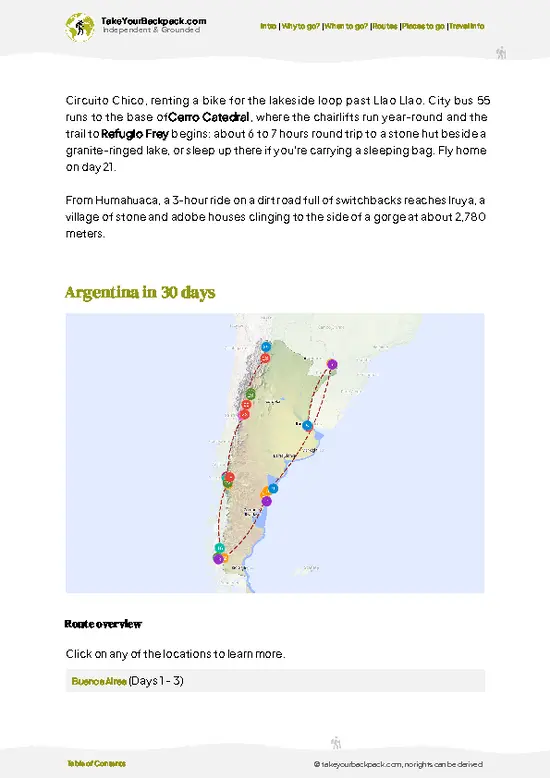
✅ Optimized 14, 21 & 30-day travel routes
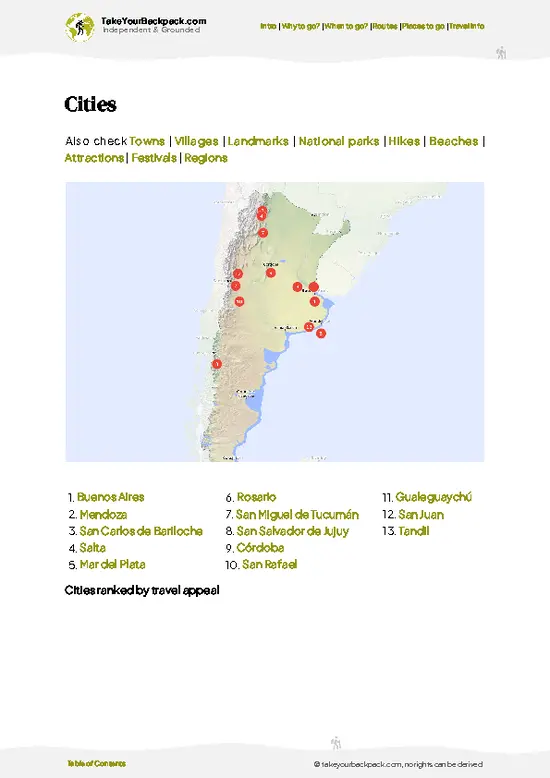
✅ Cities, national parks, landmarks, beaches
✅ How to get around
✅ Offline-friendly for travel without Wi-Fi
👉 Click to see all 30+ guide features

📅 Plan smarter in minutes, not weeks
✅ Month by month travel advice
✅ Festivals & national holidays
✅ Budget expectations

🗺️ Go to the right places, skip the overrated ones
✅ Honest pros & cons of destinations
✅ Top hikes, parks & viewpoints
✅ Lesser-known places most travelers miss
✅ Clear “worth it vs skip it” guidance

🛏️ Travel smoothly without rookie mistakes
✅ Best areas to stay
✅ Transport systems explained simply
✅ Common scams & safety advice
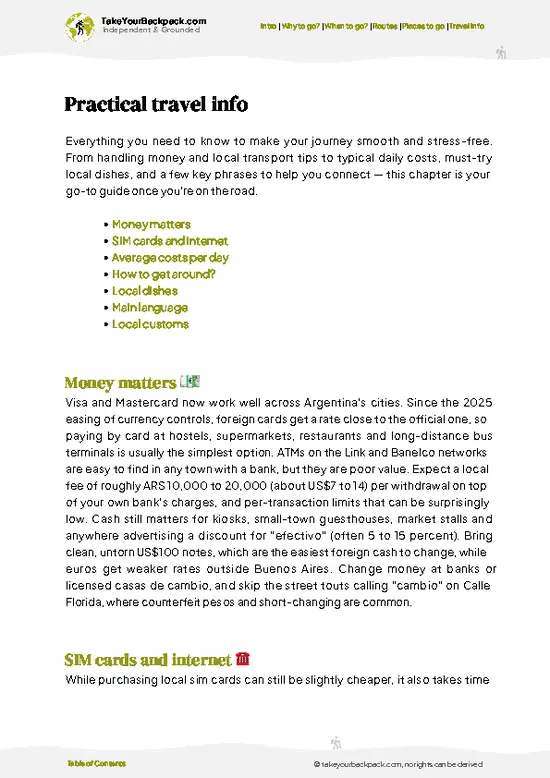
✅ SIM cards, money & practical tips

🌍 Understand the country, not just visit it
✅ Culture & traditions
✅ 52 Essential phrases & customs
✅ Festivals worth planning around
✅ Traveler-friendly historical context
✅ Insights that make places more meaningful

📱 Built for real travel conditions
✅ Fully downloadable PDF
✅ Works completely offline
✅ Optimized for phone use
✅ Useful in remote areas & buses
✅ Everything in one place
Stop searching, start planning
Get instant access to your full guide. 30‑day money-back guarantee.
+ Add another guide for just

By proceeding you agree to our terms.
Sent to your inbox immediately after payment • 100% Secure Checkout
Best Backpacking Travel Advisor 2025 tourism awardBest Backpacking
Travel Advisor
2025
What others say about Take Your Backpack Guides:
⭐⭐⭐⭐⭐
Fantastic, amazing amount of information!
⭐⭐⭐⭐⭐
My goodness this is amazing, it's what I've been looking for hats off too you!
⭐⭐⭐⭐⭐
I think this is absolutely BRILLIANT
⭐⭐⭐⭐
Very complete and informative. It's still missing places, but I gotta to commend you
⭐⭐⭐⭐⭐
This is truly amazing, thank you, can't wait to explore it with my kids!
⭐⭐⭐⭐⭐
Awesome resource, thank you!
⭐⭐⭐⭐⭐
This is amazing! Can't wait to explore the ones I haven't seen
⭐⭐⭐⭐
I love this! Well done, great idea.
⭐⭐⭐⭐⭐
Thanks for taking the time to make this gem!
⭐⭐⭐⭐⭐
This might be the best website I've ever seen.
⭐⭐⭐⭐⭐
Congratulations, and thank you so much for your work; it's incredibly valuable.
⭐⭐⭐⭐
In all seriousness I think you did a great job pointing out the important spots
⭐⭐⭐⭐⭐
10/10 very good
⭐⭐⭐⭐⭐
As someone who's only just starting to visit regularly this is awesome, thank you.
⭐⭐⭐⭐
Thank you very much! I'm going to visit my dad, it's going to be very useful!
⭐⭐⭐⭐⭐
This is really cool! We'll be travelling for the first time and this definitely come in handy.
⭐⭐⭐⭐⭐
You are now our minister of culture, congratulations 👨‍💼
⭐⭐⭐⭐⭐
Just wanted to tell you that this is a pearl! Going to follow your recommendations.
⭐⭐⭐⭐⭐
This is so cool. I'll definitely be using the resource for my travels soon.
⭐⭐⭐⭐⭐
This is very impressive! Good work.
⭐⭐⭐⭐⭐
This is an amazing and informative site. Very well done!

🛏️ Where to stay?How to pick the right area

Most backpackers base themselves in Bariloche city center, which sits about 19 km from the mountain and offers the best mix of budget hostels, communal kitchens, and other travelers to team up with for trailhead transport. The Bariloche bus terminal area is walkable to many hostels and puts you steps from the buses that run directly to Villa Catedral, the base village. If you want to skip city noise, Villa Catedral itself has a small cluster of budget lodging right at the trailhead, useful if you plan an early start for Refugio Frey and don't want a bus ride before sunrise. For those craving forest … read more 👉
Most backpackers base themselves in Bariloche city center, which sits about 19 km from the mountain and offers the best mix of budget hostels, communal kitchens, and other travelers to team up with for trailhead transport. The Bariloche bus terminal area is walkable to many hostels and puts you steps from the buses that run directly to Villa Catedral, the base village. If you want to skip city noise, Villa Catedral itself has a small cluster of budget lodging right at the trailhead, useful if you plan an early start for Refugio Frey and don't want a bus ride before sunrise. For those craving forest and quiet, the road toward Colonia Suiza has a few simple, low-cost options surrounded by lenga trees and lake views, still within reach of the mountain by local transport. Wherever you land, staying somewhere with a shared kitchen matters here, since Bariloche's restaurant prices run higher than other Patagonian towns.

👛 Costs (as of 19 October 2026)How expensive it really is

Visiting Cerro Catedral is generally affordable by Patagonian standards, especially if you skip the lift and hike. Here's a realistic daily budget breakdown in USD.
CategoryBudget RangeLocal Reality
Bus from Bariloche to Villa CatedralUSD 2 to 4Frequent public buses run daily, roughly every 30 to 60 minutes in high season
Cable car (Aerosilla) round tripUSD 25 to 35Price varies by season, higher in ski months, not needed if hiking
Refugio Frey overnight (bunk)USD 20 to 30Cash preferred, book ahead in January and February
Meals at refugioUSD 10 to 18Simple hot dishes, pricier than town due to remote supply
Hostel dorm bed in BarilocheUSD 12 to 22Prices spike in summer and during ski season weekends
Groceries for day hikeUSD 5 to 10Supermarkets in Bariloche are cheaper than anything near the trail
Optional
… read more 👉
Visiting Cerro Catedral is generally affordable by Patagonian standards, especially if you skip the lift and hike. Here's a realistic daily budget breakdown in USD.
CategoryBudget RangeLocal Reality
Bus from Bariloche to Villa CatedralUSD 2 to 4Frequent public buses run daily, roughly every 30 to 60 minutes in high season
Cable car (Aerosilla) round tripUSD 25 to 35Price varies by season, higher in ski months, not needed if hiking
Refugio Frey overnight (bunk)USD 20 to 30Cash preferred, book ahead in January and February
Meals at refugioUSD 10 to 18Simple hot dishes, pricier than town due to remote supply
Hostel dorm bed in BarilocheUSD 12 to 22Prices spike in summer and during ski season weekends
Groceries for day hikeUSD 5 to 10Supermarkets in Bariloche are cheaper than anything near the trail
Optional gear rental (trekking poles, crampons)USD 8 to 15 per dayAvailable in Bariloche shops, less common at the base
Total daily cost for a budget-conscious hiker, including a hostel bed and a day hike without the cable car, typically lands around USD 40 to 60.


source: argentina.travel
⚠️ Prices can change and everyone travels differently, so take this as a rough guide. Hope it helps you plan your adventure!

FAQTraveler FAQ

Cerro Catedral is a granite mountain in Argentina's Nahuel Huapi National Park, about 19 km from Bariloche, known both as the country's largest ski resort and as a summer hiking destination famous for its jagged spires and access to Refugio Frey.
A single day trip to hike toward Refugio Frey and back takes about 8 to 10 hours round trip, but many backpackers stay overnight at the refugio to add a second day exploring the Frey circuit or San Martín trail, making two days the more comfortable option.
From Bariloche, catch a local bus (line 55) from the city center to Villa Catedral, the base village, a ride that takes roughly 40 minutes and costs a few dollars; from there, trailheads for Refugio Frey and the cable car are within walking distance.
⚠️ Things can change over time, so always validate details locally before you go.

Other Argentine landmarks near Cerro Catedral

Explore more nearby:

  • Punta Tombo—Penguin burrows, roped trail, chick season, steppe wildlife| 603 km away
  • Cueva de las Manos—Hand stencils, guanaco hunts, Río Pinturas canyon, ochre pigments| 669 km away
  • Cañón del Atuel—Route 173, red rock walls, turquoise rapids, dam reservoirs| 749 km away

💡 Not sure where to go next?
Create a personalized itinerary for Argentina including Cerro Catedral and the places that fit your trip.

Generate my itinerary

👉 Discover all landmarks

Or checkout all Argentina has to offer (think cities, towns, villages, national parks, hikes, beaches, festivals)
Country photo of Argentina

We 💚 feedbackFinal thoughts on visiting Cerro Catedral

Cerro Catedral earns its reputation the moment you're standing above Frey with those granite spires overhead, no entrance fee required for the best part. The drawback is Bariloche itself: overpriced restaurants and crowded ski-season weekends can sour the mood if you don't plan around them. Hike it, don't just ride the lift.

✈️ When did I visit Argentina?
I have visited Argentina, together with Chile, in September 2012.

✍️ Help improve this page!
The information on this page is based on my own backpacking experience in Argentina, supplemented with up-to-date research and feedback from other travelers. Travel details can change, so if you notice anything outdated or incomplete, feel free to let me know.


🙋‍♂️ Give feedback

👋 Meet the founderWho’s Behind Take Your Backpack?

Johan, backpacker and founder of TakeYourBackpackHi, I’m Johan (Netherlands 🇳🇱), the creator of TakeYourBackpack. Over the past 3 decades, I’ve backpacked through 90+ countries across six continents, gaining extensive experience with independent travel, long-term trips, and overland routes.

This site is built on a combination of firsthand travel experience and carefully curated insights from other backpackers. Many guides are based on places I’ve personally visited, while others bring together tips, observations, and practical advice shared by trusted travelers I’ve met along the way.

The goal is to provide realistic, experience-driven guidance — not generic itineraries — so you can explore destinations with better context, clearer expectations, and more confidence.