×

Argentina🇦🇷 | landmarksCono de Aritaperfect volcanic cone, salt flat isolation, stark symmetry | things to do and best time to go

Explore Cerro CatedralExplore Cueva de las Manos, Río Pinturas

Backpacking in Cono de Arita
👌 Worth visitingunique site ranked #9
By Johan Kruseman 🇳🇱 | Updated September 4, 2026

Your boots crunch on salt that looks like snow but feels like broken plates, the wind is dry enough to sting your teeth, and there it is: a perfect black cone rising out of the blinding white, so quiet you can hear your own heartbeat. Cono de Arita sits in the Salar de Arizaro, deep in Salta Province in northwest Argentina, and it is absolutely not an easy-win Instagram stop. The wow-factor is huge precisely because it’s hard to reach, there’s almost no one around, and services are basically nonexistent. Transport can be pricey, the track is rough, and you’re committing a full day. But the emptiness, the scale, and the way the cone glows at sunset? That feels ancient, almost ceremonial, and worth every dusty kilometer.

Discover everything you want to know in the 📖 Argentina Travel Guide.
Loading the map 🌍
CLICK TO FILTER
cities
towns
villages
landmarks
national parks
hikes
beaches
attractions
festivals
regions
SHOW COUNTRY’S BESTSHOW ALL

✨ Why go?
Ranked #9 unique site in Argentina
What makes it a must-see unique site

The Cono de Arita isn’t just another pretty picture for your Instagram feed; it’s a jaw-dropping natural wonder that demands your attention. This cone-shaped volcanic formation rises dramatically from the salt flats of Salinas Grandes, and trust me, it’s worth the trek.

Yes, you’ll encounter crowds, especially during peak season, but don’t let that deter you. The effort-to-reward ratio is solid. Getting there isn’t a cakewalk, but the sense of isolation and the sheer scale of the landscape will make you feel like you’ve stepped onto another planet.

It fits perfectly into a broader route through northwest Argentina, allowing you to explore charming towns like Purmamarca and Tilcara along the way. Plus, it’s low-cost—just a few pesos for transport. The real magic lies in the experience: … read more 👉
The Cono de Arita isn’t just another pretty picture for your Instagram feed; it’s a jaw-dropping natural wonder that demands your attention. This cone-shaped volcanic formation rises dramatically from the salt flats of Salinas Grandes, and trust me, it’s worth the trek.

Yes, you’ll encounter crowds, especially during peak season, but don’t let that deter you. The effort-to-reward ratio is solid. Getting there isn’t a cakewalk, but the sense of isolation and the sheer scale of the landscape will make you feel like you’ve stepped onto another planet.

It fits perfectly into a broader route through northwest Argentina, allowing you to explore charming towns like Purmamarca and Tilcara along the way. Plus, it’s low-cost—just a few pesos for transport. The real magic lies in the experience: the silence, the vastness, and the chance to connect with nature in a way that feels authentic and raw.
Want to include Cono de Arita in your Argentina route?
Create a personalized Argentina itinerary that includes Cono de Arita and the places that fit your trip — based on your travel style, budget, and available time. Get your route in seconds.

Generate my trip

💡 HighlightsDon't-miss highlights and experiences

  • The cone itself — An almost eerily perfect conical hill rising straight out of the salt: looks like someone dropped a giant ice-cream cone on a white plate. It’s the visual hook — simple, sculptural, and totally out of place in the flat salt plain.
  • The salt-flat context — That white, cracked crust around the cone turns the whole site into a minimal, otherworldly panorama. Patterns in the salt, scale tricks for photos and the feeling of emptiness make the cone read like a single, dramatic punctuation mark on the landscape.
  • Sunrise and sunset light (personal favorite) — Low sun throws long shadows and bathes the cone and salt in warm pinks and golds; that short window is when the scene goes from stark to cinematic. If you only have time for one view, aim for dawn — fewer people and magical
read more 👉
  • The cone itself — An almost eerily perfect conical hill rising straight out of the salt: looks like someone dropped a giant ice-cream cone on a white plate. It’s the visual hook — simple, sculptural, and totally out of place in the flat salt plain.
  • The salt-flat context — That white, cracked crust around the cone turns the whole site into a minimal, otherworldly panorama. Patterns in the salt, scale tricks for photos and the feeling of emptiness make the cone read like a single, dramatic punctuation mark on the landscape.
  • Sunrise and sunset light (personal favorite) — Low sun throws long shadows and bathes the cone and salt in warm pinks and golds; that short window is when the scene goes from stark to cinematic. If you only have time for one view, aim for dawn — fewer people and magical color shifts.
  • The geological mystery — Scientists still debate how the cone formed, which adds a layer of intrigue. It’s not a volcano plug or a man-made structure — the unknown origin makes the spot feel like a natural curiosity worth pondering while you sit on the salt.
  • Night sky and stargazing — High, remote and with virtually no light pollution, the area gives you a brilliant Milky Way and crisp constellations. Bring a headlamp with red mode and a warm jacket; the cold at night is real, but the sky is worth it.
  • The approach and Puna scenery — The drive or 4x4 route to Cono de Arita is part of the experience: volcanic silhouettes, scrubby puna plants, and vast open space. It feels like an honest, off-the-beaten-track slice of the Argentine high plateau — bring fuel, water and basic tools.
  • Nearby high-altitude wetlands and wildlife — In the broader region you can find saline lagoons and patches of puna habitat where birds (including flamingos in some spots) and hardy Andean fauna show up. It’s a nice contrast to the stark salt plain and adds variety to a short excursion.
Spotted a mistake or missing something? Contact us.
🌤️ When to go?When to go for the best experience


  • Weather: The dry season from May to September is your best bet—clear skies dominate, making the salt flats around Cono de Arita gleam. Rain is rare but can turn the flats into a muddy mess, so avoid the summer months (December to February) when storms hit.

  • Temperature: Nights get cold, often dropping below 0°C (32°F) in winter, while days can warm up to a comfortable 20°C (68°F). Summer days scorch at 30°C+ (86°F+), but nights remain chilly. Dress in layers; the desert swings hard.

  • Daylight Hours: Winter days are short—about 10 hours of light—so plan hikes and photo ops early. Summer offers up to 14 hours, but the heat can drain you fast.

  • Crowds: This isn’t Machu Picchu; expect solitude most of the year. Peak season (June-August) sees a handful of tourists, but you’ll rarely feel
read more 👉

  • Weather: The dry season from May to September is your best bet—clear skies dominate, making the salt flats around Cono de Arita gleam. Rain is rare but can turn the flats into a muddy mess, so avoid the summer months (December to February) when storms hit.

  • Temperature: Nights get cold, often dropping below 0°C (32°F) in winter, while days can warm up to a comfortable 20°C (68°F). Summer days scorch at 30°C+ (86°F+), but nights remain chilly. Dress in layers; the desert swings hard.

  • Daylight Hours: Winter days are short—about 10 hours of light—so plan hikes and photo ops early. Summer offers up to 14 hours, but the heat can drain you fast.

  • Crowds: This isn’t Machu Picchu; expect solitude most of the year. Peak season (June-August) sees a handful of tourists, but you’ll rarely feel overwhelmed. The real magic is the quiet.

  • Seasonal Activities: Winter’s dry air is perfect for stargazing and photography. Summer’s heat limits daytime exploration but brings vibrant local festivals nearby—if you can handle the heat.

  • Price Fluctuations: Costs for lodging and tours spike slightly in winter due to demand from international travelers chasing dry weather. Summer is cheaper but less comfortable and riskier for access.


Pro-tip: Aim for late May or early September—cool, clear, and quiet—when you get the best balance of weather, light, and solitude without the winter price hike.


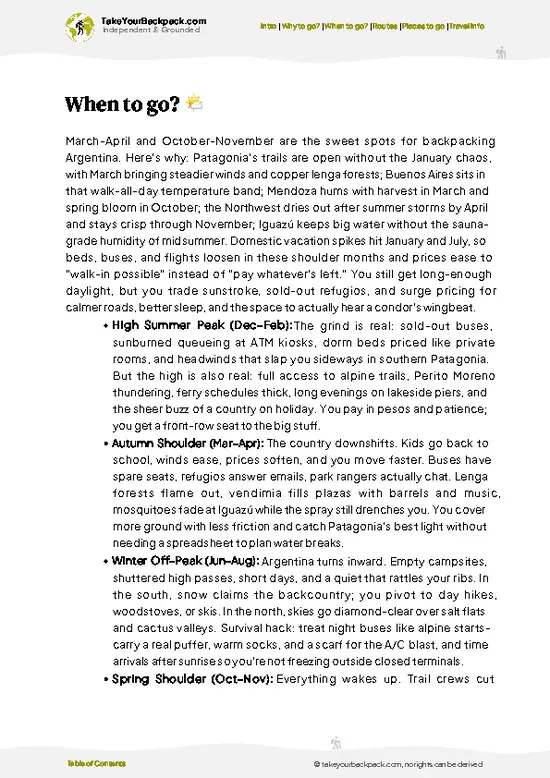
source: climatestotravel.comJANJanuary: fair for travelingFEBFebruary: fair for travelingMARMarch: good for travelingAPRApril: good for travelingMAYMay: highly recommended for travelingJUNJune: excellent for travelingJULJuly: excellent for travelingAUGAugust: excellent for travelingSEPSeptember: highly recommended for travelingOCTOctober: good for travelingNOVNovember: good for travelingDECDecember: fair for traveling
when-to-go

✈️ The backpacker research shortcutArgentina Travel Guide

An offline-friendly backpacking guide with optimized travel routes, ranked highlights, transport advice, and the best areas to stay.
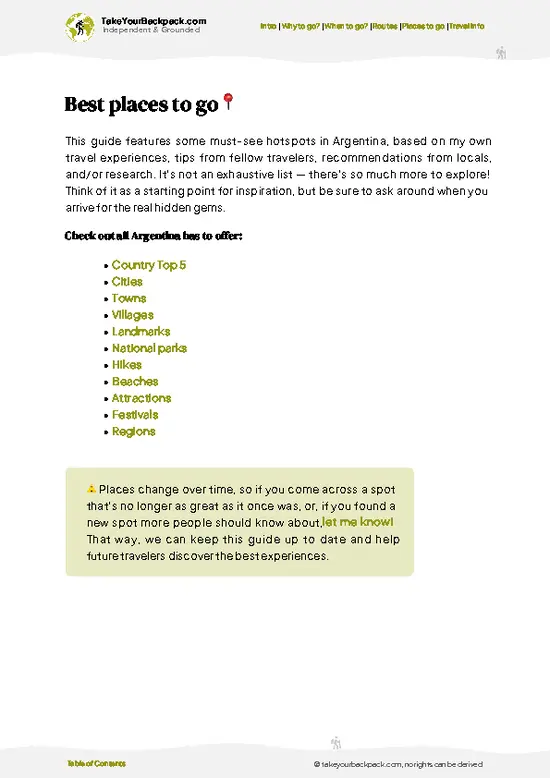
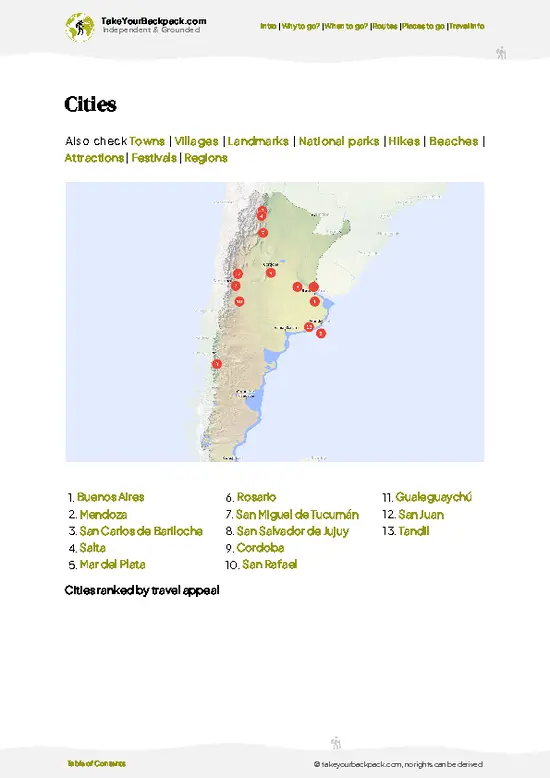
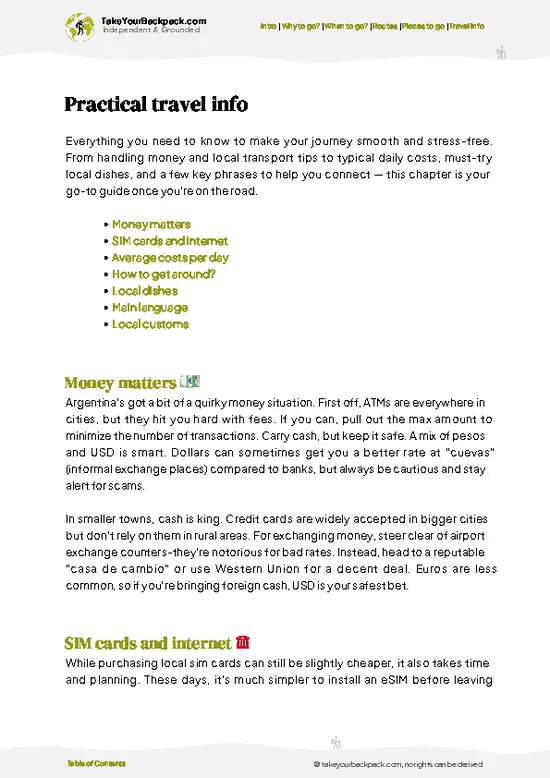
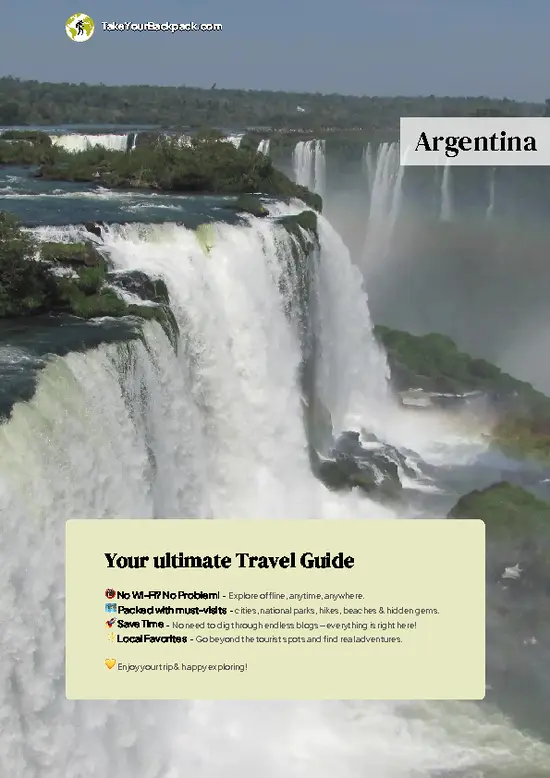
example page 0 from our offline Travel Guide for Argentina
example page 1 from our offline Travel Guide for Argentina
example page 2 from our offline Travel Guide for Argentina
example page 3 from our offline Travel Guide for Argentina
example page 4 from our offline Travel Guide for Argentina
example page 5 from our offline Travel Guide for Argentina
example page 6 from our offline Travel Guide for Argentina
example page 7 from our offline Travel Guide for Argentina
The digital guide (505 pages) contains:
135 highlights, ranked by travel appeal
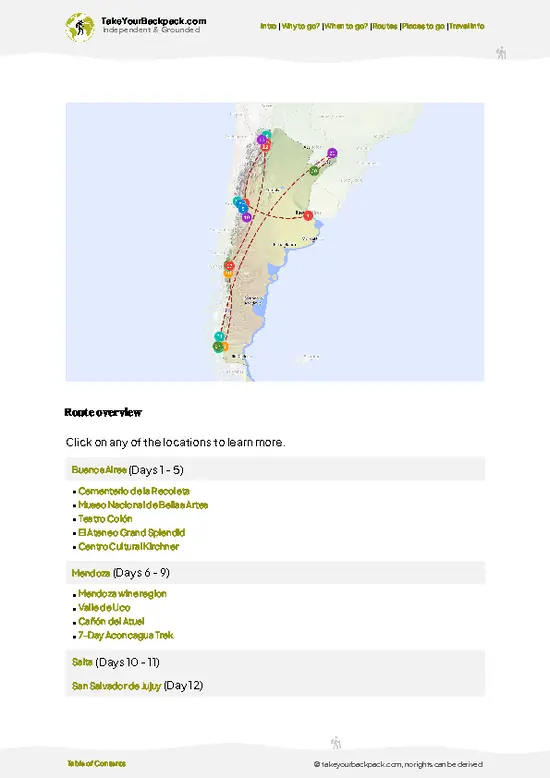
Optimized 14, 21 & 30-day travel routes
Cities, national parks, landmarks, beaches
How to get around
Offline-friendly for travel without Wi-Fi
👉 Click to see all 30+ guide features

📅 Plan smarter in minutes, not weeks
Month by month travel advice
Festivals & national holidays
Budget expectations

🗺️ Go to the right places, skip the overrated ones
Honest pros & cons of destinations
Top hikes, parks & viewpoints
Lesser-known places most travelers miss
Clear “worth it vs skip it” guidance

🛏️ Travel smoothly without rookie mistakes
Best areas to stay
Transport systems explained simply
Common scams & safety advice
SIM cards, money & practical tips

🌍 Understand the country, not just visit it
Culture & traditions
52 Essential phrases & customs
Festivals worth planning around
Traveler-friendly historical context
Insights that make places more meaningful

📱 Built for real travel conditions
Fully downloadable PDF
Works completely offline
Optimized for phone use
Useful in remote areas & buses
Everything in one place
Save weeks of stressful planning
Get instant access to your full guide. 30‑day money-back guarantee.
+ Add another guide for just US$7.80

By proceeding you agree to our terms.
Sent to your inbox immediately after payment • 100% Secure Checkout
Best Backpacking Travel Advisor 2025 tourism awardBest Backpacking
Travel Advisor
2025
What others say about Take Your Backpack Guides:
⭐⭐⭐⭐⭐
Fantastic, amazing amount of information!
⭐⭐⭐⭐⭐
My goodness this is amazing, it's what I've been looking for hats off too you!
⭐⭐⭐⭐⭐
I think this is absolutely BRILLIANT
⭐⭐⭐⭐
Very complete and informative. It's still missing places, but I gotta to commend you
⭐⭐⭐⭐⭐
This is truly amazing, thank you, can't wait to explore it with my kids!
⭐⭐⭐⭐⭐
Awesome resource, thank you!
⭐⭐⭐⭐⭐
This is amazing! Can't wait to explore the ones I haven't seen
⭐⭐⭐⭐
I love this! Well done, great idea.
⭐⭐⭐⭐⭐
Thanks for taking the time to make this gem!
⭐⭐⭐⭐⭐
This might be the best website I've ever seen.
⭐⭐⭐⭐⭐
Congratulations, and thank you so much for your work; it's incredibly valuable.
⭐⭐⭐⭐
In all seriousness I think you did a great job pointing out the important spots
⭐⭐⭐⭐⭐
10/10 very good
⭐⭐⭐⭐⭐
As someone who's only just starting to visit regularly this is awesome, thank you.
⭐⭐⭐⭐
Thank you very much! I'm going to visit my dad, it's going to be very useful!
⭐⭐⭐⭐⭐
This is really cool! We'll be travelling for the first time and this definitely come in handy.
⭐⭐⭐⭐⭐
You are now our minister of culture, congratulations 👨‍💼
⭐⭐⭐⭐⭐
Just wanted to tell you that this is a pearl! Going to follow your recommendations.
⭐⭐⭐⭐⭐
This is so cool. I'll definitely be using the resource for my travels soon.
⭐⭐⭐⭐⭐
This is very impressive! Good work.
⭐⭐⭐⭐⭐
This is an amazing and informative site. Very well done!

🛏️ Where to stay?How to pick the right area

When you’re heading to Cono de Arita, the last thing you want is to be stuck in a tourist trap. The area around Salinas Grandes is your best bet. It’s not just about the salt flats; it’s about the vibe.

Stay in the nearby town of Purmamarca. It’s a small, colorful village that’s got a laid-back atmosphere. You’ll find friendly locals and fellow backpackers. The communal spaces in hostels here are perfect for swapping stories and tips. Plus, the views of the surrounding mountains are a bonus.

Another option is Tilcara. This town has a bit more life, with markets and cafes that serve up local … read more 👉
When you’re heading to Cono de Arita, the last thing you want is to be stuck in a tourist trap. The area around Salinas Grandes is your best bet. It’s not just about the salt flats; it’s about the vibe.

Stay in the nearby town of Purmamarca. It’s a small, colorful village that’s got a laid-back atmosphere. You’ll find friendly locals and fellow backpackers. The communal spaces in hostels here are perfect for swapping stories and tips. Plus, the views of the surrounding mountains are a bonus.

Another option is Tilcara. This town has a bit more life, with markets and cafes that serve up local flavors. It’s a great base for exploring the region’s stunning landscapes.

Both towns are safe and welcoming, making them ideal for solo travelers. You’ll feel the pulse of authentic Argentine culture without the overwhelming crowds. Just remember, the real magic lies in the experience, not just the photo ops.

👛 Costs (as of 4 September 2026)Travel costs and budget guide for Cono de Arita

Visiting Cono de Arita in Argentina is a unique experience, but it comes with its own set of costs. Here’s a breakdown to help you plan your adventure.
  • Transportation: Getting to Cono de Arita isn’t straightforward. Expect to spend around €50 to €100 ($55 to $110) for a bus from Salta to the nearest town, then factor in another €30 to €60 ($33 to $66) for a taxi or shared ride to the cone itself. If you’re feeling adventurous, consider renting a car, which can cost about €30 to €70 ($33 to $77) per day, plus fuel.
  • Accommodation: Options near Cono de Arita are limited. You might find basic hostels or guesthouses in the surrounding towns for about €15 to €30 ($16 to $33) per night. If you prefer a bit more comfort, look for small hotels that can run from €40 to €80 ($44 to $88) per night.
  • Food:
read more 👉
Visiting Cono de Arita in Argentina is a unique experience, but it comes with its own set of costs. Here’s a breakdown to help you plan your adventure.
  • Transportation: Getting to Cono de Arita isn’t straightforward. Expect to spend around €50 to €100 ($55 to $110) for a bus from Salta to the nearest town, then factor in another €30 to €60 ($33 to $66) for a taxi or shared ride to the cone itself. If you’re feeling adventurous, consider renting a car, which can cost about €30 to €70 ($33 to $77) per day, plus fuel.
  • Accommodation: Options near Cono de Arita are limited. You might find basic hostels or guesthouses in the surrounding towns for about €15 to €30 ($16 to $33) per night. If you prefer a bit more comfort, look for small hotels that can run from €40 to €80 ($44 to $88) per night.
  • Food: Dining options are sparse, but you can grab a meal for around €5 to €15 ($5.50 to $16.50) at local eateries. If you’re self-catering, budget about €20 ($22) for groceries to last a couple of days.
  • Entrance Fees: There’s no official entrance fee for Cono de Arita, but you might want to hire a local guide for a more enriching experience. Guides typically charge around €20 to €50 ($22 to $55) for a half-day tour, which can be worth it for the insights they provide.
  • Miscellaneous: Don’t forget to budget for things like water, snacks, and any souvenirs. A reasonable estimate would be around €10 to €20 ($11 to $22) for these extras.

In total, you might spend anywhere from €150 to €300 ($165 to $330) for a couple of days, depending on your choices. It’s not the cheapest destination, but the raw beauty and solitude of Cono de Arita make it a worthwhile journey.


source: argentina.gob.ar
⚠️ Prices can change and everyone travels differently, so take this as a rough guide. Hope it helps you plan your adventure!

FAQFrequently asked questions about Cono de Arita

Cono de Arita is a natural cone-shaped hill located in the Salar de Arizaro salt flat in Argentina. It stands about 200 meters tall and is a unique geological formation in the region.
Visiting Cono de Arita typically requires a half-day to a full day, depending on your starting point and travel conditions. Most travelers allocate around 4 to 6 hours to explore the area and take photos.
To get to Cono de Arita, you usually travel from the town of Tolar Grande, which is about 50 kilometers away. Access is by 4x4 vehicle due to rough dirt roads, and it is recommended to arrange transport locally or join a guided tour.
⚠️ Things can change over time, so always validate details locally before you go.

Other Argentinian landmarks near Cono de Arita

Explore more nearby:


💡 Not sure where to go next?
Create a personalized itinerary for Argentina including Cono de Arita and the places that fit your trip.

Generate my itinerary

👉 Discover all landmarks

Or checkout all Argentina has to offer (think cities, towns, villages, national parks, hikes, beaches, festivals)
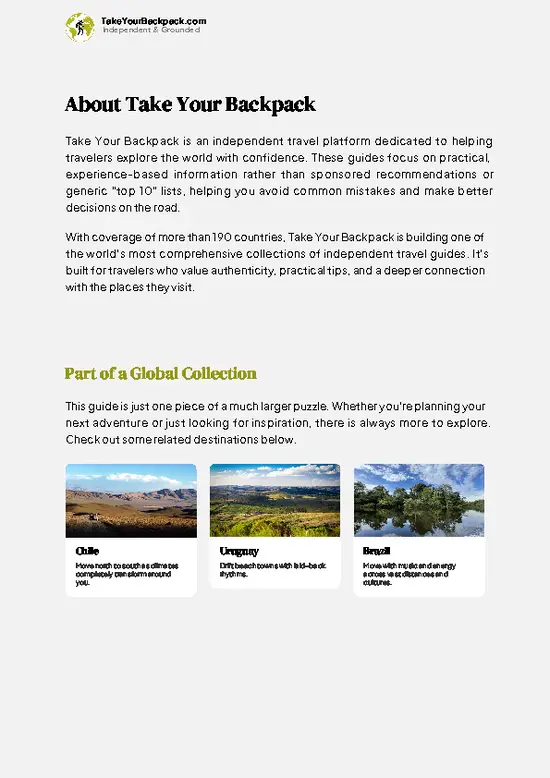
Country photo of Argentina

We 💚 feedbackKey takeaways before you go

Cono de Arita is a surreal sight that feels like stepping onto another planet. The stark beauty of that cone against the endless salt flats is a moment you won’t forget. But let’s be real: it’s remote, and the journey can be a slog. Expect crowds during peak season, which can dilute the magic. Still, if you can embrace the adventure, the payoff is worth every bump in the road.

✈️ When did I visit Argentina?
I have visited Argentina, together with Chile, in September 2012.

✍️ Help improve this page!
The information on this page is based on my own backpacking experience in Argentina, supplemented with up-to-date research and feedback from other travelers. Travel details can change, so if you notice anything outdated or incomplete, feel free to let me know.


🙋‍♂️ Give feedback

👋 Meet the founderWho’s Behind Take Your Backpack?

Johan, backpacker and founder of TakeYourBackpackHi, I’m Johan (Netherlands 🇳🇱), the creator of TakeYourBackpack. Over the past decade, I’ve backpacked through 80+ countries across six continents, gaining extensive experience with independent travel, long-term trips, and overland routes.

This site is built on a combination of firsthand travel experience and carefully curated insights from other backpackers. Many guides are based on places I’ve personally visited, while others bring together tips, observations, and practical advice shared by trusted travelers I’ve met along the way.

The goal is to provide realistic, experience-driven guidance — not generic itineraries — so you can explore destinations with better context, clearer expectations, and more confidence.

Get full Argentina guide •
Instant download • 135 highlights • Full Offline guide