×

Argentina🇦🇷 | regionsLake DistrictGranite spires, hut treks, lake loops, El Bolsón markets | things to do and best time to go

Explore La PampaExplore Mendoza wine region

Backpacking in Lake District
🌟 Highlightregion ranked #3
By Johan Kruseman 🇳🇱 | Updated October 19, 2026

Here's a detail almost nobody clocks: many Bariloche locals descend from Swiss, German, and Austrian settlers who arrived a century ago, which is why you'll find chocolate shops that taste like the real Alpine thing and why the architecture around Civic Center looks lifted from a Central European postcard. The region sits in southwest Argentina, straddling Rio Negro and Neuquen provinces along the Chilean border. For backpackers, it's a trade-off map. Spend more time and less money, and you get the good stuff: multi-day treks in Nahuel Huapi National Park, hitchhiking Ruta 40 instead of paying for buses, camping instead of hostels. Spend more money, you buy comfort: private rooms, guided ascents, faster inter-town transfers. I remember sitting on a rock above Refugio Frey, boots soaked, eating cold pasta from a pot while the granite spires went orange at sunset, and thinking no photo I'd seen prepared me for how sharp that light actually felt. Compared to Mendoza's wine-heavy pace or Patagonia's south (Calafate, El Chalten), this region moves faster and feels less remote. Travel in shoulder season (late September, or March) when the Circuito Chico buses run half-empty and chocolate shops aren't three-deep.

Discover everything you want to know in the 📖 Argentina Travel Guide.


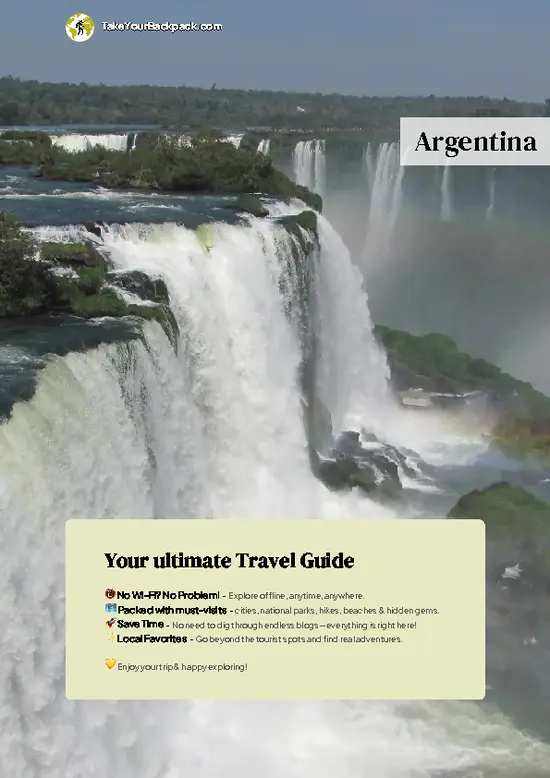
example page 0 from our offline Travel Guide for Argentina
example page 1 from our offline Travel Guide for Argentina
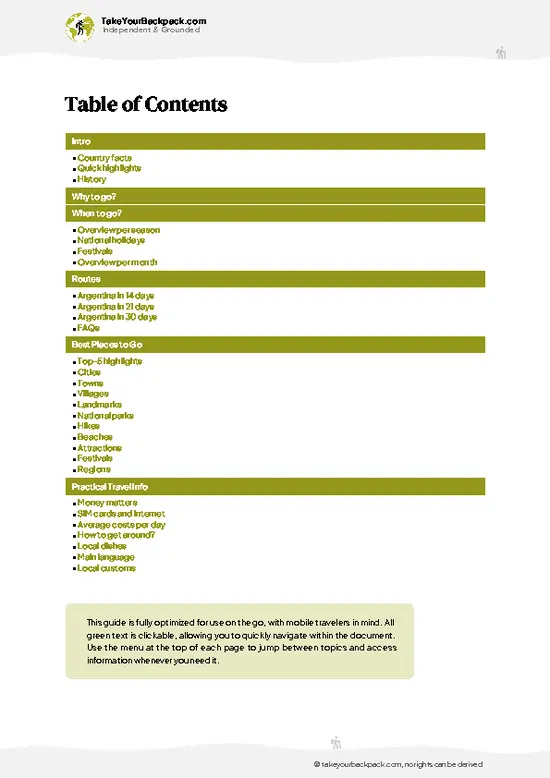
example page 2 from our offline Travel Guide for Argentina
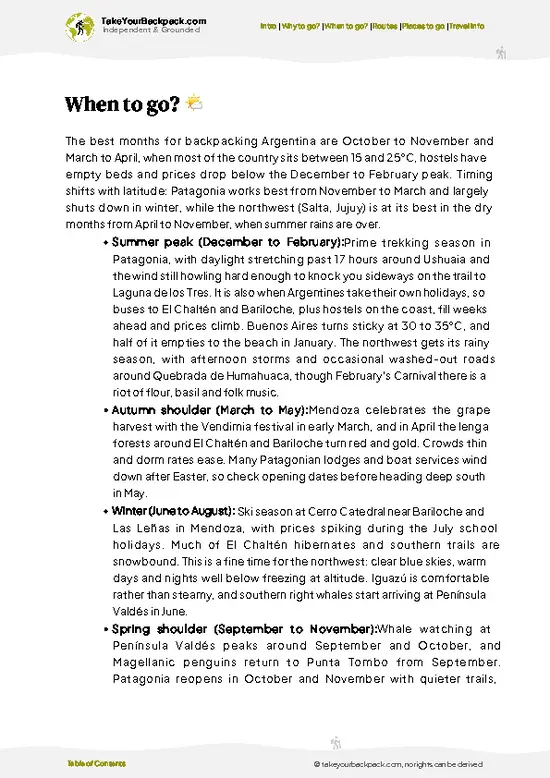
example page 3 from our offline Travel Guide for Argentina
example page 4 from our offline Travel Guide for Argentina
example page 5 from our offline Travel Guide for Argentina
example page 6 from our offline Travel Guide for Argentina
example page 7 from our offline Travel Guide for Argentina
Loading the map 🌍
CLICK TO FILTER
cities
towns
villages
landmarks
national parks
hikes
beaches
attractions
festivals
regions
SHOW COUNTRY’S BESTSHOW ALL

✨ Why go?
Ranked #3 region in Argentina
What makes it a must-see region

Backpackers linger here because the landscape variety is unmatched in a single, connected pocket of Argentina. You get turquoise lakes, dense Valdivian forest, and granite peaks all within a few hours of each other, without needing to fly or take 20-hour buses between stops. The transport network (frequent buses along Ruta 40 and Ruta 231, plus reliable hitchhiking culture) means you can bounce between Bariloche, Villa La Angostura, and El Bolson without much planning or expense. This lets you mix slow travel with active days: a morning trek followed by an afternoon reading by a lake, then a night out in a town with actual nightlife. It's also one of the few places in Patagonia where culture and nature blend easily, German-Swiss bakeries next to Mapuche craft markets, ski culture next to gaucho … read more 👉
Backpackers linger here because the landscape variety is unmatched in a single, connected pocket of Argentina. You get turquoise lakes, dense Valdivian forest, and granite peaks all within a few hours of each other, without needing to fly or take 20-hour buses between stops. The transport network (frequent buses along Ruta 40 and Ruta 231, plus reliable hitchhiking culture) means you can bounce between Bariloche, Villa La Angostura, and El Bolson without much planning or expense. This lets you mix slow travel with active days: a morning trek followed by an afternoon reading by a lake, then a night out in a town with actual nightlife. It's also one of the few places in Patagonia where culture and nature blend easily, German-Swiss bakeries next to Mapuche craft markets, ski culture next to gaucho tradition. For budget travelers, that density of experience per kilometer traveled is rare, and it's why so many backpackers plan for a week and stay three.

💡 HighlightsTop highlights of Lake District

  1. Nahuel Huapi National Park: The anchor of the whole region, covering forests, lakes, and peaks accessible by trail or by boat from Bariloche's port.
  2. Refugio Frey: A mountain hut trek (around 5-6 hours uphill) leading to a lake ringed by dramatic granite spires, one of the best free camping spots in Argentina for climbers and hikers alike.
  3. Circuito Chico: A 60km loop road outside Bariloche past Lago Nahuel Huapi and Lago Perito Moreno, doable by bike, bus, or hitchhiking, with lookout points like Cerro Campanario.
  4. Cerro Campanario: A short chairlift or hike up to a viewpoint frequently ranked among the best panoramas in Patagonia, overlooking multiple lakes simultaneously.
  5. Villa La Angostura: A quieter lakeside town north of Bariloche, less commercial, with Arrayanes National Park nearby, home
… read more 👉
  1. Nahuel Huapi National Park: The anchor of the whole region, covering forests, lakes, and peaks accessible by trail or by boat from Bariloche's port.
  2. Refugio Frey: A mountain hut trek (around 5-6 hours uphill) leading to a lake ringed by dramatic granite spires, one of the best free camping spots in Argentina for climbers and hikers alike.
  3. Circuito Chico: A 60km loop road outside Bariloche past Lago Nahuel Huapi and Lago Perito Moreno, doable by bike, bus, or hitchhiking, with lookout points like Cerro Campanario.
  4. Cerro Campanario: A short chairlift or hike up to a viewpoint frequently ranked among the best panoramas in Patagonia, overlooking multiple lakes simultaneously.
  5. Villa La Angostura: A quieter lakeside town north of Bariloche, less commercial, with Arrayanes National Park nearby, home to a rare forest of cinnamon-colored arrayan trees.
  6. El Bolson: A counterculture town south of Bariloche known for its Tuesday and Thursday craft market, home-brewed beer, and access to Cerro Piltriquitron.
  7. Cerro Piltriquitron: Overlooks El Bolson and holds the Bosque Tallado, a forest where sculptors carved figures directly into standing dead trees.
  8. Lago Puelo National Park: South of El Bolson, smaller and far less visited than Nahuel Huapi, with a turquoise lake that connects (via river) toward Chile.
  9. Colonia Suiza: A tiny lakeside settlement near Bariloche with a Sunday craft fair and curanto (an earth-oven meal) that locals travel for specifically, largely bypassed by tour buses.
  10. Isla Victoria and Bosque de Arrayanes boat trip: A ferry ride from Bariloche through the lake to see the arrayan forest without hiking, good for travelers short on time or energy.
Spotted a mistake or missing something? Contact us.

Things to do around Lake District

Ratings based on Tripadvisor reviews. When you book through this link, you support our work at no extra cost to you.

⌛️ 5 daysSeeing the highlights in 5 days

Day 1: Bariloche: Bariloche is the transport hub for the whole region, so land here first and use it to organize onward buses and gear rentals. Spend the day getting oriented in Civic Center and walking the coast, since jet lag or bus fatigue makes day one a poor choice for serious trekking.Day 2: Refugio Frey: This is the physical centerpiece of the route. The trailhead is a short bus ride from town, and the uphill trek takes most of a day, rewarding you with a night among granite spires that most day-trippers never see.Day 3: Circuito Chico: Coming back down tired, shift to something lower-effort: rent a bike or catch the local bus around Circuito Chico, stopping at Cerro Campanario for the panoramic view before heading back to town.Day 4: Villa La Angostura: Buses run north along Ruta 231 … read more 👉
Day 1: Bariloche: Bariloche is the transport hub for the whole region, so land here first and use it to organize onward buses and gear rentals. Spend the day getting oriented in Civic Center and walking the coast, since jet lag or bus fatigue makes day one a poor choice for serious trekking.Day 2: Refugio Frey: This is the physical centerpiece of the route. The trailhead is a short bus ride from town, and the uphill trek takes most of a day, rewarding you with a night among granite spires that most day-trippers never see.Day 3: Circuito Chico: Coming back down tired, shift to something lower-effort: rent a bike or catch the local bus around Circuito Chico, stopping at Cerro Campanario for the panoramic view before heading back to town.Day 4: Villa La Angostura: Buses run north along Ruta 231 regularly, making this an easy half-day relocation. Detour into Parque Nacional Los Arrayanes for the cinnamon-bark tree forest, reached by boat or by a 12 km trail along the Quetrihué peninsula.Day 5: El Bolson: Head south past Bariloche to El Bolson for a different pace entirely, craft markets, home brew, and Cerro Piltriquitron's carved forest.The must-do: Day 2 at Refugio Frey. Everything else is good, but that's the day that justifies the whole trip.

🌤️ When to go?Seasonal considerations and timing

  • Summer (December to February): Warm days around 20-25°C (68-77°F), long daylight, peak crowds and peak prices, ideal for trekking and lake swimming.
  • Shoulder Season (March, late September to November): Cooler, 10-18°C (50-64°F), fewer tourists, lower accommodation prices, autumn colors in April are striking around El Bolson.
  • Winter (June to August): Cold, 0-8°C (32-46°F), short daylight, ski season at Cerro Catedral drives prices up in Bariloche specifically, otherwise quiet elsewhere.
  • Festivals: Fiesta Nacional del Lupulo (beer and hops festival) in El Bolson, usually late February, worth timing a visit around.
Aim for the first half of March. The water's still warm enough to swim, the ski crowds haven't arrived, and hostel owners actually have time to talk.

source: climatestotravel.comJANJanuary: highly recommended for travelingFEBFebruary: highly recommended for travelingMARMarch: highly recommended for travelingAPRApril: highly recommended for travelingMAYMay: good for travelingJUNJune: good for travelingJULJuly: good for travelingAUGAugust: good for travelingSEPSeptember: highly recommended for travelingOCTOctober: excellent for travelingNOVNovember: excellent for travelingDECDecember: highly recommended for traveling

✈️ The backpacker research shortcutArgentina Travel Guide

An offline-friendly backpacking guide with optimized travel routes, ranked highlights, transport advice, and the best areas to stay.
example page 0 from our offline Travel Guide for Argentina
example page 1 from our offline Travel Guide for Argentina
example page 2 from our offline Travel Guide for Argentina
example page 3 from our offline Travel Guide for Argentina
example page 4 from our offline Travel Guide for Argentina
example page 5 from our offline Travel Guide for Argentina
example page 6 from our offline Travel Guide for Argentina
example page 7 from our offline Travel Guide for Argentina
The digital guide (393 pages) contains:
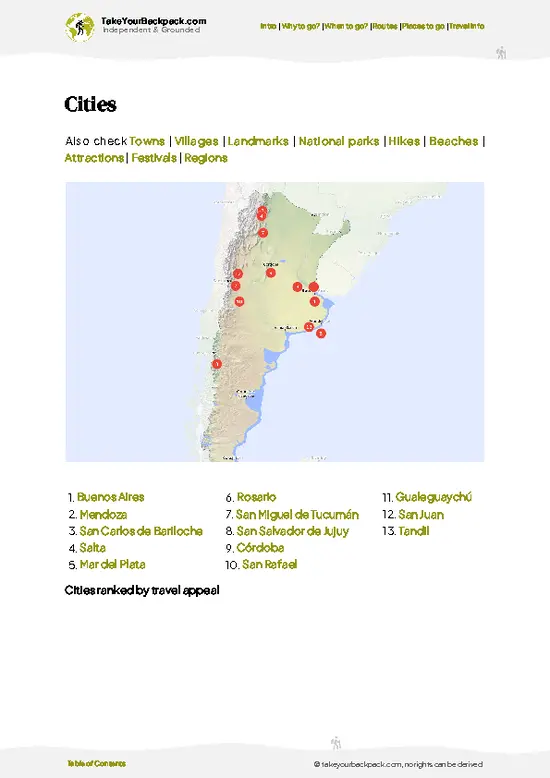
✅ 131 highlights, ranked by travel appeal
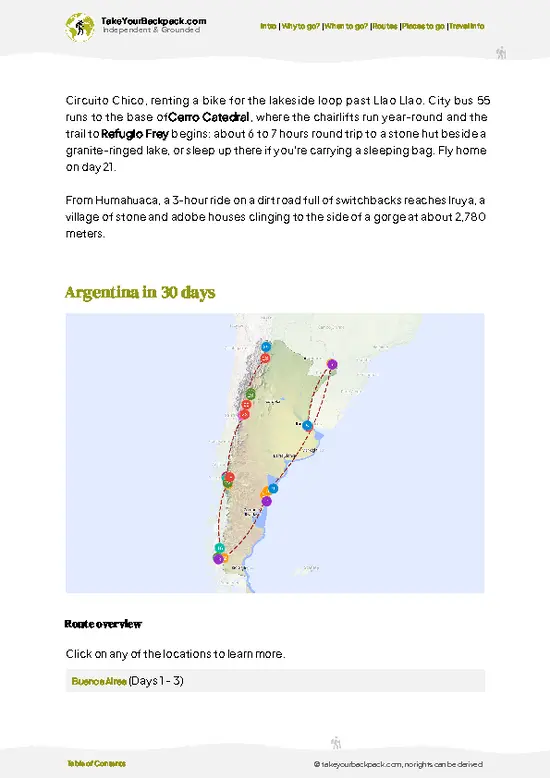
✅ Optimized 14, 21 & 30-day travel routes
✅ Cities, national parks, landmarks, beaches
✅ How to get around
✅ Offline-friendly for travel without Wi-Fi
👉 Click to see all 30+ guide features

📅 Plan smarter in minutes, not weeks
✅ Month by month travel advice
✅ Festivals & national holidays
✅ Budget expectations

🗺️ Go to the right places, skip the overrated ones
✅ Honest pros & cons of destinations
✅ Top hikes, parks & viewpoints
✅ Lesser-known places most travelers miss
✅ Clear “worth it vs skip it” guidance

🛏️ Travel smoothly without rookie mistakes
✅ Best areas to stay
✅ Transport systems explained simply
✅ Common scams & safety advice
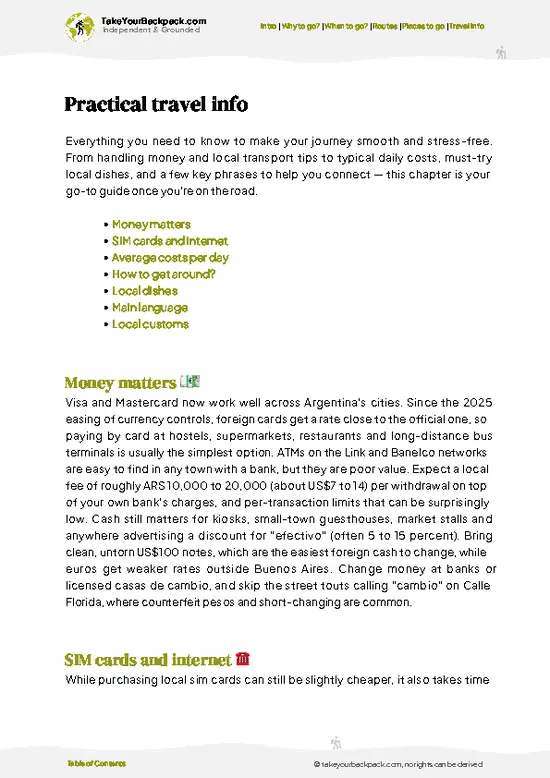
✅ SIM cards, money & practical tips

🌍 Understand the country, not just visit it
✅ Culture & traditions
✅ 52 Essential phrases & customs
✅ Festivals worth planning around
✅ Traveler-friendly historical context
✅ Insights that make places more meaningful

📱 Built for real travel conditions
✅ Fully downloadable PDF
✅ Works completely offline
✅ Optimized for phone use
✅ Useful in remote areas & buses
✅ Everything in one place
Stop searching, start planning
Get instant access to your full guide. 30‑day money-back guarantee.
+ Add another guide for just

By proceeding you agree to our terms.
Sent to your inbox immediately after payment • 100% Secure Checkout
Best Backpacking Travel Advisor 2025 tourism awardBest Backpacking
Travel Advisor
2025
What others say about Take Your Backpack Guides:
⭐⭐⭐⭐⭐
Fantastic, amazing amount of information!
⭐⭐⭐⭐⭐
My goodness this is amazing, it's what I've been looking for hats off too you!
⭐⭐⭐⭐⭐
I think this is absolutely BRILLIANT
⭐⭐⭐⭐
Very complete and informative. It's still missing places, but I gotta to commend you
⭐⭐⭐⭐⭐
This is truly amazing, thank you, can't wait to explore it with my kids!
⭐⭐⭐⭐⭐
Awesome resource, thank you!
⭐⭐⭐⭐⭐
This is amazing! Can't wait to explore the ones I haven't seen
⭐⭐⭐⭐
I love this! Well done, great idea.
⭐⭐⭐⭐⭐
Thanks for taking the time to make this gem!
⭐⭐⭐⭐⭐
This might be the best website I've ever seen.
⭐⭐⭐⭐⭐
Congratulations, and thank you so much for your work; it's incredibly valuable.
⭐⭐⭐⭐
In all seriousness I think you did a great job pointing out the important spots
⭐⭐⭐⭐⭐
10/10 very good
⭐⭐⭐⭐⭐
As someone who's only just starting to visit regularly this is awesome, thank you.
⭐⭐⭐⭐
Thank you very much! I'm going to visit my dad, it's going to be very useful!
⭐⭐⭐⭐⭐
This is really cool! We'll be travelling for the first time and this definitely come in handy.
⭐⭐⭐⭐⭐
You are now our minister of culture, congratulations 👨‍💼
⭐⭐⭐⭐⭐
Just wanted to tell you that this is a pearl! Going to follow your recommendations.
⭐⭐⭐⭐⭐
This is so cool. I'll definitely be using the resource for my travels soon.
⭐⭐⭐⭐⭐
This is very impressive! Good work.
⭐⭐⭐⭐⭐
This is an amazing and informative site. Very well done!

🛏️ Where to stay?How to pick the right area

Bariloche is the obvious base for most backpackers, with the highest concentration of hostels, bars, and other travelers to link up with for treks or gear splitting. It's social almost to a fault in peak summer, but that's exactly what makes it easy to find hiking partners.

El Bolson suits travelers wanting a slower, more alternative crowd. Fewer hostels, but the ones that exist tend to attract long-term travelers, musicians, and people who came for a weekend and stayed a month.

Villa La Angostura is quieter and slightly pricier, better suited to those wanting a calmer base with easy access … read more 👉
Bariloche is the obvious base for most backpackers, with the highest concentration of hostels, bars, and other travelers to link up with for treks or gear splitting. It's social almost to a fault in peak summer, but that's exactly what makes it easy to find hiking partners.

El Bolson suits travelers wanting a slower, more alternative crowd. Fewer hostels, but the ones that exist tend to attract long-term travelers, musicians, and people who came for a weekend and stayed a month.

Villa La Angostura is quieter and slightly pricier, better suited to those wanting a calmer base with easy access to Los Arrayanes National Park without the party noise of Bariloche.

All three are considered safe by Argentine standards, with low violent crime, though normal city precautions (watching bags on buses, avoiding empty streets late at night) apply everywhere.

🚌 Getting aroundGetting around like a local

This region runs on a strange mix of rigid bus schedules and loose improvisation. Long-distance buses between towns stick to fixed timetables, but once you're inside a town or heading to a trailhead, things loosen into a hitchhiking, shared-taxi, thumb-out kind of rhythm that rewards patience over planning.
  • Long-distance buses (Via Bariloche, Andesmar): Connect Bariloche, Villa La Angostura, and El Bolson multiple times daily, comfortable seating, journeys of 1-2 hours between towns, moderate cost.
  • Local buses (Mi Bus): Cover routes like Circuito Chico and trailheads around Bariloche, cheap, but infrequent outside peak summer months, so check timetables the day before.
  • Hitchhiking: Extremely common and culturally accepted here, especially along Ruta 40 and toward trailheads, free but unpredictable
… read more 👉
This region runs on a strange mix of rigid bus schedules and loose improvisation. Long-distance buses between towns stick to fixed timetables, but once you're inside a town or heading to a trailhead, things loosen into a hitchhiking, shared-taxi, thumb-out kind of rhythm that rewards patience over planning.
  • Long-distance buses (Via Bariloche, Andesmar): Connect Bariloche, Villa La Angostura, and El Bolson multiple times daily, comfortable seating, journeys of 1-2 hours between towns, moderate cost.
  • Local buses (Mi Bus): Cover routes like Circuito Chico and trailheads around Bariloche, cheap, but infrequent outside peak summer months, so check timetables the day before.
  • Hitchhiking: Extremely common and culturally accepted here, especially along Ruta 40 and toward trailheads, free but unpredictable in wait time.
  • Rental bikes: Widely available in Bariloche and Villa La Angostura, ideal for Circuito Chico, gives you flexibility a bus schedule can't.
  • Shared remises/taxis: Useful for reaching trailheads early morning before public buses start running, split the cost between a few travelers and it's barely more than the bus.
If you're heading to Refugio Frey or any trailhead, get there before 9am. Buses fill up fast in high season and hitchhiking gets harder once the day-trip crowd clogs the road. Trade time for money here freely, an extra hour spent waiting for a free ride saves real cash over a full backpacking trip, but if you're short on days, just pay for the bus and don't romanticize the wait.

🍲 FoodWhat to Eat & Drink

The region's German-Swiss heritage shows up hardest in its chocolate, artisanal shops in Bariloche sell thick drinking chocolate and bars far richer than anything mass-produced. Curanto, a meat and vegetable dish cooked in an underground earth oven, shows up at community gatherings like the one in Colonia Suiza and is worth timing a visit around. Craft beer is huge here, especially in El Bolson, where microbreweries serve pale ales and stouts using hops grown locally, a rarity in Argentina. For cheap eats, backpackers lean on choripan stands (grilled chorizo sandwiches) sold near markets and bus terminals, and the Tuesday/Thursday craft market in El Bolson doubles as a food stop with empanadas and homemade jams. Sit-down meals lean toward parrilla (grilled meat) restaurants, casual and unhurried, … read more 👉
The region's German-Swiss heritage shows up hardest in its chocolate, artisanal shops in Bariloche sell thick drinking chocolate and bars far richer than anything mass-produced. Curanto, a meat and vegetable dish cooked in an underground earth oven, shows up at community gatherings like the one in Colonia Suiza and is worth timing a visit around. Craft beer is huge here, especially in El Bolson, where microbreweries serve pale ales and stouts using hops grown locally, a rarity in Argentina. For cheap eats, backpackers lean on choripan stands (grilled chorizo sandwiches) sold near markets and bus terminals, and the Tuesday/Thursday craft market in El Bolson doubles as a food stop with empanadas and homemade jams. Sit-down meals lean toward parrilla (grilled meat) restaurants, casual and unhurried, where sharing a bottle of Patagonian Malbec is normal even at lunch. One quirk: dinner runs late, often not starting until 9pm, so don't expect much open earlier if you're hungry at 6.

FAQTraveler FAQ

Plan for at least 5 to 7 days to cover the highlights properly, including one overnight trek like Refugio Frey. Two weeks lets you add Villa La Angostura and El Bolson at a relaxed pace without rushing bus connections.
Local and long-distance buses connect the main towns frequently, and hitchhiking is common and culturally accepted, especially toward trailheads. Bikes are also easy to rent in Bariloche and Villa La Angostura for shorter routes like Circuito Chico.
It's known for its Swiss-German influenced towns, chocolate production, and access to Nahuel Huapi National Park's lakes and granite peaks. Bariloche in particular is famous as Argentina's main hub for trekking, skiing, and lake-based outdoor activities.
⚠️ Things can change over time, so always validate details locally before you go.

Other Argentine regions near Lake District

Explore more nearby:

  • Patagonia—Fitz Roy treks, calving glacier, steppe distances, whale coast| 583 km away
  • Península Valdés—Orca beach, southern right whales, elephant seals, penguin cliffs| 640 km away
  • La Pampa—Gaucho ranch towns, flat pampa horizons, granite hills, salt flats| 758 km away

💡 Not sure where to go next?
Create a personalized itinerary for Argentina including Lake District and the places that fit your trip.

Generate my itinerary

👉 Discover all regions

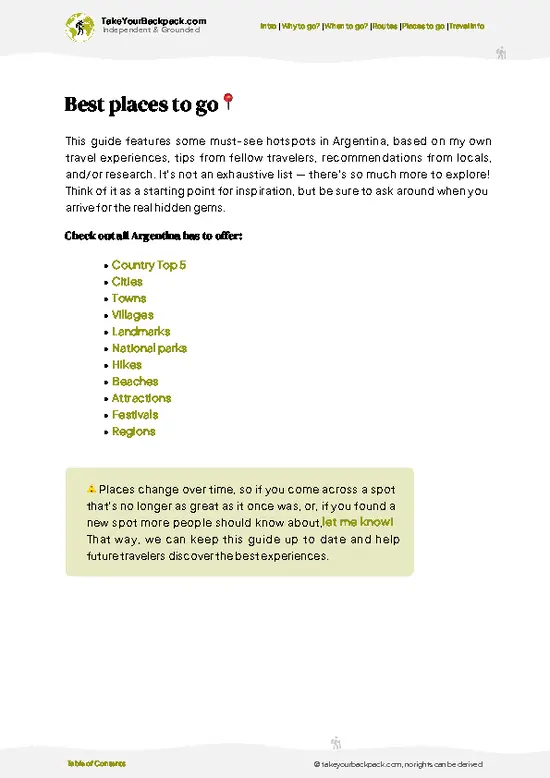
Or checkout all Argentina has to offer (think cities, towns, villages, national parks, hikes, beaches, festivals)
Country photo of Argentina

We 💚 feedbackIs it worth it?

Worth it for the sheer density of scenery you get without constantly repacking your bag, lakes, peaks, and forest all within a short bus ride of each other. The drawback: summer crowds in Bariloche can feel more like a ski resort town than wilderness, so budget extra effort to get past the center and into the trails.

✈️ When did I visit Argentina?
I have visited Argentina, together with Chile, in September 2012.

✍️ Help improve this page!
The information on this page is based on my own backpacking experience in Argentina, supplemented with up-to-date research and feedback from other travelers. Travel details can change, so if you notice anything outdated or incomplete, feel free to let me know.


🙋‍♂️ Give feedback

👋 Meet the founderWho’s Behind Take Your Backpack?

Johan, backpacker and founder of TakeYourBackpackHi, I’m Johan (Netherlands 🇳🇱), the creator of TakeYourBackpack. Over the past 3 decades, I’ve backpacked through 90+ countries across six continents, gaining extensive experience with independent travel, long-term trips, and overland routes.

This site is built on a combination of firsthand travel experience and carefully curated insights from other backpackers. Many guides are based on places I’ve personally visited, while others bring together tips, observations, and practical advice shared by trusted travelers I’ve met along the way.

The goal is to provide realistic, experience-driven guidance — not generic itineraries — so you can explore destinations with better context, clearer expectations, and more confidence.