×

Argentina🇦🇷 | regionsLa PampaGaucho ranch towns, flat pampa horizons, granite hills, salt flats | things to do and best time to go

Explore Quebrada de HumahuacaExplore Lake District

Backpacking in La Pampa
👌 Worth visitingregion ranked #9
By Johan Kruseman 🇳🇱 | Updated October 19, 2026

Dust on my boots, the smell of dry grass, and a horizon that just doesn't quit. I'm sitting on a fence post outside General Acha watching a gaucho move cattle without saying a word, just whistles and a dog that knows exactly what to do. La Pampa sits in the center of Argentina, west of Buenos Aires province, and it's the country's quiet middle child. You get zero crowds, real ranch culture, and prices lower than Patagonia or Mendoza, but you sacrifice speed. Buses run thin, distances stretch long, and there's little nightlife scene. Book an estancia stay midweek when rates drop and owners have time to actually talk with you. It's slow, it's flat, and honestly, that's the whole appeal.

Discover everything you want to know in the 📖 Argentina Travel Guide.


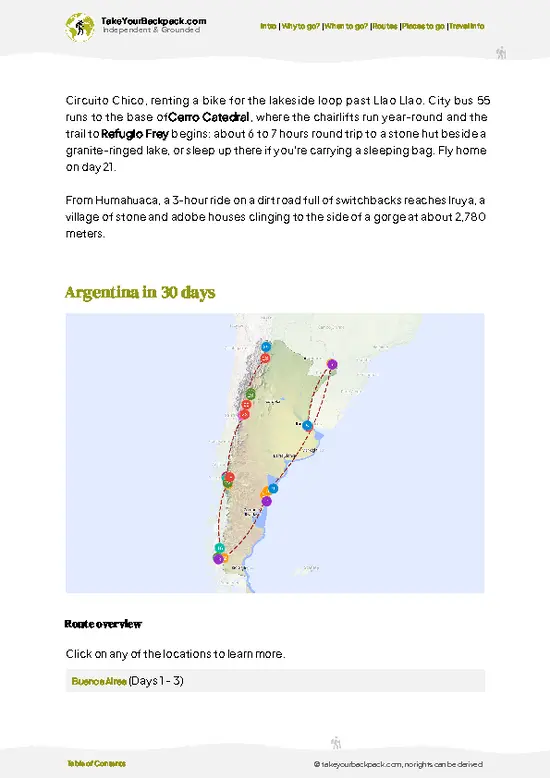
example page 0 from our offline Travel Guide for Argentina
example page 1 from our offline Travel Guide for Argentina
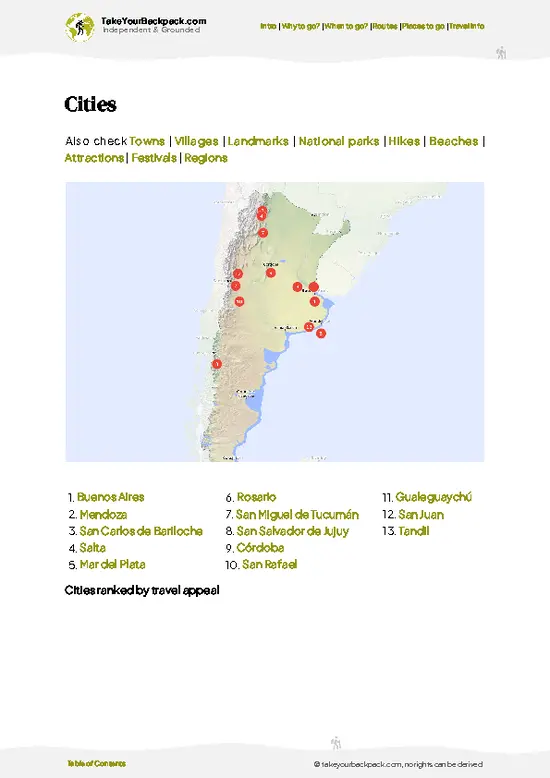
example page 2 from our offline Travel Guide for Argentina
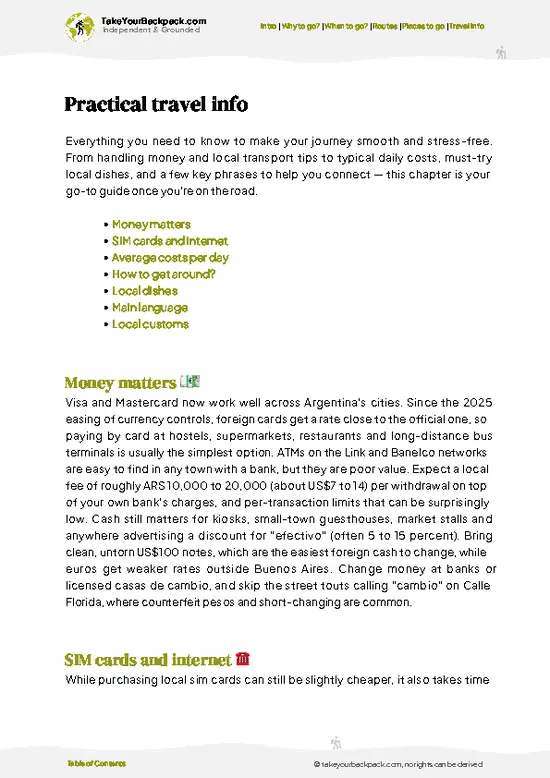
example page 3 from our offline Travel Guide for Argentina
example page 4 from our offline Travel Guide for Argentina
example page 5 from our offline Travel Guide for Argentina
example page 6 from our offline Travel Guide for Argentina
example page 7 from our offline Travel Guide for Argentina
Loading the map 🌍
CLICK TO FILTER
cities
towns
villages
landmarks
national parks
hikes
beaches
attractions
festivals
regions
SHOW COUNTRY’S BESTSHOW ALL

✨ Why go?
Ranked #9 region in Argentina
Reasons people choose to visit here

Backpackers come to La Pampa for the open space, plain and simple. This is one of the few Argentine regions where you can string together desert dunes, saline lakes, and working ranches without hopping on five different buses. The region rewards slow travel: fewer relocations, more time actually absorbing a place instead of packing and unpacking. Transport is flexible enough (regional buses, shared remises, the odd hitch) that you're not locked into rigid tourist circuits like in the north. You get authentic ranch culture here, not a staged version for tour groups. It's also a smart breather stop between Buenos Aires and Patagonia, letting you mix nature (Parque Nacional Lihue Calel) with small-town life (Santa Rosa, General Acha) without the price tag or crowds you'll hit further south.

💡 HighlightsWhat this place is best known for

  1. Parque Nacional Lihue Calel: Low granite hills rising out of flat scrubland, with hiking trails past caves with faint indigenous rock paintings. The silence here is total.
  2. Santa Rosa's Laguna Don Tomás: A city park built around a lagoon, popular with locals for evening walks and asado picnics. Good spot to watch daily life unfold.
  3. General Acha: A ranching town about 106 km from Santa Rosa, far less polished than tourist towns further north.
  4. Museo Provincial de Historia Natural (Santa Rosa): Small but sharp collection on Pampean geology and indigenous history, worth an hour.
  5. Parque Luro: A former hunting reserve turned nature park, with red deer roaming free and an old mansion you can tour.
  6. Salinas Grandes de Hidalgo: Vast salt flats that locals harvest commercially, less visited than the Jujuy
… read more 👉
  1. Parque Nacional Lihue Calel: Low granite hills rising out of flat scrubland, with hiking trails past caves with faint indigenous rock paintings. The silence here is total.
  2. Santa Rosa's Laguna Don Tomás: A city park built around a lagoon, popular with locals for evening walks and asado picnics. Good spot to watch daily life unfold.
  3. General Acha: A ranching town about 106 km from Santa Rosa, far less polished than tourist towns further north.
  4. Museo Provincial de Historia Natural (Santa Rosa): Small but sharp collection on Pampean geology and indigenous history, worth an hour.
  5. Parque Luro: A former hunting reserve turned nature park, with red deer roaming free and an old mansion you can tour.
  6. Salinas Grandes de Hidalgo: Vast salt flats that locals harvest commercially, less visited than the Jujuy salt flats but equally striking at sunset.
  7. Casa de Piedra Reservoir: A dammed lake popular with Argentine anglers, quiet and largely tourist-free.
  8. Toay's old train station: The former railway station, now the Complejo Municipal Horacio del Campo, in a small historic town about 15 minutes from Santa Rosa.
  9. Chacharramendi backroads: Empty dirt roads through pure pampa scenery, best explored by remise with a local driver who'll point out wildlife.
Spotted a mistake or missing something? Contact us.

⌛️ 5 daysSeeing the highlights in 5 days

Day 1: Santa Rosa: Land here first since it's the province's transport hub, with the only real bus terminal connecting outward. Spend the day easing into the pace, walking Laguna Don Tomás and the museum.Day 2: Parque Luro: A short bus or remise ride south gets you into deer-filled woodland and an old hunting mansion. It's a soft entry into pampa nature before the bigger landscapes.Day 3: Lihue Calel: This is the long haul day, several hours by bus toward the park. Worth it for the rock formations and total quiet. Ask a driver about the indigenous cave paintings in the park.Day 4: General Acha: Loop back through this ranching town for a grittier, less curated slice of pampa life.Day 5: Salinas Grandes de Hidalgo: End on the salt flats, ideally timed for sunset when the white ground turns pink … read more 👉
Day 1: Santa Rosa: Land here first since it's the province's transport hub, with the only real bus terminal connecting outward. Spend the day easing into the pace, walking Laguna Don Tomás and the museum.Day 2: Parque Luro: A short bus or remise ride south gets you into deer-filled woodland and an old hunting mansion. It's a soft entry into pampa nature before the bigger landscapes.Day 3: Lihue Calel: This is the long haul day, several hours by bus toward the park. Worth it for the rock formations and total quiet. Ask a driver about the indigenous cave paintings in the park.Day 4: General Acha: Loop back through this ranching town for a grittier, less curated slice of pampa life.Day 5: Salinas Grandes de Hidalgo: End on the salt flats, ideally timed for sunset when the white ground turns pink and orange. Transport here is sparse, so arrange a remise in advance.The must-do day is Lihue Calel. It's the one place that makes the whole slow, bus-dependent trip make sense.

🌤️ When to go?Seasonal considerations and timing

  • Spring (September to November): Temperatures sit around 15-25°C (59-77°F), wildflowers bloom in Lihue Calel. This is the sweet spot.
  • Summer (December to February): Brutal heat, often 30-38°C (86-100°F), with long dry spells. Doable but exhausting for hiking.
  • Autumn (March to May): Mild, 12-22°C (54-72°F), fewer travelers, golden light on the grasslands.
  • Winter (June to August): Cold mornings near 0-5°C (32-41°F), short daylight, but rock-bottom prices and empty roads.
  • Crowds & Costs: There's no real high season here, so prices stay stable year-round outside of national holidays.
Aim for late September, before the summer heat hits but after winter's short days lift.

source: climatestotravel.comJANJanuary: highly recommended for travelingFEBFebruary: highly recommended for travelingMARMarch: good for travelingAPRApril: highly recommended for travelingMAYMay: highly recommended for travelingJUNJune: fair for travelingJULJuly: fair for travelingAUGAugust: fair for travelingSEPSeptember: highly recommended for travelingOCTOctober: excellent for travelingNOVNovember: excellent for travelingDECDecember: highly recommended for traveling
when-to-go

✈️ The backpacker research shortcutArgentina Travel Guide

An offline-friendly backpacking guide with optimized travel routes, ranked highlights, transport advice, and the best areas to stay.
example page 0 from our offline Travel Guide for Argentina
example page 1 from our offline Travel Guide for Argentina
example page 2 from our offline Travel Guide for Argentina
example page 3 from our offline Travel Guide for Argentina
example page 4 from our offline Travel Guide for Argentina
example page 5 from our offline Travel Guide for Argentina
example page 6 from our offline Travel Guide for Argentina
example page 7 from our offline Travel Guide for Argentina
The digital guide (393 pages) contains:
✅ 131 highlights, ranked by travel appeal
✅ Optimized 14, 21 & 30-day travel routes
✅ Cities, national parks, landmarks, beaches
✅ How to get around
✅ Offline-friendly for travel without Wi-Fi
👉 Click to see all 30+ guide features

📅 Plan smarter in minutes, not weeks
✅ Month by month travel advice
✅ Festivals & national holidays
✅ Budget expectations

🗺️ Go to the right places, skip the overrated ones
✅ Honest pros & cons of destinations
✅ Top hikes, parks & viewpoints
✅ Lesser-known places most travelers miss
✅ Clear “worth it vs skip it” guidance

🛏️ Travel smoothly without rookie mistakes
✅ Best areas to stay
✅ Transport systems explained simply
✅ Common scams & safety advice
✅ SIM cards, money & practical tips

🌍 Understand the country, not just visit it
✅ Culture & traditions
✅ 52 Essential phrases & customs
✅ Festivals worth planning around
✅ Traveler-friendly historical context
✅ Insights that make places more meaningful

📱 Built for real travel conditions
✅ Fully downloadable PDF
✅ Works completely offline
✅ Optimized for phone use
✅ Useful in remote areas & buses
✅ Everything in one place
Stop searching, start planning
Get instant access to your full guide. 30‑day money-back guarantee.
+ Add another guide for just

By proceeding you agree to our terms.
Sent to your inbox immediately after payment • 100% Secure Checkout
Best Backpacking Travel Advisor 2025 tourism awardBest Backpacking
Travel Advisor
2025
What others say about Take Your Backpack Guides:
⭐⭐⭐⭐⭐
Fantastic, amazing amount of information!
⭐⭐⭐⭐⭐
My goodness this is amazing, it's what I've been looking for hats off too you!
⭐⭐⭐⭐⭐
I think this is absolutely BRILLIANT
⭐⭐⭐⭐
Very complete and informative. It's still missing places, but I gotta to commend you
⭐⭐⭐⭐⭐
This is truly amazing, thank you, can't wait to explore it with my kids!
⭐⭐⭐⭐⭐
Awesome resource, thank you!
⭐⭐⭐⭐⭐
This is amazing! Can't wait to explore the ones I haven't seen
⭐⭐⭐⭐
I love this! Well done, great idea.
⭐⭐⭐⭐⭐
Thanks for taking the time to make this gem!
⭐⭐⭐⭐⭐
This might be the best website I've ever seen.
⭐⭐⭐⭐⭐
Congratulations, and thank you so much for your work; it's incredibly valuable.
⭐⭐⭐⭐
In all seriousness I think you did a great job pointing out the important spots
⭐⭐⭐⭐⭐
10/10 very good
⭐⭐⭐⭐⭐
As someone who's only just starting to visit regularly this is awesome, thank you.
⭐⭐⭐⭐
Thank you very much! I'm going to visit my dad, it's going to be very useful!
⭐⭐⭐⭐⭐
This is really cool! We'll be travelling for the first time and this definitely come in handy.
⭐⭐⭐⭐⭐
You are now our minister of culture, congratulations 👨‍💼
⭐⭐⭐⭐⭐
Just wanted to tell you that this is a pearl! Going to follow your recommendations.
⭐⭐⭐⭐⭐
This is so cool. I'll definitely be using the resource for my travels soon.
⭐⭐⭐⭐⭐
This is very impressive! Good work.
⭐⭐⭐⭐⭐
This is an amazing and informative site. Very well done!

🛏️ Where to stay?Where staying makes the most sense

Santa Rosa is your base camp here, plain and simple. It's the provincial capital, so you get real infrastructure: bus connections, ATMs that actually work, and a plaza-centered grid that's easy to navigate on foot. Stay near the center and you can walk to everything, including cheap parrillas and the bus terminal for onward trips. It's safe enough to wander after dark without the paranoia you might carry in bigger Argentine cities.

General Pico, a few hours north, is the second option worth considering. It's smaller, quieter, and gives you a look at small-town Pampa life without feeling remote. … read more 👉
Santa Rosa is your base camp here, plain and simple. It's the provincial capital, so you get real infrastructure: bus connections, ATMs that actually work, and a plaza-centered grid that's easy to navigate on foot. Stay near the center and you can walk to everything, including cheap parrillas and the bus terminal for onward trips. It's safe enough to wander after dark without the paranoia you might carry in bigger Argentine cities.

General Pico, a few hours north, is the second option worth considering. It's smaller, quieter, and gives you a look at small-town Pampa life without feeling remote. Fewer backpackers pass through, which means less built-in social scene, but also more genuine interactions with locals who aren't jaded by tourism.

If you're heading toward Parque Nacional Lihué Calel, treat Santa Rosa as your launch point rather than expecting accommodation near the park itself. Options there are sparse. Base yourself in the city, day-trip or overnight into the park, and return. That rhythm works better than trying to wing it in the countryside.

🚌 Getting aroundTransportation options and practical tips

Santa Rosa, the provincial capital, is compact enough that the grid of streets around Plaza San Martín and the bus terminal area can be covered on foot in 20 minutes, but walking stops making sense the moment you head for Parque Luro, the lagoons, or anything in the western desert. La Pampa is flat, huge and thinly populated, so distances between towns run from 100 to 400 kilometers. Long-distance buses are reliable and are how nearly every backpacker moves, while local links to reserves are thin.
  • Long-distance buses link Santa Rosa with General Pico (about 2 hours, US$6 to 9), Buenos Aires (roughly 8 to 9 hours, US$30 to 50), Bahía Blanca and Neuquén. Reclining semi-cama seats cost a few dollars more than standard and are worth it overnight. This is the option that gives you the most for your
… read more 👉
Santa Rosa, the provincial capital, is compact enough that the grid of streets around Plaza San Martín and the bus terminal area can be covered on foot in 20 minutes, but walking stops making sense the moment you head for Parque Luro, the lagoons, or anything in the western desert. La Pampa is flat, huge and thinly populated, so distances between towns run from 100 to 400 kilometers. Long-distance buses are reliable and are how nearly every backpacker moves, while local links to reserves are thin.
  • Long-distance buses link Santa Rosa with General Pico (about 2 hours, US$6 to 9), Buenos Aires (roughly 8 to 9 hours, US$30 to 50), Bahía Blanca and Neuquén. Reclining semi-cama seats cost a few dollars more than standard and are worth it overnight. This is the option that gives you the most for your money, since it is cheap, frequent on main routes and comfortable enough to sleep on.
  • Remises and taxis cover the short hops, such as Santa Rosa to Parque Luro (about 30 minutes, US$10 to 15 each way). They are quick and easy, but split between two or three people the cost is better than a tour. Do not bother with them inside the city, where a walk is faster than waiting.
  • Hitchhiking works on Ruta 35 and Ruta 5 and drivers are friendly, but traffic is sparse and summer shade is nonexistent. It saves money and costs hours, so use it only for short stretches between towns with a bus as backup.
  • Rental car runs about US$50 to 80 a day and is the only practical way to reach Lihué Calel National Park (around 220 kilometers southwest of Santa Rosa) or the Salinas Grandes. It is the priciest choice, yet it saves days of waiting. Three travelers sharing it make it the best value in the province.
  • Organized excursions from Santa Rosa to the national park are rare and expensive for what they offer, so skip them and hire a car or a remis by the day instead.
Fill the tank whenever you pass a station, because fuel stops on the long stretches of road can be 100 kilometers apart.

🍲 FoodEating & Drinking in La Pampa

La Pampa runs on beef, and the asado here is unfussy and enormous. Expect thick cuts of costillar (ribs) cooked slow over wood coals, served with little more than salt and chimichurri. This isn't a place for vegetarian improvisation; menus assume you eat meat, and side dishes are an afterthought.

For casual eating, look for parrillas with plastic chairs and a handwritten menu taped to the wall. These no-frills spots serve massive portions for a fraction of what you'd pay in Buenos Aires. Confiterías (café-bakeries) are where locals linger over facturas (sweet pastries) and café con leche in the morning, and they're a good spot to sit, people-watch, and plan your day.

Mate is everywhere, and if someone offers you a sip from their thermos and gourd, take it. Refusing can read as standoffish. … read more 👉
La Pampa runs on beef, and the asado here is unfussy and enormous. Expect thick cuts of costillar (ribs) cooked slow over wood coals, served with little more than salt and chimichurri. This isn't a place for vegetarian improvisation; menus assume you eat meat, and side dishes are an afterthought.

For casual eating, look for parrillas with plastic chairs and a handwritten menu taped to the wall. These no-frills spots serve massive portions for a fraction of what you'd pay in Buenos Aires. Confiterías (café-bakeries) are where locals linger over facturas (sweet pastries) and café con leche in the morning, and they're a good spot to sit, people-watch, and plan your day.

Mate is everywhere, and if someone offers you a sip from their thermos and gourd, take it. Refusing can read as standoffish. Dinner runs late, rarely before 9pm, so don't expect much open earlier. Bring patience: service is relaxed, sometimes slow, and nobody's rushing your table. That's the point.

FAQFrequently asked questions about La Pampa

Three to five days is enough to cover La Pampa for most backpackers. Two days handles Santa Rosa, Parque Luro and the Laguna Don Tomás, while adding Lihué Calel National Park, about 220 kilometers southwest, needs another two days. Anyone chasing birdwatching or horse-country estancias can stretch it to a week.
Long-distance buses are the way to move around La Pampa without a car. Services run from Santa Rosa to General Pico in about 2 hours (US$6 to 9), to Buenos Aires in 8 to 9 hours (US$30 to 50) and on to Neuquén and Bahía Blanca. For remote spots like Lihué Calel, you need a rented car or a hired remis at roughly US$50 to 80 for the day, because public transport barely reaches them.
La Pampa is known for its wide open plains, big skies and gaucho ranching culture. Parque Luro near Santa Rosa holds a hunting lodge and red deer reserve, while Lihué Calel National Park has granite hills, desert flora and ancient rock paintings. The province also has the Salinas Grandes salt flats and a strong tradition of asado and caldén forests.
⚠️ Things can change over time, so always validate details locally before you go.

Other Argentine regions near La Pampa

Explore more nearby:

  • Mendoza wine region—Malbec bodegas, Maipú bikes, Andes terraces, thermal pools| 546 km away
  • Valle de Uco—Boutique cellars, Tupungato sunsets, San Martín pass, small producers| 553 km away
  • Tigre Delta—Stilt houses, river launches, fruit-port market, island prison| 571 km away

💡 Not sure where to go next?
Create a personalized itinerary for Argentina including La Pampa and the places that fit your trip.

Generate my itinerary

👉 Discover all regions

Or checkout all Argentina has to offer (think cities, towns, villages, national parks, hikes, beaches, festivals)
Country photo of Argentina

We 💚 feedbackSumming up the experience

La Pampa punishes the traveler who treats it as a quick tick on the way to Patagonia. Cutting across in one long bus ride shows you only flat road and fence posts. Pick two bases instead: Santa Rosa for the city and the lagoons, then Parque Nacional Lihué Calel for granite hills, cave paintings and a slow walk at dawn.

✈️ When did I visit Argentina?
I have visited Argentina, together with Chile, in September 2012.

✍️ Help improve this page!
The information on this page is based on my own backpacking experience in Argentina, supplemented with up-to-date research and feedback from other travelers. Travel details can change, so if you notice anything outdated or incomplete, feel free to let me know.


🙋‍♂️ Give feedback

👋 Meet the founderWho’s Behind Take Your Backpack?

Johan, backpacker and founder of TakeYourBackpackHi, I’m Johan (Netherlands 🇳🇱), the creator of TakeYourBackpack. Over the past 3 decades, I’ve backpacked through 90+ countries across six continents, gaining extensive experience with independent travel, long-term trips, and overland routes.

This site is built on a combination of firsthand travel experience and carefully curated insights from other backpackers. Many guides are based on places I’ve personally visited, while others bring together tips, observations, and practical advice shared by trusted travelers I’ve met along the way.

The goal is to provide realistic, experience-driven guidance — not generic itineraries — so you can explore destinations with better context, clearer expectations, and more confidence.