×

Argentina🇦🇷 | townsPuerto BlestRainforest, waterfalls, remote lake access | things to do and best time to go

Explore Caviahue-CopahueExplore Villa General Belgrano

Backpacking in Puerto Blest
👀 For curious travelerstown ranked #17
By Johan Kruseman 🇳🇱 | Updated September 4, 2026

Most travelers realize too late that Puerto Blest’s real gift is its enforced slowness—there’s no road in, only a boat across the glassy, green Lake Nahuel Huapi, which means the crowds thin out and the air feels like it’s been filtered through a thousand miles of forest. Puerto Blest sits tucked into the far western edge of Argentina’s Lake District, deep inside Nahuel Huapi National Park, where the Andes start to flex their muscles and the forest smells like wet earth and cold stone. For backpackers, this isn’t a town in the usual sense—think more of a lakeside outpost with a lodge, a dock, and a handful of trails threading into the Valdivian rainforest. It’s not a base for nightlife or urban wandering; it’s a launchpad for hiking to Lago Frías, waterfall walks, and the kind of silence you only get when the last boat leaves. Getting here means committing to the ferry from Bariloche, and once you arrive, everything is walkable—if you’re happy with mud and roots underfoot. Social life is quiet: you’ll meet other hikers over shared thermos-mate, not in bars. Costs are higher than in Bariloche, but the payoff is a rare, unplugged calm. Compared to the tourist bustle of Bariloche or the lakeside ease of Villa La Angostura, Puerto Blest feels like a secret you have to work for—less practical, more elemental, and all the better for it.

Discover everything you want to know in the 📖 Argentina Travel Guide.
Loading the map 🌍
CLICK TO FILTER
cities
towns
villages
landmarks
national parks
hikes
beaches
attractions
festivals
regions
SHOW COUNTRY’S BESTSHOW ALL

✨ Why go?
Ranked #17 town in Argentina
Why Puerto Blest should be on your travel list

Puerto Blest draws backpackers not for its size or nightlife but for its strategic spot on the Lake District route. This small settlement acts as a gateway to the surrounding Patagonian wilderness, making it a practical base for hikers and nature lovers. The town’s charm lies in its simplicity: a handful of small-scale hostels and guesthouses offer a cozy, communal vibe where you can swap trail stories over a locally brewed mate or a hearty plate of trout fresh from the lake. Streets are quiet and easily walkable, with the scent of pine and damp earth hanging in the air, setting a calm tone that contrasts sharply with busier tourist hubs.

Most travelers stay just a night or two, using Puerto Blest as a launchpad for nearby hikes like the trail to Cascada Los Cántaros or boat trips across … read more 👉
Puerto Blest draws backpackers not for its size or nightlife but for its strategic spot on the Lake District route. This small settlement acts as a gateway to the surrounding Patagonian wilderness, making it a practical base for hikers and nature lovers. The town’s charm lies in its simplicity: a handful of small-scale hostels and guesthouses offer a cozy, communal vibe where you can swap trail stories over a locally brewed mate or a hearty plate of trout fresh from the lake. Streets are quiet and easily walkable, with the scent of pine and damp earth hanging in the air, setting a calm tone that contrasts sharply with busier tourist hubs.

Most travelers stay just a night or two, using Puerto Blest as a launchpad for nearby hikes like the trail to Cascada Los Cántaros or boat trips across Lago Nahuel Huapi. It’s not a place to linger if you crave nightlife or urban buzz, but perfect for slow travelers, solo hikers, or small groups who want to soak in nature without the crowds. The social atmosphere is friendly but low-key—think campfire chats, not party bars. If your trip’s about connecting with the landscape and recharging quietly, Puerto Blest fits like a well-worn hiking boot.
Want to include Puerto Blest in your Argentina route?
Create a personalized Argentina itinerary that includes Puerto Blest and the places that fit your trip — based on your travel style, budget, and available time. Get your route in seconds.

Generate my trip

💡 HighlightsKey sights and experiences for travelers

Puerto Blest Pier & Lakeshore
This is the pulse of Puerto Blest—where the emerald-green waters of Lago Nahuel Huapi lap against the dock, and the air is thick with the scent of wet earth and pine. The pier isn’t just a transit point; it’s the town’s living room. Watch the catamarans come and go, listen to the shouts of guides corralling day-trippers, and feel the hush settle once the boats leave. The light here, especially in late afternoon, is cinematic—golden, slanting through the lenga trees. Arrive early or linger after the crowds for the quietest moments. Free to wander; allow 30-60 minutes to soak it in, longer if you want to picnic or sketch.


Sendero Río Frías (Frías River Trail)
This trail is Puerto Blest’s secret handshake. It’s not long—just under 2 km each way—but it’s a sensory … read more 👉
Puerto Blest Pier & Lakeshore
This is the pulse of Puerto Blest—where the emerald-green waters of Lago Nahuel Huapi lap against the dock, and the air is thick with the scent of wet earth and pine. The pier isn’t just a transit point; it’s the town’s living room. Watch the catamarans come and go, listen to the shouts of guides corralling day-trippers, and feel the hush settle once the boats leave. The light here, especially in late afternoon, is cinematic—golden, slanting through the lenga trees. Arrive early or linger after the crowds for the quietest moments. Free to wander; allow 30-60 minutes to soak it in, longer if you want to picnic or sketch.


Sendero Río Frías (Frías River Trail)
This trail is Puerto Blest’s secret handshake. It’s not long—just under 2 km each way—but it’s a sensory overload: the river’s glacial blue, the mossy hush under ancient coihue trees, the sudden, sharp scent of cold water and leaf litter. The path is well-marked and mostly flat, making it accessible for most walkers. The payoff is the river itself, impossibly turquoise, with a small suspension bridge for that Indiana Jones moment. Go in the morning for the best light and fewest people. Free; plan for 1-2 hours round trip, more if you linger at the riverbank.


Puerto Blest Hotel & Tea House
Even if you’re not staying overnight, this 1940s lodge is worth a visit. The wood-paneled dining room feels like stepping into a Patagonian time capsule—think creaky floors, the aroma of woodsmoke, and windows framing the lake. Order a slice of homemade torta and a pot of tea, and watch the weather roll in over the water. It’s a living piece of local history, and the staff are happy to share stories if you ask. Best in the late afternoon, when the light softens and the day-trippers have gone. Tea and cake run about ARS 3000-5000 (subject to change); linger for 45-90 minutes.


Mirador Lago Frías
A short, sometimes muddy path leads to this viewpoint above the milky-green Lago Frías. The color comes from glacial silt, and on a clear day, the lake glows like a gemstone against the dark forest. You’ll hear nothing but wind and distant bird calls. It’s a place for quiet awe, not crowds. The walk up takes about 20-30 minutes; best in the morning or late afternoon for dramatic shadows and fewer people. Free; allow 45 minutes to an hour.


Interpretive Nature Walks with Park Rangers
If you want to understand why this place feels so alive, join a ranger-led walk (offered most days in high season). You’ll learn to spot the difference between a coihue and a lenga, hear about the area’s indigenous Mapuche history, and maybe even glimpse a pudú (tiny deer) if you’re lucky. The rangers’ passion is infectious, and their stories make the forest feel like a living museum. Walks are usually free or tip-based; check at the pier for times. Plan for 1-1.5 hours.


Puerto Blest is compact, but its rewards are layered for those who linger. For day trips, Lago Frías itself, the roaring Los Cántaros waterfall, and the lush Valdivian rainforest at Cascada Los Cántaros are all within easy reach—Los Cántaros is my personal favorite for the sheer power of water and the ancient trees that seem to hum with history.
Spotted a mistake or missing something? Contact us.

Things to do around Puerto Blest

Ratings based on Tripadvisor reviews. When you book through this link, you support our work at no extra cost to you.

🏘️ NeighborhoodsHow different areas shape the experience

Puerto Blest is a small, remote hub tucked into the Argentine Lake District, where nature’s drama unfolds in every direction. It’s not a sprawling town but a cluster of key spots that serve as your gateway to the wild. Knowing where to land here shapes your whole experience.

Puerto Blest Dock Area
This is the heartbeat for most visitors—where boats arrive and depart, slicing through the misty lake at dawn. It’s lively but not noisy, with a handful of cafes and basic services. Perfect if you’re in for a day trip or a quick stopover. Walkability is limited but manageable; everything is close, but the terrain is uneven and damp. No nightlife to speak of, so plan to rest early or head back to your lodge.

Refugio Puerto Blest
The main lodging cluster, this area is where you’ll find rustic … read more 👉
Puerto Blest is a small, remote hub tucked into the Argentine Lake District, where nature’s drama unfolds in every direction. It’s not a sprawling town but a cluster of key spots that serve as your gateway to the wild. Knowing where to land here shapes your whole experience.

Puerto Blest Dock Area
This is the heartbeat for most visitors—where boats arrive and depart, slicing through the misty lake at dawn. It’s lively but not noisy, with a handful of cafes and basic services. Perfect if you’re in for a day trip or a quick stopover. Walkability is limited but manageable; everything is close, but the terrain is uneven and damp. No nightlife to speak of, so plan to rest early or head back to your lodge.

Refugio Puerto Blest
The main lodging cluster, this area is where you’ll find rustic cabins and the occasional hostel. It’s quiet, with the scent of pine and wet earth thick in the air. Ideal for longer stays if you want to soak in the forest atmosphere and wake up to the sound of waterfalls. It’s a bit pricier due to its exclusivity and limited options, but the trade-off is a peaceful base with direct access to hiking trails. Nightlife is nonexistent, but the stars here are a show in themselves.

Trailheads and Surrounding Forest
Not a neighborhood per se, but crucial for backpackers who want to dive into the wilderness. These paths start right outside the lodges and dock, leading through dense woods and past roaring rivers. No amenities here, so pack light but smart. This area demands physical effort but rewards with solitude and raw nature—perfect if you’re chasing that deep, off-the-grid vibe.

Understanding these zones helps you skip confusion and settle into the rhythm of Puerto Blest, where every step outside your door is a step deeper into Patagonia’s wild soul.

⌛️ 1 dayA smart one-day plan

Puerto Blest is a quiet outpost on the edge of Argentina’s Lake Nahuel Huapi, where the air smells of pine and cold water, and the mountains lean in close like old friends sharing secrets. It’s not a town bustling with nightlife or crowded streets, but a gateway to raw Patagonian wilderness that rewards those who slow down and listen. The charm here isn’t in flashy attractions but in the rhythm of nature and the subtle details—the way the morning mist clings to the lake’s surface or how the wooden docks creak underfoot.

Start your day early with a walk along the lake’s edge. The light at dawn is soft, almost silver, and the water is so still it mirrors the surrounding peaks perfectly. From the small pier, you can catch a boat to the nearby Cascada de los Cántaros, a waterfall tucked away … read more 👉
Puerto Blest is a quiet outpost on the edge of Argentina’s Lake Nahuel Huapi, where the air smells of pine and cold water, and the mountains lean in close like old friends sharing secrets. It’s not a town bustling with nightlife or crowded streets, but a gateway to raw Patagonian wilderness that rewards those who slow down and listen. The charm here isn’t in flashy attractions but in the rhythm of nature and the subtle details—the way the morning mist clings to the lake’s surface or how the wooden docks creak underfoot.

Start your day early with a walk along the lake’s edge. The light at dawn is soft, almost silver, and the water is so still it mirrors the surrounding peaks perfectly. From the small pier, you can catch a boat to the nearby Cascada de los Cántaros, a waterfall tucked away in a forest that most tourists miss because it requires a short hike through mossy trails. This detour is worth it—the sound of rushing water and the scent of damp earth feel like a secret handshake with the wild. The hike is gentle, about 30 minutes each way, making it a perfect morning adventure that sets a calm, reflective tone.

By midday, return to Puerto Blest’s tiny cluster of lodges and the rustic restaurant near the dock. The menu leans heavily on local trout and hearty stews, perfect after a morning outdoors. Sit by a window, watch the boats come and go, and let the warmth of the wood stove soak into your bones.

In the afternoon, take the short trail to the Mirador Puerto Blest viewpoint. It’s a quick climb but the payoff is a sweeping panorama of the lake’s deep blues and the forest’s emerald greens. The light here in the late afternoon sharpens the landscape’s textures, making every tree and ripple stand out like a painting. Before dusk, stroll through the small neighborhood of Puerto Blest itself—mostly wooden cabins with flower boxes and smoke curling from chimneys. It’s quiet, but the atmosphere hums with the kind of peace that makes you want to stay longer.

Evening falls early, and the town dims with it. If you’re lucky, the sky will clear enough for stars to spill across the black canvas overhead. There’s no better way to end the day than wrapped in a blanket on the dock, the cold air sharp and fresh, the lake whispering stories just for you. Puerto Blest isn’t about ticking off sights; it’s about sinking into a place that feels untouched and real, where every moment is earned by the effort it takes to get here.
Turn your Puerto Blest visit into an Argentina adventure
Build a complete Argentina route with Puerto Blest, hidden gems, must-see destinations, and realistic travel times included.

Generate my trip

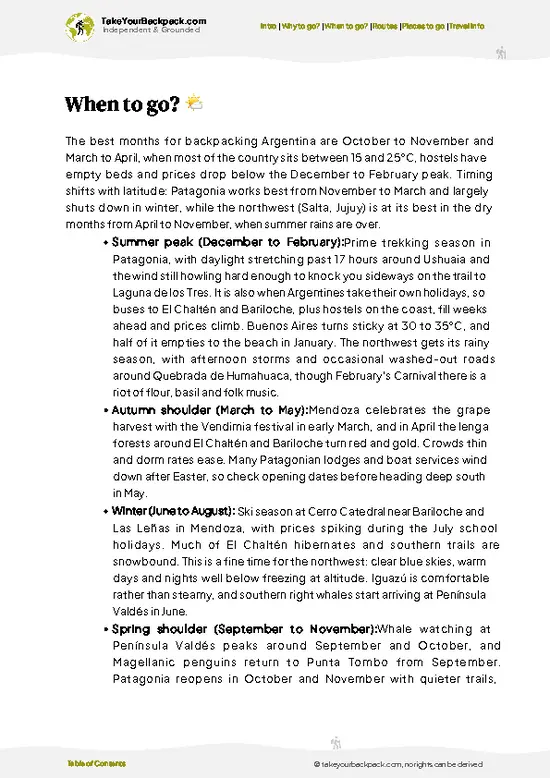
🌤️ When to go?When to go for the best experience


  • Weather: Puerto Blest’s weather swings with the Southern Hemisphere seasons. From December to February, expect mild summers with temperatures around 20-25°C (68-77°F), perfect for hiking and boat tours without the chill. Winters, June through August, drop to 0-5°C (32-41°F), often bringing snow and icy trails that can limit access.

  • Temperature: Spring (September-November) and autumn (March-May) offer cool but comfortable days, typically 10-15°C (50-59°F). These shoulder seasons balance warmth and crisp mountain air, ideal for those who want to avoid the extremes but still enjoy outdoor activities.

  • Daylight Hours: Summer days stretch long, with up to 15 hours of light in December, giving you more time to explore the lush forests and lakes. Winter days shrink to about 9 hours, which means
read more 👉

  • Weather: Puerto Blest’s weather swings with the Southern Hemisphere seasons. From December to February, expect mild summers with temperatures around 20-25°C (68-77°F), perfect for hiking and boat tours without the chill. Winters, June through August, drop to 0-5°C (32-41°F), often bringing snow and icy trails that can limit access.

  • Temperature: Spring (September-November) and autumn (March-May) offer cool but comfortable days, typically 10-15°C (50-59°F). These shoulder seasons balance warmth and crisp mountain air, ideal for those who want to avoid the extremes but still enjoy outdoor activities.

  • Daylight Hours: Summer days stretch long, with up to 15 hours of light in December, giving you more time to explore the lush forests and lakes. Winter days shrink to about 9 hours, which means planning your hikes carefully to avoid being caught in the dark.

  • Crowds: Peak season is summer, when tourists flock to the area, making trails and boats busier. Visiting in spring or autumn means fewer people, letting you soak in the quiet and the scent of damp earth and pine without elbowing through crowds.

  • Seasonal Activities: Summer opens up all activities—kayaking, fishing, and boat tours on Lake Nahuel Huapi. Winter’s snow transforms the landscape, but many trails close, limiting options mostly to scenic drives and cozy lodge stays.

  • Price Fluctuations: Expect higher prices from December to February due to demand. Shoulder seasons bring better deals on accommodation and tours, making spring and autumn the sweet spot for budget-conscious travelers who still want good weather.


Pro-tip: Aim for late spring (November) or early autumn (March) to catch crisp air, manageable crowds, and the best balance of daylight and activity options—your boots will thank you for it.


source: climatestotravel.comJANJanuary: excellent for travelingFEBFebruary: excellent for travelingMARMarch: highly recommended for travelingAPRApril: highly recommended for travelingMAYMay: good for travelingJUNJune: fair for travelingJULJuly: fair for travelingAUGAugust: fair for travelingSEPSeptember: highly recommended for travelingOCTOctober: highly recommended for travelingNOVNovember: excellent for travelingDECDecember: excellent for traveling
when-to-go

✈️ The backpacker research shortcutArgentina Travel Guide

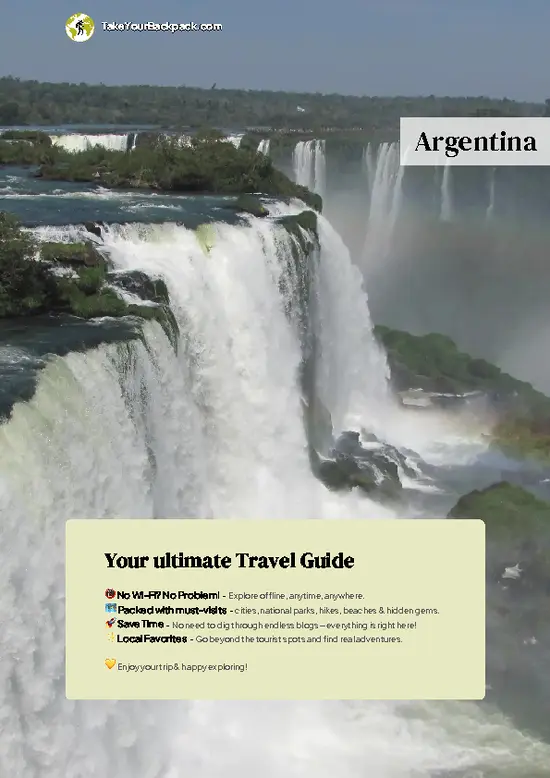
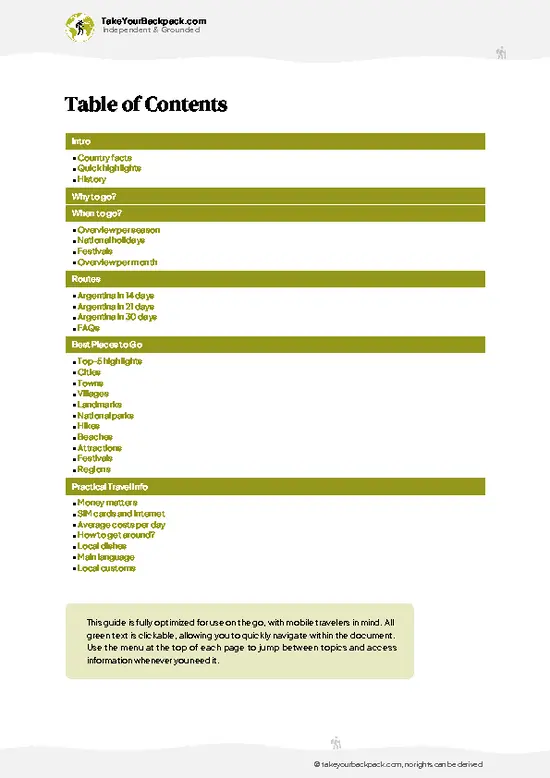
An offline-friendly backpacking guide with optimized travel routes, ranked highlights, transport advice, and the best areas to stay.
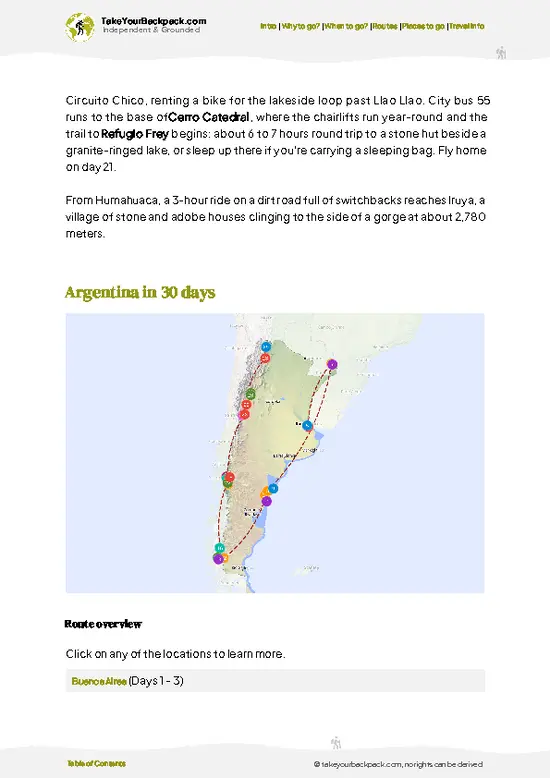
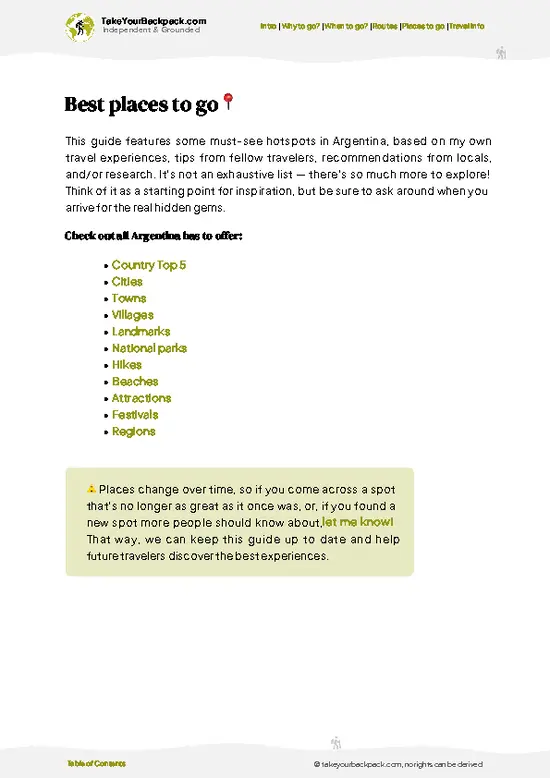
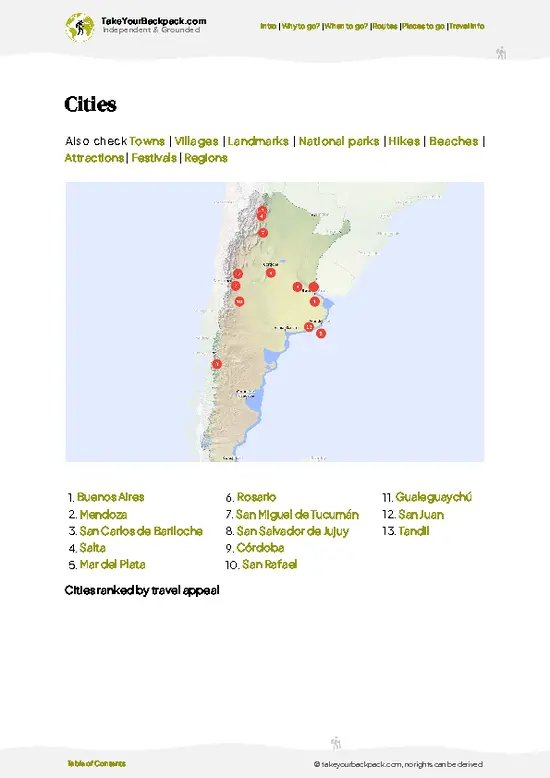
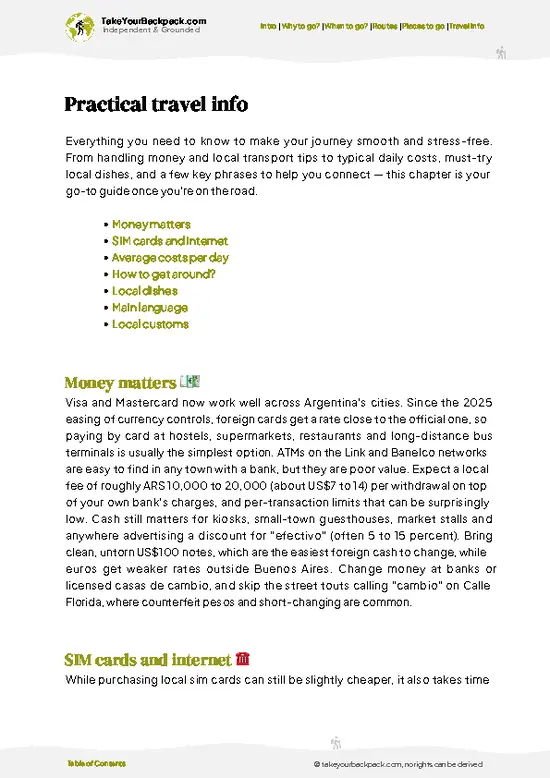
example page 0 from our offline Travel Guide for Argentina
example page 1 from our offline Travel Guide for Argentina
example page 2 from our offline Travel Guide for Argentina
example page 3 from our offline Travel Guide for Argentina
example page 4 from our offline Travel Guide for Argentina
example page 5 from our offline Travel Guide for Argentina
example page 6 from our offline Travel Guide for Argentina
example page 7 from our offline Travel Guide for Argentina
The digital guide (505 pages) contains:
135 highlights, ranked by travel appeal
Optimized 14, 21 & 30-day travel routes
Cities, national parks, landmarks, beaches
How to get around
Offline-friendly for travel without Wi-Fi
👉 Click to see all 30+ guide features

📅 Plan smarter in minutes, not weeks
Month by month travel advice
Festivals & national holidays
Budget expectations

🗺️ Go to the right places, skip the overrated ones
Honest pros & cons of destinations
Top hikes, parks & viewpoints
Lesser-known places most travelers miss
Clear “worth it vs skip it” guidance

🛏️ Travel smoothly without rookie mistakes
Best areas to stay
Transport systems explained simply
Common scams & safety advice
SIM cards, money & practical tips

🌍 Understand the country, not just visit it
Culture & traditions
52 Essential phrases & customs
Festivals worth planning around
Traveler-friendly historical context
Insights that make places more meaningful

📱 Built for real travel conditions
Fully downloadable PDF
Works completely offline
Optimized for phone use
Useful in remote areas & buses
Everything in one place
Save weeks of stressful planning
Get instant access to your full guide. 30‑day money-back guarantee.
+ Add another guide for just US$7.80

By proceeding you agree to our terms.
Sent to your inbox immediately after payment • 100% Secure Checkout
Best Backpacking Travel Advisor 2025 tourism awardBest Backpacking
Travel Advisor
2025
What others say about Take Your Backpack Guides:
⭐⭐⭐⭐⭐
Fantastic, amazing amount of information!
⭐⭐⭐⭐⭐
My goodness this is amazing, it's what I've been looking for hats off too you!
⭐⭐⭐⭐⭐
I think this is absolutely BRILLIANT
⭐⭐⭐⭐
Very complete and informative. It's still missing places, but I gotta to commend you
⭐⭐⭐⭐⭐
This is truly amazing, thank you, can't wait to explore it with my kids!
⭐⭐⭐⭐⭐
Awesome resource, thank you!
⭐⭐⭐⭐⭐
This is amazing! Can't wait to explore the ones I haven't seen
⭐⭐⭐⭐
I love this! Well done, great idea.
⭐⭐⭐⭐⭐
Thanks for taking the time to make this gem!
⭐⭐⭐⭐⭐
This might be the best website I've ever seen.
⭐⭐⭐⭐⭐
Congratulations, and thank you so much for your work; it's incredibly valuable.
⭐⭐⭐⭐
In all seriousness I think you did a great job pointing out the important spots
⭐⭐⭐⭐⭐
10/10 very good
⭐⭐⭐⭐⭐
As someone who's only just starting to visit regularly this is awesome, thank you.
⭐⭐⭐⭐
Thank you very much! I'm going to visit my dad, it's going to be very useful!
⭐⭐⭐⭐⭐
This is really cool! We'll be travelling for the first time and this definitely come in handy.
⭐⭐⭐⭐⭐
You are now our minister of culture, congratulations 👨‍💼
⭐⭐⭐⭐⭐
Just wanted to tell you that this is a pearl! Going to follow your recommendations.
⭐⭐⭐⭐⭐
This is so cool. I'll definitely be using the resource for my travels soon.
⭐⭐⭐⭐⭐
This is very impressive! Good work.
⭐⭐⭐⭐⭐
This is an amazing and informative site. Very well done!

🛏️ Where to stay?Where staying makes the most sense

Puerto Blest isn’t your typical bustling town with neighborhoods to pick from—it’s a small, tucked-away spot on the edge of Nahuel Huapi Lake, surrounded by dense forest and mountains. That means your choice isn’t about city blocks but about proximity to the dock and trailheads, where the pulse of backpacker life beats strongest. The area right around the pier is where you want to be. It’s safe, naturally quiet except for the lapping water and bird calls, and it draws a steady flow of solo travelers and budget adventurers who’ve just arrived or are gearing up for hikes.

Staying near the dock … read more 👉
Puerto Blest isn’t your typical bustling town with neighborhoods to pick from—it’s a small, tucked-away spot on the edge of Nahuel Huapi Lake, surrounded by dense forest and mountains. That means your choice isn’t about city blocks but about proximity to the dock and trailheads, where the pulse of backpacker life beats strongest. The area right around the pier is where you want to be. It’s safe, naturally quiet except for the lapping water and bird calls, and it draws a steady flow of solo travelers and budget adventurers who’ve just arrived or are gearing up for hikes.

Staying near the dock means you’re steps from the boat rides that connect Puerto Blest to Bariloche and other points, which is crucial because transport options are limited and timing matters. Hostels here tend to be small, cozy, and social—think shared kitchens and common rooms where you swap trail stories over mate or instant coffee. The vibe is low-key but friendly, with a mix of international backpackers and Argentine travelers who appreciate the raw, natural setting.

Venture too far from the dock, and you’ll find fewer lodging options and less of that communal energy. The forested paths beyond are beautiful but isolated, better for day hikes than overnight stays. So, for safety, social buzz, and budget-friendly lodging, the dockside cluster is your best bet—where the scent of pine and fresh lake air sets the tone for every adventure.

🚌 Getting aroundGetting around like a local

Puerto Blest moves at the pace of the lake’s ripple—unhurried but deliberate. This isn’t a place where you’ll find rigid timetables or the buzz of constant traffic. Instead, the rhythm here is set by nature’s own clock: the soft splash of boat engines, the occasional call of a bird, and the way the mist lifts off the water in the early morning. You’ll quickly learn that patience isn’t just a virtue; it’s your best travel tool. The town’s flow is about syncing with the environment, not fighting it. That means planning your moves around boat schedules and trail openings, but also leaving room for the unexpected moments—the scent of damp pine, the cool breeze off the lake, the quiet that fills the spaces between.


  • Boat Shuttle to Puerto Pañuelo: This is your main artery in and out of Puerto
read more 👉
Puerto Blest moves at the pace of the lake’s ripple—unhurried but deliberate. This isn’t a place where you’ll find rigid timetables or the buzz of constant traffic. Instead, the rhythm here is set by nature’s own clock: the soft splash of boat engines, the occasional call of a bird, and the way the mist lifts off the water in the early morning. You’ll quickly learn that patience isn’t just a virtue; it’s your best travel tool. The town’s flow is about syncing with the environment, not fighting it. That means planning your moves around boat schedules and trail openings, but also leaving room for the unexpected moments—the scent of damp pine, the cool breeze off the lake, the quiet that fills the spaces between.


  • Boat Shuttle to Puerto Pañuelo: This is your main artery in and out of Puerto Blest. Boats run roughly from 8:00 AM to 6:00 PM, with departures every 30 to 60 minutes depending on the season. Tickets hover around $15-$20 USD one way, which is a steal considering the 30-minute ride slices through emerald waters framed by towering peaks. The boats are basic but comfortable, with open decks perfect for soaking in the fresh air and snapping photos.


  • Walking Trails Around Puerto Blest: For budget travelers, your feet are a prime mode of transport. The trails here aren’t just paths; they’re sensory corridors lined with mossy trees, wildflowers, and the occasional waterfall’s mist. The main trail to the Cascada Blanca waterfall is about a 40-minute walk—easy to moderate terrain. No cost, just sturdy shoes and a readiness to pause and breathe in the forest’s earthy aroma.


  • Taxi Boats for Private Transfers: If you want to skip the group boat schedules, taxi boats offer a flexible but pricier option. They can be flagged down or booked in advance, running from early morning until dusk. Expect to pay around $50-$70 USD for a private ride, which is worth it if you’re traveling with gear or want to catch the sunrise or sunset without waiting for the public shuttle.


  • Local Bus to Bariloche (via Puerto Pañuelo): While not directly in Puerto Blest, the bus connection from Puerto Pañuelo to Bariloche is essential for budget travelers looping back to town. Buses run from early morning until late afternoon, with tickets under $10 USD. The ride takes about 1.5 hours, winding through the Andes with views that reward the slow pace.


  • Car Rentals (Limited Use): Renting a car isn’t practical within Puerto Blest itself due to the terrain and boat-dependent access, but if you’re planning to explore beyond, picking up a rental in Bariloche before heading to Puerto Pañuelo is smart. It gives you freedom on the mainland, but remember: Puerto Blest’s charm is best experienced on foot and by boat, not behind a wheel.

👛 Costs (as of 4 September 2026)Travel costs and budget guide for Puerto Blest

Backpacking in Puerto Blest, Argentina, involves moderate daily expenses typical for a remote nature-focused destination.
  • Dorm accommodation: Dorm beds in nearby hostels or lodges usually cost between USD15 and 25 per night, given the limited options directly in Puerto Blest.
  • Meals: Expect to spend around USD10 to 15 for simple meals, often relying on small local eateries or self-catering supplies from nearby towns.
  • Local transport: Transport costs are generally low, around USD5 to 10, mainly for boat transfers or shuttle services connecting Puerto Blest with other points in the Nahuel Huapi National Park area.
  • Basic activities/entry fees: Entry to the national park and guided tours typically range from USD10 to 20, depending on the activity and season.
  • Miscellaneous expenses: Budget around USD5
read more 👉
Backpacking in Puerto Blest, Argentina, involves moderate daily expenses typical for a remote nature-focused destination.
  • Dorm accommodation: Dorm beds in nearby hostels or lodges usually cost between USD15 and 25 per night, given the limited options directly in Puerto Blest.
  • Meals: Expect to spend around USD10 to 15 for simple meals, often relying on small local eateries or self-catering supplies from nearby towns.
  • Local transport: Transport costs are generally low, around USD5 to 10, mainly for boat transfers or shuttle services connecting Puerto Blest with other points in the Nahuel Huapi National Park area.
  • Basic activities/entry fees: Entry to the national park and guided tours typically range from USD10 to 20, depending on the activity and season.
  • Miscellaneous expenses: Budget around USD5 to 10 for small extras like snacks, water, or tips.
Overall, a daily budget of USD40 to 70 covers essential expenses for an independent backpacker in Puerto Blest, balancing comfort and adventure in this scenic part of Argentina.


source: numbeo.com
⚠️ Prices can change and everyone travels differently, so take this as a rough guide. Hope it helps you plan your adventure!

🚌 Day tripsShort trips worth adding

Puerto Blest is a compact, low-key hub that feels like a secret handshake for travelers ready to dive into the wild Patagonian landscape without the hassle of constant packing and moving. It’s small enough to keep your bearings but perfectly placed for launching into some of the region’s most rewarding day trips.

Lake Nahuel Huapi Boat Tour

This isn’t just a boat ride; it’s a slow immersion into the scent of pine and the crisp, cold air that sharpens your senses. The tour typically lasts around 3 hours, looping through crystal-clear waters framed by jagged peaks. For about $15–20 USD, you get a front-row seat to untouched forests and the occasional splash of a jumping trout. The best time is late spring through early autumn when the water is calm and the light plays off the waves just right. … read more 👉
Puerto Blest is a compact, low-key hub that feels like a secret handshake for travelers ready to dive into the wild Patagonian landscape without the hassle of constant packing and moving. It’s small enough to keep your bearings but perfectly placed for launching into some of the region’s most rewarding day trips.

Lake Nahuel Huapi Boat Tour

This isn’t just a boat ride; it’s a slow immersion into the scent of pine and the crisp, cold air that sharpens your senses. The tour typically lasts around 3 hours, looping through crystal-clear waters framed by jagged peaks. For about $15–20 USD, you get a front-row seat to untouched forests and the occasional splash of a jumping trout. The best time is late spring through early autumn when the water is calm and the light plays off the waves just right. Don’t make the rookie mistake of skipping the early morning departure—afternoon winds can turn the lake choppy, and that serenity you came for vanishes.


Hiking to Cascada Los Cántaros

A 2-hour trek from Puerto Blest, this trail rewards you with the thunderous roar of Cascada Los Cántaros, a waterfall that feels like nature’s own percussion section. The path winds through mossy forests where the air is thick with the smell of wet earth and pine resin. It’s free, aside from a small park entrance fee, and best tackled in the morning when the light filters through the canopy, casting dappled shadows. Many first-timers underestimate the muddy patches—good boots are a must, or you’ll spend more time slipping than soaking in the views.


Puerto Blest to Refugio López Day Hike

This is a full-day commitment but worth every step. The trail climbs steadily for about 4 hours to Refugio López, a rustic mountain hut perched above the lake. Along the way, you’ll pass wildflower meadows and panoramic views that make the sweat and sore muscles feel like a small price. Pack a lunch and water; there’s no shop at the top. The trail is best in summer and early fall when the weather is stable. Avoid the temptation to rush—pausing to listen to the wind through lenga trees is part of the experience.


Exploring the Arrayanes Forest

Just a short boat ride from Puerto Blest, the Arrayanes Forest feels like stepping into a fairy tale. The cinnamon-colored bark of the Arrayán trees contrasts sharply with the deep green understory, and the air smells faintly of cinnamon and pine. The walk through the forest is gentle and can be done in 2–3 hours round trip. It’s a budget-friendly trip, with the boat costing around $10 USD. The forest is at its best in spring when the new leaves add a fresh vibrancy. Don’t miss the chance to sit quietly by the shore and watch the light shift on the water—it’s the kind of moment that stays with you.
Want to know what more Argentina offers?
The Argentina Travel Guide describes 135 highlights, from cities to national parks, from beaches to hikes

Get the Travel Guide -

🛡️ SafetyScams, Hazards, and Annoyances

Puerto Blest is a quiet spot, tucked into the Argentine Lake District where the air smells of pine and fresh water. It’s broadly safe, but the remoteness means you should stay sharp in practical ways. The main pinch point is the ferry dock area—crowded with tourists and vendors, it’s where your attention can slip. Keep your belongings close and avoid flashing valuables; pickpockets aren’t common, but the bustle invites distraction. Solo travelers will find the daytime calm reassuring, but after dark, the town’s limited lighting and sparse population mean it’s best to stay put or head back to your lodge. Nighttime walks along the lake aren’t just dim—they can be slippery and uneven, so don’t push it. Scams are rare here, but vendors sometimes overcharge for souvenirs or boat tours if you don’t … read more 👉
Puerto Blest is a quiet spot, tucked into the Argentine Lake District where the air smells of pine and fresh water. It’s broadly safe, but the remoteness means you should stay sharp in practical ways. The main pinch point is the ferry dock area—crowded with tourists and vendors, it’s where your attention can slip. Keep your belongings close and avoid flashing valuables; pickpockets aren’t common, but the bustle invites distraction. Solo travelers will find the daytime calm reassuring, but after dark, the town’s limited lighting and sparse population mean it’s best to stay put or head back to your lodge. Nighttime walks along the lake aren’t just dim—they can be slippery and uneven, so don’t push it. Scams are rare here, but vendors sometimes overcharge for souvenirs or boat tours if you don’t ask prices upfront. A simple “¿Cuánto cuesta?” and a confident nod go a long way. Carry yourself like you belong—steady, aware, and respectful—and Puerto Blest will reward you with its quiet, unhurried charm.

FAQTraveler FAQ

Puerto Blest is worth visiting for its stunning natural beauty and access to Nahuel Huapi National Park, not just a stopover. It offers unique views of waterfalls and the surrounding Andes, making it a highlight for nature lovers.
One full day is usually sufficient to explore Puerto Blest, including hiking trails and boat tours to nearby waterfalls. Most visitors spend about 6 to 8 hours here to fully appreciate the area.
Yes, Puerto Blest can be visited as a day trip from San Carlos de Bariloche. The boat ride takes about 1.5 hours each way, making it feasible to return the same day if you start early.
⚠️ Things can change over time, so always validate details locally before you go.

Other Argentinian towns near Puerto Blest

Explore more nearby:


💡 Not sure where to go next?
Create a personalized itinerary for Argentina including Puerto Blest and the places that fit your trip.

Generate my itinerary

👉 Discover all towns

Or checkout all Argentina has to offer (think cities, towns, villages, national parks, hikes, beaches, festivals)
Country photo of Argentina

We 💚 feedbackFinal thoughts on visiting Puerto Blest

Puerto Blest is a rare kind of quiet—where the air smells of pine and cold water, and the only soundtrack is the gentle lap of lake waves against the shore. It’s worth the trek because here, the world slows down in a way that feels like a reset button for your senses. But don’t expect easy access; the boat rides and trails can be slippery and chilly, so pack layers and steady shoes. The payoff is a peacefulness that’s hard to find anywhere else.

✈️ When did I visit Argentina?
I have visited Argentina, together with Chile, in September 2012.

✍️ Help improve this page!
The information on this page is based on my own backpacking experience in Argentina, supplemented with up-to-date research and feedback from other travelers. Travel details can change, so if you notice anything outdated or incomplete, feel free to let me know.


🙋‍♂️ Give feedback

👋 Meet the founderWho’s Behind Take Your Backpack?

Johan, backpacker and founder of TakeYourBackpackHi, I’m Johan (Netherlands 🇳🇱), the creator of TakeYourBackpack. Over the past decade, I’ve backpacked through 80+ countries across six continents, gaining extensive experience with independent travel, long-term trips, and overland routes.

This site is built on a combination of firsthand travel experience and carefully curated insights from other backpackers. Many guides are based on places I’ve personally visited, while others bring together tips, observations, and practical advice shared by trusted travelers I’ve met along the way.

The goal is to provide realistic, experience-driven guidance — not generic itineraries — so you can explore destinations with better context, clearer expectations, and more confidence.

Get full Argentina guide •
Instant download • 135 highlights • Full Offline guide