×

Argentina🇦🇷 | best attractionsEssential 10 attractions to Explore in Argentina

Argentina’s best attractions are defined by extremes—vast landscapes, shifting climates, and a cultural mosaic that demands more than a cursory glance. From the windswept plains of Patagonia to the sultry streets of Buenos Aires, each region offers a distinct flavor that shapes your backpacking experience. Understanding these differences is crucial for independent travelers who want to maximize value without sacrificing comfort or safety.

In the north, the dry, high-altitude deserts and colorful Quebrada de Humahuaca contrast sharply with the humid subtropical jungles of Misiones, where Iguazú Falls roars. These environments dictate not only what you’ll see but how you’ll get there, how much you’ll spend, and when it’s best to visit. Patagonia’s shoulder seasons bring fewer crowds but harsher weather, while the bustling urban hubs pulse year-round with cultural events and nightlife, affecting your vibe and budget.

Choosing the right attraction in Argentina isn’t just about ticking off landmarks; it’s about aligning your itinerary with your travel style. Backpacking here means balancing long bus rides against local homestays, gauging when to splurge on guided treks versus self-guided exploration, and navigating safety concerns that vary widely between remote wilderness and city streets. The payoff is a trip that feels authentic, manageable, and deeply rewarding.

By Johan Kruseman 🇳🇱 | Updated September 5, 2026
Explore the best festivals in Argentina

Why go?Why These attraction Stand Out

Argentina’s attractions demand a clear-eyed understanding of the trade-offs between time, money, and comfort because this country is vast, diverse, and often logistically challenging. Unlike smaller or more compact destinations, Argentina’s sheer size means that reaching its most compelling sites often involves long travel times. This isn’t a place where you can casually hop from one highlight to the next without investing hours on buses, planes, or winding mountain roads. The payoff is depth: the landscapes and cultural experiences here unfold with a scale and intensity that reward patience and planning, but they rarely come cheap or easy.

The country’s geography is a defining factor in these trade-offs. From the arid north to the icy south, the climate swings dramatically, shaping when … read more 👉
Argentina’s attractions demand a clear-eyed understanding of the trade-offs between time, money, and comfort because this country is vast, diverse, and often logistically challenging. Unlike smaller or more compact destinations, Argentina’s sheer size means that reaching its most compelling sites often involves long travel times. This isn’t a place where you can casually hop from one highlight to the next without investing hours on buses, planes, or winding mountain roads. The payoff is depth: the landscapes and cultural experiences here unfold with a scale and intensity that reward patience and planning, but they rarely come cheap or easy.

The country’s geography is a defining factor in these trade-offs. From the arid north to the icy south, the climate swings dramatically, shaping when and how you can visit certain attractions. Some regions are only accessible during specific seasons, forcing travelers to choose between peak conditions and off-peak affordability or crowd levels. This seasonal rhythm also affects comfort—expect rougher roads, fewer services, and more rustic accommodations in remote areas. If you prioritize ease and convenience, Argentina’s best experiences may require a willingness to sacrifice some creature comforts or pay a premium for guided tours and internal flights.

Culturally and historically, Argentina offers a rich tapestry that is inseparable from its physical environment. The blend of indigenous heritage, European immigration, and modern urban culture creates attractions that are as much about human stories as natural wonders. However, fully appreciating this requires time and often local knowledge. Quick visits risk reducing these complex narratives to surface-level encounters. Travelers must weigh the value of immersive experiences against the cost of extended stays or hiring expert guides.

Infrastructure varies wildly. Major cities boast modern amenities and efficient transport, but venturing beyond urban centers often means confronting patchy connectivity and limited public transit. This disparity forces a choice: stick to well-trodden routes with predictable comfort or embrace the unpredictability of off-the-beaten-path adventures that deliver authenticity at the expense of convenience.

Ultimately, Argentina’s attractions matter because they challenge travelers to decide what they value most. Is it the thrill of discovery in raw, untamed landscapes? The richness of cultural immersion that demands time and patience? Or the ease of access and comfort that comes with staying close to urban hubs? Understanding these trade-offs upfront is essential to crafting a trip that feels not just good, but genuinely worth the effort.
Behind the Scenes of Selection
The list of best attractions in Argentina is created based on cultural significance or entertainment value. If you feel a attraction is missing in this list, please let us know.

When to go?Timing Your Visit for the Best Experience

Seasonal Patterns Shape Your Argentina Experience


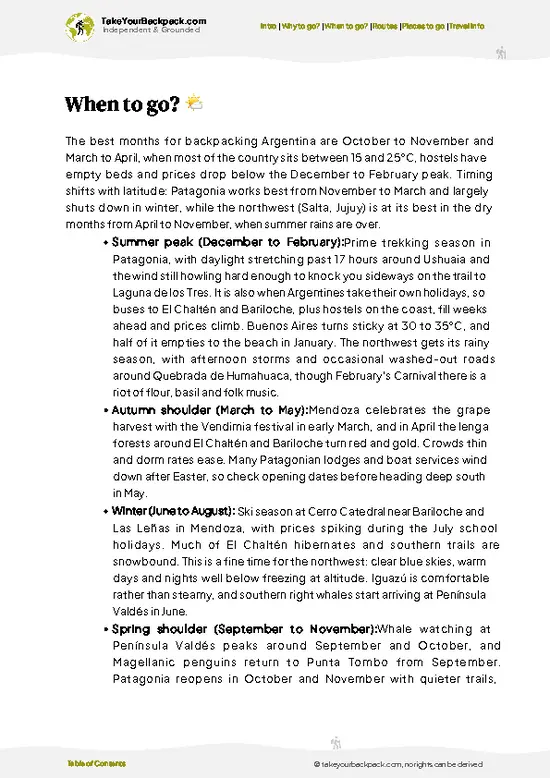
Argentina’s vastness means its climate swings dramatically, but the broad strokes of seasonality apply across the board when planning to visit its attractions. The country’s southern hemisphere location flips the typical Northern Hemisphere calendar, so summer runs from December through February, bringing warm to hot weather, while winter spans June to August, delivering cold and often harsh conditions, especially in the south and higher elevations.

Summer: Warmth Comes with Crowds and Costs


Summer is when Argentina’s landscapes come alive with lush greenery and long daylight hours. This is prime time for outdoor activities, but it’s also the peak tourist season. Expect higher prices and crowded spots. The warmth can be intense, especially … read more 👉

Seasonal Patterns Shape Your Argentina Experience


Argentina’s vastness means its climate swings dramatically, but the broad strokes of seasonality apply across the board when planning to visit its attractions. The country’s southern hemisphere location flips the typical Northern Hemisphere calendar, so summer runs from December through February, bringing warm to hot weather, while winter spans June to August, delivering cold and often harsh conditions, especially in the south and higher elevations.

Summer: Warmth Comes with Crowds and Costs


Summer is when Argentina’s landscapes come alive with lush greenery and long daylight hours. This is prime time for outdoor activities, but it’s also the peak tourist season. Expect higher prices and crowded spots. The warmth can be intense, especially in the northern and central regions, which might limit comfort for some travelers. If you’re chasing vibrant natural scenes and don’t mind sharing the experience with others, summer delivers. Just be prepared for the trade-off: more money spent and less solitude.

Winter: Quiet, Cold, and Somewhat Limited Access


Winter chills much of the country, particularly the south and mountainous areas. Many attractions remain open, but some outdoor activities become less accessible or require specialized gear. This season offers fewer tourists and lower prices, but the cold can be a dealbreaker if you’re not prepared. Winter is a strategic choice for travelers who prioritize budget and solitude over warmth and full accessibility.

Shoulder Seasons: The Sweet Spot with Trade-Offs


Spring (September to November) and autumn (March to May) are the shoulder seasons that balance weather, crowds, and costs. These months often bring mild temperatures and fewer tourists, making them ideal for those who want to avoid the extremes of summer heat and winter cold. However, weather can be unpredictable—rain and wind are more common, and some attractions might have limited hours or services. The shoulder seasons demand flexibility but reward with a more authentic, less commercialized experience.

Trade-Offs to Consider


Choosing when to visit Argentina’s attractions boils down to what you’re willing to sacrifice. Summer offers comfort in warmth but at the expense of crowds and higher prices. Winter cuts costs and crowds but introduces cold and limited access. Shoulder seasons provide a middle ground but require tolerance for variable weather and occasional inconvenience. Understanding these trade-offs upfront lets you tailor your trip to what matters most—whether that’s comfort, cost, or the quality of the experience itself.

attraction hoppingSuggested Travel Strategies

Map Your Route by Regions, Not Just Attractions

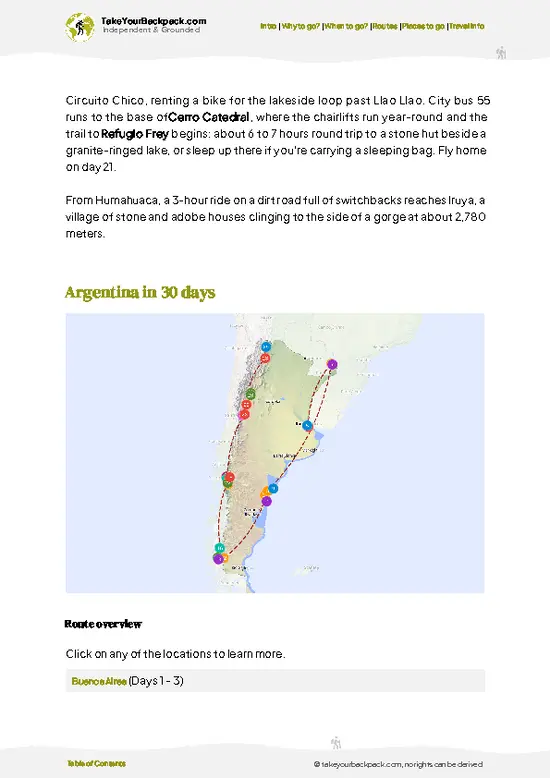
Argentina’s vastness demands a strategy beyond ticking off sights. Group your stops by region—Patagonia, the Lake District, the Pampas, the Northwest, and Buenos Aires—and plan your route to minimize backtracking. Jumping from the southern glaciers to the northern deserts and back again wastes time and energy. A logical flow usually means starting in Buenos Aires, moving north or south depending on the season, then circling back or flying out from a major hub. This approach saves travel fatigue and maximizes time on the ground.

Respect the Time Each Experience Demands

Not all attractions are created equal in terms of time investment. Urban explorations like Buenos Aires or Córdoba can fill days with museums, markets, and nightlife. Natural … read more 👉

Map Your Route by Regions, Not Just Attractions

Argentina’s vastness demands a strategy beyond ticking off sights. Group your stops by region—Patagonia, the Lake District, the Pampas, the Northwest, and Buenos Aires—and plan your route to minimize backtracking. Jumping from the southern glaciers to the northern deserts and back again wastes time and energy. A logical flow usually means starting in Buenos Aires, moving north or south depending on the season, then circling back or flying out from a major hub. This approach saves travel fatigue and maximizes time on the ground.

Respect the Time Each Experience Demands

Not all attractions are created equal in terms of time investment. Urban explorations like Buenos Aires or Córdoba can fill days with museums, markets, and nightlife. Natural wonders like Iguazú Falls or Perito Moreno Glacier require at least a full day each, often two, to appreciate without rushing. Trekking in Patagonia or the Northwest’s rugged landscapes demands multiple days to absorb the scale and solitude. Trying to cram too many of these into a short trip turns your vacation into a checklist, not an experience.

Beware the Trap of Overpacking Your Itinerary

The most common mistake is overambition—assuming you can hit every highlight in a single trip. Argentina’s distances are deceptive; a few hundred kilometers can mean hours on winding roads or limited flights. This leads to rushed visits, missed connections, and exhaustion. Instead, prioritize depth over breadth. Choose fewer regions and savor them. Flexibility is key—build in buffer days for weather delays or spontaneous detours.

Trade-Offs: Speed vs. Depth, Budget vs. Comfort

Fast travel means more places but less immersion. Budget travelers often sacrifice comfort and convenience, enduring long bus rides or multiple connections. Those who splurge on internal flights and private transfers gain time but lose some local color and spontaneity. Comfort can also mean staying in well-located lodgings that reduce transit time, allowing more moments to soak in the atmosphere. Decide what matters most: a whirlwind tour or a slower, richer experience.

Strategic Planning Beats Rigid Itineraries

Build a flexible framework rather than a minute-by-minute schedule. Know your must-sees and how much time they realistically require, then leave room for the unexpected. Weather, local festivals, or personal energy levels will influence your pace. Argentina rewards those who adapt—sometimes the best moments happen when plans shift. The goal is to balance ambition with realism, ensuring your trip feels like a journey, not a race.

The ListTop attractions of Argentina

1 Cementerio de la Recoleta

ornate mausoleums, labyrinthine lanes, notable burials

Wander among intricate tombs and tree-lined paths, discovering Argentina’s layered history through the resting places of its most influential figures.

argentina-attraction-cementerio-de-la-recoleta
© Google |

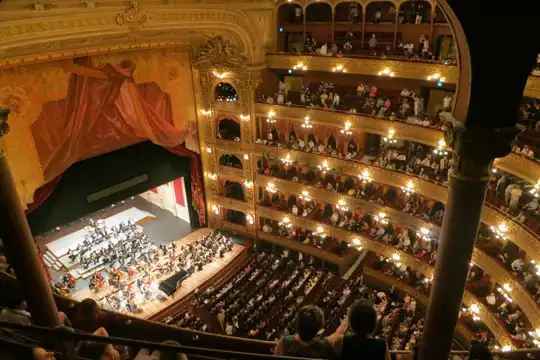
2 Teatro Colón

horseshoe auditorium, gilded balconies, world-class acoustics

Attend an opera or ballet in a venue renowned for its ornate interiors and exceptional sound, central to Argentina’s performing arts.

Argentina - Theatro Colón

3 El Ateneo Grand Splendid

theater-turned bookstore, frescoed ceilings, reading balconies

Browse shelves beneath gilded balconies and painted domes, enjoying a unique literary atmosphere inside a repurposed early 20th-century theater.

4 Museo Nacional de Bellas Artes

European masters, Argentine painting, sculpture galleries

View an extensive collection spanning centuries, including major works by international and local artists in a spacious neoclassical building.

argentina-attraction-museo-nacional-de-bellas-artes
© Google |

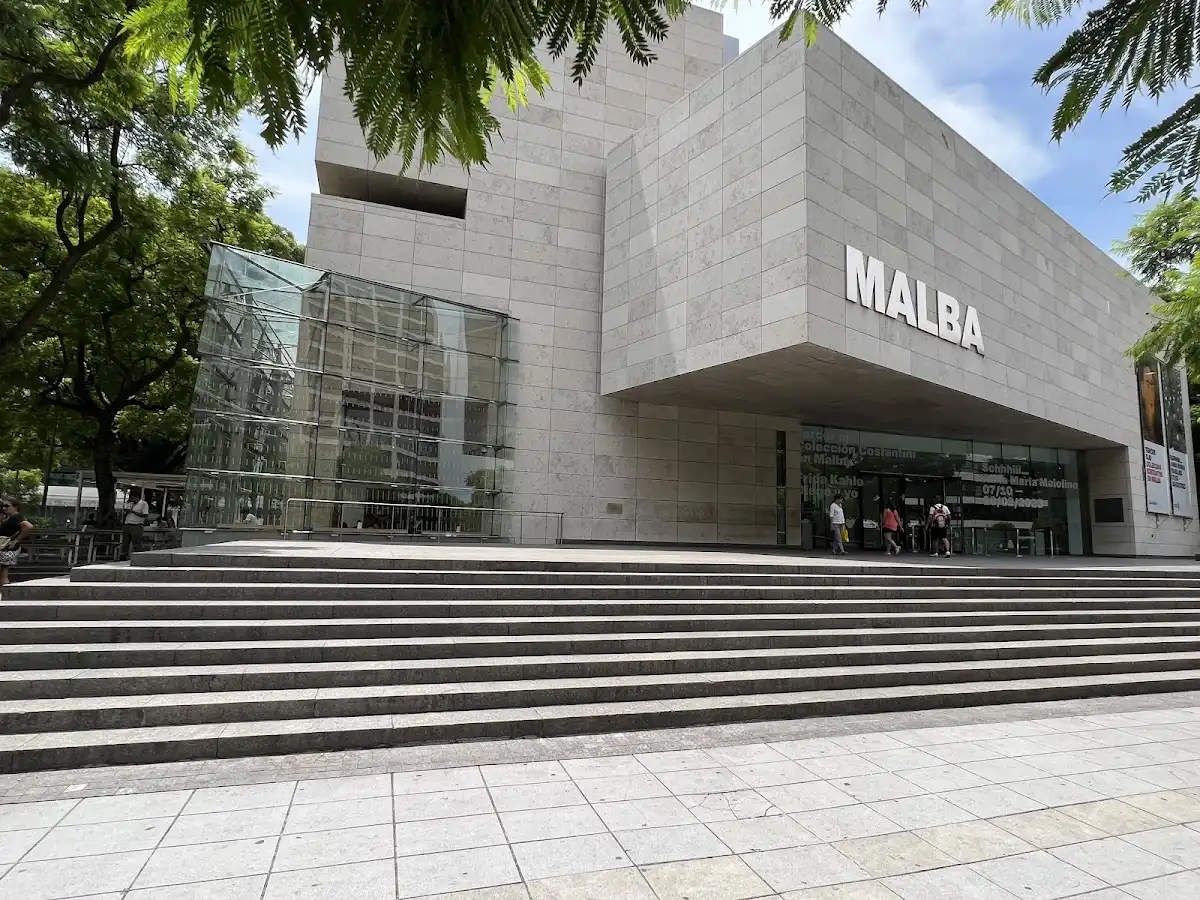
5 Museo de Arte Latinoamericano de Buenos Aires

Latin American masters, modernist galleries, rotating retrospectives

View works by influential regional artists in a museum focused on 20th and 21st-century creativity from across Latin America.

argentina-attraction-museo-de-arte-latinoamericano-de-buenos-aires
© Google |

6 Palacio Barolo

esoteric symbolism, lighthouse dome, Dante-inspired design

Ascend through allegorical floors inspired by the Divine Comedy, culminating in panoramic city views from the illuminated tower.

argentina-attraction-palacio-barolo
© Google |

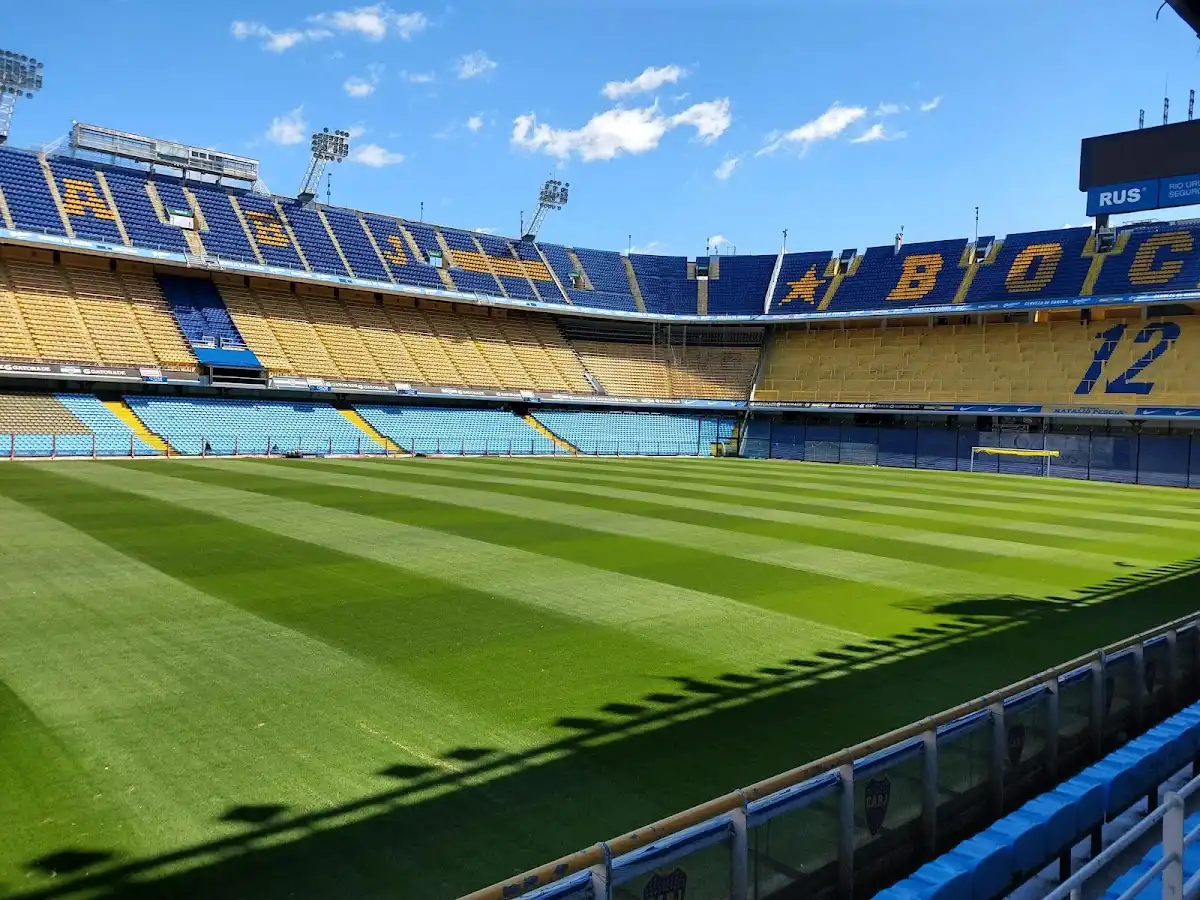
7 La Bombonera

steep stands, blue and yellow seats, football murals

Feel the intensity of local football culture in a stadium where passionate crowds and bold colors define every match day experience.

argentina-attraction-la-bombonera
© Google |

8 Centro Cultural Kirchner

grand halls, contemporary exhibitions, panoramic viewpoints

Experience a vast cultural space where modern installations, rotating art, and city views converge inside a monumental former post office.

9 Museo Nacional de Arte Decorativo

French-style mansion, period rooms, decorative arts

Step into a lavish early 20th-century residence filled with European furnishings, porcelain, and fine decorative objects.

argentina-attraction-museo-nacional-de-arte-decorativo
© Google |

10 Museo Evita

personal belongings, period fashion, political memorabilia

Follow the life and legacy of Eva Perón through intimate displays set in a mansion that once served as a women’s shelter.

argentina-attraction-museo-evita
© Google |

11 Museo Histórico Nacional

independence relics, colonial artifacts, national heroes

Examine objects and documents that shaped Argentina’s formation, from early colonial times through the wars of independence.

12 Museo de la Patagonia Francisco P. Moreno

Patagonian history, indigenous artifacts, natural science displays

Trace the region’s geological, cultural, and ecological evolution through exhibits on native peoples, explorers, and local wildlife.

13 Museo Municipal de Bellas Artes Juan B. Castagnino

regional painting, sculpture halls, Rosario artists

Survey a broad collection of Argentine and European art, with a strong emphasis on works by artists from the Rosario area.

14 Teatro San Martín

experimental theater, urban setting, multidisciplinary spaces

Experience innovative productions and diverse programming in a complex that anchors Buenos Aires’ contemporary performing arts scene.

15 Usina del Arte

converted power plant, concert halls, visual arts

Discover music and exhibitions in a striking industrial building, now a dynamic center for concerts, installations, and cultural events.

16 Museo de Arte Moderno de Buenos Aires

industrial space, avant-garde collections, local contemporary art

Explore experimental installations and bold works by Argentine artists in a museum housed in a converted tobacco factory.

17 Teatro Argentino de La Plata

modernist architecture, opera stage, acoustic engineering

Attend performances in a venue known for its technical precision and bold design, serving as a major cultural hub outside Buenos Aires.

18 Museo de la Memoria

dictatorship archives, remembrance exhibits, testimonial spaces

Reflect on Argentina’s recent past through personal stories, documents, and installations focused on the era of state terrorism.

Think you know Argentina?

Prove you’re a true local — uncover 8 lesser-known attractions in Argentina that locals tend to keep to themselves.
Loading the map 🌍

Expert viewTips and Advice from Travelers

Time vs. Depth: How Many Attractions Can You Really Absorb?

Argentina is vast. It’s not just a country; it’s a continent-sized playground with wildly different climates, landscapes, and cultural vibes. Trying to cram every major attraction into one trip is a rookie mistake. You’ll end up skimming the surface, exhausted, and missing the soul of each place. The real value lies in choosing fewer attractions and diving deep. Think of it as quality over quantity. Three to five major stops spread over a couple of weeks is a solid rule of thumb. This range lets you experience the local rhythm without feeling like you’re on a frantic checklist mission. If you push beyond that, you’re trading meaningful engagement for the bragging rights of ticking boxes.

Money vs. Experience: Where to Spend and

read more 👉

Time vs. Depth: How Many Attractions Can You Really Absorb?

Argentina is vast. It’s not just a country; it’s a continent-sized playground with wildly different climates, landscapes, and cultural vibes. Trying to cram every major attraction into one trip is a rookie mistake. You’ll end up skimming the surface, exhausted, and missing the soul of each place. The real value lies in choosing fewer attractions and diving deep. Think of it as quality over quantity. Three to five major stops spread over a couple of weeks is a solid rule of thumb. This range lets you experience the local rhythm without feeling like you’re on a frantic checklist mission. If you push beyond that, you’re trading meaningful engagement for the bragging rights of ticking boxes.

Money vs. Experience: Where to Spend and Where to Save

Argentina’s cost spectrum is wide. You can find budget options that keep you on the street-food-and-bus track, or you can splurge on experiences that redefine what travel means to you. The catch? The best, most memorable attractions often demand a premium—whether it’s paying for guided tours in remote natural parks or indulging in authentic culinary experiences that aren’t tourist traps but local institutions. Skimping on these can turn a potentially transformative moment into a forgettable one. On the flip side, some attractions are naturally low-cost but require more time or effort to reach, like trekking or public transport adventures. Here’s the trade-off: if you want comfort and convenience, expect to pay more. If your budget is tight, prepare for longer travel times and less polished infrastructure. The sweet spot is knowing which experiences are worth the splurge because they offer something you can’t get anywhere else, and which ones you can enjoy just as much on a shoestring.

Comfort vs. Authenticity: Navigating Infrastructure and Local Culture

Argentina’s infrastructure varies dramatically. Urban centers have reliable transport, decent roads, and a range of accommodation options. Venture into rural or wilderness areas, and the picture changes fast—unpaved roads, limited public transit, and fewer English speakers. This is where comfort takes a hit, but authenticity skyrockets. If you insist on air-conditioned buses and polished hotels everywhere, you’ll miss out on the raw, unfiltered experiences that make Argentina unforgettable. However, embracing discomfort isn’t for everyone. It demands flexibility, patience, and a willingness to adapt to local customs and rhythms. Safety-wise, sticking to well-traveled routes and reputable guides in remote areas is non-negotiable. The cultural trade-off is real: the more you lean into local ways, the richer your experience, but the less cushy your trip might be. Balancing this means deciding how much you’re willing to sacrifice creature comforts for genuine connection.

Regional Variation: Planning Around Climate and Accessibility

Argentina’s size means climate and accessibility vary wildly by region and season. Some attractions are only accessible during certain months due to weather or road conditions. This isn’t just a minor inconvenience—it can make or break your trip. For example, high-altitude or southern regions can be brutally cold or snowed in, while northern areas might be sweltering or rainy. Planning without factoring in these seasonal realities is a recipe for frustration. Also, some regions have better transport links and tourist infrastructure, making them easier to visit but often more crowded and commercialized. Others require more effort to reach but reward you with solitude and a sense of discovery. The trade-off here is between ease of access and the quality of the experience. If you want to avoid long, uncomfortable journeys, stick to well-connected areas. If you crave something off the beaten path, prepare for the logistical challenges that come with it.

Safety and Cultural Sensitivity: Non-Negotiables for a Smooth Trip

Argentina is generally safe for travelers, but like anywhere, risks increase when you stray from common sense. Pickpocketing and petty theft can be issues in crowded urban spots, so vigilance is key. In remote areas, the biggest safety concerns are environmental—weather changes, wildlife, and terrain hazards. Don’t underestimate the importance of local advice here. Cultural sensitivity is equally crucial. Argentina has a proud, complex identity shaped by indigenous heritage, European immigration, and modern urban culture. Approaching local customs with respect—whether it’s dining etiquette, language use, or social norms—opens doors and enriches your experience. Ignoring this can lead to awkward or even hostile encounters. The trade-off is simple: invest time in learning about the culture and safety tips, and you’ll travel smarter and deeper.

Prioritizing Attractions: The Art of Saying No

The hardest part of planning is what you leave out. Argentina’s attractions are tempting, but trying to do everything dilutes the impact of each experience. Prioritize based on what moves you—whether that’s nature, history, food, or culture—and accept that skipping some “must-sees” is part of smart travel. This isn’t about missing out; it’s about making space for moments that resonate. For example, if you’re drawn to natural wonders, focus your time and budget there and skip urban tourist traps that don’t add value. Conversely, if cultural immersion is your goal, allocate more days to neighborhoods and local events rather than distant landmarks. This conscious curation turns a good trip into a great one.

Final Thought: Own Your Trade-Offs

Travel in Argentina demands choices. You can’t have it all—time, money, comfort, and authenticity pull in different directions. The key is to own those trade-offs with eyes wide open. Want to save money? Prepare for longer travel times and rougher conditions. Crave comfort? Budget accordingly and accept fewer stops. Aim for depth? Cut down on quantity and stay longer in fewer places. This isn’t about limiting your adventure; it’s about sharpening it. When you understand what you’re giving up, you can focus on what truly matters and come home with stories that stick, not just photos that fill your phone.

✈️ The backpacker research shortcutArgentina Travel Guide

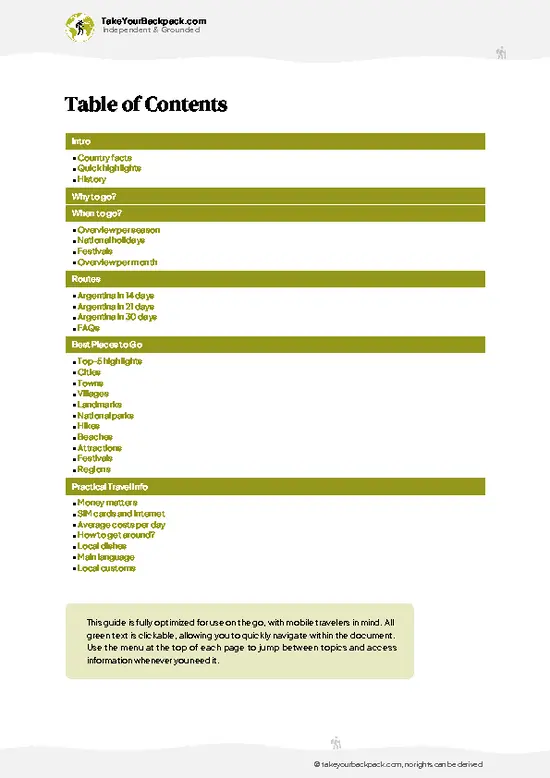
An offline-friendly backpacking guide with optimized travel routes, ranked highlights, transport advice, and the best areas to stay.
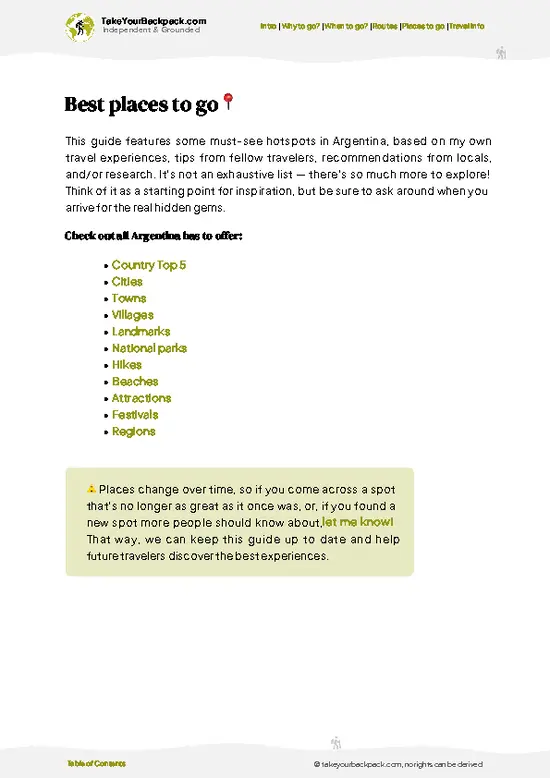
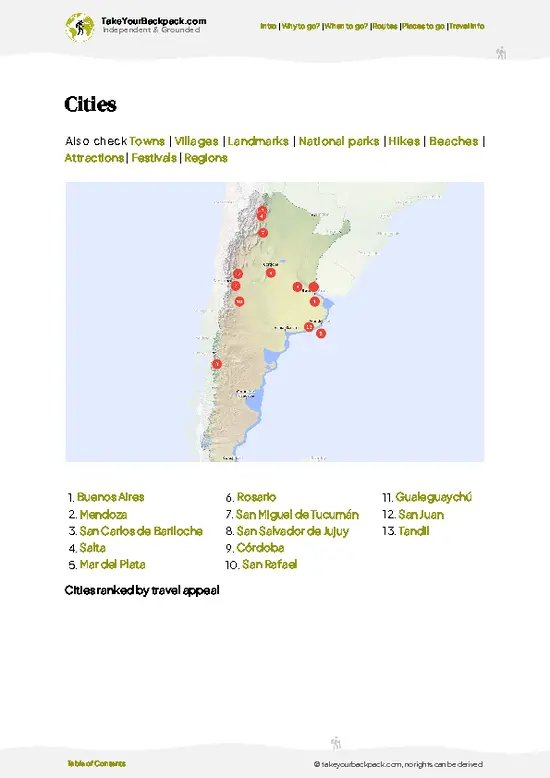
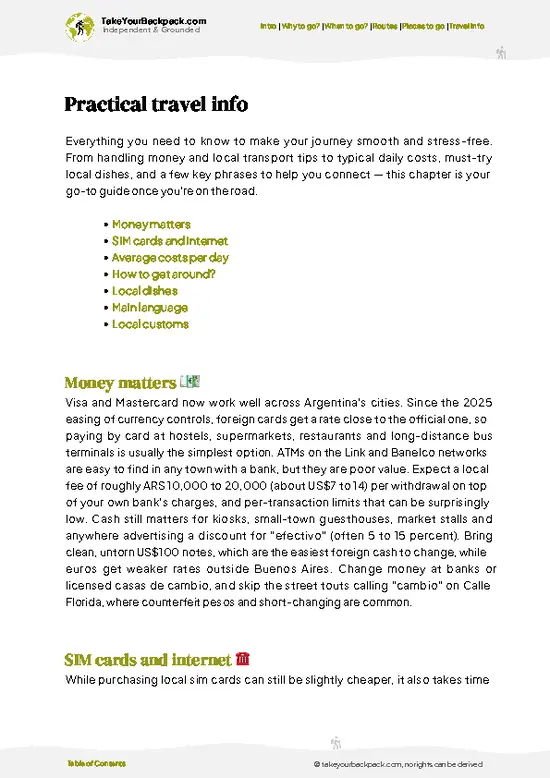
example page 0 from our offline Travel Guide for Argentina
example page 1 from our offline Travel Guide for Argentina
example page 2 from our offline Travel Guide for Argentina
example page 3 from our offline Travel Guide for Argentina
example page 4 from our offline Travel Guide for Argentina
example page 5 from our offline Travel Guide for Argentina
example page 6 from our offline Travel Guide for Argentina
example page 7 from our offline Travel Guide for Argentina
The digital guide (505 pages) contains:
135 highlights, ranked by travel appeal
Optimized 14, 21 & 30-day travel routes
Cities, national parks, landmarks, beaches
How to get around
Offline-friendly for travel without Wi-Fi
👉 Click to see all 30+ guide features

📅 Plan smarter in minutes, not weeks
Month by month travel advice
Festivals & national holidays
Budget expectations

🗺️ Go to the right places, skip the overrated ones
Honest pros & cons of destinations
Top hikes, parks & viewpoints
Lesser-known places most travelers miss
Clear “worth it vs skip it” guidance

🛏️ Travel smoothly without rookie mistakes
Best areas to stay
Transport systems explained simply
Common scams & safety advice
SIM cards, money & practical tips

🌍 Understand the country, not just visit it
Culture & traditions
52 Essential phrases & customs
Festivals worth planning around
Traveler-friendly historical context
Insights that make places more meaningful

📱 Built for real travel conditions
Fully downloadable PDF
Works completely offline
Optimized for phone use
Useful in remote areas & buses
Everything in one place
Save weeks of stressful planning
Get instant access to your full guide. 30‑day money-back guarantee.
+ Add another guide for just US$7.80

By proceeding you agree to our terms.
Sent to your inbox immediately after payment • 100% Secure Checkout
Best Backpacking Travel Advisor 2025 tourism awardBest Backpacking
Travel Advisor
2025
What others say about Take Your Backpack Guides:
⭐⭐⭐⭐⭐
Fantastic, amazing amount of information!
⭐⭐⭐⭐⭐
My goodness this is amazing, it's what I've been looking for hats off too you!
⭐⭐⭐⭐⭐
I think this is absolutely BRILLIANT
⭐⭐⭐⭐
Very complete and informative. It's still missing places, but I gotta to commend you
⭐⭐⭐⭐⭐
This is truly amazing, thank you, can't wait to explore it with my kids!
⭐⭐⭐⭐⭐
Awesome resource, thank you!
⭐⭐⭐⭐⭐
This is amazing! Can't wait to explore the ones I haven't seen
⭐⭐⭐⭐
I love this! Well done, great idea.
⭐⭐⭐⭐⭐
Thanks for taking the time to make this gem!
⭐⭐⭐⭐⭐
This might be the best website I've ever seen.
⭐⭐⭐⭐⭐
Congratulations, and thank you so much for your work; it's incredibly valuable.
⭐⭐⭐⭐
In all seriousness I think you did a great job pointing out the important spots
⭐⭐⭐⭐⭐
10/10 very good
⭐⭐⭐⭐⭐
As someone who's only just starting to visit regularly this is awesome, thank you.
⭐⭐⭐⭐
Thank you very much! I'm going to visit my dad, it's going to be very useful!
⭐⭐⭐⭐⭐
This is really cool! We'll be travelling for the first time and this definitely come in handy.
⭐⭐⭐⭐⭐
You are now our minister of culture, congratulations 👨‍💼
⭐⭐⭐⭐⭐
Just wanted to tell you that this is a pearl! Going to follow your recommendations.
⭐⭐⭐⭐⭐
This is so cool. I'll definitely be using the resource for my travels soon.
⭐⭐⭐⭐⭐
This is very impressive! Good work.
⭐⭐⭐⭐⭐
This is an amazing and informative site. Very well done!

🛏️ Where to stay?Top Places to Consider Staying

hostels and budget accommodation are widespread across Argentina, with the most options in Buenos Aires (Palermo, San Telmo, Microcentro, Recoleta), Mendoza (city centre and Chacras de Coria), Bariloche (centro), El Calafate (centro) and Puerto Iguazú (town centre).

Palermo has nightlife, cafés and many hostel choices but is noisier and often pricier; San Telmo offers historic charm and markets with a strong backpacker vibe but can feel less safe late at night; Microcentro and Recoleta give the best transit links and museums yet are quieter after dark and more touristy; Mendoza centre and Chacras are walkable to vineyards and plazas but farther from mountain trails; Bariloche centro is convenient … read more 👉
hostels and budget accommodation are widespread across Argentina, with the most options in Buenos Aires (Palermo, San Telmo, Microcentro, Recoleta), Mendoza (city centre and Chacras de Coria), Bariloche (centro), El Calafate (centro) and Puerto Iguazú (town centre).

Palermo has nightlife, cafés and many hostel choices but is noisier and often pricier; San Telmo offers historic charm and markets with a strong backpacker vibe but can feel less safe late at night; Microcentro and Recoleta give the best transit links and museums yet are quieter after dark and more touristy; Mendoza centre and Chacras are walkable to vineyards and plazas but farther from mountain trails; Bariloche centro is convenient for buses, shops and lake access but fills up in high season; El Calafate centro is the practical base for glacier tours though touristy and cold; Puerto Iguazú town is the cheapest base for the falls with basic services but less nightlife and higher humidity.

If you enjoy meeting fellow travelers, consider choosing hostels with high ratings for atmosphere. On the other hand, if you prefer having your own space, a hotel might be a better option.

ArgentinaMore Places Across Argentina

👋 Meet the founderWho’s Behind Take Your Backpack?

Johan, backpacker and founder of TakeYourBackpackHi, I’m Johan (Netherlands 🇳🇱), the creator of TakeYourBackpack. Over the past decade, I’ve backpacked through 80+ countries across six continents, gaining extensive experience with independent travel, long-term trips, and overland routes.

This site is built on a combination of firsthand travel experience and carefully curated insights from other backpackers. Many guides are based on places I’ve personally visited, while others bring together tips, observations, and practical advice shared by trusted travelers I’ve met along the way.

The goal is to provide realistic, experience-driven guidance — not generic itineraries — so you can explore destinations with better context, clearer expectations, and more confidence.

Get full Argentina guide •
Instant download • 135 highlights • Full Offline guide