×

Argentina🇦🇷 | townsUshuaiaBeagle Channel, southernmost city, snow-capped peaks | things to do and best time to go

Explore Tafí del ValleExplore Villa de Merlo

Backpacking in Ushuaia
🏆 Top picktown ranked #3
By Johan Kruseman 🇳🇱 | Updated September 4, 2026

Most people only realize in hindsight that Ushuaia is one of the easiest places in Patagonia to stack a lot of “big” experiences into a short window: glacier, penguins, national park, boat into the Beagle Channel, all running like clockwork from one compact port town. It sits at the far south of Argentina, in Tierra del Fuego, squeezed between steep, snow-dusted mountains and a cold, metallic-blue sea that smells faintly of salt and fuel when the wind swings around the harbor.

For backpackers, Ushuaia is less a city to linger in and more a launchpad. You base here for day hikes in Tierra del Fuego National Park, boat trips, and last‑minute gear checks before pushing deeper into Patagonia or onward to Antarctica. The center is walkable, but stretched along the coast; you’ll use local buses or taxis for trailheads. It’s pricier and more tour‑oriented than Río Grande or Punta Arenas, yet still relaxed enough that hostel kitchens, small bars, and tour offices become easy meeting points. Nights are social but not wild, safety is generally solid, and the real payoff is how quickly you can step from supermarket and sidewalk into raw, windy, end‑of‑the‑world landscapes.

Discover everything you want to know in the 📖 Argentina Travel Guide.
Loading the map 🌍
CLICK TO FILTER
cities
towns
villages
landmarks
national parks
hikes
beaches
attractions
festivals
regions
SHOW COUNTRY’S BESTSHOW ALL

✨ Why go?
Ranked #3 town in Argentina
What makes it a must-see town

Ushuaia, the southernmost town in the world, serves as a launchpad for backpackers eager to explore the wild landscapes of Tierra del Fuego. Its walkable streets are lined with small-scale hostels and guesthouses, perfect for solo travelers or small groups seeking a cozy atmosphere. You’ll find a mix of local food experiences—think fresh seafood and hearty stews—inviting you to refuel after a day of hiking.

The town is a gateway to stunning trails like the Tierra del Fuego National Park, where the scent of lenga trees and the sound of distant waves create an immersive experience. Many travelers linger here for a few days, soaking in the friendly social vibe that makes it easy to connect with fellow adventurers.

While Ushuaia isn’t a nightlife hotspot, its charm lies in the quiet moments—watching … read more 👉
Ushuaia, the southernmost town in the world, serves as a launchpad for backpackers eager to explore the wild landscapes of Tierra del Fuego. Its walkable streets are lined with small-scale hostels and guesthouses, perfect for solo travelers or small groups seeking a cozy atmosphere. You’ll find a mix of local food experiences—think fresh seafood and hearty stews—inviting you to refuel after a day of hiking.

The town is a gateway to stunning trails like the Tierra del Fuego National Park, where the scent of lenga trees and the sound of distant waves create an immersive experience. Many travelers linger here for a few days, soaking in the friendly social vibe that makes it easy to connect with fellow adventurers.

While Ushuaia isn’t a nightlife hotspot, its charm lies in the quiet moments—watching the sunset over the Beagle Channel or sharing stories with new friends over a warm drink. This town is ideal for slow travelers and hikers who appreciate the balance of adventure and relaxation, making it a worthwhile stop on your journey.
Want to include Ushuaia in your Argentina route?
Create a personalized Argentina itinerary that includes Ushuaia and the places that fit your trip — based on your travel style, budget, and available time. Get your route in seconds.

Generate my trip

💡 HighlightsTop highlights of Ushuaia

1. Museo Marítimo y del Presidio de Ushuaia
Step inside the old prison and you’ll feel the chill of Ushuaia’s past in your bones—literally. The stone corridors echo with the stories of convicts, explorers, and Antarctic dreamers. This isn’t a polished, hands-off museum; you’re walking through real cells, faded graffiti still on the walls, and the maritime wing is packed with ship models and relics that smell faintly of salt and old wood. Go in the late afternoon when the crowds thin and the southern light slants through barred windows. Entry is around ARS 12,000 (about $12 USD), and you’ll want at least two hours to do it justice. It’s the best crash course in why Ushuaia feels so raw and alive.


2. Paseo de las Artesanías (Artisan Market)
Skip the duty-free shops and head here for the real … read more 👉
1. Museo Marítimo y del Presidio de Ushuaia
Step inside the old prison and you’ll feel the chill of Ushuaia’s past in your bones—literally. The stone corridors echo with the stories of convicts, explorers, and Antarctic dreamers. This isn’t a polished, hands-off museum; you’re walking through real cells, faded graffiti still on the walls, and the maritime wing is packed with ship models and relics that smell faintly of salt and old wood. Go in the late afternoon when the crowds thin and the southern light slants through barred windows. Entry is around ARS 12,000 (about $12 USD), and you’ll want at least two hours to do it justice. It’s the best crash course in why Ushuaia feels so raw and alive.


2. Paseo de las Artesanías (Artisan Market)
Skip the duty-free shops and head here for the real pulse of local creativity. The market is a warren of tiny stalls, each run by the hands that made what’s for sale—leatherwork, ceramics, mate gourds, and wool dyed in colors that match the hills outside town. The air smells of wood shavings and yerba mate. It’s open most afternoons, but Saturday mornings are when the energy peaks. Free to enter, but bring cash for small purchases. You can see it all in 30 minutes, but linger and you’ll get stories with your souvenirs.


3. Museo del Fin del Mundo
This compact museum is Ushuaia’s memory box. The exhibits—Yámana canoe replicas, shipwreck artifacts, taxidermied seabirds—are humble but deeply evocative. You’ll leave with a sense of how people have survived at the edge of the world, from indigenous ingenuity to shipwrecked sailors. The building itself, a former bank, creaks with age. Go in the morning to have it mostly to yourself. Entry is about ARS 5,000 (roughly $5 USD), and an hour is plenty unless you’re a history completist.


4. Walk the Waterfront (Avenida Maipú)
This isn’t just a stroll; it’s Ushuaia’s open-air theater. The wind off the Beagle Channel tastes briny and sharp, and the mountains crowd the horizon like a painted backdrop. Watch the fishing boats and Antarctic vessels, spot the Malvinas memorial, and let the cold air wake you up. Early evening is magic—golden light, fewer tour buses, and the town’s pace slows. Free, and you can take as long as your fingers can stand the chill.


5. La Última Bita
Part museum, part curiosity shop, part time capsule. This place is a riot of maritime oddities, antique tools, and Patagonian kitsch, all crammed into a creaky wooden house. The owner is often around, happy to share tales that blur the line between fact and legend. It’s a sensory overload—dust, brass, and the faint scent of old rope. Open afternoons, entry is free but you’ll want to buy a quirky souvenir. Give it 30-45 minutes, but don’t rush; half the fun is in the details.


If you’re itching to stretch your legs beyond town, Tierra del Fuego National Park, the Martial Glacier, and the Beagle Channel boat trips are all within easy striking distance—Tierra del Fuego is my personal favorite for its wild, end-of-the-road feeling and the way the wind sounds in the lenga forests.
Spotted a mistake or missing something? Contact us.

Things to do around Ushuaia

Ratings based on Tripadvisor reviews. When you book through this link, you support our work at no extra cost to you.

🏘️ NeighborhoodsKey areas and districts to know

Ushuaia, the southernmost city in the world, is a unique blend of rugged beauty and urban charm. Each neighborhood offers its own flavor, making it essential to choose wisely for your backpacking adventure.

Centro: This is the heartbeat of Ushuaia. You’ll find bustling cafes, shops, and the iconic waterfront. The vibe is lively, perfect for those who want to soak in the local culture. Walkability is high; everything is within a short stroll. Prices can be a bit steep, but the convenience of being close to transport hubs makes it worth it for short stays.

La Misión: A quieter area, La Misión is ideal for those seeking a more laid-back atmosphere. The streets are lined with charming houses and local eateries. It’s a bit further from the main attractions, but the trade-off is a more authentic … read more 👉
Ushuaia, the southernmost city in the world, is a unique blend of rugged beauty and urban charm. Each neighborhood offers its own flavor, making it essential to choose wisely for your backpacking adventure.

Centro: This is the heartbeat of Ushuaia. You’ll find bustling cafes, shops, and the iconic waterfront. The vibe is lively, perfect for those who want to soak in the local culture. Walkability is high; everything is within a short stroll. Prices can be a bit steep, but the convenience of being close to transport hubs makes it worth it for short stays.

La Misión: A quieter area, La Misión is ideal for those seeking a more laid-back atmosphere. The streets are lined with charming houses and local eateries. It’s a bit further from the main attractions, but the trade-off is a more authentic experience. This neighborhood is great for longer stays, especially if you want to escape the tourist hustle.

Puerto Almanza: If you’re after a taste of the wild, head to Puerto Almanza. It’s a fishing village about 30 minutes from the city center. The scenery is breathtaking, with fresh seafood and stunning views. It’s less walkable, so a car or bike is recommended. Perfect for those who want to immerse themselves in nature for a few days.

Andes: Nestled in the hills, this area offers a mix of residential and tourist spots. It’s quieter, with a more local feel. The views are spectacular, especially at sunset. While it’s a bit removed from the nightlife, it’s a great base for hiking and exploring the surrounding landscapes. Ideal for longer stays if you’re looking to connect with nature.

⌛️ 1 day1-day itinerary for Ushuaia

Ushuaia, the southernmost city in the world, is a place where the mountains meet the sea, and the air is crisp with adventure. The town is a gateway to the wild landscapes of Tierra del Fuego, where nature reigns supreme. You can feel the pulse of the land in the vibrant streets, where the scent of fresh seafood mingles with the salty breeze.

Start your morning at Café de la Plaza, a cozy spot where the aroma of freshly brewed coffee fills the air. Grab a slice of medialuna, a sweet pastry that pairs perfectly with your caffeine fix. As you sip, take in the view of the Beagle Channel, where fishing boats bob gently in the water. After fueling up, head to the nearby Maritime Museum, housed in an old prison. It’s a fascinating dive into the region’s maritime history, and the building itself … read more 👉
Ushuaia, the southernmost city in the world, is a place where the mountains meet the sea, and the air is crisp with adventure. The town is a gateway to the wild landscapes of Tierra del Fuego, where nature reigns supreme. You can feel the pulse of the land in the vibrant streets, where the scent of fresh seafood mingles with the salty breeze.

Start your morning at Café de la Plaza, a cozy spot where the aroma of freshly brewed coffee fills the air. Grab a slice of medialuna, a sweet pastry that pairs perfectly with your caffeine fix. As you sip, take in the view of the Beagle Channel, where fishing boats bob gently in the water. After fueling up, head to the nearby Maritime Museum, housed in an old prison. It’s a fascinating dive into the region’s maritime history, and the building itself has a haunting beauty that adds to the experience.

In the afternoon, make your way to the less-trodden path of the Laguna Esmeralda. A short drive or a local bus will get you to the trailhead. The hike is moderate, winding through lenga forests and offering glimpses of the surrounding peaks. When you reach the lagoon, the emerald waters reflect the jagged mountains, creating a scene that feels almost surreal. Pack a lunch to enjoy here; the tranquility is worth the effort.

As evening approaches, return to town and stroll through the charming streets of the old neighborhood, Barrio de la Misión. The colorful houses and local art give it a unique character. For dinner, try a parrilla at La Estancia, where the smell of grilled meat wafts through the air. The warmth of the place and the hearty food will cap off your day perfectly.

Ushuaia isn’t just a destination; it’s an experience that lingers long after you leave. Each moment, from the morning coffee to the evening feast, is a step deeper into the heart of this remarkable place.
Turn your Ushuaia visit into an Argentina adventure
Build a complete Argentina route with Ushuaia, hidden gems, must-see destinations, and realistic travel times included.

Generate my trip

🌤️ When to go?Choosing the right time of year


  • Weather: Ushuaia’s weather is famously unpredictable. Summer (December to February) offers the mildest conditions, with temperatures hovering between 5°C and 15°C (41°F to 59°F). Winters plunge below freezing, often dipping to -2°C (28°F), making outdoor activities tougher but rewarding for snow lovers.

  • Daylight Hours: In summer, daylight stretches up to 17 hours, giving you long, golden evenings perfect for hiking or boat tours. Winter days shrink dramatically to about 7 hours, limiting outdoor time but creating a cozy, intimate atmosphere.

  • Crowds: Summer draws the bulk of visitors, especially in January, so expect busier trails and pricier accommodations. Shoulder seasons (late spring and early autumn) offer quieter streets and a more local vibe, with fewer tourists but still manageable
read more 👉

  • Weather: Ushuaia’s weather is famously unpredictable. Summer (December to February) offers the mildest conditions, with temperatures hovering between 5°C and 15°C (41°F to 59°F). Winters plunge below freezing, often dipping to -2°C (28°F), making outdoor activities tougher but rewarding for snow lovers.

  • Daylight Hours: In summer, daylight stretches up to 17 hours, giving you long, golden evenings perfect for hiking or boat tours. Winter days shrink dramatically to about 7 hours, limiting outdoor time but creating a cozy, intimate atmosphere.

  • Crowds: Summer draws the bulk of visitors, especially in January, so expect busier trails and pricier accommodations. Shoulder seasons (late spring and early autumn) offer quieter streets and a more local vibe, with fewer tourists but still manageable weather.

  • Seasonal Activities: Summer is prime for trekking, kayaking, and wildlife spotting. Winter transforms Ushuaia into a snow sports hub, with skiing and snowshoeing dominating. Spring and autumn bring a mix of both worlds, with blooming flora or early snow dusting the peaks.

  • Price Fluctuations: Peak summer months see a spike in prices for lodging and tours. Booking ahead is crucial. Off-season months offer better deals but come with the trade-off of limited services and harsher weather.


Pro-tip: Aim for late November or early March to catch decent weather, fewer crowds, and better prices—this sweet spot lets you savor Ushuaia’s rugged charm without the summer crush.


source: climatestotravel.comJANJanuary: highly recommended for travelingFEBFebruary: highly recommended for travelingMARMarch: highly recommended for travelingAPRApril: good for travelingMAYMay: fair for travelingJUNJune: fair for travelingJULJuly: good for travelingAUGAugust: good for travelingSEPSeptember: good for travelingOCTOctober: good for travelingNOVNovember: highly recommended for travelingDECDecember: highly recommended for traveling
argentina-city-ushuaia
© Google | José Chuse

✈️ The backpacker research shortcutArgentina Travel Guide

An offline-friendly backpacking guide with optimized travel routes, ranked highlights, transport advice, and the best areas to stay.
example page 0 from our offline Travel Guide for Argentina
example page 1 from our offline Travel Guide for Argentina
example page 2 from our offline Travel Guide for Argentina
example page 3 from our offline Travel Guide for Argentina
example page 4 from our offline Travel Guide for Argentina
example page 5 from our offline Travel Guide for Argentina
example page 6 from our offline Travel Guide for Argentina
example page 7 from our offline Travel Guide for Argentina
The digital guide (505 pages) contains:
135 highlights, ranked by travel appeal
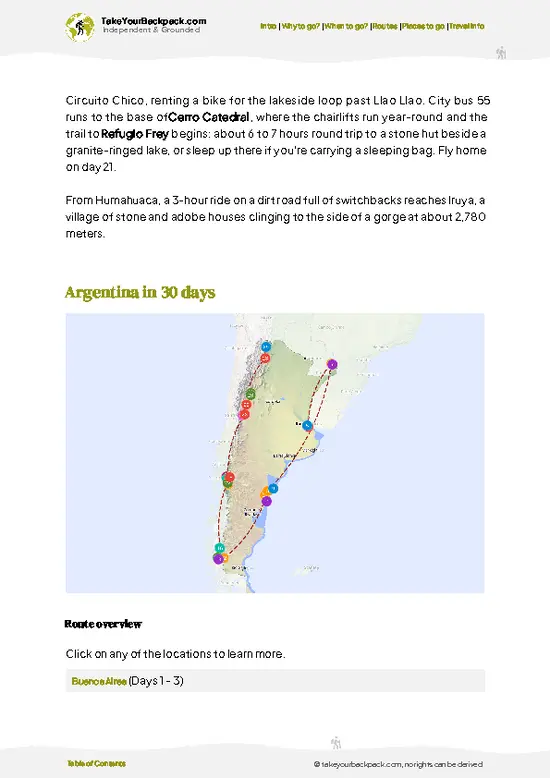
Optimized 14, 21 & 30-day travel routes
Cities, national parks, landmarks, beaches
How to get around
Offline-friendly for travel without Wi-Fi
👉 Click to see all 30+ guide features

📅 Plan smarter in minutes, not weeks
Month by month travel advice
Festivals & national holidays
Budget expectations

🗺️ Go to the right places, skip the overrated ones
Honest pros & cons of destinations
Top hikes, parks & viewpoints
Lesser-known places most travelers miss
Clear “worth it vs skip it” guidance

🛏️ Travel smoothly without rookie mistakes
Best areas to stay
Transport systems explained simply
Common scams & safety advice
SIM cards, money & practical tips

🌍 Understand the country, not just visit it
Culture & traditions
52 Essential phrases & customs
Festivals worth planning around
Traveler-friendly historical context
Insights that make places more meaningful

📱 Built for real travel conditions
Fully downloadable PDF
Works completely offline
Optimized for phone use
Useful in remote areas & buses
Everything in one place
Save weeks of stressful planning
Get instant access to your full guide. 30‑day money-back guarantee.
+ Add another guide for just £5.98

By proceeding you agree to our terms.
Sent to your inbox immediately after payment • 100% Secure Checkout
Best Backpacking Travel Advisor 2025 tourism awardBest Backpacking
Travel Advisor
2025
What others say about Take Your Backpack Guides:
⭐⭐⭐⭐⭐
Fantastic, amazing amount of information!
⭐⭐⭐⭐⭐
My goodness this is amazing, it's what I've been looking for hats off too you!
⭐⭐⭐⭐⭐
I think this is absolutely BRILLIANT
⭐⭐⭐⭐
Very complete and informative. It's still missing places, but I gotta to commend you
⭐⭐⭐⭐⭐
This is truly amazing, thank you, can't wait to explore it with my kids!
⭐⭐⭐⭐⭐
Awesome resource, thank you!
⭐⭐⭐⭐⭐
This is amazing! Can't wait to explore the ones I haven't seen
⭐⭐⭐⭐
I love this! Well done, great idea.
⭐⭐⭐⭐⭐
Thanks for taking the time to make this gem!
⭐⭐⭐⭐⭐
This might be the best website I've ever seen.
⭐⭐⭐⭐⭐
Congratulations, and thank you so much for your work; it's incredibly valuable.
⭐⭐⭐⭐
In all seriousness I think you did a great job pointing out the important spots
⭐⭐⭐⭐⭐
10/10 very good
⭐⭐⭐⭐⭐
As someone who's only just starting to visit regularly this is awesome, thank you.
⭐⭐⭐⭐
Thank you very much! I'm going to visit my dad, it's going to be very useful!
⭐⭐⭐⭐⭐
This is really cool! We'll be travelling for the first time and this definitely come in handy.
⭐⭐⭐⭐⭐
You are now our minister of culture, congratulations 👨‍💼
⭐⭐⭐⭐⭐
Just wanted to tell you that this is a pearl! Going to follow your recommendations.
⭐⭐⭐⭐⭐
This is so cool. I'll definitely be using the resource for my travels soon.
⭐⭐⭐⭐⭐
This is very impressive! Good work.
⭐⭐⭐⭐⭐
This is an amazing and informative site. Very well done!

🛏️ Where to stay?Best areas to stay in Argentina

The best area for backpackers in Ushuaia is the downtown core, especially around San Martín Street and the adjacent blocks. This neighborhood pulses with energy from early morning markets to late-night chatter spilling out of cozy cafés and budget-friendly bars. It’s where you’ll find the highest concentration of hostels, making it easy to meet other travelers swapping Patagonia stories over a shared dinner or a cold beer. The streets here are safe, well-lit, and walkable, which is a relief after long days trekking or ferrying across the Beagle Channel.

Staying downtown means you’re steps away … read more 👉
The best area for backpackers in Ushuaia is the downtown core, especially around San Martín Street and the adjacent blocks. This neighborhood pulses with energy from early morning markets to late-night chatter spilling out of cozy cafés and budget-friendly bars. It’s where you’ll find the highest concentration of hostels, making it easy to meet other travelers swapping Patagonia stories over a shared dinner or a cold beer. The streets here are safe, well-lit, and walkable, which is a relief after long days trekking or ferrying across the Beagle Channel.

Staying downtown means you’re steps away from the waterfront, where the sharp, salty air mixes with the scent of pine and seaweed—a sensory reminder that you’re at the edge of the world. The vibe is casual but lively, with a mix of locals and backpackers creating a social atmosphere without the touristy overload of busier cities. Compared to neighborhoods farther out, which can feel isolated or require taxis, downtown Ushuaia offers a practical base. You can walk to gear shops, tour operators, and the ferry docks without hassle, saving time and money.

If you want to blend safety, social buzz, and budget options, downtown Ushuaia isn’t just a place to crash—it’s where the trip starts to feel real. The crisp mountain light filtering through the streets at dawn is your cue: adventure is just outside your door.

🚌 Getting aroundGetting around like a local

Ushuaia moves with a rhythm that’s part rugged frontier, part tourist gateway. The air carries a sharp, salty bite from the Beagle Channel, and the light shifts quickly—bright and clear one moment, then thick with Patagonian mist the next. This isn’t a city where you’ll find strict timetables or polished transit hubs. Instead, it’s a place where intuition and local know-how smooth out the rough edges. The streets feel alive with a mix of travelers and locals, each navigating the town’s compact layout with a blend of purpose and relaxed patience. Understanding how Ushuaia flows means embracing a bit of unpredictability while knowing the best ways to move efficiently without breaking the bank.

Walking is your first and best transit option. Ushuaia’s downtown is small enough to cover on foot, … read more 👉
Ushuaia moves with a rhythm that’s part rugged frontier, part tourist gateway. The air carries a sharp, salty bite from the Beagle Channel, and the light shifts quickly—bright and clear one moment, then thick with Patagonian mist the next. This isn’t a city where you’ll find strict timetables or polished transit hubs. Instead, it’s a place where intuition and local know-how smooth out the rough edges. The streets feel alive with a mix of travelers and locals, each navigating the town’s compact layout with a blend of purpose and relaxed patience. Understanding how Ushuaia flows means embracing a bit of unpredictability while knowing the best ways to move efficiently without breaking the bank.

Walking is your first and best transit option. Ushuaia’s downtown is small enough to cover on foot, and walking lets you soak in the crisp mountain air, the scent of pine mingling with diesel from fishing boats, and the occasional bark of sea lions from the harbor. Most hostels, shops, and restaurants cluster within a 20-minute stroll, making this not just the cheapest but the most immersive way to get around. Don’t underestimate the hills—some streets climb steeply, so sturdy shoes are a must.

Local Buses are the budget traveler’s lifeline for reaching neighborhoods and attractions beyond walking distance. The buses run roughly from 7:00 AM to 10:00 PM, with fares around 50 Argentine pesos (about $0.25 USD), making them incredibly affordable. They’re not the most punctual, so expect some waiting and occasional crowding, especially during peak tourist season. The buses are basic but functional, with large windows perfect for catching views of the snow-capped Andes as you roll by.

Shared Taxis (Colectivos) operate like a hybrid between buses and private cabs. They follow set routes but pick up and drop off passengers anywhere along the way. This flexibility means you can hop on or off without waiting for a designated stop. Prices hover around 100 pesos, which is still wallet-friendly if you’re covering longer distances or carrying gear. The drivers often chat, offering local tips or warnings about trail conditions, which can be a bonus if you’re heading out for hikes.

Rental Bikes offer a faster, more flexible way to explore Ushuaia’s outskirts and waterfront paths. Many rental shops open by 9:00 AM and close around 7:00 PM, with daily rates starting near 1,500 pesos. The terrain can be challenging—expect gravel and steep climbs—but the payoff is huge: fresh air, quiet trails, and the chance to pause wherever the landscape grabs you. Bring layers; the wind off the channel can turn chilly fast.

Boat Shuttles connect Ushuaia to nearby islands and the southern tip of Tierra del Fuego National Park. These run mostly in the morning and early afternoon, with prices around 3,000 pesos for a round trip. While pricier than land options, they’re essential for accessing remote spots like Martillo Island, where you can see penguins up close. The boats are sturdy but exposed, so dress for wind and spray. The ride itself is a sensory highlight—the sharp tang of sea air, the slap of waves, and panoramic views that reward the effort.

Mastering Ushuaia’s transit means blending these options: walk the core, catch a bus or colectivo for longer hauls, and consider a bike or boat for adventure. This mix keeps your budget intact while letting you experience the town’s wild edges without hassle. The payoff? A trip that feels earned, where every step and ride reveals a new layer of Patagonia’s raw, magnetic charm.

👛 Costs (as of 4 September 2026)What things cost and how to budget

Backpacking in Ushuaia, the southern tip of Argentina, comes with a price tag that reflects its remote location and unique appeal. Here’s what you’re realistically looking at day-to-day.
  • Dorm Accommodation: Expect to pay between $15 and $30 USD per night for a bed in a shared dorm. Hostels here are basic but clean, often with heating to combat the cold air that sneaks in even during summer. The closer you get to the town center or waterfront, the higher the price, but it’s worth it for the views and easy access to trails.
  • Meals: Budget around $10 to $20 USD daily if you stick to casual eateries or cook your own food. A hearty breakfast or lunch at a local café might cost $5 to $8, while dinner at a modest restaurant runs $10 to $15. Fresh seafood is tempting but can push your meal costs
read more 👉
Backpacking in Ushuaia, the southern tip of Argentina, comes with a price tag that reflects its remote location and unique appeal. Here’s what you’re realistically looking at day-to-day.
  • Dorm Accommodation: Expect to pay between $15 and $30 USD per night for a bed in a shared dorm. Hostels here are basic but clean, often with heating to combat the cold air that sneaks in even during summer. The closer you get to the town center or waterfront, the higher the price, but it’s worth it for the views and easy access to trails.
  • Meals: Budget around $10 to $20 USD daily if you stick to casual eateries or cook your own food. A hearty breakfast or lunch at a local café might cost $5 to $8, while dinner at a modest restaurant runs $10 to $15. Fresh seafood is tempting but can push your meal costs higher if you indulge regularly.
  • Local Transport: Public buses and shared taxis are your best bets, costing about $1 to $3 per ride. Ushuaia is compact, so many spots are walkable, but if you’re heading to national parks or farther out, budget $10 to $20 for occasional shuttle services or taxis.
  • Basic Activities/Entry Fees: National park entrance fees hover around $10 to $15. Guided hikes or boat tours start at $30 and can climb depending on the length and exclusivity. Independent trekking is free but requires good planning and gear to handle the unpredictable weather.
  • Miscellaneous Expenses: Factor in $5 to $10 for essentials like water, snacks, or occasional laundry. Internet access is decent but can be spotty; some hostels charge a small fee for reliable Wi-Fi.

All told, you’re looking at roughly $40 to $80 USD per day to cover the essentials without cutting corners. Ushuaia’s charm is in its raw, windswept landscapes and the sense of being at the edge of the world—paying a bit more here means you get to soak in that atmosphere without constant stress over every peso.
⚠️ Prices can change and everyone travels differently, so take this as a rough guide. Hope it helps you plan your adventure!

🚌 Day tripsWhere to go beyond the main area

Ushuaia, the southernmost city in the world, is a backpacker’s dream base for exploring the wild beauty of Tierra del Fuego. With its rugged mountains and sprawling waterways, each day trip offers a unique taste of adventure. Here are some must-do excursions that will elevate your experience.

1. Tierra del Fuego National Park
Just a short bus ride from the city, this park is a paradise for hikers. The trails wind through lenga forests, alongside the Beagle Channel, and up to stunning viewpoints. You can easily spend a full day here, soaking in the crisp air and the scent of damp earth. Bring a packed lunch to enjoy by the water, and keep an eye out for the park’s wildlife, including guanacos and the elusive Andean condor. The best time to visit is during the summer months (December to March) … read more 👉
Ushuaia, the southernmost city in the world, is a backpacker’s dream base for exploring the wild beauty of Tierra del Fuego. With its rugged mountains and sprawling waterways, each day trip offers a unique taste of adventure. Here are some must-do excursions that will elevate your experience.

1. Tierra del Fuego National Park
Just a short bus ride from the city, this park is a paradise for hikers. The trails wind through lenga forests, alongside the Beagle Channel, and up to stunning viewpoints. You can easily spend a full day here, soaking in the crisp air and the scent of damp earth. Bring a packed lunch to enjoy by the water, and keep an eye out for the park’s wildlife, including guanacos and the elusive Andean condor. The best time to visit is during the summer months (December to March) when the days are long and the weather is milder. A round-trip bus ticket costs around $10, making it a budget-friendly option. Many first-timers underestimate the park’s size and end up rushing through; take your time to explore.
👉 Explore Tierra del Fuego National Park

2. Les Éclaireurs Lighthouse
Hop on a boat tour from the harbor to see this iconic lighthouse, often called the ”Lighthouse at the End of the World.” The ride takes about two hours, and you’ll glide through the Beagle Channel, surrounded by stunning mountain views. Keep your camera ready for the sea lions lounging on the rocks. Tours typically cost around $50, and the best time to go is in the morning when the light is perfect for photos. A common mistake is to skip the boat ride altogether; seeing the lighthouse from the water offers a perspective you can’t get from land.


3. Martial Glacier
A quick 15-minute drive from Ushuaia, the Martial Glacier trek is a must for those seeking a bit of a challenge. The trail starts off steep but rewards you with breathtaking views of the city and the surrounding mountains. The hike takes about 3-4 hours round trip, and you can grab a hot chocolate at the café at the base afterward. The best time to hike is during the summer, but even in early fall, the colors are spectacular. Many backpackers miss the trailhead; make sure to ask locals for directions to avoid wandering off course.


4. Estancia Harberton
This historic ranch is a bit further out, about an hour’s drive, but it’s worth the trip for a glimpse into the region’s past. You can tour the old buildings, learn about the indigenous history, and even take a boat to nearby islands for wildlife spotting. Expect to spend around $30 for the bus and entrance fee. The best time to visit is during the warmer months when the flora is in full bloom. A common mistake is to underestimate the time needed; plan for a full day to truly soak in the experience.


Each of these trips offers a unique slice of what makes Ushuaia special. Embrace the journey, and let the wild landscapes fill your senses.
Want to know what more Argentina offers?
The Argentina Travel Guide describes 135 highlights, from cities to national parks, from beaches to hikes

Get the Travel Guide -

🛡️ SafetyStaying Safe: What Travelers Should Know

Ushuaia is generally safe, but like any destination, a little awareness goes a long way. The main streets are well-lit and bustling, especially near the waterfront, but stray into quieter areas after dark and keep your wits about you. If you’re solo, stick to populated spots and avoid wandering too far off the beaten path at night.

Watch for the occasional street vendor who might try to upsell you on tours or souvenirs. They can be persistent, but a polite “no, gracias” usually does the trick. Also, be cautious with your belongings in crowded areas, especially around the port where tourists gather. Pickpocketing isn’t rampant, but it’s smart to keep your backpack zipped and close.

The weather can be unpredictable, so dress in layers and be ready for sudden changes. This isn’t just about … read more 👉
Ushuaia is generally safe, but like any destination, a little awareness goes a long way. The main streets are well-lit and bustling, especially near the waterfront, but stray into quieter areas after dark and keep your wits about you. If you’re solo, stick to populated spots and avoid wandering too far off the beaten path at night.

Watch for the occasional street vendor who might try to upsell you on tours or souvenirs. They can be persistent, but a polite “no, gracias” usually does the trick. Also, be cautious with your belongings in crowded areas, especially around the port where tourists gather. Pickpocketing isn’t rampant, but it’s smart to keep your backpack zipped and close.

The weather can be unpredictable, so dress in layers and be ready for sudden changes. This isn’t just about comfort; it’s about enjoying your time outdoors without the distraction of being cold or wet. Embrace the quirks of Ushuaia, and you’ll find the charm in its rugged beauty.

FAQFrequently asked questions about Ushuaia

Yes, Ushuaia is worth visiting for its unique location as the southernmost city in the world and gateway to Antarctica. It offers stunning landscapes, wildlife, and outdoor activities like hiking and boat tours in Tierra del Fuego National Park. Many travelers spend time here beyond just a stopover to explore these attractions.
3 to 4 days are ideal to explore Ushuaia thoroughly. This allows time for a boat trip on the Beagle Channel, hiking in Tierra del Fuego National Park, visiting the End of the World Museum, and possibly a day trip to nearby glaciers. Shorter stays limit your ability to experience the natural and cultural highlights.
No, Ushuaia cannot be visited as a day trip from a nearby city because it is very remote. The closest major city, Rio Gallegos, is about 600 kilometers away, requiring a flight or a long bus ride. Most travelers arrive directly in Ushuaia and stay overnight to make the most of their visit.
⚠️ Things can change over time, so always validate details locally before you go.

Other Argentinian towns near Ushuaia

Explore more nearby:

  • El Calafate—Glacier access, Lago Argentino, Patagonian steppe| 564 km away
  • Gaiman—Welsh tea houses, chapels, Chubut Valley| 1295 km away
  • Trevelin—Welsh settlements, windmills, Andean foothills| 1322 km away

💡 Not sure where to go next?
Create a personalized itinerary for Argentina including Ushuaia and the places that fit your trip.

Generate my itinerary

👉 Discover all towns

Or checkout all Argentina has to offer (think cities, towns, villages, national parks, hikes, beaches, festivals)
Country photo of Argentina

We 💚 feedbackKey takeaways before you go

Ushuaia is a wild frontier, where the air is crisp and the mountains loom like ancient sentinels. The thrill of hiking in Tierra del Fuego National Park, with its rugged trails and breathtaking views, makes every step worth it. But be prepared: the weather can turn on a dime, often leaving you soaked and shivering. Embrace the unpredictability; it’s part of the adventure. The payoff? A raw beauty that feels like a secret shared only with those who dare to explore.

✈️ When did I visit Argentina?
I have visited Argentina, together with Chile, in September 2012.

✍️ Help improve this page!
The information on this page is based on my own backpacking experience in Argentina, supplemented with up-to-date research and feedback from other travelers. Travel details can change, so if you notice anything outdated or incomplete, feel free to let me know.


🙋‍♂️ Give feedback

👋 Meet the founderWho’s Behind Take Your Backpack?

Johan, backpacker and founder of TakeYourBackpackHi, I’m Johan (Netherlands 🇳🇱), the creator of TakeYourBackpack. Over the past decade, I’ve backpacked through 80+ countries across six continents, gaining extensive experience with independent travel, long-term trips, and overland routes.

This site is built on a combination of firsthand travel experience and carefully curated insights from other backpackers. Many guides are based on places I’ve personally visited, while others bring together tips, observations, and practical advice shared by trusted travelers I’ve met along the way.

The goal is to provide realistic, experience-driven guidance — not generic itineraries — so you can explore destinations with better context, clearer expectations, and more confidence.

Get full Argentina guide •
Instant download • 135 highlights • Full Offline guide