×

Australia🇦🇺 | citiesCanberraGrass-roof Parliament, free national museums, lake loop, Anzac Parade | things to do and best time to go

Explore BrisbaneExplore Hobart

Backpacking in Canberra
👌 Worth visitingcity ranked #10
By Johan Kruseman 🇳🇱 | Updated October 16, 2026

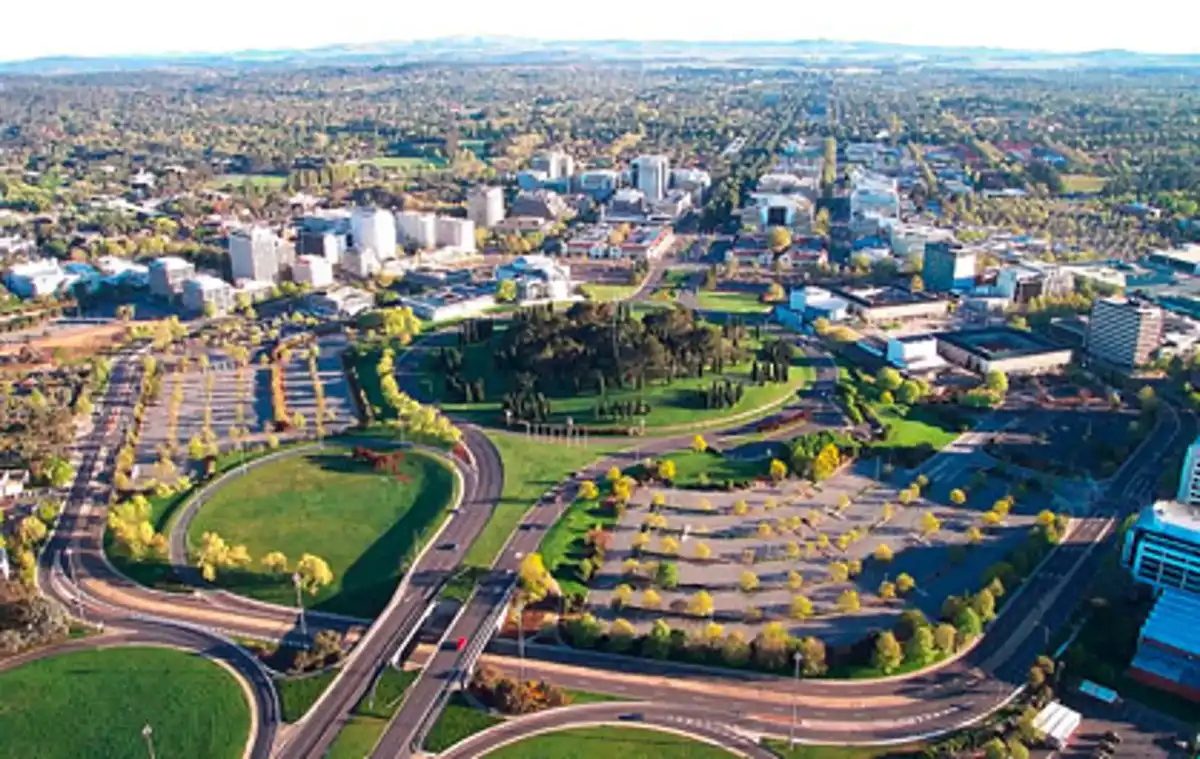
Canberra is where Australia’s Parliament sits and where the big national museums and galleries cluster, and the part travelers overlook is that nearly all of it is free, which is why it suits a thin wallet. It’s in Australia’s capital territory, roughly inland between Sydney and the Snowy Mountains. The city was designed from scratch, so distances look short on the map and then turn out to be a hike, because the sights sit around a lake and not beside each other. Use the buses and the lakeside paths instead. I arrived expecting a grand capital and got roundabouts, wide lawns and a silence that made me whisper at a bus stop. It suits museum fans, cyclists and road-trippers. Nightlife seekers will be bored.

Discover everything you want to know in the 📖 Australia Travel Guide.


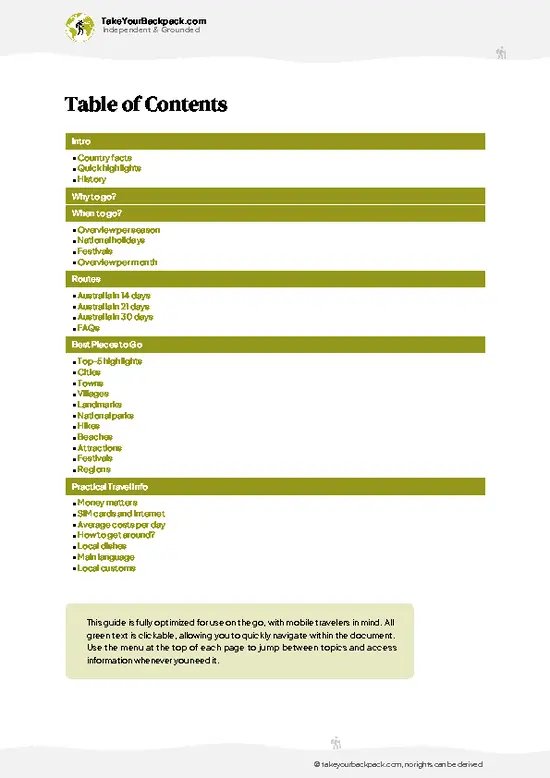
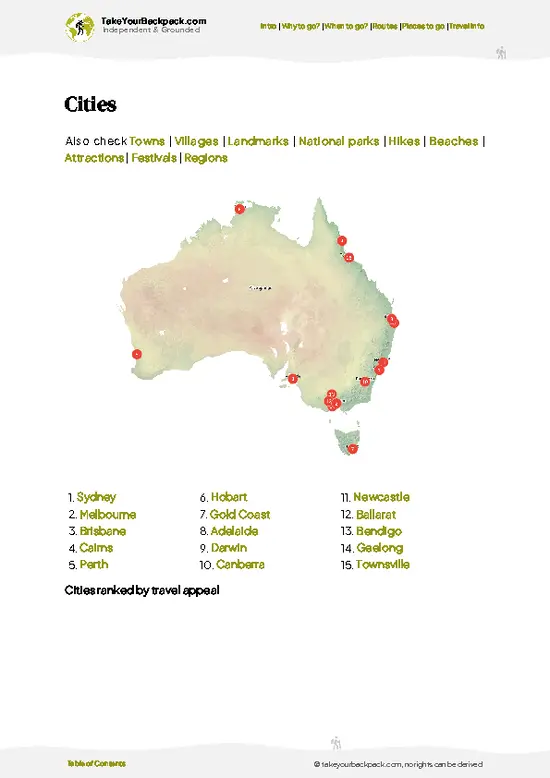
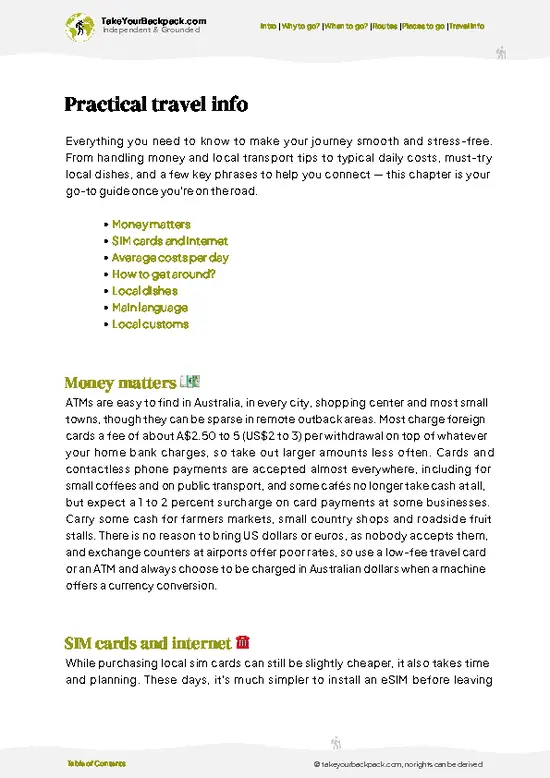
example page 0 from our offline Travel Guide for Australia
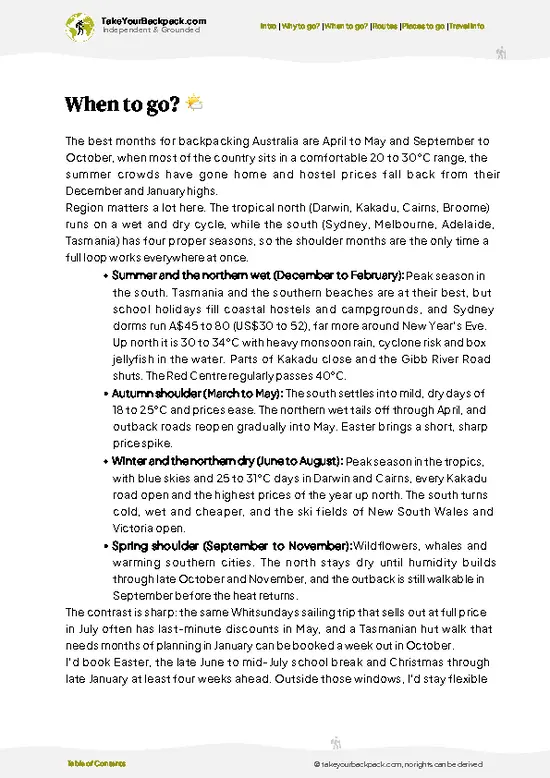
example page 1 from our offline Travel Guide for Australia
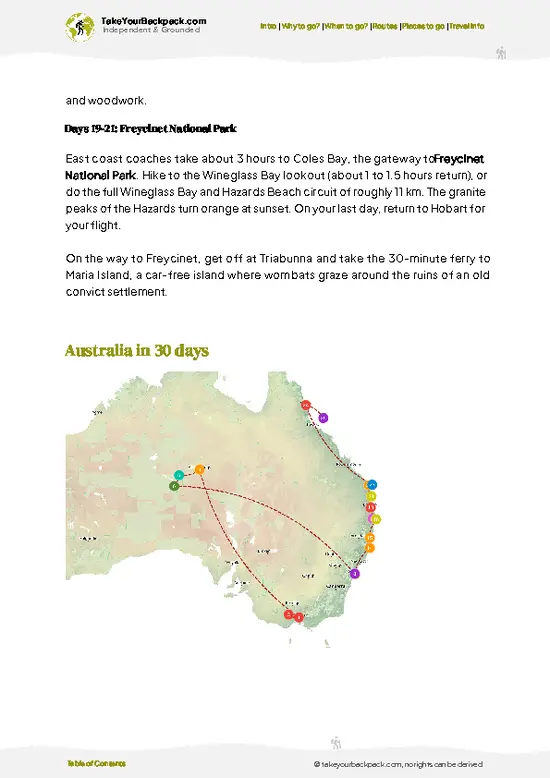
example page 2 from our offline Travel Guide for Australia
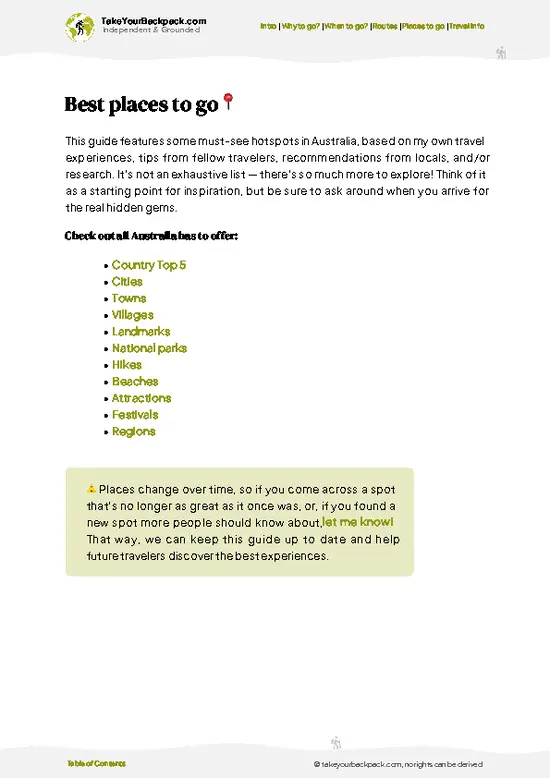
example page 3 from our offline Travel Guide for Australia
example page 4 from our offline Travel Guide for Australia
example page 5 from our offline Travel Guide for Australia
example page 6 from our offline Travel Guide for Australia
example page 7 from our offline Travel Guide for Australia
Loading the map 🌍
CLICK TO FILTER
cities
towns
villages
landmarks
national parks
hikes
beaches
attractions
festivals
regions
SHOW COUNTRY’S BESTSHOW ALL

✨ Why go?
Ranked #10 city in Australia
What makes this city worth visiting

Backpackers come to Canberra for the national institutions, most of which charge nothing for general entry, and that matters when you have been paying beach-town prices on the coast. It also works as a practical stop on the Sydney to Melbourne overland route, so a night or two costs you little extra routing. The city is spread out and car-oriented, but the central core around Civic is compact enough to cover on foot, and the lakeshore paths are flat and good for bikes. Hostels are few, so book ahead. Nightlife is modest, though Civic and Braddon have decent bars and coffee. Think of it as a culture-and-recharge stop of two days, not a place to base yourself for a week.

💡 HighlightsKey sights and experiences for travelers

  1. Parliament House: The dramatic hill-top building has a grass roof you can walk on, a public gallery and free entry. Visit on a sitting day for question time. Allow 1.5 to 2 hours.
  2. Australian War Memorial: A memorial, museum and archive in one, with a moving Last Post ceremony at closing time (5 pm). Entry is free. Allow 2 to 4 hours.
  3. National Gallery of Australia: Strong Indigenous art and a sculpture garden. General entry is free, special exhibitions about A$20 to 30. Allow 2 hours.
  4. National Museum of Australia: A quirky building on the lakeshore telling Australian stories, with Indigenous history a highlight. Free general entry. Allow 2 hours.
  5. Old Parliament House (Museum of Australian Democracy): Walk the old chambers and corridors, plus the Prime Minister’s office. Entry costs a couple of
… read more 👉
  1. Parliament House: The dramatic hill-top building has a grass roof you can walk on, a public gallery and free entry. Visit on a sitting day for question time. Allow 1.5 to 2 hours.
  2. Australian War Memorial: A memorial, museum and archive in one, with a moving Last Post ceremony at closing time (5 pm). Entry is free. Allow 2 to 4 hours.
  3. National Gallery of Australia: Strong Indigenous art and a sculpture garden. General entry is free, special exhibitions about A$20 to 30. Allow 2 hours.
  4. National Museum of Australia: A quirky building on the lakeshore telling Australian stories, with Indigenous history a highlight. Free general entry. Allow 2 hours.
  5. Old Parliament House (Museum of Australian Democracy): Walk the old chambers and corridors, plus the Prime Minister’s office. Entry costs a couple of dollars at most. Allow 1 to 1.5 hours.
  6. Mount Ainslie Lookout: The best view of the city’s layout down Anzac Parade to the lake. Go at sunset. Free, 30 minutes by car or a 1.5 hour round-trip walk.
  7. Lake Burley Griffin Walk or Ride: The roughly 5 km central loop is flat and passes the Captain Cook Memorial Jet. Bike hire is about A$20 to 40 a day. Allow 2 to 3 hours.
  8. National Arboretum Canberra: Hill-top forest plots with views over the city. Free entry. Allow 1.5 hours.
Day trips from the city include Tidbinbilla Nature Reserve, Namadgi National Park, Cockington Green Gardens and the wine region around Murrumbateman. If time is short, skip the Arboretum, since Mount Ainslie gives the view for less effort.
Spotted a mistake or missing something? Contact us.

Things to do in Canberra

Ratings based on Tripadvisor reviews. When you book through this link, you support our work at no extra cost to you.

🏘️ NeighborhoodsHow different areas shape the experience

Canberra is a planned city, which means the areas are spread out on purpose and nobody consulted your feet. Here is how the main ones work.
  • Civic (City Centre): The one place that feels like a normal downtown, with bars, cafés, the bus interchange and the light rail terminus. It is compact and flat, so walk it. Come for Thursday to Saturday nights, when the lanes around Garema Place and the Braddon edge fill up.
  • Braddon: Ten minutes' walk north of Civic, with converted workshops, coffee roasters, breweries and brunch lines. Eat here rather than in the centre, where menus tend to cater to lobbyists on expense accounts.
  • Parliamentary Triangle: Parliament House, the National Gallery, the National Museum and the High Court sit around Lake Burley Griffin. Distances look short on the map and are not.
… read more 👉
Canberra is a planned city, which means the areas are spread out on purpose and nobody consulted your feet. Here is how the main ones work.
  • Civic (City Centre): The one place that feels like a normal downtown, with bars, cafés, the bus interchange and the light rail terminus. It is compact and flat, so walk it. Come for Thursday to Saturday nights, when the lanes around Garema Place and the Braddon edge fill up.
  • Braddon: Ten minutes' walk north of Civic, with converted workshops, coffee roasters, breweries and brunch lines. Eat here rather than in the centre, where menus tend to cater to lobbyists on expense accounts.
  • Parliamentary Triangle: Parliament House, the National Gallery, the National Museum and the High Court sit around Lake Burley Griffin. Distances look short on the map and are not. Rent a bike or hop on a bus rather than plan a stroll between them in January.
  • Kingston Foreshore: Lakeside restaurants and a Sunday craft market at the Old Bus Depot. Quiet at night, pleasant by day, best reached by bus or bike.
  • Manuka: Leafy, polished and a little posh, with cafés and a cinema. Visit for a coffee, not for nightlife.

⌛️ 1 dayA smart one-day plan

Canberra is spread out, so mix short bus rides with walking and plan a coffee break in the middle of the day, especially in summer heat.
9:00 AM: Parliament House Walk the grass roof, then pop into the public gallery. The building is the best introduction to how the city was conceived.
11:00 AM: Old Parliament House A short ride away, this offers the human side of politics, from the corridors to the Prime Minister’s office.
12:30 PM: Braddon Take a bus to the Civic area and have lunch at one of the cafés along Lonsdale Street, where local roasters and street art fill the block.
2:30 PM: National Gallery of Australia Spend two hours with Indigenous works and the sculpture garden, then follow the lake path.
5:00 PM: Australian War Memorial Catch the Last Post ceremony, a quiet, affecting finish.
7:00 … read more 👉
Canberra is spread out, so mix short bus rides with walking and plan a coffee break in the middle of the day, especially in summer heat.
9:00 AM: Parliament House Walk the grass roof, then pop into the public gallery. The building is the best introduction to how the city was conceived.
11:00 AM: Old Parliament House A short ride away, this offers the human side of politics, from the corridors to the Prime Minister’s office.
12:30 PM: Braddon Take a bus to the Civic area and have lunch at one of the cafés along Lonsdale Street, where local roasters and street art fill the block.
2:30 PM: National Gallery of Australia Spend two hours with Indigenous works and the sculpture garden, then follow the lake path.
5:00 PM: Australian War Memorial Catch the Last Post ceremony, a quiet, affecting finish.
7:00 PM: Lyneham or Kingston Foreshore Skip the tourist menus and eat where locals do, at the small restaurants and wine bars by the water or in the quiet suburban strips.

🌤️ When to go?Seasonal considerations and timing

Autumn (March to May) is the pick, with days of 15 to 24°C (59 to 75°F) and the city's trees turning red and gold.
  • Autumn: Crisp mornings, clear skies, and the best light for the lakeside. Crowds are moderate and prices normal.
  • Spring (September to November): 12 to 22°C (54 to 72°F), with the Floriade flower festival drawing crowds and pushing up bed prices.
  • Summer (December to February): 17 to 30°C (63 to 86°F), with occasional 35°C+ (95°F+) days, bushfire smoke some years, and daylight until about 8:30 pm. School holidays raise prices.
  • Winter (June to August): Frosty nights below 0°C (32°F), days around 12°C (54°F), cheap beds, and daylight ending near 5 pm. Ski fields open within a few hours' drive.
Book Floriade weekends early, or skip them for a quieter midweek visit.

source: climatestotravel.comJANJanuary: highly recommended for travelingFEBFebruary: highly recommended for travelingMARMarch: highly recommended for travelingAPRApril: excellent for travelingMAYMay: excellent for travelingJUNJune: good for travelingJULJuly: fair for travelingAUGAugust: fair for travelingSEPSeptember: excellent for travelingOCTOctober: excellent for travelingNOVNovember: highly recommended for travelingDECDecember: highly recommended for traveling
australia-city-canberra
© Google | Eli Arévalo

✈️ The backpacker research shortcutAustralia Travel Guide

An offline-friendly backpacking guide with optimized travel routes, ranked highlights, transport advice, and the best areas to stay.
example page 0 from our offline Travel Guide for Australia
example page 1 from our offline Travel Guide for Australia
example page 2 from our offline Travel Guide for Australia
example page 3 from our offline Travel Guide for Australia
example page 4 from our offline Travel Guide for Australia
example page 5 from our offline Travel Guide for Australia
example page 6 from our offline Travel Guide for Australia
example page 7 from our offline Travel Guide for Australia
The digital guide (414 pages) contains:
✅ 143 highlights, ranked by travel appeal
✅ Optimized 14, 21 & 30-day travel routes
✅ Cities, national parks, landmarks, beaches
✅ How to get around
✅ Offline-friendly for travel without Wi-Fi
👉 Click to see all 30+ guide features

📅 Plan smarter in minutes, not weeks
✅ Month by month travel advice
✅ Festivals & national holidays
✅ Budget expectations

🗺️ Go to the right places, skip the overrated ones
✅ Honest pros & cons of destinations
✅ Top hikes, parks & viewpoints
✅ Lesser-known places most travelers miss
✅ Clear “worth it vs skip it” guidance

🛏️ Travel smoothly without rookie mistakes
✅ Best areas to stay
✅ Transport systems explained simply
✅ Common scams & safety advice
✅ SIM cards, money & practical tips

🌍 Understand the country, not just visit it
✅ Culture & traditions
✅ Local customs
✅ Festivals worth planning around
✅ Traveler-friendly historical context
✅ Insights that make places more meaningful

📱 Built for real travel conditions
✅ Fully downloadable PDF
✅ Works completely offline
✅ Optimized for phone use
✅ Useful in remote areas & buses
✅ Everything in one place
Stop searching, start planning
Get instant access to your full guide. 30‑day money-back guarantee.
+ Add another guide for just

By proceeding you agree to our terms.
Sent to your inbox immediately after payment • 100% Secure Checkout
Best Backpacking Travel Advisor 2025 tourism awardBest Backpacking
Travel Advisor
2025
What others say about Take Your Backpack Guides:
⭐⭐⭐⭐⭐
Fantastic, amazing amount of information!
⭐⭐⭐⭐⭐
My goodness this is amazing, it's what I've been looking for hats off too you!
⭐⭐⭐⭐⭐
I think this is absolutely BRILLIANT
⭐⭐⭐⭐
Very complete and informative. It's still missing places, but I gotta to commend you
⭐⭐⭐⭐⭐
This is truly amazing, thank you, can't wait to explore it with my kids!
⭐⭐⭐⭐⭐
Awesome resource, thank you!
⭐⭐⭐⭐⭐
This is amazing! Can't wait to explore the ones I haven't seen
⭐⭐⭐⭐
I love this! Well done, great idea.
⭐⭐⭐⭐⭐
Thanks for taking the time to make this gem!
⭐⭐⭐⭐⭐
This might be the best website I've ever seen.
⭐⭐⭐⭐⭐
Congratulations, and thank you so much for your work; it's incredibly valuable.
⭐⭐⭐⭐
In all seriousness I think you did a great job pointing out the important spots
⭐⭐⭐⭐⭐
10/10 very good
⭐⭐⭐⭐⭐
As someone who's only just starting to visit regularly this is awesome, thank you.
⭐⭐⭐⭐
Thank you very much! I'm going to visit my dad, it's going to be very useful!
⭐⭐⭐⭐⭐
This is really cool! We'll be travelling for the first time and this definitely come in handy.
⭐⭐⭐⭐⭐
You are now our minister of culture, congratulations 👨‍💼
⭐⭐⭐⭐⭐
Just wanted to tell you that this is a pearl! Going to follow your recommendations.
⭐⭐⭐⭐⭐
This is so cool. I'll definitely be using the resource for my travels soon.
⭐⭐⭐⭐⭐
This is very impressive! Good work.
⭐⭐⭐⭐⭐
This is an amazing and informative site. Very well done!

🛏️ Where to stay?Where staying makes the most sense

Civic and nearby Braddon are the best bets for a budget stay, with the most dorm beds, mostly A$35 to 60 a night in high season. Both put you within walking distance of the bus interchange, the light rail terminus and the intercity coach stop, so arrivals and day trips are easy. Nights are lively on Thursday to Saturday, so pack earplugs if you want quiet, and ask for a room away from the street. The streets are well lit and used by students and workers, and walking back after dark is generally fine. Dorm supply is thin compared with Sydney or Melbourne, so book ahead for Floriade, school holidays … read more 👉
Civic and nearby Braddon are the best bets for a budget stay, with the most dorm beds, mostly A$35 to 60 a night in high season. Both put you within walking distance of the bus interchange, the light rail terminus and the intercity coach stop, so arrivals and day trips are easy. Nights are lively on Thursday to Saturday, so pack earplugs if you want quiet, and ask for a room away from the street. The streets are well lit and used by students and workers, and walking back after dark is generally fine. Dorm supply is thin compared with Sydney or Melbourne, so book ahead for Floriade, school holidays and parliamentary sitting weeks. Kingston is a calmer second option with a few budget beds, a short bus ride from the center, but it has fewer places open late.

🚌 Getting aroundGetting around like a local

The center is flat and compact, so you can walk between Civic, Braddon and the bus interchange in minutes, but walking stops making sense once you head for the lakeside institutions or the suburbs. Canberra was designed around cars, so distances between attractions are longer than they look. Here is how to cover them without a rental.
  • Walking: Free and ideal for Civic, Braddon and Manuka. The Parliamentary Triangle is about 3 to 4 km from Civic to the far end, and shade is scarce in summer.
  • Light rail: Runs from Civic north to Gungahlin, roughly every 6 to 15 minutes, about 5:30 am to near midnight. It suits only northern trips, so check the line before assuming it goes where you need.
  • Buses (Transport Canberra): The main network, with fares of about A$3 to 5 using a MyWay card or contactless
… read more 👉
The center is flat and compact, so you can walk between Civic, Braddon and the bus interchange in minutes, but walking stops making sense once you head for the lakeside institutions or the suburbs. Canberra was designed around cars, so distances between attractions are longer than they look. Here is how to cover them without a rental.
  • Walking: Free and ideal for Civic, Braddon and Manuka. The Parliamentary Triangle is about 3 to 4 km from Civic to the far end, and shade is scarce in summer.
  • Light rail: Runs from Civic north to Gungahlin, roughly every 6 to 15 minutes, about 5:30 am to near midnight. It suits only northern trips, so check the line before assuming it goes where you need.
  • Buses (Transport Canberra): The main network, with fares of about A$3 to 5 using a MyWay card or contactless payment. Daily caps keep costs down. Evenings and Sundays are less frequent, so check timetables before you commit to a late return.
  • Bikes and e-scooters: Shared scooters cost around A$1 to 2 to unlock plus per-minute fees. Paths loop the lake (about 35 km) and are the smart way to link the museums and Parliament House.
  • Rideshare and taxis: A$15 to 30 for most inner trips, which is worth splitting between three or four people for late nights or the airport run.

👛 Costs (as of 16 October 2026)How expensive it really is

Canberra costs a backpacker about US$85 a day in high season, with dorm beds, self-catered meals and a few paid attractions. Most of the big national museums and galleries are free, which keeps the daily total lower than in Sydney.
CategoryBudget RangeLocal Reality
Dorm accommodation (high season)US$30 to 45Summer, school holidays and Floriade in spring push beds toward the top of the range. The total below uses US$35.
Dorm accommodation (off-season)US$24 to 35Winter is cheaper, though the nights are cold.
MealsUS$22 to 35Supermarket groceries and a cooked hostel dinner keep you near the bottom. A café lunch runs US$10 to 15. The total uses US$25.
Local transportUS$3 to 6Buses and the light rail share one fare system, and a single ride costs about US$3 to 4. The total uses US$4.
City transport passUS$6
… read more 👉
Canberra costs a backpacker about US$85 a day in high season, with dorm beds, self-catered meals and a few paid attractions. Most of the big national museums and galleries are free, which keeps the daily total lower than in Sydney.
CategoryBudget RangeLocal Reality
Dorm accommodation (high season)US$30 to 45Summer, school holidays and Floriade in spring push beds toward the top of the range. The total below uses US$35.
Dorm accommodation (off-season)US$24 to 35Winter is cheaper, though the nights are cold.
MealsUS$22 to 35Supermarket groceries and a cooked hostel dinner keep you near the bottom. A café lunch runs US$10 to 15. The total uses US$25.
Local transportUS$3 to 6Buses and the light rail share one fare system, and a single ride costs about US$3 to 4. The total uses US$4.
City transport passUS$6 to 8Daily fare caps apply on a MyWay card, so many rides in one day stay within this amount. The total uses US$6.
Basic activities/entry feesUS$0 to 20The National Museum, National Gallery and Parliament House are free. Paid special exhibitions and Questacon cost extra. The total uses US$10.
MiscellaneousUS$4 to 10Coffee, sunscreen, laundry and the odd beer. The total uses US$5.
Total Daily BudgetUS$85High-season dorm, meals, transport, pass, activities and extras combined.
Cooking in a hostel kitchen and walking or cycling the lakeside paths saves the most money.
⚠️ Prices can change and everyone travels differently, so take this as a rough guide. Hope it helps you plan your adventure!

🚌 Day tripsEasy escapes and nearby places

Canberra works well as a base for day trips, especially if you have a car or join a tour, since public transport beyond the city is thin.
Namadgi National Park:
About 45 minutes south, with granite peaks, Aboriginal rock art at Yankee Hat and kangaroos on the grassy flats. Cars are needed, entry is free, and fuel runs around A$20 to 40. Autumn and spring are best, and first-timers often underestimate how cold the mornings get.

Jervis Bay:
Roughly 2.5 to 3 hours by car to white-sand beaches and dolphin watching. It makes a long but worthwhile day in summer. Budget A$60 to 90 for fuel and a cruise, and leave early.
👉 Explore Jervis Bay
Yass and Murrumbateman wineries:
Cool-climate wine country 30 to 45 minutes north. Tastings are often free or A$5 to 10 with purchase. Pick a designated driver … read more 👉
Canberra works well as a base for day trips, especially if you have a car or join a tour, since public transport beyond the city is thin.
Namadgi National Park:
About 45 minutes south, with granite peaks, Aboriginal rock art at Yankee Hat and kangaroos on the grassy flats. Cars are needed, entry is free, and fuel runs around A$20 to 40. Autumn and spring are best, and first-timers often underestimate how cold the mornings get.

Jervis Bay:
Roughly 2.5 to 3 hours by car to white-sand beaches and dolphin watching. It makes a long but worthwhile day in summer. Budget A$60 to 90 for fuel and a cruise, and leave early.
👉 Explore Jervis Bay
Yass and Murrumbateman wineries:
Cool-climate wine country 30 to 45 minutes north. Tastings are often free or A$5 to 10 with purchase. Pick a designated driver or book a tour, because rural roads have no taxis.

Cooma and the Snowy Mountains:
About 1.5 hours south to Cooma, then another hour to Thredbo, where the Kosciuszko chairlift works year round. Winter gives snow, summer gives alpine walks. Chains are required on some snowy roads, so check conditions.

🍲 FoodLocal Flavors for Backpackers

Canberra's food scene leans toward specialty coffee, cool-climate wine and produce from the surrounding region. Local Murrumbateman and Hall wines, especially riesling and shiraz, are worth trying at cellar doors or city wine bars. Truffles from the nearby region show up on menus in winter, a quirky local specialty.

Backpackers eat well in Braddon and Civic, where cafés, craft breweries and casual Asian eateries cluster. The Capital Region Farmers Market at Exhibition Park on Saturday mornings is the place for pies, pastries, local honey and cheap fresh breakfasts. A Sunday market at Kingston's Old Bus Depot sells handmade goods and snacks. Pubs around Civic run weekly meal deals for about A$12 to 20. Locals tend to take their coffee seriously, so expect flat whites with proper texture.

🛡️ SafetyScams, Hazards, and Annoyances

Canberra is one of Australia's safest cities, and most problems are minor. Bike and scooter theft happens, so lock up with a decent chain. Keep valuables out of parked cars, especially at trailheads and lookouts. Civic's nightlife strip can get rowdy late on Friday and Saturday, so stick with groups and avoid arguments with drunk strangers. Solo travelers, including women, generally walk around central areas comfortably at night, though some quiet suburbs and dark path stretches near the lake are better skipped after midnight. Summer brings serious sun and bushfire smoke some years, and winter frosts make dawn walks colder than expected. Wildlife like kangaroos can be unpredictable at dusk on roads, so drive slowly.

FAQFrequently asked questions about Canberra

Three days is enough to see Canberra properly. Spend one day on the Parliamentary Triangle (Parliament House, the National Gallery and the War Memorial, which are free), one day on Braddon, Lake Burley Griffin and Mount Ainslie, and one day on a trip to Namadgi National Park or the wineries around Yass, 30 to 45 minutes away.
Canberra is very safe for solo backpackers, with low violent crime and well-lit central streets. Civic can get rowdy on weekend nights, so stay with other people late. Lock up bikes and scooters, and keep belongings out of parked cars at lookouts.
Canberra is known as Australia's capital, home to Parliament House, the Australian War Memorial and the National Gallery. It is also known for Lake Burley Griffin, designed by American architect Walter Burley Griffin, and for the Floriade flower festival each spring. Many national museums have free entry, which keeps costs low.
⚠️ Things can change over time, so always validate details locally before you go.

Other Australian cities near Canberra

Explore more nearby:

  • Sydney—Opera House tiles, harbor ferries, Bondi to Coogee path, sandstone Rocks| 246 km away
  • Newcastle—Ocean baths, convict rock pool, Nobbys breakwater, working harbor| 358 km away
  • Bendigo—Underground mine, Chinese dragon, Talking Tram, pottery kilns| 466 km away

💡 Not sure where to go next?
Create a personalized itinerary for Australia including Canberra and the places that fit your trip.

Generate my itinerary

👉 Discover all cities

Or checkout all Australia has to offer (think cities, towns, villages, national parks, hikes, beaches, festivals)
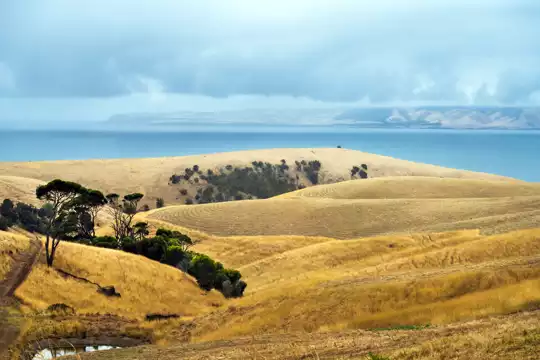
Country photo of Australia

We 💚 feedbackFinal thoughts on visiting Canberra

Canberra suits curious travelers who like museums, cycling and quiet evenings, and it will frustrate anyone chasing a party. I would give it two nights, hire a bike for the lakeshore, and time the War Memorial for the Last Post at closing.

✈️ When did I visit Australia?
On my trip to New Zealand in 1993, I had a short stop in Australia as well.

✍️ Help improve this page!
The information on this page is based on my own backpacking experience in Australia, supplemented with up-to-date research and feedback from other travelers. Travel details can change, so if you notice anything outdated or incomplete, feel free to let me know.


🙋‍♂️ Give feedback

👋 Meet the founderWho’s Behind Take Your Backpack?

Johan, backpacker and founder of TakeYourBackpackHi, I’m Johan (Netherlands 🇳🇱), the creator of TakeYourBackpack. Over the past 3 decades, I’ve backpacked through 90+ countries across six continents, gaining extensive experience with independent travel, long-term trips, and overland routes.

This site is built on a combination of firsthand travel experience and carefully curated insights from other backpackers. Many guides are based on places I’ve personally visited, while others bring together tips, observations, and practical advice shared by trusted travelers I’ve met along the way.

The goal is to provide realistic, experience-driven guidance — not generic itineraries — so you can explore destinations with better context, clearer expectations, and more confidence.