×

Australia🇦🇺 | regionsCoonawarraTerra rossa soil, cabernet cellar doors, Penola cottages, one flat road | things to do and best time to go

Explore Barossa ValleyExplore Eyre Peninsula

Backpacking in Coonawarra
👀 For curious travelersregion ranked #16
By Johan Kruseman 🇳🇱 | Updated October 15, 2026

Whether to bring a designated driver or hire one decides how your Coonawarra days go, because the cellar doors sit along one flat road and nobody walks between them gracefully. The region lies in the south-east of South Australia, in Australia, near the Victorian border. I asked a cellar-door host which red to buy, and she poured me three, then said the best one was whichever I finished first. The red-brown terra rossa soil stripe is tiny, so you cover it quickly. Book tastings ahead, since small estates often close early.

Discover everything you want to know in the 📖 Australia Travel Guide.


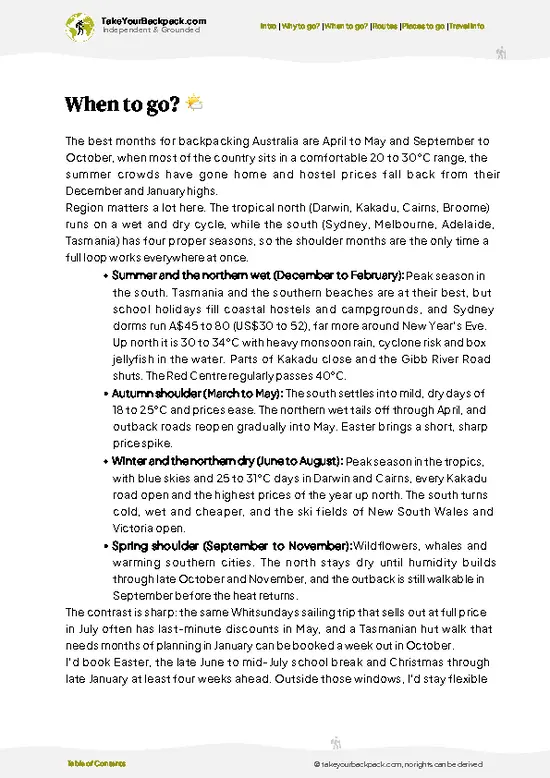
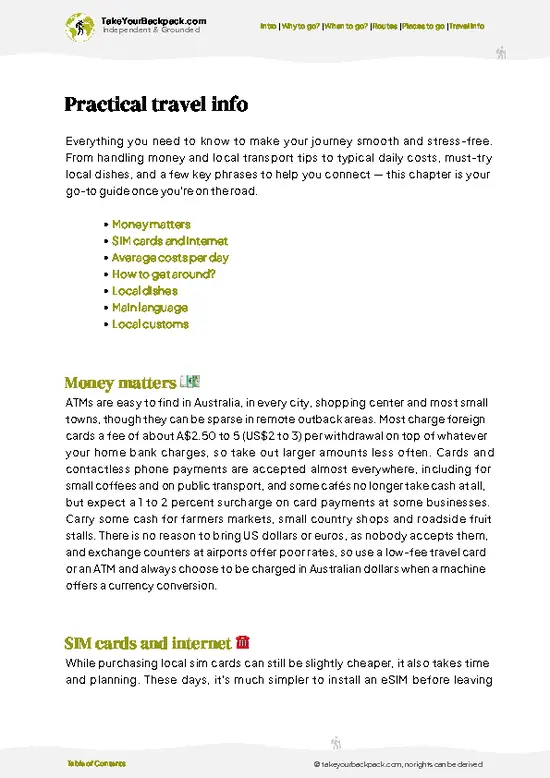
example page 0 from our offline Travel Guide for Australia
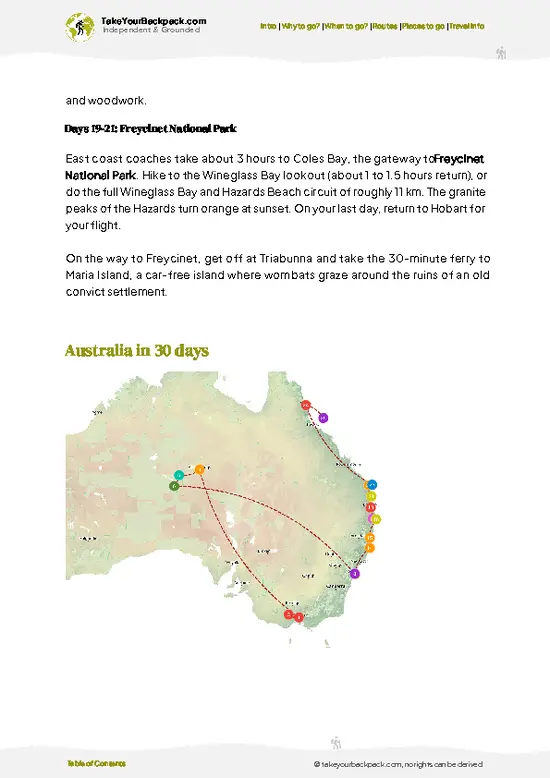
example page 1 from our offline Travel Guide for Australia
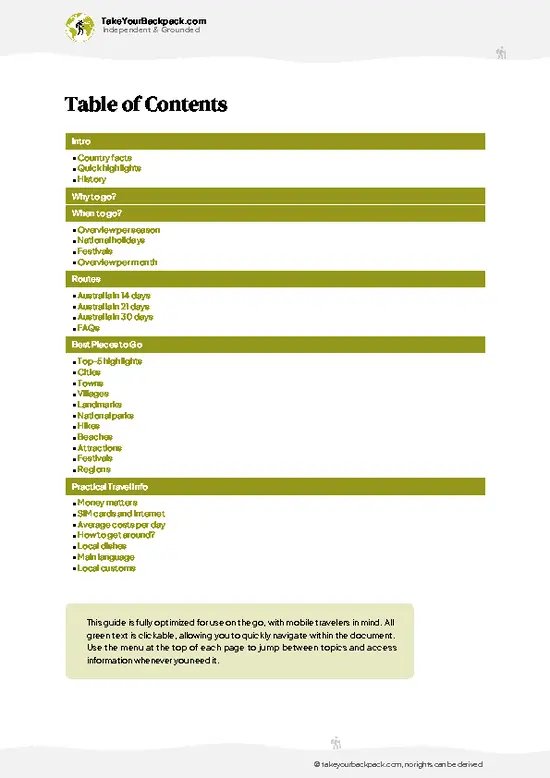
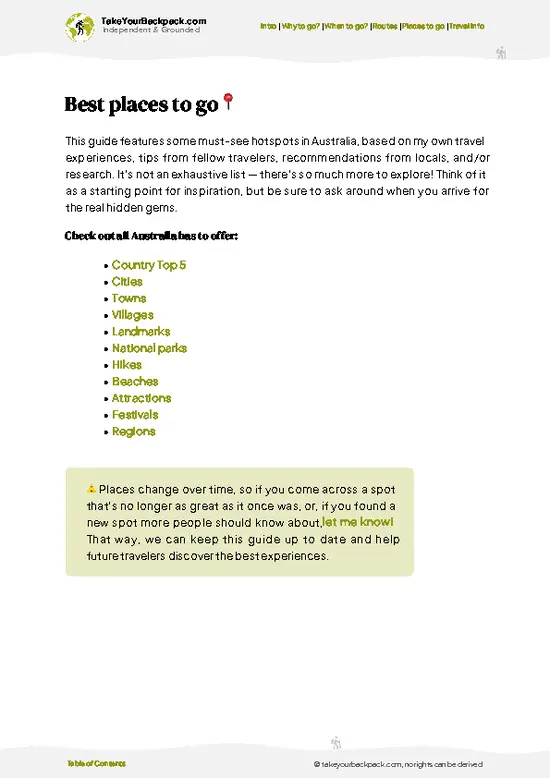
example page 2 from our offline Travel Guide for Australia
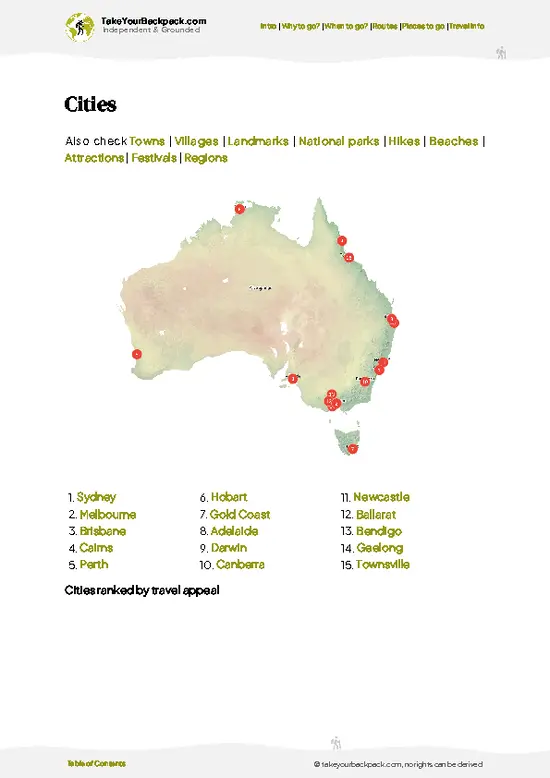
example page 3 from our offline Travel Guide for Australia
example page 4 from our offline Travel Guide for Australia
example page 5 from our offline Travel Guide for Australia
example page 6 from our offline Travel Guide for Australia
example page 7 from our offline Travel Guide for Australia
Loading the map 🌍
CLICK TO FILTER
cities
towns
villages
landmarks
national parks
hikes
beaches
attractions
festivals
regions
SHOW COUNTRY’S BESTSHOW ALL

✨ Why go?
Ranked #16 region in Australia
What sets this place apart

Coonawarra packs its whole appeal into a 15-kilometer strip of terra rossa soil, so you can taste cabernet sauvignon from a dozen estates without repacking your bag. A bicycle or a short tour covers the main road, and the pace suits slow travel. Add the Penola village for pubs, galleries and Mary MacKillop history, and you get wine and heritage on one flat loop. Limestone Coast caves and sinkholes sit close, so a wine-soaked morning can turn into a cave or swim afternoon without changing base.

💡 HighlightsThe experiences that define the visit

  1. Wynns Coonawarra Estate: the region’s oldest big name, with a 19th-century stone winery and a tasting room built around the cabernet that put the area on the map.
  2. Penley Estate: a polished cellar door with a clear focus on structured reds, handy for comparing styles side by side.
  3. Katnook Estate: a historic woolshed-era property pouring single-vineyard cabernet and sauvignon blanc.
  4. Zema Estate: a family-run cellar door where the owners often pour themselves, a friendly low-key stop.
  5. Majella Wines: a family estate known for its Malleea blend and relaxed tastings among old vines.
  6. Mary MacKillop Penola Centre: exhibits on Australia’s first saint, who taught in Penola, in a small heritage-listed set of buildings.
  7. Petticoat Lane, Penola: a lane of 1850s cottages, one of the best-preserved streets in the
… read more 👉
  1. Wynns Coonawarra Estate: the region’s oldest big name, with a 19th-century stone winery and a tasting room built around the cabernet that put the area on the map.
  2. Penley Estate: a polished cellar door with a clear focus on structured reds, handy for comparing styles side by side.
  3. Katnook Estate: a historic woolshed-era property pouring single-vineyard cabernet and sauvignon blanc.
  4. Zema Estate: a family-run cellar door where the owners often pour themselves, a friendly low-key stop.
  5. Majella Wines: a family estate known for its Malleea blend and relaxed tastings among old vines.
  6. Mary MacKillop Penola Centre: exhibits on Australia’s first saint, who taught in Penola, in a small heritage-listed set of buildings.
  7. Petticoat Lane, Penola: a lane of 1850s cottages, one of the best-preserved streets in the region.
  8. John Riddoch Centre: a local history and art space in Penola, rarely crowded and good for rainy hours.
  9. Yallum Park: a Victorian-era homestead, a quiet detour for architecture lovers.
  10. Coonawarra Wine Region Visitor Information: a practical stop for tasting maps and cycle route tips.
You can see the main highlights in two relaxed days.
Spotted a mistake or missing something? Contact us.

⌛️ 5 days5-day itinerary for Coonawarra

A slow cellar-door day opens the trip, because without a car the region runs on bikes and booked drivers.
Day 1: Coonawarra: Start at Wynns and work north along the main road, ending at Majella. Distances are short, so the day is about pacing your tastings rather than moving.
Day 2: Penola: Swap wine for heritage. Walk Petticoat Lane, visit the Mary MacKillop Penola Centre, and have lunch in the village. Walking beats driving here.
Day 3: Katnook and Zema: Return for the smaller estates you skipped, when cellar doors are quieter and hosts have time to talk.
Day 4: Yallum Park: A short drive for a homestead visit, which adds a historic angle without upsetting the plan.
Day 5: Detour to a Limestone Coast sinkhole: Spend your last day on a short drive to a local cave or sinkhole, a cool counterpoint … read more 👉
A slow cellar-door day opens the trip, because without a car the region runs on bikes and booked drivers.
Day 1: Coonawarra: Start at Wynns and work north along the main road, ending at Majella. Distances are short, so the day is about pacing your tastings rather than moving.
Day 2: Penola: Swap wine for heritage. Walk Petticoat Lane, visit the Mary MacKillop Penola Centre, and have lunch in the village. Walking beats driving here.
Day 3: Katnook and Zema: Return for the smaller estates you skipped, when cellar doors are quieter and hosts have time to talk.
Day 4: Yallum Park: A short drive for a homestead visit, which adds a historic angle without upsetting the plan.
Day 5: Detour to a Limestone Coast sinkhole: Spend your last day on a short drive to a local cave or sinkhole, a cool counterpoint to the vines.
If I had to keep one day, I would keep Day 2, because Penola gives the wine its human context.

🌤️ When to go?When to go for the best experience

  • Autumn (Mar to May): Days of 15 to 24°C (59 to 75°F) suit cycling the vineyards, and the harvest brings cellar-door buzz and higher accommodation rates.
  • Winter (Jun to Aug): Cool and wet, 4 to 14°C (39 to 57°F), with daylight of about 10 hours. Cabernet suits the fireside weather, rooms are cheaper and crowds are thin.
  • Spring (Sep to Nov): Mild, 9 to 21°C (48 to 70°F), with green vines and fewer visitors.
  • Summer (Dec to Feb): Dry and hot, often 28 to 35°C (82 to 95°F), with long light past 8:30 pm.
Book weekends early for the Cabernet Celebration in October.

source: climatestotravel.comJANJanuary: good for travelingFEBFebruary: good for travelingMARMarch: good for travelingAPRApril: highly recommended for travelingMAYMay: highly recommended for travelingJUNJune: good for travelingJULJuly: fair for travelingAUGAugust: fair for travelingSEPSeptember: excellent for travelingOCTOctober: excellent for travelingNOVNovember: highly recommended for travelingDECDecember: good for traveling
when-to-go

✈️ The backpacker research shortcutAustralia Travel Guide

An offline-friendly backpacking guide with optimized travel routes, ranked highlights, transport advice, and the best areas to stay.
example page 0 from our offline Travel Guide for Australia
example page 1 from our offline Travel Guide for Australia
example page 2 from our offline Travel Guide for Australia
example page 3 from our offline Travel Guide for Australia
example page 4 from our offline Travel Guide for Australia
example page 5 from our offline Travel Guide for Australia
example page 6 from our offline Travel Guide for Australia
example page 7 from our offline Travel Guide for Australia
The digital guide (414 pages) contains:
✅ 143 highlights, ranked by travel appeal
✅ Optimized 14, 21 & 30-day travel routes
✅ Cities, national parks, landmarks, beaches
✅ How to get around
✅ Offline-friendly for travel without Wi-Fi
👉 Click to see all 30+ guide features

📅 Plan smarter in minutes, not weeks
✅ Month by month travel advice
✅ Festivals & national holidays
✅ Budget expectations

🗺️ Go to the right places, skip the overrated ones
✅ Honest pros & cons of destinations
✅ Top hikes, parks & viewpoints
✅ Lesser-known places most travelers miss
✅ Clear “worth it vs skip it” guidance

🛏️ Travel smoothly without rookie mistakes
✅ Best areas to stay
✅ Transport systems explained simply
✅ Common scams & safety advice
✅ SIM cards, money & practical tips

🌍 Understand the country, not just visit it
✅ Culture & traditions
✅ Local customs
✅ Festivals worth planning around
✅ Traveler-friendly historical context
✅ Insights that make places more meaningful

📱 Built for real travel conditions
✅ Fully downloadable PDF
✅ Works completely offline
✅ Optimized for phone use
✅ Useful in remote areas & buses
✅ Everything in one place
Stop searching, start planning
Get instant access to your full guide. 30‑day money-back guarantee.
+ Add another guide for just

By proceeding you agree to our terms.
Sent to your inbox immediately after payment • 100% Secure Checkout
Best Backpacking Travel Advisor 2025 tourism awardBest Backpacking
Travel Advisor
2025
What others say about Take Your Backpack Guides:
⭐⭐⭐⭐⭐
Fantastic, amazing amount of information!
⭐⭐⭐⭐⭐
My goodness this is amazing, it's what I've been looking for hats off too you!
⭐⭐⭐⭐⭐
I think this is absolutely BRILLIANT
⭐⭐⭐⭐
Very complete and informative. It's still missing places, but I gotta to commend you
⭐⭐⭐⭐⭐
This is truly amazing, thank you, can't wait to explore it with my kids!
⭐⭐⭐⭐⭐
Awesome resource, thank you!
⭐⭐⭐⭐⭐
This is amazing! Can't wait to explore the ones I haven't seen
⭐⭐⭐⭐
I love this! Well done, great idea.
⭐⭐⭐⭐⭐
Thanks for taking the time to make this gem!
⭐⭐⭐⭐⭐
This might be the best website I've ever seen.
⭐⭐⭐⭐⭐
Congratulations, and thank you so much for your work; it's incredibly valuable.
⭐⭐⭐⭐
In all seriousness I think you did a great job pointing out the important spots
⭐⭐⭐⭐⭐
10/10 very good
⭐⭐⭐⭐⭐
As someone who's only just starting to visit regularly this is awesome, thank you.
⭐⭐⭐⭐
Thank you very much! I'm going to visit my dad, it's going to be very useful!
⭐⭐⭐⭐⭐
This is really cool! We'll be travelling for the first time and this definitely come in handy.
⭐⭐⭐⭐⭐
You are now our minister of culture, congratulations 👨‍💼
⭐⭐⭐⭐⭐
Just wanted to tell you that this is a pearl! Going to follow your recommendations.
⭐⭐⭐⭐⭐
This is so cool. I'll definitely be using the resource for my travels soon.
⭐⭐⭐⭐⭐
This is very impressive! Good work.
⭐⭐⭐⭐⭐
This is an amazing and informative site. Very well done!

🛏️ Where to stay?How to pick the right area

Penola is the town to stay in, a quiet place about 10 km from the main vineyards, and it has the best mix of budget beds, pubs and cafés. Its sandstone streets and the old courthouse square make for easy evening strolls, and solo travelers meet others at the pub or the bakery in the morning. Staying here also keeps you close to Coonawarra’s cellar doors by bike or short drive. Mount Gambier, about 45 minutes south, is the bigger base. It has more backpacker-friendly hostels, supermarkets, and the Blue Lake and sinkholes, so it suits those watching their budget or arriving by bus. Naracoorte, an hour north, works if you plan to add the caves.

🚌 Getting aroundGetting around like a local

A taxi or rideshare is rare here, and if you can find one, fares run about A$2.50 to 3 per kilometer. Most backpackers base themselves in Penola and cycle the flat roads between cellar doors, or join a winery tour. Reliability depends on your planning, because nothing here runs on impulse.
  • Bicycle: Hire costs about A$30 to 50 a day, and the pan-flat 10 km run along Riddoch Highway lets you roll up to a tasting room with the smugness of a person who did not drive.
  • Winery tour: Small-group tours from Penola or Mount Gambier cost roughly A$100 to 200 per person. Someone else drives, and you get to taste the famous terra rossa reds without a designated-driver sulk.
  • Taxi or local driver: Book ahead, as there are only a few cars, and expect A$40 to 80 for hops between towns. You get a chatty local
… read more 👉
A taxi or rideshare is rare here, and if you can find one, fares run about A$2.50 to 3 per kilometer. Most backpackers base themselves in Penola and cycle the flat roads between cellar doors, or join a winery tour. Reliability depends on your planning, because nothing here runs on impulse.
  • Bicycle: Hire costs about A$30 to 50 a day, and the pan-flat 10 km run along Riddoch Highway lets you roll up to a tasting room with the smugness of a person who did not drive.
  • Winery tour: Small-group tours from Penola or Mount Gambier cost roughly A$100 to 200 per person. Someone else drives, and you get to taste the famous terra rossa reds without a designated-driver sulk.
  • Taxi or local driver: Book ahead, as there are only a few cars, and expect A$40 to 80 for hops between towns. You get a chatty local who knows which cellar door pours the good stuff.
  • Bus and car hire: Coaches reach Mount Gambier (about 45 minutes away) from Adelaide in 6 to 7 hours, and rental cars start near A$50 a day from there. You get the freedom to reach the Naracoorte Caves, an hour north.
Hire your bike the evening before, since the shops are not always open early, and tasting rooms often close by 5 pm.

🍲 FoodLocal Cuisine & Drinks

Coonawarra’s story is Cabernet Sauvignon, grown on red terra rossa soil and poured in cellar doors where a tasting often costs A$5 to 15. Expect deep blackcurrant, mint and a dry, grippy finish. Local lamb, southern rock lobster and beef from the Limestone Coast show up on pub and café menus, often with a glass of red alongside. In Penola, eat at bakeries, pubs and casual cafés, where meals run A$18 to 35. A pie and a coffee make a cheap lunch between cellars. Tasting rooms close early and book up on weekends, so reserve ahead, and spit buckets are normal, so no one judges you for using one.

FAQTraveler FAQ

Two days is enough for Coonawarra itself, and three if you add Penola and the Naracoorte Caves. One day covers six to eight cellar doors by bike along the 15 km wine strip. Add a day for Mount Gambier’s Blue Lake, about 45 minutes south.
Cycling is the easiest way, with hire at about A$30 to 50 a day on flat roads between cellar doors. Winery tours from Penola or Mount Gambier cost roughly A$100 to 200 per person, and local drivers handle short transfers. Coaches run to Mount Gambier from Adelaide in 6 to 7 hours, but there is no public transport between vineyards.
Coonawarra is known for Cabernet Sauvignon grown on a thin strip of terra rossa soil about 15 km long. More than 20 wineries sit along that strip, many with cellar doors open daily. Nearby, Penola is known for its heritage sandstone buildings and for Mary MacKillop’s early teaching years.
⚠️ Things can change over time, so always validate details locally before you go.

Other Australian regions near Coonawarra

Explore more nearby:

  • Fleurieu Peninsula—McLaren Vale Shiraz, penguin causeway, ferry port, quiet coves| 293 km away
  • Barossa Valley—Fortified wine cellars, Lutheran villages, Saturday market, vineyard bike path| 354 km away
  • Kangaroo Island—Sea lion beaches, wind-carved boulders, koala walks, ferry crossing| 363 km away

💡 Not sure where to go next?
Create a personalized itinerary for Australia including Coonawarra and the places that fit your trip.

Generate my itinerary

👉 Discover all regions

Or checkout all Australia has to offer (think cities, towns, villages, national parks, hikes, beaches, festivals)
Country photo of Australia

We 💚 feedbackIs it worth it?

Coonawarra suits couples, food lovers and slow-paced travelers who like talking with winemakers more than ticking off sights. Nightlife is thin and you need a plan for getting around. I would book a driver for one afternoon and spend the rest on a bike.

✈️ When did I visit Australia?
On my trip to New Zealand in 1993, I had a short stop in Australia as well.

✍️ Help improve this page!
The information on this page is based on my own backpacking experience in Australia, supplemented with up-to-date research and feedback from other travelers. Travel details can change, so if you notice anything outdated or incomplete, feel free to let me know.


🙋‍♂️ Give feedback

👋 Meet the founderWho’s Behind Take Your Backpack?

Johan, backpacker and founder of TakeYourBackpackHi, I’m Johan (Netherlands 🇳🇱), the creator of TakeYourBackpack. Over the past 3 decades, I’ve backpacked through 90+ countries across six continents, gaining extensive experience with independent travel, long-term trips, and overland routes.

This site is built on a combination of firsthand travel experience and carefully curated insights from other backpackers. Many guides are based on places I’ve personally visited, while others bring together tips, observations, and practical advice shared by trusted travelers I’ve met along the way.

The goal is to provide realistic, experience-driven guidance — not generic itineraries — so you can explore destinations with better context, clearer expectations, and more confidence.