×

Australia🇦🇺 | regionsKangaroo IslandSea lion beaches, wind-carved boulders, koala walks, ferry crossing | things to do and best time to go

Explore Greater Blue Mountains AreaExplore Kimberley

Backpacking in Kangaroo Island
🌟 Highlightregion ranked #4
By Johan Kruseman 🇳🇱 | Updated October 15, 2026

Kangaroo Island is best known for wildlife that ignores you: Australian sea lions snoozing on the sand, koalas wedged into eucalyptus forks, wallabies grazing at dusk. It sits off the coast of South Australia, southwest of Adelaide, in Australia’s south. The island is much bigger than the map suggests and public buses are close to nonexistent, so experienced travelers split a rental car or join a small-group tour rather than hope a lift appears. The ferry car deck fills up, so they book the vehicle space first and sort the beds second. I crossed on the ferry from the mainland, and when a pod of dolphins showed up alongside, every passenger abandoned their coffee and crowded the windows, which finally shortened the café queue. Wildlife fans and slow road-trippers will love it. Anyone chasing nightlife or a tight budget will not.

Discover everything you want to know in the 📖 Australia Travel Guide.


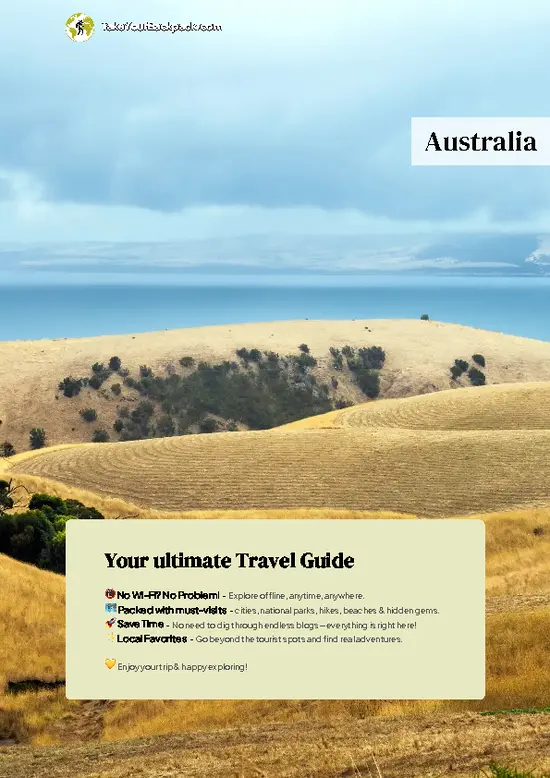
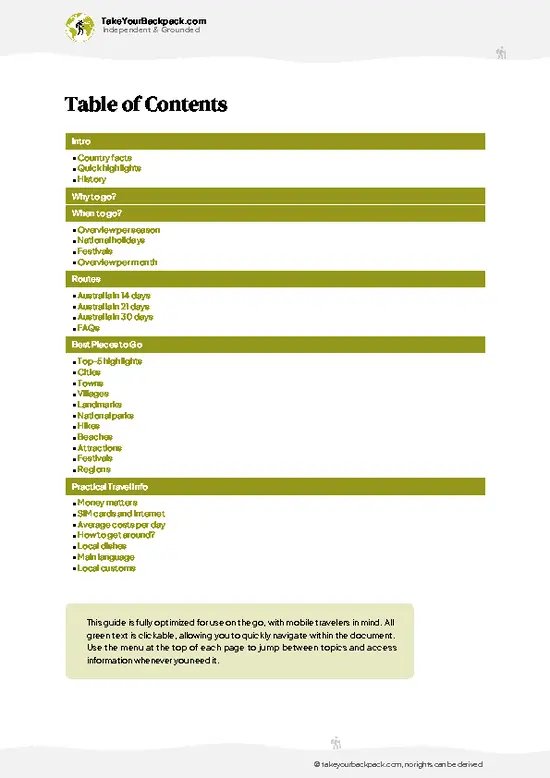
example page 0 from our offline Travel Guide for Australia
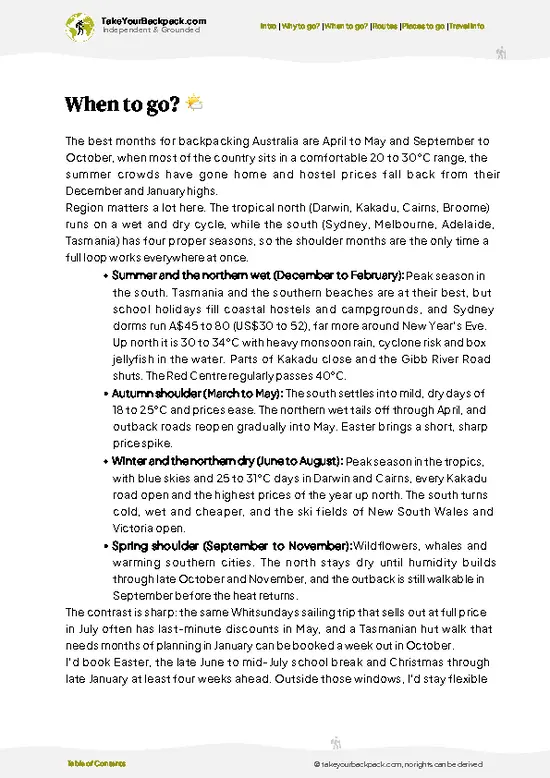
example page 1 from our offline Travel Guide for Australia
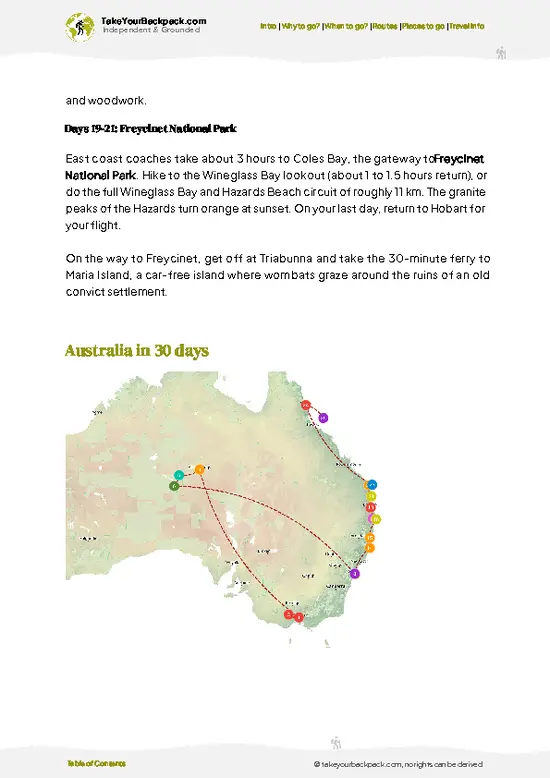
example page 2 from our offline Travel Guide for Australia
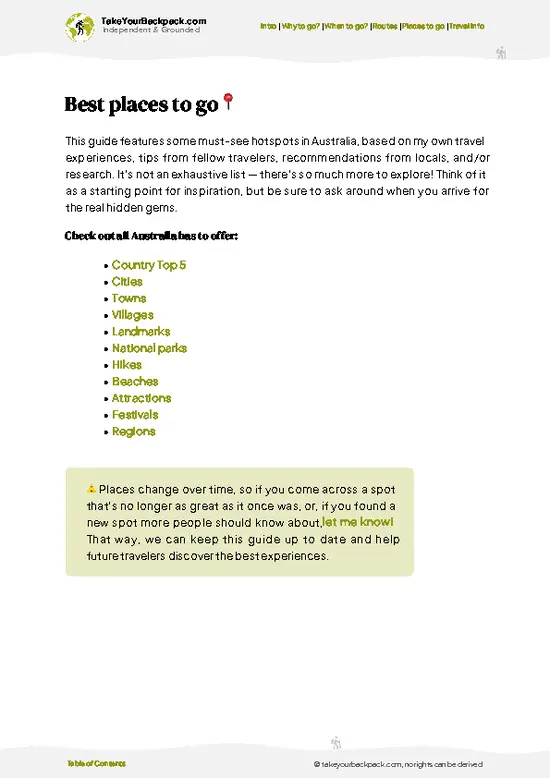
example page 3 from our offline Travel Guide for Australia
example page 4 from our offline Travel Guide for Australia
example page 5 from our offline Travel Guide for Australia
example page 6 from our offline Travel Guide for Australia
example page 7 from our offline Travel Guide for Australia
Loading the map 🌍
CLICK TO FILTER
cities
towns
villages
landmarks
national parks
hikes
beaches
attractions
festivals
regions
SHOW COUNTRY’S BESTSHOW ALL

✨ Why go?
Ranked #4 region in Australia
What makes it a must-see region

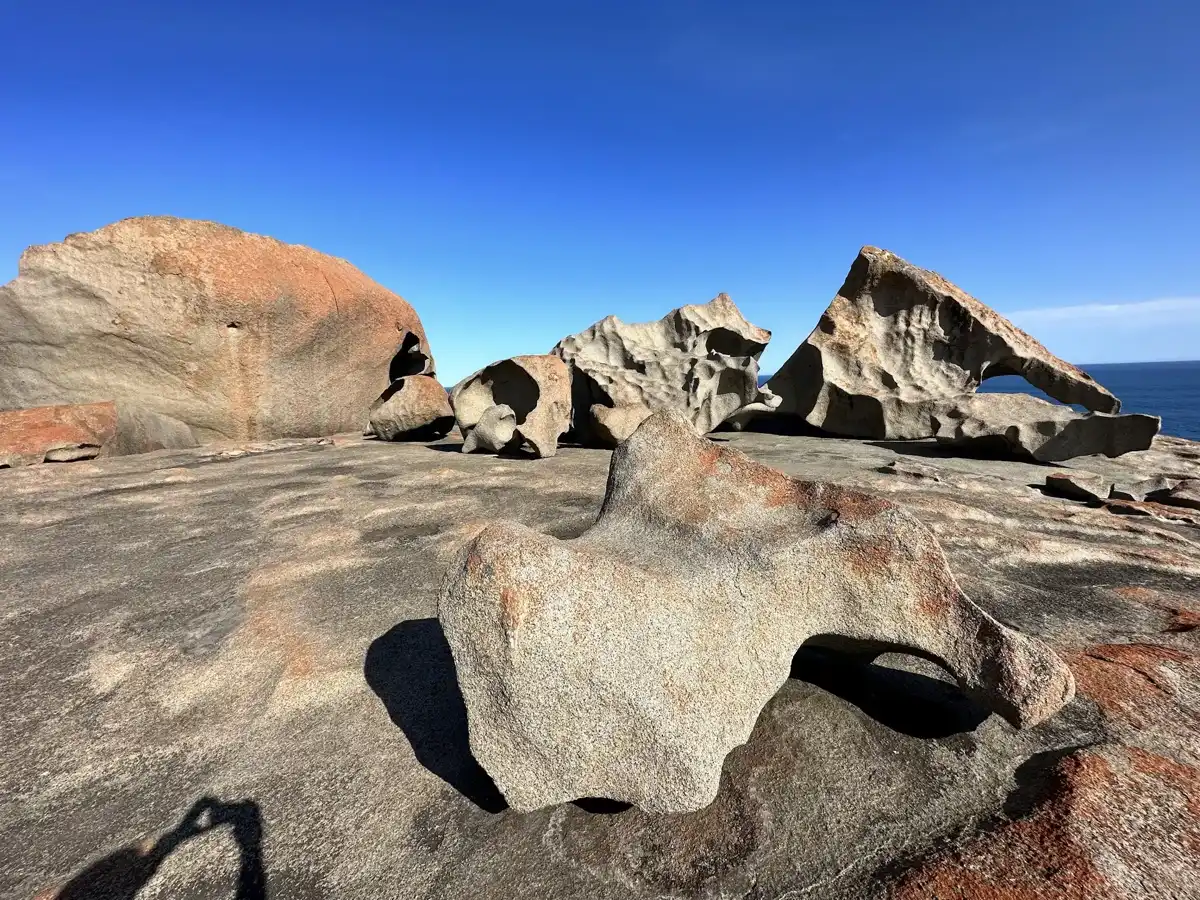
Kangaroo Island packs a lot of Australia into one landmass, so you unpack once and stay put. Within a single day you can slide down the dunes at Little Sahara, walk among sea lions on the sand at Seal Bay, and stand under the weathered granite boulders of Remarkable Rocks in Flinders Chase National Park. On the mainland, those three experiences would mean three different regions and a lot of driving.

The island also suits slow travel because wildlife is the main event, not a side show. Koalas sit in the eucalypts around Hanson Bay, echidnas shuffle across gravel roads, and a few little penguins still come ashore at dusk near Penneshaw. You do not need a tour to see most of it, just a few unhurried days.

The practical reason to commit is the sheer size, about 150 kilometers end to end. A … read more 👉
Kangaroo Island packs a lot of Australia into one landmass, so you unpack once and stay put. Within a single day you can slide down the dunes at Little Sahara, walk among sea lions on the sand at Seal Bay, and stand under the weathered granite boulders of Remarkable Rocks in Flinders Chase National Park. On the mainland, those three experiences would mean three different regions and a lot of driving.

The island also suits slow travel because wildlife is the main event, not a side show. Koalas sit in the eucalypts around Hanson Bay, echidnas shuffle across gravel roads, and a few little penguins still come ashore at dusk near Penneshaw. You do not need a tour to see most of it, just a few unhurried days.

The practical reason to commit is the sheer size, about 150 kilometers end to end. A rental car gives you the freedom to chase sunsets and beaches at your own pace, and the sealed main roads make that easy. Add farm gate stops for honey, oysters and gin, and the island rewards anyone who treats it as a place to linger, not a checklist to tick off.

💡 HighlightsDon't-miss highlights and experiences

  1. Remarkable Rocks: huge granite boulders sculpted by wind and lichen on a dome above the Southern Ocean in Flinders Chase National Park. Go when the light is low and the orange lichen glows.
  2. Admirals Arch: a natural rock arch with stalactites, where New Zealand fur seals loll on the rocks below the boardwalk near Cape du Couedic.
  3. Seal Bay Conservation Park: a guided walk puts you on the beach among endangered Australian sea lions, one of few places in the world you can do this. Book the guided beach tour in advance.
  4. Little Sahara: dunes of pale sand near the south coast. Sandboards can be rented on site and the climb is steeper than it looks.
  5. Vivonne Bay: a long, squeaky white beach with a jetty, often almost empty, and a good place to swim in calm conditions.
  6. Kelly Hill Caves: a guided cave tour
… read more 👉
  1. Remarkable Rocks: huge granite boulders sculpted by wind and lichen on a dome above the Southern Ocean in Flinders Chase National Park. Go when the light is low and the orange lichen glows.
  2. Admirals Arch: a natural rock arch with stalactites, where New Zealand fur seals loll on the rocks below the boardwalk near Cape du Couedic.
  3. Seal Bay Conservation Park: a guided walk puts you on the beach among endangered Australian sea lions, one of few places in the world you can do this. Book the guided beach tour in advance.
  4. Little Sahara: dunes of pale sand near the south coast. Sandboards can be rented on site and the climb is steeper than it looks.
  5. Vivonne Bay: a long, squeaky white beach with a jetty, often almost empty, and a good place to swim in calm conditions.
  6. Kelly Hill Caves: a guided cave tour through limestone chambers in Kelly Hill Conservation Park, where the formations are lit as you walk.
  7. Hanson Bay Koala Walk: a short bush trail on private land where koalas sit in the trees close enough to photograph. Few tour groups come here.
  8. Stokes Bay: reach this north-coast beach through a narrow rock tunnel from the car park, which opens onto a sheltered tidal pool good for kids and tired legs.
  9. Cape Willoughby Lighthouse: the oldest lighthouse in South Australia, on the island’s eastern tip, with a cliffside tour and wide ocean views.
  10. Pennington Bay: a surf beach on the south coast with a lookout above the swell, loved by locals and usually skipped by day visitors.
Seeing all of it properly takes four to five days with a car.
Spotted a mistake or missing something? Contact us.

Things to do around Kangaroo Island

Ratings based on Tripadvisor reviews. When you book through this link, you support our work at no extra cost to you.

⌛️ 5 daysWhat you can realistically do in a week

A ferry-and-driving day opens this loop, so treat the first morning as a logistics day. The island has almost no public transport, so a rental car or a small-group tour sets the whole pace, and everything below assumes you have wheels.

Day 1: Penneshaw: Land on the ferry, pick up the car, and settle in the east. Walk out to Cape Willoughby Lighthouse, then return at dusk for the little penguins coming ashore. Starting east means you save the long western drive for when you’re rested.

Day 2: Seal Bay: Head across the island to the south coast. Take the guided beach walk with the sea lions first while it is quiet, then slide down Little Sahara, and finish with a swim at Vivonne Bay. These three sit close together, which is why this is the easy day.

Days 3 and 4: Flinders Chase: The park is … read more 👉
A ferry-and-driving day opens this loop, so treat the first morning as a logistics day. The island has almost no public transport, so a rental car or a small-group tour sets the whole pace, and everything below assumes you have wheels.

Day 1: Penneshaw: Land on the ferry, pick up the car, and settle in the east. Walk out to Cape Willoughby Lighthouse, then return at dusk for the little penguins coming ashore. Starting east means you save the long western drive for when you’re rested.

Day 2: Seal Bay: Head across the island to the south coast. Take the guided beach walk with the sea lions first while it is quiet, then slide down Little Sahara, and finish with a swim at Vivonne Bay. These three sit close together, which is why this is the easy day.

Days 3 and 4: Flinders Chase: The park is the island’s western anchor, so give it two days. Do Remarkable Rocks and Admirals Arch on one, then Kelly Hill Caves and the Hanson Bay Koala Walk on the other. Sleep nearby so you can see the animals at dusk, when kangaroos and wallabies come out around the campsites.

Day 5: Stokes Bay: Drive back along the north coast for the detour: walk through the rock tunnel to the tidal pool at Stokes Bay and eat lunch nearby. It adds a quiet beach without breaking the route to the ferry.

If I had to keep one day, it would be the second day at Flinders Chase, when the cave and the koalas make the long trip west feel worthwhile.

🌤️ When to go?Seasonal considerations and timing

Kangaroo Island is at its most comfortable from October to April, when days run warm and dry enough for beaches and long hikes.
  • Summer (Dec to Feb): Highs of 22 to 27°C (72 to 81°F), with up to 14 hours of daylight. Ferries, rental cars and beds sell out, and prices climb sharply around Christmas and January. Sea lions and fur seals are easy to see, and bushfire risk is real on hot days.
  • Autumn (Mar to May): Highs of 18 to 23°C (64 to 73°F), calm seas, thinner crowds and lower rates. Good for hiking and the island’s produce trail.
  • Winter (Jun to Aug): Highs of 14 to 16°C (57 to 61°F), lows near 7°C (45°F), about 10 hours of daylight. Rain and wind are common, some tours and eateries close, but accommodation is cheapest and the coast is empty.
  • Spring (Sep to Nov): Highs of 16 to 21°C (61 to 70°F).
… read more 👉
Kangaroo Island is at its most comfortable from October to April, when days run warm and dry enough for beaches and long hikes.
  • Summer (Dec to Feb): Highs of 22 to 27°C (72 to 81°F), with up to 14 hours of daylight. Ferries, rental cars and beds sell out, and prices climb sharply around Christmas and January. Sea lions and fur seals are easy to see, and bushfire risk is real on hot days.
  • Autumn (Mar to May): Highs of 18 to 23°C (64 to 73°F), calm seas, thinner crowds and lower rates. Good for hiking and the island’s produce trail.
  • Winter (Jun to Aug): Highs of 14 to 16°C (57 to 61°F), lows near 7°C (45°F), about 10 hours of daylight. Rain and wind are common, some tours and eateries close, but accommodation is cheapest and the coast is empty.
  • Spring (Sep to Nov): Highs of 16 to 21°C (61 to 70°F). Wildflowers bloom, and koalas and echidnas are active. Prices rise with the school holidays in late September.
Book the ferry and a car at least a month ahead for any January or Easter trip.


source: climatestotravel.comJANJanuary: highly recommended for travelingFEBFebruary: highly recommended for travelingMARMarch: highly recommended for travelingAPRApril: good for travelingMAYMay: fair for travelingJUNJune: fair for travelingJULJuly: below average for travelingAUGAugust: below average for travelingSEPSeptember: fair for travelingOCTOctober: highly recommended for travelingNOVNovember: excellent for travelingDECDecember: highly recommended for traveling
australia-region-kangaroo-island
© Google | Davide Baldini

✈️ The backpacker research shortcutAustralia Travel Guide

An offline-friendly backpacking guide with optimized travel routes, ranked highlights, transport advice, and the best areas to stay.
example page 0 from our offline Travel Guide for Australia
example page 1 from our offline Travel Guide for Australia
example page 2 from our offline Travel Guide for Australia
example page 3 from our offline Travel Guide for Australia
example page 4 from our offline Travel Guide for Australia
example page 5 from our offline Travel Guide for Australia
example page 6 from our offline Travel Guide for Australia
example page 7 from our offline Travel Guide for Australia
The digital guide (414 pages) contains:
✅ 143 highlights, ranked by travel appeal
✅ Optimized 14, 21 & 30-day travel routes
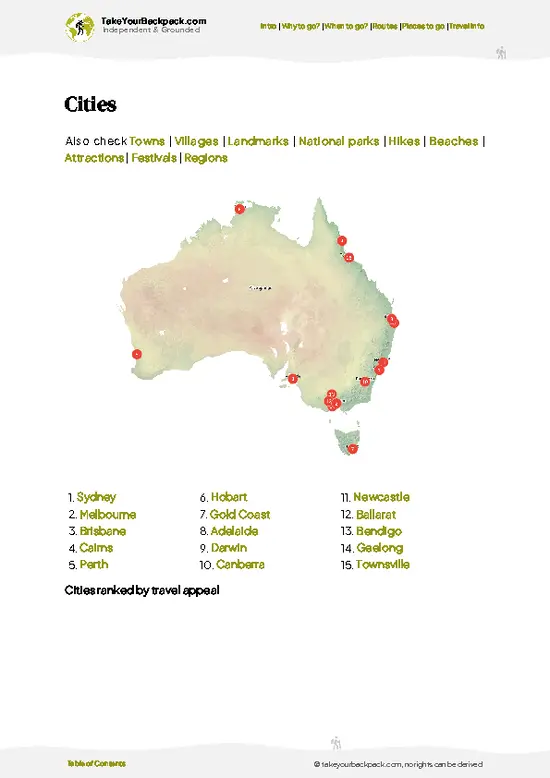
✅ Cities, national parks, landmarks, beaches
✅ How to get around
✅ Offline-friendly for travel without Wi-Fi
👉 Click to see all 30+ guide features

📅 Plan smarter in minutes, not weeks
✅ Month by month travel advice
✅ Festivals & national holidays
✅ Budget expectations

🗺️ Go to the right places, skip the overrated ones
✅ Honest pros & cons of destinations
✅ Top hikes, parks & viewpoints
✅ Lesser-known places most travelers miss
✅ Clear “worth it vs skip it” guidance

🛏️ Travel smoothly without rookie mistakes
✅ Best areas to stay
✅ Transport systems explained simply
✅ Common scams & safety advice
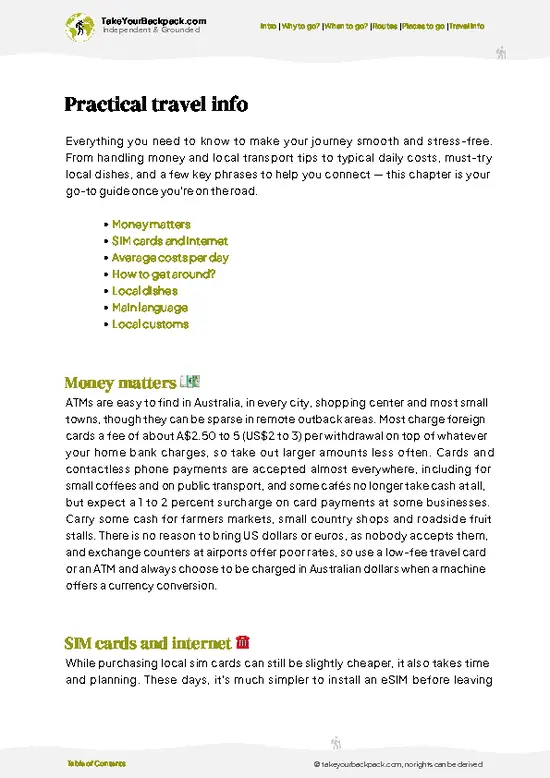
✅ SIM cards, money & practical tips

🌍 Understand the country, not just visit it
✅ Culture & traditions
✅ Local customs
✅ Festivals worth planning around
✅ Traveler-friendly historical context
✅ Insights that make places more meaningful

📱 Built for real travel conditions
✅ Fully downloadable PDF
✅ Works completely offline
✅ Optimized for phone use
✅ Useful in remote areas & buses
✅ Everything in one place
Stop searching, start planning
Get instant access to your full guide. 30‑day money-back guarantee.
+ Add another guide for just

By proceeding you agree to our terms.
Sent to your inbox immediately after payment • 100% Secure Checkout
Best Backpacking Travel Advisor 2025 tourism awardBest Backpacking
Travel Advisor
2025
What others say about Take Your Backpack Guides:
⭐⭐⭐⭐⭐
Fantastic, amazing amount of information!
⭐⭐⭐⭐⭐
My goodness this is amazing, it's what I've been looking for hats off too you!
⭐⭐⭐⭐⭐
I think this is absolutely BRILLIANT
⭐⭐⭐⭐
Very complete and informative. It's still missing places, but I gotta to commend you
⭐⭐⭐⭐⭐
This is truly amazing, thank you, can't wait to explore it with my kids!
⭐⭐⭐⭐⭐
Awesome resource, thank you!
⭐⭐⭐⭐⭐
This is amazing! Can't wait to explore the ones I haven't seen
⭐⭐⭐⭐
I love this! Well done, great idea.
⭐⭐⭐⭐⭐
Thanks for taking the time to make this gem!
⭐⭐⭐⭐⭐
This might be the best website I've ever seen.
⭐⭐⭐⭐⭐
Congratulations, and thank you so much for your work; it's incredibly valuable.
⭐⭐⭐⭐
In all seriousness I think you did a great job pointing out the important spots
⭐⭐⭐⭐⭐
10/10 very good
⭐⭐⭐⭐⭐
As someone who's only just starting to visit regularly this is awesome, thank you.
⭐⭐⭐⭐
Thank you very much! I'm going to visit my dad, it's going to be very useful!
⭐⭐⭐⭐⭐
This is really cool! We'll be travelling for the first time and this definitely come in handy.
⭐⭐⭐⭐⭐
You are now our minister of culture, congratulations 👨‍💼
⭐⭐⭐⭐⭐
Just wanted to tell you that this is a pearl! Going to follow your recommendations.
⭐⭐⭐⭐⭐
This is so cool. I'll definitely be using the resource for my travels soon.
⭐⭐⭐⭐⭐
This is very impressive! Good work.
⭐⭐⭐⭐⭐
This is an amazing and informative site. Very well done!

🛏️ Where to stay?Choosing the right base

Kingscote is the easiest base for backpackers, with the island’s only real supermarket, a pub, the main bus pickup points and the widest choice of budget beds. It is the best place to meet other travelers and arrange shared car hire or tours.
Penneshaw, on the Dudley Peninsula, works well if you arrive by ferry. It is small and friendly, with a beach where little penguins come ashore at dusk, and cafés and a bakery within walking distance. It is also the quietest of the main towns, so expect early nights rather than parties.
American River is a calm, bird-rich inlet between the two. It suits those … read more 👉
Kingscote is the easiest base for backpackers, with the island’s only real supermarket, a pub, the main bus pickup points and the widest choice of budget beds. It is the best place to meet other travelers and arrange shared car hire or tours.
Penneshaw, on the Dudley Peninsula, works well if you arrive by ferry. It is small and friendly, with a beach where little penguins come ashore at dusk, and cafés and a bakery within walking distance. It is also the quietest of the main towns, so expect early nights rather than parties.
American River is a calm, bird-rich inlet between the two. It suits those who want water views and a slower pace, though you will want a car for food and supplies.
For the west, Flinders Chase and Vivonne Bay have campgrounds and a few cabins. These put you close to Remarkable Rocks, Admirals Arch and Seal Bay at sunrise, before the day groups arrive. Nights here are properly dark, ideal for stargazing, though supplies are scarce and everything needs to be stocked before arrival. Budget about A$30 to 60 for a dorm bed or campsite and more in summer.

🚌 Getting aroundHow to get from A to B

The towns here are small enough to stroll, but nothing between them is. Kingscote, the main town, takes about 15 minutes to cross on foot, and Penneshaw and American River each have a main street you can finish before your coffee cools. Past that, the island is 155 km (96 miles) long, and the sights sit tens of kilometers apart.
This is why almost everyone drives. Public transport barely exists, because about 5,000 residents cannot support a bus network. The smarter move is to accept that and share the cost of a vehicle rather than pay for separate tours.
  • Rental car: US$60 to 120 a day (roughly A$90 to 180), and the most practical choice. Fuel costs more than on the mainland because it arrives by ship, so fill up in Kingscote or Penneshaw rather than gambling on a remote pump. Book early, as
… read more 👉
The towns here are small enough to stroll, but nothing between them is. Kingscote, the main town, takes about 15 minutes to cross on foot, and Penneshaw and American River each have a main street you can finish before your coffee cools. Past that, the island is 155 km (96 miles) long, and the sights sit tens of kilometers apart.
This is why almost everyone drives. Public transport barely exists, because about 5,000 residents cannot support a bus network. The smarter move is to accept that and share the cost of a vehicle rather than pay for separate tours.
  • Rental car: US$60 to 120 a day (roughly A$90 to 180), and the most practical choice. Fuel costs more than on the mainland because it arrives by ship, so fill up in Kingscote or Penneshaw rather than gambling on a remote pump. Book early, as the fleet is small and sells out in summer.
  • Sealink ferry: Cape Jervis to Penneshaw takes about 45 minutes, with several sailings a day and a car fare of around A$300 to 400 return. Foot passengers pay far less, which suits anyone planning to join tours. Cars are cheaper to bring if you split them among four people.
  • Flights: Adelaide to Kingscote takes about 30 minutes. Fares of A$150 to 300 each way save time, and you can then rent a car on arrival and skip the ferry entirely.
  • Guided tours: Day tours from Kingscote or Penneshaw cost around A$150 to 300 and cover Seal Bay, Flinders Chase and Remarkable Rocks. They suit solo travelers without a car, though you trade away flexibility.
  • Hitching and cycling: Possible, but distances are long, shoulders are narrow and traffic is sparse. Hitching is slow, and cycling the main roads is only sensible for the very fit.
Drive carefully at dawn and dusk, when wallabies and kangaroos cross roads, and avoid unsealed roads in a standard rental, since most contracts exclude them.

🍲 FoodLocal Flavors for Backpackers

Kangaroo Island eats what it grows and catches. The signature is marron and King George whiting, sweet and fresh, usually pan-fried or crumbed. Local oysters from Cygnet River and rock lobster appear on blackboards in season. The island also produces Ligurian honey, one of the world’s last pure strains of Italian bees, with a floral, almost herbal sweetness. Try it spooned over yogurt or in ice cream.
For drinks, the island’s craft gin and cool-climate wines are poured at small cellar doors, and local beer pairs well with a pub meal. Tastings run from A$5 to 15.
Backpackers eat cheaply at Kingscote and Penneshaw bakeries, where pies and pastries cost A$6 to 10, and at pubs serving fish and chips for A$18 to 28. Roadside honesty boxes and farm gates sell eggs, olives and fruit. Cook for yourself … read more 👉
Kangaroo Island eats what it grows and catches. The signature is marron and King George whiting, sweet and fresh, usually pan-fried or crumbed. Local oysters from Cygnet River and rock lobster appear on blackboards in season. The island also produces Ligurian honey, one of the world’s last pure strains of Italian bees, with a floral, almost herbal sweetness. Try it spooned over yogurt or in ice cream.
For drinks, the island’s craft gin and cool-climate wines are poured at small cellar doors, and local beer pairs well with a pub meal. Tastings run from A$5 to 15.
Backpackers eat cheaply at Kingscote and Penneshaw bakeries, where pies and pastries cost A$6 to 10, and at pubs serving fish and chips for A$18 to 28. Roadside honesty boxes and farm gates sell eggs, olives and fruit. Cook for yourself when you can, as supermarket stock is pricier than on the mainland.
Many places close early, often by 8pm, and kitchens in quieter areas shut even sooner. Book dinner in summer, and carry snacks when exploring the west, where food stops are few.

FAQFrequently asked questions about Kangaroo Island

Three days is the practical minimum, and four lets you see everything without rushing. Spend one day around Kingscote and Seal Bay, another at Flinders Chase National Park for Remarkable Rocks and Admirals Arch, and a third on the Dudley Peninsula near Penneshaw. Driving from Penneshaw to Flinders Chase takes about two hours, so add a night in the west if you want sunrise there.
Without a car, you have two real choices: join a guided day tour or hire a driver, as there is no regular public bus network. Tours from Kingscote and Penneshaw cost around A$150 to 300 and cover the main sights such as Seal Bay and Flinders Chase. Cycling between nearby towns is possible, but the island is 155 km long, so it suits only the very fit.
Wildlife is the draw. Sea lions at Seal Bay, koalas, kangaroos, wallabies and echidnas all live here, and a few little penguins still come ashore at Penneshaw at dusk. Flinders Chase National Park holds the sculpted granite of Remarkable Rocks and the Admirals Arch fur seal colony. The island is also known for Ligurian honey, fresh seafood and boutique gin.
⚠️ Things can change over time, so always validate details locally before you go.

Other Australian regions near Kangaroo Island

Explore more nearby:

  • Fleurieu Peninsula—McLaren Vale Shiraz, penguin causeway, ferry port, quiet coves| 120 km away
  • Barossa Valley—Fortified wine cellars, Lutheran villages, Saturday market, vineyard bike path| 208 km away
  • Eyre Peninsula—Oyster farms, sea lion swims, Bight whales, granite outcrops| 238 km away

💡 Not sure where to go next?
Create a personalized itinerary for Australia including Kangaroo Island and the places that fit your trip.

Generate my itinerary

👉 Discover all regions

Or checkout all Australia has to offer (think cities, towns, villages, national parks, hikes, beaches, festivals)
Country photo of Australia

We 💚 feedbackSumming up the experience

The classic mistake is squeezing the island into one overnight stay, then spending most of it behind the wheel. I would give it at least three nights, book the sea lion tour early, and fill the tank and grab groceries whenever you pass a town, since the west gets remote.

✈️ When did I visit Australia?
On my trip to New Zealand in 1993, I had a short stop in Australia as well.

✍️ Help improve this page!
The information on this page is based on my own backpacking experience in Australia, supplemented with up-to-date research and feedback from other travelers. Travel details can change, so if you notice anything outdated or incomplete, feel free to let me know.


🙋‍♂️ Give feedback

👋 Meet the founderWho’s Behind Take Your Backpack?

Johan, backpacker and founder of TakeYourBackpackHi, I’m Johan (Netherlands 🇳🇱), the creator of TakeYourBackpack. Over the past 3 decades, I’ve backpacked through 90+ countries across six continents, gaining extensive experience with independent travel, long-term trips, and overland routes.

This site is built on a combination of firsthand travel experience and carefully curated insights from other backpackers. Many guides are based on places I’ve personally visited, while others bring together tips, observations, and practical advice shared by trusted travelers I’ve met along the way.

The goal is to provide realistic, experience-driven guidance — not generic itineraries — so you can explore destinations with better context, clearer expectations, and more confidence.