×

Australia🇦🇺 | beachesFour Mile BeachWallaga Lake entrance, unpatrolled surf, Camel Rock, Blue Pool | things to do and best time to go

Explore Bronte BeachExplore Burleigh Heads Beach

Backpacking in Four Mile Beach
👍 Recommendedbeach ranked #14
By Johan Kruseman 🇳🇱 | Updated October 15, 2026

Four Mile Beach runs south from Camel Rock, a short walk from the entrance to Wallaga Lake, so one outing gets you both ocean surf and calm lagoon water. It sits on the far south coast of New South Wales in Australia, a short drive from Bermagui. I got there on a dirt track after a kangaroo stood in the road and stared me down like a toll collector. The sand is clean, the crowds thin out fast outside school holidays, and there are no cafés on the beach, so you bring your own lunch. Swimming means reading the surf, which is unpatrolled and can be punchy. Bermagui has the cheap pies and the campgrounds. Unlike the rock-pool crowds at Blue Pool, you will mostly share this beach with gulls.

Discover everything you want to know in the 📖 Australia Travel Guide.


example page 0 from our offline Travel Guide for Australia
example page 1 from our offline Travel Guide for Australia
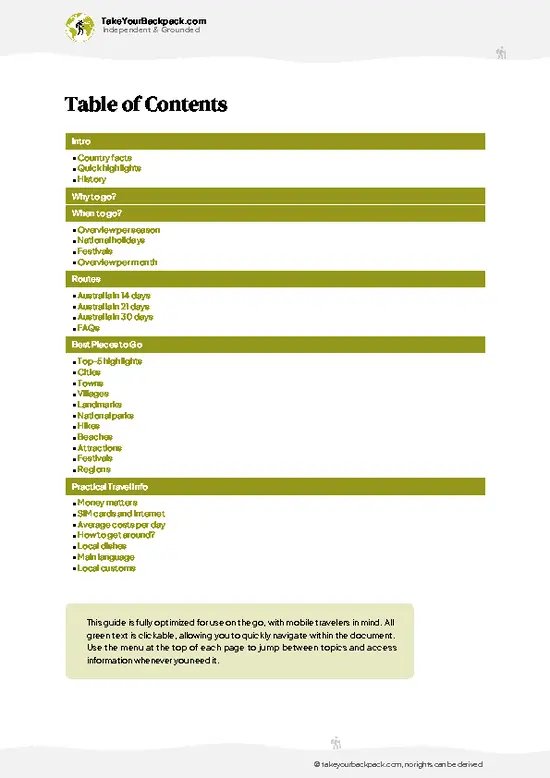
example page 2 from our offline Travel Guide for Australia
example page 3 from our offline Travel Guide for Australia
example page 4 from our offline Travel Guide for Australia
example page 5 from our offline Travel Guide for Australia
example page 6 from our offline Travel Guide for Australia
example page 7 from our offline Travel Guide for Australia
Loading the map 🌍
CLICK TO FILTER
cities
towns
villages
landmarks
national parks
hikes
beaches
attractions
festivals
regions
SHOW COUNTRY’S BESTSHOW ALL

✨ Why go?
Ranked #14 beach in Australia
What makes it a must-see beach

Backpackers stop here because it is the quiet answer to the busier beaches along the Sapphire Coast. You park, walk, and often see more birds than people. The beach is long enough that a ten-minute stroll puts a dune between you and anyone else.
The second draw is the Wallaga Lake entrance, where tidal water pushes in and out and shallow channels warm up quickly. It suits anyone who wants to splash around without fighting waves. Dolphins and pelicans regularly work the channel.
The third is its place on the south coast route. It is close to Bermagui, which has a fishing harbor, groceries, and cheap campsites, so you can restock easily. Fuel your own picnic, since the beach itself has no shops.

💡 HighlightsPlaces and moments you shouldn't skip

  1. Four Mile Beach walk: The long, open stretch of pale sand is the main event. Walk the full length at low tide when the sand is firm, and look for tracks left by birds and foxes.
  2. Wallaga Lake entrance: Just north of Camel Rock, the tidal channel gives you shallow, calm water for wading and a good place to watch pelicans and other waterbirds.
  3. Surf swimming and body surfing: The waves break onto a steep beach with no patrol, so experienced swimmers enjoy it and everyone else should stay in shallow water.
  4. Camel Rock: This sea-battered headland near Wallaga Lake gets its name from its humped shape. It is a short stop for photos and rock fishing views.
  5. Blue Pool, Bermagui: The ocean rock pool in town is a sheltered, tidal swim that makes a good counterpoint to the open surf.
Allow half a day for the … read more 👉
  1. Four Mile Beach walk: The long, open stretch of pale sand is the main event. Walk the full length at low tide when the sand is firm, and look for tracks left by birds and foxes.
  2. Wallaga Lake entrance: Just north of Camel Rock, the tidal channel gives you shallow, calm water for wading and a good place to watch pelicans and other waterbirds.
  3. Surf swimming and body surfing: The waves break onto a steep beach with no patrol, so experienced swimmers enjoy it and everyone else should stay in shallow water.
  4. Camel Rock: This sea-battered headland near Wallaga Lake gets its name from its humped shape. It is a short stop for photos and rock fishing views.
  5. Blue Pool, Bermagui: The ocean rock pool in town is a sheltered, tidal swim that makes a good counterpoint to the open surf.
Allow half a day for the beach and lake, and a full day if you add Camel Rock and Bermagui.
Spotted a mistake or missing something? Contact us.

Things to do near Four Mile Beach

Ratings based on Tripadvisor reviews. When you book through this link, you support our work at no extra cost to you.

🌤️ When to go?When to go for the best experience

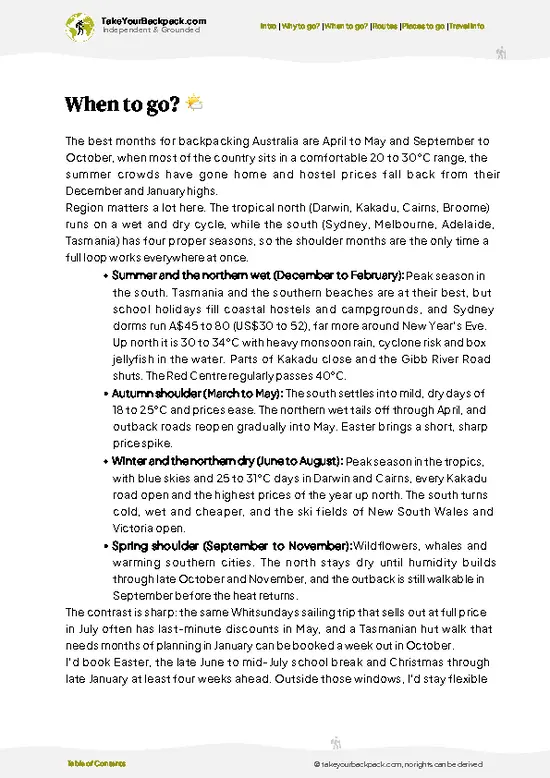
Summer, December to February, is the warmest window for Four Mile Beach near Bermagui, on the New South Wales Far South Coast. Here is how the year breaks down.
  • Summer (Dec to Feb): Highs of 24 to 27°C (75 to 81°F), sea around 20 to 22°C, light until about 8 pm. School holidays fill Bermagui and prices climb.
  • Autumn (Mar to May): Days of 19 to 24°C (66 to 75°F), calm mornings, thin crowds and easier beds.
  • Winter (Jun to Aug): Highs of 14 to 17°C (57 to 63°F), light gone by 5 pm. Cold water, but humpback whales pass from roughly June to November.
  • Spring (Sep to Nov): Mild 17 to 22°C (63 to 72°F), windy at times, prices low.
Avoid the weeks around Christmas and January unless you have booked well ahead.

source: climatestotravel.comJANJanuary: fair for travelingFEBFebruary: fair for travelingMARMarch: fair for travelingAPRApril: good for travelingMAYMay: excellent for travelingJUNJune: highly recommended for travelingJULJuly: good for travelingAUGAugust: good for travelingSEPSeptember: excellent for travelingOCTOctober: excellent for travelingNOVNovember: good for travelingDECDecember: fair for traveling
when-to-go

✈️ The backpacker research shortcutAustralia Travel Guide

An offline-friendly backpacking guide with optimized travel routes, ranked highlights, transport advice, and the best areas to stay.
example page 0 from our offline Travel Guide for Australia
example page 1 from our offline Travel Guide for Australia
example page 2 from our offline Travel Guide for Australia
example page 3 from our offline Travel Guide for Australia
example page 4 from our offline Travel Guide for Australia
example page 5 from our offline Travel Guide for Australia
example page 6 from our offline Travel Guide for Australia
example page 7 from our offline Travel Guide for Australia
The digital guide (414 pages) contains:
✅ 143 highlights, ranked by travel appeal
✅ Optimized 14, 21 & 30-day travel routes
✅ Cities, national parks, landmarks, beaches
✅ How to get around
✅ Offline-friendly for travel without Wi-Fi
👉 Click to see all 30+ guide features

📅 Plan smarter in minutes, not weeks
✅ Month by month travel advice
✅ Festivals & national holidays
✅ Budget expectations

🗺️ Go to the right places, skip the overrated ones
✅ Honest pros & cons of destinations
✅ Top hikes, parks & viewpoints
✅ Lesser-known places most travelers miss
✅ Clear “worth it vs skip it” guidance

🛏️ Travel smoothly without rookie mistakes
✅ Best areas to stay
✅ Transport systems explained simply
✅ Common scams & safety advice
✅ SIM cards, money & practical tips

🌍 Understand the country, not just visit it
✅ Culture & traditions
✅ Local customs
✅ Festivals worth planning around
✅ Traveler-friendly historical context
✅ Insights that make places more meaningful

📱 Built for real travel conditions
✅ Fully downloadable PDF
✅ Works completely offline
✅ Optimized for phone use
✅ Useful in remote areas & buses
✅ Everything in one place
Stop searching, start planning
Get instant access to your full guide. 30‑day money-back guarantee.
+ Add another guide for just

By proceeding you agree to our terms.
Sent to your inbox immediately after payment • 100% Secure Checkout
Best Backpacking Travel Advisor 2025 tourism awardBest Backpacking
Travel Advisor
2025
What others say about Take Your Backpack Guides:
⭐⭐⭐⭐⭐
Fantastic, amazing amount of information!
⭐⭐⭐⭐⭐
My goodness this is amazing, it's what I've been looking for hats off too you!
⭐⭐⭐⭐⭐
I think this is absolutely BRILLIANT
⭐⭐⭐⭐
Very complete and informative. It's still missing places, but I gotta to commend you
⭐⭐⭐⭐⭐
This is truly amazing, thank you, can't wait to explore it with my kids!
⭐⭐⭐⭐⭐
Awesome resource, thank you!
⭐⭐⭐⭐⭐
This is amazing! Can't wait to explore the ones I haven't seen
⭐⭐⭐⭐
I love this! Well done, great idea.
⭐⭐⭐⭐⭐
Thanks for taking the time to make this gem!
⭐⭐⭐⭐⭐
This might be the best website I've ever seen.
⭐⭐⭐⭐⭐
Congratulations, and thank you so much for your work; it's incredibly valuable.
⭐⭐⭐⭐
In all seriousness I think you did a great job pointing out the important spots
⭐⭐⭐⭐⭐
10/10 very good
⭐⭐⭐⭐⭐
As someone who's only just starting to visit regularly this is awesome, thank you.
⭐⭐⭐⭐
Thank you very much! I'm going to visit my dad, it's going to be very useful!
⭐⭐⭐⭐⭐
This is really cool! We'll be travelling for the first time and this definitely come in handy.
⭐⭐⭐⭐⭐
You are now our minister of culture, congratulations 👨‍💼
⭐⭐⭐⭐⭐
Just wanted to tell you that this is a pearl! Going to follow your recommendations.
⭐⭐⭐⭐⭐
This is so cool. I'll definitely be using the resource for my travels soon.
⭐⭐⭐⭐⭐
This is very impressive! Good work.
⭐⭐⭐⭐⭐
This is an amazing and informative site. Very well done!

🛏️ Where to stay?Choosing the right base

Bermagui is the best base, a small coastal town about 5 minutes by car from the beach. Its holiday parks and cabins sit near the wharf, the headland and the main street, and they suit budget travelers best, with camp sites usually from about A$35 to 60 a night in off-peak months and more in January. Shared kitchens and campgrounds are where you meet other travelers. The wharf area puts you close to cafes, the pub and the sunrise coastal walks. Bega, around 50 minutes inland, has cheaper motels and more shops but no surf. Merimbula, about 1 hour 15 minutes south, has more hostel-style and backpacker … read more 👉
Bermagui is the best base, a small coastal town about 5 minutes by car from the beach. Its holiday parks and cabins sit near the wharf, the headland and the main street, and they suit budget travelers best, with camp sites usually from about A$35 to 60 a night in off-peak months and more in January. Shared kitchens and campgrounds are where you meet other travelers. The wharf area puts you close to cafes, the pub and the sunrise coastal walks. Bega, around 50 minutes inland, has cheaper motels and more shops but no surf. Merimbula, about 1 hour 15 minutes south, has more hostel-style and backpacker accommodation and a livelier evening scene. Without a car, stay in Bermagui, since local buses are infrequent and the beach lies outside town.

🛡️ SafetyTraveler Safety Guide

Four Mile Beach is an open, unpatrolled stretch of surf beach, so treat it as a place to swim with care rather than a managed pool. Waves roll in directly from the Tasman Sea and rips form near the rocks and along channels in the sand. Swim where the water looks flatter, stay within your depth and avoid it after big swells. Patrolled beaches in Bermagui are safer choices for a proper swim. Summer sun is strong, so bring shade, hat and water, as there are few facilities. Keep valuables out of sight in your car or leave them behind. Early evening can bring biting insects, and snakes occasionally sun in the dune grass.

FAQFrequently asked questions about Four Mile Beach

You need a car or a ride to reach Four Mile Beach, which sits about 5 minutes from Bermagui on the NSW Far South Coast. Bermagui is roughly 5 hours by road from Sydney and 3 hours from Canberra. Buses run from Sydney and Canberra to Bega, about 50 minutes inland, and from there you will need a taxi or car for the final stretch.
Surfing and walking suit Four Mile Beach better than swimming, since it is an exposed surf beach without lifeguards and rips can form. Beginners get easier water at patrolled beaches in Bermagui, while Four Mile suits confident swimmers on calm days. Summer water is around 20 to 22°C. There is little reef, so snorkeling is better at sheltered spots around Tathra wharf or Merimbula.
Yes, Four Mile Beach is free to visit, with no entry fee and no ticket office. Parking nearby does not usually cost anything, though facilities are minimal, so bring water and food. Camping sites in the area charge from roughly A$35 to 60 a night, so only accommodation adds to the cost. Visit in daylight, and plan about 1 to 2 hours for a walk and swim.
⚠️ Things can change over time, so always validate details locally before you go.

Other Australian beaches near Four Mile Beach

Explore more nearby:

  • Tathra Beach—Heritage timber wharf, beginner waves, humpback watching, headland rock pools| 34 km away
  • Hyams Beach—Squeaky white sand, Jervis Bay shallows, lighthouse ruins, village store| 155 km away
  • Coogee Beach—Wylie’s Baths, Giles Baths, Gordons Bay trail, curved bay| 297 km away

💡 Not sure where to go next?
Create a personalized itinerary for Australia including Four Mile Beach and the places that fit your trip.

Generate my itinerary

👉 Discover all beaches

Or checkout all Australia has to offer (think cities, towns, villages, national parks, hikes, beaches, festivals)
Country photo of Australia

We 💚 feedbackParting advice and final tips

Give it one night if you camp nearby and a half day if you don’t. One long morning walk and a swim is plenty, but two nights lets you catch both sunrise and the lake at a different tide. I would bring water, food, and sun protection.

✈️ When did I visit Australia?
On my trip to New Zealand in 1993, I had a short stop in Australia as well.

✍️ Help improve this page!
The information on this page is based on my own backpacking experience in Australia, supplemented with up-to-date research and feedback from other travelers. Travel details can change, so if you notice anything outdated or incomplete, feel free to let me know.


🙋‍♂️ Give feedback

👋 Meet the founderWho’s Behind Take Your Backpack?

Johan, backpacker and founder of TakeYourBackpackHi, I’m Johan (Netherlands 🇳🇱), the creator of TakeYourBackpack. Over the past 3 decades, I’ve backpacked through 90+ countries across six continents, gaining extensive experience with independent travel, long-term trips, and overland routes.

This site is built on a combination of firsthand travel experience and carefully curated insights from other backpackers. Many guides are based on places I’ve personally visited, while others bring together tips, observations, and practical advice shared by trusted travelers I’ve met along the way.

The goal is to provide realistic, experience-driven guidance — not generic itineraries — so you can explore destinations with better context, clearer expectations, and more confidence.