×
Great Barrier Reef

Australia🇦🇺 | landmarksGreat Barrier ReefOuter reef edge, turtles over shallows, Yongala wreck, liveaboard dives | things to do and best time to go

Explore Gondwana Rainforests of AustraliaExplore Shark Bay

Backpacking in Great Barrier Reef
🏆 Top pickunique site ranked #1
By Johan Kruseman 🇳🇱 | Updated October 15, 2026

The Great Barrier Reef is not one continuous wall of coral but about 2,900 individual reefs and 900 islands, so you cannot simply “see it” from the shore. It runs along the coast of Queensland in the northeast of Australia, so reaching it means boats, not buses. Expect a 2-hour-plus ferry or catamaran ride, a cheerful briefing about stinger suits, and a pontoon that is somehow both remote and full of people in matching snorkel masks. Pricey, yes. But the water is warm, the fish are absurdly colorful, and a turtle gliding under you makes the ticket price fade. When my boat first slowed over the reef, the sea shifted from navy to a glowing turquoise patch, and the whole deck went quiet mid-sandwich. That first look is the moment you paid for. Unlike the reefs of Ningaloo in Western Australia, which you reach by walking off a beach, this one demands a vessel and a plan.

Discover everything you want to know in the 📖 Australia Travel Guide.


example page 0 from our offline Travel Guide for Australia
example page 1 from our offline Travel Guide for Australia
example page 2 from our offline Travel Guide for Australia
example page 3 from our offline Travel Guide for Australia
example page 4 from our offline Travel Guide for Australia
example page 5 from our offline Travel Guide for Australia
example page 6 from our offline Travel Guide for Australia
example page 7 from our offline Travel Guide for Australia
Loading the map 🌍
CLICK TO FILTER
cities
towns
villages
landmarks
national parks
hikes
beaches
attractions
festivals
regions
SHOW COUNTRY’S BESTSHOW ALL

✨ Why go?
Ranked #1 unique site in Australia
What sets this place apart

The reason to go is scale and variety you cannot fake anywhere else. The system stretches over roughly 2,300 kilometers of Queensland coast, and it is the largest coral structure on Earth, visible in its entirety only from space. For a backpacker, that means you choose your depth: a snorkel off a pontoon, a certified dive on outer-reef walls, or a liveaboard trip with several dives a day. The effort is real, since you need a boat and a calm-weather window, but the payoff is water with long visibility, giant clams, reef sharks, and the chance of a green or hawksbill turtle at close range.

It also fits a classic east-coast route. Most travelers link it to Cairns, Port Douglas, the Whitsundays or Townsville, so you can pair a reef day with rainforest at Daintree or sailing between islands. Because … read more 👉
The reason to go is scale and variety you cannot fake anywhere else. The system stretches over roughly 2,300 kilometers of Queensland coast, and it is the largest coral structure on Earth, visible in its entirety only from space. For a backpacker, that means you choose your depth: a snorkel off a pontoon, a certified dive on outer-reef walls, or a liveaboard trip with several dives a day. The effort is real, since you need a boat and a calm-weather window, but the payoff is water with long visibility, giant clams, reef sharks, and the chance of a green or hawksbill turtle at close range.

It also fits a classic east-coast route. Most travelers link it to Cairns, Port Douglas, the Whitsundays or Townsville, so you can pair a reef day with rainforest at Daintree or sailing between islands. Because those hubs are connected by the Bruce Highway and cheap domestic flights, the reef becomes one strong chapter of a longer trip rather than a stand-alone splurge. Pick one good operator with small groups and you will get more than the cheapest big-boat crowd offers.

💡 HighlightsTop highlights of Great Barrier Reef

  1. Outer reef snorkeling and diving: The reef edge has the clearest water, healthiest coral gardens and the biggest fish, from parrotfish to Maori wrasse. Introductory dives are offered for beginners.
  2. Green and hawksbill turtles: Both species feed over the shallows, and you often spot them gliding past snorkelers without any special effort.
  3. Magnetic Island: A short ferry ride from Townsville, with fringing reef, bays for snorkeling, and wild rock wallabies along the Forts Walk.
  4. SS Yongala wreck: A passenger ship that sank in a cyclone in 1911 and now lies upright on the seabed, covered in coral and visited by rays, sea snakes and groupers. It is one of the top wreck dives in the world and suits advanced divers.
  5. Museum of Tropical Queensland: In Townsville, with reef exhibits and the HMS Pandora shipwreck
… read more 👉
  1. Outer reef snorkeling and diving: The reef edge has the clearest water, healthiest coral gardens and the biggest fish, from parrotfish to Maori wrasse. Introductory dives are offered for beginners.
  2. Green and hawksbill turtles: Both species feed over the shallows, and you often spot them gliding past snorkelers without any special effort.
  3. Magnetic Island: A short ferry ride from Townsville, with fringing reef, bays for snorkeling, and wild rock wallabies along the Forts Walk.
  4. SS Yongala wreck: A passenger ship that sank in a cyclone in 1911 and now lies upright on the seabed, covered in coral and visited by rays, sea snakes and groupers. It is one of the top wreck dives in the world and suits advanced divers.
  5. Museum of Tropical Queensland: In Townsville, with reef exhibits and the HMS Pandora shipwreck gallery, a rainy-day primer before you get wet.
  6. Whitsunday Islands and Whitehaven Beach: Silica sand so white and fine that it squeaks, plus sailing routes between islands with snorkeling stops.
  7. Scenic flights: From above, formations such as Heart Reef show the true patchwork of coral, sand and channels.
  8. Liveaboard trips: Multi-day boats reach the remote Ribbon Reefs and Cod Hole, with night dives and almost no crowds.
If time is short, skip the scenic flight and spend the money on extra in-water time at the outer reef.
Spotted a mistake or missing something? Contact us.

🌤️ When to go?Weather, crowds, and seasonal trade-offs

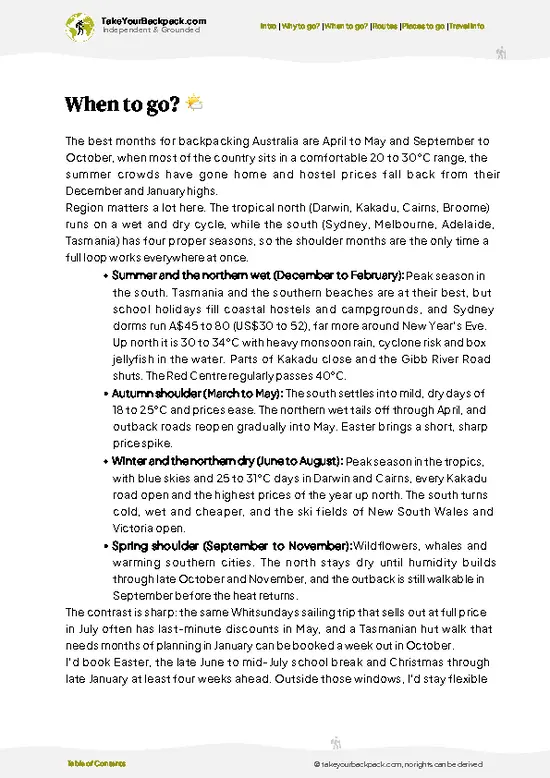
  • Dry Season (June to October): Visibility is at its best, often 15 to 30 meters, and rain is rare. Days run 24 to 26°C (75 to 79°F) with cooler nights near 17°C (63°F). Stingers are not a concern, so you can swim without a lycra suit, though a wetsuit helps on cold mornings. Whale sharks are not the draw here, but humpback whales pass through from roughly June to September. Crowds and prices peak in July and August.
  • Wet Season (November to April): Expect 29 to 33°C (84 to 91°F), high humidity, heavy downpours, and cyclone risk from January to March. Visibility drops after rain runoff. Box jellyfish and Irukandji are present, so stinger suits are compulsory on most trips. Tours are cheaper and boats are emptier. Turtle nesting and hatching run through these months.
  • Transition Months (May and late
… read more 👉
  • Dry Season (June to October): Visibility is at its best, often 15 to 30 meters, and rain is rare. Days run 24 to 26°C (75 to 79°F) with cooler nights near 17°C (63°F). Stingers are not a concern, so you can swim without a lycra suit, though a wetsuit helps on cold mornings. Whale sharks are not the draw here, but humpback whales pass through from roughly June to September. Crowds and prices peak in July and August.
  • Wet Season (November to April): Expect 29 to 33°C (84 to 91°F), high humidity, heavy downpours, and cyclone risk from January to March. Visibility drops after rain runoff. Box jellyfish and Irukandji are present, so stinger suits are compulsory on most trips. Tours are cheaper and boats are emptier. Turtle nesting and hatching run through these months.
  • Transition Months (May and late October): Seas calm, daylight lasts about 11 to 12 hours year-round, and trips are less crowded than in midwinter.
Book a dry-season trip at least two weeks ahead in July, since popular reef boats sell out.


source: climatestotravel.comJANJanuary: below average for travelingFEBFebruary: below average for travelingMARMarch: fair for travelingAPRApril: fair for travelingMAYMay: good for travelingJUNJune: highly recommended for travelingJULJuly: good for travelingAUGAugust: good for travelingSEPSeptember: highly recommended for travelingOCTOctober: excellent for travelingNOVNovember: excellent for travelingDECDecember: below average for traveling
Australia - the Great Barrier Reef

✈️ The backpacker research shortcutAustralia Travel Guide

An offline-friendly backpacking guide with optimized travel routes, ranked highlights, transport advice, and the best areas to stay.
example page 0 from our offline Travel Guide for Australia
example page 1 from our offline Travel Guide for Australia
example page 2 from our offline Travel Guide for Australia
example page 3 from our offline Travel Guide for Australia
example page 4 from our offline Travel Guide for Australia
example page 5 from our offline Travel Guide for Australia
example page 6 from our offline Travel Guide for Australia
example page 7 from our offline Travel Guide for Australia
The digital guide (414 pages) contains:
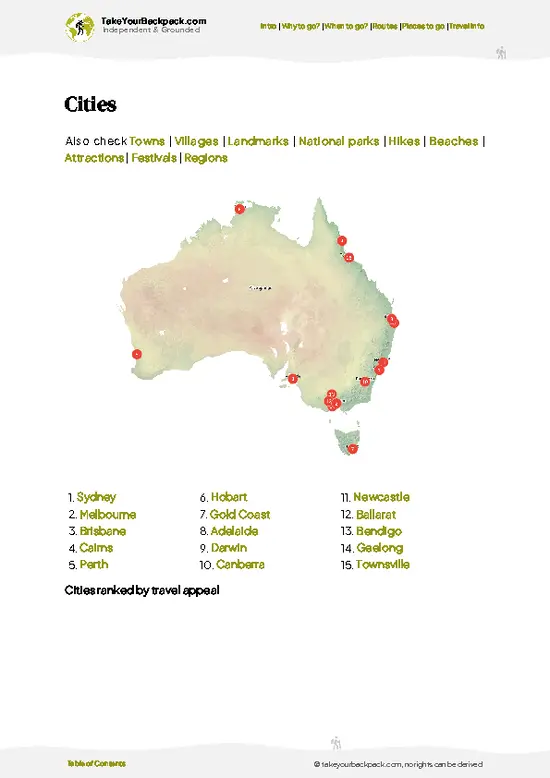
✅ 143 highlights, ranked by travel appeal
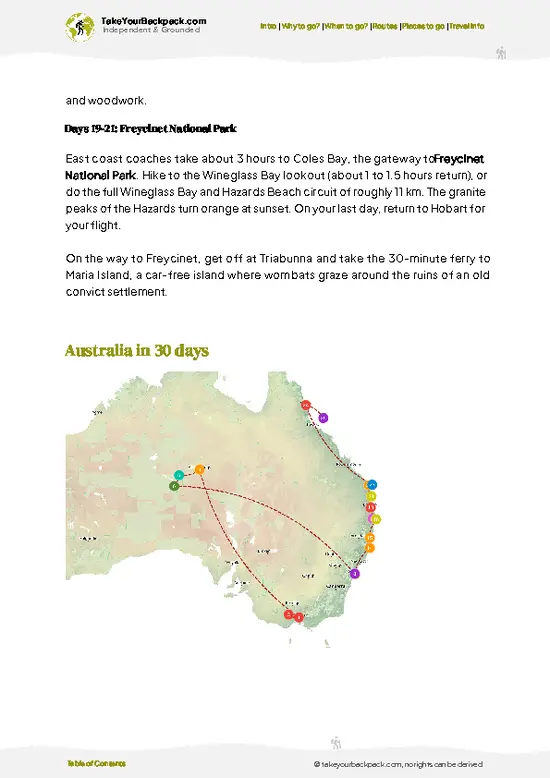
✅ Optimized 14, 21 & 30-day travel routes
✅ Cities, national parks, landmarks, beaches
✅ How to get around
✅ Offline-friendly for travel without Wi-Fi
👉 Click to see all 30+ guide features

📅 Plan smarter in minutes, not weeks
✅ Month by month travel advice
✅ Festivals & national holidays
✅ Budget expectations

🗺️ Go to the right places, skip the overrated ones
✅ Honest pros & cons of destinations
✅ Top hikes, parks & viewpoints
✅ Lesser-known places most travelers miss
✅ Clear “worth it vs skip it” guidance

🛏️ Travel smoothly without rookie mistakes
✅ Best areas to stay
✅ Transport systems explained simply
✅ Common scams & safety advice
✅ SIM cards, money & practical tips

🌍 Understand the country, not just visit it
✅ Culture & traditions
✅ Local customs
✅ Festivals worth planning around
✅ Traveler-friendly historical context
✅ Insights that make places more meaningful

📱 Built for real travel conditions
✅ Fully downloadable PDF
✅ Works completely offline
✅ Optimized for phone use
✅ Useful in remote areas & buses
✅ Everything in one place
Stop searching, start planning
Get instant access to your full guide. 30‑day money-back guarantee.
+ Add another guide for just

By proceeding you agree to our terms.
Sent to your inbox immediately after payment • 100% Secure Checkout
Best Backpacking Travel Advisor 2025 tourism awardBest Backpacking
Travel Advisor
2025
What others say about Take Your Backpack Guides:
⭐⭐⭐⭐⭐
Fantastic, amazing amount of information!
⭐⭐⭐⭐⭐
My goodness this is amazing, it's what I've been looking for hats off too you!
⭐⭐⭐⭐⭐
I think this is absolutely BRILLIANT
⭐⭐⭐⭐
Very complete and informative. It's still missing places, but I gotta to commend you
⭐⭐⭐⭐⭐
This is truly amazing, thank you, can't wait to explore it with my kids!
⭐⭐⭐⭐⭐
Awesome resource, thank you!
⭐⭐⭐⭐⭐
This is amazing! Can't wait to explore the ones I haven't seen
⭐⭐⭐⭐
I love this! Well done, great idea.
⭐⭐⭐⭐⭐
Thanks for taking the time to make this gem!
⭐⭐⭐⭐⭐
This might be the best website I've ever seen.
⭐⭐⭐⭐⭐
Congratulations, and thank you so much for your work; it's incredibly valuable.
⭐⭐⭐⭐
In all seriousness I think you did a great job pointing out the important spots
⭐⭐⭐⭐⭐
10/10 very good
⭐⭐⭐⭐⭐
As someone who's only just starting to visit regularly this is awesome, thank you.
⭐⭐⭐⭐
Thank you very much! I'm going to visit my dad, it's going to be very useful!
⭐⭐⭐⭐⭐
This is really cool! We'll be travelling for the first time and this definitely come in handy.
⭐⭐⭐⭐⭐
You are now our minister of culture, congratulations 👨‍💼
⭐⭐⭐⭐⭐
Just wanted to tell you that this is a pearl! Going to follow your recommendations.
⭐⭐⭐⭐⭐
This is so cool. I'll definitely be using the resource for my travels soon.
⭐⭐⭐⭐⭐
This is very impressive! Good work.
⭐⭐⭐⭐⭐
This is an amazing and informative site. Very well done!

🛏️ Where to stay?Best areas to stay in Australia

The most practical bases are Cairns and Airlie Beach, with Townsville and Port Douglas as alternatives. Cairns is the easiest choice for solo travelers: dozens of hostels sit within a ten-minute walk of the Esplanade and the marina where most reef boats depart. Dorms are social, and many have pools and group dinners. The city is flat, safe at night in the central grid, and full of dive shops, so you can compare operators in person. Airlie Beach is the gateway to the Whitsundays and has a party-leaning backpacker strip along Shute Harbour Road. Hostels cluster within a few blocks of the lagoon … read more 👉
The most practical bases are Cairns and Airlie Beach, with Townsville and Port Douglas as alternatives. Cairns is the easiest choice for solo travelers: dozens of hostels sit within a ten-minute walk of the Esplanade and the marina where most reef boats depart. Dorms are social, and many have pools and group dinners. The city is flat, safe at night in the central grid, and full of dive shops, so you can compare operators in person. Airlie Beach is the gateway to the Whitsundays and has a party-leaning backpacker strip along Shute Harbour Road. Hostels cluster within a few blocks of the lagoon and the marina, and sailing trips leave from here. It is compact, walkable, and easy for meeting a crew. Townsville is quieter and cheaper, with fewer crowds, and suits divers heading to the SS Yongala wreck or Magnetic Island. Port Douglas is calmer and pricier, with fewer dorms, but gives you access to the outer reef at Agincourt. Island stays, such as Magnetic Island, offer beachside hostels and a relaxed, sociable atmosphere with reef snorkeling close to shore. Choose a base by your main plan: diving in Cairns, sailing in Airlie Beach.

👛 Costs (as of 15 October 2026)Typical daily expenses

Expect to spend about US$150 to 260 a day, with a reef trip making up most of that budget. The table counts one dorm bed at high-season rates, one reef day trip, and basic food and transport.
CategoryBudget RangeLocal Reality
Accommodation (high season)US$25 to 40Dorm bed in Cairns or Airlie Beach from June to October; off-season often US$18 to 30.
Reef tourUS$85 to 130Full-day outer reef trip with snorkel gear and lunch, including the reef tax; diving adds US$40 to 80 for introductory dives.
FoodUS$25 to 45Supermarket groceries, hostel cooking, and the occasional pub meal at US$15 to 25.
Local transportUS$5 to 15Buses in Cairns cost about US$3 to 5 a ride; many hostels run free pickups for tours.
ExtrasUS$10 to 20Stinger suit hire, sunscreen, reef-safe products, and a drink or two.
Total Daily BudgetUS$150
… read more 👉
Expect to spend about US$150 to 260 a day, with a reef trip making up most of that budget. The table counts one dorm bed at high-season rates, one reef day trip, and basic food and transport.
CategoryBudget RangeLocal Reality
Accommodation (high season)US$25 to 40Dorm bed in Cairns or Airlie Beach from June to October; off-season often US$18 to 30.
Reef tourUS$85 to 130Full-day outer reef trip with snorkel gear and lunch, including the reef tax; diving adds US$40 to 80 for introductory dives.
FoodUS$25 to 45Supermarket groceries, hostel cooking, and the occasional pub meal at US$15 to 25.
Local transportUS$5 to 15Buses in Cairns cost about US$3 to 5 a ride; many hostels run free pickups for tours.
ExtrasUS$10 to 20Stinger suit hire, sunscreen, reef-safe products, and a drink or two.
Total Daily BudgetUS$150 to 260Cheaper if you skip the reef tour on some days, higher with multi-day liveaboard trips.
⚠️ Prices can change and everyone travels differently, so take this as a rough guide. Hope it helps you plan your adventure!

FAQCommon questions from travelers

The Great Barrier Reef is the world’s largest coral reef system, running about 2,300 kilometers along Queensland’s coast and made up of nearly 3,000 individual reefs. It is a UNESCO World Heritage Site and a marine park. Most visitors snorkel or dive on day trips to the outer reef from Cairns, Port Douglas, or Airlie Beach.
Allow at least two to three days: one full day on a reef boat plus a buffer day in case weather cancels trips. Day tours usually last 8 to 10 hours. Divers often add a three-day liveaboard or a 4-day open-water course, and sailing in the Whitsundays typically takes two to three nights.
Fly into Cairns Airport, or into Proserpine or Hamilton Island for the Whitsundays, then take a short transfer to the marina. Cairns is about a 2.5-hour flight from Brisbane, and Brisbane to Cairns by bus takes around 24 to 28 hours. Day boats leave Cairns Reef Fleet Terminal around 8 to 9 a.m., and the ride to the outer reef takes 1.5 to 2 hours.
⚠️ Things can change over time, so always validate details locally before you go.

Other Australian landmarks near Great Barrier Reef

Explore more nearby:


💡 Not sure where to go next?
Create a personalized itinerary for Australia including Great Barrier Reef and the places that fit your trip.

Generate my itinerary

👉 Discover all landmarks

Or checkout all Australia has to offer (think cities, towns, villages, national parks, hikes, beaches, festivals)
Country photo of Australia

We 💚 feedbackParting advice and final tips

Treat the reef as the centerpiece of a Queensland run, not the whole trip. Pair a Townsville or Cairns dive day with Magnetic Island, the Daintree rainforest or a Whitsundays sail, so you get coral, jungle and sand without repeating yourself. I would book a small-group outer reef boat and skip the cheapest big pontoon.

✈️ When did I visit Australia?
On my trip to New Zealand in 1993, I had a short stop in Australia as well.

✍️ Help improve this page!
The information on this page is based on my own backpacking experience in Australia, supplemented with up-to-date research and feedback from other travelers. Travel details can change, so if you notice anything outdated or incomplete, feel free to let me know.


🙋‍♂️ Give feedback

👋 Meet the founderWho’s Behind Take Your Backpack?

Johan, backpacker and founder of TakeYourBackpackHi, I’m Johan (Netherlands 🇳🇱), the creator of TakeYourBackpack. Over the past 3 decades, I’ve backpacked through 90+ countries across six continents, gaining extensive experience with independent travel, long-term trips, and overland routes.

This site is built on a combination of firsthand travel experience and carefully curated insights from other backpackers. Many guides are based on places I’ve personally visited, while others bring together tips, observations, and practical advice shared by trusted travelers I’ve met along the way.

The goal is to provide realistic, experience-driven guidance — not generic itineraries — so you can explore destinations with better context, clearer expectations, and more confidence.