×

Australia🇦🇺 | landmarksWillandra Lakes Regionfossil remains, dry lake beds, lunettes, ancient human sites | things to do and best time to go

Explore Wave RockExplore Great Ocean Road

Backpacking in Willandra Lakes Region
UNESCO World Heritage site
👀 For curious travelersunique site ranked #8
By Johan Kruseman 🇳🇱 | Updated September 4, 2026

Your boots crunch on powder-dry lakebed, the kind that squeaks like snow but tastes of salt and dust when the wind kicks it into your teeth. The air smells of hot stone and old rain. No traffic noise, no café music, just your heartbeat and a crow somewhere complaining about the heat. This is the Willandra Lakes Region, out in far western New South Wales, way off the usual east-coast backpacker conveyor belt.

It’s not a fireworks kind of “wow”; it’s a slow-burn, deep-time gut punch. Fossil dunes, ancient human footprints, 40,000+ years of Aboriginal story in the landscape itself. Zero crowds, huge skies, and photo potential that rewards patience more than filters. The cons: brutal summer heat, limited public transport, basic facilities, and you need to plan water and fuel like a grown-up. But if you’re chasing silence, scale, and perspective instead of bar crawls, this place quietly rearranges your brain.

Discover everything you want to know in the 📖 Australia Travel Guide.
Loading the map 🌍
CLICK TO FILTER
cities
towns
villages
landmarks
national parks
hikes
beaches
attractions
festivals
regions
SHOW COUNTRY’S BESTSHOW ALL

✨ Why go?
Ranked #8 unique site in Australia
Reasons people choose to visit here

The Willandra Lakes Region isn’t just another stop on your Australian adventure; it’s a time capsule of human history. Sure, you’ll encounter crowds, especially during peak season, but don’t let that deter you. The real magic lies in its ancient landscapes and the stories they tell. This UNESCO World Heritage site showcases some of the oldest evidence of human habitation in Australia, with fossils dating back over 40,000 years.

Access is straightforward, and it fits perfectly into a broader route through the outback. You can easily combine it with a trip to Mungo National Park, where the stunning sunsets and starry nights will leave you breathless.

Costs are low; entry fees won’t break the bank, and the camping options are budget-friendly. The effort-to-reward ratio is solid here. You’re … read more 👉
The Willandra Lakes Region isn’t just another stop on your Australian adventure; it’s a time capsule of human history. Sure, you’ll encounter crowds, especially during peak season, but don’t let that deter you. The real magic lies in its ancient landscapes and the stories they tell. This UNESCO World Heritage site showcases some of the oldest evidence of human habitation in Australia, with fossils dating back over 40,000 years.

Access is straightforward, and it fits perfectly into a broader route through the outback. You can easily combine it with a trip to Mungo National Park, where the stunning sunsets and starry nights will leave you breathless.

Costs are low; entry fees won’t break the bank, and the camping options are budget-friendly. The effort-to-reward ratio is solid here. You’re not just ticking off a box; you’re connecting with a deeply significant piece of our shared human story.
Want to include Willandra Lakes Region in your Australia route?
Create a personalized Australia itinerary that includes Willandra Lakes Region and the places that fit your trip — based on your travel style, budget, and available time. Get your route in seconds.

Generate my trip

💡 HighlightsMust-see experiences and standout moments

  • Walls of China — bleached, wind-carved lunettes that look like a white, lunar skyline. Walk the ridges at sunrise or sunset for the best light; the fragile cliffs are both photogenic and a visible record of ancient lake winds and sediments.
  • Mungo Lady and Mungo Man — two of the oldest and most important human remains ever found in Australia. Their age and the burial/cremation practices they show rewrote what we know about deep human occupation and ritual in this part of the world.
  • Deep archaeological and environmental archive — the lunette sediments preserve tens of thousands of years of stone tools, pollen, charcoal and animal bones, giving a rare, continuous picture of climate change, human use and extinct megafauna during the Pleistocene.
  • Living Aboriginal cultural connection — the
read more 👉
  • Walls of China — bleached, wind-carved lunettes that look like a white, lunar skyline. Walk the ridges at sunrise or sunset for the best light; the fragile cliffs are both photogenic and a visible record of ancient lake winds and sediments.
  • Mungo Lady and Mungo Man — two of the oldest and most important human remains ever found in Australia. Their age and the burial/cremation practices they show rewrote what we know about deep human occupation and ritual in this part of the world.
  • Deep archaeological and environmental archive — the lunette sediments preserve tens of thousands of years of stone tools, pollen, charcoal and animal bones, giving a rare, continuous picture of climate change, human use and extinct megafauna during the Pleistocene.
  • Living Aboriginal cultural connection — the region is still Country for the Paakantji, Mutthi Mutthi and Ngyiampaa peoples. Guided cultural tours and ranger-led talks offer context you won’t get from signs alone: stories, songlines and ongoing cultural obligations tied to the landscape.
  • Willandra Homestead historic precinct — a restored sheep-station complex with the original homestead, shearing shed and machinery. It’s the best place in the region to see how pastoralism shaped settlement and industry in the 19th-20th centuries.
  • Lake Mungo shoreline and interpretive walks — the dried lakebed and shoreline reveal exposed stratified layers and the actual places where important finds were made. Short walks let you stand where ancient people camped and where archaeologists uncovered game-changing evidence.
  • Ephemeral wetlands, wildlife and dark skies — when the lakes flood they attract huge flocks of migratory birds; otherwise you’ll spot kangaroos, emus and raptors against big, empty horizons. The remoteness also means superb stargazing—Milky Way views are unbeatable on a clear night.
Spotted a mistake or missing something? Contact us.

🌤️ When to go?Best time to visit Willandra Lakes Region


  • Weather: The Willandra Lakes Region bakes under a harsh sun in summer, with temps soaring above 35°C (95°F). Winters are crisp and dry, hovering around 10°C (50°F), making it far more comfortable for hiking and exploring.

  • Temperature: Daytime highs in spring and autumn sit in the sweet spot of 20-25°C (68-77°F), perfect for long days outdoors without overheating or freezing your fingers off.

  • Daylight Hours: Summer offers long days, up to 14 hours of light, but the heat can sap your energy. Winter days shrink to about 10 hours, which means less time to roam but cooler conditions.

  • Crowds: This isn’t a tourist hotspot, but school holidays and weekends see a noticeable uptick in visitors. For solitude, aim for midweek visits outside peak holiday periods.

  • Seasonal Activities: Spring
read more 👉

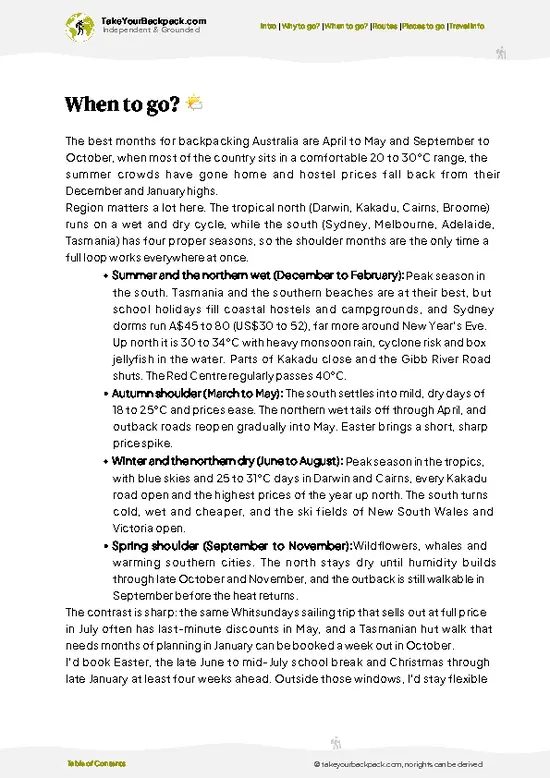
  • Weather: The Willandra Lakes Region bakes under a harsh sun in summer, with temps soaring above 35°C (95°F). Winters are crisp and dry, hovering around 10°C (50°F), making it far more comfortable for hiking and exploring.

  • Temperature: Daytime highs in spring and autumn sit in the sweet spot of 20-25°C (68-77°F), perfect for long days outdoors without overheating or freezing your fingers off.

  • Daylight Hours: Summer offers long days, up to 14 hours of light, but the heat can sap your energy. Winter days shrink to about 10 hours, which means less time to roam but cooler conditions.

  • Crowds: This isn’t a tourist hotspot, but school holidays and weekends see a noticeable uptick in visitors. For solitude, aim for midweek visits outside peak holiday periods.

  • Seasonal Activities: Spring brings wildflowers and bird migrations, adding color and life to the stark landscape. Autumn’s cooler air is ideal for camping and stargazing, with clearer skies and fewer bugs.

  • Price Fluctuations: Accommodation and tours tend to spike during school holidays and public holidays. Booking off-peak can save you a decent chunk of cash and guarantee a quieter experience.


Pro-tip: Visit in early autumn for the best blend of manageable weather, fewer crowds, and wallet-friendly prices—plus, the sunsets over the ancient lakebeds are something else.


source: climatestotravel.comJANJanuary: fair for travelingFEBFebruary: fair for travelingMARMarch: good for travelingAPRApril: highly recommended for travelingMAYMay: highly recommended for travelingJUNJune: good for travelingJULJuly: good for travelingAUGAugust: good for travelingSEPSeptember: highly recommended for travelingOCTOctober: excellent for travelingNOVNovember: good for travelingDECDecember: fair for traveling
when-to-go

✈️ The backpacker research shortcutAustralia Travel Guide

An offline-friendly backpacking guide with optimized travel routes, ranked highlights, transport advice, and the best areas to stay.
example page 0 from our offline Travel Guide for Australia
example page 1 from our offline Travel Guide for Australia
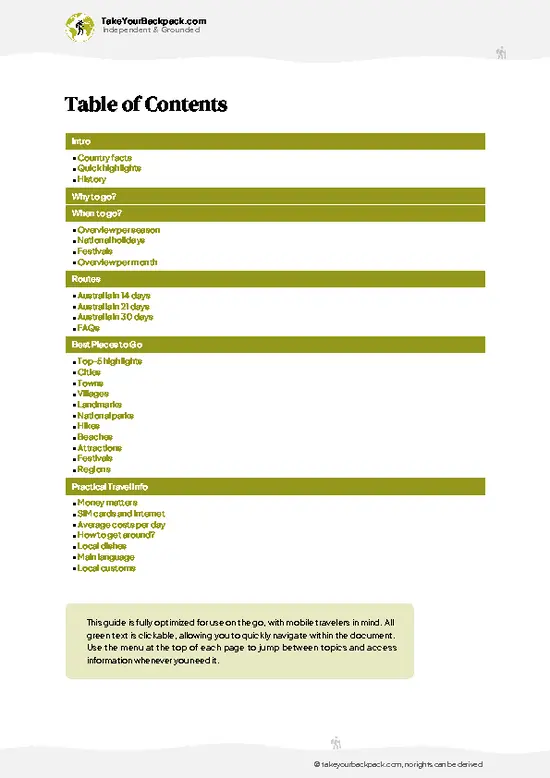
example page 2 from our offline Travel Guide for Australia
example page 3 from our offline Travel Guide for Australia
example page 4 from our offline Travel Guide for Australia
example page 5 from our offline Travel Guide for Australia
example page 6 from our offline Travel Guide for Australia
example page 7 from our offline Travel Guide for Australia
The digital guide (544 pages) contains:
149 highlights, ranked by travel appeal
Optimized 14, 21 & 30-day travel routes
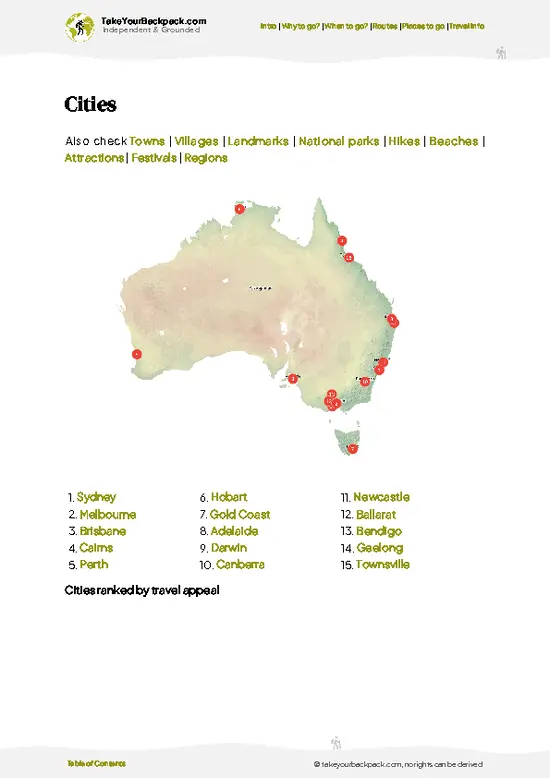
Cities, national parks, landmarks, beaches
How to get around
Offline-friendly for travel without Wi-Fi
👉 Click to see all 30+ guide features

📅 Plan smarter in minutes, not weeks
Month by month travel advice
Festivals & national holidays
Budget expectations

🗺️ Go to the right places, skip the overrated ones
Honest pros & cons of destinations
Top hikes, parks & viewpoints
Lesser-known places most travelers miss
Clear “worth it vs skip it” guidance

🛏️ Travel smoothly without rookie mistakes
Best areas to stay
Transport systems explained simply
Common scams & safety advice
SIM cards, money & practical tips

🌍 Understand the country, not just visit it
Culture & traditions
Local customs
Festivals worth planning around
Traveler-friendly historical context
Insights that make places more meaningful

📱 Built for real travel conditions
Fully downloadable PDF
Works completely offline
Optimized for phone use
Useful in remote areas & buses
Everything in one place
Save weeks of stressful planning
Get instant access to your full guide. 30‑day money-back guarantee.
+ Add another guide for just US$7.80

By proceeding you agree to our terms.
Sent to your inbox immediately after payment • 100% Secure Checkout
Best Backpacking Travel Advisor 2025 tourism awardBest Backpacking
Travel Advisor
2025
What others say about Take Your Backpack Guides:
⭐⭐⭐⭐⭐
Fantastic, amazing amount of information!
⭐⭐⭐⭐⭐
My goodness this is amazing, it's what I've been looking for hats off too you!
⭐⭐⭐⭐⭐
I think this is absolutely BRILLIANT
⭐⭐⭐⭐
Very complete and informative. It's still missing places, but I gotta to commend you
⭐⭐⭐⭐⭐
This is truly amazing, thank you, can't wait to explore it with my kids!
⭐⭐⭐⭐⭐
Awesome resource, thank you!
⭐⭐⭐⭐⭐
This is amazing! Can't wait to explore the ones I haven't seen
⭐⭐⭐⭐
I love this! Well done, great idea.
⭐⭐⭐⭐⭐
Thanks for taking the time to make this gem!
⭐⭐⭐⭐⭐
This might be the best website I've ever seen.
⭐⭐⭐⭐⭐
Congratulations, and thank you so much for your work; it's incredibly valuable.
⭐⭐⭐⭐
In all seriousness I think you did a great job pointing out the important spots
⭐⭐⭐⭐⭐
10/10 very good
⭐⭐⭐⭐⭐
As someone who's only just starting to visit regularly this is awesome, thank you.
⭐⭐⭐⭐
Thank you very much! I'm going to visit my dad, it's going to be very useful!
⭐⭐⭐⭐⭐
This is really cool! We'll be travelling for the first time and this definitely come in handy.
⭐⭐⭐⭐⭐
You are now our minister of culture, congratulations 👨‍💼
⭐⭐⭐⭐⭐
Just wanted to tell you that this is a pearl! Going to follow your recommendations.
⭐⭐⭐⭐⭐
This is so cool. I'll definitely be using the resource for my travels soon.
⭐⭐⭐⭐⭐
This is very impressive! Good work.
⭐⭐⭐⭐⭐
This is an amazing and informative site. Very well done!

🛏️ Where to stay?Choosing the right base

The Willandra Lakes Region isn’t just a postcard; it’s a living, breathing testament to Australia’s ancient history. But let’s get real: the crowds can be overwhelming, especially during peak tourist season. If you want to experience the magic without the chaos, consider staying in nearby towns like Moulamein or Balranald.

Moulamein has a laid-back vibe, perfect for solo travelers looking to connect. You’ll find a few budget-friendly options that encourage mingling. Grab a drink at the local pub, and you might just hear stories from fellow backpackers or locals about the area’s rich Aboriginal … read more 👉
The Willandra Lakes Region isn’t just a postcard; it’s a living, breathing testament to Australia’s ancient history. But let’s get real: the crowds can be overwhelming, especially during peak tourist season. If you want to experience the magic without the chaos, consider staying in nearby towns like Moulamein or Balranald.

Moulamein has a laid-back vibe, perfect for solo travelers looking to connect. You’ll find a few budget-friendly options that encourage mingling. Grab a drink at the local pub, and you might just hear stories from fellow backpackers or locals about the area’s rich Aboriginal heritage.

Balranald, on the other hand, offers a bit more in terms of amenities. It’s a hub for backpackers, with a friendly atmosphere and easy access to the lakes. The community here is welcoming, and you’ll find plenty of opportunities for outdoor adventures, from birdwatching to hiking.

Both towns keep you close to the lakes while offering a genuine slice of Aussie life. Embrace the experience; it’s worth the journey.

👛 Costs (as of 4 September 2026)Travel costs and budget guide for Willandra Lakes Region

Visiting the Willandra Lakes Region is a unique experience, but it comes with its own set of costs. Here’s a breakdown to help you plan your adventure.
  • Entry Fees: Expect to pay around $8 to $10 USD per person for entry to the Willandra Lakes Region National Park. This fee supports conservation efforts and gives you access to the stunning landscapes and rich Aboriginal heritage.
  • Accommodation: Options vary widely. Camping is the most budget-friendly, costing about $10 to $20 USD per night. If you prefer a cabin or lodge, prices can range from $80 to $150 USD per night, depending on the amenities.
  • Food: If you’re self-catering, budget around $10 to $15 USD per day for groceries. Dining out can be pricier, with meals at local cafes averaging $15 to $25 USD. Pack snacks for hikes to save money and
read more 👉
Visiting the Willandra Lakes Region is a unique experience, but it comes with its own set of costs. Here’s a breakdown to help you plan your adventure.
  • Entry Fees: Expect to pay around $8 to $10 USD per person for entry to the Willandra Lakes Region National Park. This fee supports conservation efforts and gives you access to the stunning landscapes and rich Aboriginal heritage.
  • Accommodation: Options vary widely. Camping is the most budget-friendly, costing about $10 to $20 USD per night. If you prefer a cabin or lodge, prices can range from $80 to $150 USD per night, depending on the amenities.
  • Food: If you’re self-catering, budget around $10 to $15 USD per day for groceries. Dining out can be pricier, with meals at local cafes averaging $15 to $25 USD. Pack snacks for hikes to save money and energy.
  • Transportation: Renting a car is the best way to explore. Daily rates can range from $30 to $70 USD, plus fuel costs. Public transport options are limited, so having your own wheels is key.
  • Guided Tours: If you want to dive deeper into the region’s history and ecology, consider a guided tour. Prices typically range from $50 to $100 USD per person, depending on the length and inclusions.

Understanding these costs helps you prepare for a trip that’s not just about the sights, but about connecting with the land and its stories.


source: nationalparks.nsw.gov.au
⚠️ Prices can change and everyone travels differently, so take this as a rough guide. Hope it helps you plan your adventure!

FAQFrequently asked questions about Willandra Lakes Region

Willandra Lakes Region is a UNESCO World Heritage site in New South Wales, Australia, known for its ancient dry lake beds and significant archaeological findings dating back over 40,000 years.
Visiting Willandra Lakes Region typically requires 1 to 2 days to explore key sites like the Mungo National Park and the Walls of China formations thoroughly.
You can get to Willandra Lakes Region by driving approximately 700 kilometers west from Sydney, with the nearest town being Mildura, which is about 100 kilometers away and accessible by regional flights or road.
⚠️ Things can change over time, so always validate details locally before you go.

Other Australian landmarks near Willandra Lakes Region

Explore more nearby:

  • Great Ocean Road—limestone stacks, coastal cliffs, rainforest drives, surf beaches| 563 km away
  • Sydney Harbour Bridge—steel arch, panoramic city views, pedestrian walkway, bridge climb| 750 km away
  • Sydney Opera House—sail-like roofs, performing arts venue, harbor setting, architectural icon| 751 km away

💡 Not sure where to go next?
Create a personalized itinerary for Australia including Willandra Lakes Region and the places that fit your trip.

Generate my itinerary

👉 Discover all landmarks

Or checkout all Australia has to offer (think cities, towns, villages, national parks, hikes, beaches, festivals)
Country photo of Australia

We 💚 feedbackFinal thoughts on visiting Willandra Lakes Region

The Willandra Lakes Region is a treasure trove of ancient history, where you can walk the same land as the world’s oldest cultures. But let’s be real: the isolation can be a drag. You’ll need to plan your trip carefully; it’s not a quick stop. Still, if you’re after a genuine connection to the past, this place is worth every mile. Just be ready for the quiet.

✈️ When did I visit Australia?
On my trip to New Zealand in 1993, I had a short stop in Australia as well.

✍️ Help improve this page!
The information on this page is based on my own backpacking experience in Australia, supplemented with up-to-date research and feedback from other travelers. Travel details can change, so if you notice anything outdated or incomplete, feel free to let me know.


🙋‍♂️ Give feedback

👋 Meet the founderWho’s Behind Take Your Backpack?

Johan, backpacker and founder of TakeYourBackpackHi, I’m Johan (Netherlands 🇳🇱), the creator of TakeYourBackpack. Over the past decade, I’ve backpacked through 80+ countries across six continents, gaining extensive experience with independent travel, long-term trips, and overland routes.

This site is built on a combination of firsthand travel experience and carefully curated insights from other backpackers. Many guides are based on places I’ve personally visited, while others bring together tips, observations, and practical advice shared by trusted travelers I’ve met along the way.

The goal is to provide realistic, experience-driven guidance — not generic itineraries — so you can explore destinations with better context, clearer expectations, and more confidence.

Get full Australia guide •
Instant download • 149 highlights • Full Offline guide