×
Sydney Opera House

Australia🇦🇺 | landmarksSydney Opera HouseTiled sails, Concert Hall organ, forecourt steps, harborside bar | things to do and best time to go

Explore Sydney Harbour BridgeExplore Wave Rock

Backpacking in Sydney Opera House
UNESCO World Heritage site
🏆 Top pickunique site ranked #2
By Johan Kruseman 🇳🇱 | Updated October 15, 2026

Everyone comes for the sails, and they are every bit as photogenic as the postcards promise. What gets overlooked is that the building is a working venue with several theaters, so a ticket to a show, even a cheap one, gets you inside far more cheaply than a guided tour. Be ready for crowds on the forecourt, selfie sticks at every angle and tour prices that sting. The Opera House sits on Bennelong Point in Sydney Harbour, Australia, a short walk from Circular Quay. A ferry deckhand once watched me photograph it from three different seats and said, deadpan, “It’s not going anywhere, mate, you can sit down.” He was right, and the sitting down turned out to be the best advice of the day. Walk the harborside path to the base, put your palm on the tiles, and look at the roof up close: over a million glossy and matte cream tiles laid in a chevron pattern, each catching light differently.

Discover everything you want to know in the 📖 Australia Travel Guide.


example page 0 from our offline Travel Guide for Australia
example page 1 from our offline Travel Guide for Australia
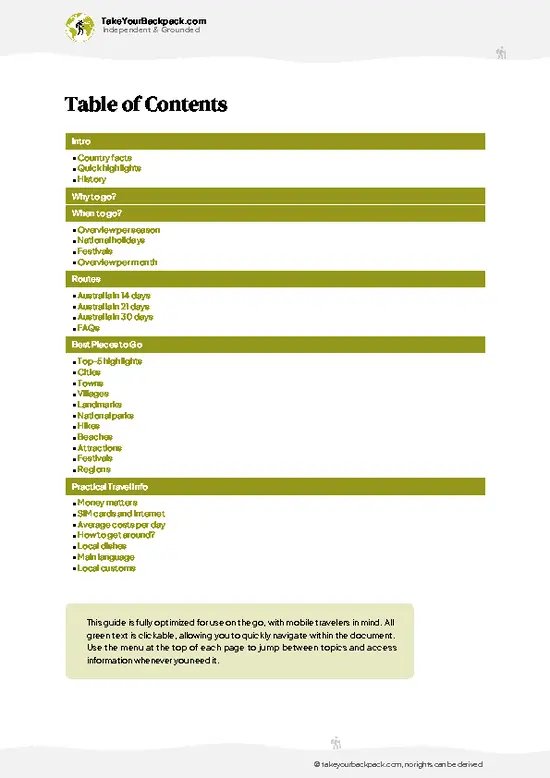
example page 2 from our offline Travel Guide for Australia
example page 3 from our offline Travel Guide for Australia
example page 4 from our offline Travel Guide for Australia
example page 5 from our offline Travel Guide for Australia
example page 6 from our offline Travel Guide for Australia
example page 7 from our offline Travel Guide for Australia
Loading the map 🌍
CLICK TO FILTER
cities
towns
villages
landmarks
national parks
hikes
beaches
attractions
festivals
regions
SHOW COUNTRY’S BESTSHOW ALL

✨ Why go?
Ranked #2 unique site in Australia
Why visitors keep coming back

The honest case for the Opera House is that it costs nothing to stand in front of one of the most recognizable buildings on Earth. The forecourt and harborside promenade are open to anyone, and from there you can walk the shoreline to the Royal Botanic Garden and Mrs Macquarie’s Chair for the classic skyline view. For the price of a ferry ticket you get the angle that most photographers prefer, from the water.

It also earns its place on a route because it anchors the harbor. Circular Quay is where ferries, trains and buses meet, so you can pair the Opera House with The Rocks, the Harbour Bridge and a ferry out to Manly in a single sweep. The building itself rewards a closer look than most people give it. A performance in the Joan Sutherland Theatre or the Concert Hall lets you see the interiors, … read more 👉
The honest case for the Opera House is that it costs nothing to stand in front of one of the most recognizable buildings on Earth. The forecourt and harborside promenade are open to anyone, and from there you can walk the shoreline to the Royal Botanic Garden and Mrs Macquarie’s Chair for the classic skyline view. For the price of a ferry ticket you get the angle that most photographers prefer, from the water.

It also earns its place on a route because it anchors the harbor. Circular Quay is where ferries, trains and buses meet, so you can pair the Opera House with The Rocks, the Harbour Bridge and a ferry out to Manly in a single sweep. The building itself rewards a closer look than most people give it. A performance in the Joan Sutherland Theatre or the Concert Hall lets you see the interiors, the timber, the acoustics and the harbor glimpsed through glass, at a fraction of what some tours cost. Treat it as the hub of a Sydney day rather than a stop to tick off, and it makes sense.

💡 HighlightsWhat this place is best known for

  1. The Shells (exterior and Forecourt): The sail-like roofs are the reason the building is on every postcard, and up close you see they are covered in more than a million glossy and matte tiles in white and cream, laid in a chevron pattern. Walk the Forecourt steps and the wide granite stairs to see how the tiles change in the light. Walking around the site is free.
  2. Opera House Tour: The standard guided tour takes you inside the foyers and into one or more of the theaters, and runs about an hour. It is the cheapest way to see the interiors if you do not have a ticket for a show. The tour costs roughly A$45 to 50, and English tours run through the day.
  3. Concert Hall: The largest venue holds about 2,600 people and houses the Grand Organ, with more than 10,000 pipes, one of the largest mechanical-action
… read more 👉
  1. The Shells (exterior and Forecourt): The sail-like roofs are the reason the building is on every postcard, and up close you see they are covered in more than a million glossy and matte tiles in white and cream, laid in a chevron pattern. Walk the Forecourt steps and the wide granite stairs to see how the tiles change in the light. Walking around the site is free.
  2. Opera House Tour: The standard guided tour takes you inside the foyers and into one or more of the theaters, and runs about an hour. It is the cheapest way to see the interiors if you do not have a ticket for a show. The tour costs roughly A$45 to 50, and English tours run through the day.
  3. Concert Hall: The largest venue holds about 2,600 people and houses the Grand Organ, with more than 10,000 pipes, one of the largest mechanical-action organs in the world. The Sydney Symphony Orchestra plays here, and a seat in the cheaper tiers still gets you the room’s plywood and brush box interior.
  4. Joan Sutherland Theatre: This is the home of Opera Australia and the Australian Ballet when they perform in Sydney. A night here gets you the full pit-and-curtain experience, and the tapestry of the stage curtains is by John Coburn, whose designs hang inside this building.
  5. Bennelong Restaurant and Opera Bar: Opera Bar sits on the water’s edge at the lower concourse and is the easiest place to take in the shells with a drink in your hand, with the Harbour Bridge across the water. Bennelong, inside one of the smaller shells, is the pricey, splurge option for a pre-show dinner.
  6. Royal Botanic Garden walk to Mrs Macquarie’s Chair: The path from the Opera House along the harbor edge leads to the sandstone bench carved for the governor’s wife in the 1810s. From the point you get the classic frame of the shells and the Harbour Bridge together. It is free and takes about 20 minutes each way.
  7. Vivid Sydney light projections: During the annual winter festival, the sails become a canvas for huge animated projections after dark. It draws big crowds, so arrive early to claim a spot on the Circular Quay side or the Botanic Garden shore.
Pair the Opera House Tour with the Botanic Garden walk to Mrs Macquarie’s Chair, since the walk starts a few minutes from the Forecourt and leaves the evening free for a show.
Spotted a mistake or missing something? Contact us.

Things to do around Sydney Opera House

Ratings based on Tripadvisor reviews. When you book through this link, you support our work at no extra cost to you.

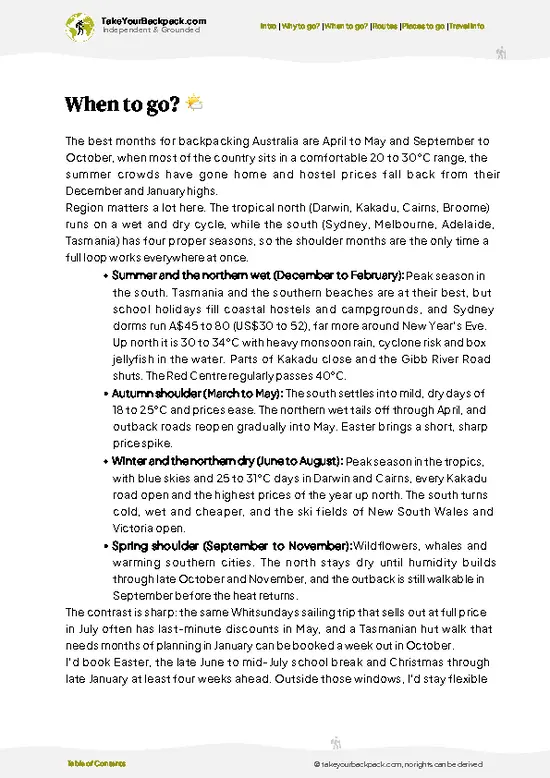
🌤️ When to go?Weather, crowds, and seasonal trade-offs

  • Summer (Dec to Feb): Sydney Harbour runs 19 to 27°C (66 to 81°F) with sunrise near 5:50 a.m. and light until about 8 p.m. Humid afternoons, thunderstorms and the biggest crowds arrive, and Vivid-free evenings are long enough for harbor ferries and outdoor films on the forecourt.
  • Autumn (Mar to May): Highs of 18 to 25°C (64 to 77°F), clear skies, calmer crowds and sunset near 5:30 to 6 p.m. Harbor light photographs beautifully on the sails.
  • Winter (Jun to Aug): 8 to 17°C (46 to 63°F), dark by 5 p.m., and the shortest queues of the year. Late May to June brings the Vivid Sydney light festival, when the sails become a projection screen and the foreshore packs out.
  • Spring (Sep to Nov): 12 to 23°C (54 to 73°F), jacaranda blooms in November and prices climb toward summer levels.
Book Opera House tours … read more 👉
  • Summer (Dec to Feb): Sydney Harbour runs 19 to 27°C (66 to 81°F) with sunrise near 5:50 a.m. and light until about 8 p.m. Humid afternoons, thunderstorms and the biggest crowds arrive, and Vivid-free evenings are long enough for harbor ferries and outdoor films on the forecourt.
  • Autumn (Mar to May): Highs of 18 to 25°C (64 to 77°F), clear skies, calmer crowds and sunset near 5:30 to 6 p.m. Harbor light photographs beautifully on the sails.
  • Winter (Jun to Aug): 8 to 17°C (46 to 63°F), dark by 5 p.m., and the shortest queues of the year. Late May to June brings the Vivid Sydney light festival, when the sails become a projection screen and the foreshore packs out.
  • Spring (Sep to Nov): 12 to 23°C (54 to 73°F), jacaranda blooms in November and prices climb toward summer levels.
Book Opera House tours and performances weeks ahead for December, January and Vivid, then walk the forecourt at dawn when it is nearly empty.


source: climatestotravel.comJANJanuary: good for travelingFEBFebruary: good for travelingMARMarch: highly recommended for travelingAPRApril: highly recommended for travelingMAYMay: highly recommended for travelingJUNJune: highly recommended for travelingJULJuly: highly recommended for travelingAUGAugust: highly recommended for travelingSEPSeptember: excellent for travelingOCTOctober: excellent for travelingNOVNovember: excellent for travelingDECDecember: good for traveling
Australia - the Sydney Opera House

✈️ The backpacker research shortcutAustralia Travel Guide

An offline-friendly backpacking guide with optimized travel routes, ranked highlights, transport advice, and the best areas to stay.
example page 0 from our offline Travel Guide for Australia
example page 1 from our offline Travel Guide for Australia
example page 2 from our offline Travel Guide for Australia
example page 3 from our offline Travel Guide for Australia
example page 4 from our offline Travel Guide for Australia
example page 5 from our offline Travel Guide for Australia
example page 6 from our offline Travel Guide for Australia
example page 7 from our offline Travel Guide for Australia
The digital guide (414 pages) contains:
✅ 143 highlights, ranked by travel appeal
✅ Optimized 14, 21 & 30-day travel routes
✅ Cities, national parks, landmarks, beaches
✅ How to get around
✅ Offline-friendly for travel without Wi-Fi
👉 Click to see all 30+ guide features

📅 Plan smarter in minutes, not weeks
✅ Month by month travel advice
✅ Festivals & national holidays
✅ Budget expectations

🗺️ Go to the right places, skip the overrated ones
✅ Honest pros & cons of destinations
✅ Top hikes, parks & viewpoints
✅ Lesser-known places most travelers miss
✅ Clear “worth it vs skip it” guidance

🛏️ Travel smoothly without rookie mistakes
✅ Best areas to stay
✅ Transport systems explained simply
✅ Common scams & safety advice
✅ SIM cards, money & practical tips

🌍 Understand the country, not just visit it
✅ Culture & traditions
✅ Local customs
✅ Festivals worth planning around
✅ Traveler-friendly historical context
✅ Insights that make places more meaningful

📱 Built for real travel conditions
✅ Fully downloadable PDF
✅ Works completely offline
✅ Optimized for phone use
✅ Useful in remote areas & buses
✅ Everything in one place
Stop searching, start planning
Get instant access to your full guide. 30‑day money-back guarantee.
+ Add another guide for just

By proceeding you agree to our terms.
Sent to your inbox immediately after payment • 100% Secure Checkout
Best Backpacking Travel Advisor 2025 tourism awardBest Backpacking
Travel Advisor
2025
What others say about Take Your Backpack Guides:
⭐⭐⭐⭐⭐
Fantastic, amazing amount of information!
⭐⭐⭐⭐⭐
My goodness this is amazing, it's what I've been looking for hats off too you!
⭐⭐⭐⭐⭐
I think this is absolutely BRILLIANT
⭐⭐⭐⭐
Very complete and informative. It's still missing places, but I gotta to commend you
⭐⭐⭐⭐⭐
This is truly amazing, thank you, can't wait to explore it with my kids!
⭐⭐⭐⭐⭐
Awesome resource, thank you!
⭐⭐⭐⭐⭐
This is amazing! Can't wait to explore the ones I haven't seen
⭐⭐⭐⭐
I love this! Well done, great idea.
⭐⭐⭐⭐⭐
Thanks for taking the time to make this gem!
⭐⭐⭐⭐⭐
This might be the best website I've ever seen.
⭐⭐⭐⭐⭐
Congratulations, and thank you so much for your work; it's incredibly valuable.
⭐⭐⭐⭐
In all seriousness I think you did a great job pointing out the important spots
⭐⭐⭐⭐⭐
10/10 very good
⭐⭐⭐⭐⭐
As someone who's only just starting to visit regularly this is awesome, thank you.
⭐⭐⭐⭐
Thank you very much! I'm going to visit my dad, it's going to be very useful!
⭐⭐⭐⭐⭐
This is really cool! We'll be travelling for the first time and this definitely come in handy.
⭐⭐⭐⭐⭐
You are now our minister of culture, congratulations 👨‍💼
⭐⭐⭐⭐⭐
Just wanted to tell you that this is a pearl! Going to follow your recommendations.
⭐⭐⭐⭐⭐
This is so cool. I'll definitely be using the resource for my travels soon.
⭐⭐⭐⭐⭐
This is very impressive! Good work.
⭐⭐⭐⭐⭐
This is an amazing and informative site. Very well done!

🛏️ Where to stay?Choosing the right base

Stay in Central Station and Haymarket, about 3 km (2 miles) from the Opera House by train or a 40-minute walk. Hostels cluster here, and it is the easiest base for budget travelers because airport trains, buses and the light rail all stop within a few blocks. Chinatown and Paddy’s Markets supply cheap late meals, and the area feels busy and well lit into the evening.
Kings Cross and Potts Point sit a 25-minute walk or short train ride east. The social backpacker scene is strongest here, with rooftop bars and big dorms, though Darlinghurst Road gets rowdy late at night, so choose a side street if … read more 👉
Stay in Central Station and Haymarket, about 3 km (2 miles) from the Opera House by train or a 40-minute walk. Hostels cluster here, and it is the easiest base for budget travelers because airport trains, buses and the light rail all stop within a few blocks. Chinatown and Paddy’s Markets supply cheap late meals, and the area feels busy and well lit into the evening.
Kings Cross and Potts Point sit a 25-minute walk or short train ride east. The social backpacker scene is strongest here, with rooftop bars and big dorms, though Darlinghurst Road gets rowdy late at night, so choose a side street if you want sleep.
Glebe is a calmer pick for longer stays, with a laid-back student crowd, secondhand bookshops and a Saturday market. Buses and light rail reach Circular Quay in about 20 to 30 minutes.
The Rocks is the closest option, a 10-minute walk from the Opera House, and has a few hostels and heritage pubs. It is pricier and quieter after dark.
Manly across the harbor suits surfers, with a ferry to Circular Quay of around 30 minutes.

👛 Costs (as of 15 October 2026)Travel costs and budget guide for Sydney Opera House

A day around the Sydney Opera House costs about US$128 for a backpacker who sleeps in a dorm, cooks some meals and walks most of the way. Exterior viewing from the forecourt and Circular Quay is free, so you only pay for what you go inside for.
CategoryBudget RangeLocal Reality
Dorm bed (high season, Dec to Feb)US$35 to 60Dorms in The Rocks, Central and Kings Cross fill early in summer, so book ahead. Used here: US$48.
Dorm bed (low season, Jun to Aug)US$28 to 45Winter drops rates by roughly a quarter, and Vivid Sydney in late May and June pushes them back up.
Opera House tourUS$25 to 50The one-hour guided tour runs about US$27 to 30. Backstage and food-and-tour options cost more. Used here: US$28.
Performance ticketUS$0 to 100Free forecourt events and the foyer bars cost nothing. Concerts start
… read more 👉
A day around the Sydney Opera House costs about US$128 for a backpacker who sleeps in a dorm, cooks some meals and walks most of the way. Exterior viewing from the forecourt and Circular Quay is free, so you only pay for what you go inside for.
CategoryBudget RangeLocal Reality
Dorm bed (high season, Dec to Feb)US$35 to 60Dorms in The Rocks, Central and Kings Cross fill early in summer, so book ahead. Used here: US$48.
Dorm bed (low season, Jun to Aug)US$28 to 45Winter drops rates by roughly a quarter, and Vivid Sydney in late May and June pushes them back up.
Opera House tourUS$25 to 50The one-hour guided tour runs about US$27 to 30. Backstage and food-and-tour options cost more. Used here: US$28.
Performance ticketUS$0 to 100Free forecourt events and the foyer bars cost nothing. Concerts start around US$30, and opera or ballet seats often start at US$60 to 80. Not counted in the total.
Public transportUS$5 to 12Circular Quay station is a short walk away. Opal card fares are capped near US$10 a day on weekdays and lower on Sundays. Used here: US$8.
Ferry from Circular QuayUS$3 to 6Ferries to Manly or Taronga Zoo count toward the Opal cap and give the best harbor views of the shells from the water.
FoodUS$18 to 40Supermarket breakfast and a US$10 to 14 lunch from a takeaway shop in The Rocks or the CBD. Waterfront restaurants charge US$30 and up per main. Used here: US$30.
DrinksUS$6 to 12A beer at the Opera Bar is around US$9 to 11. Used here: US$9.
Water and extrasUS$0 to 5Refill your bottle from the free taps. Locker use near the quay is a few dollars. Used here: US$5.
Total Daily BudgetUS$108 to 190About US$128 with a high-season dorm, a tour, transit, food, a drink and extras.


source: sydneyoperahouse.com
⚠️ Prices can change and everyone travels differently, so take this as a rough guide. Hope it helps you plan your adventure!

FAQFrequently asked questions about Sydney Opera House

The Sydney Opera House is a performing arts center on Bennelong Point in Sydney Harbour, designed by Danish architect Jørn Utzon and opened in 1973. Its white shell-shaped roofs house theaters for opera, ballet, theater and concerts, and it has been a UNESCO World Heritage Site since 2007. Entry to the forecourt and steps is free, while the one-hour guided tour costs about A$45.
Allow 1 to 2 hours for a walk around the forecourt and a standard guided tour. A show or dinner at one of the waterfront restaurants adds 2 to 3 hours. Combine it with a stroll through the Royal Botanic Garden and Mrs Macquarie’s Chair for a half day.
The easiest route is the train or light rail to Circular Quay, then a 7-minute walk east along the waterfront. From Sydney Airport, the train to Circular Quay takes about 25 minutes and costs roughly A$20 to 25 including the airport station fee. Ferries from Manly (about 30 minutes) and Parramatta (around an hour) also stop at Circular Quay, and Opal card fares apply.
⚠️ Things can change over time, so always validate details locally before you go.

Other Australian landmarks near Sydney Opera House

Explore more nearby:


💡 Not sure where to go next?
Create a personalized itinerary for Australia including Sydney Opera House and the places that fit your trip.

Generate my itinerary

👉 Discover all landmarks

Or checkout all Australia has to offer (think cities, towns, villages, national parks, hikes, beaches, festivals)
Country photo of Australia

We 💚 feedbackIs it worth it?

Go at dusk, when the tiles turn gold and the day-trippers thin out. Book an evening performance if you can, then walk back along the harbor with the sails lit behind you. I would skip the midday tour crowds and save the money for a show.

✈️ When did I visit Australia?
On my trip to New Zealand in 1993, I had a short stop in Australia as well.

✍️ Help improve this page!
The information on this page is based on my own backpacking experience in Australia, supplemented with up-to-date research and feedback from other travelers. Travel details can change, so if you notice anything outdated or incomplete, feel free to let me know.


🙋‍♂️ Give feedback

👋 Meet the founderWho’s Behind Take Your Backpack?

Johan, backpacker and founder of TakeYourBackpackHi, I’m Johan (Netherlands 🇳🇱), the creator of TakeYourBackpack. Over the past 3 decades, I’ve backpacked through 90+ countries across six continents, gaining extensive experience with independent travel, long-term trips, and overland routes.

This site is built on a combination of firsthand travel experience and carefully curated insights from other backpackers. Many guides are based on places I’ve personally visited, while others bring together tips, observations, and practical advice shared by trusted travelers I’ve met along the way.

The goal is to provide realistic, experience-driven guidance — not generic itineraries — so you can explore destinations with better context, clearer expectations, and more confidence.